Maingear Releases New RUSH System With Extremely High-End Specs

The latest among a surprisingly busy week for PC hardware, Maingear has released a new and improved version of its RUSH gaming system. Catering to the high-end gaming market, Maingear is launching models with both Intel and AMD desktop/HEDT processors. Furthermore the company has partnered with ASUS to certify its RGB LED capabilities for better integration and seamless support through the system.


The latest RUSH systems are built inside the highly customizable Lian Li PC-011D XL chassis. Maingear is also offering a custom painting services which users can have their RUSH system coated in a luxury automotive paint within its custom workshop. Each custom RUSH system is advertised as being hand-crafted and built by a ‘single master craftsman’ for a unique take which Maingear state as “One man, one machine”. 


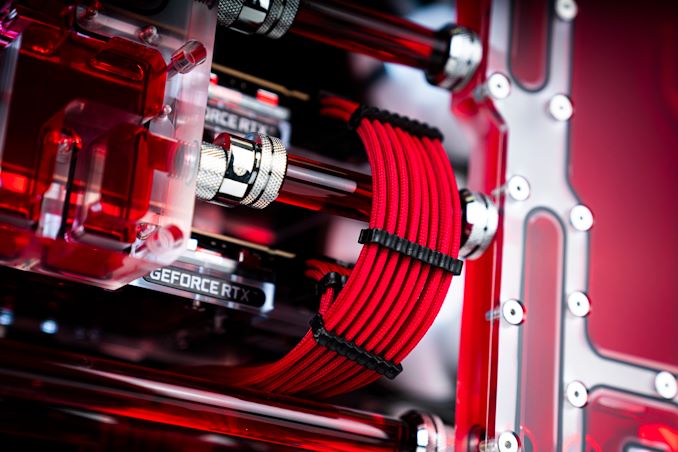
The Maingear RUSH using its Apex Custom Liquid Cooling Solution


Touching on the specifications, Maingear allows buyers to customize RUSH systems with a variety of CPU and chipset options, with both AMD and Intel systems available. These options range from desktop parts up to the AMD Ryzen 3950X (X570) and Intel Core i9-9900K (Z390), This also stretches to the more powerful HEDT platforms, including the AMD Threadripper series featuring the 3990X (TRX40) and Intel’s Core i9-10980XE (X299), which of course bumps the price up massively. Keeping in mind the ASUS collaboration, each configuration of the RUSH regardless of chipset and platform selected is based around an ASUS ROG motherboard, for maximum compatibility with its ROG Aura RGB ecosystem.


For graphics, users can select an AMD or NVIDIA setup including up to dual NVIDIA GeForce Titan RTX 24 GB graphics cards, as well as up to a dual AMD Radeon VII 16 GB setup. As for memory, all setups can be configured to run up to 128 GB of DDR4 memory, with AMD’s TRX40 for Threadripper offering up to 256 GB. The storage options vary – being dependent on the motherboard chipset – but most allow for up to two NVMe SSDs to be installed, with up to seven SATA 2.5″ drives, or four SATA 3.5″ drives. 


The most notable aspect of the new RUSH gaming system is can be configured to Maingear’s profound Apex liquid cooling solution. The Apex is a fully custom cooling solution which features an integrated pump designed for silent operation, with flow-rate sensing and a high capacity reservoir. We reported on the Apex integrated cooling solution back at CES 2018 when Maingear refreshed its F131 system. It uses a custom milled acrylic baseplate for striking aesthetics, with a parallel graphics card bridge and a custom radiator bridge. This encompasses ASUS’s ROG certification which all of the components used feature, including the Lian Li PC-O11D XL chassis. 


The new and updated RUSH series from Maingear starts from $1899 for the base models, while for those with especially deep pockets, configurations adding custom paint jobs and ultra-high-end hardware such as the AMD Threadripper 3970X and NVIDIA GeForce Titan RTX graphics card run for over $15000.


Related Reading


Source: AnandTech – Maingear Releases New RUSH System With Extremely High-End Specs

If you've ever wished Visual Studio Code could be <i>more</i> open source, the Eclipse Foundation would like a word

DIY IDE Theia hits 1.0, and it’s still compatible with all those extensionsThe Eclipse Foundation has pulled back the curtains on version 1.0 of Theia, an alternative to Microsoft’s developer darling of the hour, Visual Studio Code.…

Source: LXer – If you’ve ever wished Visual Studio Code could be <i>more</i> open source, the Eclipse Foundation would like a word

Xerox Ends Its Hostile Takeover Bid For HP

Xeros is pulling the plug on its hostile bid to buy larger rival HP (Warning: paywalled; alternative source) after the coronavirus pandemic undermined the copier maker’s ability to pull off the debt-laden merger. The Wall Street Journal reports: Xerox said Tuesday it is ending both its more than $30 billion tender offer and a proxy fight to replace the printer and PC maker’s board. Xerox concluded it is no longer prudent to pursue the deal given the public health crisis and resulting market swoon. The move puts the kibosh on one of the biggest mergers in the works and underscores the blow that the coronavirus has dealt to the world of deal making.

It marks the end of a five-month-long offensive by Xerox, kicked off when its offer became public in early November after the two companies had earlier explored a combination quietly but failed to come to an agreement. HP has repeatedly rebuffed its rival since then, rejecting Xerox’s latest cash-and-stock offer of $24 a share and an earlier one as insufficient and too risky given the amount of debt involved. Xerox’s move to buy a company more than three times its size was always going to be a challenge, but at the outset the company was in a stronger position than it is today. It had cash coming in from the sale of its joint venture with Fujifilm and its stock had been rising as it continued to cut costs.

Read more of this story at Slashdot.


Source: Slashdot – Xerox Ends Its Hostile Takeover Bid For HP

Teardown of Huawei flagship phone finds US parts despite blacklisting

Read 16 remaining paragraphs | Comments


Source: Ars Technica – Teardown of Huawei flagship phone finds US parts despite blacklisting

An Anti-Gay Charity Is Running a Coronavirus Tent Hospital in Central Park

A charity group is stepping in to help New York City, facing the worst outbreak of covid-19 in the country, by building an emergency field hospital in the middle of Central Park to handle overflow patients. But the group and its founder’s history of anti-gay sentiment is making people question whether it can truly…

Read more…


Source: Gizmodo – An Anti-Gay Charity Is Running a Coronavirus Tent Hospital in Central Park

Why Do Matter Particles Come in Threes? A Physics Titan Weighs In.

Three progressively heavier copies of each type of matter particle exist, and no one knows why. A new paper by Steven Weinberg takes a stab at explaining the pattern. From a report: Electrons and two types of quarks, dubbed “up” and “down,” mix in various ways to produce every atom in existence. But puzzlingly, this family of matter particles — the up quark, down quark and electron — is not the only one. Physicists have discovered that they make up the first of three successive “generations” of particles, each heavier than the last. The second- and third-generation particles transform into their lighter counterparts too quickly to form exotic cats, but they otherwise behave identically. It’s as if the laws of nature were composed in triplicate. “We don’t know why,” said Heather Logan, a particle physicist at Carleton University. In the 1970s, when physicists first worked out the Standard Model of particle physics — the still-reigning set of equations describing the known elementary particles and their interactions — they sought some deep principle that would explain why three generations of each type of matter particle exist. No one cracked the code, and the question was largely set aside.

Now, though, the Nobel Prize-winning physicist Steven Weinberg, one of the architects of the Standard Model, has revived the old puzzle. Weinberg, who is 86 and a professor at the University of Texas, Austin, argued in a recent paper in the journal Physical Review D that an intriguing pattern in the particles’ masses could lead the way forward. “Weinberg’s paper is a bit of lightning in the dark,” said Anthony Zee, a theoretical physicist at the University of California, Santa Barbara. “All of a sudden a titan in the field is suddenly working again on these problems.” “I’m very happy to see that he thinks it’s important to revisit this problem,” said Mu-Chun Chen, a physicist at the University of California, Irvine. Many theorists are ready to give up, she said, but “we should still be optimistic.”

Read more of this story at Slashdot.


Source: Slashdot – Why Do Matter Particles Come in Threes? A Physics Titan Weighs In.

We Trashed An Office In Good Job!

Earlier today on our Twitch channel I checked out the Switch’s adorably chaotic Good Job! and realized I actually miss being in our office, even if it is located in Times Square. Good Job! is a pretty hilarious puzzle game that gives you simple tasks to do around an office, like setting up a projector or wrangling…

Read more…


Source: Kotaku – We Trashed An Office In Good Job!

These Weather Apps Are Great Alternatives to the Apple-Owned Dark Sky

Dark Sky just announced it has been acquired by Apple, and with the sale come a few big problems for fans of the hyper-local weather app. First of all, the Android app is going away altogether—for obvious reasons. You can continue to use it until July 1, and subscribers will be refunded any money they’ve spent on a…

Read more…


Source: LifeHacker – These Weather Apps Are Great Alternatives to the Apple-Owned Dark Sky

Authors fume as online library “lends” unlimited free books

Sign in front of Middle Country public Library in Centereach, New York, on March 26, 2020.

Enlarge / Sign in front of Middle Country public Library in Centereach, New York, on March 26, 2020. (credit: Thomas A. Ferrara/Newsday RM via Getty Images)

For almost a decade, the Internet Archive, an online library best known for its Internet Wayback Machine, has let users “borrow” scanned digital copies of books held in its warehouse. Until recently, users could only check out as many copies as the organization had physical copies. But last week, The Internet Archive announced it was eliminating that restriction, allowing an unlimited number of users to check out a book simultaneously. The Internet Archive calls this the National Emergency Library.

Initial media coverage of the service was strongly positive. The New Yorker declared it a “gift to readers everywhere.” But as word of the new service spread, it triggered a backlash from authors and publishers.

“As a reminder, there is no author bailout, booksellers bailout, or publisher bailout,” author Alexander Chee tweeted on Friday. “The Internet Archive’s ’emergency’ copyrights grab endangers many already in terrible danger.”

Read 10 remaining paragraphs | Comments


Source: Ars Technica – Authors fume as online library “lends” unlimited free books

Close Calls: Impatient Cyclist Almost Gets Darwin'd By Train

Game Bundle Helps Developers Recoup Losses From A GDC That Wasn't

In an effort to provide relief to developers left in the lurch after the Game Developers Conference was postponed late last month, gamedev.world has partnered with several studios to release a massive video game bundle via itch.io, the proceeds of which will go towards a fund established to support affected developers.

Read more…


Source: Kotaku – Game Bundle Helps Developers Recoup Losses From A GDC That Wasn’t

Jedi Academy dev promises to fix mistake that let PC gamers slaughter console players

Read 5 remaining paragraphs | Comments


Source: Ars Technica – Jedi Academy dev promises to fix mistake that let PC gamers slaughter console players

FDA approves the emergency use of chloroquine for COVID-19

Image of a person's hands holding pill packaging.

Enlarge / Medical staff at the IHU Mediterranee Infection Institute in Marseille shows packets of a Nivaquine (tablets containing chloroquine) and Plaqueril (tablets containing hydroxychloroquine) on February 26, 2020,. (credit: Gerard Julien/Getty Images)

On Saturday, the Food and Drug Administration issued an Emergency Use Authorization that will allow patients suffering from COVID-19 to be treated using drugs without clear evidence of the drugs’ efficacy. The move comes after President Donald Trump has touted the drugs’ potential several times on the basis of tiny, anecdotal trials. There have also been reports of hoarding of the drugs, which are needed by people with some autoimmune disorders.

Potential or hype?

The drugs in question are relatives of chloroquine, specifically chloroquine phosphate and hydroxychloroquine sulfate. Originally developed as an antimalarial, chloroquine has a variety of effects, including the ability to reduce immune activity. That has made it useful for the treatment of autoimmune disorders such as lupus and rheumatoid arthritis. Given its multiple effects, it’s not surprising that the drug also has a variety of side effects, the most significant probably being a slowing of the heart’s rhythm that can potentially lead to fatal complications. (Technically, the drug extends the QT interval.)

What does any of this have to do with a coronavirus? As we discussed when exploring potential treatments for SARS-CoV-2, chloroquine can also alter the pH of the compartment in which some viruses are brought into the cell. This can interfere with the process of depositing the virus’ genome inside the cell and thus block the virus’ ability to reproduce. Experiments in cultured cells infected by SARS-CoV-2 indicated that chloroquine treatments can keep the virus from spreading within the culture.

Read 10 remaining paragraphs | Comments


Source: Ars Technica – FDA approves the emergency use of chloroquine for COVID-19

HPE, Intel and Linux Foundation Team Up For Open Source Software for 5G Core

HPE announced on Tuesday it’s working with Intel and the Linux Foundation on a new open source software project to help automate the roll out of 5G across multiple sites. From a report: The new partnership, which will be under the Linux Foundation umbrella, is called the Open Distributed Infrastructure Management Framework. The partnership represents HPE’s move into the 5G core network space as it branches out from its enterprise roots. Other partners for the open source project include AMI, Apstra, IBM’s Red Hat, Tech Mahindra and World Wide Technology. HPE will also introduce an enterprise offering, the HPE Open Distributed Infrastructure Management Resource Aggregator.

Read more of this story at Slashdot.


Source: Slashdot – HPE, Intel and Linux Foundation Team Up For Open Source Software for 5G Core

Ryzen Roundup: A Quick Overview of Ryzen Mobile 4000 Laptops From Acer, ASUS, Dell, & MSI

Originally announced back at CES 2020, AMD this week has finally launched its new “Renoir” Ryzen Mobile 4000 APUs. And with it, AMD’s laptop partners have begun rolling out their first wave of Ryzen 4000 laptops.


While we’re still working on our full review for next Monday, we wanted to take a moment to take stock of the laptop market thus far, and look at the Ryzen Mobile 4000 laptops that have been released this week or are due in the coming weeks. So far, Acer, ASUS, Dell, and MSI have introduced their notebooks, and between the four OEMs, they’re aiming for a wide range of the consumer market.


Acer’s Swift 3 and Aspire 5 Laptops Introduced


Acer was among the first to introduce its AMD Ryzen Mobile 4000-based laptops earlier this year, and this month, Acer finally started sales of its new notebooks, which are available in 14 and 15-inches.
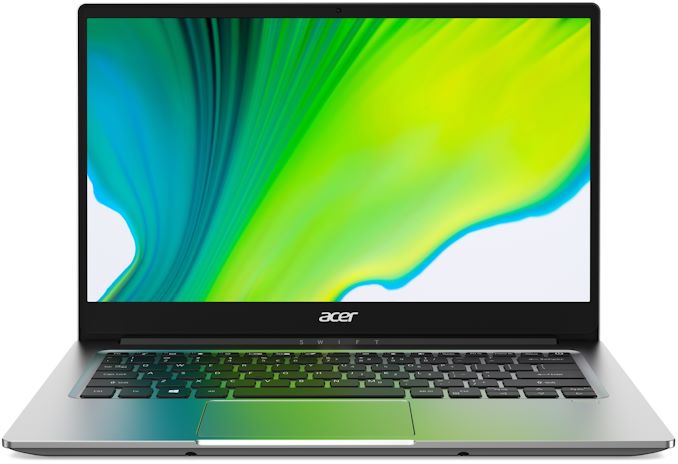


The Acer Swift 3 (SF314-42) is a 14-inch ultraportable laptop that weighs 1.17 kilograms and runs (up to) AMD’s eight-core AMD Ryzen 7 4700U APU that is paired with 8 GB of LPDDR4 memory as well as an SSD. The PC has everything that one comes to expect from a 2020 ultrathin notebook, including Bluetooth 5.0, Wi-Fi 6, USB 3.2 Gen 2 ports, and a fingerprint scanner.
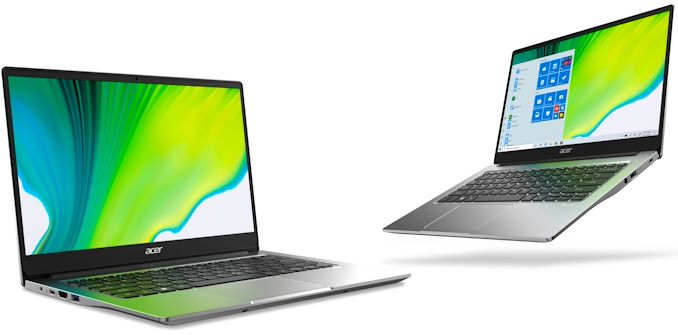


The laptop comes with an IPS Full-HD display panel with thin bezels, so it is pretty portable. Since the Swift 3 is designed primarily with roadwarriors in mind, it can work for 11.5 hours on one charge, according to the manufacturer. The Swift 3 SF314-42 will be available this April at a price starting at $629.99
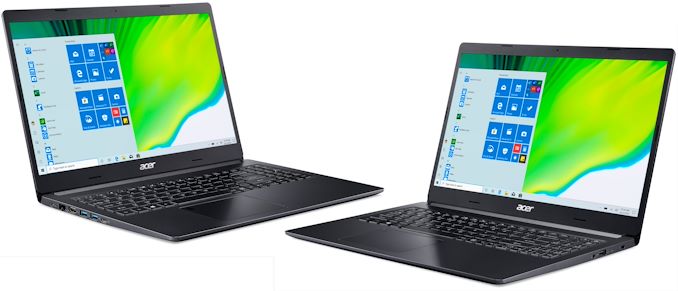


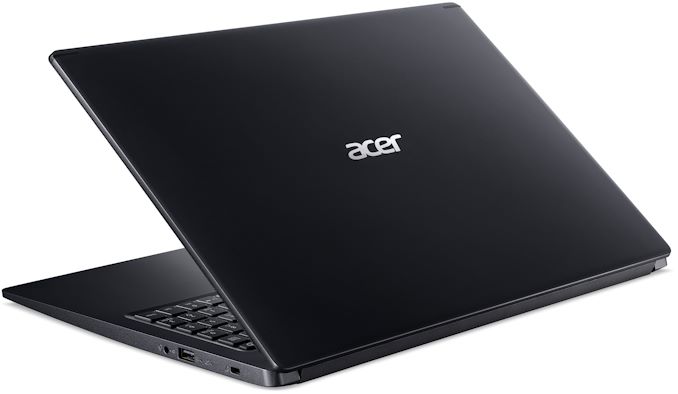
Acer’s Aspire 5 (A515-44) is aimed at  those looking for something bigger and less portable. This machine is equipped with a Full-HD IPS 15.6-inch LCD and uses AMD’s six-core Ryzen 5 4500U mobile CPU that is accompanied by up to 24 GB of RAM, up to 1 TB PCIe SSD, and a 2 TB hard drive. This system will hit the market in June at an MSRP starting at $519.99.


ASUS’s ROG Zephyrus G14: An Ultimate Gaming Laptop


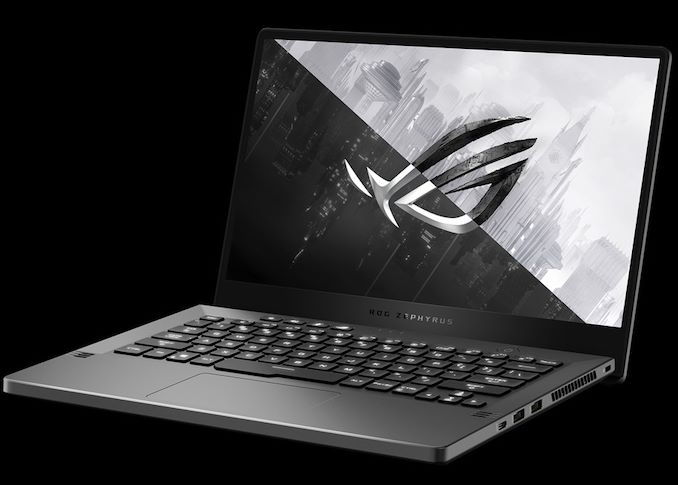
Among gaming notebook vendors, ASUS was the first company to start using AMD’s desktop Ryzen CPUs with eight cores inside its ROG laptop. So it is not surprising that the company is also among the first with its high-end ROG Zephyrus G14 notebook powered by AMD’s Ryzen 9 4900HS and Ryzen 7 4800HS mobile APUs.
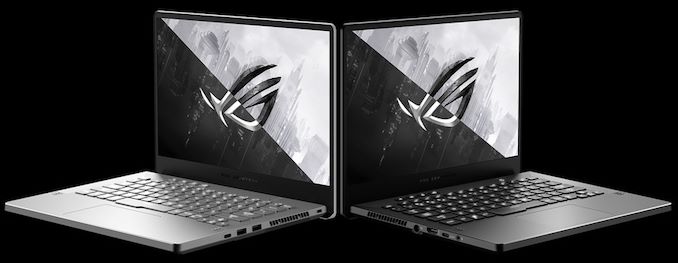


The eight-core Ryzen Mobile 4000-series processor works together with up to 32 GB of DDR4-3200 RAM, an up to 1 TB M.2 NVMe SSD, and NVIDIA’s GeForce RTX 2060 or GTX 1660 Ti discrete graphics processor. The powerful guts are accompanied by rather decent connectivity technologies, including Wi-Fi 6, Bluetooth 5.0, USB 3.1 Gen 1/2 Type-A/Type-C ports, and a DisplayPort 1.4 output.
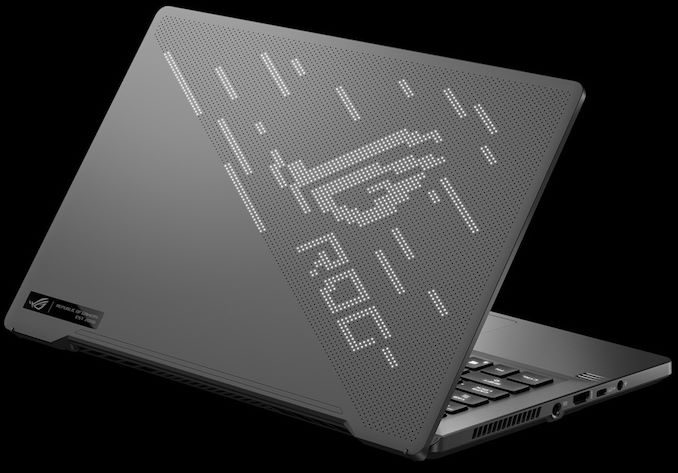


The ASUS ROG Zephyrus G14 is obviously meant for gamers on the go, and so ASUS has set out to strike a balance between performance and portability. As the name suggests, the laptop comes with a 14-inch display featuring a 2560×1440 or 1920×1080 resolution as well as a 60 Hz or 120 Hz refresh rate with VESA Adaptive-Sync on top. Interestingly, select SKUs even come with Pantone Validated LCDs to appeal to those who want to do color-critical workloads on their Republic of Gamers laptop. The machine weighs 1.7 kilograms and is 1.79 cm – 1.99 cm thick depending on the version.


ASUS’s TUF Gaming A15: Ryzen Mobile Gaming in Budget


The ROG Zephyrus G14 is not ASUS’s only AMD Ryzen Mobile 4000-series-based notebook aimed at gamers and performance-demanding enthusiasts. The company also has lower-tier TUF Gaming A15 machine, which also brings decent specifications and performance.



The ASUS TUF Gaming A15 is based on AMD’s Ryzen 7 4800H and Ryzen 5 4600H processors that are paired with NVIDIA’s GeForce RTX 2060 or GTX 1660 Ti discrete GPUs, up to 32 GB of DDR4-3200 memory, an SSD up to 1 TB in capacity, and a 1 TB 5400 RPM HDD. On the I/O side of things, the laptop has Wi-Fi 5, USB 3.2 Gen 1/2 Type-A/Type-C, a GbE port, and an HDMI output.
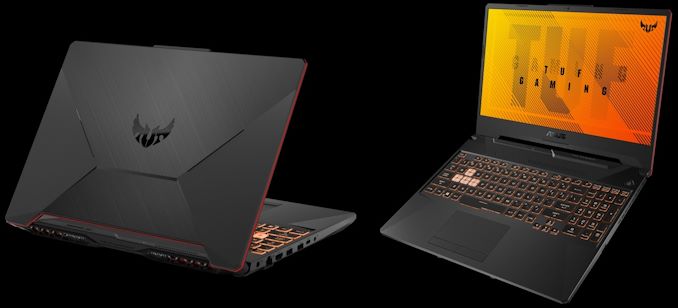


As per its name, the TUF Gaming A15 is equipped with a 15.6-inch Full-HD IPS panel with a 60 Hz or a 144 Hz refresh rate that is supported by VESA’s Adaptive-Sync technology.
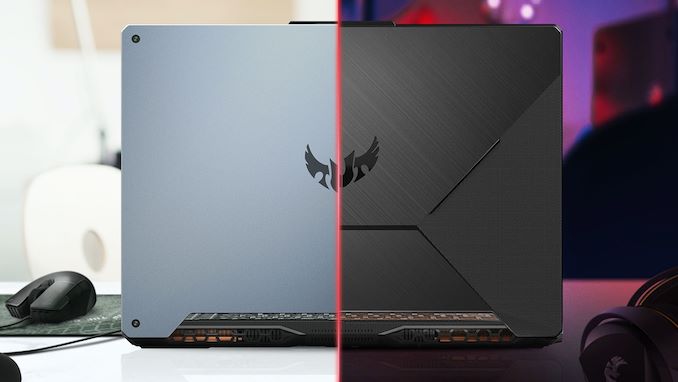


One interesting thing to note about the TUF Gaming A15 laptops is that in addition to being ruggedized, these machines will be available in two different finishes: one Fortress Gray looks minimalistic, whereas another — Bonfire Black — looks futuristic.


The ASUS TUF Gaming A15 is already available from retailers like Amazon starting at prices of $999.99.


Dell’s G5 15 Special Edition Ryzen: An AMD-Only Gaming Laptop


Dell introduced its G5 15 SE gaming laptop ahead of all of its rivals back at CES 2020. What is, perhaps, more important is that this machine uses key components only from AMD, so along with a Ryzen 4000 APU it also comes with AMD’s Radeon RX 5600M discrete GPU (Navi architecture). The notebook is currently the only PC that supports AMD’s SmartShift technology that dynamically shift power and thermal headroom between the CPU and the GPU to maximize performance.
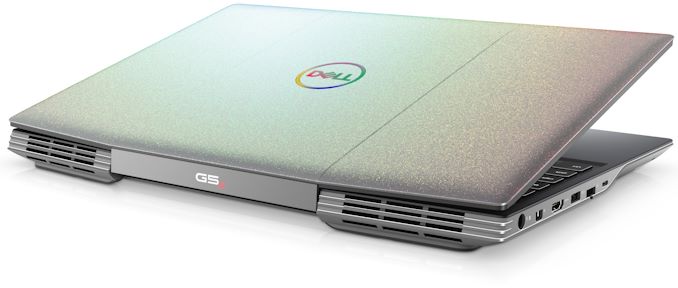


The 15.6-inch G5 15 Special Edition Ryzen gaming notebook is equipped with a Full-HD panel with a 144Hz maximum refresh rate as well as variable refresh support. Meanwhile, the system comes with DDR4 DRAM, a SSD up to 1TB in size, and a 2 TB 5400 RPM HDD. As far as I/O is concerned, the mobile PC features Wi-Fi, Bluetooth, GbE, USB-A, USB-C, mDP, HDMI, SD card reader, a 3.5-mm audio jack, and a webcam with IR sensors.
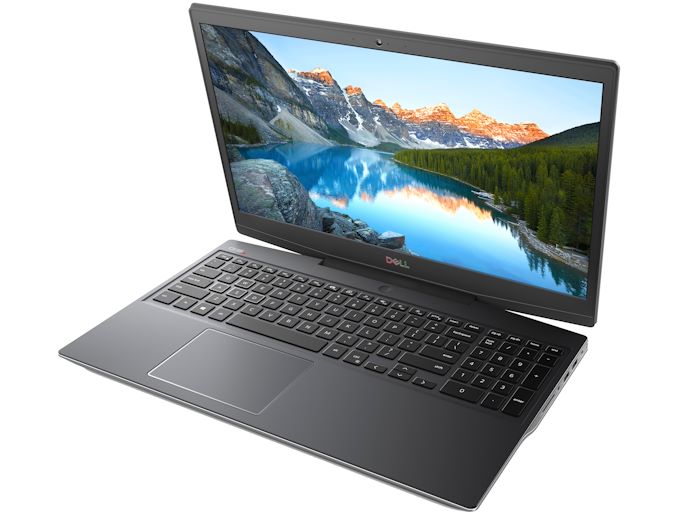


Dell’s G5 15 Special Edition Ryzen yet has to make it to the market, but back in January it was said that the notebook is due in early April. As for pricing, it is expected that the machine will cost starting at $799.


MSI’s Bravo 15: A Budget Gaming Laptop


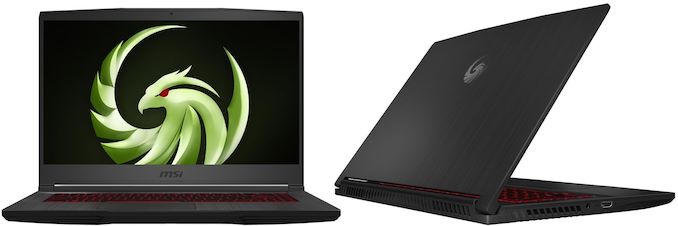
MSI is a yet another company that uses AMD’s latest six-core Ryzen 5 4600H and eight-core Ryzen 7 4800H APUs paired with the company’s latest Radeon RX 5500M discrete GPU. Though it is unclear whether the latest Bravo 15 notebook actually supports SmartShift technology.
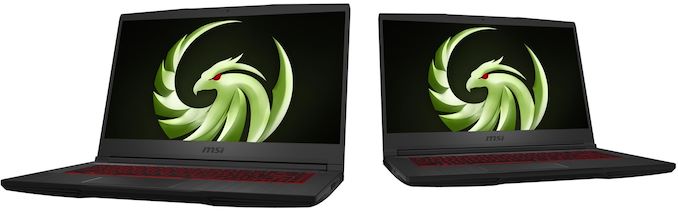


MSI’s Bravo 15 laptops that are currently available for pre-order are equipped with 16 GB of DDR4 memory as well as a 512 GB NVMe SSD, which is in line with what we expect from sub-$1000 gaming notebooks. Meanwhile, the systems are equipped with a 15.6-inch Full-HD IPS LCD panel featuring a variable refresh rate of up to 120 Hz with VESA’s Adaptive-Sync on top.


Some Thoughts


So far, PC makers have introduced several higher-end midrange gaming laptops based on AMD’s Ryzen Mobile 4000 processors. And given AMD’s ongoing success with the similar Zen 2-based Ryzen 3000 CPUs on the desktop, the company is certainly putting its best foot forward for the mobile space as well. So as supplies ramp up (and Coronavirus ramps down) expect more computer manufacturers introduce Ryzen 4000 notebooks in the coming months.


Traditionally, AMD has done well with gamers, so it is likely that at some point we are going to see true desktop replacement notebooks featuring the company’s latest processors paired with top-of-the-range GPUs. Meanwhile, what remains to be seen is how successful will AMD be with ultraportables, which is a traditional Intel stronghold. To date, only Acer has unveiled an ultrathin Ryzen 4000 notebook, and companies like Lenovo should catch up shortly.


Related Reading:


Sources: AMD, Acer, ASUS, Dell, MSI


Source: AnandTech – Ryzen Roundup: A Quick Overview of Ryzen Mobile 4000 Laptops From Acer, ASUS, Dell, & MSI