US Government Also Received a Whistleblower Complaint That WhatsApp Chats Aren’t Private

Remember that lawsuit questioning WhatsApp’s end-to-end encryption? Thursday Bloomberg reported those allegations had been investigated by special agents with America’s Commerce Department, “according to the law enforcement records, as well as a person familiar with the matter and one of the contractors.”

Similar claims were also the subject of a 2024 whistleblower complaint to the US Securities and Exchange Commission, according to the records and the person, who spoke on the condition that they not be identified out of concern for potential retaliation. The investigation and whistleblower complaint haven’t been previously reported…

Last year, two people who did content moderation work for WhatsApp told an investigator with Commerce’s Bureau of Industry and Security that some staff at Meta have been able to see the content of WhatsApp messages, according to the agent’s report summarizing the interviews. [A spokesperson for the Bureau later told Bloomberg that investigator’s assertions were “unsubstantiated and outside the scope of his authority as an export enforcement agent.”] Those content moderators, who worked for Meta through a contract with the management and technology consulting firm Accenture Plc, also alleged that they and some of their colleagues had broad access to the substance of WhatsApp messages that were supposed to be encrypted and inaccessible, according to the report. “Both sources confirmed that they had employees within their physical work locations who had unfettered access to WhatsApp,” wrote the agent… One of the content moderators who told the investigator she had access said she also “spoke with a Facebook team employee and confirmed that they could go back aways into WhatsApp (encrypted) messages, stating that they worked cases that involved criminal actions,” according to the document…

The investigator’s report, dated July 2025, described the investigation as “ongoing,” includes a case number and dubs the inquiry “Operation Sourced Encryption…” The inquiry was active as recently as January, according to a person familiar with the matter. The inquiry’s current status and who may be the defined target are both unclear. Many investigations end without any formal accusations of wrongdoing…

WhatsApp on its website says it does, in some instances, allow information about messages to be seen by the company. If someone reports a user or group for problematic messages, “WhatsApp receives up to five of the last messages they’ve sent to you” and “the user or group won’t be notified,” the company says. In those cases, WhatsApp says it receives the “group or user ID, information on when the message was sent, and the type of message sent (image, video, text, etc.).” Former contractors outlined much broader access. Larkin Fordyce was an Accenture contractor who the report says an agent interviewed about content moderation work for Meta. Fordyce told the investigator he spent years doing this work out of an Austin, Texas office starting as early as the end of 2018. He said moderators eventually were granted their own access to WhatsApp, but even before that they could request access to communications and “the Facebook team was able to ‘pull whatever they wanted and then send it,'” the report states…

The agent also gathered records that were filed in the whistleblower complaint to the SEC, according to his report, which doesn’t describe the materials… The status of the whistleblower complaint is unclear.

Some key points from the article:

“The investigative report seen by Bloomberg doesn’t include a technical explanation of the contractors’ claims.”
“A spokesperson for Meta, which acquired WhatsApp in 2014, said the contractors’ claims are impossible.” One contractor “said that there was little vetting” of foreign nationals hired to do content moderation for Meta, saying this granted them “full access to the same portal to review” content moderation cases


Read more of this story at Slashdot.

Linux 7.0 Aims To Replace More Caching Code With Sheaves For “Hopefully” Improved Performance

Introduced to the mainline Linux kernel last year was “sheaves” as an opt-in per-CPU array-based caching layer. Sheaves was merged back in Linux 6.18 and while it started as an opt-in caching layer, the plan is to replace more CPU slabs / caches with sheaves. Queued up for slated introduction in the upcoming Linux 7.0 cycle is replacing more of those caches with sheaves…

AI Use at Work Has Increased, Gallup Poll Finds

An anonymous reader shared this report from the Associated Press:

American workers adopted artificial intelligence into their work lives at a remarkable pace over the past few years, according to a new poll. Some 12% of employed adults say they use AI daily in their job, according to a Gallup Workforce survey conducted this fall of more than 22,000 U.S. workers.

The survey found roughly one-quarter say they use AI at least frequently, which is defined as at least a few times a week, and nearly half say they use it at least a few times a year. That compares with 21% who were using AI at least occasionally in 2023, when Gallup began asking the question, and points to the impact of the widespread commercial boom that ChatGPT sparked for generative AI tools that can write emails and computer code, summarize long documents, create images or help answer questions…

While frequent AI use is on the rise with many employees, AI adoption remains higher among those working in technology-related fields. About 6 in 10 technology workers say they use AI frequently, and about 3 in 10 do so daily. The share of Americans working in the technology sector who say they use AI daily or regularly has grown significantly since 2023, but there are indications that AI adoption could be starting to plateau after an explosive increase between 2024 and 2025…

A separate Gallup Workforce survey from 2025 found that even as AI use is increasing, few employees said it was “very” or “somewhat” likely that new technology, automation, robots or AI will eliminate their job within the next five years. Half said it was “not at all likely,” but that has decreased from about 6 in 10 in 2023.

A bar chart lists the sectors most likely to be using AI at their jobs:

Technology (77%)
Finance (64%)
College/University (63%)
Professional Services (62%)
K-12 Education (56%)
Community/Social Services (43%)
Government/Public Policy (42%)
Manufacturing (41%)
Health Care (41%)
Retail (33%)


Read more of this story at Slashdot.

Electric Flying Cars Now for Sale by California Company Pivotal

“A future with flying cars is no longer science fiction,” writes the Los Angeles Times.

“All you need to order your own is about $200,000 and some hope and patience.”

The Palo Alto-based company Pivotal has been developing the technology since 2009 and is nearly ready to bring it to market… [Company founder Marcus] Leng engineered an ultralight, electric-powered vertical takeoff and landing aircraft known as an eVTOL. Other VTOL aircraft, such as helicopters, had existed for decades, but Leng’s invention was fixed-wing and didn’t rely on gas. The Canadian engineer dubbed his creation BlackFly and spent years working on it in secret. The company moved to the Bay Area in 2014 and by 2018 had developed a second version of BlackFly that laid the groundwork for Helix, the aircraft Pivotal now offers for sale…

Those who are curious — and wealthy — can reserve a Helix today with a $50,000 deposit. The aircraft starts at $190,000 with the option of purchasing a transport trailer for $21,000 and a charger for $1,100. A customer who makes their reservation today could receive their aircraft in nine to 12 months, [Pivotal Chief Executive Ken] Karklin said. It takes less than two weeks to learn how to fly it. In order to complete Pivotal’s flight certification training, a customer has to pass the FAA knowledge test and complete ground school. Training, which takes place at the company’s Palo Alto headquarters and at the Monterey Bay Academy Airport, teaches customers how to control and maintain the aircraft, as well as how to transport and assemble it…

It is uncertain how fast the company and others like it can ramp up production and how communities will react. Not everyone is on board. Darlene Yaplee, president of the Aviation-Impacted Communities Alliance, said there are concerns about having different types of aircraft in limited airspace. Pivotal has around six early-access customers who already own a version of the BlackFly and are flying it for fun… Helix will have an electric range of about 30 minutes and a cruise speed of 62 mph, the company said. It takes 75 minutes to charge it using a 240 volt charger. The noise produced by the aircraft during takeoff and landing is equivalent to a couple of leaf blowers, Karklin said. When flying it is overhead, someone on the ground might not be able to hear it.

Karklin said the simplicity of the aircraft comes with lower cost, lower weight and higher safety. The aircraft, which has only 18 moving parts, is full of redundancy to prevent system failures.
In short, the article describes it as “a single-person aircraft for recreational use and short-haul travel that also has the potential to support emergency response and military operations.”


Read more of this story at Slashdot.

A cup of coffee for depression treatment has better results than microdosing

About a decade ago, many media outlets—including WIRED—zeroed in on a weird trend at the intersection of mental health, drug science, and Silicon Valley biohacking: microdosing, or the practice of taking a small amount of a psychedelic drug seeking not full-blown hallucinatory revels but gentler, more stable effects. Typically using psilocybin mushrooms or LSD, the archetypal microdoser sought less melting walls and open-eye kaleidoscopic visuals than boosts in mood and energy, like a gentle spring breeze blowing through the mind.

Anecdotal reports pitched microdosing as a kind of psychedelic Swiss Army knife, providing everything from increased focus to a spiked libido and (perhaps most promisingly) lowered reported levels of depression. It was a miracle for many. Others remained wary. Could 5 percent of a dose of acid really do all that? A new, wide-ranging study by an Australian biopharma company suggests that microdosing’s benefits may indeed be drastically overstated—at least when it comes to addressing symptoms of clinical depression.

A Phase 2B trial of 89 adult patients conducted by Melbourne-based MindBio Therapeutics, investigating the effects of microdosing LSD in the treatment of major depressive disorder, found that the psychedelic was actually outperformed by a placebo. Across an eight-week period, symptoms were gauged using the Montgomery-Åsberg Depression Rating Scale (MADRS), a widely recognized tool for the clinical evaluation of depression.

Read full article

Comments

Apple Switches to Build-to-Order Systems on Its Web Site

“Apple has gone for a choose-your-own-adventure when shopping for a new Mac,” writes long-time Slashdot reader esarjeant.

Macworld explains:

Apple has shifted from selling pre-configured Mac models to a fully customizable build-to-order system on its website, allowing customers to select display size, chip, memory, and storage options… This change emphasizes building a machine within budget rather than choosing from set configurations, potentially preparing for future CPU/GPU core selection with M5 chips. Third-party retailers like Amazon and Best Buy are expected to continue offering standard configurations for customers preferring traditional purchasing methods…

Apple is rumored to offer the ability to customize CPU and GPU cores with the upcoming launch of the M5 Pro and M5 Max MacBook Pro models, so this new system could pave the way for more build-to-order options. It could also be a way to âoehideâ smaller price increases as memory and other component costs rise throughout 2026.


Read more of this story at Slashdot.

NVIDIA is still planning to make a ‘huge’ investment in OpenAI, CEO says

NVIDIA CEO Jensen Huang told reporters that the company will “invest a great deal of money” in OpenAI’s latest funding round, according to Bloomberg, after The Wall Street Journal on Friday reported that the two companies were rethinking a previous $100 billion deal that hasn’t “progressed beyond the early stages” of negotiations. Speaking to reporters in Taipei this weekend, Huang reportedly said it could be “the largest investment we’ve ever made.” 

NVIDIA and OpenAI jointly announced in September that NVIDIA would be investing up to $100 billion in OpenAI to build 10 gigawatts of AI data centers. The companies said then that they were targeting the second half of 2026 for the first phase of the project to go online. Citing sources familiar with the discussions, The Wall Street Journal reported that Huang has highlighted privately that the agreement was nonbinding and has criticized OpenAI’s business approach as lacking discipline. 

According to Bloomberg, however, Huang called the report’s claims “nonsense,” and told reporters on Saturday, “I believe in OpenAI. The work that they do is incredible. They’re one of the most consequential companies of our time.” But, Bloomberg reports, he said NVIDIA’s investment in this funding round wouldn’t come near $100 billion.

This article originally appeared on Engadget at https://www.engadget.com/ai/nvidia-is-still-planning-to-make-a-huge-investment-in-openai-ceo-says-205521528.html?src=rss

Ayaneo’s Pocket S Mini has the perfect aspect ratio for revisiting classic console games

There may be plenty of gaming handhelds out there, but there aren’t many horizontal options that let you play childhood favorites in the original 4:3 aspect ratio. To address that gap, Ayaneo launched a premium option with the Pocket S Mini. As a “true 4:3 retro handheld,” the Pocket S Mini won’t have those pesky vertical black bars whenever you’re emulating video games from the CRT television era.

Handhelds like the Anbernic RG405M and even Ayaneo’s own Pocket Air Mini already offer a 4:3 aspect ratio, but the Pocket S Mini presents a more high-end build with a full metal frame and a glass front panel. The 4.2-inch LCD screen has a resolution of 1,280 x 960 and is flanked by Hall effect joysticks with RGB lighting, Hall effect triggers and “crystal-textured” buttons. Inside, the Pocket S Mini runs on a Snapdragon G3x Gen 2 chip and is powered by a 6,000mAh battery.

The Ayaneo Pocket S Mini in Obsidian Black, Ice Soul White and Retro Power.
Ayaneo

Unlike most of Ayaneo’s other devices, the Pocket S Mini isn’t being done through a crowdfunding campaign. It’s already available on Ayaneo’s website with a starting early bird price of $319 for either the Obsidian Black or Ice Soul White options with 8GB of memory and 128GB of storage. As usual, the Retro Power colorway will only be available with the highest specs of 16GB of memory and 512GB of storage, starting at $479. We’re not sure when Ayaneo will end early bird pricing, but the prices will eventually jump to between $399 and $559 for retail pricing.

This article originally appeared on Engadget at https://www.engadget.com/gaming/ayaneos-pocket-s-mini-has-the-perfect-aspect-ratio-for-revisiting-classic-console-games-203926701.html?src=rss

Nvidia CEO Denies OpenAI’s $100B Investment from Nvidia is ‘Stalled’

Saturday Nvidia CEO Jensen Huang said they still planned a “huge” investment in OpenAI, according to CNBC.

Friday the Wall Street Journal had reported that Nvidia’s plan to invest up to $100 billion in OpenAI “has stalled after some inside the chip giant expressed doubts about the deal, people familiar with the matter said…”

[T]he talks haven’t progressed beyond the early stages, some of the people said. Now, the two sides are rethinking the future of their partnership, some of the people said. The latest discussions, they said, include an equity investment of tens of billions of dollars as part of OpenAI’s current funding round. Nvidia CEO Jensen Huang has privately emphasized to industry associates in recent months that the original $100 billion agreement was nonbinding and not finalized, people familiar with the matter said. He has also privately criticized what he has described as a lack of discipline in OpenAI’s business approach and expressed concern about the competition it faces from the likes of Google and Anthropic, some of the people said…

OpenAI is laying the foundation to go public by the end of 2026, and has spent much of the past year racing to secure large amounts of computing capacity to help power OpenAI’s future products and growth. The stalled Nvidia pact is a blow to this effort and shows how Chief Executive Sam Altman’s penchant for announcing flashy big-ticket deals carries the potential to backfire if the terms have yet to be finalized. In a joint announcement unveiling the September deal with Altman and OpenAI President Greg Brockman, Huang called the deal “the largest computing project in history….” OpenAI went on to sign a string of other agreements with chip and cloud companies that helped fuel a global stock market rally.

But investors have since grown jittery about the startup’s ability to pay for these deals, leading to a sell-off in some tech stocks tied to OpenAI. Altman has said that the deals put the startup on the hook for $1.4 trillion in computing commitments — more than 100 times the revenue it was on pace to generate last year. OpenAI executives say the total commitments are lower when you account for overlap in some of the deals, and that the agreements will take place over a long period of time…. Huang has indicated to associates that he still believes it’s crucially important to provide OpenAI with financial support in one form or another, in part because OpenAI is one of the chip designer’s largest customers, people familiar with the matter said. If OpenAI were to fall behind other AI developers, it could dent Nvidia’s sales.

“Speaking to reporters in Taipei, Huang said it was ‘nonsense’ to say he was unhappy with OpenAI,” CNBC reported Saturday:

“We are going to make a huge investment in OpenAI. I believe in OpenAI, the work that they do is incredible, they are one of the most consequential companies of our time and I really love working with Sam,” he said, referring to OpenAI CEO Sam Altman. “Sam is closing the round (of investment) and we will absolutely be involved,” Huang added. “We will invest a great deal of money, probably the largest investment we’ve ever made.”

Asked whether it would be over $100 billion, he said: “No, no, nothing like that.”

Elsewhere the Journal has reported that Amazon is in talks to invest up to $50 billion in OpenAI.

Thanks to Slashdot reader sinij for sharing the article.


Read more of this story at Slashdot.

Blue Origin Announces Two-Year Pause in Space Tourism – to Focus on the Moon

TechCrunch reports:

Jeff Bezos’ space company Blue Origin is pausing its space tourism flights for “no less than two years” in order to focus all of its resources on upcoming missions to the moon, the company announced Friday. The decision puts a temporary halt on a program that Blue Origin has been using to fly humans past the Kármán line, the recognized boundary of space, for the last five years. Blue Origin made the announcement just a few weeks ahead of the expected third launch of its New Glenn mega-rocket, which is slated for late February…

The company said Friday that New Shepard has flown 38 times and carried 98 humans to space, along with more than 200 scientific and research payloads.

“The move is a clear sign that Blue Origin is going all in on its moon program as the company races with rival SpaceX,” reports the Business Standard, “to be the first private company to land humans on the lunar surface for Nasa’s Artemis program.”

Blue Origin holds a $3.4 billion contract with Nasa to develop its Blue Moon lander, designed to shuttle astronauts to and from the moon, with a landing originally targeted for 2029… The company is targeting the launch and landing of a cargo version of its lander as soon as this year, as a test ahead of eventually landing humans. Blue Origin has also presented an accelerated plan to Nasa for developing a lander that may be ready for carrying astronauts ahead of Starship, the large new rocket from Elon Musk’s SpaceX.


Read more of this story at Slashdot.

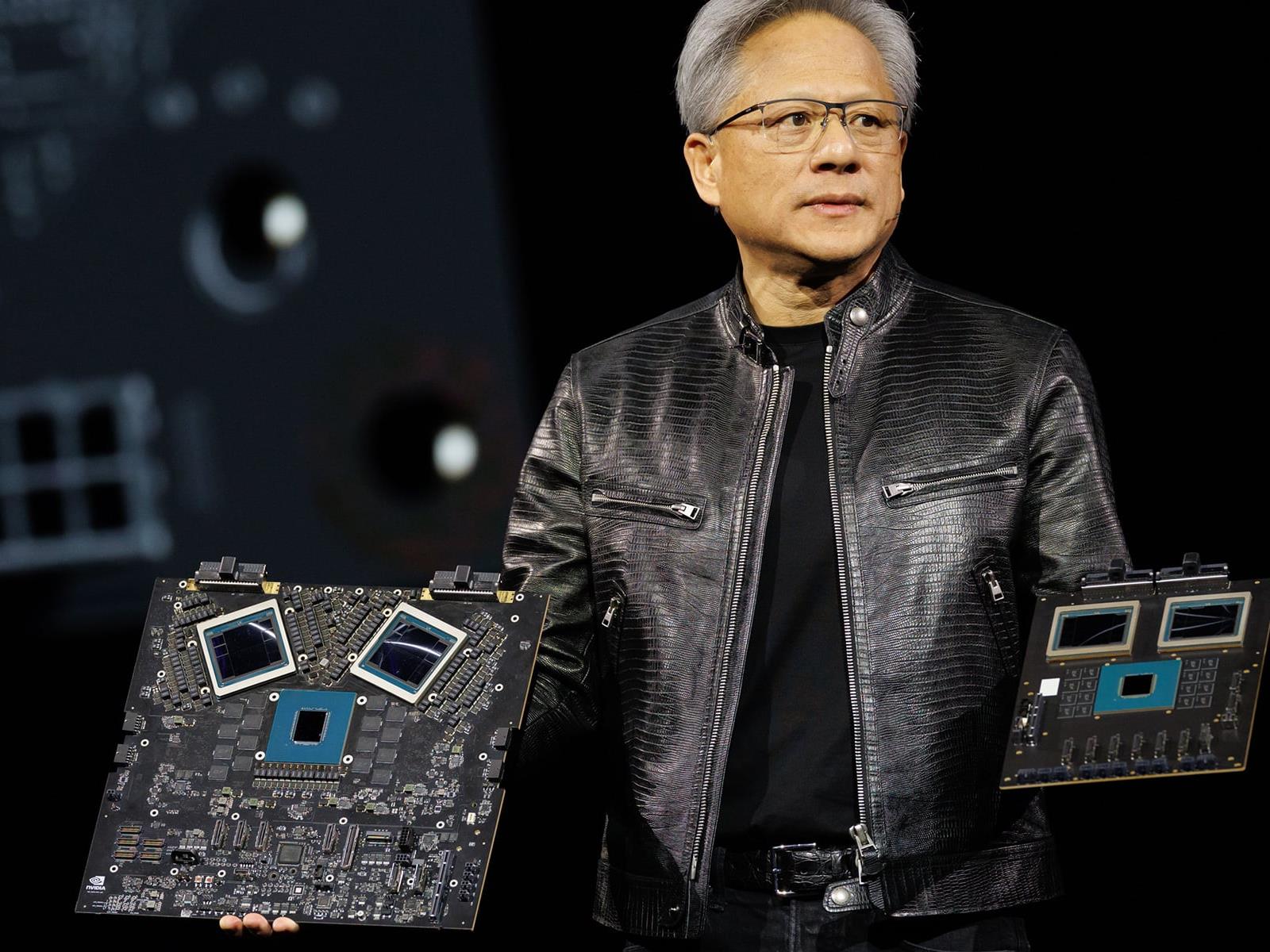
NVIDIA CEO Jensen Huang Tips Hand on N1 AI PC Chip Plans

NVIDIA CEO Jensen Huang Tips Hand on N1 AI PC Chip Plans
When you think NVIDIA, you think “GPUs.” It’s easy to forget that NVIDIA’s been making system-on-a-chip products for nearly 20 years; the first Tegra SoC came out in early 2008. The company’s chips haven’t really found their way into mainstream laptops, but that’s about to change with the release of the N1/N1X processors.

Speaking to Taiwanese

OnlyFans is reportedly in talks to sell a 60 percent stake to a San Francisco investment firm

OnlyFans is looking to cash out once again, but this time in a deal that would value it at several billion dollars less than a potential sale that previously fell through. As reported by TechCrunch, the online platform known for subscription-based pornographic content is in talks to sell a majority stake to Architect Capital, an investment firm based in San Francisco.

According to the report, the proposed deal includes $3.5 billion in equity and $2 billion in debt, which values OnlyFans at $5.5 billion. TechCrunch also reported that Architect Capital and OnlyFans are currently in exclusive talks, where the website’s owner can’t negotiate with other potential buyers for a certain amount of time.

With no set timeline yet for the deal, the deal is far from an official closing. Last year, OnlyFans’ owner Leonid Radvinsky was also negotiating with another investment firm, Forest Road Company, to sell the platform. Although that deal never went through, the talks leading up to the sale valued OnlyFans at a much higher $8 billion. The London-based website, which still doesn’t want to be known as just a porn site, is still growing and reported a nine percent increase in gross revenue for its 2024 fiscal year, earning more than $7.2 billion.

This article originally appeared on Engadget at https://www.engadget.com/social-media/onlyfans-is-reportedly-in-talks-to-sell-a-60-percent-stake-to-a-san-francisco-investment-firm-191842666.html?src=rss

Google Takes Down Massive Malicious Proxy Network, Millions of Zombie Devices

Google Takes Down Massive Malicious Proxy Network, Millions of Zombie Devices
Google has a deeply-vested interest in cybersecurity and unparalleled resources to take down bad actors. The latest target on Google’s kill list was a malicious proxy network called IPIDEA, and through coordinated efforts inside and outside of Google’s umbrella, IPIDEA has been taken down. However, cybercriminals are a notoriously resourceful

Can We Slow Global Warming By Phasing Out Super-Pollutant HFCs?

“There’s one big bright spot in the fight against climate change that most people never think about,” reports the Washington Post.

“It could prevent nearly half a degree of global warming this century, a huge margin for a planet that has warmed almost 1.5 degrees Celsius and is struggling to keep that number below 2 degrees…”

[M]ore than 170 countries — including the U.S. — have agreed to act on this one solution. That solution: phasing out hydrofluorocarbons (HFCs), a group of gases used in refrigerators, air conditioners and other cooling systems that heat the atmosphere more than almost any other pollutant on Earth. Pound for pound, HFCs are hundreds or even thousands of times better at trapping heat than carbon dioxide.

Companies are replacing HFCs with new gases that trap much less heat. If you buy a new fridge or AC unit in the United States today, it’ll probably use one of these new refrigerants — and you’re unlikely to notice the difference, according to Francis Dietz, a spokesperson for the Air-Conditioning, Heating and Refrigeration Institute, a trade group representing U.S. HVAC manufacturers… But that invisible transition is one of the most important short-term tactics to keep Earth’s climate from going catastrophically off-kilter this century. HFCs are powerful super-pollutants, but the most common ones break down in the atmosphere within about 15 years. That means stopping emissions from HFCs — and other short-lived super-pollutants such as methane — is like pulling an emergency brake on climate change.

“It’s really the fastest, easiest and, some would say, the only way to slow the rate of warming between now and 2050,” said Kiff Gallagher, executive director of the Global Heat Reduction Initiative, a business that advises companies and cities on cutting greenhouse gas emissions. The only other solution that comes close to the speed and scale of slashing HFCs would be dimming the sun, a much more controversial and potentially dangerous option… [P]hasing out HFCs now “would buy us a little bit of time to develop other solutions that maybe take longer to implement,” said Sarah Gleeson, a climate solutions research manager at Project Drawdown, a nonprofit that models how much different strategies would slow climate change. It could also keep the planet from crossing dangerous climate tipping points this century.


Read more of this story at Slashdot.

SpaceX wants to launch a constellation of a million satellites to power AI needs

Elon Musk and his aerospace company have requested to build a network that’s 100 times the number of satellites that are currently in orbit. On Friday, SpaceX filed an application with the Federal Communications Commission (FCC) to launch a million satellites meant to create an “orbital data center.” This isn’t the first time we’re hearing of Musk’s plans to build an orbital data center, as it was mentioned by company insiders following the news that the CEO was reportedly preparing to take SpaceX public.

According to the filing spotted by PCMag, this data center would run off solar power and deliver computing capacity for artificial intelligence needs. SpaceX is requesting to “deploy a system of up to one million satellites to operate within narrow orbital shells spanning up to 50 km each,” as detailed in the filing. According to SpaceX’s filing, “orbital data centers are the most efficient way to meet the accelerating demand for AI computing power” since they use “solar power with little operating and maintenance costs.”

To give some scale of the astronomical number of satellites SpaceX is asking for, the company recently hit a milestone of the 11,000th Starlink satellite launched. There aren’t as many in orbit since the satellites can run into issues, but an unofficial website that tracks Starlink stats claims there are more than 9,600 satellites in orbit as of January 30, 2026. The FCC is likely to whittle down the amount that SpaceX is asking for in its filing, as the federal agency has done in the past. Earlier this month, the FCC approved SpaceX’s request to deploy 7,500 more Starlink satellites, following another 7,500 launched in 2022. However, it’s much less than the nearly 30,000 amount that SpaceX first asked for in 2020.

This article originally appeared on Engadget at https://www.engadget.com/science/space/spacex-wants-to-launch-a-constellation-of-a-million-satellites-to-power-ai-needs-175607771.html?src=rss