
Here’s how to install and configure Tomcat 10.1 with Nginx for reverse proxy and Let’s Encrypt SSL certificate on AlmaLinux/Rocky Linux 9.
Source: LXer – Set Up Tomcat, Nginx, and SSL on AlmaLinux/Rocky Linux 9
Monthly Archives: October 2022
Meta Teases Pending Release Of Next-Gen Quest 3 VR Headset

During the company’s earnings call and Q&A session on Wednesday, Meta CEO Mark Zuckerberg indicated to investors that the next gen consumer Quest headset would be released in 2023. Meta’s VP of finance, Susan Li, also referenced the upcoming launch. This is important news for budding VR enthusiasts, as the popular and affordable Quest 2 is
Source: Hot Hardware – Meta Teases Pending Release Of Next-Gen Quest 3 VR Headset
Europe Now Has So Much Natural Gas That Prices Just Dipped Below Zero
Europe has more natural gas than it knows what to do with. So much, in fact, that spot prices briefly went negative earlier this week. From a report: For months, officials have warned of an energy crisis this winter as Russia — once the region’s biggest supplier of natural gas — slashed supplies in retaliation for sanctions Europe imposed over its invasion of Ukraine. Now, EU gas storage facilities are close to full, tankers carrying liquefied natural gas (LNG) are lining up at ports, unable to unload their cargoes, and prices are tumbling. The price of benchmark European natural gas futures has dropped 20% since last Thursday, and by more than 70% since hitting a record high in late August. On Monday, Dutch gas spot prices for delivery within an hour — which reflect real time European market conditions — dipped below 0 Euro, according to data from the Intercontinental Exchange.
Prices turned negative because of an “oversupplied grid,” Tomas Marzec-Manser, head of gas analytics at the Independent Commodity Intelligence Services (ICIS), told CNN Business. It is a hugely surprising turn of events for Europe, where households and businesses have been clobbered by eye-watering rises in the price of one of its most important energy sources over the past year. Massimo Di Odoardo, vice president of gas and LNG research at Wood Mackenzie, says unseasonably mild weather is largely responsible for the dramatic change in fortune. “In countries like Italy, Spain, France, we’re seeing temperatures and [gas] consumption closer to August and early September [levels],” he told CNN Business. “Even in countries in the Nordics, the UK and Germany, consumption is way below the average for this time of the year,” he added.


Read more of this story at Slashdot.
Source: Slashdot – Europe Now Has So Much Natural Gas That Prices Just Dipped Below Zero
The Games That Scared The Hell Out Of Us As Kids

As Halloween draws near, more and more people are loading up their favorite scary games to enjoy some digital frights. But this isn’t a new tradition. In fact, many of us here at Kotaku have been playing spooky, creepy games since we were old enough to pick up controllers or mash keyboards. And when you are a kid,…
Source: Kotaku – The Games That Scared The Hell Out Of Us As Kids
How to Introduce Yourself to a Dog, According to Cesar Millan

Elon Musk Says Twitter Won't Become a 'Hellscape,' as Stock Trading Freezes Ahead of Deal

Everyone’s favorite insufferable billionaire is here to reassure the internet. Under his (pending) leadership, Twitter will not became a “free-for-all hellscape,” Elon Musk said in a tweet composed of screenshots on Thursday. What he’s seemingly forgotten, however, is that Twitter is already a hellscape.
Source: Gizmodo – Elon Musk Says Twitter Won’t Become a ‘Hellscape,’ as Stock Trading Freezes Ahead of Deal
“Old/weird laptops” sought to help test Linux kernel backlight drivers
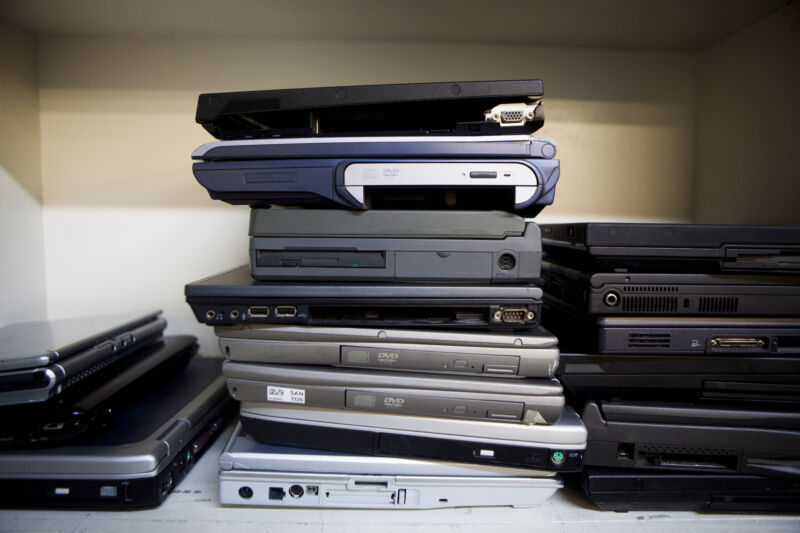
Enlarge / If you’ve got a laptop that’s sufficiently old, like this 2014 pile-up at a recycling program, or a bit “weird,” you can help test it against proposed changes to the Linux kernel’s backlight systems.
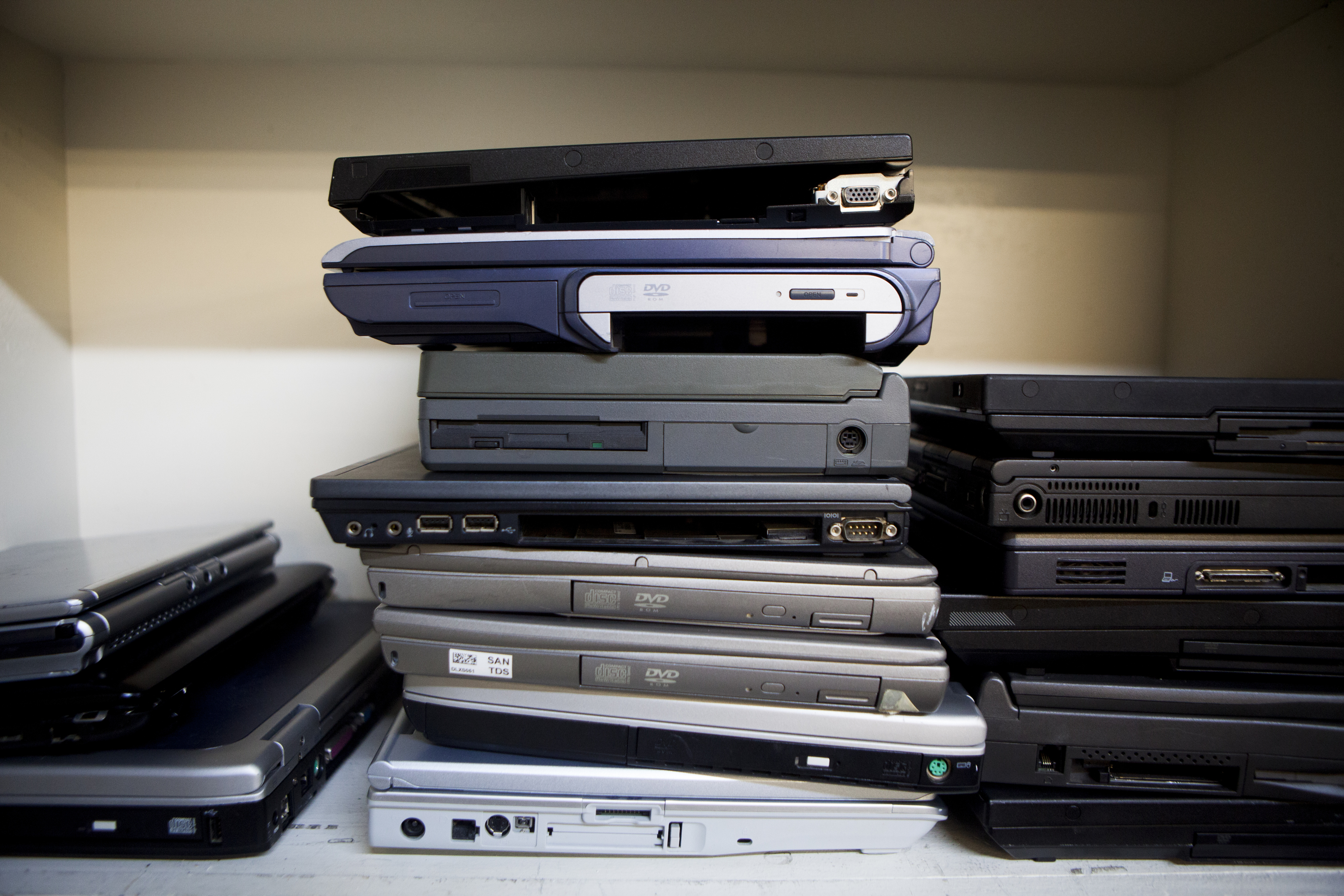
Do you have a laptop that’s either “pretty old” or “weird in some other way”? Did it ship without Windows from the factory, or did you flash its firmware with coreboot? You could help the Linux kernel move its backlight code forward without abandoning quirky gear like yours.
Hans de Goede, a longtime Linux developer and principal engineer at Red Hat, writes on his Livejournal about the need to test “a special group of laptops” to prevent their backlight controls from disappearing in Linux kernel 6.1.
Old laptop tests are needed because de Goede is initiating some major changes to user-space backlight controls, something he has been working on since 2014. As detailed at Linux blog Phoronix, there are multiple issues with how Linux tries to address the wide variety of backlight schemes in displays, which de Goede laid out at the recent Linux Plumbers Conference. There can be multiple backlight devices operating a single display, leaving high-level controls to “guess which one will work.” Brightness control requires root permissions at the moment. And “0” passed along as a backlight value remains a conundrum, as the engineer pointed out in 2014: Is that entirely off, or as low as the display can be lit?
Read 3 remaining paragraphs | Comments
Source: Ars Technica – “Old/weird laptops” sought to help test Linux kernel backlight drivers
Surface Pro 9 5G review (SQ3): A beautiful lie
Can you believe it’s been 10 years since Microsoft first launched the Surface? That’s a decade of trying to make hybrid tablet PCs a thing, something I’m still not sure many people actually want. But, you know what, I’ll give Microsoft credit for trying to push laptop designs forward in an era when everyone was trying to copy Apple’s unibody MacBook Pro and ultra-thin MacBook Air. The Surface was a radical alternative.
The Surface Pro 9 with 5G makes it clear that Microsoft has learned some lessons since its first tablets: It’s impeccably designed, and it’s the first Surface to tap into speedy 5G networks. Unfortunately, it’s also a disappointing reminder that Microsoft can’t help but repeat many of its earlier mistakes. It’s yet another ARM-based Windows PC that we can’t possibly recommend.
That’s not exactly surprising, given our lukewarm reaction to the ARM-powered Surface Pro X line. But what’s more galling this year is that Microsoft is actually calling it the Surface Pro 9 with 5G, as if it’s directly comparable to the Surface Pro 9 powered by Intel’s 12th-gen chips. That’s more than hubris – it’s an outright lie, one that will undoubtedly confuse shoppers and IT workers for the next year.
Sure, they both have the same gorgeous and impressively thin aluminum case, 13-inch PixelSense display, and very usable keyboard covers (which are unfortunately still sold separately). Both models also have the same built-in kickstand, which lets you prop up the screen on a table, or if you’re feeling risky, on your leg for on-the-go computing. If you’ve seen a Surface tablet before, especially last year’s solid Pro 8, not much has changed.
Devindra Hardawar/Engadget
A tale of two Surfaces
Here’s the rub: Microsoft now has one product line running on two very different chip designs, Intel’s x86 hardware and Microsoft’s custom SQ3 ARM system-on-a-chip (itself based on Qualcomm’s Snapdragon 8cx Gen 3). The Intel-powered Surface Pro 9 can run all of the legacy Windows apps you’d expect. The SQ3 model, on the other hand, can only run newer apps natively. Everything else is emulated, leading to significantly slower performance. On the plus side, Windows 11 supports x64 emulation now, so the Pro 9 with 5G can run plenty of apps that the Pro X couldn’t when it launched. But that doesn’t cover games, and it’s a compromise I don’t think anyone should be making at this point.
What’s even more frustrating is that Microsoft is making you pay a $300 premium above the $999 Surface Pro 9 for the privilege of owning an inherently slower computer. How much is built-in 5G worth to you, then?
Devindra Hardawar/Engadget
A better Windows on Arm experience, but not by much
After using the Pro 9 with 5G for several days, I’m even more baffled by Microsoft’s reckless attempt at shoving its x86 and ARM product lines together. While a few of the company’s engineers assured me in a recent interview that the performance would be comparable between the SQ3 and Intel models, I knew that was inaccurate the minute I launched Chrome. As an emulated x86 app, it’s slower to launch and fairly laggy while browsing the web and juggling tabs. Microsoft Edge, on the other hand, is snappier all around because it’s a native ARM app.
I typically run multiple browsers at once, since it’s the easiest way to separate work and personal accounts. I can’t just move to Edge full time. So if I wanted to work the way I’m used to on the Surface Pro 9 with 5G, I’d just have to live with an experience that’s worse than a three-year-old Surface Laptop. Does that sound like progress to you? While it performed generally fine with native apps like Spotify and Evernote, multitasking between them and emulated apps still felt noticeably sluggish. In many ways, it felt like a step down from the Surface Pro 6 I reviewed four years ago, save for the silkier 120Hz refresh rate on the Pro 9’s larger screen.
|
Geekbench 5 CPU |
3DMark Wildlife Extreme |
Cinebench R23 |
|
|
Microsoft Surface Pro 9 5G (SQ3, Adreno 8cx Gen 3) |
1,122/5,764 |
2,959 |
575/1,866 |
|
Microsoft Surface Pro 8 (Intel Core i7-1185G7, Intel Iris Xe graphics) |
1,289/5,217 |
N/A |
620/4,619 |
|
Microsoft Surface Laptop Go 2 (Intel i5-1135G7, Iris Xe graphics) |
1,349/3,764 |
2,799 |
1,127/3,115 |
|
ASUS Zenbook 17 Fold OLED (Intel i7-1280P, Iris Xe graphics) |
1,596/6,491 |
3,012 |
1,504/5,384 |
All of the benchmarks I ran on the Surface Pro 9 also show that it’s slower than any premium laptop we’ve reviewed over the past few years. Sure, Geekbench 5 was running as a slower emulated app, but its score is also indicative of how other emulated programs will run. Even the weak Surface Go 2, with its low-power 11th-gen Intel chip, managed to outperform the Pro 9 5G in single-core performance. (At least the SQ3 faired better with multi-core speeds.) 3DMark’s Wildlife Extreme test, which is one of the best ways to compare cross-platform gaming, also returned a low score, as I expected. (The bigger surprise? It was on par with the ASUS ZenBook Fold 17, a foldable computer held back by a low-wattage Intel chip.)
While I don’t think many people would be buying the 5G Surface Pro 9 for its performance alone, it’s still worth reiterating that it’ll be a far slower computer than its Intel counterpart. I didn’t have that other Pro 9 model to test, but we did review the ASUS ZenBook Fold 17, which uses a similar Intel Core i7-1250U CPU. That’s a low-power chip but otherwise comparable to the i7-1255U on the Surface Pro 9. Compared to the SQ3 Pro 9, the ZenBook blew it away in Geekbench 5’s CPU test, as well as Cinebench R23.
Surprisingly, both the ZenBook Fold 17 and 5G Pro 9 scored similarly in the Wildlife Extreme benchmark, but the Intel chip has the advantage of being able to run games natively. The Pro 9 5G couldn’t even successfully emulate older titles like Quake on Steam. (For the truly desperate, you can always stream Xbox Game Pass titles over the cloud, and a handful of low-power native games like Minecraft run fine.)
Devindra Hardawar/Engadget
What good is built-in cellular?
The Surface Pro 9’s built-in 5G connectivity gives it one major leg up over the Intel model, but I didn’t find it very compelling during my testing. During cellular setup, Windows directed me to Ubigi and Gigsky as two potential providers that would connect to the Surface’s eSIM. I went with Ubigi, and after 20 minutes of account setup, I was able to hop onto their LTE network. Unfortunately, I didn’t see any 5G speeds in my Atlanta suburb, but the network still delivered a respectable 33.6 Mbps down and (far less impressive) 2 Mbps up over LTE.
If you already have a working SIM card, you can open up the Pro 9’s expansion area under the kickstand and slide it in there. My Verizon SIM was recognized in 30 seconds, and it delivered 50 Mbps down and 4 Mbps up over LTE. You can also easily swap out the notebook’s SSD in that expansion area too, something we could never do before. In exchange, though, Microsoft removed the SD card slot. I wouldn’t consider that a dealbreaker — being able to upgrade to a larger SSD down the line is incredibly useful — but it’s something to keep in mind if you rely on SD cards to store your music or photos.
Having the ability to hop on cellular everywhere, especially for international providers like Ubigi, is certainly impressive. Personally, though, I’d trade that in for the increased speed and app compatibility from the Intel Surface Pro 9. Is it really that tough to tether your phone? And true road warriors are likely better off with a mobile hotspot, which can connect to multiple devices easily.
Devindra Hardawar/Engadget
Same Surface issues, 10 years later
Perhaps I’m just grumpy from the whole forced ARM transition, but I also couldn’t help but be frustrated by the other annoyances from the Surface Pro 9. Microsoft has been pumping these things out for a decade now, and they’re still annoying to use on your lap. Unlike a traditional laptop, which has a flat base connected to a screen, you have to juggle the Surface’s keyboard cover and kickstand on your leg to keep it propped up. It’s functional enough — I was able to type this whole review with the Surface on my lap — but not exactly comfortable.
I’ve been able to bear it for years, but by this point, it’d be nice to see Microsoft try something to improve the experience. Maybe add a secondary hinge to stabilize things, or offer a case that can completely unify the keyboard and tablet (like HP’s leather-clad Spectre Folio). With ultraportables like the MacBook Air and Dell XPS 13 getting lighter and thinner every year, Microsoft can’t just assume consumers will live with subpar ergonomics. Perhaps the tradeoff would be worth it if the Surface was usable as a tablet on its own, but I still find it too large and unwieldy compared to the iPad Pro. (And it’s not like Windows is any better on tablets, either.)
There are still some nice design ideas around the Surface — I love the way the Slim Pen 2 hides away in the $180 Signature Pro keyboard, and it remains one of the best stylii on the market when it comes to drawing and jotting down notes. Still, it feels like the Surface is turning into a computer that’s more performative than it is functional. Look at its kickstand! Don’t worry about how impractical it is. It’s got 5G! But ignore the fact that it has a slow mobile processor. Even its two USB-C ports are compromised; they’re limited to USB 3.2, whereas the Intel model’s ports all support the faster Thunderbolt 4 standard.
AI-assisted video chats
Oddly enough, there’s one thing the 5G Surface Pro 9 excels at: video calls. It sports a sharp 1080p front-facing camera, but crucially, it’s assisted by the SQ3’s Neural Processing Unit. That powers features like automatic framing, background blurring and sustained eye contact during video calls. And in my experience, it’s almost magical. The portrait blurring effects are close to what I’d expect from a larger DSLR camera, and the automatic framing was silky smooth. Those features also work across any video chat app, so you don’t have to worry about looking different across Zoom or Teams.
The one downside of the Intel-powered Surface Pro 9 is that it can’t take advantage of any of those features. While Intel’s 12th-gen CPUs are plenty powerful, they don’t have an NPU built-in. Microsoft reps say any future chips that add AI processing will be able to use these features, but that doesn’t help people buying Intel Pro 9 models this year. At the very least, they’ll have a good front-facing camera (as well as a very capable 10-megapixel rear camera).
Devindra Hardawar/Engadget
Wrap-up
If you’re still interested in the 5G Surface Pro 9, having read my complaints and frustrations, be prepared to pay dearly. It starts at $1,300 with a relatively modest 8GB of RAM and a 128GB SSD, while the Intel model goes for $1,000 with those same specs. And if you want a keyboard, add another $120 for the Pro Type Cover (though we’d recommend the $140 Pro Keyboard instead). Jumping up to 16GB of RAM with the 5G Pro 9 (like our review unit) will cost you $1,600 with 256GB of storage. As you go up the price range, the Intel and SQ3 models end up costing the same — but who wants to pay nearly $2,000 for an ARM-based Windows PC?
Perhaps one day, Microsoft’s dream of an ultra-thin, ARM-powered Surface will come true. But the company has failed at every attempt to make that happen (my condolences to anyone who bought the Surface RT). The 5G Pro 9 is an improvement, but its beauty belies its many practical issues. If you’re at all interested in a new Surface, buy the Intel model and get a hotspot on the side. You’ll be far happier.
Source: Engadget – Surface Pro 9 5G review (SQ3): A beautiful lie
Call of Duty: Modern Warfare 2 Fans Can't Believe They Have To Play In Fair Matches

Call of Duty: Modern Warfare 2 drops on October 28, though if you preordered it, you’ve likely already gotten some through some of the campaign. But ahead of the game’s full release, which will give folks full access to the multiplayer component, some are decrying the game’s skill-based matchmaking (SBMM).
Source: Kotaku – Call of Duty: Modern Warfare 2 Fans Can’t Believe They Have To Play In Fair Matches
Three Ways to Garnish Your Halloween Cocktails With Candy

It’s nearly Halloween, and I know what you’re thinking: “How do I cram more candy into my body?” Eating candy as a snack is a good start, but for a well-balanced Halloween, it’s important to incorporate sweets into your beverages, too. As you plan for this weekend’s festivities, consider buying extra candy to jazz up…
Source: LifeHacker – Three Ways to Garnish Your Halloween Cocktails With Candy
Elon Musk to advertisers: Twitter ‘cannot become a free-for-all hellscape’
One day before Elon Musk is expected to finalize his deal to buy Twitter, he’s attempting to reassure the platform’s advertisers that he won’t turn the platform into a “free-for-all hellscape.” In a message posted Thursday, Musk tried to explain why he wanted to buy the company, and that he doesn’t intend to blow up its advertising business.
“There had been much speculation about why I bought Twitter and what I think about advertising,” he wrote. “Most of it has been wrong. Twitter obviously cannot become a free-for-all hellscape, where anything can be said with no consequences!”
Dear Twitter Advertisers pic.twitter.com/GMwHmInPAS
— Elon Musk (@elonmusk) October 27, 2022
Musk has previously said that he would like to loosen Twitter’s content moderation rules, and do away with permanent bans in most cases. But that stance has upset many Twitter employees, and worried the company’s advertisers. The Wall Street Journalreported that some advertisers have even threatened to “pause all their ads” if the company gives Donald Trump his account back — something Musk has said he would likely do.
While Musk didn’t walk back those comments, he said he wanted Twitter to “be warm and welcoming to all.” He added that people should be able to “choose your desired experience according to your preferences, just as you can choose, for example, to see movies or play video games ranging from all ages to mature.”
Musk’s comments come just after he visited Twitter’s office and reportedly told employees that he won’t be axing 75 percent of its staff as earlier reports had suggested. He also apparently met with Twitter COO Sarah Personette, who tweeted that she had a “great discussion” with the Tesla CEO. “Our continued commitment to brand safety for advertisers remains unchanged,” she wrote.
Had a great discussion with @elonmusk last evening! Our continued commitment to brand safety for advertisers remains unchanged. Looking forward to the future! https://t.co/B7NFJhD2hq
— Sarah Personette (@SEP) October 27, 2022
Notably, Musk’s stance on advertising is very different from former CEO Jack Dorsey, who privately told Musk that Twitter “can’t have an advertising model” and suggested it should be a “foundation of sorts” like the messaging app Signal. But though Musk responded favorably to the idea at the time, his message to advertisers now sounds very different.
“I also very much believe that advertising, when done right, can delight, entertain and inform you,” Musk wrote. “For this to be true, it is essential to show Twitter users advertising that is as relevant as possible to their needs. Low relevancy ads are spam, but highly relevant ads are actually content.”
“Fundamentally, Twitter aspires to be the most respected advertising platform in the world that strengthens your brand and grows your enterprise.”
Source: Engadget – Elon Musk to advertisers: Twitter ‘cannot become a free-for-all hellscape’
Spotify Pulls Audiobook Purchases From iOS App After Apple Blocks Updates
An update for Spotify’s iOS app released Thursday had a big change for its audiobooks vertical — and not for the better. The app no longer indicates how you can buy any of the audiobooks in its store, posing a major roadblock for its new business. Now when you go to make a purchase, the app displays a mostly empty screen saying, “Want to listen? You can’t buy audiobooks in the app. We know, it’s not ideal.” There’s no indication of where you might be able to buy the book. From a report: The update follows a statement from Spotify on Tuesday in which the audio streamer accused Apple of “choking competition” with its app rules for audiobook purchasing. It is worth noting that Apple also sells individual audiobooks through its Books app, which can be purchased in-app. When Spotify’s audiobooks feature launched a month ago, users could not buy titles directly in the app, but they could tap a button that would email them a link to purchase the book on the web. Once the purchase was made, the title would become available for listening in the app. Now, users have to go to Spotify’s audiobooks hub in a web browser or through the desktop app in order to make a purchase.


Read more of this story at Slashdot.
Source: Slashdot – Spotify Pulls Audiobook Purchases From iOS App After Apple Blocks Updates
TSMC Forms 3DFabric Alliance to Accelerate Development of 2.5D & 3D Chiplet Products
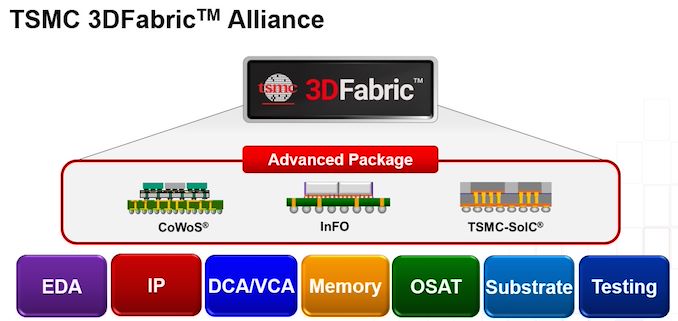
Currently the majority of high-end processors are monolithic, but design methodologies are slowly but surely shifting to multi-chiplet modules as leading-edge fabrication technologies get more expensive to use. In the coming years multi-chiplet system-in-packages (SiPs) are expected to become much more widespread, and advanced 2.5D and 3D chip packaging technologies will gain importance. To accelerate and simplify development of 3D designs, TSMC this week established its 3DFabric Alliance.
While multi-chiplet SiPs promise to simplify development and verification of highly complex designs, they require brand-new development methodologies as 3D packages bring a number of new challenges. This includes new design flows required for 3D integration, new methods of power delivery, new packaging technologies, and new testing techniques. To make the best use of the benefits of TSMC’s 2.5D and 3D packaging technologies (InFO, CoWoS, and SoIC), the chip development industry needs the whole ecosystem to work in concert on chiplet packaging – and this is what 3DFabric Alliance is designed to do.
“3D silicon stacking and advanced packaging technologies open the door to a new era of chip-level and system-level innovation, and also require extensive ecosystem collaboration to help designers navigate the best path through the myriad options and approaches available to them,” said Dr. L.C. Lu, TSMC fellow and vice president of design and technology platform.
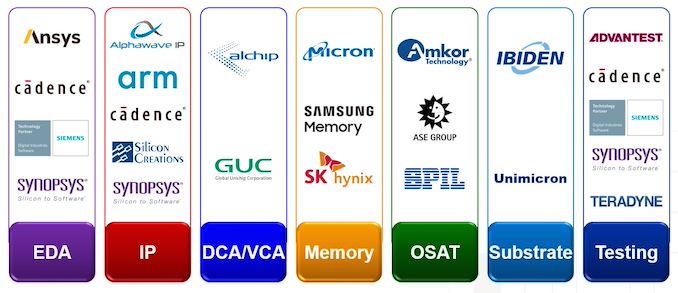
TSMC’s 3DFabric Alliance brings together developers of electronic design automation (EDA) tools, intellectual property providers, contract chip designers, memory manufacturers, advanced substrate producers, semiconductor assembly and test companies, and the groups making the equipment used for testing and verification. The alliance currently has 19 members, but over time it is expected to expand as new members join the group.
As the leader of the Alliance, TSMC will set certain ground rules and standards. Meanwhile members of 3DFabric Alliance will co-define and co-develop some of the specifications for TSMC’s 3DFabric technologies, will gain early access to TSMC’s 3DFabric roadmap and specs to align their plans with the foundry’s plans as well as those of other members of the alliance, and will be able to design and optimize solutions that are compatible with the new packaging methods.
Ultimately, TSMC wants to ensure that members of 3DFabric Alliance will offer its clients compatible and interoperable solutions that will enable quick development and verification of multi-chiplet SiPs that use 2.5D and 3D packaging.
For example, to unify the design ecosystem with qualified EDA tools and flows, TSMC has developed its 3Dblox standard. 3Dblox covers various aspects of building multi-chiplet devices featuring 2.5D and 3D packaging methodologies (such as chiplet and interface definitions), including physical implementation, power consumption, heat dissipation, electro-migration IR drop (EMIR), and timing/physical verification.
“Through the collective leadership of TSMC and our ecosystem partners, our 3DFabric Alliance offers customers an easy and flexible way to unlocking the power of 3D IC in their designs, and we can’t wait to see the innovations they can create with our 3DFabric technologies,” added Lu.
Ultimately, TSMC envisions that the alliance will greatly simplify and streamline the process for developing more advanced chips, especially for small and mid-size companies that rely more heavily on outside IP/designs. For example, if a company wants to develop a SiP consisting of logic chiplets stacked together and connected to an HBM3-based memory subsystem, EDA software from Ansys Cadence, Synopsys, and Siemens will allow it to design compatible chiplets, IP providers will sell those blocks the designer does not already have, TSMC will produce silicon, memory producers will offer compatible HBM3 KGSDs (known good stack dies), and then Ase Technology will assemble everything together. Meanwhile companies that do not have their own engineers will be able to order the design of the whole SiP (or individual chiplets) through Alchip or GUC, and then update their product over time if needed without needing to redesign everything, as the SiP will be built in accordance with 3DFabric and 3Dblox standards.
3Dblox is currently supported by four major EDA developers. Eventually it will be supported by all members of the members if the alliance where needed.
While large companies like AMD and Nvidia tend to develop their own IP, interconnection, and packaging technologies, multi-chiplet SiPs promise to make the development of complex, chiplet-style processors accessible to smaller companies. For them, standard third-party IP, fast time-to-market, and proper integration are key to success, so 3DFabric Alliance and what it brings will be vital for them.
Source: TSMC
Source: AnandTech – TSMC Forms 3DFabric Alliance to Accelerate Development of 2.5D & 3D Chiplet Products
Tax the Rich for Climate Action? Protect Towns From Floods? It’s on State Ballots This November

This story was originally published by Grist. You can subscribe to its weekly newsletter here.
Source: io9 – Tax the Rich for Climate Action? Protect Towns From Floods? It’s on State Ballots This November
Fresh off of parole, Samsung heir ascends to chairman of the company

Enlarge / Jay Y. Lee leaves court following the bribery scandal verdict in August 2017. (credit: Seung-il Ryu/NurPhoto via Getty Images)

Samsung Electronics officially has a new executive chairman. The heir to the Samsung empire, Lee Jae-yong (aka Jay Y. Lee), ascended to the throne of the world’s biggest chipmaker on Thursday. Samsung announced the move alongside its Q3 2022 earnings report, which it probably hopes will distract from the 23 percent drop in profits compared to the previous quarter.
Lee has been the de-facto leader of Samsung for several years now, so his appointment is mostly a formality. The former Samsung chairman and Lee’s father, Lee Kun-hee, died in 2020, but before that he was incapacitated for years following a 2014 heart attack. Lee’s ascension to chairman has always been expected, but it has been delayed due to Lee’s numerous legal issues.
If you ever want a wild reading topic, look up “Choi-gate,” a South Korean political scandal involving bribes paid to Choi Soon-sil, a “shamanistic cult member,” who had Rasputin-like influence over South Korea’s then-president, Park Geun-hye. Lee’s role in the scandal involved bribing Choi to convince President Park to approve a merger of two Samsung Group affiliates. Lee was originally sentenced to five years in jail, while Park was impeached and removed from office. (Samsung’s ruling family is so full of drama that NBC once considered basing a TV drama series on them. You can see why!)
Read 3 remaining paragraphs | Comments
Source: Ars Technica – Fresh off of parole, Samsung heir ascends to chairman of the company
Netflix's animated Sonic series will arrive on December 15th
Almost two years after Netflix tweeted (and deleted) about an animated Sonic the Hedgehog series that’s coming to the streaming service, the show has a release date. Season one of Sonic Prime will hit the platform on December 15th. The first season will have 24 episodes.
Alongside the release date announcement, Netflix unveiled character posters for Sonic, Amy Rose, Shadow, Knuckles, Rouge, Big the Cat and, of course, Eggman. The company will offer another look at the show during the weekly Geeked: Toon-In show, which will be broadcast at 8PM ET today on the company’s Twitch channel. The latest teaser will likely pop up on Netflix’s YouTube channel and elsewhere soon after.
Don’t miss the NEW teaser trailer on “Geeked: Toon-In” on Twitch tonight at 5pm PT! pic.twitter.com/UaBIcj1Los
— Netflix Geeked (@NetflixGeeked) October 27, 2022
The Sonic franchise has enjoyed a resurgence over the last few years, particularly in the wake of two well-received and successful movies. Back in June, Sega released a decent, remastered bundle of four classic Sonic games. On the horizon is Sonic Frontiers, an open-world 3D platformer that will arrive on November 8th.
Source: Engadget – Netflix’s animated Sonic series will arrive on December 15th
The Energy Crisis Could Actually Be Good for the Climate

In the world of climate change, we’ll take all the good news we can get. The energy crisis kicked off by Russia’s invasion of Ukraine earlier this year could represent a “historic turning point” for ending the world’s reliance on fossil fuels, the world’s top energy agency said this week.
Source: Gizmodo – The Energy Crisis Could Actually Be Good for the Climate
We Asked Dall-E to Re-Imagine 11 Legendary Halloween Movie Posters

AI image generators have exploded in popularity in recent months leading to a dizzying array of head scratching, data-crunching artworks from astronauts riding horses in space and illustrated raccoons playing tennis to more terrifying Seinfeld-inspired art concoctions. With spooky season in full swing, we wanted to…
Source: Gizmodo – We Asked Dall-E to Re-Imagine 11 Legendary Halloween Movie Posters
Twitch hopes its rewritten community policies are easier to understand
Twitch is continuing its ongoing safety reforms with a simple but potentially useful move: writing its policies in plain language. The company has rewritten its Community Guidelines to provide what it believes is a clearer structure with simpler wording, more context and practical examples. This includes new top-level categories (such as “Civility & Respect” and “Sensitive Content”) and more logical category groupings, such as a “Youth Safety” section that covers everything related to users under 18. Some violations now have dedicated categories, such as “Sexual Harassment” and “Prohibited Games.”
The livestreaming service emphasizes that the guidelines themselves haven’t changed. This is an effort to make the rules more usable. In theory, at least, you’ll see fewer inadvertent violations and more people reporting misbehavior. Twitch pointed to past revisions as an example of what could happen. When it enacted clearer rules for hate and harassment at the start of 2021, it saw both a 920 percent year-over-year surge in enforcement as well as a 511 percent jump in valid user reports.
The rewrite is an acknowledgment that Twitch’s lack of clarity has sometimes led to very real problems for creators. The service added a “Hot Tubs” category last year in part because its previous approach (lumping these streamers into the “Just Chatting” section) led to ambiguity for both users and advertisers concerned broadcasters were flouting the rules. Twitch also revised the language for its sexual content policy, and in June streamlined its approach to mentions of self-harm.
Twitch says it will continue refining the policies themselves, including a “more comprehensive” revision of its sexual content material. The clarification isn’t going to satisfy users concerned about the effectiveness of the guidelines. It may result in fewer accusations of unfair bans and demonetization, though, and might make it easier for Twitch to expand policies over time.
Source: Engadget – Twitch hopes its rewritten community policies are easier to understand
How to Install Dozzle Real-Time Log Viewer on Ubuntu 22.04
Dozzle is a simple, lightweight, and real-time log viewer application. It allows you to monitor docker container logs via a web-based interface. In this post, we will show you how to install Dozzle log viewer on Ubuntu 22.04.
The post How to Install Dozzle Real-Time Log Viewer on Ubuntu 22.04 appeared first on Linux Today.
Source: Linux Today – How to Install Dozzle Real-Time Log Viewer on Ubuntu 22.04