
As of this writing, 4,127 non-merge changesets have found their way into
the mainline repository for the 5.18 development cycle. That may seem like
a relatively slow start to the merge window, but there are a lot of changes
packed into those commits. Read on for a summary of the most
significant changes to land in the first half of the 5.18 merge window.
Source: LWN.net – [$] 5.18 Merge window, part 1
Monthly Archives: March 2022
Apple is Reportedly Planning a 15-inch MacBook Air
An anonymous reader shares a report: Apple’s upcoming MacBook Air redesign has been extensively reported on, but new information suggests it may come in two sizes. According to Display Supply Chain Consultants’ latest quarterly report, Apple is working on a 15-inch version of the laptop to sit alongside the 13-inch model, which may itself get a slightly larger screen as well. TF International Securities analyst Ming-Chi Kuo followed up on the report, saying that mass production is expected to begin in the fourth quarter of 2023. Kuo also says that the laptop is being designed to use the same 30W adapter as the MacBook Air, which would put it well below the latest MacBook Pro machines in terms of power consumption. Finally, Kuo notes that this new laptop “might not be called MacBook Air,” which is more of a question of branding than anything else and is likely to be in the realm of speculation for a product that’s so far out from production.


Read more of this story at Slashdot.
Source: Slashdot – Apple is Reportedly Planning a 15-inch MacBook Air
US, EU Reach Preliminary Deal on Data Privacy
The U.S. and the European Union reached a preliminary deal to allow data about Europeans to be stored on U.S. soil, heading off a growing threat to thousands of companies’ trans-Atlantic operations. From a report: The deal, announced Friday by President Biden and European Commission President Ursula von der Leyen, could if concluded resolve one of the thorniest outstanding issues between the two economic giants. It also assuages concerns of companies including Meta and Alphabet’s Google that were facing mounting legal challenges to data transfers that underpin some of their operations in Europe. An earlier deal regulating trans-Atlantic data flows was deemed illegal by the EU’s top court in 2020. That ruling was the second time since 2015 that the EU’s Court of Justice had deemed U.S. safeguards on Europeans’ data to be insufficient. The court said the U.S. didn’t provide EU citizens effective means to challenge U.S. government surveillance of their data. Mr. Biden and Ms. von der Leyen didn’t provide details of how the new agreement would work and withstand legal challenges. At issue in the talks has been whether the U.S. could convince the EU — and its top court — with new administrative appeals mechanisms for Europeans, but without a change to U.S. law, which would require approval by Congress, people briefed on the talks have said in recent months. Officials and observers on both sides of the Atlantic expect any new agreement to be challenged in court again, raising uncertainty about how long Friday’s deal will last.


Read more of this story at Slashdot.
Source: Slashdot – US, EU Reach Preliminary Deal on Data Privacy
A New, Illustrated Silmarillion Is On the Way, Just in Time for Amazon's LOTR Show

Just announced this morning, a new illustrated edition of J.R.R. Tolkien’s legendarium, The Silmarillion, is going to be available in October 2022. This year is going to play host to Fantasy Rings Fall, with both the Amazon Studio’s show, Rings of Power out in September and now this new book, complete with Tolkien’s…
Source: Gizmodo – A New, Illustrated Silmarillion Is On the Way, Just in Time for Amazon’s LOTR Show
Gran Turismo 7 Gives Angry Fans One Million Free Credits, Big Changes Coming
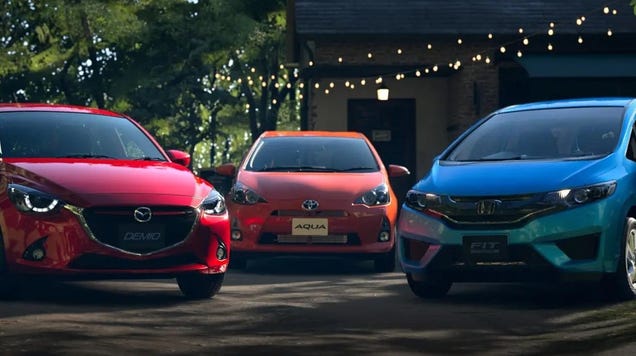
A live-service game is once again apologizing for its microtransactions, and promising to do better. In a new blog post, Gran Turismo 7 director Kazunori Yamauchi acknowledged frustrations with the state of the game and announced developer Polyphony Digital will issue 1 million credits to every player, as well as…
Source: Kotaku – Gran Turismo 7 Gives Angry Fans One Million Free Credits, Big Changes Coming
Newegg Briefly Lists the Intel Core i9-12900KS: 5.5 GHz Turbo, 5.2 GHz All-Core
Long expected from Intel, the Core i9-12900KS is now out of the bag thanks to an apparently accidental listing from Newegg. The major PC parts retailer listed the uannounced Intel chip for sale and began taking orders earlier this morning. pulling it a couple of hours later. But with the scale and popularity of Newegg – as well as having the complete specifications posted – the cat is now irreversibly out of the bag.
Source: AnandTech – Newegg Briefly Lists the Intel Core i9-12900KS: 5.5 GHz Turbo, 5.2 GHz All-Core
I'm Finally Stretching and I Kind of Like It?

Last week, I discovered that I can touch my toes (and maybe you can, too). In the past I never really felt like I got much out of stretching, and I know that it doesn’t do much to prevent injury or improve performance. But I practice what I preach when it comes to trying things you don’t like to see if maybe they’re…
Source: LifeHacker – I’m Finally Stretching and I Kind of Like It?
Polestar brings a cheaper, single-motor Polestar 2 to the US

Enlarge / A Polestar 2 (foreground) and a Polestar 1 (background) at Polestar’s showroom in Marin County, California. (credit: Polestar)

In 2020, we got our first drive in the then-new Polestar 2, an electric fastback sedan from a startup automaker owned by Volvo and Geely. The car had a great interior and some nifty infotainment features courtesy of Google’s Android Automotive OS.
At launch, there was just one powertrain option: a dual-motor, all-wheel-drive setup with a combined 408 hp (300 kW) and 486 lb-ft (660 Nm), powered by a 78 kWh (75 kWh net) lithium-ion battery. But the company has now added a second, cheaper Polestar 2 to its US lineup. The new option makes do with just a single electric motor that powers the front wheels.
Polestar has turned up the power on this motor compared to the otherwise-identical units you’d find if you dissected an AWD Polestar 2; it now generates 231 hp (170 kW), although it still makes an identical 243 lb-ft (330 Nm). Battery capacity remains unchanged at 75 kWh net, and that’s sufficient for an EPA range of 270 miles (434 km).
Read 2 remaining paragraphs | Comments
Source: Ars Technica – Polestar brings a cheaper, single-motor Polestar 2 to the US
Roland’s iconic RE-201 Space Echo returns in two new Boss pedals
It’s a good week for guitarists who love a classic echo effect. Just a few days ago, Line 6 released the DL4 MkII, a long-awaited update to its DL4 delay and looper pedal, one of the more widely-used effects pedals of the last 20 years. And now Boss, one of the most prolific and well-known manufacturers of guitar effects pedal out there, has just announced the RE-202 and RE-2 Space Echo pedals, both of which are inspired by Roland’s iconic, tape-based RE-201 Space Echo unit that was originally released way back in 1974.
For the uninitiated, the RE-201 Space Echo used three analog tape heads to record and repeat an instrument’s signal. The analog nature of the device meant that it had a number of sonic characteristics that made it unique and highly coveted. That’s still the case — original RE-201 units regularly sell for several thousand dollars.
The new RE-202, on the other hand, retails for $399.99 and offers the exact same set of controls as the original. Given that it’s 2022, we’re dealing with digital modeling recreating all the quirks of the original, rather than analog tape. But Boss built in options to “age” the virtual tape, which means you can recreate the sounds of the RE-201 as it was out of the box, or give it the worn nature and quirks that come with an older unit. The RE-202 has essentially the same front controls as the original, as well, with the 12-position mode selector dial prominently featured.
Boss
Naturally, there are a lot of modern conveniences here, too. The delay length you can dial in is twice as long as the original, and there’s a footswitch so you can tap out the delay tempo, something that’s pretty common these days on pedals like this. There’s also a fourth virtual tape head, compared to the three found in the original; this unlocks five additional sound options.
The RE-2 is a less expensive and and slightly less capable version of the RE-202. It’s a smaller, single-footswitch pedal that Boss says captures the same tones as the RE-202 in a more compact design. It’s not quite as full-featured and customizable as the RE-202, but it should provide the same sonic characteristics as the bigger and more expensive pedal. It’s also a good choice if you don’t want to take up quite so much space on your pedalboard.
The RE-2 costs $249.99, $150 less than the RE-202. Both of these pedals are definitely priced in boutique territory. But a faithful recreation of the RE-201 might be worth it for a lot of players, as the original Space Echo has been used on thousands of recordings by some of the most popular artists in history, from Pink Floyd and Radiohead, to Lee Scratch Perry, Underworld and Lauryn Hill. If you want to get the same sound without breaking the bank for a wonky, tape-based original unit, these new pedals are probably worth a look.
Source: Engadget – Roland’s iconic RE-201 Space Echo returns in two new Boss pedals
Dell Refreshes XPS 17 And 15 Laptops With 12th Gen Alder Lake-H For A Stout Performance Uplift

The perfect productivity laptop may not exist, but Dell’s XPS lineup often comes close, blending premium build quality with an array of features and fast hardware. We’re not being generic in our praise here, either—see our reviews of last year’s Dell XPS 17 and XPS 15 for our expanded analysis. These XPS models have been among our favorites,
Source: Hot Hardware – Dell Refreshes XPS 17 And 15 Laptops With 12th Gen Alder Lake-H For A Stout Performance Uplift
How to Talk Dirty in Bed Without Feeling Awkward

We know communication is the bedrock of any success romantic relationship, and that includes how we communicate our needs and desires in the bedroom. So why does talking dirty seem so…awkward? As simple as it might look in movies and porn, in real life dirty talk doesn’t always flow off the tongue quite as easily as…
Source: LifeHacker – How to Talk Dirty in Bed Without Feeling Awkward
This Solar Orbiter's Sizzling Picture Of The Sun Is The Closest View Ever Of Earth's Star

The European Space Agency’s (ESA) Solar Orbiter captured an unprecedented image of the Sun earlier this month. The spacecraft was about 46.6 million miles (75 million km) away, or halfway between Earth and the Sun.
At the beginning of March, Solar Orbiter took several images of the burning star that lights and heats our planet daily. One
Source: Hot Hardware – This Solar Orbiter’s Sizzling Picture Of The Sun Is The Closest View Ever Of Earth’s Star
At Least One Familiar Face Isn't Back for Ant-Man and The Wasp: Quantumania

Mandy’s Panos Cosmatos is working on a new fantasy nightmare with A24. J.K. Simmons talks about being a dad for Batgirl. Jensen Ackles teases the infamous comic book moment coming to The Boys’ third season. Plus, more Moon Knight footage, and MST3K prepares for its next season. To me, my spoilers!
Source: Gizmodo – At Least One Familiar Face Isn’t Back for Ant-Man and The Wasp: Quantumania
Intel Software Defined Silicon, AMD HSMP Submitted For Linux 5.18
The x86 platform driver updates have been submitted for the Linux 5.18 kernel merge window. This pull request includes a number of notable additions we have been talking about over recent weeks and months on Phoronix…
Source: Phoronix – Intel Software Defined Silicon, AMD HSMP Submitted For Linux 5.18
Create a 'Career Search Action Plan' Before You Look for a New Job

Searching for a job can feel like a full time job itself. It’s easy to feel defeated when it feels like you’re sending your resume out into the void and hearing nothing back the majority of the time. Maybe you’re graduating soon, or making a career pivot, or jumping back into the workforce after some time away—the job…
Source: LifeHacker – Create a ‘Career Search Action Plan’ Before You Look for a New Job
What to Know About the Artificial Sweetener and Cancer Study

The long-running argument over the harms and benefits of artificial sweeteners will be further complicated by new research out this week. The results of a large observational study suggest that higher consumption of artificial sweeteners is linked to a higher risk of cancer. Importantly, though, this sort of data…
Source: Gizmodo – What to Know About the Artificial Sweetener and Cancer Study
NVIDIA and the Upcoming Driverless Car Problem No One Is Talking About

This week was NVIDIA’s GTC and, as usual, the content blew me away. Jensen Huang always impresses me with a keynote that can stick with me for months by using his firm’s technology to turn what is otherwise (and often is at other events) a tedious spiel of speeds and feeds into a compelling view of our vastly changed future. It is worth your time watching it.
But one thing came out in one of the Q&A sessions I attended and that is that all the car companies are using NVIDIA’s infrastructure, but only a subset of them is using NVIDIA’s full-stack. Some believe they can do it more cheaply with their own hardware. This is ill-advised and, I expect, will eventually result in a black eye on technology and massive recalls
Let me explain.
Auto PC
I first saw this problem in the automotive market with Microsoft’s early 2000s Auto PC effort. At the time, Microsoft did the software but did not create a hard specification on the hardware. In testing, the software was impressive for the time as it would take voice commands, used an array microphone to even work in convertibles, had built-in navigation, and a host of other features I no longer remember largely because they broke on the final product. The reason for this breakage, which was most painful with a GPS system that would tell you where to turn after you passed the street (unless you kept your speed below 20 miles per hour), was that Clarion, the company that built the system, under-specified the Intel processor. The result was an affordable product that failed in the market (I put it in my wife’s car and the entire time she had it she threatened to rip it out of the dash and throw it out of the window.) Rather than enjoying this advanced device, we and our passengers would entertain ourselves by making fun of it.
The lesson learned was that the hardware and software need to be wedded for it to work properly. If you break that technology stack, you could end up with something that works unpredictably and not at all well.
The bigger problem
As I mentioned, NVIDIA’s infrastructure is being used for every car that will have autonomous drive technology, but many of the highest volume cars will use hardware that was not part of this development. This means most of the advanced testing and development will have been done on NVIDIA’s hardware, not on the potentially cheaper hardware the OEMs want to use at volume.
Now, typically, the risk of this is that the solution is unreliable, but we are talking about autonomous machines that are carrying people. So let’s say the third-party hardware is just a little slow and does not report or react to the car running the stoplight for two extra seconds. Those two seconds could make the difference between stopping safe or being T-boned in an intersection, and some of those accidents are fatal.
In the subsequent lawsuit, were I advising the plaintiff, I would suggest they add negligence to the charges for an escalation of remedies because the car maker made a conscious decision to degrade the solution to save money. The result could damage the car maker’s brand, reputation, and the resulting recall could cost far more than if they had just used the complete and thoroughly tested solution from NVIDIA.
Particularly early on with a solution like this when people are still learning, swapping out a part of the solution to save a few bucks is incredibly dangerous. Were I Consumer Reports, I would be tempted to blacklist any vendor that took this risk initially or at least until the technology had been on the road for a year or more just to assure the people that paid for my service remained safe.
Wrapping up:
Back when I was in graduate school, one of my professors who worked for NASA (which originated the concept of a digital twin, by the way) spoke about how spaceships were built. They were triple redundant and, for unique systems, three parts for every component were built. Assemblers would test the parts and install the first part that didn’t fail the test, if all three failed, they would still install the first failed part assuming one of the two redundant systems would step in. However, if all nine parts failed, so would the rocket, potentially catastrophically. That sounded incredibly stupid to me at the time.
Taking a brand new and extremely complex system and trying to save money by substituting third-party parts is incredibly risky. Yes, you may save a few dollars, but if the result ends catastrophically, you now own a decision where you put your customer’s life at risk for something like a $10 savings. Odds are, the result for you and your company will be tragic if only because, first, products that are highly complex have problems which may not emerge until later. If you mix it up, you run the chance of that decision being called out as the cause, even if it isn’t, and incurring far more massive costs and reputational damage as a result.
Now five or ten years out, when we know more about these systems in large numbers and for extended use, swapping out components might be less risky. But given the numbers, even a .01% additional risk might be unsustainable once an accident occurs, and no matter how good the technology, there will be an accident. So, personally, I would advise against this move even then.
By their very nature, autonomous cars are simply too risky to mess with. Shortly after this technology launches in volume in 2025 and 2026, I expect we will have several vendors who wished they had taken NVIDIA’s entire stack and not tried to save a few bucks.
Source: TG Daily – NVIDIA and the Upcoming Driverless Car Problem No One Is Talking About
You Unfortunately Can't Fix the Apple Magic Mouse's Idiotic Charging Port Placement Through Clever Engineering
Although companies like Apple never do anything by accident, users were perplexed when Apple revealed its Magic Mouse 2 back in 2015 with the charging port inconveniently located underneath it. It’s an issue that still plagues the mouse seven years later, and it’s apparently an issue that Apple is determined to…
Source: Gizmodo – You Unfortunately Can’t Fix the Apple Magic Mouse’s Idiotic Charging Port Placement Through Clever Engineering
Wolverine's Master Chief boots are for true Halo fanatics
Wolverine wants to help Halo fans finish their fight in style. The boot company has teamed up with Microsoft to create rugged limited-edition footwear inspired by Master Chief.
Halo developer 343 Industries worked with Wolverine for over a year to design the boot, which is based on the company’s Hellcat footwear. Wolverine says when it revealed the Hellcat in August 2020, many people noted that the safety toe made the boot look like it was straight out of the Halo universe.
The snappily named Wolverine x Halo: The Master Chief boot has rubber lug outsoles for grip and an UltraSpring high rebound midsole, which Wolverine claims will provide wearers with a “lightweight, energized ride.” It’s made with full-grain leather and there’s a hook and loop cover for the laces.
Wolverine
The footwear comes in the green of Master Chief’s armor and has his Spartan number, 117, on the heel of the left boot. The boots also feature the United Nations Space Command and the logo of the Materials Group, which made Master Chief’s armor. For better or worse, the footwear certainly catches the eye.
A pair will cost $225 and you’ll be able to buy them at noon Eastern time on March 29th from Wolverine’s website. You’ll probably need to act fast (and get lucky) if you want to wear the boots while racking up frags in Halo Infinite or kicking back and watching the Halo TV show. Wolverine is only making 117 pairs of them.
These boots aren’t the only Xbox-related footwear to hit the streets in recent months. At the tail end of 2021, Adidas releasedseveral models of sneakers modeled after Xbox consoles to mark the brand’s 20th anniversary.
Source: Engadget – Wolverine’s Master Chief boots are for true Halo fanatics
NVIDIA's NeRF AI instantly turns 2D photos into 3D objects
A new technology called Neural Radiance Field or NeRF involves training AI algorithms to enable the creation of 3D objects from two-dimensional photos. NeRF has the capability to fill in the blanks, so to speak, by interpolating what the 2D photos didn’t capture. It’s a neat trick that could lead to advances in various fields, such as video games and autonomous driving. Now, NVIDIA has developed a new NeRF technique — the fastest one to date, the company claims — that only needs seconds to train and to generate a 3D scene.
It only takes seconds to train the model, called Instant NeRF, using dozens of still photos and the camera angles they were taken from. After that, it’s capable of generating a 3D scene within just “tens of milliseconds.” Like other NeRF techniques, it requires images taken from multiple positions. And for photos with multiple subjects, pictures taken without too much motion is preferred, otherwise the result would be blurry.
Check out Instant NeRF in action below:
NVIDIA explains that early NeRF models don’t take too long to produce results either. It only takes them a few minutes to render a 3D scene, even if the subject in some of the images is obstructed by things, such as pillars and furniture. However, training them took hours. NVIDIA’s version only takes seconds to train, because it relies on a technique the company developed called multi-resolution hash grid encoding that’s optimized to run efficiently on its GPUs. It can even run on a single GPU, though it’s fastest on cards with tensor cores that provide a performance boost for artificial intelligence.
The company believes that Instant NeRF could be used to train robots and to help autonomous driving systems understand the sizes and shapes of real-world objects. NVIDIA also sees a future for the technique in entertainment and architecture, where it can be used a way to generate 3D models of real environments that creators can modify during the planning process.
Source: Engadget – NVIDIA’s NeRF AI instantly turns 2D photos into 3D objects