What You Need to Know About Weed-Infused 'Wine' and 'Beer'

Weed-infused drinks are a staple of the edibles market. But thanks to new innovations in weed tech, THC drinks are looking to move beyond traditional cannabis circles, and replace your booze, seltzer, or hard iced tea with a cannabinoid-infused version.

Read more…


Source: LifeHacker – What You Need to Know About Weed-Infused ‘Wine’ and ‘Beer’

Members of Activision’s Raven Software QA team form a union

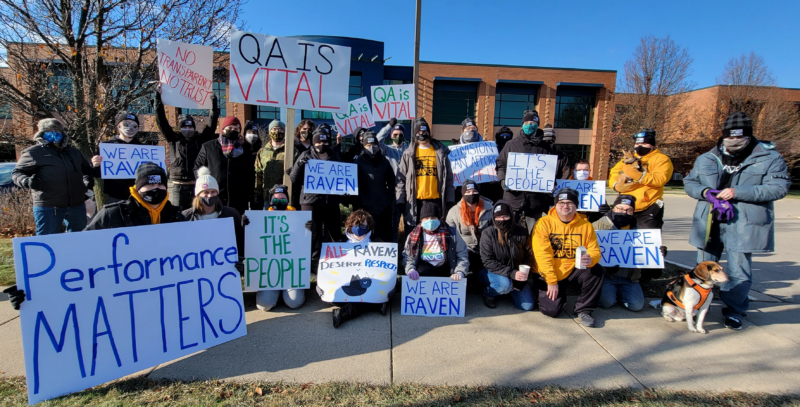
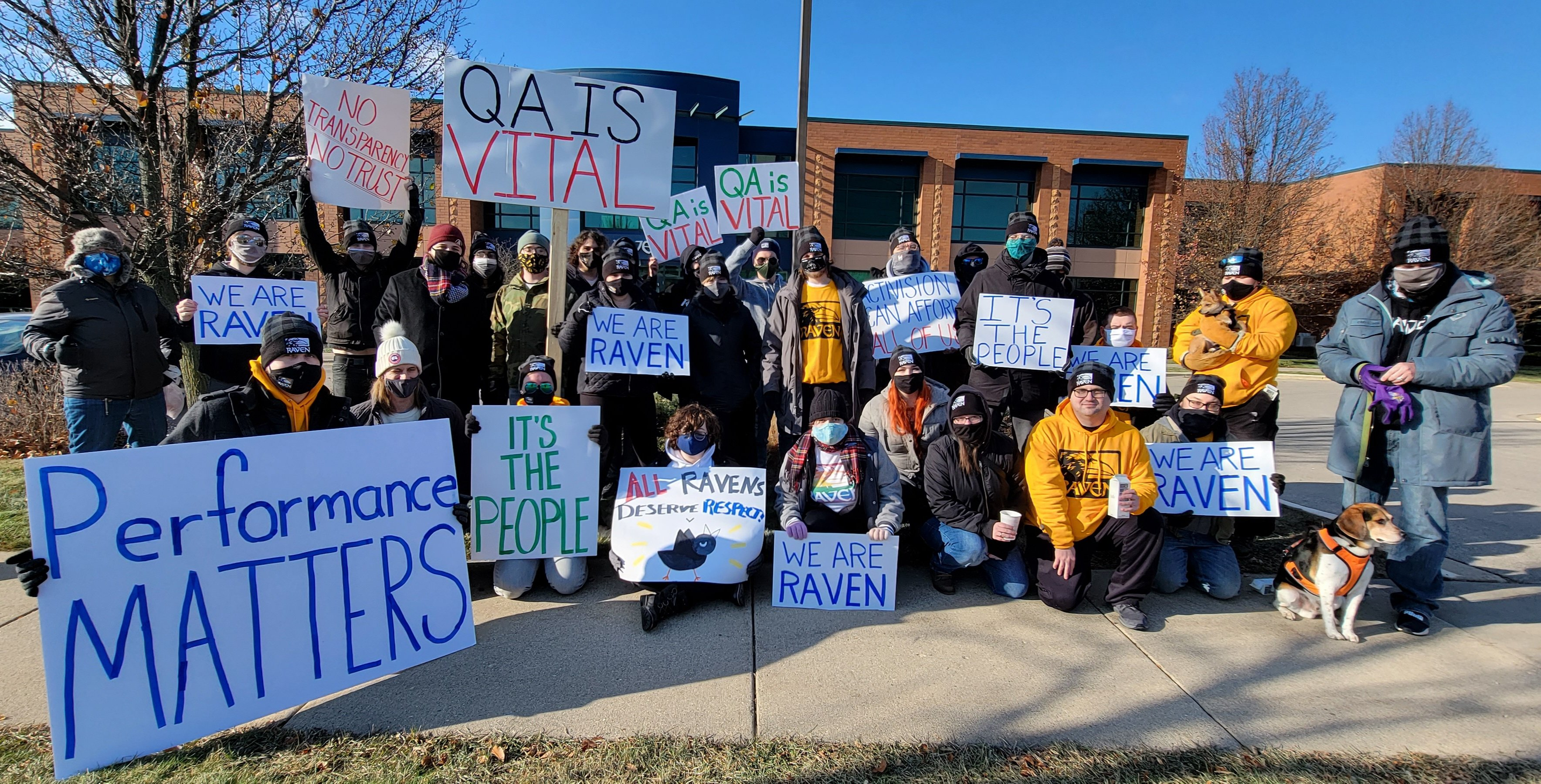
Warmly dressed and mostly masked workers hold protest signs.

Enlarge / Striking employees demand the reinstatement of Raven Software QA contractors who were let go in December. (credit: A Better ABK)

The members of Activision Blizzard subsidiary Raven Software’s quality assurance department are seeking voluntary recognition of their union, a first for workers at a major American video game publisher.

The newly formed Game Workers Alliance union is asking Activision to recognize its right to represent the 34 QA testers at the studio, which works primarily on the Call of Duty series. The union has formed with the help of the Communication Workers of America—which has for years been publicly working to organize the game industry through its Campaign to Organize Digital Employees (CODE)—and A Better ABK Workers Alliance, which is working to organize the much broader group of over 9,500 Activision employees.

(Ars Technica writers are members of the NewsGuild of New York, a subsidiary of the CWA.)

Read 10 remaining paragraphs | Comments


Source: Ars Technica – Members of Activision’s Raven Software QA team form a union

A group of Activision Blizzard workers is unionizing

Call of Duty: Warzone quality assurance workers at Activision Blizzard studio Raven Software have announced plans to unionize with the Communication Workers of America (CWA). They have asked the company to voluntarily recognize their group, which is called the Game Workers Alliance. The 34-person unit had the support of 78 percent of eligible workers, according to Polygon.

“We ask that Activision Blizzard management respect Raven QA workers by voluntarily recognizing CWA’s representation without hesitation,” CWA secretary-treasurer Sara Steffens said in a statement. “A collective bargaining agreement will give Raven QA employees a voice at work, improving the games they produce and making the company stronger. Voluntary recognition is the rational way forward.”

Workers have given Activision Blizzard until January 25th to respond to their request, according to The Washington Post. If the company fails to do so, the group will file for a union election through the National Labor Relations Board and, because the workers have a supermajority of votes, they’d be able to formalize the union without voluntary recognition from Activision Blizzard. Should the group approve the union in an election, the company would need to bargain with workers in good faith.

Sixty Raven workers went on strike in early December after Activision Blizzard laid off 12 QA contractors, despite a request from Raven leadership to keep them employed. The workers demanded the company convert all Raven QA contractors into full-time employees. So far, Activision Blizzard has reportedly been playing hardball and declining to meet with with the striking workers. Warzone players have been grousing about the game’s bugs, which QA workers are tasked with finding and addressing.

“Activision Blizzard is carefully reviewing the request for voluntary recognition from the CWA, which seeks to organize around three dozen of the company’s nearly 10,000 employees,” the company told Polygon. “While we believe that a direct relationship between the company and its team members delivers the strongest workforce opportunities, we deeply respect the rights of all employees under the law to make their own decisions about whether or not to join a union.” It added that it has raised minimum pay for Raven employees by 41 percent over the last few years, extended paid time off and converted over 60 percent of the studio’s contractors into employees.

The CWA claims Activision Blizzard has “used surveillance and intimidation tactics, including hiring notorious union busters, to silence workers.” Last July, the company hired WilmerHale, a law firm with a history of cracking down on unionization efforts, to review its HR policies.

The Game Workers Alliance said its principles include solidarity, equity, diversity, transparency and sustainability. “Shortened development timelines sacrifice project quality and damage the mental and physical health of our team,” it wrote on Twitter. “‘Crunch’ is not healthy for any product, worker, or company.”

Earlier this week, Microsoft announced an agreement to buy Activision Blizzard for $68.7 billion, the biggest deal in video game history. If shareholders and regulators approve the acquisition, which could have enormous ramifications for the industry, the merger should close by June 2023.

In an interview with the Post on Thursday, Microsoft Gaming CEO Phil Spencer noted that he didn’t have much experience with unions personally after working at Microsoft for over three decades. “So I’m not going to try to come across as an expert on this, but I’ll say we’ll be having conversations about what empowers them to do their best work, which as you can imagine in a creative industry, is the most important thing for us,” he said.

On Wednesday, Activision Blizzard said in a Securities and Exchange Commission filing regarding the planned merger that, “To the knowledge of the company, there are no pending activities or proceedings of any labor union, trade union, works council or any similar labor organization to organize any employees of the company or any of its subsidiaries with regard to their employment with the company or any of its subsidiaries.” The week that Raven workers went on strike, Activision Blizzard sent its employees a letter imploring them “to consider the consequences” of signing union cards.

As Bloomberg‘s Jason Schreier noted, the Game Workers Alliance is the first union within a AAA gaming company in North America. Last month, workers at Vodeo Games formed the first video game union in the US. Management at the indie studio voluntarily recognized Vodeo Workers United. Swedish publisher Paradox Interactive signed a collective bargaining agreement with unions in 2020, while Japanese–Korean publisher Nexon recognized a workers’ union in 2018.


Source: Engadget – A group of Activision Blizzard workers is unionizing

Intel says Ohio “megafab” will begin making advanced chips in 2025

Read 13 remaining paragraphs | Comments


Source: Ars Technica – Intel says Ohio “megafab” will begin making advanced chips in 2025

Why You Should Just Switch to Android Already

Apple is good at what they do. They make products that are easy to set up and use, but, before you know it, you feel entirely trapped in their ecosystem. Now, for many of us, that’s not so bad; the ecosystem has a lot of perks, and life seems pretty good here. But for those of us looking for another tech opportunity,…

Read more…


Source: LifeHacker – Why You Should Just Switch to Android Already

Leak offers a glimpse at Microsoft's canceled Andromeda OS for dual-screen devices

Before Microsoft announced the Surface Duo in 2019, the company spent several years working on an operating system codenamed Andromeda. It was envisioned as a reboot of Windows Phone with an emphasis on inking. The company worked on the software until it eventually decided to instead include Android on the Surface Duo. Until now, we’ve only seen glimpses of Andromeda in things like patent filing. But Windows Central recently obtained an internal build of the operating system and installed it on a Lumia 950.

Outside of a rare look at an unfinished project, what’s interesting about seeing Andromeda after all these years is how many of the ideas Microsoft was working on then either made their way to the Surface Duo or apps the company has released since. On the lock screen, for instance, you can see an early version of the Surface Duo’s peek functionality. Meanwhile, a lot of the features you see on the “Journal” home screen eventually made their way to the company’s Whiteboard app, and that’s something you can download from the Microsoft Store.

At the same time, it’s an interesting look at what could have been. Even in the software’s unfinished state, there’s a lot we see in the video that’s genuinely different from anything Android and iOS offer, even to this day. The fact Andromeda allowed you to jot down notes directly on the lock screen, and that they would still be there the next time you unlocked the phone, is something that looks genuinely useful.

Of course, there are probably many good reasons Microsoft ultimately decided not to pursue Andromeda. Launching a device that does something different, let alone a completely new operating system, is no easy task in a mature marketplace. Unless a device does nearly everything right, it’s difficult to overcome the fact most people tend to stick with products they know and are comfortable with.


Source: Engadget – Leak offers a glimpse at Microsoft’s canceled Andromeda OS for dual-screen devices

Apple Now Verifies Anyone Asking for Educational Discounts

Apple has introduced a new verification process in the US to ensure that customers who want to benefit from its discounted education pricing are actually involved in education. From a report: It’s not clear exactly when its policy changed, but at some point this month, some Reddit users noticed that Apple’s education pricing page was updated to note that customers will now be checked by Unidays, a third-party verification service. As well as requiring Unidays, Apple is also placing new limits on how many items you can buy with an educational discount. Apple Track reports that users are limited to one desktop computer, one Mac mini, one laptop, two iPads, and two accessories per year. Given that’s more than any student, teacher, or educational staff member is likely to purchase for themselves in a given year, the limit seems to be in place to stop them from acting as an illicit discount broker for all their non-education friends.

Read more of this story at Slashdot.


Source: Slashdot – Apple Now Verifies Anyone Asking for Educational Discounts

Blizzard Boss Promises Culture Change And New Game Innovation Following Microsoft Merger

Blizzard Boss Promises Culture Change And New Game Innovation Following Microsoft Merger
New head of Blizzard, Mike Ybarra, promises that the company will place teams and players at the forefront moving forward. This follows the news that Microsoft will be buying out Activision Blizzard in a blockbuster $68.7 billion deal.

Microsoft sent the gaming world into a frenzy earlier this week, when it announced it would be acquiring

Source: Hot Hardware – Blizzard Boss Promises Culture Change And New Game Innovation Following Microsoft Merger

Opera's Crypto Browser Rides The Blockchain Wave With A Built-In Wallet, NFTs And More

Opera's Crypto Browser Rides The Blockchain Wave With A Built-In Wallet, NFTs And More
You can run but you can hide from the deluge of cryptocurrency and everything related, like blockchain technology and those non-fungible tokens (NFTs). That doesn’t mean you can’t ignore all that stuff. However, if you want to go in the opposite direction and dive in browser-first, now you can—the Opera Crypto Project makes it possible.

Now

Source: Hot Hardware – Opera’s Crypto Browser Rides The Blockchain Wave With A Built-In Wallet, NFTs And More

Intel Announces Ohio Fab Complex: 2 New Fabs For $20B, And Space For More

With fab expansions on tap across the entire semiconductor industry, Intel today is laying out their own plans for significantly increasing their production capacity by announcing their intention to build a new $20 billion fab complex in Ohio. With the paperwork already inked and construction set to begin in late 2022, Intel will be building two new leading-edge fabs in their new Ohio location to support future chip needs. And should further demand call for it, the Ohio complex has space to house several more fabs.


Intel’s announcement follows ongoing concerns about chip fab capacity and national security, as like other chip fabs, Intel is looking to expand their capacity in future years amidst the current chip crunch. All the while, the United States government has become increasingly mindful about how much chip production takes place in geopolitically tricky Taiwan, placing additional pressure on firms to build additional fabs within the US. To that end, Intel has been not-so-secretly undertaking a search to find a good location for a new fab campus, and they have finally found their answer in Ohio.


The new site, Intel’s first new manufacturing site location in 40 years, is located in New Albany, Ohio, just outside of Columbus. Up until now, all of Intel’s major chip fab sites have been in the western United States – Oregon, Arizona, and at one point, Silicon Valley – so the Ohio site is a significant move for the company. All told, the Ohio “mega-site”, as Intel likes to call it, covers nearly 1000 acres. And while Intel is only initially planning for two fabs, the site offers plenty of room to grow, offering enough space for a total of 8 fabs.


The immediate goal of the company – and the crux of today’s announcement – revolves around the building of two new leading-edge fabs at the Ohio location. According to Intel, these two fabs will begin construction late this year, with production coming online in 2025. The company isn’t formally stating what the initial process node will be – instead saying that it will be using the “industry’s most advanced transistor technologies” – however if the company is indeed building truly bleeding-edge fabs, then 2025 lines up with Intel’s 18A process, which will be 4 generations newer than what Intel is using now (Intel 7).
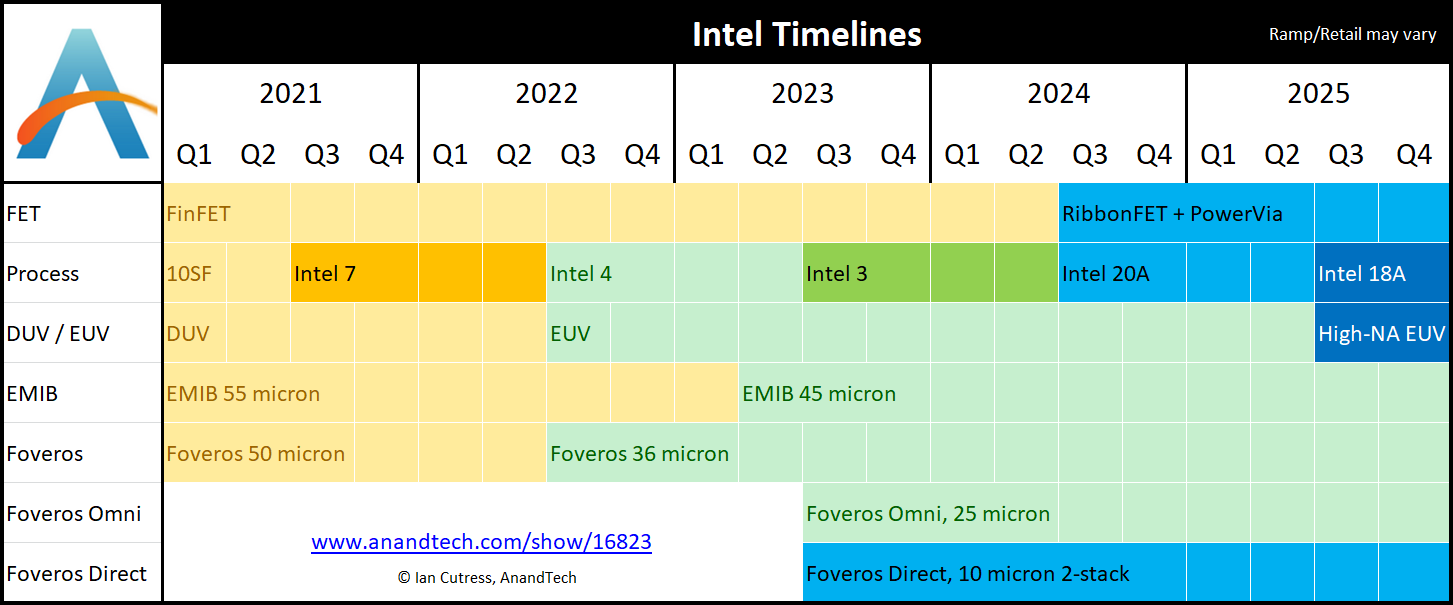


Altogether, Intel expects the project to cost about $20 billion, which is similar to what Intel will be spending for its two new Arizona fabs, which were announced just under a year ago. And further down the line, should Intel opt to fill the rest of the property with the other 6 fabs that the site can support, the company expects that the total price tag could reach nearly $100 billion. Ultimately, the company is making it clear that they are priming the site not just to met their mid-term production needs with the initial two fabs, but are making sure to have the space ready for further capacity expansion over the long-term.


As to whether Intel eventually builds those further 6 fabs, that will depend on a few factors. Key among these will be demand from Intel Foundry Services clients; while Intel will be using some of the Ohio site’s capacity for their own needs, the site will also be used to fab chips for IFS customers. If Intel’s bid to break into the contract fab business is successful, and the company is able to woo over additional clients/orders, then they will need to build additional fabs to meet that demand.


Also hanging in the balance is what the US Government opts for, both in terms of orders and incentives. The Ohio fabs will be used for domestic production of sensitive chips, as the US looks to secure its supply lines. Meanwhile the CHIPS for America Act and its 53 billion in incentives will also be a. Intel for its part isn’t playing coy about its interest in the CHIPS money, explicitly stating that “The scope and pace of Intel’s expansion in Ohio, however, will depend heavily on funding from the CHIPS Act”. In some respects Intel is taking a bit of a gamble by investing in the Ohio location before any CHIPS funding is approved – on a pure cost basis, overseas production is traditionally cheaper – so there is certainly a political element in announcing these fabs and selecting an Ohio location. And as an added incentive to the US Government, Pat Gelsinger has told Time that Intel would even be interested in bringing some chip packaging, assembly, and testing back to the US if the CHIPS Act were funded, which in turn would allow Intel to do every last step of production within the US.



But more immediately, Intel’s focus is on getting its first two Ohio fabs up and running. Along with building the facilities they’ll need a workforce to operate them, and as a result the company is also pledging $100M over a decade in funding for local educational efforts. As with similar local industry efforts, that investment would be focused on helping local colleges and universities establish semiconductor manufacturing curricula to help train the technical workforce required.


And while outside of Intel’s own investment scope, the creation of their Ohio fab complex means that Intel’s suppliers are also coming along for the ride. According to the company, Air Products, Applied Materials, LAM Research and Ultra Clean Technology have all indicated that they’ll be setting up facilities in the area. All of which the company is using to further underscore the size of the project and the value it brings to the area – and why they deserve that CHIPS Act funding.


Ultimately, the addition of a third US fab site and two more fabs to Intel’s portfolio is the latest step Intel has taken under Pat Gelsinger’s IDM 2.0 strategy. Gelsinger opted to go all-in on having Intel fab chips for themselves and others, and this is the kind of expansion that Gelsinger has been alluding to as necessary to make IDM 2.0 a reality. Taken altogether, Intel now has 4 leading-edge fabs set to come online in the 2024-2025 timeframe, and with any luck on Intel’s part, there will be room for several more to come.


Source: Intel


Source: AnandTech – Intel Announces Ohio Fab Complex: 2 New Fabs For B, And Space For More

Critical Role's The Legend of Vox Machina Succeeds A Performance Check in Strong Amazon Debut

Dungeons & Dragonsappeal lies in the fantasy it promises to fulfill: Grand tales of fighting epic beasts, slinging blades and casting magic, and exploring exciting new lands to become a legend. It can also fulfill more mundane fantasies you may not have realized you needed, like discovering a new facet of your…

Read more…


Source: Gizmodo – Critical Role’s The Legend of Vox Machina Succeeds A Performance Check in Strong Amazon Debut

Stop Using These Recalled Pacifiers That Pose a Choking Hazard

Whether they’re called pacifiers, binkies, dodies, or pacis in your household, their purpose is to soothe babies. But there’s nothing soothing about a pacifier that poses a potential danger to your baby. For this reason, Mushie & Co—a company that manufactures and sells a wide variety of products for babies and small…

Read more…


Source: LifeHacker – Stop Using These Recalled Pacifiers That Pose a Choking Hazard

The reviews are in: AMD’s mining-averse RX 6500 XT also isn’t great at gaming

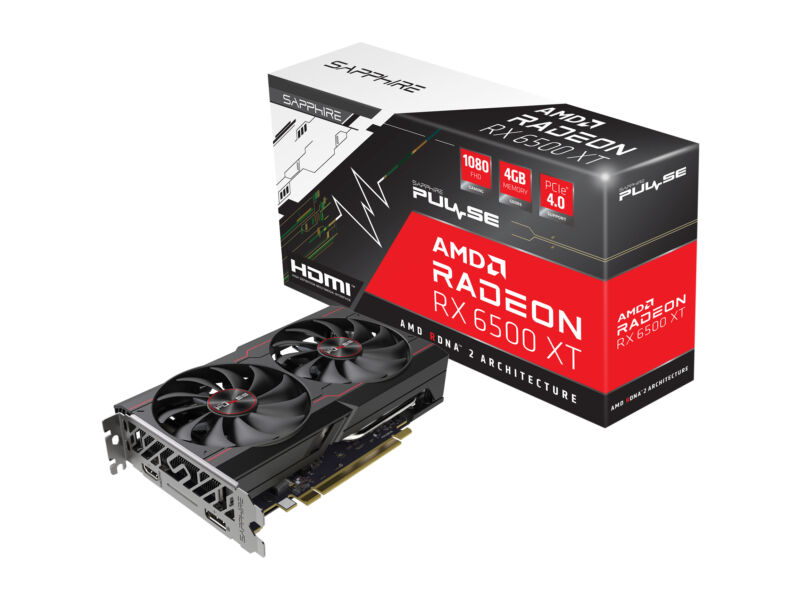
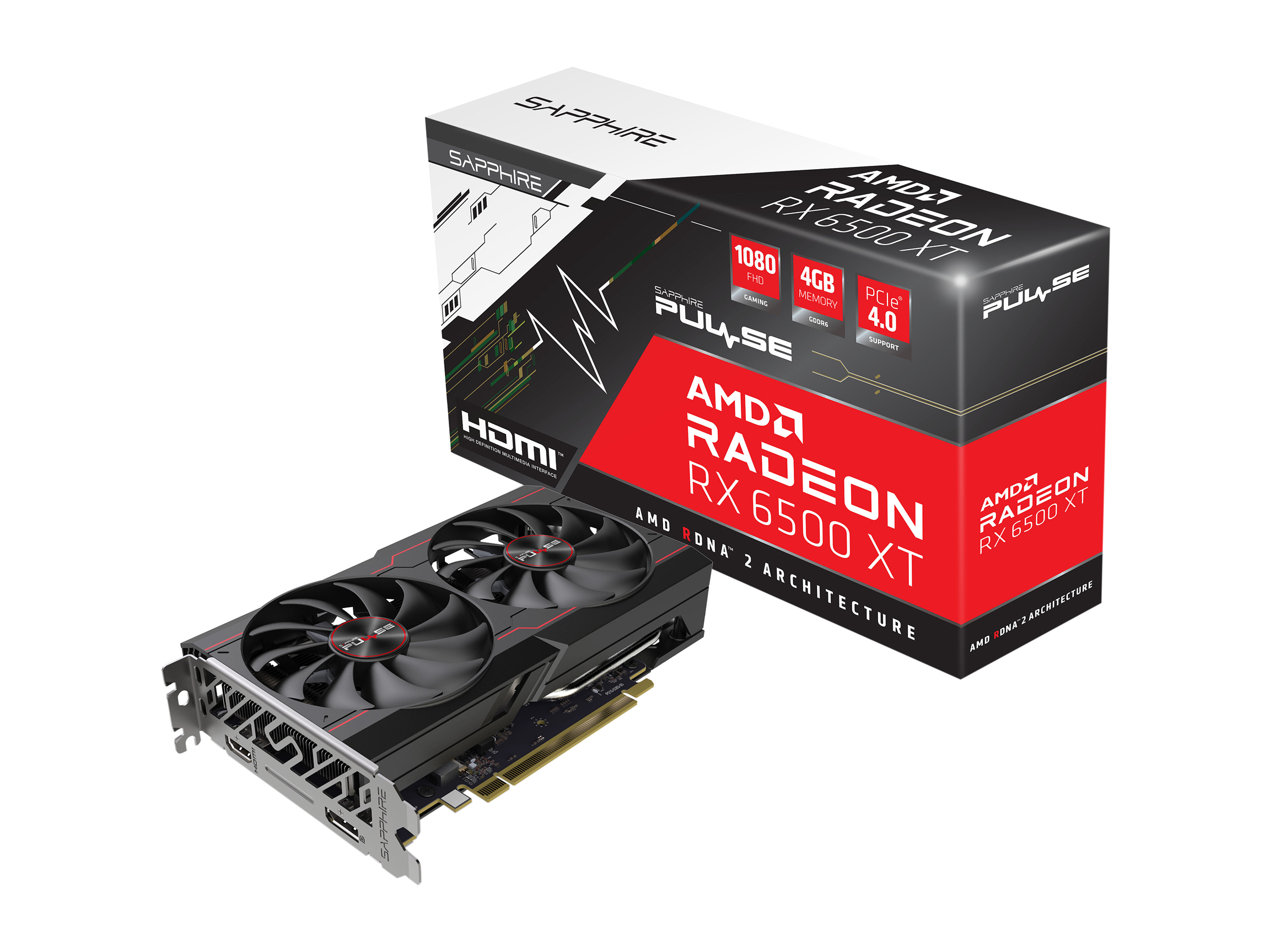
The Sapphire AMD Radeon RX 6500 XT, yet another GPU that you probably won't be able to buy.

Enlarge / The Sapphire AMD Radeon RX 6500 XT, yet another GPU that you probably won’t be able to buy. (credit: Sapphire)

When AMD announced its budget-friendly RX 6500 XT graphics card at CES early this month, the company suggested that the product had been designed with limitations that would make it unappealing to the cryptocurrency miners who have been exacerbating the ongoing GPU shortage for over a year now. But now that reviews of the card have started to hit, it’s clear that its gaming performance is the collateral damage of those limitations.

Reviews from Tom’s Hardware, PCGamer, TechSpot, Gamers Nexus, and a litany of other PC gaming YouTube channels are unanimous: the RX 6500 XT is frequently outperformed by previous-generation graphics cards, and it comes with other caveats beyond performance that limit its appeal even further. (Ars hasn’t been provided with a review unit.)

The core of the problem is a 64-bit memory interface that limits the amount of memory bandwidth the card has to work with. Plus, the card has only 4GB of RAM, which is beginning to be a limiting factor in modern games, especially at resolutions above 1080p. Many tests saw the RX 6500 XT outperformed by the 8GB variant of the RX 5500 XT, which launched at the tail end of 2019 for the same $199 (and you could actually find and buy it for that price).

Read 6 remaining paragraphs | Comments


Source: Ars Technica – The reviews are in: AMD’s mining-averse RX 6500 XT also isn’t great at gaming

Twitter Launches Feature for Displaying NFTs as Your Avatar

When you fork over a good chunk of money to buy a non-fungible token, which are digital items also known as NFTs, you’re essentially buying bragging rights. That’s fine, if you’re into that sort of thing, but I imagine that it can be disappointing if you only have a small audience to brag to about your purchases.…

Read more…


Source: Gizmodo – Twitter Launches Feature for Displaying NFTs as Your Avatar

iRobot's Roomba j7+ is $250 off, plus the rest of the week's best tech deals

A bunch of new tech sales cropped up at the start of the week for things like robot vacuums, game controllers and more, and many of them are still around today. A trio of iRobot devices remain discounted, with the most affordable of the bunch coming in at $179. Some of Amazon’s Fire tablets are up to 50 percent off, while Xbox’s Elite Wireless Series 2 controller is back down to $140. Here are the best tech deals from this week that you can still get today.

iRobot Roomba j7+

The new Roomba j7+ is $250 off right now and down to $599 at both Amazon and Wellbots. The higher-end Roomba s9+ is also $250 and down to $850. The former just came out at the end of last year and has 10x the suction power of a standard Roomba plus advanced obstacle avoidance, which means it will avoid things like pet poop more easily than other models. The s9+, on the other hand, has 40x suction power and a more corner-friendly design. Both also support automatic emptying and come with clean bases, too.

Buy Roomba j7+ at Amazon – $599Buy Roomba j7+ at Wellbots – $599Buy Roomba s9+ at Amazon – $849Buy Roomba s9+ at Wellbots – $849

iRobot Roomba 694

The Roomba 694 is down to $179, or $95 off and a return to its record-low price. It earned a spot in our best budget robot vacuums guide thanks to its strong cleaning power, on-device button controls and handy companion mobile app.

Buy Roomba 694 at Amazon – $179

24-inch iMac M1

2021 Apple iMac
Apple

Apple’s 8-core GPU iMac is down to $1,399, or $100 off. This is the latest 24-inch, M1 iMac that we gave a score of 89 for its speedy performance, stunning display and impressibly thin design.

Buy 24-inch iMac at Amazon – $1,399

Amazon Fire tablets

Amazon Fire HD 8 (2020)
Valentina Palladino / Engadget

A number of Amazon Fire tablets are on sale, with some of the best deals being on the Fire HD 8 and HD 8 Plus, both of which are 50 percent off. The Fire 7 tablet is 30 percent off and down to $35 as well. We think the Fire HD 8 slabs are the better ones to get since they have improved designs, USB-C charging, long battery lives and decent performance.

Buy Fire HD 8 at Amazon – $45Buy Fire HD 8 Plus at Amazon – $55Buy Fire 7 at Amazon – $35

Xbox Elite Wireless Series 2 controller

Microsoft Xbox Elite Series 2 controller
Microsoft

Microsoft’s Elite Wireless Series 2 controller for Xbox remains on sale for $140, or $40 less than usual. If you want to treat yourself (or someone else) to a fancy gaming accessory, this is a good option. It comes with six thumbsticks, four paddles, two D-pads, a charging dock, a carrying case and a USB-C cable, and its battery can last up to 40 hours on a single charge.

Buy Series 2 controller at Microsoft – $140

Samsung Galaxy Buds 2

The Galaxy Buds 2 are down to $100 right now, or $50 off their normal price. We gave them a score of 84 for their improve sound quality, adjustable ambient sound mode, comfortable design and support for wireless charging.

Buy Galaxy Buds 2 at Woot – $100

Samsung Galaxy S21 FE

Samsung’s latest smartphone, the Galaxy S21 FE, is officially available and starting to ship and Amazon throws in a $100 gift card if you order the handset through the online retailer. We briefly tested the FE at CES 2022 and called it “last year’s flagship without the frills,” and it includes a 5-nanometer processor, a 120HZ display, a 32-megapixel front-facing camera, a larger battery and more.

Buy Galaxy S21 FE bundle at Amazon – $700

Samsung T7 Touch SSD

Samsung T7 Touch SSD in black and silver against a white background.
Samsung

The Samsung T7 Touch SSD in 1TB is down to a record low of $140 right now. That’s even better than the price it was during the holiday shopping season last year. We like the drive’s compact design, fast speeds and built-in fingerprint reader for extra security.

Buy T7 Touch (1TB) at Amazon – $140

Libro.fm

Engadget readers can get a total of two free audiobooks when signing up for Libro.fm, the audiobook subscription service that supports local bookstores. Similarly to Audible, a Libro.fm membership costs $15 per month and gives you one audiobook credit per month, plus 30 percent off any audiobooks you buy á la carte.

Subscribe to Libro.fm – $15/month

New tech deals

83-inch Sony A90J Bravia XR OLED smart TV

This massive Sony OLED set is $2,000 off right now, bringing it down to a record low of $6,000. It includes features like Cognitive Processor XR, Motion Clarity, HDMI 2.1 for gaming, Acoustic Surface Audio+, Dolby Vision and more.

Buy 83-inch Sony A90J OLED at Amazon – $6,000Buy 83-inch Sony A90J OLED at Best Buy – $6,000

Elgato Ring Light

Elgato’s Ring Light is cheaper than ever at $150 on Amazon. Online content creators like game streamers will probably get the most out of this gadget, but it could be useful if you need better lighting for Zoom calls too. It has a 2500-lumen output, onboard brightness and color temperature controls and integration with Elgato’s Stream Deck.

Buy Elgato Ring Light at Amazon – $150

Follow @EngadgetDeals on Twitter for the latest tech deals and buying advice.


Source: Engadget – iRobot’s Roomba j7+ is 0 off, plus the rest of the week’s best tech deals

IBM Sells Some Watson Health Assets for More Than $1 Billion

IBM agreed to sell part of its IBM Watson Health business to private equity firm Francisco Partners, scaling back the technology company’s once-lofty ambitions in health care. From a report: The value of the assets being sold, which include extensive and wide-ranging data sets and products, and image software offerings, is more than $1 billion, according to people familiar with the plans. The deal “is a clear next step as IBM becomes even more focused on our platform-based hybrid cloud and AI strategy,” said Tom Rosamilia, senior vice president, IBM Software. “IBM remains committed to Watson, our broader AI business, and to the clients and partners we support in healthcare IT.” IBM launched Watson Health in 2015 with the aim of using its core artificial intelligence platform to help health care providers analyze troves of data and ultimately revolutionize cancer treatment. Many of the company’s ambitions haven’t panned out, though, and some customers have complained that its products didn’t match the hype. Even after spending roughly $4 billion in acquisitions to prop up the initiative, Watson hasn’t delivered the kind of progress IBM initially envisioned and the unit wasn’t profitable. Last year, the Wall Street Journal reported the unit generated about $1 billion of annual revenue.

Read more of this story at Slashdot.


Source: Slashdot – IBM Sells Some Watson Health Assets for More Than Billion