In the endlessly escalating war between those striving to create flawless deepfake videos and those developing automated tools that make them easy to spot, the latter camp has found a very clever way to expose videos that have been digitally modified by looking for literal signs of life: a person’s heartbeat.
Amazon is currently training a bunch of psychics, who will then license their talents to businesses across the US to read people’s palms to determine their future, specifically to see if they pose a security threat. Just kidding! There will be no psychic readings, but the retail giant is rolling out Amazon One, which is basically a palm reader.
In the brand-new issue of Hello World magazine, Shuchi Grover tells us about the limits of constructionism, the value of formative assessment, and why programming can be a source of both joy and angst.
How much open-ended exploration should there be in computing lessons?
This is a question at the heart of computer science education and one which Shuchi Grover is delicately diplomatic about in the preface to her new book, Computer Science in K-12: An A-to-Z Handbook on Teaching Programming. The book’s chapters are written by 40 teachers and researchers in computing pedagogy, and Grover openly acknowledges the varying views around discovery-based learning among her diverse range of international authors.
“I wonder if I want to wade there,” she laughs. “The act of creating a program is in itself an act of creation. So there is hands-on learning quite naturally in the computer science classroom, and mistakes are made quite naturally. There are some things that are so great about computer science education. It lends itself so easily to being hands-on and to celebrating mistakes; debugging is par for the course, and that’s not the way it is in other subjects. The kids can actually develop some very nice mindsets that they can take to other classrooms.”
Grover is a software engineer by training, turned researcher in computer science education. She holds a PhD in learning sciences and technology design from Stanford University, where she remains a visiting scholar. She explains how the beginning of her research career coincided with the advent of the block-based programming language Scratch, now widely used as an introductory programming language for children.
“Almost two decades ago, I went to Harvard to study for a master’s called technology innovation and education, and it was around that time that I volunteered for robotics workshops at the MIT Media Lab and MIT Museum. Those were pretty transformative for me: I started after-school clubs and facilitated robotics and digital storytelling clubs. In the early 2000s, I was an educational technology consultant, working with teachers on integrating technology. Then Scratch came out, and I started working with teachers on integrating Scratch into languages, arts, and science, all the things that we are doing today.”
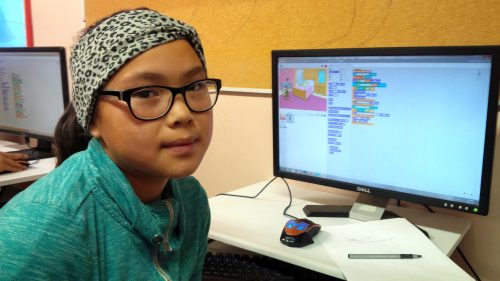
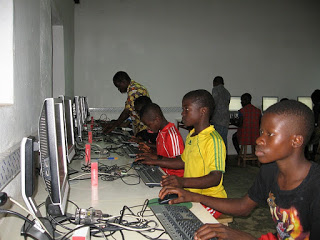
Student Joyce codes in Scratch at her Code Club in Nunavut
Do her formative experiences at MIT, the birthplace of constructionist theory of student-centred, discovery-based learning, lead her to lean one way or another in the tinkering versus direct instruction debate? “The learning in informal spaces is, of course, very interest-driven. There is no measurement. Children are invited to a space to spend some time after school and do whatever they feel like. There would be kids who would be chatting away while a couple of them designed a robot, and then they would hand over the robot to some others and say, ‘OK, now you go ahead and program it,’ and there were some kids who would just like to hang about.
“When it comes to formal education, there needs to be more accountability, you want to do right by every child. You have to be more intentional. I do feel that while tinkering and constructionism was a great way to introduce interest-driven projects for informal learning, and there’s a lot to learn from there and bring to the formal learning context, I don’t think it can only be tinkering.”
“There needs to be more accountability to do right by every child.”
“Everybody knows that engagement is very important for learning — and this is something that we are learning more about: it’s not just interest, it’s also culture, communities, and backgrounds — but all of this is to say that there is a personal element to the learning process and so engagement is necessary, but it’s not a sufficient condition. You have to go beyond engagement, to also make sure that they are also engaging with the concepts. You want at some point for students to engage with the concept in a way that reveals what their misconceptions might be, and then they end up learning and understanding these things more deeply.
“You want a robust foundation — after all, our goal for teaching children anything at school is to build a foundation on which they build their college education and career and anything beyond that. If we take programming as a skill, you want them to have a good understanding of it, and so the personal connections are important, but so is the scaffolding.
“How much scaffolding needs to be done varies from context to context. Even in the same classroom, children may need different levels of scaffolding. It’s a sweet spot; within a classroom a teacher has to juggle so much. And therein lies the challenge of teaching: 30 kids at a time, and every child is different and every child is unique.
“It’s an equity issue. Some children don’t have the prior experience that sets them up to tinker constructively. After all, tinkering is meant to be purposeful exploration. And so it becomes an issue of who are you privileging with the pedagogy.”
She points out that each chapter in her book that comes from a more constructionist viewpoint clearly speaks of the need for scaffolding. And conversely, the chapters that take a more structured approach to computing education include elements of student engagement and children creating their own programs. “Frameworks such as Use-Modify-Create and PRIMM just push that open-ended creation a little farther down, making sure that the initial experiences have more guide rails.”
Approaches to assessment
Grover is a senior research scientist at Looking Glass Ventures, which in 2018 received a National Science Foundation grant to create Edfinity, a tool to enable affordable access to high-quality assessments for schools and universities.
In her book, she argues that asking students to write programs as a means of formative assessment has several pitfalls. It is time-consuming for both students and teachers, scoring is subjective, and it’s difficult to get a picture of how much understanding a student has of their code. Did they get their program to work through trial and error? Did they lift code from another student?
“Formative assessments that give quick feedback are much better. They focus on aspects of the conceptual learning that you want children to have. Multiple-choice questions on code force both the teachers and the children to experience code reading and code comprehension, which are just so important. Just giving children a snippet of code and saying: ‘What does this do? What will be the value of the variable? How many times will this be executed?’ — it goes down to the idea of code tracing and program comprehension.
“Research has also shown that anything you do in a classroom, the children take as a signal. Going back to the constructionist thing, when you foreground personal interest, there’s a different kind of environment in the classroom, where they’re able to have a voice, they have agency. That’s one of the good things about constructionism.
“Formative assessment signals to the student what it is that you’re valuing in the learning process. They don’t always understand what it is that they’re expected to learn in programming. Is the goal creating a program that runs? Or is it something else? And so when you administer these little check-ins, they bring more alignment between a teacher’s goals for the learners and the learners’ understanding of those goals. That alignment is important and it can get lost.”
The title of Grover’s book, which could be thought to imply that computer science education consists solely of teaching students to program, may cause some raised eyebrows.
What about building robots or devices that interact with the world, computing topics like binary, or the societal impacts of technology? “I completely agree with the statement and the belief that computer science is not just about programming. I myself have been a proponent of this. But in this book I wanted to focus on programming for a couple of reasons. Programming is a central part of the computer science curriculum, at least here in the US, and it is also the part that teachers struggle with the most.
“I want to show where children struggle and how to help them.”
“As topics go, programming carries a lot of joy and angst. There is joy in computing, joy when you get it. But when a teacher is encountering this topic for the first time there is a lot of angst, because they themselves may not be understanding things, and they don’t know what it is that the children are not understanding. And there is this entire body of research on novice programming. There are the concepts, the practices, the pedagogies, and the issues of assessment. So I wanted to give the teachers all of that: everything we know about children and programming, the topics to be learnt, where they struggle, how to help them.”
Hello World is our magazine about all things computing education. It is free to download in PDF format, or you can subscribe and we will send you each new issue straight to your home.
In issue 14 of Hello World, we have gathered some inspiring stories to help your learners connect with nature. From counting penguins in Antarctica to orienteering with a GPS twist, great things can happen when young people get creative with technology outdoors. You’ll find all this and more in the new issue!
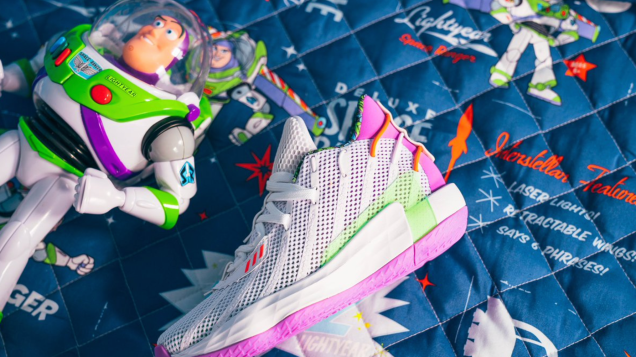
Why is it children get all the good stuff? Adidas recently debuted its upcoming collection of kids sneakers, shirts, and even a basketball inspired by Disney Pixar’s Toy Storyseries. Now if you’ll excuse me, I’m going to go find a Zoltar Speaks machine that works in reverse.
One of Peacock’s most high-profile original series at last has a release date. The Saved By The Bell reboot will start streaming on November 25th, just in time for you to ignore your family over Thanksgiving weekend while binging it.Peacock is tappin…
There’s a bit of a Halloween theme to October’s Games with Gold, as you’d expect. As ever, these games are only “free” if you have an active Xbox Live Gold membership.
TikTok is the latest social media app to push educational resources about voting and the upcoming election in an effort to stop misinformation from spreading. The app introduced a new election guide that will highlight “trusted information about the…
dupeGuru is a cross-platform GUI tool to find duplicate files in a system. It has three modes, Standard, Music and Picture, with each mode having its own scan types and unique features.
Out of all the ambitious phones of 2020 including the handsets with monstrous specs like the ROG Phone 3, forward-thinking devices like the Surface Duo, and futuristic phones like the Galaxy Z Fold 2, LG’s weird and wacky Wing is easily the funnest phone of the year.
This pandemic has been full of tough moments, but some nice walks, too. I try to hold on to those nice walks, but for parents who are staring down the barrel of an entire school year of remote learning, the silver linings can seem pretty damn dim. Enter, the “Schoolcation.”
Were just a few weeks away from Apple’s big unveil for its iPhone 12/iPhone 12 Pro family, which means that the leaks are starting to come in at a faster pace. In recent days, we’re learned that the smallest of the new phones will adopt the iPhone 12 mini branding, which is a first for the iPhone family.
In addition to Fedora Workstation 33 switching to Btrfs, there are a number of key components updated in Fedora 33 as well as finally enabling link-time optimizations (LTO) for package builds that make this next Fedora Linux installment quite interesting from a performance perspective. Here are some initial benchmarks of Fedora Workstation 32 against the Fedora Workstation 33 Beta on an Intel Core i9 10900K system.
Liar, liar, pants on fire! That pretty much sums up what a judge accused Epic of doing in its highly publicized and costly dispute with Apple over the royalty rate it collects for apps sold in its App Store, as well as in-game purchases. The judge told Epic that even though some people might consider the team a bunch of “heroes” for taking
Amazon accounts for nearly 40 percent of e-commerce sales in the US today, and it takes a cut of even more online shopping by selling payments services and other technologies to external shopping sites. Now, the online retail giant is making a play to grab a piece of brick-and-mortar shopping, too — and it wants customers to literally lend a hand to do it. From a report: Amazon on Tuesday is unveiling a new biometric technology called Amazon One that allows shoppers to pay at stores by placing their palm over a scanning device when they walk in the door or when they check out. The first time they register to use this tech, a customer will scan their palm and insert their payment card at a terminal; after that, they can simply pay with their hand. The hand-scanning tech isn’t just for Amazon’s own stores — the company hopes to sell it to other retailers, including competitors, too.
The technology will be available at the entrance of two of the company’s Amazon Go cashierless convenience stores in Seattle, Washington, starting Tuesday, and will roll out to the rest of the chain’s 20-plus stores in the future, Amazon Vice President Dilip Kumar told Recode in an interview Monday. Recode reported in December that Amazon had filed a patent application for such a hand-payment technology. The technology could also show up in Whole Foods stores, with Amazon hinting in a press release that it will introduce palm payments in the coming months at its other stores beyondtAmazon Go locations. Kumar wouldn’t comment on a potential Whole Foods implementation, though the New York Post reported a year ago that such a plan was in the works.
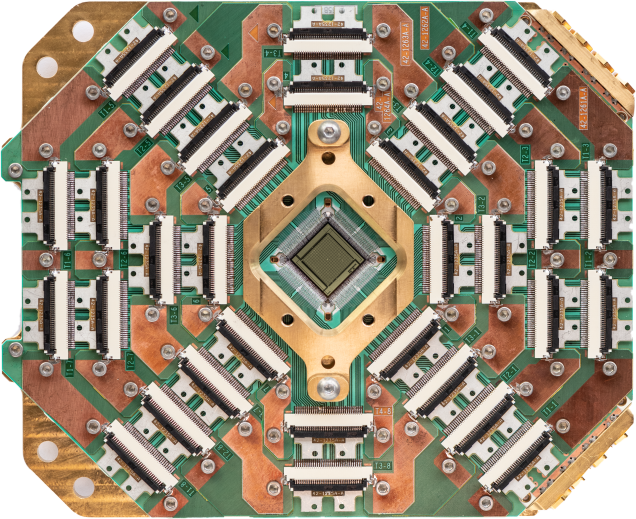
In theory, quantum computers should be faster at solving many problems compared to classical computers. But because their components are extremely delicate, existing quantum computers are still rudimentary and error-prone, and academic and industry researchers have yet to demonstrate a profitable use for them. In…
When Motorola first announced its Razr revamp earlier this month, it said that the smartphone would be priced at $1,399, which is quite a hefty sum to pay for a device that at best had mid-range specs. Well, Motorola is today confirming that the Razer 5G will go on sale October 2nd priced at only $1,199. While still a tad on the pricey side,
EVE Online fortunes can be made or broken in a manner of minutes. A few seconds of inattentiveness can cause the loss of ships and cargo worth billions of ISK. A lucky item drop or the discovery of a hidden cache of resources can secure a player’s finances for months. Then there are patch notes—updates to the base…