
COVID-19 and its effects aren’t going anywhere, and the world of work continues to change around them. If I asked you what you missed most about how you used to work, would the answer be your commute?Microsoft is convinced there are benefits to the t…
Source: Engadget – The Morning After: We reviewed iOS 14
Monthly Archives: September 2020
Raspberry Pi reaches more schools in rural Togo
We’ve been following the work of Dominique Laloux since he first got in touch with us in May 2013 ahead of leaving to spend a year in Togo. 75% of teachers in the region where he would be working had never used a computer before 2012, so he saw an opportunity to introduce Raspberry Pi and get some training set up.

We were so pleased to receive another update this year about Dominique and his Togolese team’s work. This has grown to become INITIC, a non-profit organisation that works to install low cost, low power consumption, low maintenance computer rooms in rural schools in Togo. The idea for the acronym came from the organisation’s focus on the INItiation of young people to ICT (TIC in French).

The story so far
INITIC’s first computer room was installed in Tokpli, Togo, way back in 2012. It was a small room (see the photo on the left below) donated by an agricultural association and renovated by a team of villagers.
-

The first INTIC room -

The new INTIC building
Fast forward to 2018, and INTIC had secured its own building (photo on the right above). It has a dedicated a Raspberry Pi Room, as well as a multipurpose room and another small technical room. Young people from local schools, as well as those in neighbouring villages, have access to the facilities.

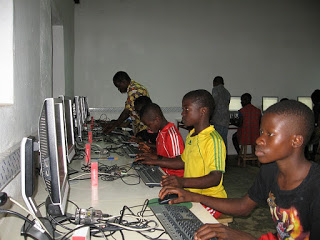
The first dedicated Raspberry Pi Room in Togo was at the Collège (secondary school) in the town of Kuma Adamé. It was equipped with 21 first-generation Raspberry Pis, which stood up impressively against humid and dusty conditions.
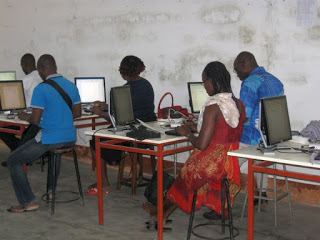
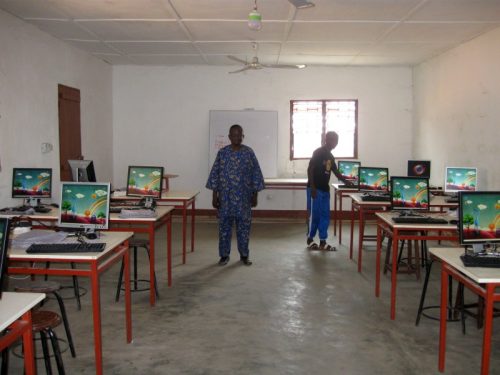
In 2019, Kpodzi High School also got its own Raspberry Pi Room, equipped with 22 Raspberry Pi workstations. Once the projector, laser printer, and scanners are in place, the space will also be used for electronics, Arduino, and programming workshops.
What’s the latest?
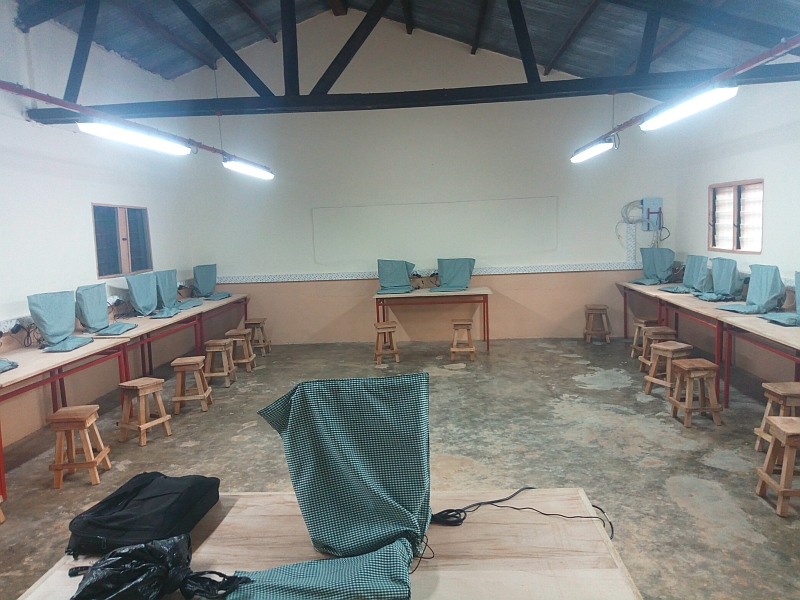
Now we find ourselves in 2020 and INTIC is still growing. Young people in the bountiful, but inaccessible, village of Danyi Dzogbégan now have access to 20 Raspberry Pi workstations (plus one for the teacher). They have been using them for learning since January this year.
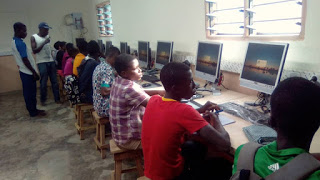
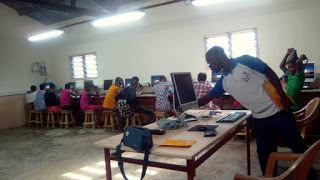
We can’t wait to see what Dominique and his team have up their sleeve next. You can help INTIC reach more young people in rural Togo by donating computer equipment, by helping teachers get lesson materials together, or through a volunteer stay at one of their facilities. Find out more here.
The post Raspberry Pi reaches more schools in rural Togo appeared first on Raspberry Pi.
Source: Raspberry Pi – Raspberry Pi reaches more schools in rural Togo
Bruce Springsteen, BLACKPINK, and 23 more albums we can’t wait to hear in October

As the leaves turn and we all brace ourselves for the deafening roar of noise that will constitute daily life in the final month before America’s presidential election, it’s nice to know that we can pop on some headphones and find respite in the upcoming swell of great new music arriving in October. From big names…
Source: Kotaku – Bruce Springsteen, BLACKPINK, and 23 more albums we can’t wait to hear in October
Intel Key Locker Support Added To LLVM – Confirms Presence With Tiger Lake
Last week on the GNU toolchain side was initial work on supporting Intel Key Locker while this week Key Locker support has come to LLVM…
Source: Phoronix – Intel Key Locker Support Added To LLVM – Confirms Presence With Tiger Lake
Seattle law will force Uber and Lyft to pay drivers a minimum hourly wage
Seattle’s city council has unanimously approved a minimum wage for Uber and Lyft drivers, joining New York as the second major US city to do so (via the New York Times). The law will require ride-hailing companies to pay drivers at least $0.56 per mi…
Source: Engadget – Seattle law will force Uber and Lyft to pay drivers a minimum hourly wage
Global respect for scientists is high, but many worry about the tech they enable
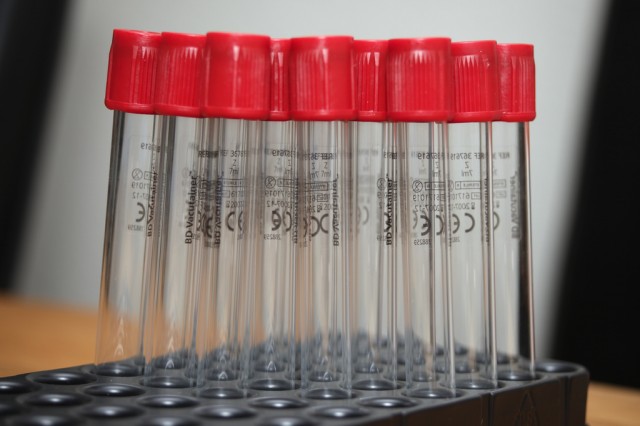
Nothing says “scientist” like test tubes. (credit: Håkan Dahlström / Flickr)
On Tuesday, the Pew Research Center released survey results that represent a picture of how the publics of 20 different countries view science and the technologies it enables—or at least how those countries viewed science and tech immediately before the pandemic struck. The good news is that there’s widespread trust in scientists and a strong desire to act on their findings on issues like climate change.
But the results also contain plenty of reasons for concern. Some of the outcomes of scientific development, such as genetically modified foods, are widely mistrusted by the public in most countries. And, in many countries, there’s a large partisan divide in views of scientists—and the divide is the most extreme in the United States.
Respect
Normally, we’d spend some time discussing the details of how survey data was gathered. But with 20 countries, each with its own independent surveys, we’ll just link you to the details and note that at least 1,000 people were surveyed in the following countries: Australia, Brazil, Canada, the Czech Republic, France, Germany, India, Italy, Japan, Malaysia, the Netherlands, Poland, Russia, Singapore, South Korea, Spain, Sweden, Taiwan, the United Kingdom, and the United States.
Read 18 remaining paragraphs | Comments
Source: Ars Technica – Global respect for scientists is high, but many worry about the tech they enable
NVIDIA Vulkan Beta Driver Moves To 455 Series For Linux
NVIDIA’s Linux Vulkan beta driver build has moved from the 450 series that it’s been on for a while to the current 455 branch…
Source: Phoronix – NVIDIA Vulkan Beta Driver Moves To 455 Series For Linux
Intel, Heidelberg University team up to bring Radeon GPU support to AI

Enlarge / Machine learning doesn’t actually have a face. But if it ever does, we’d like that face to look something like this. (credit: Alex Knight)

We’ve been following Intel’s oneAPI—an artificial intelligence development platform designed to abstract hardware away from the task of developing AI code—with great interest since its launch last November. This week, Intel and the Heidelberg University Computing Center (URZ) announced a new Academic Center of Excellence (CoE) which will support and conduct research on the oneAPI platform.
The new collaboration immediately followed Intel’s own announcement of the oneAPI specification reaching 1.0 status. The 1.0 milestone is significant, since it enables collaborators to focus on adapting hardware to a standard, fixed implementation, worrying about the specification itself shifting rapidly beneath their feet.
URZ’s own announcement of the oneAPI Center of Excellence begins by reiterating the raison d’etre of oneAPI itself:
Read 5 remaining paragraphs | Comments
Source: Ars Technica – Intel, Heidelberg University team up to bring Radeon GPU support to AI
Anime Studio Bones Did A Pokémon Music Video And It's Glorious

Famed anime studio Bones did a special Pokémon music video for the Japanese rock group Bump of Chicken. And the result is wonderful.
Source: Kotaku – Anime Studio Bones Did A Pokémon Music Video And It’s Glorious
Kirby Is Now Selling Hamburgers In Japan

Since Kirby sucks up anything imaginable, it was only a matter of time before the character began selling hamburgers. That time has come.
Source: Kotaku – Kirby Is Now Selling Hamburgers In Japan
KDE Plasma 5.18.6 LTS Brings WireGuard VPN, Wayland, and HiDPI Improvements
The KDE Project announced today the general availability of KDE Plasma 5.18.6 LTS as the sixth maintenance update to the long-term supported KDE Plasma 5.18 LTS desktop environment series.
Source: LXer – KDE Plasma 5.18.6 LTS Brings WireGuard VPN, Wayland, and HiDPI Improvements
'I Monitor My Staff With Software That Takes Screenshots'
AmiMoJo shares a report from the BBC: Shibu Philip admits he knows what it’s like to “maybe waste a bit of time at work.” Shibu is the founder of Transcend — a small London-based firm that buys beauty products wholesale and re-sells them online. For the last year and a half he has used Hubstaff software to track his workers’ hours, keystrokes, mouse movements and websites visited. With seven employees based in India, he says the software ensures “there is some level of accountability” and helps plug the time difference. “I know myself. [You can] take an extra 10-minute break here or there. It’s good to have an automatic way of monitoring what [my employees] are up to,” says Shibu. “By looking at screenshots and how much time everyone is taking on certain tasks, I know if they’re following procedures. “And, if they’re doing better than I expected, I also study the photos and ask them to share that knowledge with the rest of the team so we can all improve,” he says. US-based Hubstaff says its number of UK customers is up four times year-on-year since February. Another company called Sneek offers technology that takes photos of workers through their laptop and uploads them for colleagues to see. Photos can be taken as often as every minute, although it describes itself as a communication platform. Its co-founder, Del Currie, told the BBC that it had seen a five-fold increase in its number of users during lockdown, taking the firm to almost 20,000 in total.


Read more of this story at Slashdot.
Source: Slashdot – ‘I Monitor My Staff With Software That Takes Screenshots’
Twitter will add voice tweet transcriptions following criticism over accessibility
When Twitter introduced voice tweets earlier this summer as a way to send more personalized messages, it caught a lot of flack for not including accessibility features. Now, the company said it will add transcriptions for voice tweets as part of an i…
Source: Engadget – Twitter will add voice tweet transcriptions following criticism over accessibility
Ford makes the 2021 Mustang Mach-E a little cheaper
Ford is hoping to take the edge off some of the sticker shock when you buy a new Mustang Mach-E. Autoblog is reporting on a leaked memo, published on the Mach-E Forum, that purports to have been sent to Ford dealerships in the US. The instructions fr…
Source: Engadget – Ford makes the 2021 Mustang Mach-E a little cheaper
Charge Your Switch Every Six Months, Says Nintendo

In what’s not only good advice for the Switch by electronics in general, Nintendo Support has reminded customers in Japan to recharge their game consoles.
Source: Kotaku – Charge Your Switch Every Six Months, Says Nintendo
Xen on Raspberry Pi 4 adventures
Raspberry Pi (RPi) has been a key enabling device for the Arm community for years, given the low price and widespread adoption. According to the RPi Foundation, over 35 million have been sold, with 44% of these sold into industry. We have always been eager to get the […]
Source: LXer – Xen on Raspberry Pi 4 adventures
Upscaling Tom & Jerry to 60 fps shows why we don't

A YouTuber interpolated Tom & Jerry footage to 60 fps using AI and the results are less than desirable. It’s definitely smoother, but it’s pretty clear upscaling framerates doesn’t really work for animation. Animators generally make deliberate choices when it comes to frame duration, and the rhythm of the 60 fps version just feels off. It’s like watching somebody clap off beat to your favorite song. The music is still great, but now you’re annoyed for no reason and can’t really enjoy it. I mean, c’mon, it’s just clapping! It’s not that hard, Tom! Why do you always have to ruin everything?!
Source: Geekologie – Upscaling Tom & Jerry to 60 fps shows why we don’t
Awkward small talk during mid-air F-15 refueling

This is some awkward small talk during a mid-air refueling of an F-15 Eagle. It’s weird that you can be doing something this cool while having a conversation this boring. At least the pilot at the end seemed to enjoy it and set off a flare. Either that or he got so flustered by the flirting he accidentally hit the wrong button. Better than a Sidewinder missile I guess?
Source: Geekologie – Awkward small talk during mid-air F-15 refueling
Poll: Why are you still using Windows 7?
According to analytics data for tens of millions of website visits, as many as 10% of you are still running Windows 7. Rather than speculate on the reasons why, I’ve put together a poll. If you’re still on Windows 7, please share your reasons.
Source: LXer – Poll: Why are you still using Windows 7?
The FCC's new anti-robocall rules prevent surprise charges for consumers
Back in March, the FCC ordered all carriers and phone companies to adopt the STIR/SHAKEN protocol by June 30th, 2021 as an effort to combat robocalls. Now, the commission has announced new rules to clarify carriers’ obligations regarding the technolo…
Source: Engadget – The FCC’s new anti-robocall rules prevent surprise charges for consumers