Call of Duty games start landing on NVIDIA GeForce Now

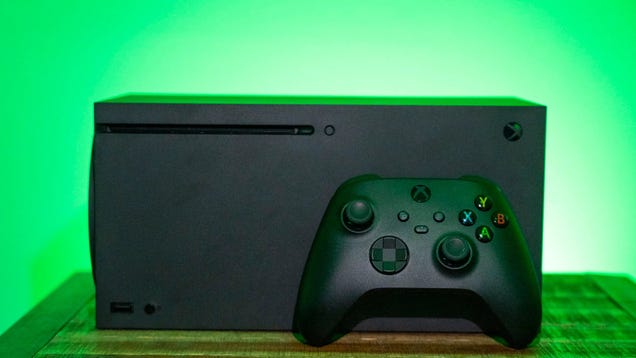
One of the major concessions Microsoft made to regulators to get its blockbuster acquisition of Activision Blizzard over the line was agreeing to let users of third-party cloud services stream Xbox-owned games. Starting today, you can play three Call of Duty games via NVIDIA GeForce Now: Modern Warfare 3, Modern Warfare 2 and Warzone.

They’re the first Activision games to land on GeForce Now since Microsoft closed the $68.7 billion Activision deal in October. Activision Blizzard games were previously available on GeForce Now but only briefly, as the publisher pulled them days after the streaming service went live for all users in early 2020.

Microsoft first made its first-party games available on GeForce Now this year, beginning with Gears 5 in May. More recently, Microsoft started allowing GeForce Now users to stream PC Game Pass titles and Microsoft Store purchases.

Call of Duty titles are major additions, though, especially since that means Warzone fans can play the battle royale on their phone or tablet wherever they are without having to pay anything extra (free GeForce Now users are limited to one hour of gameplay per session). If you’ve bought MW2 or MW3 on Steam, you can play those through GeForce Now as well. NVIDIA notes that older CoD titles will be available through GeForce Now later.

Another key concession Microsoft made to appease UK regulators was to sell the cloud gaming rights for Activision Blizzard titles to Ubisoft. However, as evidenced here, Microsoft will still honor the agreements it made directly with various cloud gaming services.

This article originally appeared on Engadget at https://www.engadget.com/call-of-duty-games-start-landing-on-nvidia-geforce-now-195040692.html?src=rss

Source: Engadget – Call of Duty games start landing on NVIDIA GeForce Now

Call Of Duty Breaks Silence On Skill-Based Matchmaking

The November 10 launch of Call of Duty: Modern Warfare III reignited the seemingly endless debate about multiplayer matchmaking, with players demanding Activision and Infinity Ward provide details, or even abolish it entirely. This conversation has perpetuated across multiple Call of Duty releases, but the team behind…

Read more…


Source: Kotaku – Call Of Duty Breaks Silence On Skill-Based Matchmaking

China's Longsoon 3A6000 CPU Battles Intel's Core i5-14600K With Surprising Results

China's Longsoon 3A6000 CPU Battles Intel's Core i5-14600K With Surprising Results
Technological autonomy has been a priority for China in recent years, partly because the country can’t import cutting-edge chips thanks to US sanctions, and also because being self-sufficient is popular policy. At the forefront of China’s native CPU industry is Loongson, which has at last released its much-anticipated 3A6000. Last year, the

Source: Hot Hardware – China’s Longsoon 3A6000 CPU Battles Intel’s Core i5-14600K With Surprising Results

Formula E now lets you stream every race from its first nine seasons for free

There’s still time to get acquainted with Formula E before the new season begins in January. To help with that, the all-electric racing series has opened up its vault and made every race from its first nine seasons available to stream for free. Starting with the first event in Beijing in 2014 through this past season’s finale in London, there’s a lot to relive or watch for the first time. If you’re trying to stream them all, that’s 90 hours of action over 116 races you have to look forward to.

Formula E’s new Race Replay archive is available for free via it’s website and mobile app. All you need to do in order to gain access to the back catalog is to register for an account. What’s more, the series says every race from 2024’s Season 10 will be available seven days after airing live. Even if you don’t have access to the required channels or platforms needed to watch live next year, you’ll still be able to follow along a few days after each event.

When the lights go out in Mexico City, Formula E will offer fans expanded viewing options in 2024. Roku will stream 11 races live through its Roku Channel for free. That platform will also offer previews, replays and other commentary in addition to the live events. Paramount+ will stream five races live as simulcasts with CBS, the broadcaster that has been home to Formula E in the US for a while now. 

Season 10 begins January 13 in Mexico City before a double-header in Diriyah, Saudi Arabia later in the month. 17 total races are scheduled for 2024, including a US stop in Portland that has been expanded to its own double-header weekend after debuting last season. Formula E completed its preseason testing in Valencia in late October and you can read our key takeaways from that event here

This article originally appeared on Engadget at https://www.engadget.com/formula-e-now-lets-you-stream-every-race-from-its-first-nine-seasons-for-free-193820963.html?src=rss

Source: Engadget – Formula E now lets you stream every race from its first nine seasons for free

Biden’s EPA proposes water rule to finally ditch lead pipes within 10 years

City workers unload a truck containing pallets of bottled water to distribute during a water filter distribution event on October 26, 2021 in Hamtramck, Michigan. The state Department of Health and Human Services has begun distributing water filters and bottled water to residents due to elevated levels of lead found in the drinking water due to old and un-maintained water pipes in the city.

Enlarge / City workers unload a truck containing pallets of bottled water to distribute during a water filter distribution event on October 26, 2021 in Hamtramck, Michigan. The state Department of Health and Human Services has begun distributing water filters and bottled water to residents due to elevated levels of lead found in the drinking water due to old and un-maintained water pipes in the city. (credit: Getty | Matthew Hatcher)

The Environmental Protection Agency on Thursday proposed a stricter rule on lead in drinking water that would require that all lead service lines in the country be replaced within 10 years, and would lower the current lead action level in drinking water from 15 parts per billion to 10 parts per billion.

More than 9.2 million American households have water connections that include lead piping, according to the White House. Lead moves from the pipes into the water when the plumbing experiences corrosion, which is most severe when the water is acidic or has low mineral content. There is no safe level of lead, which is a toxic metal with wide-ranging health effects, including neurotoxic effects. In children, lead exposure can damage the brain and nervous system, slow development, lower IQ, and cause learning, behavioral, speech, and hearing problems. In adults, it can increase the risk of high blood pressure, cardiovascular problems, and kidney damage.

The EPA estimates that the rule will generate between $9.8 billion to $34.8 billion in economic benefits each year based on health improvement, including higher IQs in children, healthier newborns, lower cardiovascular risks in adults, and a reduction in care for attention-deficit/hyperactivity disorder.

Read 5 remaining paragraphs | Comments


Source: Ars Technica – Biden’s EPA proposes water rule to finally ditch lead pipes within 10 years

NixOS 23.11 “Tapir” Released With the GNOME 45 Desktop & Wi-Fi 6 Support

Coming six months after NixOS 23.05, the NixOS 23.11 release is here to introduce the latest GNOME 45 “Riga” desktop environment series. The GNOME edition ships with the GNOME 45.1 desktop by default on a Wayland session for both bare metal and virtual machines.

The post NixOS 23.11 “Tapir” Released With the GNOME 45 Desktop & Wi-Fi 6 Support appeared first on Linux Today.


Source: Linux Today – NixOS 23.11 “Tapir” Released With the GNOME 45 Desktop & Wi-Fi 6 Support

Pressurized Walls Can Embiggen Your Crowded Apartment

Housing has become pretty expensive—rent is super high all over the country, and mortgage rates have shot up 4.6% since just last year. So it’s not really all that surprising that more adults are entering into roommate situations in order to afford their housing. A roommate can magically turn an apartment that makes you choose between rent and groceries into an affordable home.

Roommates, of course, come with downsides—especially if you’ve lived on your own for a while and thought your days of sharing space and splitting bills were long over. And it’s one thing to take on a roommate when you have the actual bedroom to offer; it’s something else entirely when you’re living in a studio or one-bedroom apartment and need someone to split the rent. There are a lot of relatively easy and affordable ways to create a second private space in your apartment, but most of them either don’t offer true privacy or require you to be able to actually renovate your place, which a landlord probably isn’t excited about.

So what can you do if you want to add a wall to your place without endangering your lease or your security deposit? You can install a pressurized wall.

Under pressure

So what’s a pressurized wall? It’s a freestanding wall that uses tension to hold itself in place. They are non-load-bearing and not permanently attached in any way, but resemble real walls in every superficial way. These walls can even have doors or windows built into them, and can have soundproofing added to enhance their privacy features. These walls typically have to be ordered custom from a company that makes them, but the upside to that is that they can be customized to match the apartment’s decor and style so they blend in pretty seamlessly. And best of all, they can be completely removed when the time comes to move out, leaving no trace behind.

The cost of having a pressurized wall installed in your apartment depends on the size of the wall needed and the features you want included. A typical price range is between $800 to $2,000, though you can spend much more on very large or super-fancy walls. Still, if the cost is split with your roommates, it can be an affordable solution because it can turn a large bedroom into two bedrooms in a way that looks professional and natural.

Legalities and downsides

Unfortunately, you can’t just order a pressurized wall off the Internet and install it whenever you want. Because a pressurized wall changes the layout of the apartment you, have to follow certain basic guidelines when installing them:

  • Get permission. Your first stop is your landlord, who may or may not allow pressurized walls in the building. Some buildings have specific posted policies concerning pressurized walls, so if you’re apartment hunting and looking for a bargain you can target studios or one-bedrooms in buildings that explicitly allow them. Otherwise, you’ll need to get permission.

  • Permits. You also might need to get a permit from the Department of Buildings or another entity that issues certificates of occupancy. Many jurisdictions consider pressurized walls to be the same as any other wall, which means installing one is treated similarly to any major renovation.

  • Follow the law. Wherever you live, there are laws pertaining to bedroom size and shape, ventilation, window access, and fire escape routes. When adding a pressurized wall to your apartment to create a new bedroom you’ll need to follow all of those rules whether you had to pull a permit or not. The company you order your wall from should be able to assist in the planning, but you might need to hire an architect or other contractor if not.

  • Strength. Since these walls aren’t true walls, you may not be able to attach anything heavy to them, like bookshelves. You should check with the manufacturer about the load they can handle before you plan to attach anything to them.

Most companies that manufacture these walls will lease them to you for a period of years, so you don’t have to purchase them outright if you’re renting. This is good because you can simply end the lease and give the wall back if and when you move, but if you stay in the apartment for a long time you might end up paying more in leasing fees than you would have if you bought the wall.

A pressurized wall isn’t right for everyone, but if you can swing one it can add rooms to your apartment with a finished feel and a real sense of privacy without damaging anything. It’s certainly better than trying to convince potential roommates that your spacious walk-in closet is actually a second bedroom.


Source: LifeHacker – Pressurized Walls Can Embiggen Your Crowded Apartment

11 Christmas Lessons Bob's Burgers Has Taught Us

Bob’s Burgers has reliably delivered a Christmas-themed episode going back to season three—which gives us great hope we’ll be getting one as part of its current 14th season. But even if we don’t, the Fox show has already gifted us with a sleigh full of silly joy, cringe-inducing snafus, and useful wisdom. Here are 13…

Read more…


Source: Gizmodo – 11 Christmas Lessons Bob’s Burgers Has Taught Us

New chip-packaging facility could save TSMC’s Arizona fab from “paperweight” status

Apple wants to build more of its A- and M-series chips in the United States.

Enlarge / Apple wants to build more of its A- and M-series chips in the United States. (credit: Apple)

Late last year, Apple CEO Tim Cook announced that the company would definitely be buying chips made at Taiwan Semiconductor’s new Arizona-based fab once it had opened. Apple working with TSMC isn’t new; most, if not all, of the processors currently sold in Apple’s products are made on one of TSMC’s many manufacturing nodes. But being able to buy them from a US-based facility would be a first.

The issue, as outlined by some TSMC employees speaking to The Information in September, is that the Arizona facility would manufacture chips, but it wouldn’t be building a facility to handle packaging. And without packaging, the Arizona factory would essentially be a “paperweight,” requiring any chips made there to be shipped to Taiwan for assembly before they could be put in any products.

Today Apple announced that it had solved that particular problem, partnering with a company called Amkor to handle chip packaging in Arizona. Amkor says that it will invest $2 billion to build the facility, which will “employ approximately 2,000 people” and “is targeted to be ready for production within the next two to three years.” Apple says that it has already worked with Amkor on chip packaging for “more than a decade.”

Read 5 remaining paragraphs | Comments


Source: Ars Technica – New chip-packaging facility could save TSMC’s Arizona fab from “paperweight” status

Microsoft Wants to Stick Game Pass on Everything, Including PlayStation and Nintendo Consoles

Xbox chief financial officer Tim Stuart was pretty damn open about the company’s desire to make Xbox Game Pass the premiere game streaming service across all platforms, not just on Microsoft’s own console. During the 2023 Wells Fargo TMT Summit, Stuart said their main goal is to get Game Pass on “every screen that can…

Read more…


Source: Gizmodo – Microsoft Wants to Stick Game Pass on Everything, Including PlayStation and Nintendo Consoles

Three Grand Theft Auto Games Are Headed To Netflix While You Wait For GTA 6

Three Grand Theft Auto Games Are Headed To Netflix While You Wait For GTA 6
Did you know that by subscribing to Netflix you get access to a library of free games? It’s right there on your phone in the Netflix mobile app. Apparently very few people take advantage of this, which is kind of a bummer because there’s a fair few quality games in there, like Dead Cells, TMNT Shredder’s Revenge, and Samurai Shodown, with

Source: Hot Hardware – Three Grand Theft Auto Games Are Headed To Netflix While You Wait For GTA 6

Bipartisan Senate bill would kill the TSA’s ‘Big Brother’ airport facial recognition

US Senators John Kennedy (R-LA) and Jeff Merkley (D-OR) introduced a bipartisan bill Wednesday to end involuntary facial recognition screening at airports. The Traveler Privacy Protection Act would block the Transportation Security Administration (TSA) from continuing or expanding its facial recognition tech program. It would also require the government agency to explicitly receive congressional permission to renew it, and it would have to dispose of all biometric data within three months.

Senator Merkley described the TSA’s biometric collection practices as the first steps toward an Orwellian nightmare. “The TSA program is a precursor to a full-blown national surveillance state,” Merkley wrote in a news release. “Nothing could be more damaging to our national values of privacy and freedom. No government should be trusted with this power.” Other Senators supporting the bill include Edward J. Markey (D-MA), Roger Marshall (R-KS), Bernie Sanders (I-VT) and Elizabeth Warren (D-MA).

The TSA began testing facial recognition at Los Angeles International Airport (LAX) in 2018. The agency’s pitch to travelers framed it as an exciting new high-tech feature, promising a “biometrically-enabled curb-to-gate passenger experience.” The TSA said this summer it planned to expand the program to over 430 US airports within the next few years.

The program at least technically allows travelers to opt-out, but that process isn’t always transparent in practice. Merkley posted the video above to X in September, demonstrating how agents guided travelers to the facial scanner without mentioning that it’s optional. No signs near the booths said it was optional or explicitly mentioned the gathering of facial data, either. The booths were arranged so that flyers would have difficulty entering their driver’s license or ID (required) without stepping in front of the facial scanner.

Advocacy groups supporting the bill include the ACLU, Electronic Privacy Information Center and Public Citizen. “The privacy risks and discriminatory impact of facial recognition are real, and the government’s use of our faces as IDs poses a serious threat to our democracy,” wrote Jeramie Scott, Senior Counsel and Director of EPIC’s Project on Surveillance Oversight, in Markley’s press release. “The TSA should not be allowed to unilaterally subject millions of travelers to this dangerous technology.”

“Every day, TSA scans thousands of Americans’ faces without their permission and without making it clear that travelers can opt out of the invasive screening,” Sen. Kennedy wrote in a separate news release. “The Traveler Privacy Protection Act would protect every American from Big Brother’s intrusion by ending the facial recognition program.”

This article originally appeared on Engadget at https://www.engadget.com/bipartisan-senate-bill-would-kill-the-tsas-big-brother-airport-facial-recognition-191010937.html?src=rss

Source: Engadget – Bipartisan Senate bill would kill the TSA’s ‘Big Brother’ airport facial recognition

JBL Authentics 300 review: Alexa and Google Assistant coexisting

Several companies have taken shots at Sonos over the years when it comes to multi-room audio and self-tuning speakers with built-in voice assistants. These devices are a lot more common in 2023 than they used to be, so there’s a whole host of options if you’re looking for alternatives to the Move or Era. JBL is the latest to give it a go with new additions to its Authentics line of speakers. While audio may be its primary use, these devices are the first to run two voice assistants simultaneously without having to switch from one to the other. And on the Authentics 300 ($450), you get a portable unit that doesn’t have to stay parked on a shelf.

Design

Most wireless JBL speakers fit into three categories. They’re either rugged and compact, modern-looking boomboxes or internally-lit party units. For this new Authentics series, the company opted for a more refined design: all black with a gold frame around the front speaker grille. It’s certainly an aesthetic that fits in nicely on a shelf, without the raucous palette of some of the company’s smaller options. All three of the Authentics speakers look almost exactly the same with the main difference being size, although the 300 does have a boombox-like rotating handle the other two don’t. That’s because it’s the only portable option in the range with a built-in battery.

JBL describes the Authentics look as “retro,” but I’m not sure I agree. Sure, there’s a classic vibe thanks to the ‘70s-inspired Quadrex grille the company has employed in the past, but the finer details and onboard controls are decidedly modern. Speaking of controls, up top you’ll find volume, treble and bass knobs that illuminate the level as you turn them. Pressing in the center of the volume dial gives you the playback controls. There are also Bluetooth, power and Moment buttons along with a thin light bar that indicates charging status when the speaker is plugged in. Around back is a microphone mute switch, along with Ethernet, 3.5mm aux, USB-C and power ports.

Software and features

JBL Authentics 300
Photo by Billy Steele/Engadget

The features and settings for the Authentics speakers are managed inside the JBL One app. Here, you’re greeted with a list of the company’s products you own as well as their connected status, battery level and whatever media is playing on the device. After selecting the Authentics 300, JBL dumps you into the specifics, with battery level once again visible up top. A media player is just below, complete with the ability to sync Amazon Music, Tidal, Napster, Qobuz, TuneIn, iHeartRadio and Calm Radio so you can play them directly inside this app.

JBL offers some limited EQ customization. There’s a manual slider with options for bass, mid and treble, but that’s it. You won’t find any carefully-tuned presets or the ability to make more detailed adjustments along the curve. To get to your tunes quickly, JBL offers a feature called Moment. Accessible via the heart button on the speaker, this allows you to save a favorite album or playlist from the app’s list of supported streaming services. You can also specify volume and auto-off timing during setup.

Lastly, a word on streaming music over Wi-Fi. The Authentics line supports a range of options here, including AirPlay, Chromecast, Alexa, Spotify Connect and Tidal Connect, all of which are more convenient than swiping over to the Bluetooth menu and pairing the speaker every time you use it. With Wi-Fi, playing music on the Authentics devices are just a couple of taps away inside of the app where you’re browsing and selecting music or podcasts from. The speakers also support multi-room audio via AirPlay, Alexa and the Google Home app

Double assistants, double the fun

JBL Authentics 300
Photo by Billy Steele/Engadget

JBL says the Authentics series is the first set of speakers to run two voice assistants simultaneously. Each of the three units can employ both Alexa and Google Assistant without you having to pick one or the other beforehand. This opens up availability across compatible smart home devices and it means your speaker choice isn’t as limited by your go-to assistant.

The speaker never had trouble hearing my commands and it didn’t mistake a query for one assistant with a question for the other. When you ask Google Assistant for help, a white light shows at the top center of the speaker grille. Summon Alexa and that LED burns blue until your convo is over. When you mute the microphones with the switch on the back of the 300, that light glows red and remains until you turn them back on. As is the case with any smart speaker, the voice command limitations are the general hindrances of the assistants themselves rather than any shortfalls of the speaker.

Sound quality

The Authentics 300 really shines with more mellow, chill music like jazz, bluegrass and acoustic-driven country. There’s a warm inviting sound with great clarity across those styles. When you jump to the full band chaos of metal and hardcore, or even the guitar-heavy but mellifluous tones of Chris Stapleton, the speaker’s tuning overemphasizes vocals and the lack of bassy thump creates a muddy overall sound.

Sure, you can dial up the bass with the physical controls or the EQ in the app, but that doesn’t add the kind of deep low-end that would open up the soundstage. It does improve the overall tuning of albums like Stapleton’s Higher, but there’s still an overemphasis on vocals. You can really hear the impact on The Killer’s Rebel Diamonds as Brandon Flowers almost entirely drowns out the backing synth on “Jenny Was A Friend Of Mine” from Hot Fuss.

At times though, the Authentics 300 is a joy to listen to. Put on some Miles Davis and the speaker is at its best. Ditto for the bluegrass of Nickel Creek, the mellow country tunes of Charles Wesley Godwin and classic Christmas mixes. However, the inconsistency across styles is frustrating. Interestingly, JBL says the Authentics speakers offer automatic self-tuning every time you power them on, but I didn’t notice much difference as I moved the 300 around.

Battery life

JBL Authentics 300
Photo by Billy Steele/Engadget

JBL says the Authentics 300 will last up to eight hours on a charge. Within two minutes of unplugging, the JBL One app already had the battery level down two percent while playing music via AirPlay 2, at about 30 percent volume. That may seem like a low level, but it’s good for “working music” on this speaker. After 30 minutes, the app was showing 88 percent, but things slowed down and I managed to still have 24 percent remaining when the eight-hours were up. During a test over Bluetooth, the percentages fell in a similar fashion, but I had no problem making it to eight hours at 50 percent volume (Bluetooth was quieter than AirPlay at 30 percent).

JBL does offer a Battery Saving Mode to help you maximize playtime when you’re away from home. This setting “optimizes” both volume and bass to extend battery life, according to the company. There’s also an optional automatic power off feature that kicks in at either 15 minutes, 30 minutes or an hour when you’re not connected to power and audio is no longer playing.

The competition

JBL offers two alternatives to the Authentics 300 within the same speaker range. The smaller Authentics 200 ($350) is more compact, but not portable, while the larger 500 ($700) is a high-fidelity unit with support for Dolby Atmos. Both still run two voice assistants at the same time and have both Bluetooth and Wi-Fi, along with everything else the Authentics line offers. In order to support that immersive audio, the Authentics 500 has more drivers than the other two, with three 25mm tweeters, three 2.75-inch mid-range and a 6.5-inch subwoofer. I look forward to seeing if the extra components and added 170 watts of output power improve sound quality, but it only has slightly lower frequency response than the 300 (40Hz vs. 45Hz).

If you’re looking for something portable that can also pull double duty at home, the Sonos Move 2 is a solid option. It’s too big to haul around with ease, but it does support both Bluetooth and Wi-Fi along with improved sound and better battery life compared to version 1.0. There’s also startling loudness and a durable design. What’s more, it’s the same price as the Authentics 300 at $449. For something more stationary and immersive, you could get the Sonos Era 300 without paying more. My colleague Nathan Ingraham noted the excellent sound quality on this unit during his review, but he did encounter inconsistent performance when it came to spatial audio. There’s also no Google Assistant support on this model.

Wrap-up

When I try to come up with a final verdict on the Authentics 300, I find myself running in circles. For every thing I like about the speaker, there’s immediately something that I don’t. The company certainly deserves some kudos for being the first to run two assistants at the same time and for figuring out how to do that with no confusion or headaches. However, the inconsistent sound quality is a major problem, especially on a $450 speaker. And while the device offers better-than-advertised battery life, it’s larger size makes portability an issue. So unless you absolutely need to seamlessly switch between Alexa and Google Assistant, there are better-sounding options.

This article originally appeared on Engadget at https://www.engadget.com/jbl-authentics-300-review-alexa-and-google-assistant-coexisting-190036434.html?src=rss

Source: Engadget – JBL Authentics 300 review: Alexa and Google Assistant coexisting

You Should Update Chrome Right Now (Again)

Attention Chrome and Chromium-browser users: Your internet activity is vulnerable to cyberattacks, unless you update to the latest version of your browser.

On Tuesday, Google announced on the Chrome Releases blog that a new version of Chrome, 119.0.6045.199 for Mac and Linux and 119.0.6045.199/.200 for Windows, is available, and patches seven different security vulnerabilities. All of these discovered issues are rated as “high” in severity, but Google only names six of them:

  • High CVE-2023-6348: Type Confusion in Spellcheck. Reported by Mark Brand of Google Project Zero on 2023-10-10

  • High CVE-2023-6347: Use after free in Mojo. Reported by Leecraso and Guang Gong of 360 Vulnerability Research Institute on 2023-10-21

  • High CVE-2023-6346: Use after free in WebAudio. Reported by Huang Xilin of Ant Group Light-Year Security Lab on 2023-11-09

  • High CVE-2023-6350: Out of bounds memory access in libavif. Reported by Fudan University on 2023-11-13

  • High CVE-2023-6351: Use after free in libavif. Reported by Fudan University on 2023-11-13

  • High CVE-2023-6345: Integer overflow in Skia. Reported by Benoît Sevens and Clément Lecigne of Google’s Threat Analysis Group on 2023-11-24

While all vulnerabilities are important to patch, it’s the last one, CVE-2023-6345, this is the most concerning. Google confirmed it is aware an exploit for this vulnerability exists in the wild, which means bad actors either know how to use it against users, or they already have.

We don’t know much about the issue, other than that it’s an integer overflow flaw in Skia. Skia is an open source 2D graphics engine, while an integer overflow occurs when the result of an operation doesn’t fit the respective amount of memory the system sets aside. While not all integer overflow flaws lead to vulnerabilities, this one does—which means bad actors may be able to use it to take over the system.

This update follows a Nov. 14 update that patched four security flaws, as well as a Nov. 7 update that patched one. The last update that patched a zero-day security flaw was issued Sept. 11.

How to update your browser

As this flaw affects the underlying code used in Chrome, all Chromium-based browsers should be updated to patch this issue. That means Chrome, of course, but also browsers like Edge, Opera, and Brave.

Your browser may be set to update automatically, but you can trigger an update manually if the update hasn’t been installed yet. Usually, that’s in the browser’s settings. In Chrome, for example, you can click the three dots in the top-right corner of the window, head to Help > About Google Chrome, then allow the browser to look for an update. If one is available, follow the on-screen instructions to install the update.


Source: LifeHacker – You Should Update Chrome Right Now (Again)

The Great Google Account Purge starts tomorrow for inactive users

The Great Google Account Purge starts tomorrow for inactive users

Enlarge (credit: Bloomberg via Getty Images)

Hello fellow procrastinators. This is your last-minute warning that you have until the end of the day to log in to any inactive Google accounts before they start getting deleted on December 1. Google is going to wipe any accounts that have been “inactive” for two years, allowing the company to free up storage space, delete unused personal data, and continue the ongoing journey of intense cost cutting it has been on for the past year.

The plan to do this was announced in May, and Google says inactive accounts should get “multiple notifications over the months leading up to deletion, to both the account email address and the recovery email (if one has been provided),” so hopefully this isn’t a surprise to anyone. The company says it will “take a phased approach” to deleting accounts, starting with “accounts that were created and never used again,” so even if you’re reading this on December 1, there’s probably still time to log in to an old account and save it.

As for the caveats around “inactivity,” Google says this will only apply to personal accounts that don’t have any subscriptions running, so Google Workspace and Google One users have nothing to fear. The company says you’ll count as “active” if you “sign-in at least once every 2 years,” which is pretty easy to do. Confusingly it also lists certain activities you can perform that will count as “activity,” but those seem rather moot, since you would already need to be logged in to do them. The “Sign in with Google” OAuth platform on other websites also counts as account activity, and so does being signed in on an Android phone.

Read 2 remaining paragraphs | Comments


Source: Ars Technica – The Great Google Account Purge starts tomorrow for inactive users

Meta sues FTC to block new restrictions on monetizing kids’ data

Meta has sued the Federal Trade Commission (FTC) in an attempt to stop regulators from reopening a landmark $5 billion privacy settlement from 2020 and to allow it to monetize kids’ data across apps like Facebook, Instagram and Whatsapp. This comes after a federal judge ruled on Monday that the FTC would be allowed to expand on 2020’s privacy settlement, paving the way for the agency to propose tough new rules on how the social media giant could operate in the wake of the Cambridge Analytica scandal.

Today’s lawsuit demands an immediate stop to the FTC’s proceedings, calling it an “obvious power grab” and an “unconstitutional adjudication by fiat.” A Meta spokesperson even referred to the FTC as “prosecutor, judge, and jury in the same case”, as reported by Bloomberg. This is the second attempt by Facebook’s parent company to stop the sanctions in court.

The FTC, for its part, says that Meta has repeatedly violated the terms of 2020’s settlement regarding user privacy. The agency also says that the company has violated the Children’s Online Privacy Protection Act (COPPA) by monetizing the data of younger users. The FTC has already been given the go ahead by a judge to restrict this type of monetization, a decision Meta hopes to overturn.

The FTC also seeks to implement new restrictions that limit Meta’s use of facial recognition, as well as a complete moratorium on new products and services until a third-party completes an audit to determine if the company’s complying with its privacy obligations.

“Facebook has repeatedly violated its privacy promises,” Samuel Levine, director of the FTC’s Bureau of Consumer Protection, said in a statement. “The company’s recklessness has put young users at risk, and Facebook needs to answer for its failures.” To that end, multiple states have sued Meta to stop the monetization of children’s data, along with the EU.

The FTC has been a consistent thorn in Meta’s side, as the agency tried to stop the company’s acquisition of VR software developer Within on the grounds that the deal would deter “future innovation and competitive rivalry.” The agency dropped this bid after a series of legal setbacks. It also opened up an investigation into the company’s VR arm, accusing Meta of anti-competitive behavior.

Corporations have been all over the FTC lately in attempts to paint the agency as a prime example of government overreach. Beyond Meta, biotech giant Illumina is suing the FTC to halt a decision that stops it from a $7 billion acquisition of the cancer detection startup Grail.

This article originally appeared on Engadget at https://www.engadget.com/meta-sues-ftc-to-block-new-restrictions-on-monetizing-kids-data-185051764.html?src=rss

Source: Engadget – Meta sues FTC to block new restrictions on monetizing kids’ data

Meta sues FTC, hoping to block ban on monetizing kids’ Facebook data

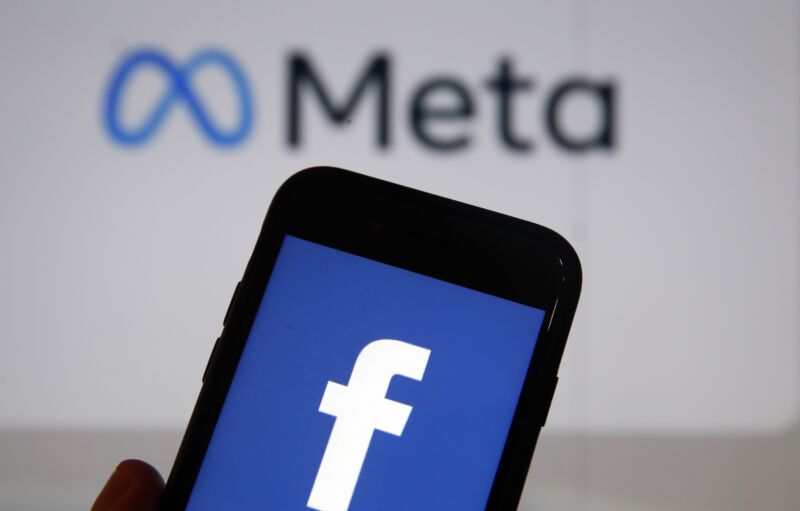
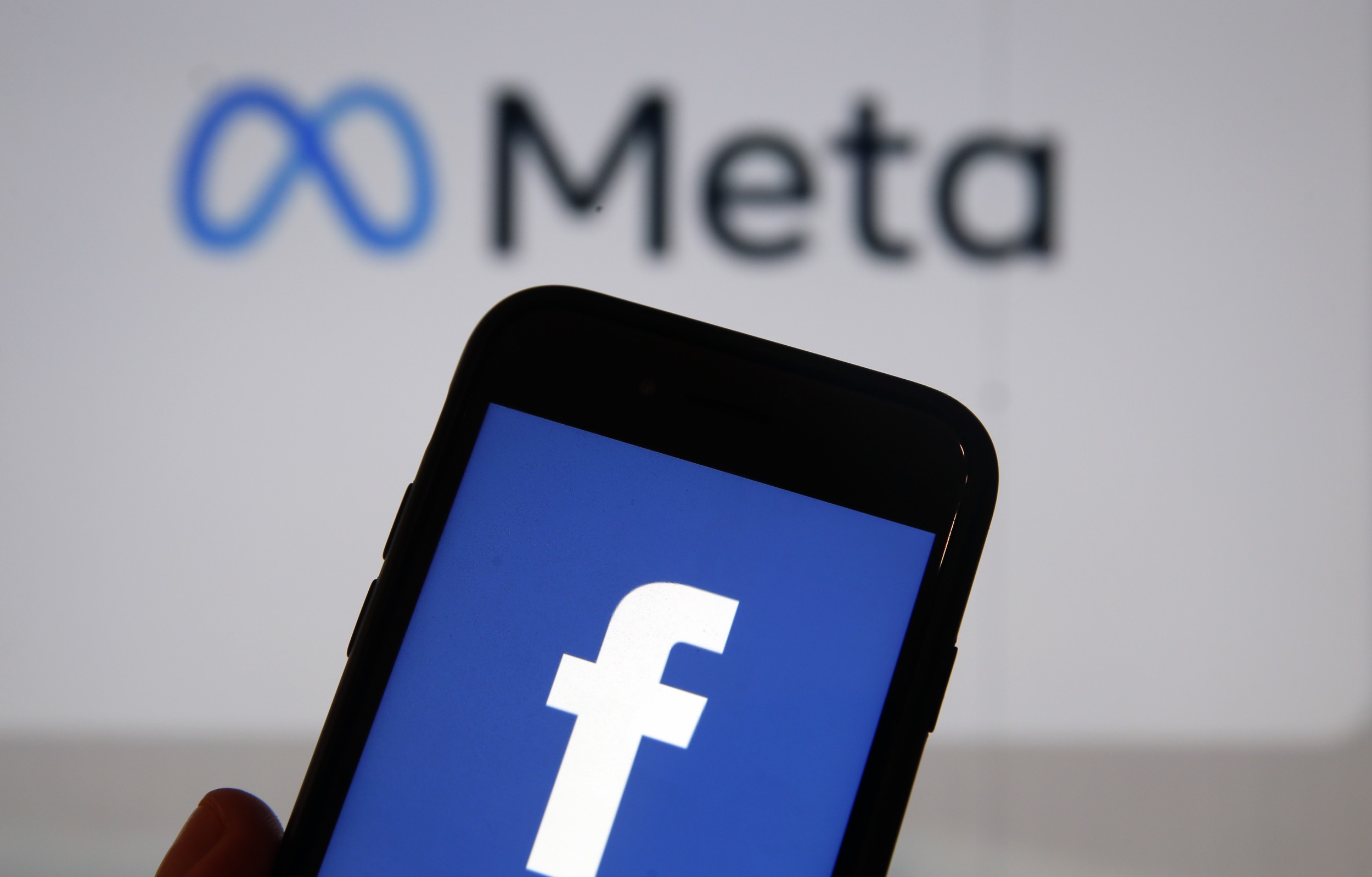
Photo illustration in which the Facebook logo is displayed on the screen of an iPhone in front of a Meta logo

Enlarge (credit: Getty Images | Chesnot)

Meta sued the Federal Trade Commission yesterday in a lawsuit that challenges the FTC’s authority to impose new privacy obligations on the social media firm.

The complaint stems from the FTC’s May 2023 allegation that Meta-owned Facebook violated a 2020 privacy settlement and the Children’s Online Privacy Protection Act. The FTC proposed changes to the 2020 privacy order that would, among other things, prohibit Facebook from monetizing data it collects from users under 18.

Meta’s lawsuit against the FTC challenges what it calls “the structurally unconstitutional authority exercised by the FTC through its Commissioners in an administrative reopening proceeding against Meta.” It was filed against the FTC, Chair Lina Khan, and other commissioners in US District Court for the District of Columbia. Meta is seeking a preliminary injunction to stop the FTC proceeding pending resolution of the lawsuit.

Read 15 remaining paragraphs | Comments


Source: Ars Technica – Meta sues FTC, hoping to block ban on monetizing kids’ Facebook data

Can digital watermarking protect us from generative AI?

The Biden White House recently enacted its latest executive order designed to establish a guiding framework for generative artificial intelligence development — including content authentication and using digital watermarks to indicate when digital assets made by the Federal government are computer generated. Here’s how it and similar copy protection technologies might help content creators more securely authenticate their online works in an age of generative AI misinformation.

A quick history of watermarking

Analog watermarking techniques were first developed in Italy in 1282. Papermakers would implant thin wires into the paper mold, which would create almost imperceptibly thinner areas of the sheet which would become apparent when held up to a light. Not only were analog watermarks used to authenticate where and how a company’s products were produced, the marks could also be leveraged to pass concealed, encoded messages. By the 18th century, the technology had spread to government use as a means to prevent currency counterfeiting. Color watermark techniques, which sandwich dyed materials between layers of paper, were developed around the same period.

Though the term “digital watermarking” wasn’t coined until 1992, the technology behind it was first patented by the Muzac Corporation in 1954. The system they built, and which they used until the company was sold in the 1980s, would identify music owned by Muzac using a “notch filter” to block the audio signal at 1 kHz in specific bursts, like Morse Code, to store identification information.

Advertisement monitoring and audience measurement firms like the Nielsen Company have long used watermarking techniques to tag the audio tracks of television shows to track and understand what American households are watching. These steganographic methods have even made their way into the modern Blu-Ray standard (the Cinavia system), as well as in government applications like authenticating drivers licenses, national currencies and other sensitive documents. The Digimarc corporation, for example, has developed a watermark for packaging that prints a product’s barcode nearly-invisibly all over the box, allowing any digital scanner in line of sight to read it. It’s also been used in applications ranging from brand anti-counterfeiting to enhanced material recycling efficiencies.

The here and now

Modern digital watermarking operates on the same principles, imperceptibly embedding added information onto a piece of content (be it image, video or audio) using special encoding software. These watermarks are easily read by machines but are largely invisible to human users. The practice differs from existing cryptographic protections like product keys or software protection dongles in that watermarks don’t actively prevent the unauthorized alteration or duplication of a piece of content, but rather provide a record of where the content originated or who the copyright holder is.

The system is not perfect, however. “There is nothing, literally nothing, to protect copyrighted works from being trained on [by generative AI models], except the unverifiable, unenforceable word of AI companies,” Dr. Ben Zhao, Neubauer Professor of Computer Science at University of Chicago, told Engadget via email.

“There are no existing cryptographic or regulatory methods to protect copyrighted works — none,” he said. “Opt-out lists have been made made a mockery by stability.ai (they changed the model name to SDXL to ignore everyone who signed up to opt out of SD 3.0), and Facebook/Meta, who responded to users on their recent opt-out list with a message that said ‘you cannot prove you were already trained into our model, therefore you cannot opt out.’”

Zhao says that while the White House’s executive order is “ambitious and covers tremendous ground,” plans laid out to date by the White House have lacked much in the way of “technical details on how it would actually achieve the goals it set.”

He notes that “there are plenty of companies who are under no regulatory or legal pressure to bother watermarking their genAI output. Voluntary measures do not work in an adversarial setting where the stakeholders are incentivized to avoid or bypass regulations and oversight.”

“Like it or not, commercial companies are designed to make money, and it is in their best interests to avoid regulations,” he added.

We could also very easily see the next presidential administration come into office and dismantle Biden’s executive order and all of the federal infrastructure that went into implementing it, since an executive order lacks the constitutional standing of congressional legislation. But don’t count on the House and Senate doing anything about the issue either.

“Congress is deeply polarized and even dysfunctional to the extent that it is very unlikely to produce any meaningful AI legislation in the near future,” Anu Bradford, a law professor at Columbia University, told MIT Tech Review. So far, enforcement mechanisms for these watermarking schemes have been generally limited to pinky swears by the industry’s major players.

How Content Credentials work

With the wheels of government turning so slowly, industry alternatives are proving necessary. Microsoft, the New York Times, CBC/Radio-Canada and the BBC began Project Origin in 2019 to protect the integrity of content, regardless of the platform on which it’s consumed. At the same time, Adobe and its partners launched the Content Authenticity Initiative (CAI), approaching the issue from the creator’s perspective. Eventually CAI and Project Origin combined their efforts to create the Coalition for Content Provenance and Authenticity (C2PA). From this coalition of coalitions came Content Credentials (“CR” for short), which Adobe announced at its Max event in 2021. 

CR attaches additional information about an image whenever it is exported or downloaded in the form of a cryptographically secure manifest. The manifest pulls data from the image or video header — the creator’s information, where it was taken, when it was taken, what device took it, whether generative AI systems like DALL-E or Stable Diffusion were used and what edits have been made since — allowing websites to check that information against provenance claims made in the manifest. When combined with watermarking technology, the result is a unique authentication method that cannot be easily stripped like EXIF and metadata (i.e. the technical details automatically added by the software or device that took the image) when uploaded to social media sites (on account of the cryptographic file signing). Not unlike blockchain technology! 

Metadata doesn’t typically survive common workflows as content is shuffled around the internet because, Digimarc Chief Product Officer Ken Sickles explained to Engadget, many online systems weren’t built to support or read them and so simply ignore the data.

“The analogy that we’ve used in the past is one of an envelope,” Chief Technology Officer of Digimarc, Tony Rodriguez told Engadget. Like an envelope, the valuable content that you want to send is placed inside “and that’s where the watermark sits. It’s actually part of the pixels, the audio, of whatever that media is. Metadata, all that other information, is being written on the outside of the envelope.”

Should someone manage to remove the watermark (turns out, not that difficult, just screenshot the image and crop out the icon) the credentials can be reattached through Verify, which runs machine vision algorithms against an uploaded image to find matches in its repository. If the uploaded image can be identified, the credentials get reapplied. If a user encounters the image content in the wild, they can check its credentials by clicking on the CR icon to pull up the full manifest and verify the information for themselves and make a more informed decision about what online content to trust.

Sickles envisions these authentication systems operating in coordinating layers, like a home security system that pairs locks and deadbolts with cameras and motion sensors to increase its coverage. “That’s the beauty of Content Credentials and watermarks together,” Sickles said. “They become a much, much stronger system as a basis for authenticity and understanding providence around an image” than they would individually.” Digimarc freely distributes its watermark detection tool to generative AI developers, and is integrating the Content Credentials standard into its existing Validate online copy protection platform.

In practice, we’re already seeing the standard being incorporated into physical commercial products like the Leica M11-P which will automatically affix a CR credential to images as they’re taken. The New York Times has explored its use in journalistic endeavors, Reuters employed it for its ambitious 76 Days feature and Microsoft has added it to Bing Image Creator and Bing AI chatbot as well. Sony is reportedly working to incorporate the standard in its Alpha 9 III digital cameras, with enabling firmware updates Alpha 1 and Alpha 7S III models arriving in 2024. CR is also available in Adobe’s expansive suite of photo and video editing tools including Illustrator, Adobe Express, Stock and Behance. The company’s own generative AI, Firefly, will automatically include non-personally identifiable information in a CR for some features like generative fill (essentially noting that the generative feature was used, but not by whom) but will otherwise be opt-in.

That said, the C2PA standard and front-end Content Credentials are barely out of development and currently exceedingly difficult to find on social media. “I think it really comes down to the wide-scale adoption of these technologies and where it’s adopted; both from a perspective of attaching the content credentials and inserting the watermark to link them,” Sickles said.

Nightshade: The CR alternative that’s deadly to databases

Some security researchers have had enough waiting around for laws to be written or industry standards to take root, and have instead taken copy protection into their own hands. Teams from the University of Chicago’s SAND Lab, for example, have developed a pair of downright nasty copy protection systems for use specifically against generative AIs.

Zhao and his team have developed Glaze, a system for creators that disrupts a generative AI’s style of mimicry (by exploiting the concept of adversarial examples). It can change the pixels in a given artwork in a way that is undetectable by the human eye but which appear radically different to a machine vision system. When a generative AI system is trained on these “glazed” images, it becomes unable to exactly replicate the intended style of art — cubism becomes cartoony, abstract styles are transformed into anime. This could prove a boon to well-known and often-imitated artists especially, in keeping their branded artistic styles commercially safe.

While Glaze focuses on preventative actions to deflect the efforts of illicit data scrapers, SAND Lab’s newest tool is whole-heartedly punitive. Dubbed Nightshade, the system will subtly change the pixels in a given image but instead of confusing the models it’s trained with like Glaze does, the poisoned image will corrupt the training database its ingested into wholesale, forcing developers to go back through and manually remove each damaging image to resolve the issue — otherwise the system will simply retrain on the bad data and suffer the same issues again.

The tool is meant as a “last resort” for content creators but cannot be used as a vector of attack. “This is the equivalent of putting hot sauce in your lunch because someone keeps stealing it out of the fridge,” Zhao argued.

Zhao has little sympathy for the owners of models that Nightshade damages. “The companies who intentionally bypass opt-out lists and do-not-scrape directives know what they are doing,” he said. “There is no ‘accidental’ download and training on data. It takes a lot of work and full intent to take someone’s content, download it and train on it.”

This article originally appeared on Engadget at https://www.engadget.com/can-digital-watermarking-protect-us-from-generative-ai-184542396.html?src=rss

Source: Engadget – Can digital watermarking protect us from generative AI?

Over 75% of Web3 Games 'Failed' in Last Five Years

Web3 research and analytics firm CoinGecko: Around 2,127 web3 games have failed in the last five years since the GameFi niche emerged, representing 75.5% of the 2,817 web3 games launched. In other words, 3 out of every 4 web3 games have become inactive. The average annual failure rate for web3 games has been 80.8% from 2018 to 2023, based on the number of web3 games failed compared to launched.

Read more of this story at Slashdot.


Source: Slashdot – Over 75% of Web3 Games ‘Failed’ in Last Five Years