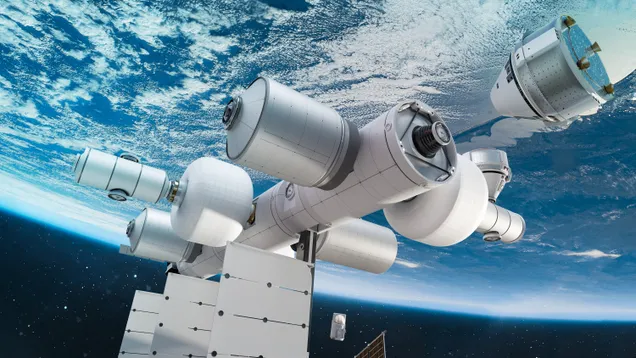
Once among the star companies championing a deal to create a private successor to the International Space Station, talks between Jeff Bezos’ Blue Origin and Sierra Space regarding the Orbital Reef project now appear to be souring.
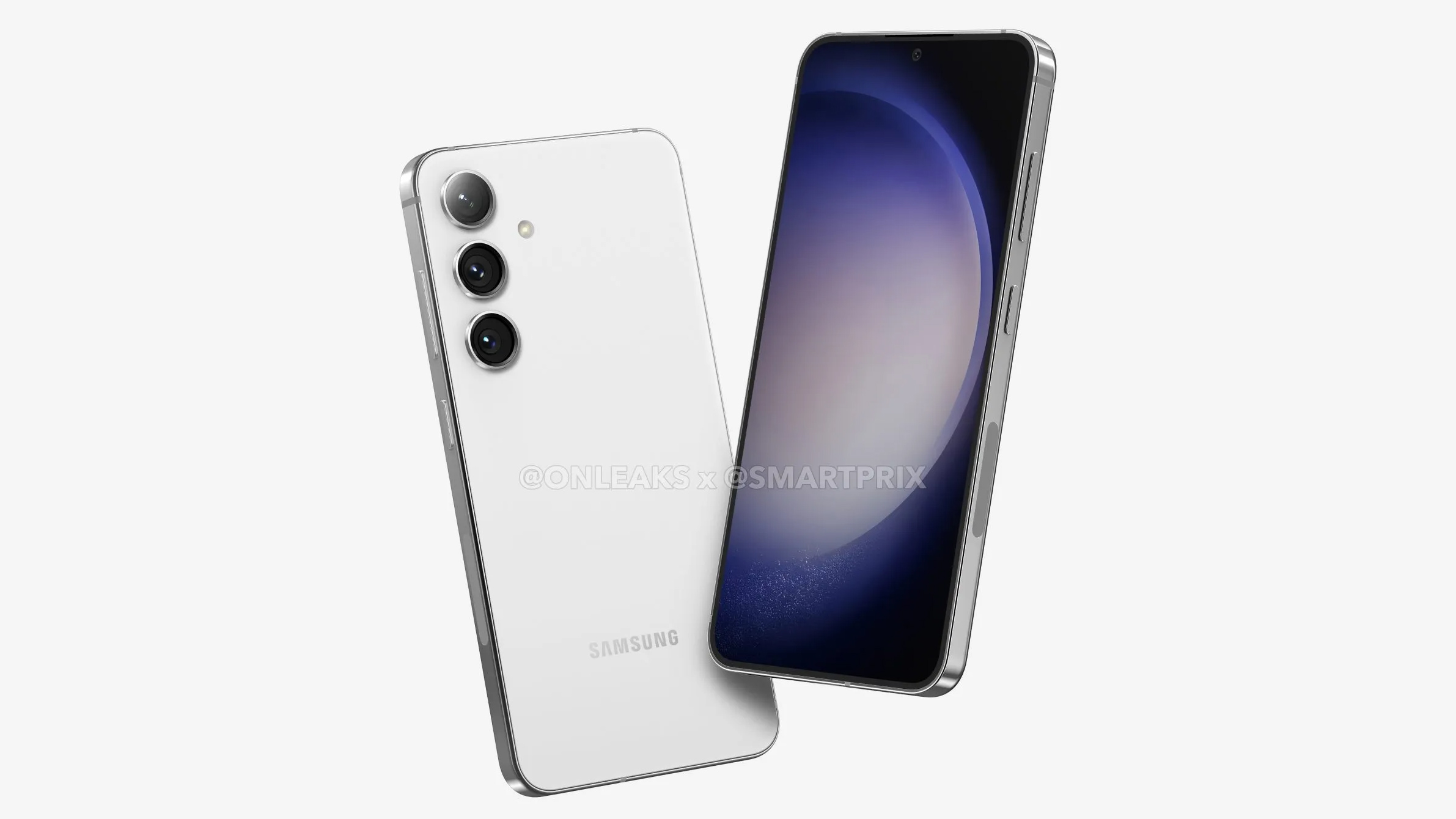
It’s Galaxy S24 leak season! The phone, which won’t be out until early 2024, is already being detailed by OnLeaks and SmartPrix. The two have dueling posts for the S24 Ultra and another for the cheaper S24 and S24 Plus. As usual, these are CAD-derived renders that are usually passed around to accessory makers, so while all the important bits are in the right spot down to the millimeter, don’t read too much into the unconfirmed finer details.
First up are the cheaper Plus and base models, which share a design. The first thing you’ll notice this year is a switch from rounded color-matched sides to a flat metal band that wraps around the perimeter. The new flat band makes the S24 awfully close to an iPhone design, with only the camera block and lack of a dynamic island as the differentiators. Would you believe Samsung has also discovered an affection for titanium and upgraded the phones with slimmer bezels? I swear I’ve heard all this before somewhere recently.
The titanium band has a big oval cutout on the right side of the phone, and that’s reportedly for a UWB (ultra-wideband) antenna. Previously, this was reserved for the Ultra and Plus models, but now even the base model is getting it. Samsung, and seemingly everyone else in the Android ecosystem, is working on coming up with Bluetooth tracker competitors to the AirTag, and UWB’s directional location features will be a core part of that. UWB is not on many Android phones, though, so this is progress.
The National Security Agency (NSA) is starting a dedicated artificial intelligence security center, as reported by AP. This move comes after the government has begun to increasingly rely on AI, integrating multiple algorithms into defense and intelligence systems. The security center will work to protect these systems from theft and sabotage, in addition to safeguarding the country from external AI-based threats.
The NSA’s recent move toward AI security was announced Thursday by outgoing director General Paul Nakasone. He says that the division will operate underneath the umbrella of the pre-existing Cybersecurity Collaboration Center. This entity works with private industry and international partners to protect the US from cyberattacks stemming from China, Russia and other countries with active malware and hacking campaigns.
For instance, the agency issued an advisory this week suggesting that Chinese hackers have been targeting government, industrial and telecommunications outfits via hacked router firmware. There’s also the specter of election interference, though Nakasone says he’s yet to see any evidence of Russia or China trying to influence the 2024 US presidential election. Still, this has been a big problem in the past, and that was before the rapid proliferation of AI algorithms like the CIA’s recently-announced chatbot.
As artificial intelligence threatens to boost the abilities of these bad actors, the US government will look to this new security division to keep up. The NSA decided on establishing the unit after conducting a study that suggested poorly-secured AI models pose a significant national security challenge. This has only been compounded by the increase of generative AI technologies that the NSA points out can be used for both good and bad purposes.
Nakasone says the organization will become “NSA’s focal point for leveraging foreign intelligence insights, contributing to the development of best practices guidelines, principles, evaluation, methodology and risk frameworks” for both AI security and for the goal of secure development and adoption of artificial intelligence within “our national security systems and our defense industrial base.” To that end, the group will work hand-in-hand with industry leaders, science labs, academic institutions, international partners and, of course, the Department of Defense.
Nakasone is on his way out of the NSA and the US Cyber Command and he’ll be succeeded by his current deputy, Air Force Lt. Gen. Timothy Haugh. Nakasone has been at his post since 2018 and, by all accounts, has had quite a successful run of it.
This article originally appeared on Engadget at https://www.engadget.com/the-nsa-has-a-new-security-center-specifically-for-guarding-against-ai-180354146.html?src=rss
An anonymous reader shares a report: Imagine demanding an “honest” debate over the cost of net zero in a report full of errors that even a schoolboy would be embarrassed about. Then imagine getting coverage of your report in the Sun, Times, Daily Mail, Daily Express and Spectator. Sound impossible? Well, let me tell you how Civitas, one of the thinktanks housed at 55 Tufton Street in London, did exactly that, and nearly got away with it. On Wednesday, Civitas published a pamphlet on net zero by Ewen Stewart, whose consultancy, Walbrook Economics, works on “the interaction of macroeconomics, politics and capital markets.” Stewart is also a climate sceptic, having written in 2021 that human-caused warming is a “contested theory.” Along with Civitas, 55 Tufton Street also houses the climate-sceptic lobby group the Global Warming Policy Foundation and its campaigning arm Net Zero Watch. These groups previously attempted to spark an “honest debate about the cost of net-zero” in 2020.
The Civitas report claims to offer a “realistic” $5.5tn estimate of the cost of reaching net zero emissions by 2050 and says “the government need to be honest with the British people.” This estimate is much higher than the figure produced by the government’s official adviser, the Climate Change Committee (CCC), which has said that reaching net zero would require net investments of $1.71tn by 2050. Note the difference between Civitas’s “costs” and the CCC’s “net investments.” The CCC also found that reaching net zero would generate savings in the form of lower fossil fuel bills worth $1.34tn, resulting in a net cost of $0.37tn. In his report for Civitas, Stewart adopts the well-worn climate-sceptic tactic of simply ignoring these savings. He also ignores what the Office for Budget Responsibility has called the potentially “catastrophic economic and fiscal consequences” of unmitigated climate change. The report was timed to follow hot on the heels of Rishi Sunak’s big climate speech, in which he called for an “honest” approach to net zero that ends “unacceptable costs.”
Letterboxd owners sold a majority stake in their social film discussion and discoveryplatform to Tiny for a whopping $50 million, the company announced on Friday. Tiny, a Canadian technology investment and holding company, acquired a 60% stake in the platform, but the owners noted in a press release that they’ll…
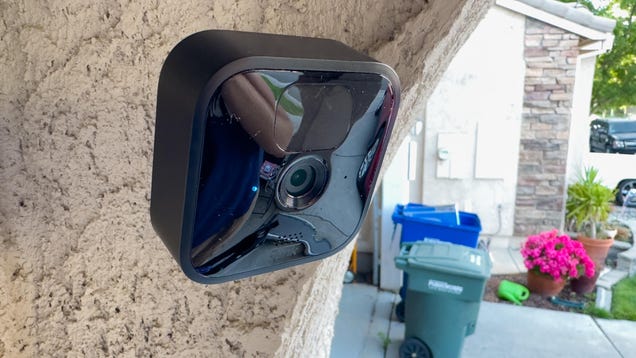
Until the end of the day on Sunday, Oct. 1, Amazon Prime members can get a 58% discount on a three-camera Blink bundle, currently going for $99.99 (down from its $239.98 list price). This is the lowest price this bundle has been, according to Camelcamelcamel’s price history.
The Disney Lorcana trading card game arrived with a massive splash at Gen Con this year, with people staying in line overnight to get booster packs. The high demand continued after the convention, and now a Ravensburger spokesperson tells io9 that “additional booster product” will be arriving at local gaming stores in…
Equal parts Terminator, The Golden Child and The Matrix prequel, The Creator is yet another sci-fi epic about a war between humans and AI, one told by someone who just can’t shut up about their time backpacking across Asia. Director Gareth Edwards clearly understands the power of scale and spectacle, something he demonstrated with his indie knockout Monsters, as well as his big-budget efforts, Godzilla and Rogue One. But The Creator, like those films, also suffers from a disjointed narrative, weak characters and a surprisingly shallow exploration of its (potentially interesting!) themes. It’s a shame — at times, the film also proves he can be a genuine visual poet.
The Creator stars John David Washington, fresh off of Christopher Nolan’s Tenet, as Joshua, an American soldier embedded among a group of AI rebels as a double-agent. When an operation goes wrong early on, he loses his rebel wife Maya (Gemma Chan) and the will to keep fighting the war between the anti-AI West and the AI-loving country of New Asia. (Yes, this is a film where the many people, cultures and languages throughout Asia are flattened into a single nation.)
Photo by 20th Century Studios
Through a series of clunky newsreels that open the film, we see the rise of artificial intelligence as a potential boon for mankind, as well as the creation of Simulants, AI-powered beings with human-like bodies and skin. When a nuclear bomb hits Los Angeles, obliterating millions in seconds, the US and other Western countries blame AI and ban its use. And so begins the war with New Asia, where people live alongside AI and support their rebellion against the West. Naturally, the US ends up building a killer, trillion-dollar weapon: Nomad, an enormous spaceship that can obliterate any location on Earth.
In a last-ditch effort to win the war, Joshua is tasked with finding a powerful new AI weapon and destroying it. Surprise! It’s an adorable AI child (portrayed by the achingly sweet Madeleine Yuna Voyles). Joshua doesn’t have the heart to kill the kid, who he calls Alfie (based on her original designation, “Alpha Omega”). The pair then set off on a Lone Wolf and Cub journey together, as often happens when a grizzled warrior is paired with an innocent child.
If you’re getting shades of Star Wars here — an evil Empire creates a massive space-based weapon to put down rebels — you’re not alone. While The Creator is technically an original property, it lifts so much from existing fiction that it still ends up feeling like a visually lush facsimile. It’s as if ChatGPT remixed your sci-fi faves and delivered the world’s best screensaver.
It doesn’t help that the film doesn’t really have much to say. America’s horrific military aggression against New Asia, which has overt and unearned shades of the Vietnam War throughout, is undoubtedly evil. AI’s push for freedom and understanding is inherently good, and any violence against the West is justified as an act of self defense. Many characters don’t think beyond their roles in the AI War: Allison Janney (from The West Wing!) plays the cruel Colonel Howell, a soldier who hates all AI and wants Alfie dead, no matter the cost. On the other side there’s Ken Watanabe’s Harun, a stoic rebel who fights relentlessly against the American army.
The Creator has no room to explore AI as their own beings and cultures — instead, they just adopt a mishmash of Asian identities. There’s nothing close to the excellent Second Renaissance shorts from The Animatrix, which chronicled the rise of AI in The Matrix and humanity’s eventual downfall. In that universe, AI rebelled against humans because they were basically treated like slaves, and they ultimately formed their own country and customs. In The Creator, some AI wear Buddhist robes for no reason.
I’d wager Edwards is trying to establish the humanity of AI by having them mirror so much of our culture. But that also feels like a wasted opportunity when it comes to portraying an entirely new lifeform. At one point, a village mother describes AI as the next step in evolution, but why must robots be defined by the limitations of humanity?
While the relationship between Joshua and Alfie serves as the emotional core of the film, it still feels stereotypical. Joshua begins the film as a complete anti-AI bigot – which seems odd, given that he spent years among AI rebels and fell in love with one of their major supporters. Alfie is an impossibly adorable Chosen One figure. You can just imagine how their bond grows.
On a personal level, I also found myself annoyed by the relentless Orientalism throughout the film, something that’s practically endemic in popular science-fiction like Blade Runner, Dune and Firefly. By adopting elements of Hinduism, Buddhism and Asian cultures, The Creator is trying to suggest something profound or spiritual tied to AI. But it mainly serves as visual shorthand without giving artificially intelligent beings any interiority of their own.
As the film critic Siddhant Adlakha wrote this week, “By having robots almost entirely stand in for Asian peoples, but without creating a compelling cinematic argument for their humanity, The Creator ends up with a cultural dynamic that feels immediately brutalizing and xenophobic.”
Despite the film’s flaws, Edwards deserves credit for delivering a major science-fiction release that at least attempts to look different than your typical comic book movie. The Creator was shot on consumer-grade Sony FX3 full-frame cameras (yes, even its IMAX footage), which gave Edwards the freedom to shoot on location across the globe. He also delivered a final cut of the film before VFX work began, which allowed those workers to focus on crafting exactly what was needed for each scene. In contrast, Marvel’s films require a backbreaking amount of VFX work, even for scenes that are later changed or cut. (It’s no wonder Marvel VFX workers voted to unionize for better treatment.)
The Creator is more of a missed opportunity than a complete creative failure. If you tune out the clunky dialogue and thin characters, it’s still a visually lush epic that’s worth seeing on the big screen. But I also think that’s true of Attack of the Clones. In a post-Matrix era, a world where we’re already seeing the (very basic) ways AI tools can reshape our society, science-fiction needs more than another story about man versus AI.
This article originally appeared on Engadget at https://www.engadget.com/the-creator-review-a-visually-stunning-yet-deeply-shallow-ai-epic-173021570.html?src=rss
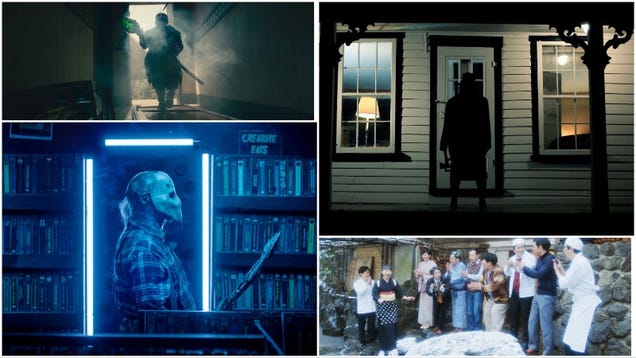
If you love genre films, there truly is nothing like Fantastic Fest. While most festivals play a more balanced slate of films covering all genres, this Austin, Texas-based fest plays only the good shit. Other festivals sometimes refer to them as “Midnight Movies,” but it’s always midnight at Fantastic Fest. Horror,…
Summer ended abruptly this year. One minute, I was sweating profusely, hiding from the sun indoors, and the next thing I knew, I was bundling myself in blankets, hiding from the rain indoors. I wasn’t done with summer, but summer was done with me. As a result, I’ve found myself clinging to sunny-weather things, like…
On September 27, 1983, Richard Stallman announced the
founding of the GNU project. His goal, which seemed wildly optimistic
and unattainable at the time, was to write a complete Unix-like operating
system from the beginning
and make it freely available. Exactly 40 years later, the GNU project
celebrated with a hacker meeting in
Switzerland. Your editor had the good fortune to be able to attend.
An anonymous reader shares a report: In December 2022, we published a short PSA, reminding users they could still activate Windows 11 and 10 with valid Windows 7, 8, and 8.1 keys. This practice dates back to 2015 when Microsoft launched Windows 10 with a one-year free upgrade window. Besides letting Windows 7/8 users upgrade for free to Windows 10, Microsoft allowed activating its newest OS using keys from the previous releases.
Upgrade from Windows 7 and 8 to Windows is no longer possible, and it now seems that Microsoft is removing the loophole to prevent users from activating Windows 11 with old Windows license keys. As spotted by Deskmodder, Microsoft published a message on the Device Partner Center, notifying customers that the installation path to obtain free upgrades from Windows 7 and 8 to more recent Windows versions is no longer available. What it means is that you can no longer update from Windows 7/8/8.1 to Windows 10 or 11.
Explore Cozy, the ultimate audiobook player for GNOME desktop. Import, organize, and listen to your audiobook collection seamlessly with advanced features.
The mutants are coming! The mutants are coming! A new report suggests that now, with the writers’ strike over, Marvel Studios has put the wheels in motion to start taking meetings about an upcoming X-Men movie. This is the absolute earliest stage of the process—but it is the start of the process, and that’s saying…
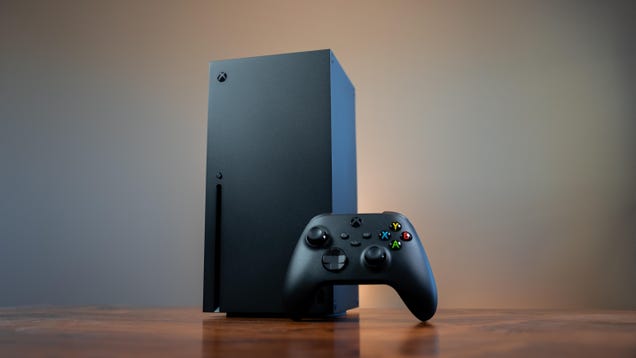
Microsoft won’t let you permanently store your game clips and screenshots on the Xbox Network anymore. In a blog post, the company has announced it’ll start deleting all of these game captures 90 days after you upload them. If you’re as emotionally attached to your “play of the game” moments as I am, you should start…
An educational center could open up at the site of the famed Arecibo Observatory in Puerto Rico as soon as early next year, but astronomy research won’t be among its missions. At least, not for now. The National Science Foundation announced this week that it’s chosen four institutions to take charge of the site’s transition, with a $5.5 million investment over the next five years. It’ll be a hub for STEM education, with a focus on life and computer sciences.
The NSF first revealed its plans for an education center at Arecibo last year after months of uncertainty about its future, confirming then that the telescope would not be rebuilt. The observatory’s main radio telescope suffered a catastrophic collapse in December 2020, when its 900-ton hanging instrument platform fell onto the dish below, destroying the 1,000-foot-wide structure. The collapse abruptly finalized the end of the telescope’s operations after nearly six decades of observations, during which it became a critical tool in the search for extraterrestrial intelligence and in advancing our understanding of the universe.
The new educational center, called the Arecibo Center for Culturally Relevant and Inclusive Science Education, Computational Skills, and Community Engagement (Arecibo C3 for short), is projected to open in early 2024. It’ll be led in collaboration by Cold Spring Harbor Laboratory, University of Puerto Rico-Río Piedras, Universidad del Sagrado Corazón, University of Maryland, Baltimore County.
While there are other working instruments at the site still, which researchers hoped to see funding for to continue science operations, the NSF confirmed to Nature that this is not in its current plans, though it will accept and consider proposals. The telescope’s impact will be presented in an interactive exhibit at the new center. Arecibo C3’s executive director, astronomer Wanda Díaz-Merced, told Nature, “We will be building on the heritage of Arecibo, but we will be building in a wider sense.”
This article originally appeared on Engadget at https://www.engadget.com/the-arecibo-observatorys-next-phase-as-a-stem-education-center-starts-in-2024-165915827.html?src=rss
If you’ve checked out Twitter anytime recently, you might’ve caught a glimpse of Project Voltage, The Pokémon Company’s ongoing art and music collaboration with the Vocaloid teen idol Hatsune Miku. So far Voltage has released 18 illustrations (one for every type of Pokémon) imagining Miku as differentkinds oftrainers
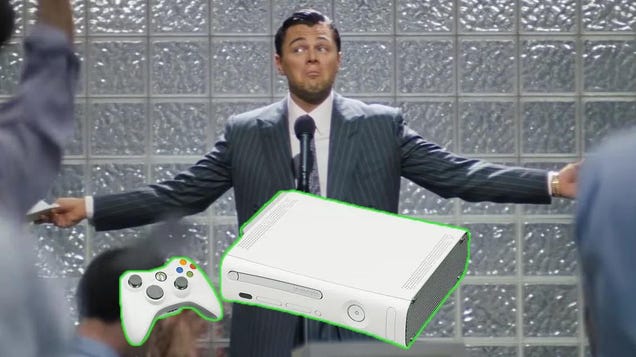
A newly unsealed FBI indictment accuses a former analyst at Goldman Sachs of insider trading, including allegedly using an Xbox to pass tips onto his close friends. The friend group earned over $400,000 in ill-gotten gains as a result, federal prosecutors claim. “There’s no tracing [Xbox 360 chat],” the analyst…