Ahsoka's Composers Break Down Scoring This Week's Big Cameo

Balancing the need to bring a new but familiar sound to Star Wars while also playing in the footsteps of John Williams’ legendary music for the saga is a challenge for every composer who joins the franchise. Few have faced it as often as the Kiner family—composer and father Kevin, alongside his children Deana and…

Read more…


Source: Gizmodo – Ahsoka’s Composers Break Down Scoring This Week’s Big Cameo

Where to Stream the Washington Vs. Arizona Game

This week five matchup pits the Arizona Wildcats against the Washington Huskies. Washington is hoping to expand its undefeated 2023 record to 5-o, but the Wildcats are not going to roll over. While they’re definitely the underdog, Arizona is coming off a 21-20 win against Stanford, and the team’s 3-1 record is nothing…

Read more…


Source: LifeHacker – Where to Stream the Washington Vs. Arizona Game

Preorder Thrustmaster's Ferrari 488 GT3 Racing Wheel Add-On To Dominate The Track

Preorder Thrustmaster's Ferrari 488 GT3 Racing Wheel Add-On To Dominate The Track
Thrustmaster is introducing a new add-on racing wheel to its collection known as the Ferrari 488 GT3 Wheel Add-On. Inspired by Ferrari’s very successful 488 GT3 racing car, the wheel is an exact 1:1 replica of the steering wheel found on the real GT3 race car, sporting a carbon fiber finish. The wheel is compatible with current and future

Source: Hot Hardware – Preorder Thrustmaster’s Ferrari 488 GT3 Racing Wheel Add-On To Dominate The Track

The Elder Scrolls: Castles is like Fallout Shelter for Skyrim fans

Bethesda appears to have shadow-dropped (intentionally or not) a new mobile game set in a familiar universe. The Elder Scrolls: Castles is a building management game reminiscent of Fallout Shelter. The title, first spotted by Reddit user u/tracteurman (via GamesRadar), is available for Android but not iOS.

The Elder Scrolls: Castles tasks you with controlling a castle — and your dynasty. “Oversee your subjects as the years come and go, families grow, and new rulers take the throne,” the game’s Play Store description reads. It describes a real-life day in the game covering a year within the virtual world.

Its gameplay involves familiar staples of building management sims: customize the castle, add and expand rooms, decorate, place monuments and assign workers to stations. In addition, you can create heroes to embark on “epic quests” to battle against classic Elder Scrolls foes.

Play Store marketing slide for Bethesda’s mobile game ‘The Elder Scrolls: Castles.’ A screenshot shows an action scene where several players battle a giant red dragon. A banner at the bottom (featuring a fearsome knight) reads,
Bethesda

The Play Store listing’s “What’s new” section says, “Welcome to early access,” which at least suggests the game may have been intended as a closed beta. However, it’s downloadable and playable to anyone with a Play Store account at the time of publication. We reached out to Bethesda to find out whether the game’s silent publication was intentional, and we’ll update this article if we find out more.

The Elder Scrolls: Castles is free in the Google Play Store. It’s rated “Teen” for violence and suggestive themes.

This article originally appeared on Engadget at https://www.engadget.com/the-elder-scrolls-castles-is-like-fallout-shelter-but-skyrim-212404049.html?src=rss

Source: Engadget – The Elder Scrolls: Castles is like Fallout Shelter for Skyrim fans

New 0-day in Chrome and Firefox will likely plague other software

Photograph depicts a security scanner extracting virus from a string of binary code. Hand with the word "exploit"

Enlarge (credit: Getty Images)

A critical zero-day vulnerability Google reported on Wednesday in its Chrome browser is opening the Internet to a new chapter of Groundhog Day.

Like a critical zero-day Google disclosed on September 11, the new exploited vulnerability doesn’t affect just Chrome. Already, Mozilla has said that its Firefox browser is vulnerable to the same bug, which is tracked as CVE-2023-5217. And just like CVE-2023-4863 from 17 days ago, the new one resides in a widely used code library for processing media files, specifically those in the VP8 format.

Pages here and here list hundreds of packages for Ubuntu and Debian alone that rely on the library known as libvpx. Most browsers use it, and the list of software or vendors supporting it reads like a who’s who of the Internet, including Skype, Adobe, VLC, and Android.

Read 7 remaining paragraphs | Comments


Source: Ars Technica – New 0-day in Chrome and Firefox will likely plague other software

If the Linux Foundation Was a Software Company, It'd Likely Be the Biggest in the World

An anonymous reader shares a report: The Cloud Native Computing Foundation has returned to Shanghai for the city’s first Kubecon since the pandemic. During a keynote that switched languages several times, demonstrating the challenges faced by both AI and human translators in keeping up, Jim Zemlin, executive director of the Linux Foundation, threw out several crowd-pleasing statistics while also highlighting some projects likely to make one or two companies squirm a little. On the statistics front, Zemlin joked that the Linux Foundation was likely the largest software company in the world, noting that if one took an average software developer’s salary — he put the worldwide mean as being $40,000 — and multiplied it by the number of developers contributing to the foundation, the payroll would come to around $26 billion — more than Microsoft’s $24 billion R&D payroll.

The statistic was somewhat tongue in cheek as Zemlin pointed out that none of the developers working on Linux Foundation projects actually work for the Linux Foundation. However, the sheer quantity of engineers involved highlighted another issue noted by Zemlin: the “paradox of choice” when selecting the correct open source project for a given purpose when the number on offer reaches the hundreds, thousands, and beyond. Reflecting the increasing maturity of some elements of the open source world, he also emphasized the opportunities for companies to increase revenues and profits through the use of open source. WeChat, Alibaba, and Huawei all received nods — unsurprising considering the location — as Zemlin noted a virtuous circle whereby improvements go back into projects, meaning better profits, meaning more improvements, and so on. It all sounded very utopian, although darkening clouds were signaled by the addition of OpenTofu to the list of projects Zemlin was keen to boast about, including open source efforts around large language models.

Read more of this story at Slashdot.


Source: Slashdot – If the Linux Foundation Was a Software Company, It’d Likely Be the Biggest in the World

Epic Games is laying off 16 percent of its workforce and selling Bandcamp

Fortnite maker Epic Games is laying off 16 percent of its staff — or about 830 employees. CEO Tim Sweeney said in an open letter to sent employees that Epic Games has been spending “way more money” than it earns. “We concluded that layoffs are the only way,” he wrote “and that doing them now and on this scale will stabilize our finances.”

For those impacted by the layoffs, the company says it will offer a severance package that includes six months base pay and healthcare. Epic Games is also offering to accelerate employee’s stock option vesting schedule through 2024, while giving two additional years to exercise the options. About two-thirds of the layoffs affected teams outside of core development.

Sweeney wrote that Epic had been making an effort to reduce costs by not only freezing hiring but also by cutting spending on things like marketing and events. And while the metaverse is still in a conceptual phase, Sweeney said he wants the company to focus on developing infrastructure for its games to exist in the metaverse ecosystem. For example, Epic teamed up with LEGO to build an “immersive digital experience” for kids.

Epic also said it is divesting Bandcamp, an online music platform it acquired in mid-2022; it’s coordinating a sale to Songtradr, a music licensing platform. SuperAwesome, a kid-friendly developer Epic acquired back in 2020, is being broken apart and partially spun out as well. Its advertising business will become an independent company, while the Kids Web Services segment and the parent verification and consent management toolsets will remain part of Epic.

While these moves to cut spending may help Epic Games stave off pressure from investors like Tencent and Sony, its flagship game Fortnite remains banned from Apple’s App Store and Google’s Play Store, which will continue to impact its bottom line. Not to mention the $520 million dollars in penalties it has incurred from the FTC and its efforts to have the Supreme Court overturn a ruling that cleared of antitrust violations.

Still, Sweeney says Epic’s “prospects for the future are strong,” thanks to Fortnite and the Unreal Engine. Next week, the company will be hosting Unreal Fest, and while some products and initiatives will continue to land on schedule, Sweeney says some may fall behind due to restrictions on resources. “We’re ok with the schedule tradeoff if it means holding on to our ability to achieve our goals, get to the other side of profitability and become a leading metaverse company,” he said in the memo.

The company says it will not cut any funding for its core businesses and it will continue to invest in games with Fortnite first-party development, as well as the Fortnite creator ecosystem.

This article originally appeared on Engadget at https://www.engadget.com/epic-games-is-laying-off-16-percent-of-its-workforce-and-selling-bandcamp-211830580.html?src=rss

Source: Engadget – Epic Games is laying off 16 percent of its workforce and selling Bandcamp

Adobe's 'Photoshop on the web' service is now available to all Creative Cloud subscribers

Users will be able to edit, share and receive feedback on their Photoshop projects from anywhere on the web, Adobe announced Wednesday, regardless of whether an Adobe product is installed on their PC or tablet. The company is bringing its Photoshop on the web service out of beta and incorporating a few handy new AI features as well.

Adobe first introduced a feature-svelt online version of the popular Photoshop app in December, 2021. Originally, users could share their psd files but only if the recipient had a copy of Photoshop or Illustrator on their computer too. That changed with the introduction of Creative Cloud, which allowed for sharing without the need for a local install. The beta version of Photoshop on the web took that concept a step further by incorporating basic editing tools into the web UI geared towards “minor tweaks and quick edits” — the easy sort of stuff that took less time to fix than the program took to boot. The production version released Wednesday does all that and more.

“With this release we are starting with a focus on the needs of creators who are new to Photoshop with a streamlined user experience,” Adobe VP Pam Clark wrote in a blog post. “We have brought the majority of the most commonly used Photoshop tools to the web and have streamlined the user experience, to make it easier for newer users to navigate the app.”

Users will also be able to experiment with two new AI-driven tools, generative fill and generative expand. As their names’ imply, these will “allow you to add, expand, or remove content from your images non-destructively, while magically matching perspective, lighting, and style of your image,” Clark wrote. The features were first released as part of Firefly for the desktop edition of Photoshop

The Contextual Taskbar is also migrating over from the desktop. This on-screen menu will observe your workflow and suggest relevant next steps. But for all the new features to play with, a number of existing tools have yet to make the jump to the web, including the patch and pen tools, smart object support and the polygonal lasso, the the company insists that they will be added with future updates.  

This article originally appeared on Engadget at https://www.engadget.com/adobes-photoshop-on-the-web-service-is-now-available-to-all-creative-cloud-subscribers-210034891.html?src=rss

Source: Engadget – Adobe’s ‘Photoshop on the web’ service is now available to all Creative Cloud subscribers

The Three Best Kitchen Countertops to Install Yourself

If you’re considering a kitchen remodel, or you just need to replace your worn-out countertops, finding the right type of countertop might seem daunting. With costs for materials seemingly ever-increasing, staying on budget is a challenge. Finding a DIY solution can be a great way to save money on your countertop…

Read more…


Source: LifeHacker – The Three Best Kitchen Countertops to Install Yourself

Looks like NVIDIA got raided by French antitrust authorities

At dawn on Wednesday, French antitrust authorities conducted a surprise raid on a company in the country that specializes in graphics cards — and according to The Wall Street Journal and Challenges business magazine, that company was NVIDIA. We reached out to NVIDIA for clarification and a spokesperson declined to comment. Here’s what we know for sure:

The French Competition Authority conducted a surprise raid early Wednesday morning on “a company suspected of having implemented anticompetitive practices in the graphics cards sector,” according to a brief press release from the regulator. The raid was tied to a larger investigation into the health of the cloud computing market, with a focus on identifying whether new companies were being unfairly squeezed out by larger, existing ones. The results of that investigation were published in June and they centered on three “hyperscalers,” Amazon Web Services, Google Cloud and Microsoft Azure. 

The results read, in part, “The likelihood of a new operator being able to gain market share rapidly appears limited, excluding companies who are already powerful in other digital markets.” NVIDIA is not mentioned in the original cloud investigation.

NVIDIA has seen significant financial success this year amid the AI boom. NVIDIA’s AI chips and data centers are in high demand, and the company crushed its most recent earnings expectations, pulling in $13.51 billion in the second quarter of 2023, compared with $6.7 billion in 2022.

As the French Competition Authority noted, a raid does not mean the targeted company is guilty of anticompetitive practices — but it’s a confident step from the regulatory body.

This article originally appeared on Engadget at https://www.engadget.com/looks-like-nvidia-got-raided-by-french-antitrust-authorities-205809329.html?src=rss

Source: Engadget – Looks like NVIDIA got raided by French antitrust authorities

The Spotted Lanternfly Has Invaded Illinois, Squash 'em

The Department of Agriculture (DOA) has confirmed that a local sighting of the invasive spotted lanternfly was reported on Sept. 16, marking yet another state it’s migrated to since the colorful insect was first sighted in the U.S. nearly a decade ago. The Department of Agriculture did not disclose the lanternfly’s…

Read more…


Source: io9 – The Spotted Lanternfly Has Invaded Illinois, Squash ’em

Someone Turned Starfield’s Lockpicking Into Its Own Game

Released earlier this month, Starfield is Bethesda’s long-in-development and much-hyped open-world space RPG. And while the hundreds of planets and spaceship building are cool and all, I particularly enjoy Starfield’s fantastic lockpicking minigame. Apparently I’m not alone, because someone out there has taken the…

Read more…


Source: Kotaku – Someone Turned Starfield’s Lockpicking Into Its Own Game

Mark Zuckerberg Can't Quit the Metaverse

An anonymous reader shares a story: Almost two years ago, Mark Zuckerberg rebranded his company Facebook to Meta — and since then, he has been focused on building the “metaverse,” a three-dimensional virtual reality. But the metaverse has lost some of its luster since 2021. Companies like Disney have closed down their metaverse divisions and deemphasized using the word, while crypto-based startup metaverses have quietly languished or imploded. In 2022, Meta’s Reality Labs division reported an operational loss of $13.7 billion. But at Meta Connect 2023, Zuckerberg still hasn’t given up on the metaverse — he’s just shifted how he talks about it. He once focused on the metaverse as a completely digital new world. Now, he aims to convince the public that the future is a blend of the digital and the physical.

At Connect this year, Zuckerberg emphasized that the modern “real world” combines the physical world and the digital world still being built — and that it all builds up to “this concept we call the metaverse.” He added: “Pretty soon, I think we’re going to be at a point where you’re going to be there physically with some of your friends, and others will be there digitally as avatars or holograms, and they’ll feel just as present as everyone else. Or you’ll walk into a meeting and sit down at a table. There will be people who are there physically and people who are there digitally as holograms, but also sitting around the table with you are going to be a bunch of AI guys who are embodied as holograms and are helping you get different stuff done too.”

Read more of this story at Slashdot.


Source: Slashdot – Mark Zuckerberg Can’t Quit the Metaverse

Iran Launches Third Military Satellite to Orbit, Raising Tensions on the Ground

Iran claims it has successfully placed a third imaging satellite in orbit, a move that will likely garner more criticism from the Western world over fears that the Islamic republic is bolstering its ballistic missile technology.

Read more…


Source: Gizmodo – Iran Launches Third Military Satellite to Orbit, Raising Tensions on the Ground

Privacy Fears Abound After Uber Eats Delivery Bot Shares Video Footage With LAPD

It’s only been about a year since Uber Eats began deploying food delivery robots throughout select parts of Los Angeles and, already, concerns have been raised that the squat little automatons could become a police surveillance tool.

Read more…


Source: Gizmodo – Privacy Fears Abound After Uber Eats Delivery Bot Shares Video Footage With LAPD

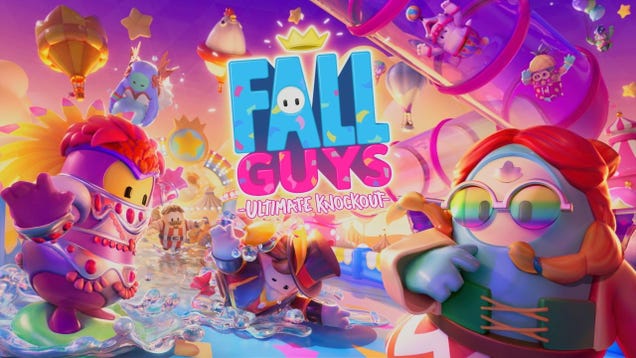
Beloved Battle Royale Fall Guys Among Those Hit By Epic Games Layoffs

Epic Games acquired Mediatonic in 2021 after its colorful battle royale, Fall Guys, became a multiplayer sensation early in the covid-19 pandemic. Now, it’s laying off tons of developers at the UK-based studio as part massive cost cutting at the Fortnite maker.

Read more…


Source: Kotaku – Beloved Battle Royale Fall Guys Among Those Hit By Epic Games Layoffs

How to Rejuvenate the Soil in Your Raised Garden Beds

It’s the end of the season, and we’re all starting to tuck in our garden beds for winter. The soil in your raised garden bed has worked hard all season to impart nutrients to your vegetables and flowers, which leaves the soil depleted. The long winter sleep is a great time to let your soil build back up the supply of…

Read more…


Source: LifeHacker – How to Rejuvenate the Soil in Your Raised Garden Beds

Google will let publishers hide their content from its insatiable AI

Google has announced a new control in its robots.txt indexing file that would let publishers decide whether their content will “help improve Bard and Vertex AI generative APIs, including future generations of models that power those products.” The control is a crawler called Google-Extended, and publishers can add it to the file in their site’s documentation to tell Google not to use it for those two APIs. In its announcement, the company’s vice president of “Trust” Danielle Romain said it’s “heard from web publishers that they want greater choice and control over how their content is used for emerging generative AI use cases.”

Romain added that Google-Extended “is an important step in providing transparency and control that we believe all providers of AI models should make available.” As generative AI chatbots grow in prevalence and become more deeply integrated into search results, the way content is digested by things like Bard and Bing AI has been of concern to publishers. 

While those systems may cite their sources, they do aggregate information that originates from different websites and present it to the users within the conversation. This might drastically reduce the amount of traffic going to individual outlets, which would then significantly impact things like ad revenue and entire business models.

Google said that when it comes to training AI models, the opt-outs will apply to the next generation of models for Bard and Vertex AI. Publishers looking to keep their content out of things like Search Generative Experience (SGE) should continue to use the Googlebot user agent and the NOINDEX meta tag in the robots.txt document to do so.

Romain points out that “as AI applications expand, web publishers will face the increasing complexity of managing different uses at scale.” This year has seen an explosion in the development of tools based on generative AI, and with search being such a huge way people discover content, the state of the internet looks set to undergo a huge shift. Google’s addition of this control is not only timely, but indicates it’s thinking about the way its products will impact the web.

Update, September 28 at 5:36pm ET: This article was updated to add more information about how publishers can keep their content out of Google’s search and AI results and training.

This article originally appeared on Engadget at https://www.engadget.com/google-will-let-publishers-hide-their-content-from-its-insatiable-ai-202015557.html?src=rss

Source: Engadget – Google will let publishers hide their content from its insatiable AI