The Morning After: The FTC is challenging Microsoft’s Activision buyout, again

Just when Microsoft’s buyout of Activision finally seemed to be near complete — and we could focus on Google’s legal tussles with the Department of Justice — the Federal Trade Commission said it will revive its attempt to block the $69 billion deal in an adjudicative process. Microsoft received EU approval over the summer when the European Commission endorsed the deal as long as the tech giant could ensure “full compliance with commitments.”

Normally, the FTC drops its challenges to deals when efforts are lost in federal court. This move will not delay the deal, though in the worst-case scenario, Microsoft might have to sell off parts of the gaming company. Microsoft told Bloomberg it’s not concerned about the move preventing its purchase. Regardless of the impact it could have, the FTC’s in-house hearing will only start after the Ninth Circuit issues an opinion on the appeal.

— Mat Smith

The Morning After is going to YouTube. Check out our weekly episodes here!

The biggest stories you might have missed

How to use iOS 17’s Check In feature in iMessage to let friends know you got home safe

macOS Sonoma made me hate widgets less

The best gaming keyboards of 2023

ChatGPT now supports voice chats and image-based queries

Scientists confirm some black holes spin

The researchers analyzed 22 years’ worth of observations of the galaxy M87.

Observing 22 years of the first black hole humanity has ever imaged has offered “unequivocal evidence” that black holes spin. There’s apparently an oscillating jet that swings up and down roughly every 11 years. An international team of scientists headed by Chinese researcher Dr. Cui Yuzhu analyzed more than two decades of observational data gathered by more than 20 telescopes around the world to make the discovery in the black hole at the center of galaxy M87.

A small fraction of particles not falling into the black hole get jetted out. The telescopes’ observations show that M87’s jet oscillates by 10 degrees in a recurring 11-year cycle —– as Einstein’s General Theory of Relativity predicted. Aside from proving Einstein right, it’s a significant discovery that massively improves our understanding of black holes.

Continue reading.

Honda’s first all-electric SUV has 300-mile range

The Prologue arrives in early 2024.

Honda has revealed more details about its all-electric Prologue SUV. The EV will have a listed range of 300 miles and cost around “the upper $40,000s” before any incentives or tax credits. The pricing puts it well above rival SUVs, like the Volkswagen ID.4, Hyundai Ioniq 5 and Mustang Mach-E — all of which start around $40,000. Also, the range of Honda’s EV is comparatively shorter.

Continue reading.

This third-party deck makes your Switch feel like a dream

CRKD’s Nitro Deck costs $60.

TMA
Engadget

The Nitro Deck comes from CRKD, a new company founded at Embracer Group’s Freemode incubator lab. The Nitro Deck is a simple idea executed well: Slide your Switch screen into the frame and it acts as a self-contained, beefed-up gamepad, sidestepping the initially innovative but drifty Joy-Con controllers. You can also get it in a decidedly Gamecube colorway. Lots of purple.

Continue reading.

These origami-inspired flying robots change shape in mid-air

The true foldables.

TMA
University of Washington

Scientists at the University of Washington have developed flying robots that change shape in mid-air, without batteries, as originally published in the research journal Science Robotics. These miniature Transformers snap into a folded position during flight to stabilize descent. They weigh just 400 milligrams and feature an on-board battery-free actuator, powered by solar. Future-use cases could range from monitoring weather to checking air conditions with a fleet of the lil’ things

Continue reading.

This article originally appeared on Engadget at https://www.engadget.com/the-morning-after-the-ftc-is-challenging-microsofts-activision-buyout-again-111600835.html?src=rss

Source: Engadget – The Morning After: The FTC is challenging Microsoft’s Activision buyout, again

Rocket Report: Iran launches satellite; Artemis II boosters get train ride

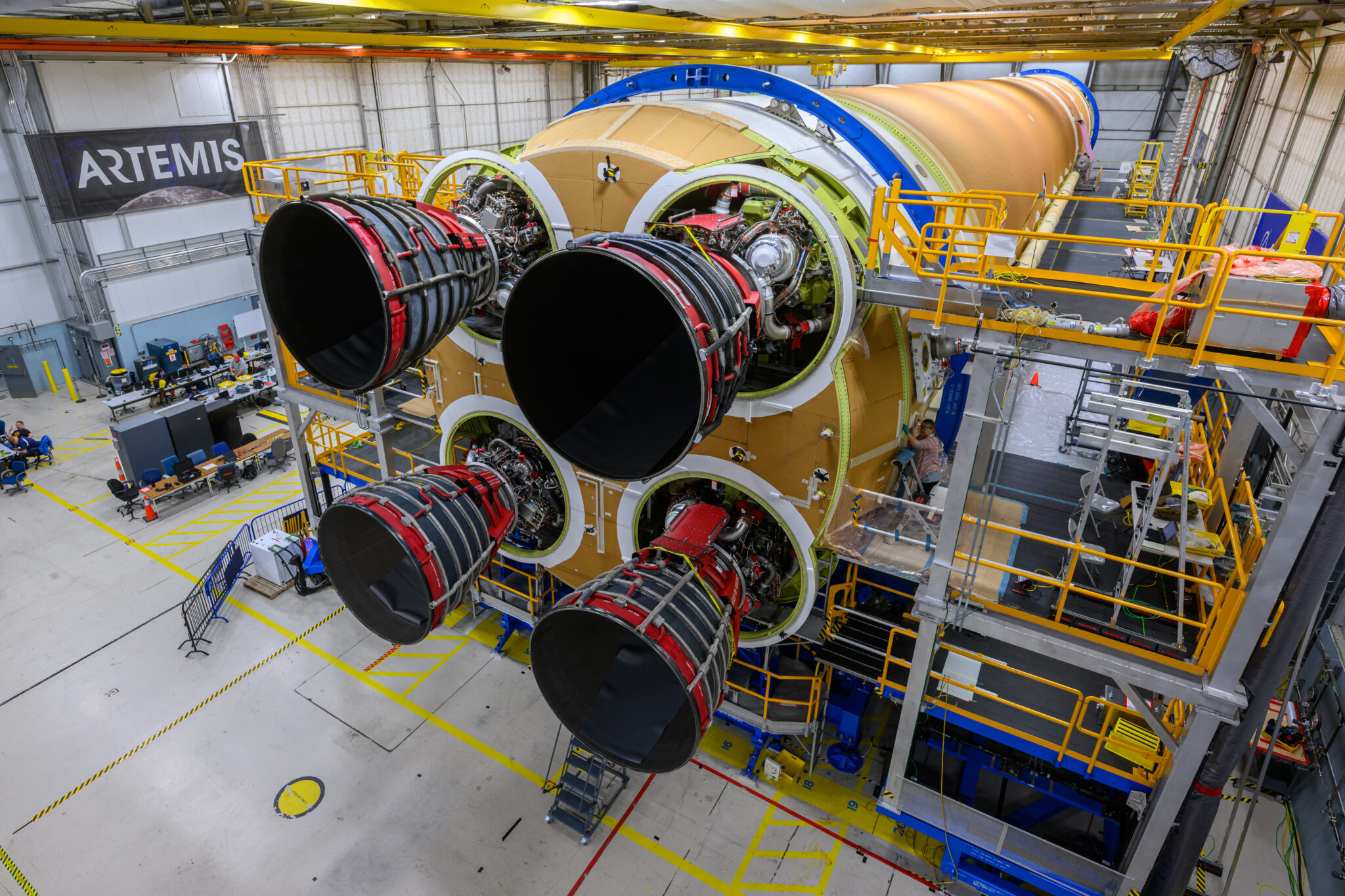
All four RS-25 main engines are now installed the core stage for the Artemis II mission.

Enlarge / All four RS-25 main engines are now installed the core stage for the Artemis II mission.

Welcome to Edition 6.13 of the Rocket Report! While SpaceX waits for regulatory approval to launch the second full-scale test flight of its Super Heavy booster and Starship rocket, NASA’s contractors took two steps forward this week to prepare for the second launch of the government-owned Space Launch System on the Artemis II mission, which will send a team of four astronauts around the far side of the Moon. This launch is still more than a year away. How many Starship test flights will SpaceX launch before Artemis II? Will Blue Origin’s New Glenn be flying by then?

As always, we welcome reader submissions, and if you don’t want to miss an issue, please subscribe using the box below (the form will not appear on AMP-enabled versions of the site). Each report will include information on small-, medium-, and heavy-lift rockets, as well as a quick look ahead at the next three launches on the calendar.

Iran has launched a small satellite. Iran’s Islamic Revolutionary Guard Corps successfully launched a small satellite named Noor 3 into orbit Wednesday, Reuters reported. This military satellite launched aboard a Qased rocket, a small launch vehicle powered by a liquid-fueled booster stage. The Qased, which means “messenger” in Persian, is reportedly capable of carrying a payload up to about 100 pounds (45 kilograms) into low-Earth orbit. Publicly available US military tracking data indicated the rocket deployed the Noor 3 satellite into an orbit about 280 miles (450 kilometers) above Earth.

Read 22 remaining paragraphs | Comments


Source: Ars Technica – Rocket Report: Iran launches satellite; Artemis II boosters get train ride

Google is sunsetting its collaborative Jamboard app

Google is sending Jamboard on its way to the company’s ever-growing graveyard full of products and services that didn’t quite work out. It will wind down the Jamboard whiteboarding app sometime in late 2024, it has revealed in a Workspace post, and will switch to working more closely with third-party partners. Jamboard is the tech giant’s home-grown whiteboarding solution that provides people the ability to collaborate in real time. Anything drawn or edited on its website or app, for instance, gets reflected on the Jamboard hardware, and vice versa. 

To continue giving teams that use its tools access to a collaborative digital whiteboard, Google is integrating FigJam, Lucidspark and Miro across its Workspace. It also promised to provide a “retention and migration path” so that users don’t lose any collaborative work they’ve created within an organization. In its post, Google said it received feedback from customers that the advanced features offered by the aforementioned third-party partners helped their teams work better together. Based on that feedback, the company has decided to “leverage [its] partner ecosystem for whiteboarding in Workspace and focus [its] efforts on core content collaboration across Docs, Sheets, and Slides.”

In addition to killing the Jamboard app, Google is also winding down support for the $5,000 Jamboard device. The 4K digital whiteboard, which originally went on sale in 2017, will stop receiving auto-updates on September 30, 2024.

This article originally appeared on Engadget at https://www.engadget.com/google-is-sunsetting-its-collaborative-jamboard-app-101658315.html?src=rss

Source: Engadget – Google is sunsetting its collaborative Jamboard app

Nissan To Go All-Electric By 2030 Despite UK's Petrol Ban Delay

“Nissan will make the switch to full electric by 2030 in Europe. We believe it is the right thing to do for our business, our customers and for the planet,” said Nissan’s chief executive Makoto Uchida. The announcement comes despite the UK postponing its 2030 ban on the sale of new petrol and diesel cars to 2035. The BBC reports: In an interview with the BBC, Mr Uchida said the company was aiming to bring down the cost of electric vehicles for customers, so that they were no more expensive than petrol and diesel cars. “It may take a bit of time, but we are looking at the next few years,” he said. “We are looking at it from the point of view of the technology, from the point of view of cooperating with suppliers, and of course working with the government on how we can deliver that kind of cost competitiveness to the consumer,” Mr Uchida added. Will that price parity happen by 2030? “That’s what we’re aiming for,” confirmed Mr Uchida.

Mr Uchida also said that the company was fast-tracking a different kind of battery technology, known as all-solid-state batteries (ASSB), which are lighter, cheaper, and quicker to charge. “We are going to have a pilot plant for ASSB in Japan from next year, and we want to ensure they can be mass produced by 2028,” he said. “There are a lot of challenges with this, but we do have a solution, and we are on track [to meet that target]”, he added.

Read more of this story at Slashdot.


Source: Slashdot – Nissan To Go All-Electric By 2030 Despite UK’s Petrol Ban Delay

SpaceX lands US Space Force contract for Starshield satellite communications

SpaceX has won a $70 million contract with the US Space Force to provide satellite communications for the US Space Force via its Starshield program, Bloomberg reported. The company will effectively be repurposing its Starlink network for military usage as a way to provide a “secured satellite network for government entities,” according to SpaceX’s website. The contract has a one-year duration. 

“The SpaceX contract provides for Starshield end-to-end service (via the Starlink constellation), user terminals, ancillary equipment, network management and other related services,” a Space Force spokesperson told CNBC in a statement. The initial phase requires the Space Force to pay $15 million to SpaceX by September 30th, and SpaceX will support 54 military “mission partners” across Department of Defence (DoD) branches. 

A group of US senators recently criticized SpaceX’s actions in Ukraine, after a biography on Elon Musk revealed that he refused Ukraine’s request to extend Starlink coverage to allow a naval attack on Russian-held Crimea. “We are deeply concerned with the ability and willingness of SpaceX to interrupt their service at Mr. Musk’s whim and for the purpose of handcuffing a sovereign country’s self-defense, effectively defending Russian interests,” they wrote.

However in a post on his social network X, Musk refuted that sentiment. “Starlink needs to be a civilian network, not a participant to combat. Starshield will be owned by the US government and controlled by DoD Space Force,” he said. 

SpaceX is already a key contractor for the Pentagon, providing the military with rocket launches. Last year, the Space Force approved the company’s reusable Falcon Heavy to carry US spy satellites into orbit. Earlier this year, SpaceX won a contract to provide an unspecified number of Starlink ground terminals for use in Ukraine. 

This article originally appeared on Engadget at https://www.engadget.com/spacex-lands-us-space-force-contract-for-starshield-satellite-communications-085045883.html?src=rss

Source: Engadget – SpaceX lands US Space Force contract for Starshield satellite communications

How to Install WordPress on Debian 12

Learn how to install WordPress on Debian 12 with our in-depth tutorial. Read on and learn more about this topic. WordPress is a free, open-source content management system (CMS) written in PHP. It is used for creating websites with various plugins and themes and is customizable in every aspect according to client needs. In this blog post, we will install WordPress with the LAMP stack. Installing WordPress with a LAMP stack is a straightforward process that may take up to 15 minutes.

Source: LXer – How to Install WordPress on Debian 12

Top Chinese Scientist Questions India's Claim To Reaching Moon's South Pole

Last month, India became the first country to put a spacecraft near the lunar south pole — breaking China’s record for the southernmost lunar landing. Now, the so-called father of China’s lunar exploration program, Ouyang Ziyuan, said claims about the accomplishment are overstated. Time reports: Ziyuan […] told the Chinese-language Science Times newspaper that the Chandrayaan-3 landing site, at 69 degrees south latitude, was nowhere close to the pole, defined as between 88.5 and 90 degrees. On Earth, 69 degrees south would be within the Antarctic Circle, but the lunar version of the circle is much closer to the pole.

“It’s wrong!” he said of claims for an Indian polar landing. “The landing site of Chandrayaan-3 is not at the lunar south pole, not in the lunar south pole region, nor is it near the lunar south pole region.” The Chandrayaan-3 was 619 kilometers (385 miles) distant from the polar region, Ouyang said.

Read more of this story at Slashdot.


Source: Slashdot – Top Chinese Scientist Questions India’s Claim To Reaching Moon’s South Pole

Tesla sued by federal agency for racial harassment at California factory

Tesla has been tolerating racial harassment at its factory in Fremont, California since at least 2015 until today, according to the lawsuit filed by the US Equal Employment Opportunity Commission (EEOC). The automaker has violated federal law by tolerating the “widespread and ongoing racial harassment of its Black employees,” the agency said. Further, affected workers who raised concerns about the abuse they were getting were apparently subjected to various forms of retaliation: They were transferred, their duties were changed, or they were terminated. 

The EEOC’s lawsuit says Black employees were regularly called variations of the N-word, “monkey,” “boy” and “black b*tch” throughout the factory, even in hubs were workers gathered. These employees also encountered drawings of racial graffiti, including swastikas and nooses, on desks, as well as on the walls of bathroom stalls and elevators throughout the factory. If these allegations sound familiar, it’s because they’re identical to the complaints filed by plaintiffs who previously sued Tesla for racial harassment. 

One of those plaintiffs was Melvin Berry, who accused Tesla supervisors of using racial slurs against him. And there was Owen Diaz, who said he was subjected to racial slurs and was made to feel unsafe at work with racist graffiti on his workspace, such as drawings of Inki the Caveman. Diaz was originally granted $137 million in damages, which was one of the highest amounts awarded to an individual suing on the basis of discrimination. However, it was significantly lowered following several appeals, until it was reduced to $3.2 million earlier this year. 

The EEOC filed its lawsuit after doing an investigation on the automaker and trying to reach pre-litigation settlement through conciliation. Now, it’s seeking both compensatory and punitive damages, as well as backpay for all affected workers. It’s also asking the court for an injunction “designed to reform Tesla’s employment practices to prevent such discrimination in the future.”

This article originally appeared on Engadget at https://www.engadget.com/tesla-sued-by-federal-agency-for-racial-harassment-at-california-factory-053220563.html?src=rss

Source: Engadget – Tesla sued by federal agency for racial harassment at California factory

How Lockheed Martin Designed the World's Weirdest, Quietest Supersonic Jet

An anonymous reader quotes a report from Fast Company: The Lockheed Martin X-59 is probably the strangest airplane ever designed. Its razor-sharp nose takes half of the airplane’s length; there’s no cockpit in sight; the wings are tiny compared to the entire fuselage; and its oversized tail engine looks like a weird hump about to fall off. Of course, there’s a method to this madness. The design is the secret sauce that has produced a true unicorn: a supersonic jet that doesn’t boom the hell out of people and buildings on the ground. […] The X-59, developed alongside NASA, is designed as an experimental jet that NASA will use to test just how big of a boom people on the ground are willing to accept from a supersonic aircraft. According to Dave Richardson, the program director for X-59 at Lockheed Martin, with this new design, people shouldn’t expect much of a boom at all.

The X-59’s “quiet” supersonic boom isn’t made possible by expensive magical materials or exotic engines, Richardson explains. “There is no radical technology in the airplane itself. It really is just the shape of the aircraft.” And if the shape looks more like an anime alien spaceship than an actual vehicle created by human beings, that’s because it was dreamed up in another dimension — by computers and humans — through special software created by the Bethesda, Maryland, company’s engineers. […] Richardson and his team learned a few important lessons about designing for supersonic boom. First, the heavy, bulky parts of the plane needed to be as far back as possible. “We really put nothing out in the front, but we want to have that long, fine ratio,” he says. This resulted in an extremely fine nose and body, with no surface interruptions that can produce noise when the plane breaks the sound barrier. “You want to be able to stretch out and manage the different shocks across the length of the airplane,” he adds.

They also learned that anything that causes discontinuity in the airplane’s shape — for instance a windshield or canopy — can add to the boom effect. This led them to get rid of the windshield altogether. Instead, the X-59 uses an external vision system, which is the only advanced technology in the plane, according to Richardson. The pilot navigates using a camera, viewing the outside through a large display. This system had to undergo rigorous certification by the Federal Aviation Administration for use in the national airspace. […] The X-59 has been designed to manage and distribute shockwaves differently from the very start while also flying at slower speeds than the Concorde (the Concorde’s cruising speed was 1,350 mph, while the X-59 will cruise at around 925 mph). “I think most people look at the airplane and they say, ‘Wait, something’s wrong,'” Richardson says. “[They think] it’s too long. The landing gear is too far in the back. And why is the nose so long?” The inaugural flight is scheduled for early 2024, notes Fast Company. “If they achieve their objectives, there’s no reason why aircraft manufacturers can’t take the concepts they discovered and turn them into commercial airliners, Richardson says.”

“Someday, people might be able to look up and see an alien shape in the sky, with the X-59’s design transcending experimental nature and ushering in a new era for high-speed travel across the globe.”

Read more of this story at Slashdot.


Source: Slashdot – How Lockheed Martin Designed the World’s Weirdest, Quietest Supersonic Jet

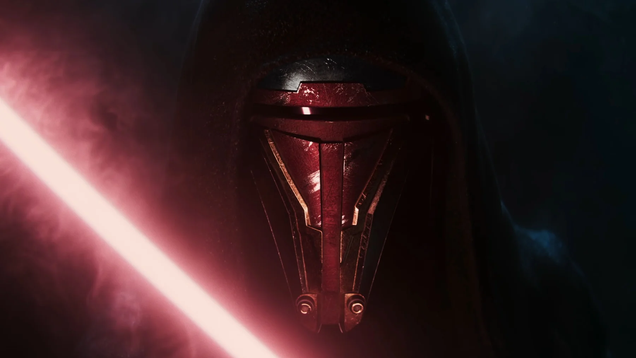
Sony Deletes Mentions Of Troubled Star Wars: KotOR PS5 Remake, Hides Trailer

A teaser for a Star Wars: Knights of the Old Republic remake coming to PlayStation 5 nearly stole the show at Sony’s September 2021 showcase. But reports surfaced last year that the project was already in trouble. Now Star Wars fans have noticed that Sony recently deleted tweets about the game and has hidden the…

Read more…


Source: Kotaku – Sony Deletes Mentions Of Troubled Star Wars: KotOR PS5 Remake, Hides Trailer

Bing Chat Responses Infiltrated By Ads Pushing Malware

Bill Toulas writes via BleepingComputer: Malicious advertisements are now being injected into Microsoft’s AI-powered Bing Chat responses, promoting fake download sites that distribute malware. […] Malicious ads spotted by Malwarebytes are pretending to be download sites for the popular ‘Advanced IP Scanner’ utility, which has been previously used by RomCom RAT and Somnia ransomware operators.

The researchers found that when you asked Bing Chat how to download Advanced IP Scanner, it would display a link to download it in the chat. However, when you hover over an underlined link in a chat, Bing Chat may show an advertisement first, followed by the legitimate download link. In this case, the sponsored link was a malvertisements pushing malware. […] Unfortunately, Malwarebytes could not find the final payload for this malware campaign, so it is unclear what malware is ultimately being installed. However, in similar campaigns, threat actors commonly distribute information-stealing malware or remote access trojans that allow them to breach other accounts or corporate networks.

Read more of this story at Slashdot.


Source: Slashdot – Bing Chat Responses Infiltrated By Ads Pushing Malware

Reddit Is Removing Ability To Opt Out of Ad Personalization Based On Your Activity

Ivan Mehta writes via TechCrunch: Reddit said Wednesday that the platform is revamping its privacy settings with an aim to make ad personalization and account visibility toggles consistent. Most notably though, it is removing the ability to opt out of ad personalization based on Reddit activity. The company said that it will still have opt-out controls in “select countries” without specifying which ones. It mentioned in a blog post that users won’t see more ads but they will see better-targeted ads following this change.

The company is essentially removing the option to not track you based on whatever you do on Reddit. Additionally, Reddit is consolidating two toggles on showing ads based on activity and information from partners into one toggle. So there is no way to separate those two settings now. Reddit is seemingly removing toggles for getting post recommendations based on “general location” and activity on partner sites and apps. It’s not clear if this means those parameters will be used for post suggestions by default and there is no way to turn them off.

The social network said it will also roll out controls to limit certain advertising categories such as alcohol, weight loss, dating, gambling pregnancy and parenting. The company noted that ad-limiting controls will possibly show you fewer ads from mentioned categories if the toggles are turned off, but won’t possibly filter out all ads. Reddit justified this by saying it uses manual tagging and machine learning to label ads, so there is a chance that it is not 100% accurate. Reddit is also simplifying its location customization setting under a single menu, which will be easily accessible through settings on apps and on the web.

Read more of this story at Slashdot.


Source: Slashdot – Reddit Is Removing Ability To Opt Out of Ad Personalization Based On Your Activity

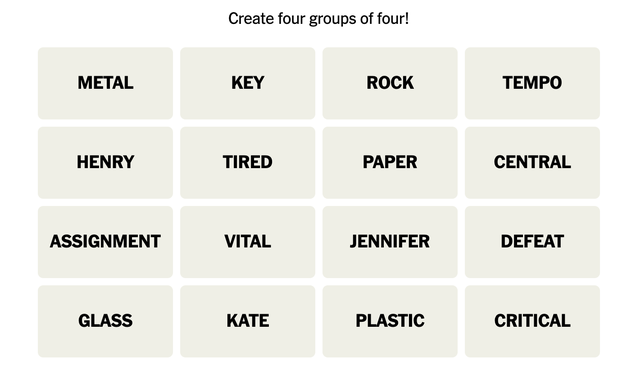
Today’s NYT Connections Hints (and Answer) for September 29, 2023

If you’re looking for the Connections answer for Friday, September 29, 2023, read on—I’ll share some clues, tips, and strategies, and finally the solutions to all four categories. Beware, there are spoilers below for September 29, NYT Connections #110! Scroll down if you want some hints (and then the answer) to…

Read more…


Source: LifeHacker – Today’s NYT Connections Hints (and Answer) for September 29, 2023

Raspberry Pi 5 Graphics Continue With Open-Source Driver & Crazy Fast Compared To RPi 4

With my Raspberry Pi 5 review and benchmarks I focused on the CPU performance of the quad-core Cortex-A76 2.4GHz Broadcom SoC powering this new single board computer, but the graphics upgrade are just as equally impressive. Here is a look at the open-source driver support and performance for the Raspberry Pi 5’s VideoCore VII GPU.

Source: Phoronix – Raspberry Pi 5 Graphics Continue With Open-Source Driver & Crazy Fast Compared To RPi 4