AMD Launches Ryzen 5 7500F in China: Zen 4 With no Integrated Graphics

Over the weekend, AMD officially listed the Ryzen 5 7500F processor on their website. Although initial reports pointed towards a China-only release, and at present, that much is true, the Ryzen 5 7500F is heading towards global availability, at least according to AMD. With a reported MSRP of around $179, the Ryzen 5 7500F is currently the cheapest Zen 4-based desktop processor. It comes with six Zen 4 cores and is similar in specifications to the Ryzen 5 7600, albeit with a few variances. Most importantly, it doesn’t feature AMD’s RDNA 2 integrated graphics, as seen on other Ryzen 7000 SKUs.


When AMD initially launched their Ryzen 7000 desktop processors based on their latest Zen 4 microarchitecture in September last year, they received many performance and power efficiency plaudits. One area that didn’t shine so brightly was in value, as AMD’s Ryzen 7000 processors only support DDR5, and at the time, AMD’s new (at the time) AM5 platform was hardly cheap. Fast forward to now, and AMD looks to rectify that with their first sub $200 chip based on Zen 4, the Ryzen 5 7500F.


AMD Ryzen 5 Series Line-Up (Sub $300)
AnandTech Cores

Threads
Base

Freq
Turbo

Freq
Memory

Support
L3

Cache
TDP PPT Price $
Ryzen 5 7600X 6C / 12T 4.7 GHz 5.3 GHz DDR5-5200 32 MB 105 W 142 W $299
Ryzen 5 7600 6C / 12T 3.8 GHz 5.1 GHz DDR5-5200 32 MB 65 W 88 W $227
Ryzen 5 7500F 6C / 12T 3.7 GHz 5.0 GHz DDR5-5200 32 MB 65 W 88 W $179?*


*Price as reported by Toms Hardware & TechPowerUp


Despite only being available at the time of writing in the Chinese market, the AMD Ryzen 5 7500F benefits from six Zen 4 cores (and 12 threads), as well as a base frequency of 3.7 GHz and a turbo of up to 5.0 GHz. As with other Ryzen 5 models, such as the 7600X and 7600, the 7500F also has 32 MB of L3 cache. It also aligns with the more efficient Ryzen 5 7600 and, as such, has a 65 W base TDP with a Package Power Tracking (PPT) of up to 88 W.


The most significant difference between the Ryzen 5 7500F and the other Ryzen 7000 series processors is it seems to be the first Zen 4-based CPU to omit integrated graphics. Although the other Ryzen 7000 series chips use RDNA 2-based integrated graphics, which, although not good enough to game with at decent frame rates, does provide other benefits as it is more than powerful enough to operate typical desktop work. The Ryzen 5 7500F does retain all the other benefits of the Zen 4 and AM5 platform, such as 28 x PCIe 5.0 lanes and support for a fully-fledged high-performance PCIe 5.0 x4 M.2 SSD.


All currently associated reviews of the Ryzen 5 7500F are from Chinese and South Korean media outlets. As we mentioned, this is because, technically, the only place users can currently buy this chip is in China. Still, things point to a subsequent global launch further down the line or imminently in other regions such as North America and Europe.


Source: AnandTech – AMD Launches Ryzen 5 7500F in China: Zen 4 With no Integrated Graphics

Splash a Little Campari Into Your Iced Coffee

Even at the apex of my partying, I was never big on combining caffeine and booze. The Four Loko fad missed me entirely, and Red Bull & Vodka crossed my lips exactly one time in college during a desperate and unhinged thermodynamics study session. But I’m not against the concept entirely, especially when presented in a…

Read more…


Source: LifeHacker – Splash a Little Campari Into Your Iced Coffee

You Should Enable Gmail's New 'Enhanced Safe Browsing'

Google’s had an Enhanced Safe Browsing feature in Chrome since 2019—a set of privacy features to help protect against phishing and malware attacks. Basically, if a link doesn’t seem quite right, Google will warn you about it. Recently, they finally brought the feature directly into Gmail.

Read more…


Source: LifeHacker – You Should Enable Gmail’s New ‘Enhanced Safe Browsing’

Spotify raises the price of its Premium plans

Listening to your favorite songs uninterrupted is about to get a little pricier: Spotify has announced it’s raising the price of all its Premium plans. In the United States, this means a Premium Single subscription is going from $10 a month to $11 a month — its first increase since Spotify launched over a decade ago. Its Premium Family and Student plans are also going up by a dollar, now costing $17 and $6 per month, respectively. Premium Duo has the largest bump, going up two dollars per month from $13 to $15.

The move follows similar price hikes by competitors, with Apple Music, Amazon Music and YouTube Music all raising their ad-free individual plans to $11 in the past year. Last October, Spotify CEO Daniel Ek seemed to revel in other companies’ increased costs, “When our competitors are raising their prices, that is really good for us.” At the time, Ek said he would like to charge more for subscriptions, especially in the US, and felt confident Spotify would be able to in 2023. 

People keep coming to Spotify, with the music streamer reporting five million more users during 2023’s first quarter worldwide, and an extra $12 a year might not impact that much. Updated prices are rolling out in countries across the world, from the United Kingdom to Thailand. Spotify says it will contact users via email to share how much their bill will go up and when it will happen. 

This article originally appeared on Engadget at https://www.engadget.com/spotify-raises-iprice-of-premium-plans-115138529.html?src=rss

Source: Engadget – Spotify raises the price of its Premium plans

Is AI Training on Libraries of Pirated Books?

The New York Times points out that so-called “shadow libraries,” like Library Genesis, Z-Library or Bibliotik, “are obscure repositories storing millions of titles, in many cases without permission — and are often used as A.I. training data.”

A.I. companies have acknowledged in research papers that they rely on shadow libraries. OpenAI’s GPT-1 was trained on BookCorpus, which has over 7,000 unpublished titles scraped from the self-publishing platform Smashwords. To train GPT-3, OpenAI said that about 16 percent of the data it used came from two “internet-based books corpora” that it called “Books1” and “Books2.” According to a lawsuit by the comedian Sarah Silverman and two other authors against OpenAI, Books2 is most likely a “flagrantly illegal” shadow library.

These sites have been under scrutiny for some time. The Authors Guild, which organized the authors’ open letter to tech executives, cited studies in 2016 and 2017 that suggested text piracy depressed legitimate book sales by as much as 14 percent.

Efforts to shut down these sites have floundered. Last year, the F.B.I., with help from the Authors Guild, charged two people accused of running Z-Library with copyright infringement, fraud and money laundering. But afterward, some of these sites were moved to the dark web and torrent sites, making it harder to trace them. And because many of these sites are run outside the United States and anonymously, actually punishing the operators is a tall task.

Tech companies are becoming more tight-lipped about the data used to train their systems.

Read more of this story at Slashdot.


Source: Slashdot – Is AI Training on Libraries of Pirated Books?

The Morning After: Twitter rebrands itself as X and ditches the bird

In a series of tweets last Saturday, Musk said the company’s famous bird logo and name would soon disappear. The company will change from Twitter to “X.” According to Platformer, Musk emailed staff later over the weekend saying the company would become X and his note “was the last email he’ll ever send from a Twitter email address.” And a lot of those changes have now happened.

Twitter’s own account is now all “X” branding, and it’s rolled out quickly elsewhere. Twitter employees are getting an “X” tag to their Twitter handles, next to their blue check, while the “X” logo has already been projected on a building, like a bat signal for self-aggrandizing tech executives and their minions. (I’m still not sure what this tweet (X?) even means.)

X.com was once an online bank co-founded by Musk in 1999. It eventually became PayPal and was bought by eBay. Of course, we already have SpaceX, his recently announced AI venture is called xAI and Twitter’s holding company was rammed to X Corp in April. Musk has also talked about how X would help Twitter become an “everything app.”

Terms that still need to be rebranded: subtweets, retweets, fail whales.

– Mat Smith

You can get these reports delivered daily direct to your inbox. Subscribe right here!

The biggest stories you might have missed

ChatGPT’s Android app arrives in the last week of July

‘Star Trek: Strange New Worlds’ season 2 will include a musical episode

‘Oppenheimer’ review: Sympathy for the destroyer of worlds

What we bought: Engadget’s favorite backpacks

Summer Samsung Unpacked 2023: What to expect

Engadget Podcast: How AI created a ‘South Park’ episode around us

Plus, we chat with the director and writers of Netflix’s ‘They Cloned Tyrone.’

AI can now place us inside South Park episodes – should we be worried? This week, Devindra and Deputy Editor Nathan Ingraham chat with Edward Saatchi, the CEO of The Simulation, about his company’s new AI technology that can generate TV episodes, movies and more. We preview a test South Park episode featuring Devindra and discuss if this technology is actually a good thing for creatives. Also, Editor at Large James Trew joins to discuss his piece on AI-powered immortality.

Continue reading.

Redditors troll AI content farm into covering a fake ‘WoW’ feature

The hugely anticipated Glorbo feature is not a feature.

TMA
Blizzard

Some redditors were very excited about a new World of Warcraft feature called Glorbo. Just one problem: Glorbo isn’t real. Their faux enthusiasm for Glorbo caught the attention of a blog named The Portal, which publishes “gaming content powered by Z League” – often tenuously rewritten subreddit scraping, seemingly done by AI. (We hope it’s not a human.)

Redditor u/kaefer_kriegerin noticed The Portal was turning discussions from some gaming subreddits into blog posts. They decided to try to trick the content farm into covering a fake WoW feature. The ruse was a success. The Portal‘s now-deleted blog post even quoted u/kaefer_kriegerin as stating, “Honestly, this new feature makes me so happy! I just really want some major bot-operated news websites to publish an article about this.”

Continue reading.

Our favorite VPN is Express VPN

It’s the best one for gaming and streaming.

The best VPNs stay out of your way, and you’ll barely even notice they’re running. But ExpressVPN internet speeds outperformed even our baseline internet speed measures. The service is likely circumventing traffic shaping by the internet service provider or a similar anomaly because every other VPN will hurt internet speed in some way. It was also easy to access geo-blocked content using ExpressVPN, with little-to-no buffering – which is the cheeky reason a lot of us invest in a VPN.

Continue reading.

​​

This article originally appeared on Engadget at https://www.engadget.com/the-morning-after-twitter-rebrands-itself-as-x-and-ditches-the-bird-111524841.html?src=rss

Source: Engadget – The Morning After: Twitter rebrands itself as X and ditches the bird

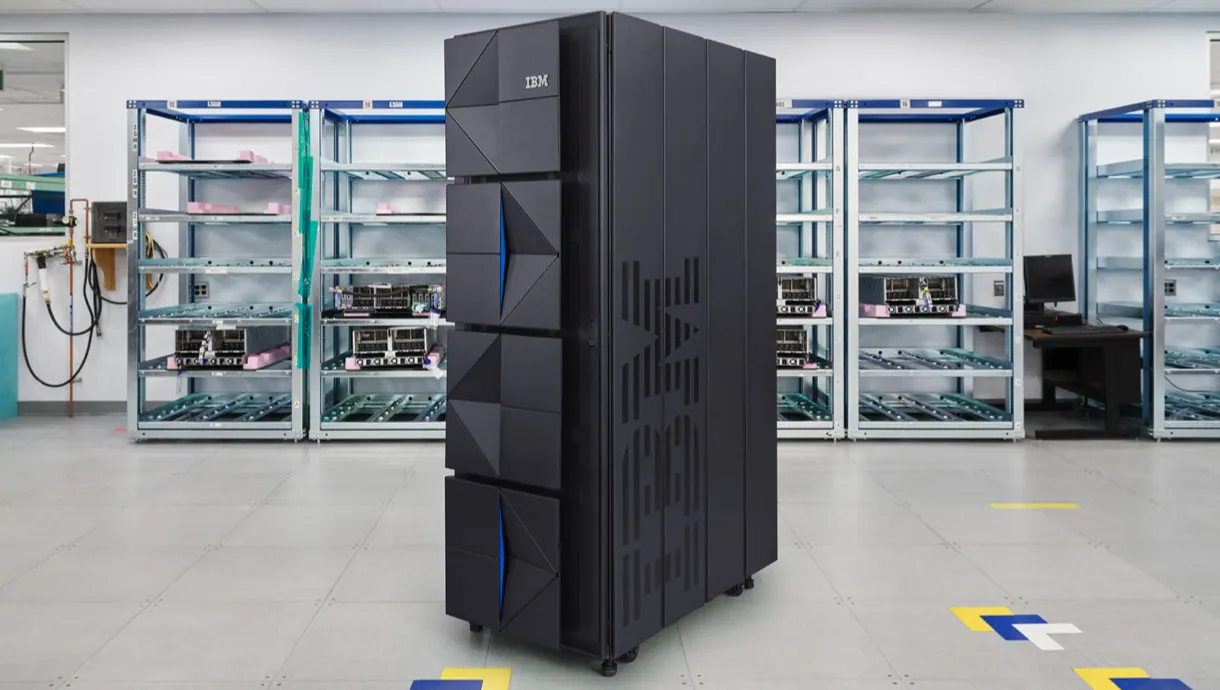
The IBM mainframe: How it runs and why it survives

Read 70 remaining paragraphs | Comments


Source: Ars Technica – The IBM mainframe: How it runs and why it survives

Twitter begins its transition to 'X'

Unlike when Dogecoin’s Shiba Inu briefly replaced it, it seems Twitter’s longstanding bird logo is genuinely having its last curtain call. Elon Musk and Twitter (or should we say X?) CEO Linda Yaccarino announced that the company was rebranding as “X” and projected the new emblem onto the company’s San Francisco headquarters. So far, the simple white logo with a black background has replaced the bird in the top left spot of the website, and the pair have it next to their respective names and blue checks. Twitter’s official account has also been renamed X, with the new logo and a stark black background. As of publication, the blue bird still exists in the browser icon, but that will likely change soon.

Musk has long had an affinity for the letter X, naming his 1999 banking startup x.com, aerospace company SpaceX and recent AI venture xAI. Speaking of x.com, type that into your search bar, and it will automatically reroute you to Twitter’s homepage — Musk bought x.com back from PayPal in 2017.

Musk and co have made hefty claims about Twitter’s future since he first took ownership, and its rebrand is no exception. “X is the future state of unlimited interactivity – centered in audio, video, messaging, payments/banking – creating a global marketplace for ideas, goods, services, and opportunities,” Yaccarino said in a Twitter thread repeating much of what Musk has said in the past. “Powered by AI, X will connect us all in ways we’re just beginning to imagine.” We’ll have to wait and see if the rebrand does anything to bring back all the advertising dollars the company has lost or help it compete against Meta’s Threads.

This article originally appeared on Engadget at https://www.engadget.com/twitter-begins-its-transition-to-x-100901444.html?src=rss

Source: Engadget – Twitter begins its transition to ‘X’

US Pulls Authorization for Lithium Exploration Project in Southern Nevada, Citing Wildlife

Tuesday North America’s largest lithium mining operation cleared its last legal hurdle in federal appeals court, giving a green light to the mining of 6,000 acres in an 18,000-acre project site near Nevada’s northern border.

But meanwhile, in Southern Nevada…

Federal land managers have formally withdrawn their authorization of a Canadian mining company’s lithium exploration project bordering a national wildlife refuge in southern Nevada after conservationists sought a court order to block it.

The Center for Biological Diversity and the Amargosa Conservancy said in a lawsuit filed July 7 that the project on the edge of the Ash Meadows National Wildlife Refuge outside Las Vegas posed an illegal risk to a dozen fish, snail and plant species currently protected under the Endangered Species Act. They filed an additional motion this week in federal court seeking a temporary injunction prohibiting Rover Metals from initiating the drilling of 30 bore sites in search of the highly sought-after metal used to manufacture batteries for electric vehicles.
But before a judge in Las Vegas could rule on the request, the Bureau of Land Management notified Rover Metals on Wednesday that its earlier acceptance of the company’s notice of its intent to proceed “was in error… The agency has concluded that proposed operations are likely to result in disturbance to localized groundwaters that supply the connected surface waters associated with Threatened and Endangered species in local springs,” said Angelita Bulletts, district manager of the bureau’s southern Nevada district…

Conservationists said the reversal provides at least a temporary reprieve for the lush oasis in the Mojave Desert that is home to 25 species of fish, plants, insects and snails that are found nowhere else on Earth — one of the highest concentrations of endemic species in North America at one of the hottest, driest places on the planet.
The article ends with this quote from a director at the Center for Biological Diversity and the Amargosa Conservancy. “We need lithium for our renewable energy transition, but this episode sends a message loud and clear that some places are just too special to drill.”

Read more of this story at Slashdot.


Source: Slashdot – US Pulls Authorization for Lithium Exploration Project in Southern Nevada, Citing Wildlife

AI Watches Millions of Cars and Tells Cops if You Might Be a Criminal

Forbes’ senior writer on cybersecurity writes on the “warrantless monitoring of citizens en masse” in the United States.

Here’s how county police armed with a “powerful new AI tool” identified the suspicious driving pattern of a grey Chevy owned by David Zayas:
Searching through a database of 1.6 billion license plate records collected over the last two years from locations across New York State, the AI determined that Zayas’ car was on a journey typical of a drug trafficker. According to a Department of Justice prosecutor filing, it made nine trips from Massachusetts to different parts of New York between October 2020 and August 2021 following routes known to be used by narcotics pushers and for conspicuously short stays. So on March 10 last year, Westchester PD pulled him over and searched his car, finding 112 grams of crack cocaine, a semiautomatic pistol and $34,000 in cash inside, according to court documents. A year later, Zayas pleaded guilty to a drug trafficking charge.

The previously unreported case is a window into the evolution of AI-powered policing, and a harbinger of the constitutional issues that will inevitably accompany it… Westchester PD’s license plate surveillance system was built by Rekor, a $125 million market cap AI company trading on the NASDAQ. Local reporting and public government data reviewed by Forbes show Rekor has sold its ALPR tech to at least 23 police departments and local governments across America, from Lauderhill, Florida to San Diego, California. That’s not including more than 40 police departments across New York state who can avail themselves of Westchester County PD’s system, which runs out of its Real-Time Crime Center… It also runs the Rekor Public Safety Network, an opt-in project that has been aggregating vehicle location data from customers for the last three years, since it launched with information from 30 states that, at the time, were reading 150 million plates per month. That kind of centralized database with cross-state data sharing, has troubled civil rights activists, especially in light of recent revelations that Sacramento County Sheriff’s Office was sharing license plate reader data with states that have banned abortion…

The ALPR market is growing thanks to a glut of Rekor rivals, including Flock, Motorola, Genetec, Jenoptik and many others who have contracts across federal and state governments. They’re each trying to grab a slice of a market estimated to be worth at least $2.5 billion… In pursuit of that elusive profit, the market is looking beyond law enforcement to retail and fast food. Corporate giants have toyed with the idea of tying license plates to customer identities. McDonalds and White Castle have already begun using ALPR to tailor drive-through experiences, detecting returning customers and using past orders to guide them through the ordering process or offer individualized promotion offers. The latter restaurant chain uses Rekor tech to do that via a partnership with Mastercard.
A senior staff attorney at the ACLU tells Forbes that “The scale of this kind of surveillance is just incredibly massive.”

Thanks to long-time Slashdot reader Geek_Cop for sharing the article.

Read more of this story at Slashdot.


Source: Slashdot – AI Watches Millions of Cars and Tells Cops if You Might Be a Criminal

'Star Trek: Strange New Worlds' season 2 will include a musical episode

Star Trek musical parodies have been a thing since the Shatner days, but no official Star Trek musical has ever been released officially. That’s about to change, though, as Star Trek: Strange New Worlds season 2 will feature the first ever Star Trek musical episode, Paramount announced. Called Subspace Rhapsody, it will be the ninth episode of the season and debut on Paramount Plus on August 3rd at 7PM ET.  

The news dropped at San Diego Comic-Con during the Star Trek Universe panel, along with a video (below, US only). It features 10 new songs composed by Kay Hanley and Tom Polce of the rock band Letters to Cleo.

Strange New Worlds has been a success with both critics (including Engadget’s Daniel Cooper) and audiences since its debut, thanks in large part to the cast led by Anson Mount (Captain Pike), Rebecca Romjin (Number 1) and Ethan Peck (Spock). It also brought a lighter touch to the Star Trek universe following darker shows like Picard. As we detailed yesterday, the show dropped its Lower Decks crossover episode earlier than expected, and it’s now available to stream. 

Musical TV episodes are nothing new, with some of the more noteworthy ones coming out of Buffy the Vampire Slayer, Scrubs and Xena, Warrior Princess (yep). Sometimes these are, well, unmotivated, with everyone suddenly breaking into song (Scrubs), or the musical is built as a bottle episode outside the reality of the main show (Xena). 

Subspace Rhapsody seems to be set in motion by plot events, though, with some kind of (insert your favorite Trek MacGuffin here) event bringing out the characters’ inner theater kids. As shown in the trailer and retro-style poster, it’s staged and performed as a full-blown musical, and looks like some silly fun. 

This article originally appeared on Engadget at https://www.engadget.com/star-trek-strange-new-worlds-season-2-will-include-a-musical-episode-042558081.html?src=rss

Source: Engadget – ‘Star Trek: Strange New Worlds’ season 2 will include a musical episode

Sixth 'Hutter Prize' Awarded for Achieving New Data Compression Milestone

Since 2006, Slashdot has been covering a contest CmdrTaco once summarized as “Compress Wikipedia and Win.” It rewards progress on compressing a 1-billion-character excerpt of Wikipedia — approximately the amount that a human can read in a lifetime.

And today a new record was announced. The 1 billion characters have now been compressed to just 114,156,155 bytes — about 114 megabytes, or just 11.41% of the original size — by Saurabh Kumar, a New York-based quantitative developer for a high-frequency/algorithmic trading and financial services fund. The amount of each “Hutter Prize for Lossless Compression of Human Knowledge” increases based on how much compression is achieved (so if you compress the file x% better you receive x% of the prize). Kumar’s compression was 1.04% smaller than the previous record, so they’ll receive €5187.

But “The intention of this prize is to encourage development of intelligent compressors/programs as a path to AGI,” said Marcus Hutter (now a senior researcher at Google DeepMind) in a 2020 interview with Lex Fridman.

17 years after their original post announcing the competition, Baldrson (Slashdot reader #78,598) returns to explain the contest’s significance to AI research, starting with a quote from mathematician Gregory Chaitin — that “Compression is comprehension.”

But they emphasize that the contest also has one specific hardware constraint rooted in theories of AI optimization:

The Hutter Prize is geared toward research in that it restricts computation resources to the most general purpose hardware that is widely available. Why? As described by the seminal paper “The Hardware Lottery” by Sara Hooker, AI research is biased toward algorithms optimized for existing hardware infrastructure. While this hardware bias is justified for engineering (applying existing scientific understanding to the “utility function” of making money) to quote Sara Hooker, it “can delay research progress by casting successful ideas as failures.”

The complaint that this is “mere” optimization ignores the fact that this was done on general purpose computation hardware, and is therefore in line with the spirit of Sara Hookers admonition to researchers in “The Hardware Lottery”. By showing how to optimize within the constraint of general purpose computation, Saurabh’s contribution may help point the way toward future directions in hardware architecture.

Read more of this story at Slashdot.


Source: Slashdot – Sixth ‘Hutter Prize’ Awarded for Achieving New Data Compression Milestone