These Recalled Trader Joe’s Cookies Might Have Rocks In Them

Trader Joe’s cookies generally rock…but maybe they rock a little too much recently. If you get an extra crunch from eating Trader Joe’s almond cookies, it could be because the popular grocery store chain has put out an announcement recalling two of its cookies for potentially containing rocks. Here’s what you need…

Read more…


Source: LifeHacker – These Recalled Trader Joe’s Cookies Might Have Rocks In Them

Mastodon's decentralized social network has a major CSAM problem

Mastodon has gained popularity over the past year as Twitter users looked for alternatives following Elon Musk’s takeover. Part of its appeal is its decentralized nature that insulates it against the whims of billionaires who speak before they think. Unsurprisingly, though, what makes it so appealing has also proven to be a headache, making content moderation all but impossible.

A study from Stanford found 112 matches of known child sexual abuse material (CSAM) over a two-day period, with almost 2,000 posts using common hashtags related to abusive material. Researcher David Thiel says, “We got more photoDNA hits in a two-day period than we’ve probably had in the entire history of our organization of doing any kind of social media analysis, and it’s not even close.” We’ve reached out to Mastodon for comment and will update this story once we’ve heard back.

Of course, the big problem with unfederated social media platforms such as Mastodon is that no one company or entity controls everything on the platform. Every instance has its own administrators, and they are the ones who are ultimately responsible. However, those admins cannot control and moderate what goes on in other instances or servers.

This isn’t uniquely a Mastodon problem, either. Meta’s popular Threads is also built around the decentralized model. While it’s not supported just yet, Threads plans on being interoperable with ActivityPub. This means Threads users will be able to follow, reply and repost content from Mastodon, and vice versa.

This creates a unique problem for Meta, which can’t control the entire moderation flow like it could with Facebook or Instagram. Even then, the company struggles to keep up with moderation. Presumably, larger instances on Mastodon and other platforms such as Threads could outright block access to problematic instances. Of course, that wouldn’t “solve” the problem. The content would still exist. It would just be siloed and left to the moderators of that specific instance to remove it.

This article originally appeared on Engadget at https://www.engadget.com/mastodons-decentralized-social-network-has-a-major-csam-problem-202519000.html?src=rss

Source: Engadget – Mastodon’s decentralized social network has a major CSAM problem

New ChatGPT feature remembers “custom instructions” between sessions

An AI-generated image of a chatbot in front of library shelves.

Enlarge / An AI-generated image of a chatbot in front of library shelves. (credit: Benj Edwards / Stable Diffusion)

On Thursday, OpenAI announced a new beta feature for ChatGPT that allows users to provide custom instructions that the chatbot will consider with every submission. The goal is to prevent users from having to repeat common instructions between chat sessions.

The feature is currently available in beta for ChatGPT Plus subscription members, but OpenAI says it will extend availability to all users over the coming weeks. As of this writing, the feature is not yet available in the UK and EU.

The Custom Instructions feature functions by letting users set their individual preferences or requirements that the AI model will then consider when generating responses. Instead of starting each conversation anew, ChatGPT can now be instructed to remember specific user preferences across multiple interactions.

Read 9 remaining paragraphs | Comments


Source: Ars Technica – New ChatGPT feature remembers “custom instructions” between sessions

Diablo IV’s Stingy Battle Pass Won’t Let You Afford Even A Single Item

Like many battle passes for live-service games, Diablo IV lets you earn some of its premium currency as you grind your way through each of the tiers. And while fans might be ready to take the pass’s sweet 666 platinum to their wallets, they certainly won’t be taking it to the in-game shop, as that’s not enough to…

Read more…


Source: Kotaku – Diablo IV’s Stingy Battle Pass Won’t Let You Afford Even A Single Item

The Best Career-Planning Quizzes for Basically Anyone

While you should always approach personality tests with a healthy skepticism, sometimes these exercises can reveal things about you that are truly insightful—and potentially helpful. The best example of this phenomenon: career tests, which can help you figure out what you want to do, and what you’re especially skilled…

Read more…


Source: LifeHacker – The Best Career-Planning Quizzes for Basically Anyone

Google’s nightmare “Web Integrity API” wants a DRM gatekeeper for the web

A man laughs at his smartphone while a cartoon characters peaks over his shoulder.

Enlarge / The little Android robot is watching everything you do. (credit: Aurich Lawson / Getty Images)

Google’s newest proposed web standard is… DRM? Over the weekend the Internet got wind of this proposal for a “Web Environment Integrity API. ” The explainer is authored by four Googlers, including at least one person on Chrome’s “Privacy Sandbox” team, which is responding to the death of tracking cookies by building a user-tracking ad platform right into the browser.

The intro to the Web Integrity API starts out: “Users often depend on websites trusting the client environment they run in. This trust may assume that the client environment is honest about certain aspects of itself, keeps user data and intellectual property secure, and is transparent about whether or not a human is using it.”

The goal of the project is to learn more about the person on the other side of the web browser, ensuring they aren’t a robot and that the browser hasn’t been modified or tampered with in any unapproved ways. The intro says this data would be useful to advertisers to better count ad impressions, stop social network bots, enforce intellectual property rights, stop cheating in web games, and help financial transactions be more secure.

Read 8 remaining paragraphs | Comments


Source: Ars Technica – Google’s nightmare “Web Integrity API” wants a DRM gatekeeper for the web

Shin Kamen Rider Is the Best Superspeed Has Ever Looked in a Superhero Movie

Superspeed is a difficult power to portray in superpowered adaptations. There are almost as many ways to portray superhuman agility as there are movies that have attempted it, from dilated time to blurs of vision. And yet, as more and more speedsters race to the big-budget world of the Hollywood blockbuster, none have…

Read more…


Source: Gizmodo – Shin Kamen Rider Is the Best Superspeed Has Ever Looked in a Superhero Movie

Researchers Find 'Backdoor' in Encrypted Police and Military Radios

A group of cybersecurity researchers has uncovered what they believe is an intentional backdoor in encrypted radios used by police, military, and critical infrastructure entities around the world. The backdoor may have existed for decades, potentially exposing a wealth of sensitive information transmitted across them, according to the researchers. From a report: While the researchers frame their discovery as a backdoor, the organization responsible for maintaining the standard pushes back against that specific term, and says the standard was designed for export controls which determine the strength of encryption. The end result, however, are radios with traffic that can be decrypted using consumer hardware like an ordinary laptop in under a minute. “There’s no other way in which this can function than that this is an intentional backdoor,” Jos Wetzels, one of the researchers from cybersecurity firm Midnight Blue, told Motherboard in a phone call.

The research is the first public and in-depth analysis of the TErrestrial Trunked RAdio (TETRA) standard in the more than 20 years the standard has existed. Not all users of TETRA-powered radios use the specific encryption algorithim called TEA1 which is impacted by the backdoor. TEA1 is part of the TETRA standard approved for export to other countries. But the researchers also found other, multiple vulnerabilities across TETRA that could allow historical decryption of communications and deanonymization. TETRA-radio users in general include national police forces and emergency services in Europe; military organizations in Africa; and train operators in North America and critical infrastructure providers elsewhere.

Read more of this story at Slashdot.


Source: Slashdot – Researchers Find ‘Backdoor’ in Encrypted Police and Military Radios

AlmaLinux says Red Hat source changes won’t kill its RHEL-compatible distro

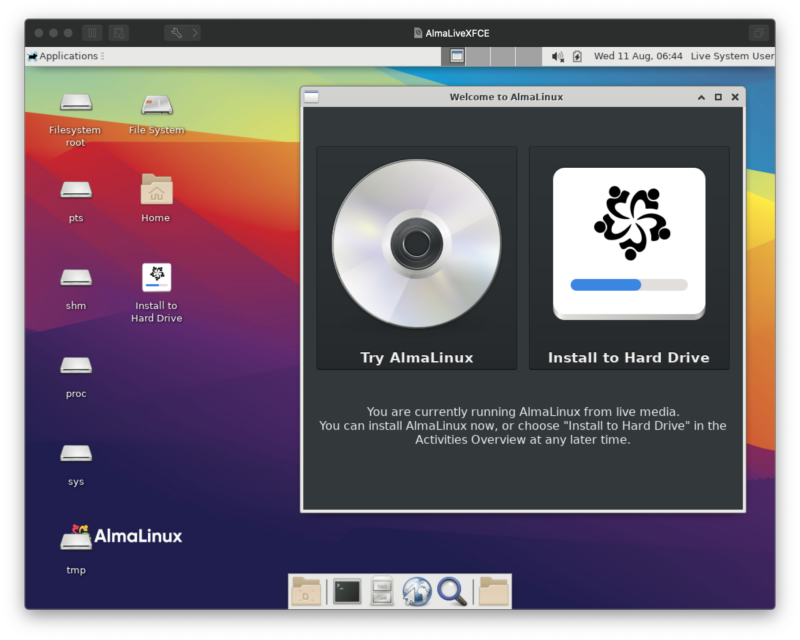
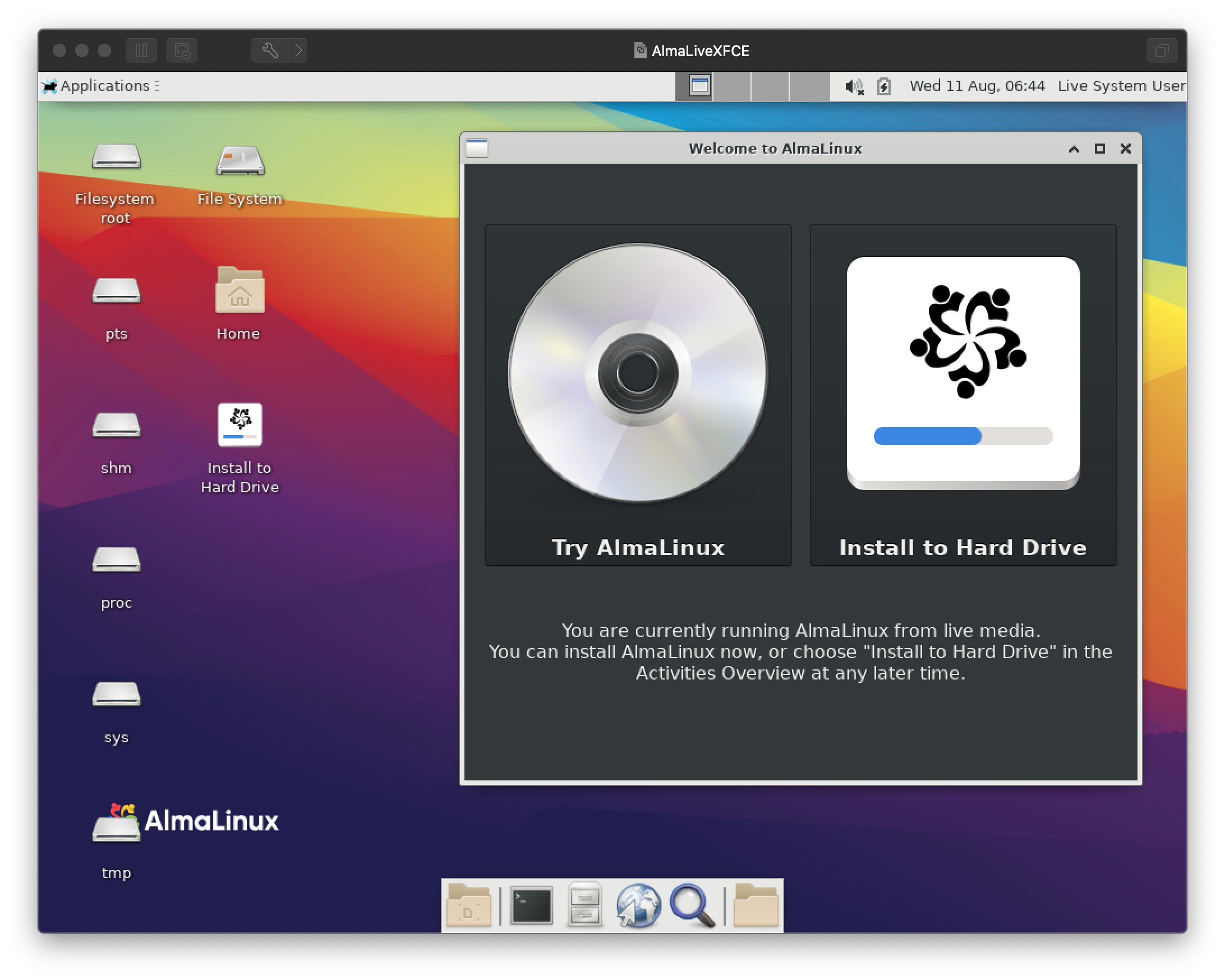
AlmaLinux's live media, offering a quick spin or installation.

Enlarge / AlmaLinux lets you build applications that work with Red Hat Enterprise Linux but can’t promise the exact same bug environment. That’s different from how they started, but it’s also a chance to pick a new path forward. (credit: AlmaLinux OS)

I asked benny Vasquez, chair of the AlmaLinux OS Foundation, how she would explain the recent Red Hat Enterprise Linux source code controversy to somebody at a family barbecue—somebody who, in other words, might not have followed the latest tech news quite so closely.

“Most of my family barbecues are going to be explaining that Linux is an operating system,” Vasquez said. “Then explaining what an operating system is.”

It is indeed tricky to explain all the pieces—Red Hat, Red Hat Enterprise Linux, CentOS, CentOS Stream, Fedora, RHEL, Alma, Rocky, upstreams, downstreams, source code, and the GPL—to anyone who isn’t familiar with Red Hat’s quirky history, and how it progressed to the wide but disparate ecosystem it has today. And, yes, Linux in general. But Vasquez was game to play out my thought experiment.

Read 15 remaining paragraphs | Comments


Source: Ars Technica – AlmaLinux says Red Hat source changes won’t kill its RHEL-compatible distro

The Different Hammers You Should Have (and When to Use Them)

A heavy hunk of metal attached to a handle to pound things into submission doesn’t seem like it’s all that far removed from a convenient rock picked up off the ground and used to pound things into submission. But there are actually a lot more types of hammers than you think, and a lot more uses for them than you might…

Read more…


Source: LifeHacker – The Different Hammers You Should Have (and When to Use Them)

Apple releases iOS, iPadOS, and macOS updates to fix bugs and shore up security

Macs running macOS Ventura.

Enlarge / Macs running macOS Ventura. (credit: Apple)

Apple’s iOS 16, iPadOS 16, and macOS 13 operating systems are all due to be replaced with new versions in the next two or three months, but some bugs can’t wait for a whole new release. The company has released iOS/iPadOS 16.6 and macOS 13.5 to fix several “actively exploited” security bugs, plus a handful of other security fixes for problems that have been reported to Apple but aren’t being exploited in the wild yet. The release notes also mention unspecified “bug fixes” for each OS.

The new updates don’t add anything by way of new features—at least, there aren’t any mentioned in the release notes. This will likely be the case for most iOS 16 and macOS 13 Ventura updates going forward, as Apple shifts its focus to newer operating systems. The iOS/iPadOS 17 and macOS 14 Sonoma updates should be available in September or October, if Apple sticks to its historical release schedule. The public betas were released earlier this month.

Several of the security fixes in these updates were originally part of a Rapid Response security update for iOS 16.5.1 and macOS 13.4.1. The original version of that update was pulled post-release after it broke a few major websites on devices that installed it, but a working version with the same fixes was released soon after.

Read 2 remaining paragraphs | Comments


Source: Ars Technica – Apple releases iOS, iPadOS, and macOS updates to fix bugs and shore up security

Buy These Toys That Let Kids 'Play' Like Grown-Ups

From Furbies, Hatchimals, and Tickle-Me Elmo to Tamagotchi digital pets, Cabbage Patch Kids, Baby Alive and even pet rocks, generations of kids have been drawn to toys that feed their need to “nurture” something the way they are nurtured by the adults in their lives.

Read more…


Source: LifeHacker – Buy These Toys That Let Kids ‘Play’ Like Grown-Ups

AMD Ryzen 9 7945HX3D To Bring A Mountain Of V-Cache To Gaming Laptops

AMD Ryzen 9 7945HX3D To Bring A Mountain Of V-Cache To Gaming Laptops
New reports indicate that AMD is bringing its game-enhancing 3D V-Cache technology to the mobile market with new Ryzen 7000 mobile CPUs sporting up to 128MB of L3 cache. An unreleased ASUS ROG Strix laptop was spotted featuring a Ryzen 9 7945HX3D CPU with 16 cores 32 threads, and 128MB of L3 cache, which is a substantial jump over the 64MB

Source: Hot Hardware – AMD Ryzen 9 7945HX3D To Bring A Mountain Of V-Cache To Gaming Laptops

Five cool features and one weird thing you’ll find in macOS 14 Sonoma

Five cool features and one weird thing you’ll find in macOS 14 Sonoma

Enlarge (credit: Andrew Cunningham)

Apple released its first public beta for macOS Sonoma (among other operating systems) this month, and per usual, headlining features like desktop widgets have gotten a lot of coverage. We’ll take a more comprehensive look at the big-ticket items in our review later this fall, but there are always some features and changes worth discussing that get buried or lost in the shuffle. Here are a few deeper cuts we’ve played with so far.

Better screen sharing

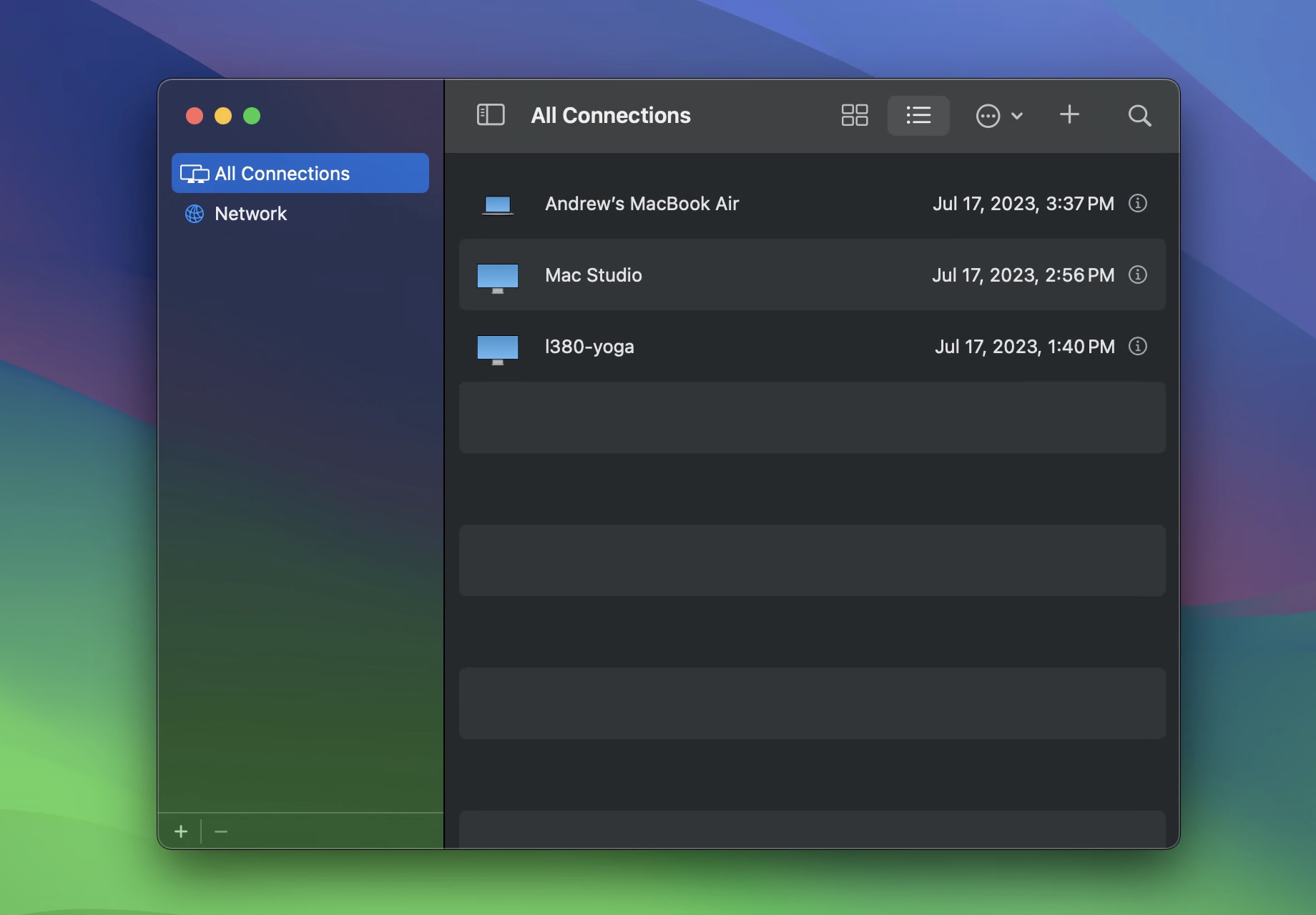
The new Screen Sharing app, which is actually an app and not just a window you type an IP address into. Note the mix of Macs and PCs.

The new Screen Sharing app, which is actually an app and not just a window you type an IP address into. Note the mix of Macs and PCs. (credit: Andrew Cunningham)

Apple first added basic screen sharing support to macOS back in 2007, with version 10.5 (Leopard). Screen sharing did use a dedicated app, but it was hidden in macOS’ system folders rather than in the Applications or Utilities folders—it was really only intended to be launched indirectly, either using the Finder or the Connect to Server menu. If you did launch it directly, its interface was a simple “connect to” dialog where you could enter your desired hostname or IP address. Functional, but minimalist.

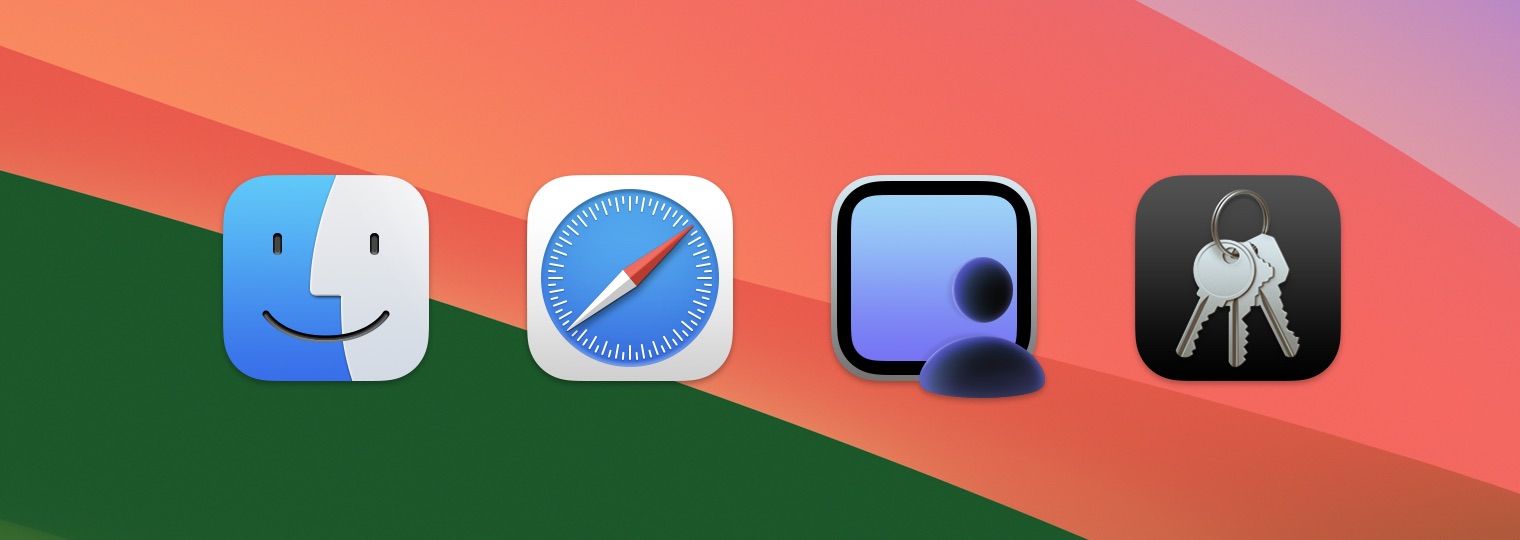
Screen Sharing in Sonoma revamps the app itself, as well as how the underlying technology works. You’ll now find a Screen Sharing app in the Utilities folder (the same place as Terminal, Disk Utility, and others), signaling that Apple has made it a full-fledged app. The new Screen Sharing app looks a bit like a (very) light, feature-limited version of the Remote Desktop management software, with a list of all computers you’ve connected to in the past, the ability to see all computers on your local network with screen sharing enabled, and the option to create groups of computers so you can easily sort systems based on how you use them.

Read 27 remaining paragraphs | Comments


Source: Ars Technica – Five cool features and one weird thing you’ll find in macOS 14 Sonoma