How to scan with an iPhone

Our phones can replace a lot of things we used to need on the regular — our wallets, our car keys and now even scanners. Thanks to your handset’s camera, the power to scan things is built into your iPhone. You can use it to scan documents, QR codes and more, allowing you to save IRL files in a pinch, pull up menus at restaurants and even check grocery prices on the fly. Here’s how to scan almost anything with your iPhone.

How to scan documents with an iPhone

The default way to scan a document with an iPhone lives within iOS’ native Notes app. Open it and open a new note. Tap the camera icon on the bottom menu bar, tap Scan Documents and then hold your phone to frame the document you want to scan.

How to scan with an iPhone
Photo by Julia Mercado / Engadget

The camera will scan the document automatically. But, just like taking a photo, you also have the option to do it manually by tapping the white button at the bottom of the screen or pressing the volume button.

If your document is more than one page, repeat the process for each page and hit the Save button at the bottom right corner when you’re done. If you need to redo or edit a scan, tap the stack icon at the bottom left corner. Once saved, all of the pages will be attached to the same note in your library.

How to scan with iPhone
Photo by Julia Mercado / Engadget

Your iPhone also has the ability to scan the text in your document and make a note from it as well. Just tap and hold on text in your scanned document and highlight the portion you want to extract. You can then make a new note from that, or copy and paste the text into an existing note.

How to scan a QR code with an iPhone

Open the Camera and hold it up to the QR code. Tap the link that generates beneath the code and it will take you straight to your browser. You will automatically be sent to the site or PDF that the QR code links to.

Another way to scan a QR code is by using iOS’ built in Code Scanner. First, go to settings and tap Control Center. Then, tap the green plus icon next to Code Scanner to add it to your Control Center. Swipe down from the top right corner of your home screen and tap the Code Scanner. The icon is represented with a small QR code inside four corners framing it.

How to scan with an iPhone
Photo by Julia Mercado / Engadget

That option will take you to another form of your camera. This time, there’s no need to click a link: just frame the code in the four white corners and wait. Code Scanner will automatically show you what’s linked in your browser.

How to scan a barcode with an iPhone

Unfortunately, iPhones can’t handle barcodes on their own just yet, but there are third-party apps that can. Depending on the barcode, each app can help you do something different. If you are looking to keep track of books in your library, you can rely on Goodreads. If you just want to shop smart, ShopSavvy can help you find coupons on items you’re thinking of buying. And if you need a basic scanner, Barcode Scanner can look up anything and add it to your history, plus it even lets you make your own QR codes.

This article originally appeared on Engadget at https://www.engadget.com/how-to-scan-with-iphone-120030667.html?src=rss

Source: Engadget – How to scan with an iPhone

All the Ways Your Credit Card Info Can Be Stolen

Sure, you know how to spot a phishing email (even if your parents don’t). Unfortunately, cybercriminals are continuously devising new methods to gain unauthorized access to credit card information, leaving you with financial losses and personal distress. And while hackers flex their endless creativity, the old ways of…

Read more…


Source: LifeHacker – All the Ways Your Credit Card Info Can Be Stolen

Microsoft faces an EU antitrust probe over its bundling of Teams

An investigation into Microsoft’s potential antitrust practices is underway nearly three years after Slack first filed a complaint against the company. The European Commission has announced a probe into if Microsoft bundling Teams with its product suites violated EU competition rules. Slack filed its antitrust complaint in 2020, alleging that Microsoft’s decision to include Teams with Microsoft 365 or Office 365 is illegal and that the company blocked some users from removing the software. 

In April, Microsoft agreed to remove Teams from its Office suite in an attempt to prevent a probe, but said it was unclear how it would do so. The effort wasn’t enough to avoid concerns and make a deal. In its announcement opening the investigation, the European Commission said it “is concerned that Microsoft may grant Teams a distribution advantage by not giving customers a choice on whether or not to include access to that product when they subscribe to their productivity suites and may have limited the interoperability between its productivity suites and competing offerings.” 

A Microsoft spokesperson responded to the news: “We respect the European Commission’s work on this case and take our own responsibilities very seriously. We will continue to cooperate with the Commission and remain committed to finding solutions that will address its concerns.” 

This isn’t the first time Microsoft has found itself in hot water with the European Commission. In 2009, the company agreed to offer EU users different browser options instead of forcing them to use Internet Explorer in Windows. Four years later, the European Commission fined Microsoft €561 million ($625 million) after a “glitch” stopped the browser choice screen from consistently appearing. The current investigation has no decision deadline, so it might be some time before the European Commission announces Microsoft’s fate. 

This article originally appeared on Engadget at https://www.engadget.com/microsoft-faces-an-eu-antitrust-probe-over-its-bundling-of-teams-114147712.html?src=rss

Source: Engadget – Microsoft faces an EU antitrust probe over its bundling of Teams

The Morning After: Everything announced at Samsung's Summer Unpacked 2023 event

Cruelly timed for just after The Morning After newsletter yesterday, Samsung’s latest Unpacked media event was a first for the company. It’s the first time the company has launched over five devices in a single day. Ah wait, no. Was it the first time K-Pop superstars BTS helped promote Samsung’s latest smartphone? Nope, that’s been done before, too. No, this July event was the first Unpacked in the company’s native South Korea, in Seoul.

The move speaks to the confidence Samsung has about its newest smartphones, which includes its fourth-generation foldables. For me, those devices are the exciting part, even though the company is bringing back the bezel to its wearables and has made its premium tablets water resistant.

TMA
Engadget

The Galaxy Z Flip 4 ($999) gets the most evolutionary treatment this year, with a far more expansive external display, new widgets and features. At this point, it has to match what we saw on Motorola’s Razr+, but it initially doesn’t seem as versatile as Moto’s take on the secondary screen. Expect our review to put those new features through their paces.

The Galaxy Z Fold 4 ($1,800, yikes), meanwhile, is slightly slimmer, slightly more powerful and a little too similar to last year’s Fold 3 at first blush. Samsung’s new Flex Hinge – said to have a more streamlined design while still boasting IPX8 water resistance – erases that jarring gap between the screen halves while decreasing its overall thickness to 13.5mm. (Note: That’s still thicker than its rival foldable, the Pixel Fold.)

I’ve corralled the other highlights from Samsung – is this the year you’ll buy a foldable?

– Mat Smith

​​You can get these reports delivered daily direct to your inbox. Subscribe right here!

Samsung Unpacked July 2023 highlights

Samsung Galaxy Z Flip 5 hands-on: A larger external display holds promise

Samsung Galaxy Z Fold 5 hands-on: Is Samsung squandering its head start?

Galaxy Z Flip 5 vs Moto Razr+: A clamshell comparison

Galaxy Z Fold 5 vs Pixel Fold: Did Samsung rise to Google’s challenge?

Samsung Galaxy Watch 6 hands-on: The spinning bezel’s triumphant return

Samsung Galaxy Tab S9 Ultra hands-on: A premium tablet with water protection

Samsung Galaxy Z Fold 5 pre-orders on Amazon include a $200 gift card

The other biggest stories you might have missed

The $9,995 Fuell Fllow electric motorcycle is available for pre-order today

August’s PlayStation Plus monthly games include ‘Death’s Door’ and ‘Dreams’

Xbox home screen revamp provides quicker access to games

The best wireless headphones for 2023

Meta had its best quarter since 2021 despite losing more money on the metaverse

Meta is ‘fully committed’ to the metaverse.

Meta just had its best quarter since 2021, even as it continues to lose massive amounts of money on the metaverse. In fact, the company said it expects to lose even more money on its efforts in the year to come. I mean, the company changed its name – it’s not going to give up so easily.

Reality Labs, the Meta division overseeing its virtual and augmented reality projects, lost $3.7 billion during the second quarter of 2023 and generated just $276 million in revenue, according to the company’s latest earnings report. Aside from the metaverse, it was an otherwise strong quarter for Meta, which reported $32 billion in revenue, an 11 percent increase from last year.

Continue reading.

Amazon Prime members can now get pre-approved for new Boost Infinite cellular plans

There’s a storefront selling Boost Infinite’s SIM kits.

Amazon has teamed up with Boost Infinite, a wireless carrier owned by Dish Wireless, and has launched a storefront to make the latter’s SIM kits more accessible. While Amazon sells SIM cards from a variety of providers, this is a genuine tie-up that automatically pre-qualifies Prime members for the carrier’s $25-per-month postpaid wireless plan. Subscribers can purchase Boost Infinite’s Unlimited $25 SIM kit from the Amazon store with a 20 percent discount. It’s not quite the free cellular service rumors we’ve heard about, but a discount is a discount…

Continue reading.

X threatens to drop verification status for advertisers spending under $1,000 per month

Musk says it’s to prevent scammers from creating millions of accounts.

TMA
Engadget

Twitter, now X, is reportedly hardballing advertisers to increase its bottom line. Reports earlier this month suggested X’s revenue had dropped by a staggering 50 percent. The company’s latest strategy, according to The Wall Street Journal, is asking brands to spend at least $1,000 per month on ads to maintain their verified status on the platform. Musk says the “moderately high” cost is a preventative measure to help reduce the number of scammers creating “millions of accounts” on the platform. Millions!

Continue reading.

This article originally appeared on Engadget at https://www.engadget.com/the-morning-after-everything-announced-at-samsungs-summer-unpacked-2023-event-111543940.html?src=rss

Source: Engadget – The Morning After: Everything announced at Samsung’s Summer Unpacked 2023 event

A nearly 20-year ban on human spaceflight regulations is set to expire

Read 55 remaining paragraphs | Comments


Source: Ars Technica – A nearly 20-year ban on human spaceflight regulations is set to expire

EU Opens Antitrust Probe Into Microsoft Over Teams Bundling

European Union regulators on Thursday opened an antitrust investigation into Microsoft’s
bundling of its video and chat app Teams with other Office products. From a report: The European Commission, the EU’s executive arm, said that these practices may constitute anti-competitive behavior. It is the first antitrust investigation by the EU into Microsoft in over a decade. “The Commission is concerned that Microsoft may grant Teams a distribution advantage by not giving customers the choice on whether or not to include access to that product when they subscribe to their productivity suites and may have limited the interoperability between its productivity suites and competing offerings,” the EU regulators said on Thursday in a press release. In other words, the EU is concerned Microsoft is not giving customers the choice to not buy Teams when they subscribe to the company’s Office 365 product. In doing so, Microsoft might be stopping other companies from competing in the workplace messaging and video app space.

Read more of this story at Slashdot.


Source: Slashdot – EU Opens Antitrust Probe Into Microsoft Over Teams Bundling

The four elements of our focus on impact

The mission of the Raspberry Pi Foundation is to enable young people to realise their full potential through the power of computing and digital technologies. That’s what we say in our 2025 strategy. But how can we be sure we’re succeeding?

Learners at a CoderDojo coding club.
Participants at a CoderDojo in England.

In our strategy we also identify one of our values as being ‘focussed on impact’. This means that we are committed to learning from the best available evidence, and to being rigorous and transparent about the difference we’re making.

Children in a Code Club in India.
Participants at a Code Club in India.

Like all our values, our focus on impact infuses all of our work, and it is led by a dedicated impact team. This blog outlines four ways in which we put this value into practice in pursuit of our mission.

1. Do the right things

It doesn’t matter how fast you run, if you’re heading in the wrong direction, you’ll never get to your destination. We use data to prioritise our resources where we can make the biggest difference for young people.

For example, we use national statistics from the UK to assess how many of the Code Clubs and CoderDojos we support in the UK run in places where they can reach young people facing educational disadvantage, so that we can adopt an evidence-based approach to better serving these young people.

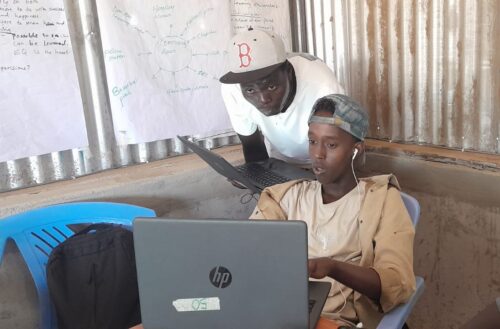
A child at a laptop in a classroom in rural Kenya.
Learners in a classroom in Kenya.

And we know many of the young people who face the greatest barriers to accessing computing education and developing new skills and confidence live in countries with low- and middle-income economies. That’s why we are building new partnerships in India, Kenya, and South Africa and adapting our resources and programmes for the contexts of educators and learners living there.

2. Measure what matters

We’re really excited that we’ll soon be publishing an updated Theory of Change, which captures how we make an impact. This will be the foundation for Monitoring and Evaluation (M&E) plans for all of our initiatives, where we specify their goals and set down what kinds of data we will collect to make sure we have the measure of whether the initiatives are succeeding.

A learner and a faciliator in a classroom learning digital skills.
A learner and facilitator in a classroom in Kakuma refugee camp.

Strong M&E is equally important for our established programmes and our new pilot initiatives. Code Club, the worldwide network of free, after-school coding clubs for 9- to 13-year-olds we support, has been growing for more than 10 years. Durham University’s Evidence Centre for Education is currently conducting an independent evaluation of UK-based Code Clubs to help us understand how to better support Code Club volunteers and learners around the world. We ourselves recently evaluated the pilot of a new programme we designed in partnership with Amala Education to deliver a vocational skills course for displaced learners aged 16 to 25 in Kakuma refugee camp in Kenya.

3. Keep getting better

Data is only useful if it’s translated into insights that are acted upon. We use the findings from evaluations to inform the design and continual improvement of all our initiatives.

Teachers in Code Club training in Odisha, India.
Teachers in Code Club training in India.

For example, the evaluation of our pilot vocational skills training in Kakuma refugee camp provided insights that have helped us adapt the programme for a second cohort of young people. The same was true of the M&E insights we gained from our partnership with Mo Schools in Odisha, India, where we have provided training and support to 1075 teachers to establish Code Clubs. Informed by survey data and informal feedback each step of the way, we are now gradually scaling up our support towards launching a more intensive computing and coding programme in 2000 schools in Odisha this year.

Young learners at computers in a classroom.
Learners in a UK primary school classroom.

Side by side with our M&E results, we also rely on the latest computing education research, conducted at the Foundation, in the Raspberry Pi Computing Education Research Centre at the University of Cambridge, and by academic researchers around the world. Our groundbreaking research programme on gender balance in computing, and our ongoing research on culturally relevant pedagogy, are shaping the way we work to enable all young people to achieve their full potential in computing.

4. Tell people about it

We are proud of the difference we are making. We want everyone to hear about it and feel inspired to get involved in our vital mission for young people. Our annual reviews are packed full of statistics and overviews of the difference we’re making, and we’re creating a growing video series of unique stories from people in the community we support. Watch this space for news about our updated Theory of Change, our next annual review, and more blogs about our impact.

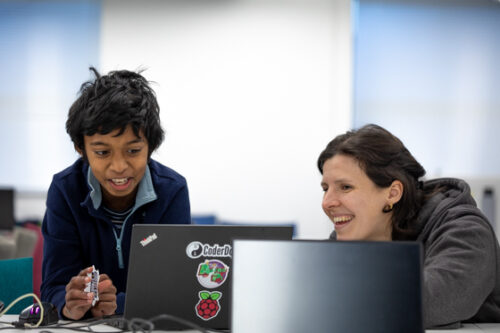
A learner and a volunteer at a CoderDojo coding club.
A participant and a volunteer at a CoderDojo in England.

By doing these four things well, we can be confident that we are enabling young people to achieve their potential through the power of computing and digital technologies.

If you share our passion for impact and think our mission is important, why not get involved today? You can:

The post The four elements of our focus on impact appeared first on Raspberry Pi Foundation.


Source: Raspberry Pi – The four elements of our focus on impact

GCC 13.2 Released With 58+ Bugs Fixed

Released back in April was GCC 13.1 as the first stable release in the GCC 13 series that brought Modula-2 language support, more C++23/C23 features, Modula-2 language support, and other new CPU targets supported from Arm to Intel. Debuting today is GCC 13.2 as the first point release in the series to ship dozens of bug fixes…

Source: Phoronix – GCC 13.2 Released With 58+ Bugs Fixed

China's Jobless Graduate Army Falls Through Cracks in Economy

Record youth unemployment after Beijing clampdown on private sector, FDI slump. From a report: New graduate Glonee Zhang had high hopes when he landed a job at a lithium battery company in Shenzhen last summer. Now, like more than one in five young people in China, he’s out of work. An English major entering a post-COVID working world, Zhang thought “the end of the pandemic would bring a bright future.” Six months later, he and half of the firm’s intake of 400 new grads were laid off when the company’s sales slumped by 10% year-on-year. “Sometimes I feel my soul is being torn apart,” said a downbeat Zhang, getting by in the meantime doing odd jobs.

Caught between a long-running regulatory crackdown by Beijing on private enterprise, and a slide in hiring by foreign firms in the country, young people now face a record jobless rate of 21.3%. Since the official number only includes people actively seeking work, some economists say the percentage of young people not in employment, education or training could be significantly higher. While the pandemic may have gone, its departure has unmasked a growing structural problem for President Xi Jinping and the Chinese Communist Party (CCP). The world’s second-biggest economy is producing twice the number of graduates it did 10 years ago, with nearly 12 million this year – but not the jobs they’re qualified to do.

“Over the years, China has expanded universities, but China is still a largely manufacturing [and services] based economy,” Robin Xing, chief China economist at Morgan Stanley in Hong Kong, told Nikkei Asia. “This is structural, because the economy itself is big, it’s gradually changing. But it takes time for China to become a more advanced economy like Japan, South Korea and the U.S., which have more professional services dominating job creation.” In December 2019, before COVID struck, the youth jobless rate was 12.2%. Graduates like Zhang are now forced to consider continuing in higher education or trying for highly competitive but stable government jobs for which they are overqualified. Studying or working overseas is also an option for some.

Read more of this story at Slashdot.


Source: Slashdot – China’s Jobless Graduate Army Falls Through Cracks in Economy

Apple AirTag 4-pack falls back to $85

If you want to keep track of your luggage or if you have items you need to protect from theft or loss, Apple’s AirTags are the answer. You can now pick up a four-pack at Amazon and Walmart for $85 (14 percent off) — just slightly higher than the lowest price we’ve ever seen. The deal is ideal if you have multiple items to keep safe.

If you’re in Apple’s ecosystem, AirTags give you some big advantages over rival trackers from Tile and others. The ultra-wideband functionality offers precise tracking with iPhone 11 (and up) devices when you get close, so you can tell whether your missing object is under a couch cushion or behind a chair, for example. Meanwhile, the AirTag network enabled by all Apple device users allows you to find a missing bag that might be a longer distance away.

The coin-sized design is nice and simple and you’ll get a seamless experience thanks to the Find My App. You can also force the AirTag to emit a chime to help you more easily locate your item if you’re close to it. However, it doesn’t have a built-in keyring like rival devices, so you’ll need to buy additional accessories — luckily, Engadget just released a buyer’s guide for AirTag keyrings, straps and more. 

The main drawback is that it only works with Apple devices, so Android users will have to look elsewhere, and battery life is also limited. Still, Apple users can now grab a four pack at one of the lowest prices we’ve seen.

Follow @EngadgetDeals on Twitter and subscribe to the Engadget Deals newsletter for the latest tech deals and buying advice.

This article originally appeared on Engadget at https://www.engadget.com/apple-airtag-4-pack-falls-back-to-85-075538136.html?src=rss

Source: Engadget – Apple AirTag 4-pack falls back to

Crypto Bill Passes Congressional Committee in Victory for Industry

A key congressional committee on Wednesday advanced a bipartisan bill that aims to develop a regulatory framework for cryptocurrencies, a milestone for Capitol Hill in its efforts to codify federal oversight for the digital asset industry. From a report: The bill passed by the House Financial Services Committee would define when a cryptocurrency is a security or a commodity and expand the Commodity Futures Trading Commission’s (CFTC) oversight of the crypto industry, while clarifying the Securities and Exchange Commission’s jurisdiction, as many crypto advocates complain of the agency’s perceived overreach. A handful of Democrats, including Reps. Jim Himes and Ritchie Torres, joined committee Republicans in voting for the bill. The House Agriculture Committee is scheduled to consider the same bill Thursday. “As other jurisdictions like the UK, the [European Union], Singapore and Australia have moved forward with clear regulatory frameworks for digital assets, the United States is at risk of falling behind. We intend to change that today,” said Representative Patrick McHenry, the Republican chair of the House Financial Services Committee, at the markup.

Read more of this story at Slashdot.


Source: Slashdot – Crypto Bill Passes Congressional Committee in Victory for Industry

Samsung blames Q3's drop in revenue to decline in smartphone shipments

Samsung has reported KRW 0.67 trillion ($527 million) in operating profit for the second quarter of 2023, which is just slightly higher than last quarter’s, thanks to its memory business posting a narrower loss. That figure is also, however, much, much smaller than the KRW 14.1 trillion ($10.8 billion) operating profit it posted in July 2022. In its latest earnings report, the tech giant also revealed a consolidated revenue of KRW 60.01 trillion ($47 billion), which represents a 6 percent decline from the previous quarter’s and a far cry from last year’s record-breaking KRW 77.2 trillion ($59.4 billion).

The company blames the drop in revenue mostly to a decline in smartphone shipments “as the effect of the Galaxy S23 launch” in the first quarter faded. If you’ll recall, Samsung’s mobile division performed well the previous earning period due to the strong sales of the Galaxy S23 series, specifically the Galaxy S23 Ultra. Now, the division’s consolidated revenue has slipped from KRW 31.82 trillion ($23.7 billion) to KRW 25.55 trillion ($20 billion), while its operating profit dropped by $500 billion. 

Samsung expects the overall smartphone market to pick back up in the second half of the year, especially in the premium market. Unsurprisingly, it plans to focus its efforts on the newly launched Galaxy Z Flip 5 and Galaxy Z Fold 5 series. The Galaxy Z Flip 5 boasts a 3.6-inch external display — the previous model had a 1.9-inch one — while the Galaxy Z Fold 5 has a new hinge that gets rid of the gap between the two screen halves. 

Meanwhile, Samsung’s DS Division or memory business experienced a slight recovery in revenue from KRW 13.73 trillion ($10.2 billion) in Q1 to KRW 14.73 trillion ($11.53 billion). Its operating loss, while still massive at KRW 4.58 trillion ($3.4 billion), is at least a bit smaller at KRW 4.36 trillion ($3.4 billion). Going forward, the company plans to focus on the sale of what it calls “high-value-added products,” such as DDR5 and LPDDR5x components.

This article originally appeared on Engadget at https://www.engadget.com/samsung-blames-q3s-drop-in-revenue-to-decline-in-smartphone-shipments-055356695.html?src=rss

Source: Engadget – Samsung blames Q3’s drop in revenue to decline in smartphone shipments

Netflix Lists $900,000 Job Seeking AI To 'Create Great Content'

An anonymous reader shares a report: As Hollywood executives insist it is “just not realistic” to pay actors — 87 percent of whom earn less than $26,000 — more, they are spending lavishly on AI programs. While entertainment firms like Disney have declined to go into specifics about the nature of their investments in artificial intelligence, job postings and financial disclosures reviewed by The Intercept reveal new details about the extent of these companies’ embrace of the technology. In one case, Netflix is offering as much as $900,000 for a single AI product manager.

[…] Netflix’s posting for a $900,000-a-year AI product manager job makes clear that the AI goes beyond just the algorithms that determine what shows are recommended to users. The listing points to AI’s uses for content creation: “Artificial Intelligence is powering innovation in all areas of the business,” including by helping them to “create great content.” Netflix’s AI product manager posting alludes to a sprawling effort by the business to embrace AI, referring to its “Machine Learning Platform” involving AI specialists “across Netflix.”

A research section on Netflix’s website describes its machine learning platform, noting that while it was historically used for things like recommendations, it is now being applied to content creation. “Historically, personalization has been the most well-known area, where machine learning powers our recommendation algorithms. We’re also using machine learning to help shape our catalog of movies and TV shows by learning characteristics that make content successful. We use it to optimize the production of original movies and TV shows in Netflix’s rapidly growing studio.”

Read more of this story at Slashdot.


Source: Slashdot – Netflix Lists 0,000 Job Seeking AI To ‘Create Great Content’

A Comprehensive Guide to Using PuTTY for SSH into Linux

Whether you’re an experienced developer or a beginner trying to establish a secure connection between your computer and a remote Linux server, PuTTY is a tool you can rely on. Let’s delve into understanding how to utilize PuTTY to Secure Shell (SSH) into a Linux machine from a Windows operating system.

Source: LXer – A Comprehensive Guide to Using PuTTY for SSH into Linux