Enlarge/ A small selection of the characters that would be part of Microsoft if its proposed Activision/Blizzard merger is allowed to go through. (credit: Activision Blizzard King)
Activision isn’t pulling any punches in its fight against the UK’s regulatory attempts to block its merger with Microsoft. In a “motion to intervene” recently filed with the Competition Appeal Tribunal (and recently summarized on the tribunal’s website), Activision excoriates the UK’s Competition and Markets Authority for a “flawed conclusion” that was variously “unlawful, irrational, and/or disproportionate” and “arrived at in a procedurally unfair manner.”
The appeal takes particular issue with the CMA’s focus on cloud gaming in a vacuum, without taking into account competition from “native gaming” via games running on local hardware. The ability to easily switch from one type of game experience to the other means that cloud gaming should not be a “separate product market,” Activision argues.
A source close to Activision’s appeals process (who asked for anonymity to speak frankly about the appeal) put a finer point on this argument, saying that cloud gaming is a niche technology and that “most consumers continue to get games by download or physical disc because running the game on their local hardware gives them a much better experience.”
In a world fascinated by the capabilities of AI, a former employee of Google sends out a warning about the current dangers surrounding utilizing AI chatbots to write news articles. Arjun Narayan, a former Trust and Safety Lead at ByteDance and Google, says AI-generated articles are still subject to “hallucinations,” or making things up that
A German startup has secured initial funding to develop a revolutionary fusion energy machine that it hopes can provide a future source of abundant, emissions-free power. From a report: Proxima Fusion, incorporated in January, aims to build a complex device known as a stellarator and is the latest company to join the emerging fusion industry’s effort to generate electricity by fusing atoms. Although the amount of funding is small at only $7.5mn, it is significant as Proxima is the first fusion company to spin out of Germany’s revered Max Planck Institute for Plasma Physics. The institute is the home of the world’s most advanced existing stellarator in Greifswald, in eastern Germany, built by government-funded scientists over the past 27 years using supercomputers and advanced engineering.
Little known outside the world of plasma physics, a stellarator is an alternative to the better known tokamak device, pioneered by Soviet scientists in the 1950s. Both use huge magnets to suspend a floating mass of hydrogen plasma as it is heated to extreme temperatures so the atomic nuclei fuse releasing energy. Until recently nearly all funding of so-called magnetic confinement fusion has been channelled into tokamaks such as the Joint European Torus in Oxford, England, or the Sparc device being built by the Bill Gates-backed Commonwealth Fusion Systems in Massachusetts.
If you type in Spanish in iMessage, Portuguese in WhatsApp, and English in Slack on your Mac, you’re probably annoyed by the effort it takes to keep switching keyboards. Input Source Pro wants to solve that problem. The app automatically changes the input method depending on which website or app is open, and you can…
As is often the case with PC versions of PlayStation exclusives, there are some extra bells and whistles here. There are new “ray-traced shadows for natural light in outdoor areas” which allow for “realistic shadows with natural gradients in softness,” as Julian Huijbregts, an online community specialist at Nixxes (the Sony studio that’s working on the port), notes on the PlayStation Blog. The gameplay and cutscenes have been optimized for ultra-wide displays, including aspect ratios of 21:9, 32:9 and even 48:9 for triple-monitor setups.
Along with unlocked framerates, there’s support for upscaling tech including NVIDIA DLSS 3, AMD FSR 2, Intel XeSS and Insomniac’s own Temporal Injection, as well as NVIDIA Reflex and NVIDIA DLAA anti-aliasing. You can opt to use a keyboard and mouse with fully customizable controls or a controller. Plug in a DualSense, and you’ll be able to experience the same haptic feedback and dynamic trigger effects that you would on PS5.
I finally got around to playing Ratchet and Clank: Rift Apart after it hit PlayStation Plus recently and enjoyed it immensely. It’s a breathtakingly gorgeous game with strong combat, captivating characters and a smart script. Insomniac also makes better use of the DualSense’s capabilities than most studios.
Fingers crossed that Insomniac and Nixxes can avoid the kinds of technical issues that have plagued PC versions of other Sony games. The Last of Us Part 1(Iron Galaxy worked with Naughty Dog on that port) and Horizon Zero Dawn, which Nixxes helped to fix, both had notable problems at the outset on PC.
Ratchet and Clank: Rift Apart relies on the speedy load times of the PlayStation 5 to make the dimension-hopping feature work seamlessly. With that (and the stellar visuals) in mind, it’s likely that you’ll need a beefy gaming rig to get the most out of the port. So, it’s probably worth waiting for Sony to reveal the PC specs before locking in a pre-order on Steam or the Epic Games Store.
This article originally appeared on Engadget at https://www.engadget.com/ratchet-and-clank-rift-apart-is-coming-to-pc-on-july-26th-162146036.html?src=rss
China launched its latest crew of astronauts to the Tiangong space station, including the first civilian sent to orbit by the country’s rapidly evolving space program.
Amnesia: The Bunker—the fourth game in the legendary survival horror series—will come to Xbox’s Game Pass streaming service on the day it releases. After facing a few delays, the semi-open world horror game should finally be out on June 6, around the same time a handful of other titles come to Game Pass for its first…
It’s almost summer and gamers are starting to lose it. In the midst of a renewed console race frenzy and video game industry consolidation, fan speculation about future game releases and company deals is at an all time high. It’s an exciting time for new announcements as we head into not-E3 showcase season, but also…
Tears of the Kingdom is clearly proving it should’ve been named The Legend of Zelda: Betcha Didn’t Know You Could Do This. It seems every day there’s some unique way to traverse the big open world, solve cryptic puzzles, and more. Now, players have found unique ways to completely shut down bosses—and none of it…
In an interview with The Guardianmore than a decade ago, Warren Spector, the director and producer of Deus Ex, said his dream game would take place in one city block. “There are people who are trying to simulate massive worlds at a level of an inch per mile,” Spector told journalist Keith Stuart. “I don’t get it. I really want deep worlds that you can interact with.”
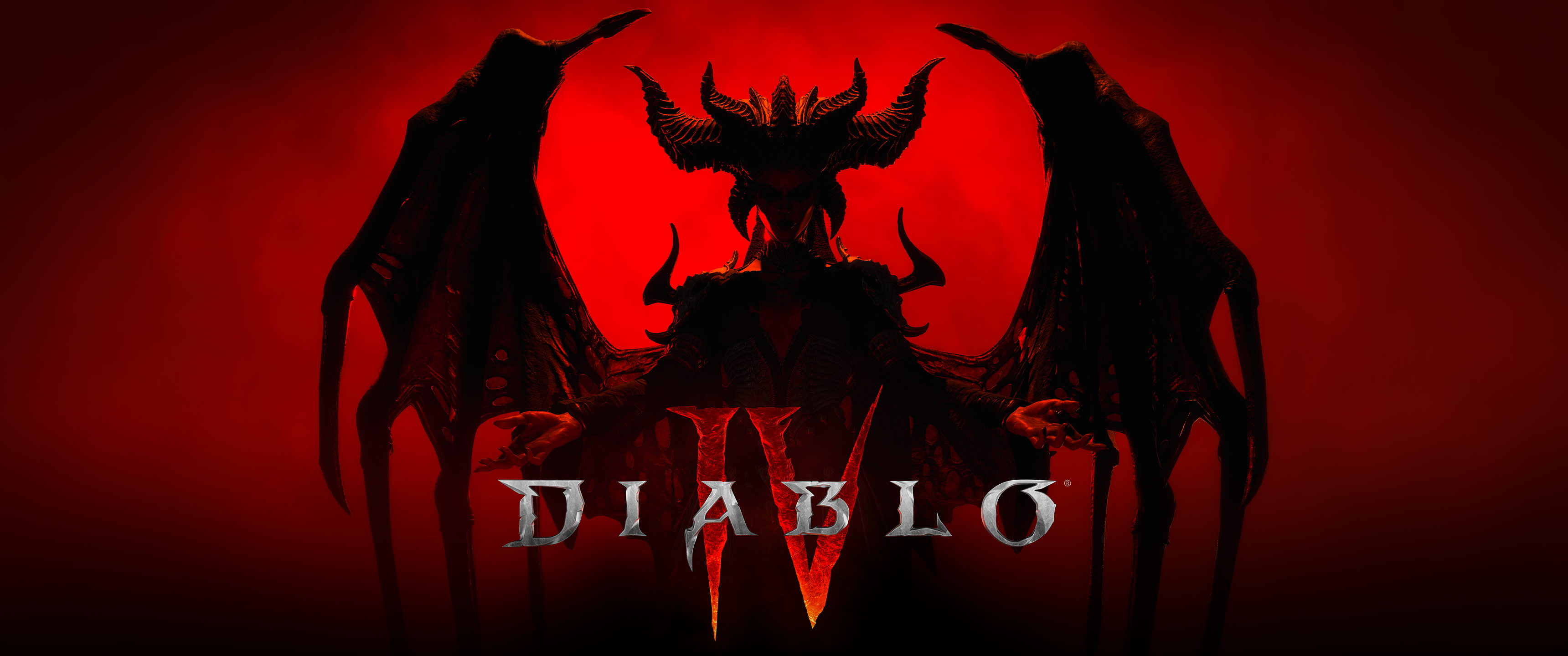
I’ve spent a lot of time thinking about those comments while playing Diablo IV. Blizzard’s latest is easily one of the best games the studio has released in about a decade, but I can’t help imagining what Diablo IV could have been if it were a smaller, more focused experience.
The story of Diablo IV opens decades after the end of Diablo III: Reaper of Souls, with the world of Sanctuary still reeling from the events of that game. Structurally, the narrative that unfolds is similar to Diablo II. Following a visit to a remote village, your character sets off after the demon Lilith – who is the daughter of Mephisto, one of the Prime Evils you defeated in Diablo II. More often than not,your character finds they’re one step behind Lilith, leading to predictably dire results.
I won’t say much more about Diablo IV’s story other than to note Blizzard smartly grounded it in the tragedy of its human characters. When the narrative calls on elements from past games, it does so in ways that feel natural and earned. Lilith is also a great antagonist. Every time she appeared on-screen, I felt a sense of unease waiting to see what kind of calculated cruelty she’d inflict on those unlucky enough to cross her path. If you only end up playing Diablo IV for its story, I think you will enjoy the experience, but if you decide to veer off itscritical path, be prepared to play through a lot of uninspired content.
If you tried Diablo IV during one of the open betas Blizzard held in recent months, you’ve seen most of what the game’s open world has to offer as you’re leveling your character. Did you encounter a world event in the Fractured Peaks that tasked you with protecting a group of villagers hiding under their carts? Guess what – you’ll find another group just like that one again in Scosglen, the game’s second zone, and in other areas, too. I bet you played through a few optional dungeons. Well, there are more than 100 in the full game, and most feature a limited combination of layouts and objectives. World bosses and camps are more fun to complete, but there are far fewer of them than all the other content present in the game. The post-campaign adds more things to do like helltides and nightmare dungeons, but those increase the difficulty of the content, rather than introducing something substantially new.
Sometimes you’ll discover some interesting lore, a nifty bit of environmental storytelling or a named enemy that will drop an item with unique flavor text, but those moments are few and far between. I kept waiting for Diablo IV’s worldto surprise me, to do something unexpected. The closest the game came to scratching that itch was when it sent the Butcher, a boss that shows up in nearly every Diablo game, to murder my character in an optional dungeon I was exploring. Even though my barbarian didn’t survive the encounter, I wanted more moments like that. Instead, the game seemed dead set on offering me an endless checklist of samey content if I ever decided to strike off on my own.
Blizzard Entertainment
That frustration is palpable while playing Diablo IV because so much of the game is immediately compelling. Nearly every inch of itsopen world is striking, with some of the most detailed and creative assets Blizzard has ever produced. Add to that a soundtrack that is haunting and evocative, and you have an experience that’s begging for players to inhabit it.
Maybe it’s my fault for expecting a live service game to offer something more substantive, but everywhere in Diablo IV, you see evidence that the people who spent years of their lives working on this project wanted the same thing. Just look at character creation. Clearly, the intention here was to allow players to make their druid, barbarian, sorcerer, rogue or necromancer look exactly like they’ve always appeared in their imaginations. Diablo IV offers a dizzying amount of visual customization for each class. In addition to all of the items, you can give your character different hairstyles and tattoos, and modify their skin tone, eye color and other attributes. Add in the transmog system, which allows you to transform the appearance of items to make them look like ones you’ve found in the past, and I can guarantee no two characters will look alike.
Blizzard obviously also put a lot of thought into player agency, allowing each class to be played in a variety of ways. The Aspects system is one of Diablo IV’s most compelling features: By completing dungeons and finding legendary items, you will collect item affixes that modify how skills work, and they’re transferable among your inventory. Some of these can completely change how your build functions. After some initial frustration, I found a build that allowed my barbarian to make short work of both hordes of monsters and Diablo IV’s spongy bosses, and I had a lot of fun with the game. I just wish there was more to do in Diablo IV’s world other than kill countless monster hordes. After all, role-playing has always been part of the ARPG genre.
Blizzard Entertainment
One last thing I want to note is that I played a version of Diablo IV that did not include any of the microtransactions the final build will feature. If you haven’t followed that aspect of the game’s development, I wrote about Blizzard’s monetization plans for Diablo IV last year. In short, Diablo IV is a full-priced game that also happens to feature an in-game shop and seasonal passes. Blizzard has promised that none of the cosmetic items you can buy in the shop or earn by completing the paid track of a season pass will grant “direct or indirect” gameplay advantages. The studio was also quick to note the shop and season pass will offer “more diversity of choices, not systematically better choices” for customizing your character. After Diablo Immortal, I’m fine with this setup, but I know some people will be put off by the presence of a season pass.
I don’t want to give you the wrong impression of my time with Diablo IV; I enjoyed nearly every moment of it. In a lot of ways, it’s the Diablo game I’ve been dreaming of ever since I first set foot in the world of Sanctuary back in 1997. But it is also a reminder of all the ways Blizzard has changed since I first encountered its games. There’s no way the company that released Diablo II in 2000 and even Diablo III in 2012 could have created a game of Diablo IV’s scale, but sheer size is not what makes Diablo IV enjoyable. So often, that scale works against the game, resulting in a world that is, as Warren Spector might say, simulated at a level of an inch per mile.
Diablo IV will be available on PC, PlayStation and Xbox on June 6th.
This article originally appeared on Engadget at https://www.engadget.com/diablo-iv-review-a-mechanically-perfect-romp-through-a-shallow-world-160017353.html?src=rss
When Diablo 3 released 11 years ago, it was a mess.
Put aside the action role-playing game’s infamous server problems at launch—a product of the series going online-only for the first time—the game itself had fundamental issues. At core was its ill-conceived and universally reviled real-money auction house, which changed the thrust of the series’ loot hunt from “look at this badass helm I got from killing an elite demon” to “look at these practical pants I bought from an in-game spreadsheet for $2.99 USD.” Difficulty and balance were all over the place, and, perhaps worst of all to long-time Diablo fans, the previous games’ dark horror aesthetic was replaced with a more colorful, cartoony vibe.
Two years and a management shakeup later, we got the Reaper of Souls expansion, which completely revamped Diablo 3’s loot and endgame, giving us the game we should have had from the beginning. Art direction notwithstanding, Diablo 3 ended up in a good place, and I played a ton of it, largely due to its genre-leading combat. (Lest we forget, Diablo 2 also had a game-changing expansion in Lord of Destruction.)
Generative artificial intelligence is all the rage in startup-land, and corporate venture capital investors don’t want to be left out. From a report: A small but growing number of companies’ venture arms are rolling out efforts, in various forms, that are focused on investing in the current AI startup boom. Generative AI and large language models are getting a lot of attention for their potential to automate many business tasks, big and small. “From an enterprise perspective, more than two-thirds of leaders are trying to prioritize generative AI,” Paul Drews, managing partner at Salesforce Ventures, tells Axios. Of the 44 startups Workday Ventures has backed, about 25% are already using tech developed by OpenAI, according to managing director Barbry McGann. She adds it’s because the AI company’s tools are so “enterprise-ready,” making it easy for business software makers to quickly integrate the tech.
How did a classically trained performer go from quirky character actor to slasher icon? New documentary Hollywood Dreams & Nightmares: The Robert Englund Story takes the viewer through the life and career of the man who brought Freddy Krueger to terrifying (and sometimes hilarious) life in the Nightmare on Elm Street…
With inflation still high the chances of that changing significantly any time soon rather low, you might be wondering if now is a good time to tackle any home renovation projects at all. Even under relatively calm economic conditions, it can be a challenge to choose the right renovation project and make sure you get…
Crucial T700: Starting At $209 (1TB), $369 (2TB w/ Heatsink) The Solidigm P44 Pro is an enthusiast-class PCIe Gen 4 solid state drive that offers excellent all-around performance at competitive prices. Class-Leading Performance Bleeding Edge NAND For Desktops / Workstation Only Price Premium After showing them off over the last few months,…
With the recent stable releases of LLVM’s Clang 16 and GCC 13 compilers there is now initial AMD Zen 4 “znver4” support in these open-source compilers. Curious about the performance difference between these two compilers on the very newest AMD 4th Gen EPYC “Genoa” server processors, I ran some LLVM Clang 16.0 and GCC 13.1 benchmarks on the flagship EPYC 9654 2P Linux server.
After six months, Pokémon Scarlet and Violet nowhave Pokémon Home support, allowing players to transfer some of their old favorite ‘mons from the storage app to the latest games. The update allows a select number of Pokémon to join your Paldea journey, but as fans have been exploring the update, they’ve discovered a…
Over 350 AI executives, researchers, and industry leaders signed a one-sentence warning released Tuesday, saying that we should try to stop their technology from destroying the world.
Martin Petersen and John Garry led a session at the 2023 Linux Storage, Filesystem,
Memory-Management and BPF Summit on work they have been doing to
implement atomic block writes of various sizes for SCSI and NVMe.
The idea is to support devices that can guarantee atomic operations for
sizes larger than their block size.
It is
an attempt to “find
common ground” between the two standards, Petersen said, because the two
have slightly different semantics, depending on the device type, and
different restrictions, which has made for an “interesting project”. It has
been a challenge to find an abstraction layer that can work with the “five
different variants
of SCSI and NVMe implementations that may or may not be out there”.
When you made the first version of your resume, you probably aligned it with the advice of whoever was helping you at the time: your college professor, your parents, a friend, or the wisdom of the internet. As norms for job seekers have changed throughout the years, most of our resumes haven’t kept pace as we’ve been…