Honor’s Magic 5 Pro offers a polished alternative for Android connoisseurs

After breaking from Huawei, Honor has made the case that, in Europe at least, it is Samsung’s true rival in the Android space. In the last three years, it has offered flagship phones that are spec-for-spec the equal of whatever that year’s S-series is packing. Sadly, it’s also doing this at a time when the spec arms race is all but done, and it’s harder than ever to actually stand out amongst the crowd. The Magic 5 Pro doesn’t deviate from the template laid down by its two predecessors, so Honor can’t play on your neophilia as a reason to buy it. But there might be something in the sheer muscularity of its offering that could tempt you into making the switch.

The Magic 5 Pro is making its debut at MWC in Barcelona, and will be sold in both Europe and China. Design-wise, it’s close to its predecessor, but Honor says the new handset apes the sweeping, organic curves favored by Catalan architect Antoni Gaudí. Where the Magic 4 Pro had a fairly hard line around its camera hump – sorry, Eye of Muse – here the back cover pours itself into the bump quite seamlessly. It’s comfortable enough in your hand and light enough to hold, but you’ll need the case to keep things pristine. It’s available in fingerprint-magnet piano Black and Meadow Green, which looks nicer in person than it does in photos.

Render of Honor's Magic 5 Pro in Meadow Green, stood monolithically in a pastoral scene.
Honor

A sense of evolution, rather than revolution, continues along the rest of the spec list, with little major difference between the Magic 4 and its replacement. The “Quad Curved Floating Screen” is, like the Magic 4, a 6.81-inch, 120Hz, LTPO OLED display with a 2,848 x 1,312 resolution that curves into the frame. Honor says that the enhancements are mostly behind the scenes, with a new discrete display chipset for better video quality and better brightness. Whereas the Magic 4 could muster up 1,000 nits, its successor can crank out 1,300 nits, or 1,800 nits at peak.

Nestled inside is a Snapdragon 8 Gen 2, up from the Gen 1 found on the Magic 4, matching the silicon inside the S23, which is paired with 12GB RAM and 512GB storage. Although Honor can’t call upon the same overclocking magic found in Samsung’s handset, it does say its AI-infused performance software will do a similar job. Sadly, I had all of ten minutes to spend with the handset and so there wasn’t the chance to do any serious stress testing. But history tells us that a handset this chock-full of gear is hardly going to be a slouch.

A 5,100mAh battery is powering the show here, a significantly bigger battery than the 4,500 found on the 4. This, I suspect, is the reason this handset is four grams heavier than the last one, but what’s a couple of grams between friends, eh? That cell will accept 66W wired or 50W wireless charging, if you have the necessary Honor SuperCharge stand in your home. As I said above, this is more or less what you’d expect with any Android flagship these days.

The major selling point for a handset like this is the camera, and Honor is doing its usual job here. Magic 5 Pro comes with a “Star Wheel” version of its “Eye of Muse” camera ring, packed with three beefy lenses jutting out from the back. First is a 50-megapixel, f/1.6 lens with a custom 1/1.12-inch sensor, the manufacturer of which I don’t yet know. That’s paired with a 50-megapixel, f/2.0 ultra-wide camera with a 122-degree field of view and a 50-megapixel, f/3.0 periscope telephoto with a 3.5x optical zoom and 100x digital zoom connected to Sony’s IMX858 image sensor. Less attention is given to the forward facing camera, which is probably the same 12-megapixel, f/2.4 unit paired with a 3D depth camera as found in the Magic 4 Pro.

(Those with long memories, or access to Google, will recall that the Magic 4 Pro’s telephoto lens had a quoted resolution of 64-megapixels. An Honor spokesperson said that the switch is down to an improvement in sensor size, and the new image engine will offer “far better light sensing.”)

Image of both colorways of Honor's Magic 5 Pro side-by side, including the fingerprint-smeared piano gloss black (which I'd wiped seconds before) and the green version, which looks more petrol in the images.
Daniel Cooper

Supporting the headline trio is, again, an 8×8 Direct Time of Flight Sensor for laser focusing, a multi-spectrum color temperature and flicker sensor. Those will all add muscle to the handset’s upgraded image engine, promising faster capture, better HDR and higher quality computational photography. The company hinted about further improvements to the stills shooting, and while the video-shooting abilities garnered nary a mention, it’ll still output (compressed) “Log” footage using Honor’s proprietary Magic-Log format.

As for what you can do with those lenses, Honor is making the same noises it’s always made about its class-leading imaging. As well as a Dxomark score of 152, the company — before the handset was even announced – bragged that the Magic 5 Pro’s camera was good enough to capture a Guinness World Record in the making. And that its AI smarts were capable of plucking a single, perfect frame of a basketballer mid-dunk that was worthy of sharing.

Now, we must always treat these pledges as they’re intended, knowing that they mean nothing until we’ve tried to replicate those results ourselves. As we learned last year when we really tested the Magic 4 Pro’s promise of 4K video shooting, promises are cheaper than delivering.

One thing that’s clear about so many handsets these days is that companies are looking for marginal gains all over the package. For instance, Honor says the Magic 5 Pro has discrete Bluetooth and WiFi antennas which should boost download speeds and improve the reliability of your Bluetooth connection. It’s hard to see if those are current gripes with a wide number of users, but it’s good to see some thought put to improving matters.

And Honor has also revived a much-ballyhooed, rarely-loved gimmick feature in the form of air gestures. Now, you can control elements of your phone’s UI from a foot over the top of the front facing camera, when you’re trying to browse recipes with messy hands. Honor says that their return is thanks to the Snapdragon 8 Gen 2’s additional power, which is capable of watching your hand movements without putting too much pressure on the system-on-chip.

Now, I only had about ten minutes of time with the handset, and there wasn’t a whole lot of stuff I could do to put it through its paces. I will say that I’m expecting the imaging performance to be a lot snappier than what was available on the demo unit, which felt a little sluggish. And that while nobody’s expecting any smartphone maker to reinvent the wheel, there’s fewer marks on offer for polish. As I said at the top, my initial impression of Honor’s Magic 5 Pro is of a handset that doesn’t deviate from the template laid down by its two immediate predecessors, but one that’s been polished to a very high shine.

As well as the Magic 5 Pro, the company also announced the European arrival of the Magic 5, a less expansive version of the same handset. Both will be available at some point in the second quarter of the year, with the Magic 5 — with 8GB RAM and 256GB storage, priced at €899 ($950), while the Magic 5 Pro with 12GB RAM and 512GB storage will set you back €1,199 ($1,267). But I suspect that Honor might need to trim that asking price down a little if it really wants to tempt away folks who, right now, have sworn their brand allegiance to Samsung.


Source: Engadget – Honor’s Magic 5 Pro offers a polished alternative for Android connoisseurs

Elon Musk Lays Off Twitter Employee Who Slept on the Floor to Meet His Crazy Deadlines

Twitter CEO Elon Musk has a message for employees: Loyalty means nothing. Over the weekend, Musk laid off more than 50 employees at the social media company, including one of his most vocal supporters, product head Esther Crawford.

Read more…


Source: Gizmodo – Elon Musk Lays Off Twitter Employee Who Slept on the Floor to Meet His Crazy Deadlines

The AMD Ryzen 9 7950X3D Review: AMD's Fastest Gaming Processor

This week is the long-awaited launch of AMD’s second generation of V-Cache equipped consumer chips, the Ryzen 7000X3D family. Aimed primarily at gamers, tomorrow morning AMD will be releasing a pair of their latest-generation Ryzen 7000 chips with the extra cache stacked on, including the Ryzen 9 7950X3D (16C/32T) and the Ryzen 7 7900X3D (12C/24T). Both chips build upon their Ryzen 7000X-series predecessors by adding a further 64MB of L3 cache, bringing them to an impressive total of 128 MB of L3 cache.


Meanwhile, a third SKU, the AMD Ryzen 7 7800X3D, is in the works for April 6th. That part will offer 8 CPU cores and 96 MB of L3 cache, making it the most direct successor to the Ryzen 7 5800X3D.


Ultimately, all three chips will serve to update AMD’s product stack by combining the strengths of the Zen 4 CPU architecture with the performance benefits of the extra L3 cache, which during the overlapping period of the last several months, has been split between the Ryzen 5000 and Ryzen 7000 families. In short, PC gamers will finally be able to have their cake and eat it too, gaining access to AMD’s Zen 4 microarchitecture and its myriad of benefits (higher IPC, higher clockspeeds, DDR5, PCIe 5) with a nice helping of additional L3 cache slathered on top.


From that stack, today we’re reviewing the new flagship Ryzen 9 7950X3D. The 7950X3D offers 16 Zen 4 cores spread over two CCDs (8C/16T per CCD). AMD had to elect one of the CCDs to stack the additional L3 cache onto, resulting in a new-to-AMD heterogeneous CPU design, but they do have some special sauce as a garnish to make it work. We aim to determine if the Ryzen 9 7950X3D is the chip gamers have been yearning for and how it stacks up against other Ryzen 7000 chips (and Intel’s 13th Gen) in our test suite.


Source: AnandTech – The AMD Ryzen 9 7950X3D Review: AMD’s Fastest Gaming Processor

The Morning After: Scientists confirm a fifth layer inside the Earth's core

Tear down the middle school geology posters: We have an update. A team at Australian National University (ANU) has found evidence of a new fifth layer to the planet, an iron-nickel alloy ball in the inner core. The scientists found the hidden core by studying seismic waves that travel up to five times across the Earth’s diameter – previous studies only looked at single bounces. The earthquake waves probed places near the center at angles that suggested a different crystalline structure deep inside.

The ANU researchers also believe the innermost inner core hints at a major event in Earth’s past that had a “significant” impact on the planet’s heart. As researchers told The Washington Post, it could also help explain the formation of the Earth’s magnetic field. The field plays a major role in supporting life as it shields the Earth from harmful radiation and keeps water from drifting into space.

– Mat Smith

The Morning After isn’t just a newsletter – it’s also a daily podcast. Get our daily audio briefings, Monday through Friday, by subscribing right here.

The biggest stories you might have missed

Russia’s replacement Soyuz spacecraft arrives at ISS to bring back MS-22 crew

The spacecraft successfully docked on Saturday evening.

TMA
ROCOSMOS

MS-23, the Soyuz spacecraft Russia sent to bring cosmonauts Sergey Prokopyev and Dmitry Petelin and NASA astronaut Frank Rubio back to Earth, has arrived at the International Space Station. According to Space.com, the vessel docked with the ISS at 7:58 PM ET on Saturday evening. MS-23 was scheduled to launch later this year, but Roscosmos was forced to push up the flight after MS-22 – Prokopyev, Petelin and Rubio’s original return craft – sprung a coolant leak in December following a micrometeoroid strike. If an emergency broke out on the ISS and the entire crew had to evacuate, it wasn’t clear whether MS-22 could carry its crew safely back to Earth. That’s no longer the case, now the Soyuz spacecraft is docked.

Continue reading.

Watch the first episode of Star Trek: Picard’s final season for free

You can watch it on YouTube before paying out for a Paramount+ sub.

If you can’t resist the chance to see the crew of Star Trek: The Next Generation one last time, Paramount is offering a free way to watch the first episode of season three. The debut episode sees Jean-Luc Picard return from retirement (yet again) after his friend and former first officer Will Riker receives a warning from Dr. Beverly Crusher. We’ve shared opinions on the first six episodes, but if you’re still intrigued, now there’s a chance to make your own mind up.

Continue reading.

Engadget Podcast: AI all the things!

ChatGPT is popping up on the Kindle Store, and even Spotify is looking at AI.

TMA
Engadget

The AI news just won’t stop! This week, Cherlynn and Devindra discussed the latest on Bing AI – Microsoft is loosening up recent restrictions, following reports of its bad behavior – as well as the rise of ChatGPT stories on the Kindle store. Spotify is also launching its own AI DJ, starring the digitized voice of one of its current hosts.

Continue reading.


Source: Engadget – The Morning After: Scientists confirm a fifth layer inside the Earth’s core

Could deep boreholes solve our nuclear waste problem?

Read 55 remaining paragraphs | Comments


Source: Ars Technica – Could deep boreholes solve our nuclear waste problem?

Linux Inadvertently Has Been Leaving IBRS-Mitigated Systems Without STIBP

The Linux kernel since last year has mistakenly left systems relying on the original Indirect Branch Restricted Speculation (IBRS) for Spectre V2 mitigation without Single Threaded Indirect Branch Predictor (STIBP) coverage for cross-HyperThread dealing with this Spectre vulnerability. There is a patch underway that is resolving this issue for Intel Skylake era systems…

Source: Phoronix – Linux Inadvertently Has Been Leaving IBRS-Mitigated Systems Without STIBP

Google is bringing a bunch of new features to Android and Wear OS

The advent of MWC is always an opportunity for Google to shine a light on some smaller, but still useful, tweaks to its ecosystems. This year, the Android giant is unveiling a raft of minor additions to Android and Wear OS designed to further smooth the bumps in your digital life. That includes a new widget for Google Keep that’ll let you check-off to-do lists from the comfort of your home screen. You’ll also get the ability to, with a compatible watch, let you dictate notes and to-do list items from your wrist.

Another more notable change is improved noise cancellation in Google Meet when used on some Android devices. The company says that, much like the feature as it already exists, you’ll find the noise of nearby construction or other distractions will be crunched to oblivion while you chat. And, on the audio front, Google says that you’ll soon be able to use Chrome OS’ Fast Pair feature to connect new Bluetooth headphones to your machine with a single tap.

Less notable additions include the ability to mash together different emoji to offer a more topic relevant response. In the example, you can merge the Basketball emoji with the Heart Eyes, to give you either a heart-shaped basketball, or add a basketball-like texture to those same heart eyes. Similarly, Android handsets will get new tap-to-pay animations to bring some cartoonish cheer to balance out the misery of spending money on things.

And, on the accessibility front, Chrome on Android will now let you zoom the size of content by up to 300 percent while preserving page layout. Wear OS 3+, meanwhile, will offer Mono-audio for those who might be distracted by stereo, as well as grayscale and color-correction modes for your watch display for easier viewing. If you’re interested in learning more about this, you can check out Google’s full and comprehensive work-up of all the features over at its blog.


Source: Engadget – Google is bringing a bunch of new features to Android and Wear OS

New Wind and Solar Energy Projects Are Now Overwhelming America's Antiquated Electrical Grids

An explosion in proposed clean energy ventures in America “has overwhelmed the system for connecting new power sources to homes and businesses,” reports the New York Times:

So many projects are trying to squeeze through the approval process that delays can drag on for years, leaving some developers to throw up their hands and walk away.
More than 8,100 energy projects — the vast majority of them wind, solar and batteries — were waiting for permission to connect to electric grids at the end of 2021, up from 5,600 the year before, jamming the system known as interconnection…. PJM Interconnection, which operates the nation’s largest regional grid, stretching from Illinois to New Jersey, has been so inundated by connection requests that last year it announced a freeze on new applications until 2026, so that it can work through a backlog of thousands of proposals, mostly for renewable energy.

It now takes roughly four years, on average, for developers to get approval, double the time it took a decade ago. And when companies finally get their projects reviewed, they often face another hurdle: the local grid is at capacity, and they are required to spend much more than they planned for new transmission lines and other upgrades. Many give up. Fewer than one-fifth of solar and wind proposals actually make it through the so-called interconnection queue, according to research from Lawrence Berkeley National Laboratory. “From our perspective, the interconnection process has become the No. 1 project killer,” said Piper Miller, vice president of market development at Pine Gate Renewables, a major solar power and battery developer….

A potentially bigger problem for solar and wind is that, in many places around the country, the local grid is clogged, unable to absorb more power. That means if a developer wants to build a new wind farm, it might have to pay not just for a simple connecting line, but also for deeper grid upgrades elsewhere…. These costs can be unpredictable. In 2018, EDP North America, a renewable energy developer, proposed a 100-megawatt wind farm in southwestern Minnesota, estimating it would have to spend $10 million connecting to the grid. But after the grid operator completed its analysis, EDP learned the upgrades would cost $80 million. It canceled the project.

That creates a new problem: When a proposed energy project drops out of the queue, the grid operator often has to redo studies for other pending projects and shift costs to other developers, which can trigger more cancellations and delays. It also creates perverse incentives, experts said. Some developers will submit multiple proposals for wind and solar farms at different locations without intending to build them all. Instead, they hope that one of their proposals will come after another developer who has to pay for major network upgrades. The rise of this sort of speculative bidding has further jammed up the queue.

Read more of this story at Slashdot.


Source: Slashdot – New Wind and Solar Energy Projects Are Now Overwhelming America’s Antiquated Electrical Grids

The War in Ukraine Is Accelerating the Global Drive Toward Killer Robots

The U.S. military is intensifying its commitment to the development and use of autonomous weapons, as confirmed by an update to a Department of Defense directive. The update, released Jan. 25, 2023, is the first in a decade to focus on artificial intelligence autonomous weapons. It follows a related implementation plan

Read more…


Source: Gizmodo – The War in Ukraine Is Accelerating the Global Drive Toward Killer Robots

Linux Getting Quirk For Working NVMe PCIe On Surface Pro X, ThinkPad X13s

A change made to the Linux kernel back in 2016 is causing issues with NVMe PCIe support on some ARM64 devices like the Microsoft Surface Pro X and Lenovo ThinkPad X13s. A new kernel quirk is on the way for aiming to address that and yield working NVMe storage…

Source: Phoronix – Linux Getting Quirk For Working NVMe PCIe On Surface Pro X, ThinkPad X13s

Xiaomi shows off its new wireless AR glasses

AR is an exciting idea, but it’s not clear if there’s enough computational power in the world to make such a fantastic concept real. Undeterred, Xiaomi has unveiled its Wireless AR Glass Discovery Edition, a compact AR headset using the same Snapdragon XR2 Gen 1 found in the Quest Pro. The company says these oversized sunglasses offer an elegant way to blend the digital and real worlds while, most crucially, not requiring a physical tether to a smartphone.

Weighing 126g (4.4 ounces), Xiaomi crafted the hardware from magnesium-titanium alloy and carbon fiber parts to lighten the load. It’s also rocking a custom-made silicon-oxygen anode battery which, all in, Xiaomi says will reduce the physical burden on the user. (This user would like to disagree, speaking from experience that anything over 100g pressing on your nose is still too much to take for extended periods of time.)

As for the displays, the headset is packing a pair of microOLED displays hooked up to a pair of “free-form, light-guiding” prisms so pixel-dense, your eyes won’t spot the squares. The company says, too, that you’ll experience less brightness loss than with other close-up displays, and can crank out a peak brightness of 1,200nits. And, for immersion’s sake, the front of the lenses are electrochromic, automatically dimming when you need to focus on the virtual world.

The advanced hand-tracking is said to enable a new form of user interaction, whereby our hands can be used to manipulate the digital world. In a concept video, a wearer looks at a smart light and deactivates it by flicking a virtual switch hovering over the device itself. Users will also be able to, Minority Report-style, flick and tap around the internet (or video), and potentially use these for productivity purposes as well.

The advent of these glasses is also part of Qualcomm’s own plans to leverage its Snapdragon Spaces platform to boost XR devices. Xiaomi’s hardware, when paired with a compatible device like the new Xiaomi 13, and promises latency low enough that you won’t notice the lack of a wire. And the company says that it will “work closely with developers to expedite the arrival of AR,” so vital in the still-nascent space.

Unfortunately there’s no word on price or availability since this is very much a concept device as yet. Consequently we wouldn’t recommend setting up a separate savings account to put aside cash to buy one of these unless you’re really, really, really patient.


Source: Engadget – Xiaomi shows off its new wireless AR glasses

Linux Basics – Set a Static IP on Ubuntu

Set a static IP on Ubuntu. All Ubuntu versions, from Ubuntu 22.04, and Ubuntu 20.04 down to Ubuntu 12.04, are covered in this tutorial. The guide explains setting a static IP on an Ubuntu system from the command line. It covers the network configuration for all recent Ubuntu versions and includes instructions to configure a static IP address, set the hostname, and configure name resolving.

Source: LXer – Linux Basics – Set a Static IP on Ubuntu

Apple's 2021 iPad drops to an new all-time low of $250

One of the best selling points of Apple devices is that even when the company releases new hardware, previous generations continue to be supported for years to come. That’s the case for the popular 2021 10.2-inch iPad, which now finds itself on sale at Amazon for $250, the lowest price we’ve seen to date. That’s at least a $79 saving on its recommended price and $20 below its previous low.

The 10.2-inch iPad remains a solid purchase simply because it has a lot of bang for its buck. At $250, it’ll run all day, has a nice bright display and its processor is still plenty snappy for gaming and general multitasking. Its wide-angle camera with Center Stage makes it easier for the family to video call friends and loved ones by bundling everyone into the frame. The 2021 iPad has enough storage for most tasks, access to plenty of apps and offers improved Messages, Siri and Dictation features with iPadOS 16.

Make no mistake, the 2021 iPad — with its old-school design — may feel a little dated compared to its newer sibling. You won’t get those thinner bezels, faster processors and improved cameras, but you won’t be spending $400 either. There’s no Magic Keyboard or second-generation Pencil support on this model but if you don’t need those extras, the 10.2-inch iPad is still a very solid device for armchair gaming, reading, video watching and browsing.


Source: Engadget – Apple’s 2021 iPad drops to an new all-time low of 0

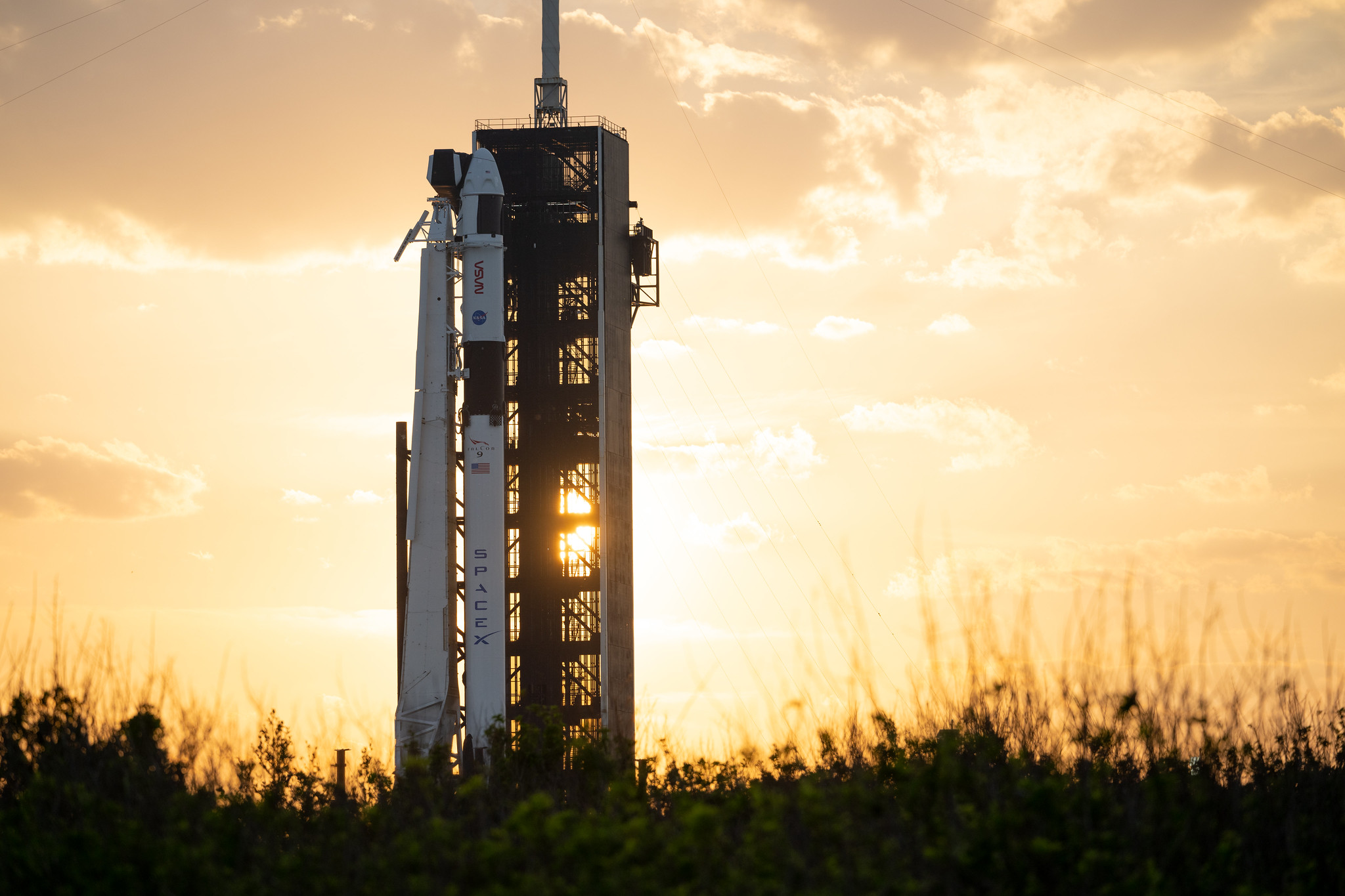
Shortly before liftoff, SpaceX cancels a crew launch due to igniter issues

Read 6 remaining paragraphs | Comments


Source: Ars Technica – Shortly before liftoff, SpaceX cancels a crew launch due to igniter issues

SpaceX Launch of Six Astronauts to the ISS is Scrubbed

SpaceX is livestreaming coverage of its latest launch tonight. SpaceX and NASA were “preparing to launch a fresh crew to the International Space Station,” reports CNN, “continuing the public-private effort to keep the orbiting laboratory fully staffed and return astronaut launches to U.S. soil

For this mission a reusable Falcon 9 rocket will eventually propel a Crew Dragon capsule into space — carrying six astronauts “from all over the world — two NASA astronauts, a Russian cosmonaut and an astronaut from the United Arab Emirates… to take over operations from the SpaceX Crew-5 astronauts who arrived at the space station in October 2022.”

They’re expected to spend up to six months on board the orbiting laboratory, carrying out science experiments and maintaining the two-decade-old station…. During their stint in space, the Crew-6 astronauts will oversee more than 200 science-oriented projects, including researching how some substances burn in the microgravity environment and investigating microbial samples that will be collected from the exterior of the ISS.

They will play host to two other key missions that will stop by the ISS during their stay. The first is the Boeing Crew Flight Test, which will mark the first astronaut mission under a Boeing-NASA partnership. Slated for April, the flight will carry NASA astronauts Barry Wilmore and Sunita Williams to the space station, marking the last phase of a testing and demonstration program Boeing needs to carry out to certify its Starliner spacecraft for routine astronaut missions.

Then, in May, a group of four astronauts will arrive on a mission called AX-2 — a privately funded tourism mission to the space station. That mission, which will be carried out by a separate SpaceX Crew Dragon capsule, will include former NASA astronaut Peggy Whitson, now a private astronaut with the Texas-based space tourism company Axiom, which brokered and organized the mission. It will also include three paying customers, similar to the AX-1 mission that visited the ISS last year.

“It’s another paradigm shift,” mission commander Stephen Bowen said in January. “Those two events — huge events — in spaceflight happening during our increment, on top of all the other work we get to do, I don’t think we’re going to fully be able to absorb it until after the fact.”
Roughly 25 hours after the launch the crew capsule willdock with the space station. This will be SpaceX’s seventh astronaut-carrying flight for NASA since 2020.

Read more of this story at Slashdot.


Source: Slashdot – SpaceX Launch of Six Astronauts to the ISS is Scrubbed