TuSimple, a self-driving trucking company, said Monday it had fired its chief executive and co-founder, Xiaodi Hou. From a report: The San Diego-based company said in a news release and securities filing that its board of directors on Sunday had ousted Mr. Hou, who was also the board chairman and chief technology officer. Mr. Hou was fired in connection with a continuing investigation by members of the board, the release said. That review “led the board to conclude that a change of Chief Executive Officer was necessary,” the company said in the release.
The securities filing said that the board’s investigation found that TuSimple this year shared confidential information with Hydron, a trucking startup with operations mostly in China and funded by Chinese investors. The filing also said that TuSimple’s decision to share the confidential information hadn’t been disclosed to the board before TuSimple entered into a business deal with Hydron. TuSimple said it didn’t know whether Hydron shared, or publicly disclosed, the confidential information, the securities filing said. WSJ, reporting on Sunday: TuSimple faces federal investigations into whether it improperly financed and transferred technology to a Chinese startup, according to people with knowledge of the matter.
The people said the concurrent probes by the Federal Bureau of Investigation, Securities and Exchange Commission and Committee on Foreign Investment in the U.S., known as Cfius, are examining TuSimple’s relationship with Hydron, a startup that says it is developing autonomous hydrogen-powered trucks and is led by one of TuSimple’s co-founders.
Investigators at the FBI and SEC are looking at whether TuSimple and its executives — principally Chief Executive Xiaodi Hou — breached fiduciary duties and securities laws by failing to properly disclose the relationship, the people familiar with the matter said. They are also probing whether TuSimple shared with Hydron intellectual property developed in the U.S. and whether that action defrauded TuSimple investors by sending valuable technology to an overseas adversary, the people said.
This weekend, Brazilians voted out Jair Bolsonaro, the right-wing, Christo-fascist president who oversaw vast environmental destruction during his nearly four years in office.
Enlarge/ Eight terminally ill teens in hospice cope with their fate by telling scary stories in The Midnight Club (credit: Netflix)
If you’re looking for a solid, binge-worthy scary series this Halloween, you could do a lot worse than The Midnight Club, the latest Netflix horror series from Mike Flanagan (Haunting of Hill House, Haunting of Bly Manor, Midnight Mass). Based on the young adult horror novel of the same name by Christopher Pike, it mines the haunting specter of human mortality for its chills and thrills and ends up being both an entertaining horror story and a moving reflection on how we all cope differently with the harsh truth of our finite lives.
(WARNING: Major spoilers for the 1994 book below. We’ll give you another heads-up when we get to major spoilers for the TV series.)
The novel features seven terminally ill teenaged residents of the fictional Rotterdam Home hospice who are facing the prospect of their own imminent deaths. There are regular therapy sessions, but the teens find an even better way to cope with their fate. They meet at midnight every night in the library to tell scary stories. (If you’re thinking it sounds like a ripoff of Scary Stories To Tell in the Dark, think again. Flanagan and Pike are both too smart for that.) Eventually, the teens make a pact that whichever of them dies first will attempt to communicate with the others from the Beyond—just to let them know what it’s like, so they’re better prepared. Then the first member of the group does indeed die.
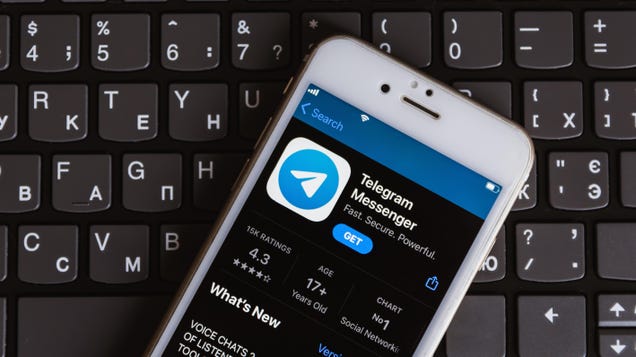
Telegram CEO Pavel Durov announced late last Friday the company had disabled users from using paywalls on posts to get users to pay to access content for iOS devices. Apparently, Apple just didn’t like the idea of people paying others using bots without paying the troll toll.
On October 28, San Francisco police arrested a man for attacking Nancy Pelosi’s husband with a hammer. Now it’s been reported that he may have been inspired by the far-right movement Gamergate.
No More Secrets (nms) is a free and open-source command-line tool that recreates the famous data decryption effect seen in the 1992 thriller film Sneakers. In this article, we feature how to install and use nms to add a cool decryption effect to your encrypted data.
Google has been making high-end Chromebooks for almost a decade now, dating back to the $1,300 Chromebook Pixel in 2013. At the time, many people saw it as a beautiful but strange device. In the years that followed, both Google and its hardware partners have made premium Chromebooks more and more commonplace. Though, a still-unconfirmed report earlier this year suggests Google is giving up on making laptop hardware, at least for now. The company hasn’t said anything of the sort yet, but the reality is that Google hasn’t made a new Chromebook since the Pixelbook Go in late 2019.
Of course, that hasn’t stopped other manufacturers from making Chromebooks with gorgeous screens, great industrial design and powerful hardware. But HP’s Elite Dragonfly Chromebook, released earlier this year, might be the nicest I’ve used in a long time. It also has a jaw-dropping price point, starting at well over $1,000. Much like the original Chromebook Pixel, HP’s latest is a joy to use that is very hard to recommend because of that price.
Design
Before we talk about the bummer that is the HP Elite Dragonfly Chromebook’s cost, let’s go over the good stuff. The Dragonfly is similar in stature to a MacBook Air, weighing in at about 2.8 pounds and measuring only .65 inches thick. Combined with a fairly spacious 13.5-inch touchscreen display with a 3:2 aspect ratio, the Dragonfly is comfortable to work on and easy to travel with.
Design-wise, it’s a spartan affair, with a dark gray finish and only a few silver accents to be found. But given that HP is primarily targeting this computer at enterprise users, it makes sense that they went with a classic look here. There’s a decent selection of ports, despite the Dragonfly’s rather slim profile: it has two USB-C / Thunderbolt 4 ports, a USB-A connection, a headphone jack, HDMI and a microSD slot. That’s a lot better than you’ll get on a typical ultraportable.
Nathan Ingraham / Engadget
Screen and keyboard
There’s a handful of things that make the Dragonfly really stand out. For starters, it has an excellent display, with a 3:2 aspect ratio that provides a lot more vertical viewing space than your standard 16:9 screen. The configuration I’m testing has a 2,256 x 1,504 resolution, good for about 200 pixels per inch. Sure, there are more pixel-dense displays out there, but this one looks stunning, with sharp text and images and basically no visible pixels. It’s the nicest screen on a Chromebook I’ve seen in a long time. The only minor knock is its unremarkable 60Hz refresh rate, but that shouldn’t be a major issue for most people. Still, HP spared basically no expense on everything else, so it would have been nice to have.
Despite the refresh rate, the Dragonfly’s display is great beyond just the aspect ratio. It’s bright and has nice contrast without things being too over-exaggerated. It’s also rather reflective, which makes it not ideal if there’s a light shining on the display, but the screen is bright enough that it should be usable in all but the harshest of light.
The keyboard and trackpad are also excellent. The keys are firm, but not too firm, and have plenty of travel for a relatively thin laptop. The trackpad, meanwhile, is large and responsive. Nothing quite matches up to the trackpad on a MacBook for me, but this one feels pretty close. HP says it’s a haptic trackpad, with customized vibrations for some specific actions like pinning windows in split screen or switching between virtual desks, but I can’t say I noticed much of anything there.
Nathan Ingraham / Engadget
Good specs (for a Chromebook)
Finally, the Dragonfly mostly has cutting-edge spec options; the model I tested has a 12th-generation Intel Core i5 processor, built-in LTE, 256GB of storage and 8GB of RAM. LTE isn’t exactly cutting-edge anymore, and 8GB of RAM is a bit stingy on a computer this pricey. But aside from those quibbles, this is plenty of horsepower for basically anything you want to do in ChromeOS; I never experienced any stutters when switching apps or playing back music and video. Despite the high-resolution screen and powerful processor, battery life is solid if not spectacular. I got between six and eight hours of normal usage, which involved a lot of Chrome tabs, Spotify, Todoist, Slack, Google Keep, Trello and the occasional Android app here and there. It managed to play back a movie for 8 hours and 50 minutes in our battery drain test. If battery is your foremost concern, the model with a Core i3 processor or the lower-resolution screen will likely last even longer.
It also does a fine job running the handful of Android apps I tested it with. In the last year or so, you’ve been able to run downloaded apps in tablet, phone or resizable windows, and for the most part I was able to get Todoist, Spotify and Lightroom all working well in resizable windows. Even Instagram finally works properly, although now that the website now allows you to create posts, it’s not really necessary any more. Putting that aside, performance across basically all the Android apps and games I tried was solid. But given how many apps are in the Play Store, there’s still a good chance of running across some that don’t work well.
While Chromebooks aren’t known for gaming, the Dragonfly easily handled some cloud-based play via NVIDIA’s GeForce Now and Xbox Cloud Gaming – not a surprise given the powerful (for a Chromebook, at least) hardware. At this point, ChromeOS has pretty solid game controller support, and it obviously works with external keyboards and mice. So provided the titles you want are available, this is probably the best way to play games on a Chromebook at this point. That said, this hardware should more than meet the cut for installing Steam, once Google and Valve start rolling that out beyond its current limited alpha phase.
The catch
The problem that keeps me from recommending the Dragonfly is easy to explain. The cheapest model of this laptop costs an eye-popping $1,150. And that’s with an i3 processor and only 128GB of storage. As usual, HP has a dizzying array of different configurations, though I don’t think they’re actually selling the model I have through their site right now. But there is an option with an i5 processor that costs more than $1,500. That is crazy money for a Chromebook, no matter how nice it is.
For a comparison, Acer’s Chromebook Spin 714 has essentially the same processor, storage and RAM as the Dragonfly for only $730. The screen and build quality aren’t quite as nice, but we’re talking about a computer that’s essentially just as capable but costs half of what HP is offering. For the cost of the Dragonfly, you could also pick up an extremely capable Windows laptop or MacBook Air. As much as I like using Chrome OS, it’s nearly impossible to recommend anyone spend that kind of cash on a Chromebook.
To be fair to HP, the company isn’t positioning this as a broad consumer device. It falls under their enterprise category, and I could imagine some businesses heavily invested in Google’s ecosystem buying these for executives. But, there’s no denying that, at this price point, ChromeOS is a compromise compared to Windows or macOS.
In this way, HP’s Elite Dragonfly Chromebook is a lot like Google’s Chromebook Pixel: It’s the best Chromebook you can buy, and it shows how good the experience of using ChromeOS can be. But, it’s not so much better than the many other reasonably priced options out there for anyone to seriously consider unless they love ChromeOS and have money to burn.
Google updates Chrome like clockwork. Each month, you can expect a new version of the browser, sporting new features and changes for all of us to enjoy. Chrome 107, in particular, focuses the changes on Chromebooks, with ChromeOS 107, including a Stage Manager-like camera feature and the ability to close your laptop…
On Linux-based operating system the /etc directory is used to hold global configuration files for applications and services. A good set of configurations is really important for a good working system, so being able to keep track of changes and quickly revert them, in case something go wrong, is crucial. Etckeeper helps us achieve this goal keeping configuration files under version control.
You’d think that James Cameron breaking up his Avatar sequels would mean leaner runtimes, but no—we’re just getting multiple epics. The Hollywood Reporter has revealed the official run time of Avatar: The Way of Water, and it’s clocking in at 3 hours and 10 minutes.
The Federal Trade Commission on Monday cracked down on Chegg, an education technology firm based in Santa Clara, Calif., saying the company’s “careless” approach to cybersecurity had exposed the personal details of tens of millions of users. From a report: In a legal complaint, filed on Monday morning, regulators accused Chegg of numerous data security lapses dating to 2017. Among other problems, the agency said, Chegg had issued root login credentials, essentially an all-access pass to certain databases, to multiple employees and outside contractors. Those credentials enabled many people to look at user account data, which the company kept on Amazon Web Services’ online storage system.
As a result, the agency said, a former Chegg contractor was able to use company-issued credentials to steal the names, email addresses and passwords of about 40 million users in 2018. In certain cases, sensitive details on students’ religion, sexual orientation, disabilities and parents’ income were also taken. Some of the data was later found for sale online. Chegg’s popular homework help app is used regularly by millions of high school and college students. To settle the F.T.C.’s charges, the agency said Chegg had agreed to adopt a comprehensive data security program.
The first time the internet saw DCU Superman star Henry Cavill as Geralt of Rivia in Netflix’s adaptation of The Witcher, it howled in collective laughter over the terrible wig. Four years later, fans are losing their minds that Hollywood’s leading himbo won’t be reprising the role after season three ends. One obvious…
I’m a sucker for wine cask-finished whiskeys (well, just whiskeys, really, but sometimes I pretend to have a palate). The Glenmorangie Madeira Wood was one of my first Scotch love affairs, and I recently discovered the new Basil Hayden Red Wine Cask Finish, which blends Kentucky Straight Bourbon with bourbon partially…
You may trust Chegg with your textbooks or tutoring, but regulators aren’t quite so confident. The Federal Trade Commission has filed a complaint accusing education tech provider Chegg of “careless” security practices that compromised personal data since 2017. Among the violations, the company reportedly exposed sensitive info for roughly 40 million customers in 2018 after a former contractor used their login to access a third-party database. The content included names, email addresses, passwords and even content like religion, sexual orientation and parents’ income ranges. The info eventually turned up for sale through the online black market.
Some of the stolen info belonged to employees. Chegg exposed Social Security numbers, medical data and other worker details.
The FTC further alleges Chegg failed to use “commercially reasonable” safeguards. It reportedly let employees and contractors use a single sign-in, didn’t require multi-factor authentication and didn’t scan for threats. The firm stored personal data in plain text and relied on “outdated and weak” encryption for passwords, the Commission adds. Officials also say Chegg didn’t even have a written security policy until January 2021, and didn’t provide sufficient security training despite three phishing attacks.
Chegg has agreed to honor a proposed order to make amends, the FTC says. The company will have to both define the information it collects and limit the scope of that collection. It will institute multi-factor authentication and a “comprehensive” security program that includes encryption and security training. Customers will have access to their data, and will be allowed to ask Chegg to delete that data.
The provider isn’t alone in facing government crackdowns over security problems. Uber settled with the Justice Department in July for failing to notify customers of a major 2016 data breach, while the FTC recently penalized Drizly and its CEO for alleged lapses that led to a 2020 incident. The government is clearly eager to prevent data breaches and make an example of companies with sub-par security measures.
In a statement to Engadget, Chegg says it treats data privacy as a “top priority.” The company cooperated with the FTC and will “comply fully” with the Commission’s order. It adds that it didn’t face any fines, and believes this is a reflection of its improved security stance. You can read the full response below.
“Data privacy is a top priority for Chegg. Chegg worked cooperatively with the Federal Trade Commission on these matters to find a mutually agreeable outcome and will comply fully with the mandates outlined in the Commission’s Administrative Order. The incidents in the Federal Trade Commission’s complaint related to issues that occurred more than two years ago. No monetary fines were assessed, which we believe is indicative of our current robust security practices, as well as our efforts to continuously improve our security program. Chegg is wholly committed to safeguarding users’ data and has worked with reputable privacy organizations to improve our security measures and will continue our efforts.”
Google’s budget-conscious A-series Pixels have been a solid purchase since their debut with the Pixel 3a. A new report suggests that Google’s new budget Pixel 7a is going to represent a major upgrade over the already very good 6a (above). In fact, it may even beat the flagship Pixel 7 in some ways.
A team of researchers has detected a trio of near-Earth asteroids in the inner solar system, one of which is the largest found since 2014 that poses a potential risk to the planet. The asteroids remained undetected until now because they occupy a region of the sky hidden by the Sun’s glare.
A new art exhibition in San Francisco showcases some of the unique ways that artists have begun to incorporate Dall-E 2, GPT-3 and other AI systems into their work — efforts that go well beyond just typing some text and seeing what pops out. From a report: The exhibit, “Artificial Imagination,” comes amid a broad debate over the legal and artistic merits of AI-created art, as well as concerns that more powerful computers could take jobs away from humans. “Artificial Imagination” includes a range of work, from videos to still images and sculpture. While many of the pieces used Dall-E 2 to help generate images, others took a different approach. Alexander Reben, for example, used text generated by GPT-3 and then built his interpretation of the computer’s description. The artists and curators said the exhibition, believed to be the first of its kind, is an important recognition that AI art is indeed art.
We’ve seen Rick and Morty in Claymation form before, but never in a standalone Claymation short—until now. That’s all thanks to Lee Hardcastle, the animator who created a string of sci-fi parodies for the smash-hit series before Adult Swim tapped him to create this year’s Halloween special.
Most emergencies don’t come with advance warning, which is why it’s best to do some basic preparation ahead of time. You can check out tips for extremely specific emergencies and create an ‘If I Go Missing’ file, but don’t forget the one useful lifesaving tool you undoubtedly have with you at all times: you phone.…
Enlarge (credit: Aurich Lawson | Photo by Jim Watson/AFP via Getty Images)
The Elon Musk-led Twitter is reportedly planning big layoffs and a $20 monthly charge for any user who wants to be verified or keep their current account verification.
According to The Verge, Musk ordered employees to raise the price of the Twitter Blue subscription from $4.99 a month to $19.99 and require anyone with a verified account to subscribe in order to keep their blue verification checkmark. Citing “people familiar with the matter and internal correspondence,” The Verge article said the plan is that “verified users would have 90 days to subscribe [to Twitter Blue] or lose their blue checkmark. Employees working on the project were told on Sunday that they need to meet a deadline of November 7th to launch the feature or they will be fired.”
Turning verification into a paid feature could make it easier for scammers to impersonate real people. As Twitter’s website notes, “the blue Verified badge on Twitter lets people know that an account of public interest is authentic. To receive the blue badge, your account must be authentic, notable, and active.” Corporations might see the charge as part of the cost of doing business, but individuals are less likely to pay that much just to keep their blue checks.