Roli's redesigned Seaboard Rise keyboard offers more precise playing

Roli has been building unconventional musical instruments for nearly a decade now — the company’s first product, the rubber-keyed Seaboard piano was first revealed back in 2013. It was originally released as a full size, 88-key piano, but a few years later Roli unveiled the smaller and more affordable Seaboard Rise. But since then Roli has mostly focused on other pursuits. That changes today as the company has just announced the Seaboard Rise 2, a totally revamped version of the older keyboard that is up for pre-order today. 

Probably the most significant change here is a new “Keywave 2” playing surface that has what Roli calls “precision frets.” To explain what’s different here, you first need to know how the Seaboard differs from a traditional piano keyboard. Instead of having totally distinct keys for each of the 12 chromatic tones, the Seaboard keys are designed so that you can slide between them seamlessly. Those keys were undoubtably the biggest differentiator between the Seaboard and a traditional keyboard, as they let users easily bend pitches, add vibrato and generally conjure up sounds that are trickery to pull off with normal keys. 

That’s all well and good, but not having distinct keys made it challenging to hit a note right in tune, a pretty major concern when you’re trying to play the Seaboard in a more traditional fashion. Roli says that the newly designed keywaves (the term it uses for its version of traditional keys) have been tested to be more precise and intuitive, letting traditional keyboard players have an easier time picking up the instrument and translating their skills to it. Of course, it’s the kind of thing that people will need to test out in person to verify Roli’s claims, but it’s good to note that they’re taking this into account with the new model.

Beyond the new playing surface, the Seaboard Rise 2 has a redesigned aluminum chassis that comes in a “platinum blue” color scheme; from the pics, it looks like a classy dark gray. Either way, Roli says the new casing is more durable than before, something that touring musicians should appreciate. Unsurprisingly, the Seaboard Rise 2 includes USB-C and MIDI ports for connectivity. 

Roli Seaboard Rise 2
Roli

Finally, the keyboard includes several different software suites. The company’s own Equator2 MIDI Polyphonic Expression (MPE) suite, which costs $249 on its own, is bundled alongside the more basic Roli Studio. The “lite” version of Ableton Live is included as well. 

The initial run of the Seaboard Rise 2 goes up for pre-order today, priced at $1,399. The Seaboard Rise 2 comes in a four-octave, 49-key version only. The original Seaboard Rise also had a more affordable 25-key model, but Roli says that the 49-key option was by far the more popular, so they’re only going with that one this time out. As for when it’ll be available, Roli says that batches of keyboards will ship in order of when they’re pre-ordered, and the first group will ship in October. 

The Seaboard Rise 2 is also notable as its the first hardware product Roli is releasing since the company filed for administration in the UK, a process similar to filing for bankruptcy in the US. The company reorganized under the brand name Luminary Roli and said at the time it would focus on beginners rather than professional musicians. The launch of the Seaboard Rise 2, definitely a product focused on professionals or advanced music enthusiasts, seems to contradict that a bit. But, Roli still offers its light-up Lumi keyboard, which was originally released alongside software that helps teach users how to play the piano. The company also offers a more advanced model called the Lumi Studio. Regardless of the Seaboard Rise 2 not exactly being a tool for beginners, it’s probably a good sign for Roli’s future that it’s releasing its first new product since filing for administration. 


Source: Engadget – Roli’s redesigned Seaboard Rise keyboard offers more precise playing

Facebook Paid GOP Firm To Malign TikTok

Several readers have shared this report: Employees with the firm, Targeted Victory, worked to undermine TikTok through a nationwide media and lobbying campaign portraying the fast-growing app, owned by the Beijing-based company ByteDance, as a danger to American children and society, according to internal emails shared with The Washington Post. Targeted Victory needs to “get the message out that while Meta is the current punching bag, TikTok is the real threat especially as a foreign owned app that is #1 in sharing data that young teens are using,” a director for the firm wrote in a February email. Campaign operatives were also encouraged to use TikTok’s prominence as a way to deflect from Meta’s own privacy and antitrust concerns. “Bonus point if we can fit this into a broader message that the current bills/proposals aren’t where [state attorneys general] or members of Congress should be focused,” a Targeted Victory staffer wrote.

The emails, which have not been previously reported, show the extent to which Meta and its partners will use opposition-research tactics on the Chinese-owned, multibillion-dollar rival that has become one of the most downloaded apps in the world, often outranking even Meta’s popular Facebook and Instagram apps. In an internal report last year leaked by the whistleblower Frances Haugen, Facebook researchers said teens were spending “2-3X more time” on TikTok than Instagram, and that Facebook’s popularity among young people had plummeted. In one email, a Targeted Victory director asked for ideas on local political reporters who could serve as a “back channel” for anti-TikTok messages, saying the firm “would definitely want it to be hands off.” In other emails, Targeted Victory urged partners to push stories to local media tying TikTok to dangerous teen trends in an effort to show the app’s purported harms. “Any local examples of bad TikTok trends/stories in your markets?” a Targeted Victory staffer asked.

Read more of this story at Slashdot.


Source: Slashdot – Facebook Paid GOP Firm To Malign TikTok

Roli's Squishy-Keyed Seaboard Rise Keyboard Just Got an Important Upgrade Making it Easier to Play [EMBARGO: March 30, 10am EST]

Aside from going digital in the late ‘70s and then the rise of cheap electronic Casio keyboards in the ‘80s (blasting Rick Astley’s Never Gonna Give You Up in demo mode) the piano went mostly unchanged until 2013 when Roli first revealed its squishy-keyed Seaboard Rise. Nine years later, Roli is introducing version 2

Read more…


Source: Gizmodo – Roli’s Squishy-Keyed Seaboard Rise Keyboard Just Got an Important Upgrade Making it Easier to Play [EMBARGO: March 30, 10am EST]

Updates on the Future of Sonic 2, The Mandalorian, and Star Trek: Picard

Rob Zombie shares more from behind the scenes on The Munsters. Joel Edgerton has boarded a new adaptation of Dark Matter. Plus, get a new sneak peek at what’s coming on The Walking Dead, and a glimpse of tomorrow’s episode of Star Trek: Picard. To me, my spoilers!

Read more…


Source: Gizmodo – Updates on the Future of Sonic 2, The Mandalorian, and Star Trek: Picard

Meta reportedly paid political consultants to smear TikTok

Meta’s long-running fight against TikTok may have gotten dirty. The Washington Post has obtained emails it says reveal that Facebook’s parent company is paying the major political consulting firm Targeted Victory to run a smear campaign against TikTok. The initiative reportedly promoted dodgy local news stories, opinion pieces and letters to the editor blaming TikTok for harmful teen behavior, whether or not it was truly responsible.

The aim was to position TikTok as the “real threat” in the public eye, prompting politicians to crack down on the social media firm while simultaneously promoting Facebook’s worth. This included speculation TikTok might share data with China. The strategy was apparently effective — Connecticut Senator Richard Blumenthal wrote a letter in September 2021 asking TikTok executives to testify for a subcommittee for allegedly fostering a vandalism challenge whose rumors first circulated on Facebook.

We’ve asked Meta for comment. In a statement to The Post, company spokesperson Andy Stone justified the campaign by claiming that every platform should “face a level of scrutiny consistent with their growing success.” Targeted Victory didn’t address the anti-TikTok campaign, but said it was “proud” of serving Met for several years. TikTok, meanwhile, was “deeply concerned” about the promotion of local news reports that incorrectly blamed it for hurtful trends.

A campaign like this wouldn’t be completely surprising. Meta doggedly pursues rivals that could undermine its core businesses, to the point where it mimics key features. And TikTok is one of the biggest rivals — leaked documents from Meta whistleblower Frances Haugen showed that teens were spending up to “2-3X” more of their time on that social platform than Instagram. In theory, trashing TikTok’s reputation would not only steer some of those users toward Meta’s products, but limit its ability to compete in the first place. 


Source: Engadget – Meta reportedly paid political consultants to smear TikTok

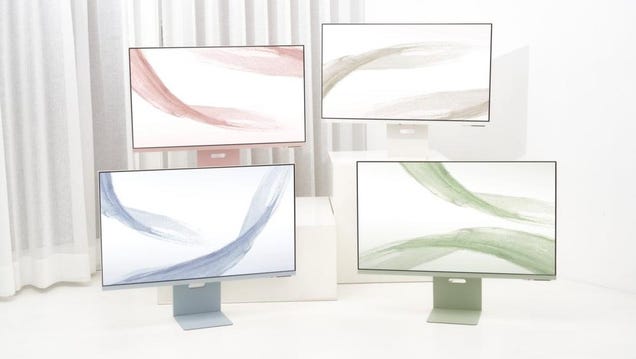
Don't Buy an Apple Monitor for Your Mac (Buy This Instead)

There are plenty of external monitors on the market, but many Mac users (myself included) naturally gravitate toward the aesthetics and features of those made by Apple: a high-quality display, excellent speakers, ease of use, and, of course, an aesthetic that aligns with the rest of your Apple products. So yes, A…

Read more…


Source: LifeHacker – Don’t Buy an Apple Monitor for Your Mac (Buy This Instead)

Exploring the counterintuitive mysteries of black holes with Paul Sutter

Produced and directed by Corey Eisenstein. Click here for transcript. (video link)

Of all the amazing and varied phenomena in the cosmological zoo, black holes are among the most mysterious. They are zombies—the all-devouring corpses of dead stars, made of trillions of tons of stellar ash compressed into an infinitely dense point called a “singularity.” The gravity exerted by the singularity is so intense that it warps space-time, preventing even light from escaping.

In many ways, to look at a black hole is to look at the inevitable future of our Universe, because there will come a time—many trillions of trillions of years from now, but inevitable nonetheless—where all the sky’s stars will have gone out, and black holes will be the Universe’s main attraction, still gobbling down any remaining free clumps of matter and acting as the only sources of light left. And perhaps most creepily of all, if proton decay turns out to be a thing, this future black hole era will be how our cosmos spends the majority of its life—dark, silent, and forbiddingly empty.

Read 5 remaining paragraphs | Comments


Source: Ars Technica – Exploring the counterintuitive mysteries of black holes with Paul Sutter

What we bought: Chrysler's Pacifica was the perfect family plug-in hybrid, until it wasn't

It’s a terrible time to buy a car. The global chip shortage and a pandemic-driven demand for safe transportation has pushed prices to obscene levels. It’s not unusual to see dealers adding on $10,000 or more in “market adjustment fees.” For most people, the smartest decision right now is to hold onto your current car for as long as possible. But as my wife and I began preparing for our second child, we realized we needed a larger vehicle for carrying twice as much baby gear, as well as to take the occasional road trip.

As much as I loved my 2017 RAV4 Hybrid, it would have been too tight with two car seats in the backseat along with two kids worth of gear in the trunk. It also didn’t have CarPlay integration, which meant I had to rely on Bluetooth audio and Toyota’s abysmal infotainment apps. (I was particularly annoyed that I couldn’t even play the radio while using Google Maps navigation.) There weren’t any rear vents for heating and cooling, either, which inevitably turned the back seat into a furnace during Georgia’s obscenely humid summers. That’s a surefire way to make a toddler cranky, and it would be even worse with an infant onboard.

Thankfully, I’ve spent the last few years obsessively researching the perfect family car. (You can thank the pandemic and my desire to tinker with new hardware for that.) Toyota’s hybrid 2021 Sienna taught me that minivans can actually look cool these days and get decent mileage. I’ve also tested out Toyota’s RAV4 Prime, Prius Prime and the Kia Sorento, all of which were plug-in hybrids (PHEVs) with a bit of electric driving range.

At first, I leaned towards the updated Sienna: I genuinely loved our review unit, and Toyota’s reliability is legendary. But it turns out tons of other people had the same idea earlier this year. New Siennas were selling for $8,000 over their list price, based on what I saw at several local dealers. (Who, of course, didn’t tell me about those extra fees until I stepped foot in their godforsaken offices.) And used 2021 models were actually going for more than their original list price. I wasn’t about to spend over $50,000 on a used Sienna.

Chrysler Pacifica 2018
Devindra Hardawar/Engadget

Then I remembered the other popular minivan, the Chrysler Pacifica Hybrid. It’s the only PHEV minivan on the market, delivering 33 miles of electric range and 32 MPG of gas driving. We gave it a glowing review in 2018, and, well, my options were pretty limited earlier this year. My dream car would have been a large family-sized EV, but with the Tesla Model X still far out of reach and no alternatives available, a PHEV simply made more sense.

After being burned by several useless car dealers, I spent weeks hunting through Carvana listings. I appreciated that they were up front about extra fees, they don’t gouge you as much as dealers and I had a great experience buying my RAV4 from them in 2020. Eventually, I found my ideal Pacifica: a Limited 2018 model with low mileage, CarPlay, a tri-plane sunroof, advanced safety features and a 20-speaker sound system. There was no way I was going to look like a cool dad in a minivan, but at least I could have a bit of fun driving it.

Chrysler Pacifica 2018
Devindra Hardawar/Engadget

A week later, Carvana took away my RAV4 as a trade-in and delivered the Pacifica to my driveway. It was love at first sight. Even though it’s not as sporty as the Sienna or RAV4 Prime, I love the Pacifica’s cute and quirky aesthetic. It’s as if Chrysler took the idea of a family van and processed it through a ’90s anime filter. Its arched LED daytime running lights seem like they’re winking at you, while the elegant body lines give it a sense of motion while it’s standing still.

The sheer practicality of the Pacifica also won me over quickly. The Pacifica’s sliding doors made it a cinch to install my daughter’s 30-pound car seat, and I appreciated having much more room for child loading/unloading. Being a minivan, its trunk area was massive, even if I decided to have the third-row seats opened up. Those rear seats are a serious upgrade over mid-size SUVs, where they’re only meant for children.

Chrysler Pacifica 2018
Devindra Hardawar/Engadget

My wife and I also loved having more interior space in general, since we inevitably found ourselves buried in toddler toys and gear in the RAV4. There’s even enough room for my daughter to use her portable potty between the seats! Another bonus: The rear seats also have two separate video screens, which will be perfect for keeping the kids entertained during long trips.

Things got even better in the driver’s seat, where the Pacifica’s UConnect infotainment system finally made me feel like I was driving a modern car. The 8.4-inch screen was bright enough to be clearly visible in direct sunlight (something my RAV4 struggled to do), and it had a surprisingly responsive touchscreen. While I was most excited to have CarPlay integration, it was nice to see that UConnect’s entire interface could be customized as easily as an iOS device.

Chrysler Pacifica 2018

Unfortunately, Carvana didn’t ship the Pacifica with a Level 1 charging cable, but I received a voucher to receive one from a local mechanic. That process would take a few weeks though, so I bought another charger myself to get juice up sooner. After 12 hours of charging from a standard wall socket in my garage, the Pacifica truly became the PHEV of my dreams. It handled quietly and smoothly around my neighborhood, giving us enough EV driving to deal with daycare drop-off and pickup, as well as our typical neighborhood errands.

While I’m sure nobody would ever mistake the Pacifica for a Tesla, I definitely surprised some local drivers when I zoomed ahead of them at stop lights. That’s the power of EV torque in action: It was so smooth, it never felt like I was driving a large minivan.

Chrysler Pacifica 2018
Devindra Hardawar/Engadget

My family and I had a blissful first few weeks with the Pacifica. We rarely exceeded the 30 miles of EV range we typically saw every day (a bit less than EPA estimates), which meant the gas gauge pretty much stayed put. Sadly, our honeymoon period ended shortly after Valentine’s Day, when Chrysler announced it was recalling 16,741 2017-2018 Pacifica hybrid models. The company said it was aware of 10 vehicles that caught fire while the ignition was off, many of which were also charging at the same time. Chrysler’s advice: Park outside and don’t charge your Pacifica until the problem is fixed.

Sadly, our car was among the recalled models, so now we’re stuck using it like a standard hybrid. The Pacifica is still a very nice family minivan, but without EV driving it just felt less special to me. Occasionally, its regenerative brakes will gather enough juice for a bit of electric fun, but it’s never too long before the V6 engine kicks in and it starts guzzling gas again. We’re also not getting anywhere near the 32MPG estimated mileage. Instead, it’s hovering around 21MPG, which is more in line with the standard gas Pacifica.

Chrysler Pacifica 2018
Devindra Hardawar/Engadget

After all that research and anticipation, it’s heartbreaking to see our dream PHEV turned into a hybrid with so-so mileage, especially with skyrocketing gas prices. I’m also kicking myself for taking a risk on a Chrysler car, a brand that hasn’t been known for reliability nearly as much as Toyota. All I can do now is hope Chrysler comes up with a fix soon and pray that we don’t have to deal with a car fire with kids onboard. (Or just throw caution to the wind and swap to the Volvo XC90 PHEV.)


Source: Engadget – What we bought: Chrysler’s Pacifica was the perfect family plug-in hybrid, until it wasn’t

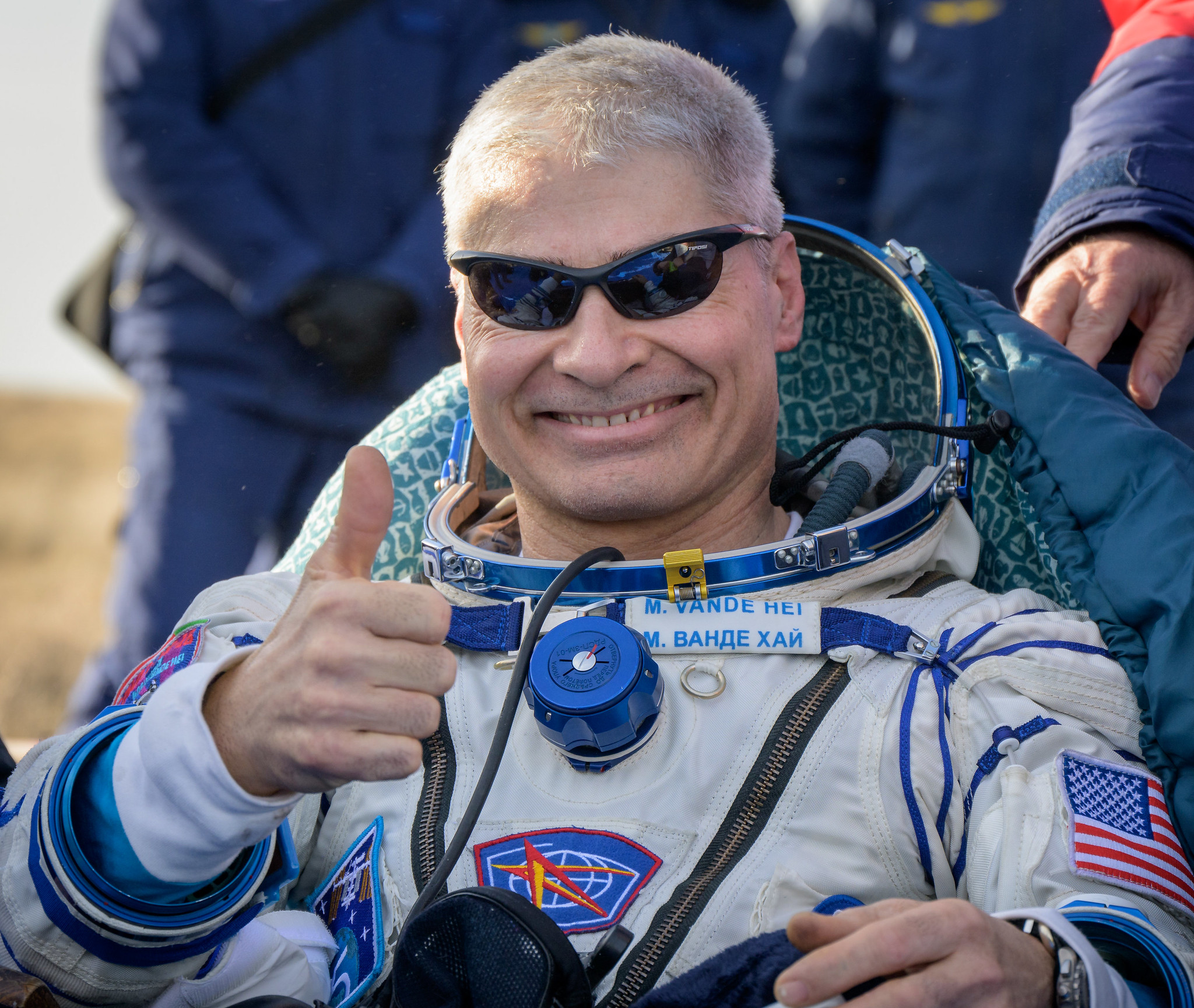
A NASA astronaut just landed in a Russian spacecraft, and all is well

Read 8 remaining paragraphs | Comments


Source: Ars Technica – A NASA astronaut just landed in a Russian spacecraft, and all is well

Former Yale Employee Admits She Stole $40 Million In Electronics From University

An anonymous reader quotes a report from NPR: A nearly decade-long scheme to steal millions of dollars of computers and iPads from Yale University’s School of Medicine is officially over. Former Yale administrator Jamie Petrone, 42, pleaded guilty Monday in federal court in Hartford, Conn., to two counts of wire fraud and a tax offense for her role in the plot. Petrone’s ploy started as far back as 2013 and continued well into 2021 while she worked at the university, according to the U.S. Attorney’s Office for the District of Connecticut. Until recently, her role was the director of finance and administration for the Department of Emergency Medicine at Yale. As part of this job, Petrone had the authority to make and authorize certain purchases for the department — as long as the amount was below $10,000.

Starting in 2013, Petrone would order, or have a member of her staff order, computers and other electronics, which totaled to thousands of items over the years, from Yale vendors using the Yale School of Medicine’s money. She would then arrange to ship the stolen hardware, whose costs amounted to millions of dollars, to a business in New York, in exchange for money once the electronics were resold. Investigators said Petrone would report on documents to the school that the equipment was for specific needs at the university, like medical studies that ultimately didn’t exist. She would break up the fraudulent purchases into orders that were below $10,000 each so that she wouldn’t need to get additional approval from school officials. Petrone would ship this equipment out herself to the third-party business that would resell the equipment. It would later pay Petrone by wiring funds into an account of Maziv Entertainment LLC, a company she created.

Petrone used the money to live the high life, buy real estate and travel, federal prosecutors say. She bought luxury cars as well. At the time of her guilty pleas, she was in possession of two Mercedes-Benz vehicles, two Cadillac Escalades, a Dodge Charger and a Range Rover. […] At the time of her guilty plea, she agreed to forfeit the luxury vehicles as well as three homes in Connecticut. A property she owns in Georgia may also be seized. Petrone has also agreed to forfeit more than $560,000 that was seized from the Maziv Entertainment LLC bank account. Federal prosecutors say the loss to Yale totals approximately $40,504,200.

Read more of this story at Slashdot.


Source: Slashdot – Former Yale Employee Admits She Stole Million In Electronics From University

How did a hacker steal over $600 million from a crypto gaming blockchain?

Artist's conception of Sky Mavis tracking down the hackers behind the $600+ million breach.

Enlarge / Artist’s conception of Sky Mavis tracking down the hackers behind the $600+ million breach.

Axie Infinity developer Sky Mavis today announced a massive breach of its Ronin cryptocurrency sidechain. An attacker used “hacked private keys” to break through Ronin’s validator network, Sky Mavis says, transferring 173,600 ETH (worth approximately $594 million at current rates) and $25.5 million in USDC stablecoin as part of one of the largest breaches in the history of cryptocurrency.

To understand the nature of that breach, let us take you on a crash course in the short history of Axie Infinity and the complex web of crypto standards and technologies that helped allow the exploit to happen.

So you can, like, make money by playing a game?

Axie Infinity has been cited as one of the early success stories in so-called blockchain gaming. Such games use decentralized protocols to track ownership of certain in-game items and generally lets players have some control over the resale of those items.

Read 21 remaining paragraphs | Comments


Source: Ars Technica – How did a hacker steal over 0 million from a crypto gaming blockchain?

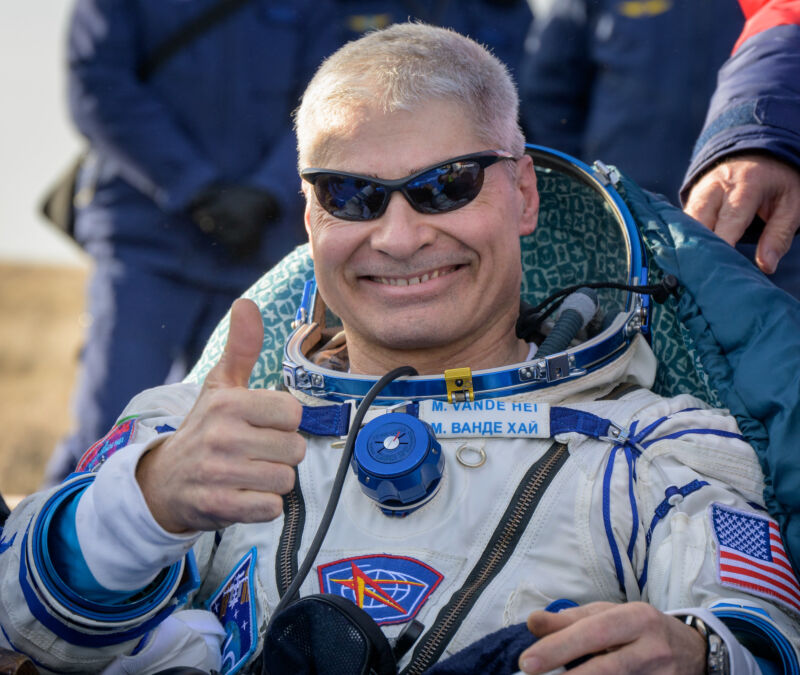
After 355 days aboard the ISS, astronaut Mark Vande Hei returns to Earth a changed man

After 355 days aboard the ISS, NASA astronaut and five-time flight engineer Mark T Vande Hei returns to Earth as record holder for the longest single spaceflight in NASA history, having surpassed Commander Scott Kelly’s 340-day mark set in 2018. Though not as long as Peggy Whitson’s 665 cumulative days spent in microgravity, Vande Hei’s accomplishment is still one of the longest single stints in human spaceflight, just behind Russia’s Valeri Polyakov, who was aboard the Mir for 438 straight days (that’s more than 14 months) back in the mid-1990s.

Though NASA’s Human Research Program has spent 50 years studying the effects that microgravity and the rigors of spaceflight have on the human body, the full impact of long-duration space travel has yet to be exhaustively researched. As humanity’s expansion into space accelerates in the coming decades, more people will be going into orbit — and much farther — both more regularly and for longer than anyone has in the past half century, and they’ll invariably need medical care while they’re out there. To fill that need, academic institutes like the Center for Space Medicine at the Baylor College of Medicine in Houston, TX, have begun training a new generation of medical practitioners with the skills necessary to keep tomorrow’s commercial astronauts alive on the job.

Even traveling the relatively short 62 mile distance to the International Space Station does a number on the human body. The sustained force generated during liftoff can hit 3 gs, though “the most important factors in determining the effects the sustained acceleration will have on the human body is the rate of onset and the peak sustained g force,” Dr. Eric Jackson wrote in his 2017 dissertation, An Investigation of the Effects of Sustained G-Forces on the Human Body During Suborbital Spaceflight. “The rate of onset, or how fast the body accelerates, dictates the ability to remain conscious, with a faster rate of onset leading to a lower g-force threshold.”

Untrained civilians will begin feeling these effects at 3 to 4 gs but with practice, seasoned astronauts using support equipment like high-g suits can resist the effects until around 8 or 9 gs, however the unprotected human body can only withstand about 5 gs of persistent force before blacking out.

Once the primary and secondary rocket stages have been expended, the pleasantness of the spaceflight will improve immensely, albeit temporarily. As NASA veteran with 230 cumulative days in space, Leroy Chiao, told Space in 2016, as soon as the main engines cut out, the crushing Gs subside and “you are instantly weightless. It feels as if you suddenly did a forward roll on a gym mat, as your brain struggles to understand the odd signals coming from your balance system.”

“Dizziness is the result, and this can again cause some nausea,” he continued. “You also feel immediate pressure in your head, as if you were lying down head first on an incline. At this point, because gravity is no longer pulling fluid into your lower extremities, it rises into your torso. Over the next few days, your body will eliminate about two liters of water to compensate, and your brain learns to ignore your balance system. Your body equilibrates with the environment over the next several weeks.”

Roughly half of people who have traveled into orbit to date have experienced this phenomenon, which has been dubbed Space Adaptation Syndrome (SAS), though as Chiao noted, the status debuffs do lessen as the astronaut’s vestibular system readjusts to their weightless environment. And even as the astronaut adapts to function in their new microgravity surroundings, their body is undergoing fundamental changes that will not abate, at least until they head back down the gravity well.

“After a long-duration flight of six or more months, the symptoms are somewhat more intense,” Chiao said. “If you’ve been on a short flight, you feel better after a day or two. But after a long flight, it usually takes a week, or several, before you feel like you’re back to normal.”

“Spaceflight is draining because you’ve taken away a lot of the physical stimulus the body would have on an everyday basis,” Dr. Jennifer Fogarty from Baylor’s Center for Space Medicine, told Engadget.

“Cells can convert mechanical inputs into biochemical signals, initiating downstream signaling cascades in a process known as mechanotransduction,” researchers from the University of Siena noted in their 2021 study, The Effect of Space Travel on Bone Metabolism. “Therefore, any changes in mechanical loading, for example, those associated with microgravity, can consequently influence cell functionality and tissue homeostasis, leading to altered physiological conditions.”

Without those sensory inputs and environmental stressors that would normally prompt the body to maintain its current level of fitness, our muscles will atrophy — up to 40 percent of their mass, depending on the length for the mission — while our bones can lose their mineral density at a rate of 1 to 2 percent every month.

“Your bones are … being continually eaten away and replenished,” pioneering Canadian astronaut Bjarni Tryggvason told CBC in 2013. “The replenishment depends on the actual stresses in your bones and it’s mainly … bones in your legs where the stresses are all of a sudden reduced [in space] that you see the major bone loss.”

This leaves astronauts highly susceptible to breaks, as well as kidney stones, upon their return to Earth and generally require two months of recovery for every month spent in microgravity. In fact, a 2000 study found that the bone loss from six months in space “parallels that experienced by elderly men and women over a decade of aging on Earth.” Even intensive daily sessions with the treadmill, cycle ergometer and ARED (Advanced Resistance Exercise Device) aboard the ISS, paired with a balanced nutrient-rich diet, has only shown to be partially effective at offsetting the incurred mineral losses.

And then there’s the space anemia. According to a study published in the journal, Nature Medicine, the bodies of astronauts appear to destroy their red blood cells faster while in space than they would here on Earth. “Space anemia has consistently been reported when astronauts returned to Earth since the first space missions, but we didn’t know why,” study author Guy Trudel said in a January 14 statement. “Our study shows that upon arriving in space, more red blood cells are destroyed, and this continues for the entire duration of the astronaut’s mission.”

This is not a short term adaptation as previously believed, the study found. The human body on Earth will produce and destroy around 2 million red blood cells every second. However, that number jumps to roughly 3 million per second while in space, a 54 percent increase that researchers attribute to fluid shifts in the body as it adapts to weightlessness.

Recent research also suggests that our brains are actively “rewiring” themselves in order to adapt to microgravity. A study published in Frontiers in Neural Circuits investigated structural changes found in white matter, which interfaces the brain’s two hemispheres, after space travel using MRI data collected from a dozen Cosmonauts before and after their stays aboard the ISS, for about 172 days apiece. Researchers discovered changes in the neural connections between different motor areas within the brain as well as changes to the shape of the corpus callosum, the part of the brain that connects and interfaces the two hemispheres, again due to fluid shifts.

“These findings give us additional pieces of the entire puzzle,” study author Floris Wuyts of Floris Wuyts, University of Antwerp told Space. “Since this research is so pioneering, we don’t know how the whole puzzle will look yet. These results contribute to our overall understanding of what’s going on in the brains of space travelers.”

As the transition towards commercial space flight accelerates and the orbital economy further opens for business, opportunities to advance space medicine increase as well. Fogarty points out that government space flight programs and installations are severely limited in the number of astronauts they can handle simultaneously — the ISS holds a whopping seven people at a time — which translates into multi-year long queues for astronauts waiting to go into space. Commercial ventures like Orbital Reef will shorten those waits by expanding the number of space-based positions available which will give institutions like the Center for Space Medicine more, and more diversified, health data to analyze.

“The diversity of the types of people that are capable and willing to go [into space for work] really opens up this aperture on understanding humanity,” Fogarty said, “versus the [existing] select population that we always struggle to match to or interpret data from.”

Even returning from space is fraught with physiological peril. Dr. Fogarty points out that while in space the gyroscopic organs in the inner ear will adapt to the new environment, which is what helps alleviate the symptoms of SAS. However, that adaptation works against the astronaut when they return to full gravity — especially the chaotic forces present during reentry — they can be shocked by the sudden return of amplified sensory information. It’s roughly equivalent, she describes, to continuing to turn up the volume on a stereo with a wonky input port: You hear nothing as you rotate the knob, right up until the moment the input’s plug wiggles just enough to connect and you blow your eardrums out because you’d dialed up the volume to 11 without realizing it.

“Your brain has acclimated to an environment, and very quickly,” Fogarty said. “But the organ systems in your ear haven’t caught up to the new environment.” These effects, like SAS, are temporary and do not appear to limit the amount of times an astronaut can venture up to orbit and return. “There’s really no evidence to say that we would know there would be a limit,” she said, envisioning it could end up being more of a personal choice in deciding if the after-effects and recovery times are worth it for your next trip to space.


Source: Engadget – After 355 days aboard the ISS, astronaut Mark Vande Hei returns to Earth a changed man

We have our best look yet at mysterious ORCs (odd radio circles) in space

Data from SARAO's MeerKAT radio telescope data (green) showing the odd radio circles, is overlaid on optical and near infrared data from the Dark Energy Survey.

Enlarge / Data from SARAO’s MeerKAT radio telescope data (green) showing the odd radio circles, is overlaid on optical and near infrared data from the Dark Energy Survey. (credit: J. English (U. Manitoba)/EMU/MeerKAT/DES(CTIO))

Astronomers have been puzzling over the nature and origin of rare, mysterious radio circles in space ever since the objects were first discovered in 2019. Now, the high-resolution MeerKAT radio telescope in South Africa has captured one such circle in much greater detail, offering some helpful clues about this rare phenomenon. The image and accompanying analysis appeared in a preprint on arXiv, and the paper has been accepted for publication in the Monthly Notices of the Royal Astronomical Society.

The discovery arose from the Evolutionary Map of the Universe (EMU) project, which aims to take a census of radio sources in the sky. Several years ago, Ray Norris, an astronomer at Western Sydney University and CSIRO in Australia, predicted that the EMU project would make unexpected discoveries. He dubbed them “WTFs.” Norris admitted in a 2020 piece for The Conversation that he expected those discoveries would arise from machine learning analysis, given the vast amounts of data involved. “But these discoveries were made with good old-fashioned eyeballing,” he wrote.

One pair of eyeballs belonged to Anna Kapinska, an astronomer at the National Radio Astronomy Observatory (NRAO). While browsing through new radio astronomy data collected by CSIRO’s Australian Square Kilometer Array Pathfinder (ASKAP) telescope, Kapinska noticed several strange shapes that didn’t seem to resemble any known type of object. Following Norris’ nomenclature, she labeled them as possible WTFs. One of those, per Norris, “was a picture of a ghostly circle of radio emission, hanging out in space like a cosmic smoke ring.”

Read 10 remaining paragraphs | Comments


Source: Ars Technica – We have our best look yet at mysterious ORCs (odd radio circles) in space