Starving Afghans Use Crypto To Sidestep US Sanctions, Failing Banks, and the Taliban

NGOs looking to provide emergency aid to Afghanistan are turning to cryptocurrency. From a report: When the Taliban took over Afghanistan in August of last year, Fereshteh Forough feared that the group would close her school in Herat, the country’s third-largest city. Code to Inspire, an NGO Forough founded, was teaching computer programming to young Afghan women, and the Taliban oppose secondary education for women. Months later, the picture is much different — and worse — from what Forough imagined. The school survived, becoming mostly virtual, but has transformed from a coding boot camp into a relief organization. The biggest risk for Forough’s students wasn’t lack of education, it was hunger. Forough looked for a way to provide emergency checks to the women but was stymied by banks that don’t want to risk violating severe U.S. sanctions.

JPMorgan Chase repeatedly blocked her attempts to transfer money, she said, and she grew increasingly alarmed by students who said they couldn’t access cash at local Afghan banks — many of which have closed or imposed strict withdrawal limits. In response, she turned to cryptocurrency to provide monthly emergency payments to help students afford enough food to survive. […] There are several advantages to using crypto: Afghans fleeing the Taliban can take their assets with them without risk. Humanitarian agencies seeking to bypass banks and discreetly avoid the Taliban can provide cash directly to those in need. Smugglers and intermediaries who may steal or try to resell aid packages can be circumvented if aid is given directly through a digital transaction.

Read more of this story at Slashdot.


Source: Slashdot – Starving Afghans Use Crypto To Sidestep US Sanctions, Failing Banks, and the Taliban

Casio’s New Keyboard Can Literally Sing Any Lyrics

Just because you can play an instrument doesn’t necessarily mean you have a great singing voice. For vocally-challenged musicians, Casio’s latest digital keyboard features a built-in vocal synthesizer. Basically, a musician can play a voice in the same way they’d play notes.

Read more…


Source: Gizmodo – Casio’s New Keyboard Can Literally Sing Any Lyrics

Have You Welcomed Little Archie Into Your Heart?

The Riverdale incarnation of Archie Comics is so popular, it can be tough sometimes to remember that the original Archie rarely if ever dealt with serial killers, ritual sacrifice, and whatever the hell this was. This means there’s a good chance that you—like me—have been sleeping on the adventures of the even more…

Read more…


Source: Gizmodo – Have You Welcomed Little Archie Into Your Heart?

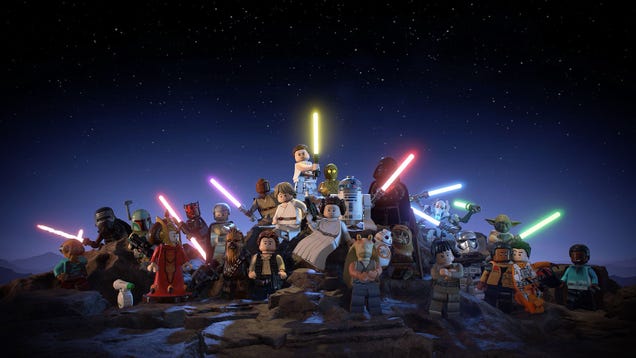
Report: The Biggest Lego Star Wars Game Ever Meant Extensive Crunch

The good news for fans of brick-built sci-fi games is that the oft-delayed Lego Star Wars: The Skywalker Saga is finally coming out on April 10. The bad news, according to a report from Polygon, is the ambitious project spanning all nine Star Wars films is alleged to have led to a whole lot of crunch for the…

Read more…


Source: Kotaku – Report: The Biggest Lego Star Wars Game Ever Meant Extensive Crunch

AR and VR hardware sales more than doubled in the US this holiday

Virtual (and augmented) reality appear poised to take off after years of modest demand. The NPD Group reports unit sales for AR and VR hardware more than doubled in the US during the 2021 holiday season (between Thanksgiving week and Christmas), jumping 180 percent compared to 2020. The growth wasn’t quite so brisk for the full year at ‘just’ 163 percent, but there was clearly a lot of demand for immersive worlds.

Raw revenue also climbed 153 percent during the holidays and 137 percent for the year. That suggests people were buying lower-cost or discounted AR and VR devices.

NPD executive director Ben Arnold was quick to caution that AR and VR “likely benefitted” from console shortages — if you couldn’t gift a PlayStation 5 or Xbox Series X, a Meta Quest 2 might have served as a stand-in. He noted that people were still looking for “unique” entertainment, however. We’d add that the lingering pandemic may have encouraged people to stay inside and try virtual experiences at a time when in-person equivalents like gyms and nightclubs might be seen as too risky.

This doesn’t mean buyers are embracing the metaverse or similar high-minded concepts. It does hint at a brighter future for AR and VR, though. NPD already expects a 32 percent jump in revenue in the first half of 2022, and upcoming headsets like Meta’s Project Cambria could further fuel demand. Don’t be surprised if headsets are in vogue next holiday season.


Source: Engadget – AR and VR hardware sales more than doubled in the US this holiday

Version 7 of WINE is better than ever at running Windows apps where they shouldn't

WINE has come a long way. It took 18 years to get to version 1.0 and another nine years to get to version 2, but since version 3 in 2018, it’s averaged roughly one major release per year. The project is now mature, stable, and quite functional. A lot of Windows programs work fine that formerly didn’t. It’s not limited to Linux – it also supports macOS and FreeBSD, and Linux relatives ChromeOS and Android.

Source: LXer – Version 7 of WINE is better than ever at running Windows apps where they shouldn’t

The first movie studio in space could be attached to the ISS in 2024

A module that hosts a film studio and sports arena could be connected to the International Space Station by December 2024. Space Entertainment Enterprise (SEE), which is co-producing a Tom Cruise movie that will partly be shot in space, is behind the project. If and when SEE-1 is up and running, it plans to host TV and film productions, as well as music events and some kind of sports, which can be filmed or livestreamed, according to Variety.

Axiom Space, which two years ago won a NASA contract to construct the first commercial ISS module, will build the station. All going well, SEE-1 will be connected to Axiom’s arm of the ISS. Axiom Station is scheduled to split from the ISS in 2028 with SEE-1 still attached.

Whether SEE and Axiom can make good on their plan remains to be seen. SEE hasn’t said how much the facility will cost, for one thing. It’s currently planning a fundraising round.

Last year, a Russian crew shot a feature-length fiction film in space for the first time, beating Cruise and his director Doug Liman to the punch. That film, The Challenge, is expected to be released this year. Cruise and Liman, meanwhile, are expected to shoot their movie on the ISS later in 2022.


Source: Engadget – The first movie studio in space could be attached to the ISS in 2024

Where does PlayStation fit into Microsoft’s Activision purchase?

A small selection of the characters that may not be appearing on PlayStation in the long term.

Enlarge / A small selection of the characters that may not be appearing on PlayStation in the long term.

In the wake of Microsoft’s announcement that it intends to acquire Activision, it has been fun to gawk at the big numbers and speculate about the fate of rich CEOs, among other business implications. But for many PlayStation owners, there’s only one question that matters: will I need to buy an Xbox or PC to continue playing Activision franchises in the future?

Microsoft’s acquisition, which could be finalized as early as July 1, could threaten PlayStation owners’ access to everything from Diablo and Overwatch to Spyro and Tony Hawk. Even Crash Bandicoot, which used to be synonymous with the PlayStation brand, would be a Microsoft property after the deal closes.

And then there’s Call of Duty, the annual first-person shooter mega-franchise that’s particularly hard to imagine not being a part of the PlayStation universe anymore. Call of Duty games continue to be some of the PlayStation’s bestsellers year after year, so a Microsoft acquisition could leave a big gap in the PlayStation catalog. Sony also declared that PlayStation was “the new home of Call of Dutyback in 2015, hyping up early access to betas and map packs for PlayStation owners, and Call of Duty‘s official esports home shifted over to PlayStation that same year.

Read 11 remaining paragraphs | Comments


Source: Ars Technica – Where does PlayStation fit into Microsoft’s Activision purchase?

How to Effectively Navigate the Health Care System, According to Reddit

Even the simplest visit to the doctor has a lot of moving parts: You have to make the appointment, wait for the appointment, and answer the same questions three times in a row because it seems like nobody actually reads your chart. Fortunately, the subreddit r/medicine has tips for navigating this whole situation.

Read more…


Source: LifeHacker – How to Effectively Navigate the Health Care System, According to Reddit

Google reportedly plans to release an AR headset in 2024

Google might have ditched its Daydream VR headset years ago, but that doesn’t mean it gave up on headsets altogether. The Vergesources claim Google is developing an augmented reality headset, nicknamed Project Iris, that it wants to release in 2024. The standalone wearable would use a custom Google processor, outward-facing tracking cameras and run Android, although a custom OS is a possibility given job listings. It might also rely on cloud-based rendering to overcome the processing power limitations of a headset.

Clay Bavor, the manager for the Project Starline 3D telepresence booth (also said due for 2024), is understood to be overseeing the highly secretive project. The tipsters also said the AR headset team included Google Assistant creator Scott Huffman, ARCore manager Shahram Izadi and Mark Lucovsky, the former leader of Meta’s in-house OS development. The Pixel division is also believed to be involved in some hardware work.

We’ve asked Google for comment, although CEO Sundar Pichai hinted in October that AR was a “major area of investment” for the company. The headset is supposedly very early in development without a clear market strategy, suggesting that the 2024 target isn’t firm.

The headset might seem unexpected from a company burned by its initial take on an AR wearable. It’s not a shock given the evolving landscape, however. Apple is widely rumored to be creating a mixed reality headset, while Meta hasn’t been shy about wanting to both develop AR hardware and jumpstart the metaverse. Google risks ceding the field to competitors if it doesn’t offer AR hardware or the platform to match, even if finished technology is still years away.


Source: Engadget – Google reportedly plans to release an AR headset in 2024

How Snapchat Is Using AI And Machine Learning To Thwart Drug Deals

How Snapchat Is Using AI And Machine Learning To Thwart Drug Deals
Snapchat is taking a proactive approach in fighting drug deals taking place on its social media platform. The company shared an update concerning its most recent efforts to halt the push to sell drugs through connections on its app.

Snapchat typically makes the news when the social media platform goes dark, sending users in a frenzy wondering

Source: Hot Hardware – How Snapchat Is Using AI And Machine Learning To Thwart Drug Deals

Google is Building an AR Headset

Meta may be the loudest company building AR and VR hardware. Microsoft has HoloLens. Apple is working on something, too. But don’t count out Google. The Verge: The search giant has recently begun ramping up work on an AR headset, internally codenamed Project Iris, that it hopes to ship in 2024, according to two people familiar with the project who requested anonymity to speak without the company’s permission. Like forthcoming headsets from Meta and Apple, Google’s device uses outward-facing cameras to blend computer graphics with a video feed of the real world, creating a more immersive, mixed reality experience than existing AR glasses from the likes of Snap and Magic Leap. Early prototypes being developed at a facility in the San Francisco Bay Area resemble a pair of ski goggles and don’t require a tethered connection to an external power source.

Google’s headset is still early in development without a clearly defined go-to-market strategy, which indicates that the 2024 target year may be more aspirational than set in stone. The hardware is powered by a custom Google processor, like its newest Google Pixel smartphone, and runs on Android, though recent job listings indicate that a unique OS is in the works. Given power constraints, Google’s strategy is to use its data centers to remotely render some graphics and beam them into the headset via an internet connection. I’m told that the Pixel team is involved in some of the hardware pieces, but it’s unclear if the headset will ultimately be Pixel-branded.

Read more of this story at Slashdot.


Source: Slashdot – Google is Building an AR Headset

Blood Reveals a Troubling Mystery in This Excerpt From Fantasy Tale The Bruising of Qilwa

The debut novella from Persian American author Naseem Jamnia, The Bruising of Qilwa follows a nonbinary refugee who’s just fled a homeland where they faced persecution for being a practitioner of blood magic. Their promising new life faces its first challenge when a strange new disease begins to appear—and blood magic…

Read more…


Source: Gizmodo – Blood Reveals a Troubling Mystery in This Excerpt From Fantasy Tale The Bruising of Qilwa

Doctors Transplant Two Pig Kidneys at Once Into a Human

This week, a team at the University of Alabama said they were able to transplant two kidneys from a genetically modified pig into a brain-dead patient, a step beyond previous experiments that transplanted only one pig kidney. The Alabama doctors say the kidneys were able to function as expected and weren’t immediately…

Read more…


Source: Gizmodo – Doctors Transplant Two Pig Kidneys at Once Into a Human

18 Things You Need to Know to Prevent a Home Burglary

The thought of someone breaking into your house and stealing your stuff is terrifying, and a lot of the “conventional wisdom” about how prevent it seems to prey on that fear. It’s not necessarily wrong advice, but it often seems based on our fear instead of reality, and often proposes a lot of (usually expensive)…

Read more…


Source: LifeHacker – 18 Things You Need to Know to Prevent a Home Burglary

This Flat Lens Technology Could Eliminate Phone Screen Notches and Rear Camera Bumps

As effortless as Apple’s Face ID is at allowing you to securely authenticate your identity, the feature comes with several drawbacks, not the least of which being a hideous notch at the top of your iPhone’s screen. Metalenz, a company spun out of Harvard University, believes it has a better approach to facial…

Read more…


Source: Gizmodo – This Flat Lens Technology Could Eliminate Phone Screen Notches and Rear Camera Bumps

Damaged Undersea Cable Could Keep Tonga Offline for Weeks After Massive Volcanic Eruption

Critical aid is just now making its way to Tonga nearly five days after an earth-shaking volcanic eruption rattled the small Pacific island nation. And while telephones service and other basic communication are starting to slowly come back online, a major disruption to an undersea fiber-optic table could leave…

Read more…


Source: Gizmodo – Damaged Undersea Cable Could Keep Tonga Offline for Weeks After Massive Volcanic Eruption

Sony Expects Microsoft To Keep Activision Games Multiplatform

Sony said Thursday that it expected Microsoft to ensure that games from Activision Blizzard are available on non-Microsoft videogame platforms if Microsoft completes its proposed acquisition of Activision. From a report: “We expect that Microsoft will abide by contractual agreements and continue to ensure Activision games are multiplatform,” a Sony spokesman said Thursday. Activision supplies some of the most popular games for Sony’s PlayStation game console, including the Call of Duty series. After Microsoft on Tuesday announced its acquisition plan, some analysts raised the possibility that Activision games might be available exclusively for Microsoft’s own Xbox console and its subscription videogame services in the future.

Read more of this story at Slashdot.


Source: Slashdot – Sony Expects Microsoft To Keep Activision Games Multiplatform

[$] The kernel radar: folios, multi-generational LRU, and Rust

The kernel community is a busy place, so it is not even remotely possible
to write full-length articles about everything that is going on. Other
topics may be of interest, but not require a longer treatment. The
answer is a collection of short topics covering developments that are on
the radar; the selection this time around includes folios, the
multi-generational LRU, and Rust in the kernel.

Source: LWN.net – [$] The kernel radar: folios, multi-generational LRU, and Rust