Here’s a fun thought experiment; picture the amount of personal data you think tech companies keep on you. Now, realize it’s actually way more than that (hmm, maybe this isn’t that fun). Even as privacy and security become more talked about in consumer tech, the companies behind our favorite products are collecting…
YouTube is exploring adding nonfungible token features for its video creators, Chief Executive Officer Susan Wojcicki wrote to the siteâ(TM)s broadcasters on Tuesday. From a report: Although Wojcicki didn’t say exactly what her team is planning, or when, it marks the first time Alphabet’s Google, YouTube’s owner, is becoming involved with the cryptocurrency collectibles. Several of YouTube’s rivals have already jumped on the trend. Twitter began letting users post NFTs as profile photos and Instagram is reportedly working on a similar offering, according to the Financial Times. NFTs are digital assets that represent ownership of digital assets, like art, that people can buy or sell. YouTube, home to the largest creator economy, has spent several years building ways for its video stars to earn money beyond advertising, adding tools like fan payments and e-commerce. Wojcicki told creators her company was looking to web3, an umbrella term for internet models built around crypto, as a “source for inspiration.”
Way back when in June of 2019, Linux Journal published one of its final issues of the digital magazine. The publications ceased its operations in the beginning of August. Anyway, some articles were not able to make it online and to the Linux Journal website. I just realized that two of those articles were mine.
You might not have to venture downtown (or to a grocery chain) to visit an Amazon Go store. USA Todayreports Amazon plans to open a new version of the cashierless store designed for suburban areas. The locations will still focus on essentials, ready-to-eat food, drinks and snacks, just with layouts more suited to these outlying regions.
The shops will still rely on computer vision to detect what you buy. Once you’ve scanned your phone at the entrance, camera systems detect what you grab from the shelves. Amazon charges you for the items once you leave the Go store.
Amazon will open the first of these suburban Go stores in Mill Creek, Washington sometime in the months ahead. A second store will debut later in the Los Angeles area. The move still leaves large parts of the US (not to mention the planet) without access, but we suspect Amazon isn’t too concerned when third-party chains like Starbucks are beginning to adopt its AI-based shopping tech.
Enlarge/ Intel’s 12th-generation Core chips are coming to laptops. (credit: Intel)
We came away impressed when we tested Intel’s top-tier 12th-generation desktop chips. Though still power-hungry compared to competing AMD Ryzen processors, their combination of big performance cores (P-cores) and clusters of small efficiency cores (E-cores) helped them shine under all kinds of workloads, including games that favor fewer, faster cores and video encoding and rendering tasks that benefit from every core you can throw at them.
The laptop versions of those chips, which Intel announced at CES earlier this month, don’t have the luxury of a desktop computer’s huge power supply or beefy cooling systems. They also don’t benefit from being compared to mediocre predecessors—11th-generation Core desktop processors backported a new CPU architecture to Intel’s decrepit 14nm manufacturing process with unimpressive results, while 11th-generation Core laptop chips benefitted from the newer 10nm process and correspondingly lower heat and power consumption. The 12th-generation chips use the same process, though it has been re-dubbed “Intel 7” to close the PR gap between Intel’s 10nm process and TSMC’s 7nm process.
The first Alder Lake laptop processor to find its way into our hands is the tippy-top-end Core i9-12900HK, the fastest of the bunch. In our testing, we tried to see whether the laptop version of Alder Lake strikes the same performance balance as the desktop version—fast cores when you need fast cores, and lots of cores when you need lots of cores.
YouTube is the latest platform eyeing a move into NFTs. In a new letter to creators about YouTube’s 2022 priorities, CEO Susan Wojicki said the company is exploring how its creators could benefit from the digital collectibles.
In the letter, Wojicki said that Web3 — a term used by crypto enthusiasts to refer to the collection of blockchain based technologies they believe will usher in a new era of the internet — has been a “source of inspiration” for the company. She didn’t say exactly how YouTube may integrate NFTs into its platform, but suggested the technology could be a new source of revenue for creators.
“The past year in the world of crypto, nonfungible tokens (NFTs), and even decentralized autonomous organizations (DAOs) has highlighted a previously unimaginable opportunity to grow the connection between creators and their fans,” she wrote. “We’re always focused on expanding the YouTube ecosystem to help creators capitalize on emerging technologies, including things like NFTs, while continuing to strengthen and enhance the experiences creators and fans have on YouTube.”
If YouTube allowed creators to sell NFTs directly to their fans, it would be a major boon for the technology, which has grown in popularity over the last year, but hasn’t been widely adopted by major social platforms. But there are already signs that could change in 2022.
Twitter just introduced its first experiment with NFTs, with NFT profile pictures. Instagram’s top executive has also expressed an interest in the technology, and The Financial Timesreported last week that Facebook and Instagram are working on an NFT marketplace and other features,
NFT aren’t the only new monetization opportunities YouTube is looking at in the coming year, though. Wojicki also said the company is “excited” about podcasts and that “we expect it to be an integral part of the creator economy.” She also confirmed that YouTube would expand its shopping features to more creators, and test “how shopping can be integrated into Shorts.”
The CEO also touched on the controversy surrounding YouTube’s decision to remove public dislike counts from its platform. She noted that the dislikes was often used to target smaller creators for harassment, and that the feature could still be used to inform individuals’ recommendations. “Every way we looked at it, we did not see a meaningful difference in viewership, regardless of whether or not there was a public dislike count,” she said. “And importantly, it reduced dislike attacks.”
It’s crazy to think that in a few days it will already be six years since the debut of Vulkan 1.0, but here we are. The Khronos Group is continuing on their two year major update regiment for Vulkan and today debuting Vulkan 1.3 with more extensions moved to core as well as introducing a new “profiles” concept.
After brushing and flossing, mouthwash completes the trifecta of daily dental care. But do we really need all three steps? Dentists wouldn’t dare tell you to skip flossing or brushing, but it turns out they’re a lot more equivocal about mouthwash.
For the just-announced Vulkan 1.3, the open-source Intel “ANV” and Radeon “RADV” Vulkan drivers within Mesa are prepared to land support for this updated specification…
The James Webb Space Telescope as it will appear in orbit. (credit: NASA)
I met John Grunsfeld outside a coffee shop in Houston, across the street from Johnson Space Center, a little more than five years ago.
He had only recently retired from NASA after a long and storied career. Over the course of nearly two decades, Grunsfeld had flown into space five times, the latter three of which were missions to service the Hubble Space Telescope. A physicist by training, Grunsfeld had become affectionately known as a “Hubble Hugger” for his work on the venerable instrument in space.
He had then left the astronaut corps and gone on to lead NASA’s science missions as associate administrator of the agency’s science directorate. When we met late in the fall of 2016, Grunsfeld had just returned to private life. Now that he could speak more freely, I wanted to know what Grunsfeld really thought about the space agency’s science priorities. He was in Houston for his annual astronaut physical, and we enjoyed the pleasant late November sunshine as cars zipped by on NASA Road 1.
Canadian musician Neil Young is not pleased to be sharing Spotify’s platform with podcast star Joe Rogan, according to Rolling Stone. In a now-deleted letter, Young reportedly asked his management team and record label to remove his songs from the platform. “I am doing this because Spotify is spreading fake information about vaccines — potentially causing death to those who believe [it],” he said. “They can have [Joe] Rogan or Young. Not both.”
The content of the letter was confirmed to The Daily Beast by Young’s manager, Frank Gironda. “It’s something that’s really important to Neil,” said Gironda. “He’s very upset about this disinformation. We’re trying to figure this out right now.” As it stands now, his music is still available on Spotify.
Spotify signed Joe Rogan to a reported multiyear, $100 million+ deal, and his The Joe Rogan Experience is now the world’s most popular podcast with up to 11 million listeners on average. It’s been controversial since it was launched, however, with Rogan allowing conspiracy theorists like InfoWars’ Alex Jones on his show.
Spotify has a responsibility to mitigate the spread of misinformation on its platform, though the company presently has no misinformation policy.
Most recently, Rogan hosted virologist Dr. Robert Malone, who says he’s one of the creators of mRNA technology. Malone made baseless claims about COVID-19, saying a “mass formation psychosis” led people to believe the vaccines were effective. The episode prompted a group of over 1,000 doctors, nurses, scientists and educators to send an open letter to Spotify demanding that it create a misinformation policy. Spotify CEO Daniel Ek has previously said that he doesn’t believe the platform has editorial responsibility over podcasts.
Young previously removed his music from Spotify over objections that the quality was too low at the time. The same year, he created the Pono music player designed for high-quality audio, and in 2016 announced a streaming service that adapted music quality based on your internet speed. That never went anywhere, but rival services including Apple Music, Amazon Music and Spotify have since launched both “lossless” high-definition and surround-sound audio options that significantly boost quality.
Young has six million followers himself on Spotify, but noted that the Joe Rogan Experience’s “tremendous influence” concerns him. “Spotify has a responsibility to mitigate the spread of misinformation on its platform, though the company presently has no misinformation policy,” he wrote.
Exhibiting emotional intelligence is more important than ever in the workplace. We are in the midst of the Great Resignation, and people are increasingly less likely to stick with jobs where they do not feel seen, heard, or valued. Employees want to work with and for people who exhibit high degrees of emotional…
The Walking Dead: Saints & Sinners is getting a sequel, its developer Skydance Interactive has confirmed. It doesn’t come as a surprise — the title quickly became one of the most popular games for the PlayStation VR since it launched in 2020, and it swiftly made its way to other platforms, including the Oculus Quest 2, Viveport and PC. Skydance has also revealed, along with its announcement that a sequel is in development, that the VR survival-horror title has welcomed 2.5 million players and has “far surpassed $60 million in revenue” since it became available on January 23rd, 2020.
The sequel is entitled Chapter 2: Retribution, and Skydance says it will pick up from where the first game left off. It’ll continue its predecessor’s storyline, which means players will play the Tourist that’ll have to survive the zombie-infested remains of New Orleans. That said, it’ll be developed as a standalone game for those who don’t want to bother playing the first and will feature new characters and new threats.
Chris Busse, head of Skydance Interactive, said in a statement:
“The past two years have been absolutely incredible for The Walking Dead: Saints & Sinners, and we’re grateful forthe continued support from the player community who have helped make the game the success it is today. We’re excited to announce Chapter 2, and we can’t wait to let players explorethe new adventures that await them in the French Quarter and beyond.”
Unfortunately, that’s the only information Skydance has shared for now, though the company promises to release more details about the sequel later this year.
Topics API relies on the Chrome browser to determine a list of top five topics a user is interested in, based on their surfing history. It’ll determine what the topics are by comparing known websites (that you visit) against a list of about 350 topics drawn from the Interactive Advertising Bureau and Google’s own data. Then, when partner publishers need to know what topics a viewer is into, they can use Topics API to ping the browser for that data and serve relevant ads based on that.
Say, for example, you’ve visited a lot of sites for hiking or working out. Chrome will count those towards your top interests for that particular week and share them with participating publishers who can then show you ads for, say, athleisure or camping gear. Topics will select one area of interest from each of the past three weeks to share with each site and its advertising partners. Google says topics are “kept for only three weeks and old topics are deleted.” The data and processing happens on your device “without involving any external servers, including Google servers.”
There will also be options in Chrome for users to see the topics assigned to you, remove those you don’t like or disable the feature altogether. At the moment, since Google has only just announced Topics and hasn’t started user tests, it hasn’t shared whether Topics will be opt-in or opt-out for users.
The list of topics is pre-set, and Google says it “will not include potentially sensitive categories, such as gender or race.” This should theoretically prevent unwanted browsing history from counting towards and showing up in your interests.
Google is targeting the end of the first quarter this year to launch its trial, and after publishing the explainer on how it expects to use Topics API today, it’ll be accepting feedback from partners, interest groups and regulatory authorities. Based on that, the company may adjust Topics API before its first trial, and if all goes well it could launch the feature by the third quarter of the year.
An anonymous reader quotes a report from the BBC: A flying car capable of hitting speeds over 100mph (160kmh) and altitudes above 8,000ft (2,500m) has been issued with a certificate of airworthiness by the Slovak Transport Authority. The hybrid car-aircraft, AirCar, is equipped with a BMW engine and runs on regular petrol-pump fuel. It takes two minutes and 15 seconds to transform from car into aircraft. The certification followed 70 hours of flight testing and more than 200 take-offs and landings, the company said. “AirCar certification opens the door for mass production of very efficient flying cars,” its creator, Prof Stefan Klein, said. “It is official and the final confirmation of our ability to change mid-distance travel forever.”
In June, the flying car completed a 35-minute flight between international airports in Nitra and Bratislava, Slovakia. The company told BBC News it planned “to fly to London from Paris in near future.” Dr Steve Wright, senior research fellow in avionics and aircraft systems, at the University of the West of England, said the news was “a good step down the road” for the company and made him “cautiously optimistic that I am going to see a few AirCars one day — but I think there is still a way to go.”
At CES this year, Intel officially announced its expanded Alder Lake lineup including the performance-laptop focused H-Series processors, which traditionally fit in the 45-Watt range. Today we finally get to take a look at the 12th generation H-Series processors, the first mobile incarnation of Alder Lake, and see how Intel’s fastest mobile platform stacks up to not only Intel’s previous 11th generation Tiger Lake platform, but also AMD’s Ryzen 5000 series.
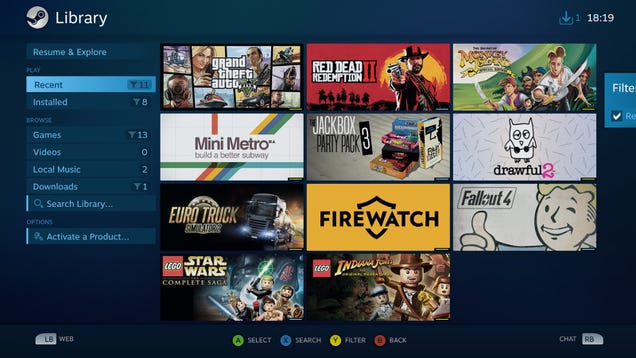
If you’re a gamer who uses Steam, then you also have access to the Remote Play service, which essentially beams gameplay around your home or across the internet to other laptops, phones, tablets, and even big-screen TVs. It’s not difficult to set up, and it means that you can keep on gaming even if you move to another…
NVIDIA has reportedly made little to no progress in gaining regulatory approval for its $40 billion purchase of ARM and is privately preparing to abandon the deal, according to Bloomberg‘s sources. Meanwhile, current ARM owner SoftBank is reportedly advancing a program to take ARM public as an alternative to the acquisition, said another person familiar with the matter.
NVIDIA announced the deal in September 2020, with CEO Jensen Huang proclaiming it would “create a company fabulously positioned for the age of AI.” ARM’s designs are used under license almost universally in smartphones and other mobile devices by companies like Apple, Qualcomm, Microsoft, Samsung, Intel and Amazon.
A backlash began soon after the announcement. The UK, where ARM is based, launched an antitrust investigation into the acquisition in January 2021, and another security probe last November. In the US, the FTC recently sued to block the purchase over concerns it would “stifle” competition in industries like data centers and car manufacturing. China would also reportedly block the transaction if other regulators don’t, Bloomberg‘s sources say.
We continue to hold the views expressed in detail in our latest regulatory filings — that this transaction provides an opportunity to accelerate Arm and boost competition and innovation.
Companies like Intel, Amazon and Microsoft have reportedly given regulators enough information to kill the deal, the sources say. They previously argued that NVIDIA can’t preserve ARM’s independence because it’s an ARM client itself. As such, it could also potentially become both a supplier and competitor to ARM licensees.
Despite the stiff headwinds, both companies maintain that they’re still pushing forward. “We continue to hold the views… that this transaction provides an opportunity to accelerate ARM and boost competition and innovation,” NVIDIA spokesman Bob Sherbin told Bloomberg. “We remain hopeful that the transaction will be approved,” a SoftBank spokesperson added in a statement.
Despite the latter comment, factions at Softbank are reportedly pushing for an ARM IPO as an alternative to the acquisition, particularly while the semiconductor industry is so hot. Others in the company want to continue pursuing the transaction given that NVIDIA’s stock price has nearly doubled since it was announced, effectively increasing the transaction price.
The initial agreement expires on September 13th, 2022, but will automatically renew if approvals take longer. NVIDIA predicted that the transaction would close in approximately 18 months — a deadline that now seems unrealistic.
Panasonic’s relationship with Tesla has been a successful one. Last year, the Japanese electronics company was able to spin its $30 million stake in Tesla into $3.6 billion, but the team-up continues. A higher-capacity next-gen battery for Tesla vehicles could go into production next year, boosting EV ranges by over 15 percent.
Although the battery is said to be twice as big as previous versions, it may have a fivefold increase in energy capacity. Panasonic is reportedly investing around 80 billion yen ($704 million) on new equipment to produce the 4680 cell — just a fraction of that windfall.
The new cell is also apparently cheaper to produce, meaning it could well affect the pricing on future Teslas — in a good way.
Google is reportedly developing a new Chromecast aimed at folks who haven’t yet splurged on a 4K TV. According to Protocol, the low-end device will offer a maximum stream resolution of 1080p.
The device, which could be named Chromecast HD with Google TV, is said to be capable of decoding the AV1 video codec (something the 4K-capable Chromecast with Google TV doesn’t support at the hardware level). Given the lower resolution output, the device will cost less than the $50 Chromecast with Google TV.
It reportedly collected “more financial data than was needed” from users.
Even if you’ve never heard of a company called Plaid, they may owe you part of a multimillion-dollar lawsuit settlement. The company connects consumer bank accounts to services like Venmo, Robinhood, Coinbase and other apps and was accused of collecting excessive financial data from consumers. While denying any wrongdoing, it agreed to pay $58 million to all consumers with a linked bank account to any of its approximately 5,000 client apps.
New plans will offer symmetrical 2Gbps or 5Gbps data speeds starting at $110 a month.
AT&T is now upgrading its fiber-based broadband service with two new plans that top out at 2Gbps and 5Gbps. The company says its new multi-gig fiber broadband will be available in more than 70 metro areas, including Dallas, LA and Atlanta. The new 2-gig plan is set to start at $110 per month plus tax (or $225 a month for a business fiber), while the faster 5-gig plan will cost $180 per month (or $395 a month for businesses).
More Google rumors. There have been rumblings for years that Google has been making its own smartwatch. Talk last month suggested a Google-branded watch could arrive sometime in 2022, now the latest murmurs point to the end of May. The smartwatch is expected to have a circular face, like other Wear OS devices seen over the past few years. It will likely have a heart rate sensor and other features adopted from Fitbit, which Google bought last year. But nothing’s confirmed yet — not even that Pixel branding. We’ll share more when we hear more.
It’s using the AI Research SuperCluster to develop new experiences for the metaverse.
Meta has completed the first phase of a new AI supercomputer. The company believes the AI Research SuperCluster (RSC), once finished, will be the fastest AI supercomputer on the planet, capable of “performing at nearly 5 exaflops of mixed precision compute.”
Er, what? Well, Meta says RSC will help researchers develop better AI models that can learn from trillions of examples. Among other things, the models will be able to build better augmented reality tools and “seamlessly analyze text, images and video together.”
If you’re looking to buy new microSD cards, external hard drives or flash drives, you may want to take a look at Amazon’s deal of the day sale. You’ll be able to get SanDisk and WD storage products for up to 40 percent off their usual prices, including the SanDisk 256GB Extreme microSDXC card for its all-time low price of $32. That’s $6 off its original retail price of $38 and is the lowest we’ve seen it sell for on the website. The microSDXC card has read speeds of up to 160MB/s for fast file transfers of large images and videos, and it also has 90MB/s write speeds for fast shooting. It’s a UHS speed class 3 card with a video speed class of 30 (V30), making it capable of handling 4K UHD and Full HD files.
SanDisk’s 512GB Ultra microSDXC is also currently on sale for its lowest price yet — you can get it for $50.49, which is almost 50 percent off its original retail price of $100. Advised for use with smartphones, tablets and mirrorless cameras, this microSDXC card has read and transfer speeds of up to 120MB/s.
But if what you really need is an SD card for your camera, you can get the SanDisk 256GB Extreme PRO SDXC card instead. It’s currently on sale for $46, which is 54 percent off its original price of $100 and is the lowest we’ve seen it sell for on Amazon. That’s $2 less than the previous all-time low for the card with shoot speeds of up to 90MB/s and transfer speeds of up to 170MB/s. It’s V30 card with a UHS speed class of 3, and SanDisk says it’s perfect for shooting 4K UHD video and sequential burst mode photography.
In case you need an external drive to store all those videos, images and other files, you can also get the SanDisk 1TB Extreme PRO Portable SSD for 45 percent off. It’s back to its all-time low price of $170 that we last saw in November. That’s a whopping $140 off its full price of $310. The portable SSD can reach read and write speeds of up to 2000MB/s and is enclosed in a forged aluminum chassis that acts as a heatsink to be able to sustain those speeds. It’s also water-and-dust resistant and can withstand drops of up to 6.5 feet. There are a lot more drives and other products included in the sale if none of the above catches your eye — you just have to grab them before the sale ends within the day before they go back to the full price.
Follow @EngadgetDeals on Twitter for the latest tech deals and buying advice.
All products recommended by Engadget are selected by our editorial team, independent of our parent company. Some of our stories include affiliate links. If you buy something through one of these links, we may earn an affiliate commission.