
Formally announced at CES, the Core i5 12400 and other Alder Lake non-K desktop CPUs are beginning to appear in retail channels. Last week I was able to buy an Intel Core i5 12400 “Alder Lake” from a major Internet retailer for $209 USD — and one week later there remains availability during these turbulent supply chain times. The i5-12400 has wound up being a very nice processor for Linux use that exceeded my initial expectations.
Source: Phoronix – Intel Core i5 12400 “Alder Lake”: A Great ~0 CPU For Linux Users
Monthly Archives: January 2022
Chrome Will Limit Access To Private Networks, Citing Security Reasons
Google says that its Chrome browser will soon block internet websites from querying and interacting with devices and servers located inside local private networks, citing security reasons and past abuse from malware operations. From a report: The change will take place through the implementation of a new W3C specification called Private Network Access (PNA) that will be rolled out in the first half of the year. The new PNA specification adds a mechanism inside the Chrome browser through which internet sites can ask systems inside local networks for permission before establishing a connection. If local devices, such as servers or routers fail to respond, internet websites will be blocked from connecting.


Read more of this story at Slashdot.
Source: Slashdot – Chrome Will Limit Access To Private Networks, Citing Security Reasons
Apple releases iOS 15.2.1 to patch a serious HomeKit DDoS vulnerability
Apple has released iOS 15.2.1, its latest software update for recent iPhone and iPad devices. The patch addresses a vulnerability found within the company’s HomeKit protocol for connecting disparate smart home devices. The bug allowed malicious individuals to force an iPhone or iPad to repeatedly crash and freeze by changing the name of a HomeKit-compatible device to include more than 500,000 characters. Since iOS backs up HomeKit device names to iCloud, it was possible for iOS users to get stuck in an endless loop of crashes.
Security researcher Trevor Spiniolas discovered the vulnerability and publicly disclosed it on January 1st. According to Spiniolas, he informed Apple of the bug back in August. The company had reportedly planned to address the vulnerability before the end of 2022 but later delayed a fix to early 2022. “I believe this bug is being handled inappropriately as it poses a serious risk to users and many months have passed without a comprehensive fix,” Spiniolas said at the time.
Spiniolas found that the vulnerability is present within Apple’s mobile operating system as far back as iOS 14.7, but said he believes it exists in all versions of iOS 14. In other words, if you’ve been holding off on installing iOS 15, now is the time to update your Apple devices.
Source: Engadget – Apple releases iOS 15.2.1 to patch a serious HomeKit DDoS vulnerability
Elon Musk Tweets Video of 'Mechazilla' Tower That Will Somehow Catch a Rocket
A daring scheme to catch a returning Starship booster rocket is taking shape at SpaceX’s launch facility in Boca Chica, Texas.
Source: Gizmodo – Elon Musk Tweets Video of ‘Mechazilla’ Tower That Will Somehow Catch a Rocket
AMD Socket AM5 Renders For Zen 4 Highlight A Potential Cooling Advantage Over Alder Lake

Back at CES 2022, AMD gave an update on the Zen 4 architecture that will first show up with the Ryzen 7000 series processors. Those chips, at least in desktop form, will go into Socket AM5. Where Socket AM4 (and most of AMD’s previous mainstream processors) used a Pin Grid Array design, the next-generation Socket AM5 will adopt a Landing Grid
Source: Hot Hardware – AMD Socket AM5 Renders For Zen 4 Highlight A Potential Cooling Advantage Over Alder Lake
Disco Elysium’s Aerostatic Pilot Jacket: The Kotaku Fashion Review

I have been afraid, for a very long time, that Lieutenant Kim Kitsuragi—your fellow detective in Disco Elysium, a game which I love—was cold. Revachol is a harsh, coastal city—one defined by high winds carrying winter in from off the water. It rains and snows frequently, even in the short seven days you spend there in…
Source: Kotaku – Disco Elysium’s Aerostatic Pilot Jacket: The Kotaku Fashion Review
Special File Permissions in Linux: SUID, GUID, and Sticky Bit
Linux has some special file permissions called SUID, GUID, and Sticky Bit. Learn more about special file permissions in Linux here.
The post Special File Permissions in Linux: SUID, GUID, and Sticky Bit appeared first on Linux Today.
Source: Linux Today – Special File Permissions in Linux: SUID, GUID, and Sticky Bit
Martian Dust Storm Sends NASA's InSight Lander Into Safe Mode

The NASA InSight Lander was forced to enter safe mode last Friday as a Martian dust storm swept over its location. The ongoing storm has reduced the amount of sunlight hitting the lander’s solar panels, so mission controllers have reduced its activity to the bare minimum to reduce strain on the batteries.
Source: Gizmodo – Martian Dust Storm Sends NASA’s InSight Lander Into Safe Mode
How Long Can You Keep Using the Same N95 Mask?

Omicron continues to overwhelm hospitals and healthcare workers already worn out by Delta. At this stage of the pandemic, and with the healthcare system once again teetering on the edge, experts are urging people to ditch their cloth masks in favor of N95 or KN95 respirators. But these masks are more expensive than…
Source: LifeHacker – How Long Can You Keep Using the Same N95 Mask?
Carmakers Launch Desperate Attempt to Delay Massachusetts Right-to-Repair Law

Major car manufacturers aren’t giving up on their efforts to stymie Massachusetts’ right to repair legislation. Less than two years after residents in the state voted in favor of updated right to repair laws that would let independent auto repair shops receive telematics data from vehicles, groups representing auto…
Source: Gizmodo – Carmakers Launch Desperate Attempt to Delay Massachusetts Right-to-Repair Law
Twitch streamers can now give their followers free emotes
Starting today, most Twitch partners and affiliates will be able to dole out emotes to community members just for following them. They can set up to five emotes that followers can use for free by uploading new ones, moving them over from subscriber-only tiers or picking from a selection of default emotes created by Twitch. The livestreaming platform started testing follower emotes last June, and now they’re more broadly available.
📢 They’re finally here… Follower Emotes are now available to all Partners & Affiliates with instant upload eligibility!
Folks awaiting Animated Emotes – we hear you! We expect all affiliates to have access to them by the end of January. https://t.co/uUyaRgOxuS
— Twitch Support (@TwitchSupport) January 12, 2022
There’s one caveat: to offer follower emotes, a streamer will need to be eligible for instant emote uploads. That feature allows streamers to add emotes that their communities can access immediately without manual review by Twitch staff. Creators’ accounts need to be in good standing to be eligible (they can’t have been suspended within the previous 60 days, for instance).
If they lose instant upload eligibility, streamers can still rearrange and delete existing follower emotes — they won’t be able to add new ones or reassign emotes from other tiers.
Until now, channel-specific emotes have mostly only been available to subscribers, though some streamers allow viewers to use Channel Points to unlock some emotes. Follower emotes should give streamers another way to make viewers feel as though they’re part of a community, even if they’re unable to subscribe.
Twitch also said affiliates should gain access to subscriber-only animated emotes this month. Partners can already use animated emotes.
Source: Engadget – Twitch streamers can now give their followers free emotes
Star Trek: Picard Is Bringing Queer Fun Times and Romulan Warlords to Audio Dramas

Star Trek: Picard’s largely confounding season one finale included a tiny step forward in the wider franchise’s approach to queer characters when it allowed Michelle Hurd and Jeri Ryan’s Raffi and Seven to… well, hold hands. Look, baby steps! Anyway, while we’re not sure what season two will have in store for them,…
Source: Gizmodo – Star Trek: Picard Is Bringing Queer Fun Times and Romulan Warlords to Audio Dramas
PCI Express 6.0 Specification Finalized: x16 Slots To Reach 128GBps
PCI Special Interest Group (PCI-SIG) has released the much-awaited final (1.0) specification for PCI Express 6.0. From a report: The next generation of the ubiquitous bus is once again doubling the data rate of a PCIe lane, bringing it to 8GB/second in each direction — and far, far higher for multi-lane configurations. With the final version of the specification now sorted and approved, the group expects the first commercial hardware to hit the market in 12-18 months, which in practice means it should start showing up in servers in 2023. First announced in the summer of 2019, PCI Express 6.0 is, as the name implies, the immediate follow-up to the current-generation PCIe 5.0 specification. Having made it their goal to keep doubling PCIe bandwidth roughly every 3 years, the PCI-SIG almost immediately set about work on PCIe 6.0 once the 5.0 specification was completed, looking at ways to once again double the bandwidth of PCIe. The product of those development efforts is the new PCIe 6.0 spec, and while the group has missed their original goal of a late 2021 release by mere weeks, today they are announcing that the specification has been finalized and is being released to the group’s members. As always, the creation of an even faster version of PCIe technology has been driven by the insatiable bandwidth needs of the industry. The amount of data being moved by graphics cards, accelerators, network cards, SSDs, and other PCIe devices only continues to increase, and thus so must bus speeds to keep these devices fed. As with past versions of the standard, the immediate demand for the faster specification comes from server operators, whom are already regularly using large amounts of high-speed hardware. But in due time the technology should filter down to consumer devices (i.e. PCs) as well.


Read more of this story at Slashdot.
Source: Slashdot – PCI Express 6.0 Specification Finalized: x16 Slots To Reach 128GBps
A Potentially Hazardous Asteroid Wider Than 34 Football Fields Will Zip Past Earth Next Week

A gigantic space rock with a diameter exceeding 1 kilometer will zoom past Earth next week at a breakneck speed of 70,415 kilometers per hour (43,754 miles per hour). It will be its closest to our home planet on January 18 at precisely 4:41pm ET, though don’t worry, ‘close’ by NASA and astronomy standards is very different than what you might
Source: Hot Hardware – A Potentially Hazardous Asteroid Wider Than 34 Football Fields Will Zip Past Earth Next Week
LUKS: Linux Hard Disk Data Encryption with NTFS Support in Linux
LUKS acronym stands for Linux Unified Key Setup which is a widely used method of disk encryption used by Linux Kernel and is implemented with the cryptsetup package.
The post LUKS: Linux Hard Disk Data Encryption with NTFS Support in Linux appeared first on Linux Today.
Source: Linux Today – LUKS: Linux Hard Disk Data Encryption with NTFS Support in Linux
PCIe 6.0 Is Going to Make Your Gadgets Unbelievably Fast, Just Not Any Time Soon
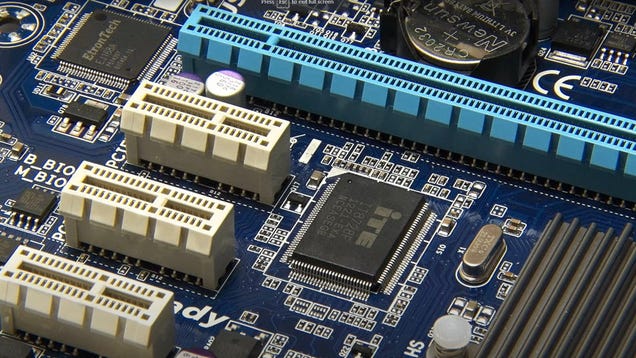
We’re only now seeing widespread support for PCIe 5.0, but as is so often the case in this industry, new tech is old tech the moment it arrives. And so, the PCI Special Interest Group today released a finalized spec for PCI Express 6.0, setting the groundwork for the next (next?) generation of SSDs.
Source: Gizmodo – PCIe 6.0 Is Going to Make Your Gadgets Unbelievably Fast, Just Not Any Time Soon
7 of the Best Cloud Storage Services That Are Cheaper Than iCloud, Google One, and OneDrive

Cloud storage still costs a lot of money: $10 per month for 2TB storage has become the standard with all major services like iCloud, Google One, and OneDrive. And our need for more of it is ever-increasing. From backing up data, sharing hour-long Zoom sessions, to just RAW video files, uncompressed video files or CAD…
Source: LifeHacker – 7 of the Best Cloud Storage Services That Are Cheaper Than iCloud, Google One, and OneDrive
Magic Leap grants healthcare startups access to its new AR headset ahead of mid-2022 release
Ahead of a planned enterprise release later this year, Magic Leap has provided a group of healthcare companies with early access to its second-generation augmented reality headset. One of the companies, SentiAR, offers software that allows doctors to see a 3D model of a patient’s heart while they’re operating them. Another company, Brainlab, wants to make its Mixed Reality Viewer software available on Magic Leap 2.
That Magic Leap is making its latest wearable available to digital healthcare startups first isn’t surprising; CEO Peggy Johnson said as much would happen last April. “Augmented reality may transform healthcare more than any other industry, at least in the near term,” she said at the time, noting also that the company would focus on enterprise customers at launch.
Magic Leap has famously struggled since its emergence as one of Silicon Valley’s most hyped startups. In 2019, it came out that the company had reportedly only sold 6,000 units of its $2,300 Magic Leap One Creator Edition headset through the first six months that the device was available. It subsequently spent months laying off employees before a $350 million investment gave it a new shot of life.
Source: Engadget – Magic Leap grants healthcare startups access to its new AR headset ahead of mid-2022 release
How to Change a Password on Linux
This short guide shows you how to change your user password on a Linux system, and how to change/reset the password of another users account.
Source: LXer – How to Change a Password on Linux
PCI Express 6.0 spec is finalized, doubling bandwidth for SSDs, GPUs, and more
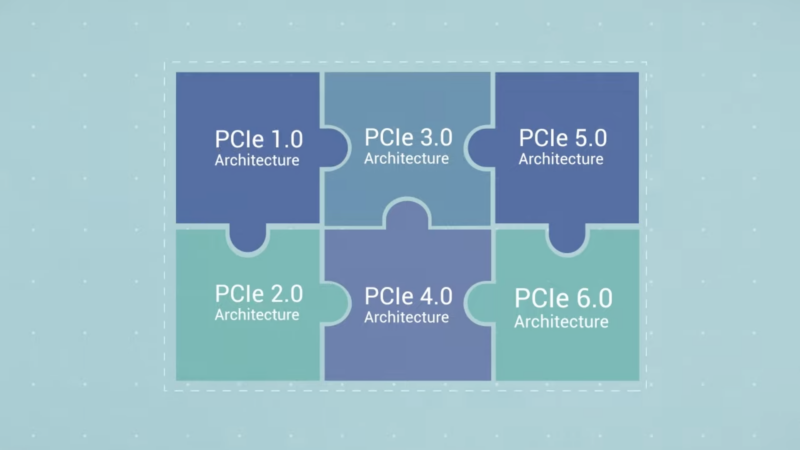
Enlarge / The PCIe 6.0 standard’s ability to interoperate with all older versions of the standard is a point of pride for the PCI-SIG. (credit: PCI-SIG)
The PCI Special Interest Group (PCI-SIG) has finalized version 6.0 of the PCI Express standard, the communication bus that lets all the stuff inside your computer communicate. The new version of the spec comes roughly three years after the PCI Express 5.0 spec was finalized, and version 6.0 once again doubles the bandwidth of a PCIe lane from 32GT/s (8GB/s in total, or 4GB/s in each direction) to 64GT/s (16GB/s, or 8GB/s in each direction). For a full 16-lane PCIe 6.0 connection, that’s as much as 256GB/s of total bandwidth, compared to the 32GB/s or 64GB/s of now-common PCIe 3.0 and 4.0 connections.
Like past PCIe versions, PCIe 6.0 will “interoperate and maintain backwards compatibility” with all existing PCIe versions, so your PCIe 4.0 GPU or SSD will continue to work in a PCIe 6.0 slot and vice-versa. The PCI-SIG bragged about the specification’s longevity in a blog post by PCI-SIG board member Debendra Das Sharma: “An interconnect technology is considered successful if it can sustain three generations of bandwidth improvement spanning a decade. PCIe architecture has far exceeded that mark.”
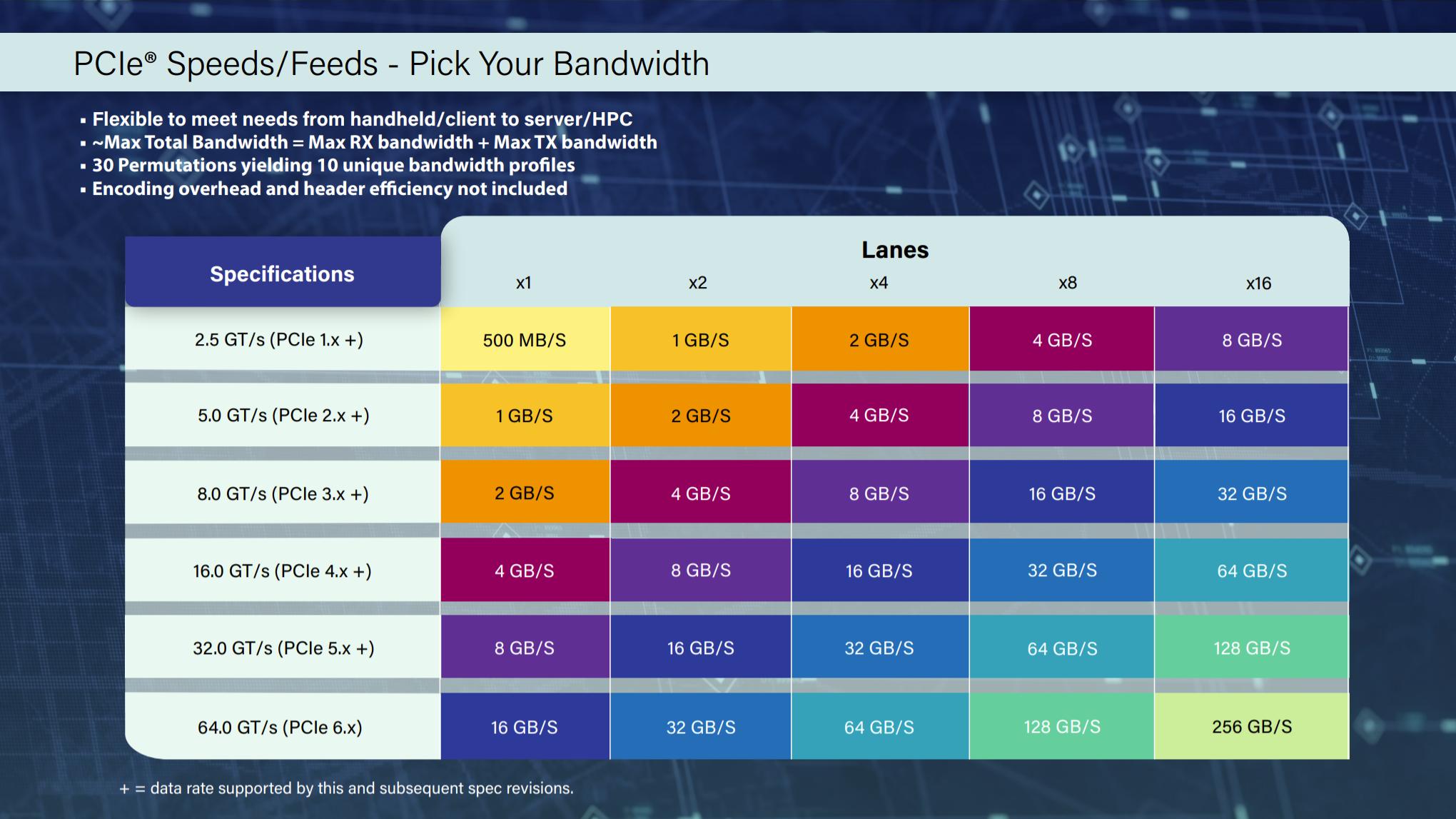
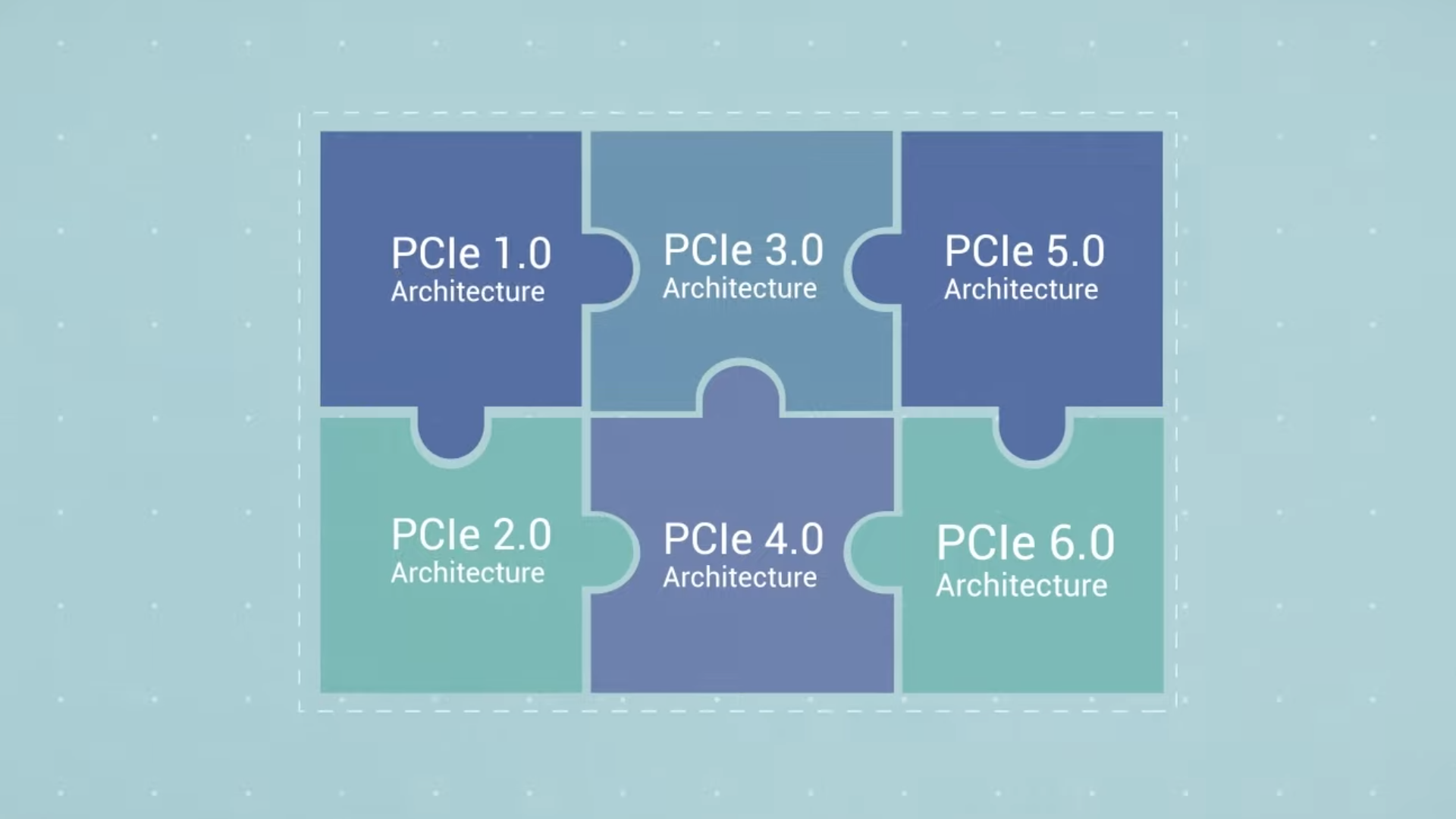
To boost its speeds, PCIe 6.0 uses a new kind of signaling called “Pulse Amplitude Modulation 4” (PAM4), which allows for faster data transfers than the previous Non-Return-To-Zero (NRZ) signaling at the expense of a higher error rate. To compensate, PCIe 6.0 includes technologies like Forward Error Correction (FEC) to correct errors and Cyclic Redundancy Checking (CRC) to ask for packets to be retransmitted when errors can’t be corrected. The PCI-SIG says that this combination of technologies should catch all errors without adding latency to the connection.
Read 2 remaining paragraphs | Comments
Source: Ars Technica – PCI Express 6.0 spec is finalized, doubling bandwidth for SSDs, GPUs, and more