
As of this writing, just short of 7,000 non-merge commits have been pulled
into the mainline kernel repository for the 5.17 release. The changes
pulled thus far bring new features across the kernel; read on for a summary
of what has been merged during the first half of the 5.17 merge window.
Source: LWN.net – [$] The first half of the 5.17 merge window
Monthly Archives: January 2022
Sony A7 IV review: A powerhouse of a hybrid camera
Nearly four years after Sony released its highly successful A7 III hybrid full-frame mirrorless camera, it finally launched a follow up. The A7 IV brings a raft of new features and improvements like a higher-resolution 33-megapixel sensor, improved video specs and updated AI-powered autofocus. However, at $2,500 it’s also $500 more than the A7 III was at launch.
A lot has changed over the years between the two models. Sony now has to contend with formidable rivals like Canon’s EOS R6 and the Nikon Z6 II. It itself has also released new high-end models like the A7S III, A7R IV and A1 loaded with the latest technology.
With all that, I was of course curious to see how the A7 IV would stack up in a category it dominated for quite a few years. How does it measure up against rivals, particularly when it comes to video? How much new tech from the high-end models has made it to the mainstream A7 IV? And is it suitable for professional use? Let’s dive in and find out.
Design and handling
Sony’s A1, A7S III and A7R IV all had substantial body changes compared to their predecessors, and the A7 IV follows the same script. It has the same nice big grip, so you never feel you’re going to drop it, even with a big lens. However, it has picked up some heft and size, weighing in at 699 grams compared to 650 with the AIII. It’s 7mm thicker, too.
It has similar controls to the A7 III, with the biggest difference being that the record button has moved from the back to an easier-to-access position on top. The buttons and dials also generally feel better and more precise, and the joystick is grippier and easier to use. It lacks certain dials compared to the far more expensive A1, like the shooting mode and autofocus dials. The lockable exposure compensation dial is the same, but lacks the graphics because it’s designed to be programmable.
In one way, however, the A7 IV’s body is a step up from the A1. The rear touch display can fully articulate and not just tilt out, so it’s much more practical for low-angle shooting in portrait orientation. That also makes it far more useful as a vlogging camera.
It has the same well-organized menu system as the A1 and A7S III, though some controls can be a bit tricky to find. As with any other modern camera then, it’s time well spent to set up the function menu, custom menus and manual controls to your liking. Overall, though, Sony’s menus are now among the best, and better organized than on Canon’s EOS R6, for example.
Steve Dent/Engadget
The 3.69-million dot EVF is much clearer than the 2.68-million dot one one on the A7 and on par with similarly priced rivals. However, the rear display is smaller and has lower resolution than the one on the R6. That can make manual focus tricky, though the A7 IV has a new feature that can help there – more on that shortly.
The A7 IV has a dual-slot card system that supports both SD UHS II and much faster CFexpress Type A cards. However, unlike the slots on the A1 and A7S III, it only has a single dual-slot, with the other being SD UHS II only. Type A CFexpress cards aren’t quite as fast as regular CFexpress cards, topping out at 800 MB/s compared to 1,700 MB/s. They’re also only used in Sony cameras, so they’re relatively hard to find and quite expensive.
Other features include a USB-C port that can power the camera during operation, along with a full-sized HDMI port, thank God. It uses Sony’s new NP-FZ100 battery that delivers up to 580 shots on a charge, or about 2 hours of 4K video shooting. Finally, the A7 IV can close its mechanical shutter when the camera is turned off, protecting it from dust when you change lenses. That’s a feature that first appeared on the EOS R, so thanks for starting that trend, Canon.
Performance
Steve Dent/Engadget
Sony’s mirrorless cameras are renowned for their autofocus speeds and AI smarts and the A7 IV is no exception. However, Sony made some compromises that affect performance.
The new 33-megapixel sensor is back-side illuminated but not stacked like the sensor on the A1, so readout speeds are relatively slow. As a result, shooting speeds are 10 fps like the A7 III in either mechanical or electronic shutter modes for compressed RAW photos, and drop to 6 fps if you use lossless or uncompressed RAW, as many photographers prefer to do.
That’s still impressive considering the resolution is up nearly 50 percent. By comparison though, the Sony A1 can shoot 50-megapixel photos in electronic mode at up to 30 fps, showing the speed benefits of a stacked sensor.
While burst speeds aren’t improved, you can capture more photos at a time, up to 1,000 in the uncompressed RAW format. If you use CFexpress Type A cards from Sony or ProGrade, you can effectively shoot forever without filling the buffer.
Steve Dent/Engadget
Another drawback with the A7 IV’s slow sensor readout speeds is rolling shutter. If you want to shoot silently in electronic mode, you’ll need to keep the camera steady and your subject can’t move quickly either. Otherwise, you’ll see slanted lines and other artifacts that can be bad enough to ruin shots. Using the crop mode helps a lot, but then you lose the benefits of a full-frame sensor.
The A7 IV is Sony’s most advanced camera yet when it comes to autofocus. All of Sony’s new AI tricks add up to make it the easiest to use and most reliable camera I’ve ever tested in that regard.
Unlike the A7 III, face, eye and body tracking works in all focus modes for animals, birds and people. Unless you turn it off, it’ll automatically pick up your subject’s eyes, face or body and track them even if they turn or disappear from frame.
Whether you’re tracking sports, birds or cars, the tracking spot will stay tenaciously locked to your subject in most situations. All you have to do is touch the subject you want to track and the camera will take it from there.
Steve Dent/Engadget
The A7 IV’s autofocus can easily keep up with the camera’s burst speeds for sports or bird shooting. But more importantly, the A7 IV consistently nails focus in other tricky situations, particularly with people. In some chaotic situations with lots of subjects and complex lighting, I ended up with very few unusable shots. Keep in mind that optimum focus performance requires Sony’s latest lenses, but it worked well with recent Sigma models as well.
Focus is just one part of the equation. It consistently nailed auto-exposure and auto white balance in tricky situations with a mix of lighting. That worked well in a bar with a mix of studio and practical lights, or in front of the famous Paris department store animated windows with all kinds of colors of lights.
In-body stabilization improves a half stop over the A7 III to 5.5 stops with compatible lenses, but neither comes close to Canon’s claimed 8 stops on the EOS R6. That’s somewhat balanced out by Sony’s superior high ISO performance, however. I was still able to get reasonably sharp shots down to a half second with some care.
Photo Quality
A big improvement with the A7 IV is with image quality. You’d expect more sharpness with the extra resolution, and it certainly delivers that. However, you might also think that the smaller pixels would make A7 IV worse in low light, but nope. In fact, through much of its ISO range, the A7 IV performs better even than Sony’s low-light champ, the A7S III.
Images are clean and usable in most low-light situations right up to ISO 12,800, with plenty of detail even in underexposed shots. In fact, the A7 IV has the least noise I’ve ever seen in that ISO range. Correctly exposed photos are usable up to ISO 25,600, but noise becomes a serious issue after that.
Sony has improved its color science with every new camera lately, and the A7 IV has perhaps its best setup yet. The green cast we’ve seen on earlier models is gone and colors are accurate right out of the camera and easier to balance in post than ever before.
JPEGs look great straight out of the camera with a nice balance between detail and noise reduction. The 14-bit RAW images deliver up to 13 stops of dynamic range, giving you plenty of room to lift shadows and claw back highlights. Overall, Sony’s A7 IV delivers perhaps the best images of any of its cameras, with a great balance between detail, high ISO performance and color accuracy.
As a semi-pro hybrid camera, the A7 IV is aimed at enthusiasts but could easily serve as a second body for professional shooters who use Sony gear. To that end, I’ve enlisted the services of Samuel Dejours and Nathanael Charpentiers from Studio Nathsam in Gien, France, who do weddings, births, events and studio work.
How is the handling on the a7 III from a pro standpoint?
Samuel: First of all the handling is a lot better than the A7 III. What I liked a lot, which is a big change for Sony, is the fully articulating display. It’s especially useful in portrait mode when you’re shooting from ground level below the subject.
What are the strong and weak points for events and studio use?
Nat: In terms of the color accuracy, it’s really improved a lot, it’s great now.
Samuel: A big issue for us is that the rolling shutter is pretty pronounced, which is a shame because it limits the use of the camera in silent mode for weddings and events.
Nathanael: And if you use this camera it’s really required for certain things because the mechanical shutter is particularly loud.
Could this serve as a professional camera for you?
Yes, it could serve as a professional camera because it’s really versatile in terms of doing both photos and video. It lacks features available on the A1 and A9, but that’s normal because those cameras are in a completely different price category.
Video
Samuel Dejours
Finally we’re onto video, the one area where rival cameras have moved well beyond the A7 III. Fortunately the A7 IV has big improvements in that area too, along with one drawback.
As before, it can shoot downsampled 4K video at up to 30p using the full width of the sensor, meaning video is extremely sharp. But now, it can capture that video at 4:2:2 10-bit with Sony’s S-Log, so it’s much easier to stretch and pull in post-production.
And now you can shoot 4K at up to 60 fps, also with 10 bits of color depth. While it’s cropped, video is still downsampled from a 4.6K size, so it remains sharp. The A7 IV can’t handle 120 fps 4K like Canon’s EOS R6, but then again it doesn’t have the R6’s serious overheating issues either. If you need that frame rate, it’s only available up to 1080p. HDMI output is limited to 4K 25p at just 8 bits of color depth, unfortunately.
With 13 stops of dynamic range in Sony’s S-Log3 mode, along with 10-bit 4:2:2 color and reasonably high bit rates up to 500 Mbps, image quality is superb and easy to control in post. The lack of noise at high ISO ranges is a huge plus, making the camera usable in a lot of low and tricky lighting situations.
Eye AF and tracking now work in video mode, making it far more dependable for shooting interviews or action. As with photos, it’s extremely intuitive to use. You can tap a subject to track it, and it will automatically switch to eye or face tracking as needed.
There’s a new and cool video feature called lens breathing compensation. Normally, pulling focus from one subject to another causes a slight but distracting zoom – an issue that’s particularly problematic on Sony’s pricey GM lenses, as good as they are. The breathing compensation function introduces a slight digital zoom that counteracts any change in focal length when focusing on a new subject.
Using the feature does cause a slight crop, and it only works with select, mostly expensive, Sony lenses. It’s a really nice feature though, and currently only found on the A7 IV.
Sony has made manual focusing for video easier as well with Manual Focus Assist. It places blue and red colors over objects behind and in front of the focus plane, while objects in focus are clear. Once I got used to it, it was relatively easy to pull focus quickly and in the right direction. The color display is a bit blocky, though, so super precise adjustments can be a challenge.
Image stabilization is very effective for video, particularly with active mode engaged. It works with 4K in both cropped 60p and uncropped 30p modes. However, rolling shutter can be pretty brutal in 30p mode with the full width of the sensor, and stabilization can sometimes make that worse (and unfixable). If you have a wide lens and can stick to the cropped mode with active stabilization, wobble is well controlled and not much worse than with the excellent A1.
Wrap-up
Steve Dent/Engadget
The A7 IV offers big improvements in resolution, AF tracking, video features and more, but forget about the spec sheet for a second. Sony’s largest achievement is that it created a mainstream camera that makes photography and video easier, thanks to AI smarts that can aid any photographer, no matter their skill.
The biggest drawback is rolling shutter that might give you pause if you require a silent mode or want to shoot uncropped 4K video. Another issue is the $2,500 price that’s $500 more than the A7 III was at launch.
Other hybrid cameras in that price range can’t quite measure up, though. Canon’s $2,500 20-megapixel EOS R6 is your best alternative, but the resolution is a big step down. Panasonic’s 24-megapixel S5 and Nikon’s Z6 II are other decent options, but lack the reliability and ease of use of the A7 IV. So once again, Sony rules the mainstream hybrid camera market and will probably do so for a while to come.
Source: Engadget – Sony A7 IV review: A powerhouse of a hybrid camera
'Fortnite' is returning to iPhone and iPad via NVIDIA GeForce Now
Fortnite hasn’t been available on Apple’s App Store or the Google Play Store for 17 months. While the game isn’t expected to return to either store anytime soon, it seems players will soon be able to drop on the island once again on their phones and tablets (unless they already use a sideloaded version on Android or play console versions remotely).
NVIDIA and Epic Games have teamed up on a mobile version of the battle royale that’s playable through GeForce Now. A desktop version is already available on the service.
A limited-time closed beta will get underway next week to test server capacity, graphics delivery and touch controls. NVIDIA has opened registrations and it will grant users access to the beta in batches over the next several weeks. You don’t need a paid GeForce Now membership to take part. If you’re able to secure a spot, you’ll be able to play Fortnite through Safari on iOS and the GeForce Now app on Android. NVIDIA and Epic haven’t set an end date for the beta as yet.
When NVIDIA enabled GeForce Now on iOS via the web in November 2020, it said it would eventually give iPhone and iPad users access to Fortnite again, though it and Epic were building a touch-friendly version first. Android and iOS players can use a Bluetooth controller if they’d rather not use touch controls while swinging around the map as Spider-Man.
Apple and Google yanked Fortnite from their respective stores in August 2020 amid a battle with Epic Games over in-app payments. The publisher suedboth companies, alleging they were engaging in anti-competitive behavior. The Apple case went to trial last year. A judge ruled Epic didn’t prove that Apple was violating antitrust laws.
Both sides appealed against aspects of the outcome. Apple won a last-minute stay from having to implement App Store changes that would force it to let developers direct users to alternative payment methods and bypass the 30 percent cut it takes from in-app payments. In any case, until all court appeals are exhausted, a process that Epic CEO Tim Sweeney said could last several more years, Apple won’t let Fortnite back onto the App Store.
Source: Engadget – ‘Fortnite’ is returning to iPhone and iPad via NVIDIA GeForce Now
Apple Revises iCloud Private Relay Notice With the Actual Reason for Why It Might Not Work
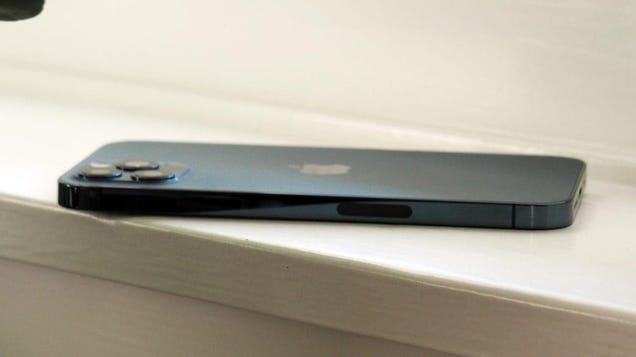
Apple and T-Mobile keep flip-flopping over who is to blame for the iCloud Private Relay being unavailable and now the Cupertino tech giant has updated its notice to users with one crucial change.
Source: Gizmodo – Apple Revises iCloud Private Relay Notice With the Actual Reason for Why It Might Not Work
10 Things You Didn't Know You Could Drag-and-Drop on Your iPhone
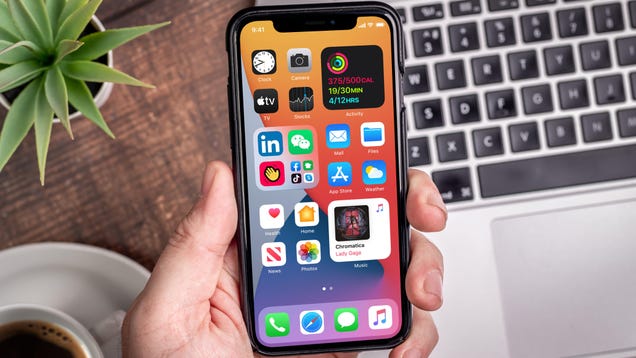
With iOS 15, your iPhone got a somewhat hidden tool that can boost your productivity and help you speed up repetitive tasks, such as copying and pasting multiple items. The tool is called drag-and-drop, and it lets you quickly drag multiple photos into a Word or Google Docs document, allows you to instantly copy links…
Source: LifeHacker – 10 Things You Didn’t Know You Could Drag-and-Drop on Your iPhone
Report: Sony will use the PS4 to fill the PS5 supply gap

Enlarge / L-R: Xbox Series X, PlayStation 5, Xbox Series S. (credit: Sam Machkovech)
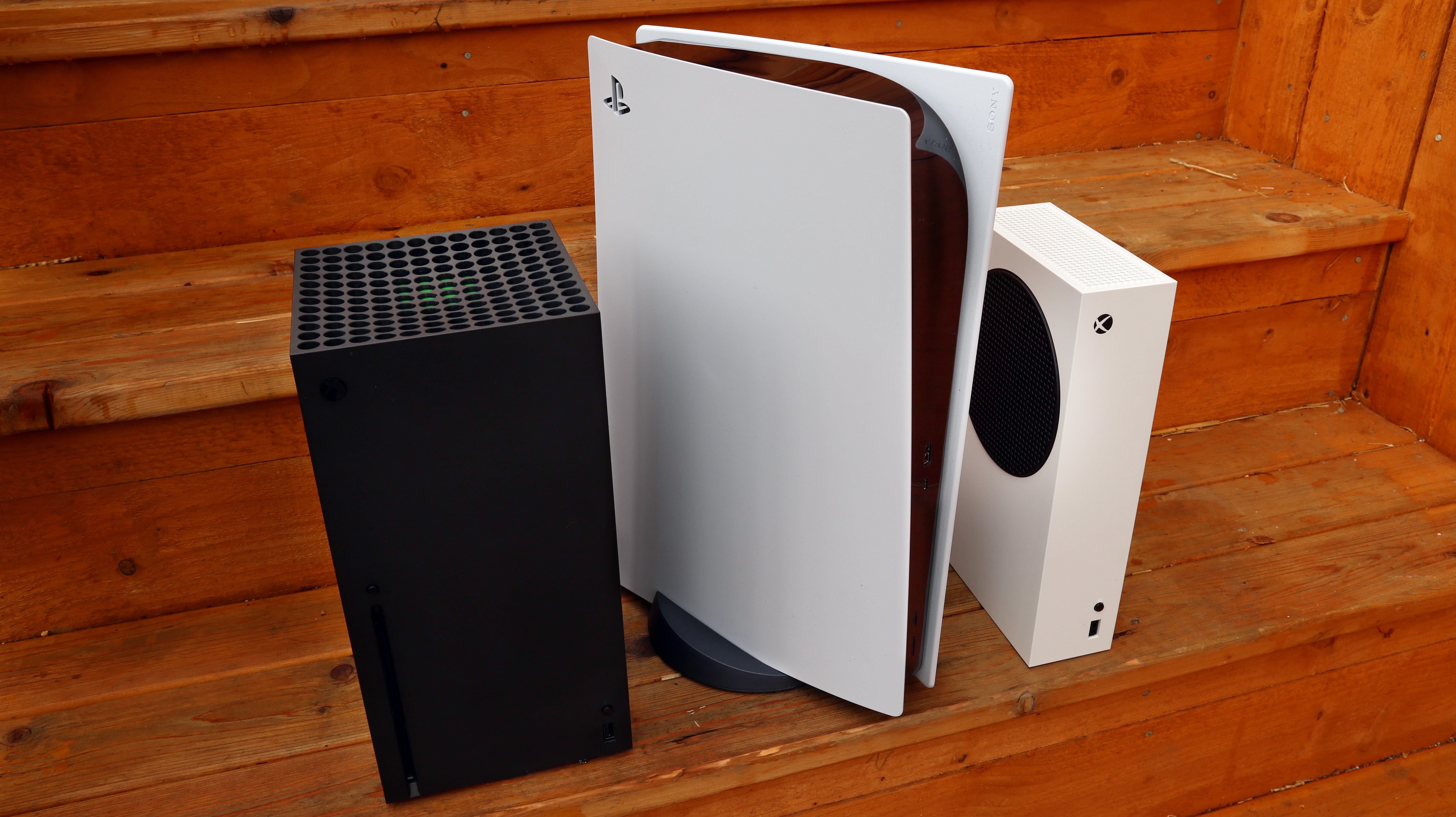
With the PlayStation 5 still hard to find at retail amid worldwide semiconductor shortages, Sony has canceled plans to discontinue the PS4, extending the system’s life through 2022.
That’s according to a Bloomberg News report citing “people familiar with the matter” who say that Sony told assembly partners that it had planned to discontinue the PS4 at the end of 2021. Instead, the company now plans this year to produce a million units of the older console, which uses less-advanced chips that are easier to source. Sony could adjust that number based on demand.
For context, the PS4 sold 1.7 million units in the first nine months of 2021, according to financial reports, compared to 8.9 million PS5 units in that same time.
Read 6 remaining paragraphs | Comments
Source: Ars Technica – Report: Sony will use the PS4 to fill the PS5 supply gap
Fortnite Returns To iPhones And iPads Via GeForce Now, How You Like Them Apples?

Fortnite is finally coming back to iPhone and iPad devices, though not because Epic Games and Apple ended their legal dispute and came to a mutual resolution. We’re still waiting to see how that situation ultimately plays out (and we be waiting quite a while). However, Fortnite is getting ready to land on iOS and Safari through NVIDIA’s GeForce
Source: Hot Hardware – Fortnite Returns To iPhones And iPads Via GeForce Now, How You Like Them Apples?
Biologists Shocked to Find Millions of Icefish Nesting Near Antarctica

Deep-sea biologists were stunned to find the largest known fish breeding ground, a discovery made last year near Antarctica. Details of the incredible find were published today, with researchers describing a sprawling colony of millions of icefish on seafloor of the Southern Ocean.
Source: Gizmodo – Biologists Shocked to Find Millions of Icefish Nesting Near Antarctica
Netflix's Shadow & Bone Adds a Slew of New Castmembers

Good news, fans of Shadow and Bone (or fans of the Darkling specifically, I guess). Netflix’s adaptation of Leigh Bardugo’s Grishaverse fantasy novels is about start production on season two, which will cover the second book in the series, Siege and Storm. Unsurprisingly, the book has new characters that need actors…
Source: Gizmodo – Netflix’s Shadow & Bone Adds a Slew of New Castmembers
Watch As A Fish Learns To Pilot A Modded Raspberry Pi Tank So It Can Fetch Treats
While you may not be able to teach an old dog new tricks, it seems you can teach a fish. Scientists have seemingly been able to train fish how to navigate their tanks in order to receive a reward. [Editor’s Note: Oh yeah, Tim? Well my dog can shake and sit on command! Well, sometimes.]
People have been finding unique and creative ways to
Source: Hot Hardware – Watch As A Fish Learns To Pilot A Modded Raspberry Pi Tank So It Can Fetch Treats
Deep Learning Can't Be Trusted, Brain Modeling Pioneer Says
During the past 20 years, deep learning has come to dominate artificial intelligence research and applications through a series of useful commercial applications. But underneath the dazzle are some deep-rooted problems that threaten the technology’s ascension. IEEE Spectrum: The inability of a typical deep learning program to perform well on more than one task, for example, severely limits application of the technology to specific tasks in rigidly controlled environments. More seriously, it has been claimed that deep learning is untrustworthy because it is not explainable — and unsuitable for some applications because it can experience catastrophic forgetting. Said more plainly, if the algorithm does work, it may be impossible to fully understand why. And while the tool is slowly learning a new database, an arbitrary part of its learned memories can suddenly collapse. It might therefore be risky to use deep learning on any life-or-death application, such as a medical one.
Now, in a new book, IEEE Fellow Stephen Grossberg argues that an entirely different approach is needed. Conscious Mind, Resonant Brain: How Each Brain Makes a Mind describes an alternative model for both biological and artificial intelligence based on cognitive and neural research Grossberg has been conducting for decades. He calls his model Adaptive Resonance Theory (ART). Grossberg — an endowed professor of cognitive and neural systems, and of mathematics and statistics, psychological and brain sciences, and biomedical engineering at Boston University — based ART on his theories about how the brain processes information. “Our brains learn to recognize and predict objects and events in a changing world that is filled with unexpected events,” he says. Based on that dynamic, ART uses supervised and unsupervised learning methods to solve such problems as pattern recognition and prediction. Algorithms using the theory have been included in large-scale applications such as classifying sonar and radar signals, detecting sleep apnea, recommending movies, and computer-vision-based driver-assistance software.
[…] One of the problems faced by classical AI, he says, is that it often built its models on how the brain might work, using concepts and operations that could be derived from introspection and common sense. “Such an approach assumes that you can introspect internal states of the brain with concepts and words people use to describe objects and actions in their daily lives,” he writes. “It is an appealing approach, but its results were all too often insufficient to build a model of how the biological brain really works.” The problem with today’s AI, he says, is that it tries to imitate the results of brain processing instead of probing the mechanisms that give rise to the results. People’s behaviors adapt to new situations and sensations “on the fly,” Grossberg says, thanks to specialized circuits in the brain. People can learn from new situations, he adds, and unexpected events are integrated into their collected knowledge and expectations about the world.


Read more of this story at Slashdot.
Source: Slashdot – Deep Learning Can’t Be Trusted, Brain Modeling Pioneer Says
Leak Offers Us A First Look At Android 13 Dynamic Themes And Notifications

How many layers are in this “tiramisu”? There is nothing official about Android 13 “Tiramisu” yet, but a few new images have been leaked. New dynamic themes and runtime permissions for notifications will reportedly be available in Android 13.
Android 12 ushered in new dynamic theming, also known as “monet.” The dynamic theming extracts
Source: Hot Hardware – Leak Offers Us A First Look At Android 13 Dynamic Themes And Notifications
Instacart's 'Ready Meals' are a grocery store alternative to take out
After partnering with a number of big chains to help speed up grocery delivery back in 2021, today Instacart is launching Ready Meals so you can now order hot and pre-made meals from local grocers too.
For Instacart, the play is rather straightforward as the company looks to position its Ready Meal Hub as an alternative to more traditional food delivery apps like Seamless, Uber Eats and the like. The only real difference is that instead of ordering food from local restaurants, Instacart is hoping its customers will use Ready Meals to order fresh food like sandwiches, sushi and more from nearby grocery stores, in addition to pre-prepared, ready-to-heat dishes such as take-and-bake casseroles.
Just like regular grocery orders, Instacart says its Ready Meals Hub will be available nationwide, with deliveries arriving at your door in as little as 30 minutes. Instacart is partnering with grocers including Publix, GIANT, Food Lion, Hannaford, Stop & Shop, Martin’s, and Kroger, with plans to add more retailers such as ShopRite in the coming months.
The arrival of the Ready Meals Hub in the Instacart app follows the addition of the Convenience Hub last fall, which added the ability to order a range of pantry staples, snacks, and even alcohol from big-name stores like 7-Eleven and others. Another benefit of the new Ready Meals Hub is that because pre-prepared foods can be ordered alongside regular groceries, Instacart is making it easier to order food for a variety of meals or situations with a single purchase.
The expansion of Instacart’s delivery options serves to further reinforce the increasing popularity of home grocery delivery. According to a recent report from the Food Industry Association (FMI), while most meals in the U.S. are still prepared at home, 55% percent of shoppers noted a desire for more hybrid meal options that contain a mix of semi-prepared and fully-prepared dishes.
That said, with Instacart expected to go public later this year, the new Ready Meals Hub is also clearly a way to help maintain strong sales following a record number of orders during the 2021 holiday season.
Source: Engadget – Instacart’s ‘Ready Meals’ are a grocery store alternative to take out
Do 'Legal' Weed Alternatives Really Work?

Even as an increasing number of Americans have come to accept the use of cannabis, one thing that hasn’t budged much is how accessible it is. Sure, more states are legalizing the stuff every year, but even where weed is legal, you can’t just walk into the corner store and buy it alongside some toilet paper and a…
Source: LifeHacker – Do ‘Legal’ Weed Alternatives Really Work?
LG is bringing its CLOi service robot to the US
Don’t be shocked if a robot serves you the next time you eat out or go on vacation. LG is bringing its CLOi ServeBot to the US, giving hotels, restaurants and stores a semi-autonomous machine that can ferry up to 66lbs of food and other cargo across a busy space. While humans have to pre-program maps and set destinations, the bot can use a 3D camera, LiDAR and sensors to dodge people and detect when someone has removed an item from a tray.
Like other CLOi robots, the ServeBot uses its 9.2-inch touchsreen to both put on a friendly face for guests and take input. It’s not fast at 2.2MPH, but its 11 hours of continuous use should be enough for a long workday.
This isn’t the first LG robot to cross to the US. The Korean tech firm brought its disinfecting UV-C robot to the US in 2021. The timing might be apt, however. American companies are grappling with the combination of job shortages (particularly in service roles) and an evolving pandemic that adds risk to waiting tables or helming a hotel’s front desk. ServeBot won’t completely replace human workers, but it might lessen the sting of job shortfalls and reduce exposure for workers who frequently have to deal with the public.
Source: Engadget – LG is bringing its CLOi service robot to the US
Set up a build system with CMake and VSCodium
This article is part of a series about open source DevOps tools for C/C++ development. If you build up your project from the beginning on a powerful toolchain, you will benefit from a faster and safer development. Aside from that, it will be easier for you to get others involved in your project. In this article, I will prepare a C/C++ build system based on CMake and VSCodium.
Source: LXer – Set up a build system with CMake and VSCodium
Genshin Impact's Greece-Inspired Update Is Surprisingly Devastating

Genshin Impact’s first major update of the year takes place in the Chinese-inspired city-state of Liyue. The update centers two new characters, and Liyue will soon host Genshin’s annual Chinese New Year event. So I understand why the newly added Enkanomiyan islands aren’t depicted as the meat of this update. There’s…
Source: Kotaku – Genshin Impact’s Greece-Inspired Update Is Surprisingly Devastating
Stop Using Round Measuring Spoons

I don’t tend to make product recommendation or write reviews. With the exception of wildly popular appliances like the air fryer and Instant Pot, I try to ensure my recipes don’t hinge on any one piece of equipment, and my own kitchen is stocked with things I inherited, or purchased at Goodwill or the restaurant…
Source: LifeHacker – Stop Using Round Measuring Spoons
Before Twin Peaks' Laura Palmer, There Was the Mystery of Hazel Drew

Twin Peaks fans all know the tragic tale of Laura Palmer, the small-town beauty queen who died hiding some rather dark secrets. But did you know that Mark Frost, who co-created the series with David Lynch, actually took inspiration from a real-life historic unsolved murder?
Source: Gizmodo – Before Twin Peaks’ Laura Palmer, There Was the Mystery of Hazel Drew
Microsoft is no longer making Xbox One consoles
Microsoft and Sony are struggling to keep up with demand for the Xbox Series X and PlayStation 5. While Sony plans to keep manufacturing the PlayStation 4 for the time being to make up for its shortfall of current-gen consoles, the Xbox One is no more.
We learned in July 2020 that Microsoft had discontinued the Xbox One X and Xbox One S Digital Edition by that point. Now, it has emerged the company quietly stopped making the Xbox One S by the end of that year too. “To focus on production of Xbox Series X/S, we stopped production for all Xbox One consoles by the end of 2020,” Xbox’s senior director of console product marketing Cindy Walker told The Verge.
It seems the strategy has paid off. Xbox head Phil Spencer told The New York Times this week that Microsoft has sold more of the Series X and Series S at this point in their lifecycle than it has with any previous Xbox generation, though he didn’t reveal actual sales figures. Analyst Daniel Ahmad of Niko Partners said that would put shipments of Series X/S at more than 12 million units.
While the more powerful Series X typically sells out minutes after every stock drop (it doesn’t help that scalpers are using bots to snap them up), the Series S isn’t hard to come by at this point. It’s available to buy at the time of writing in the US, UK and Canada at retailers like Amazon, Best Buy, GameStop and Walmart. Given that the Series S can handle pretty much everything the Xbox One can — except for playing discs — it doesn’t make a ton of sense for Microsoft to keep making that console.
It’s a slightly different story for Sony. Save for the disc drive, there’s no difference between the two PS5 models. Given the high demand (Sony had sold 13.4 million units by October 2021) and the ongoing supply chain crisis, it’s harder for most people to score one of those consoles than a Series S right now. As such, Sony told Bloomberg on Wednesday it will keep making the PS4 (which uses less advanced components than the PS5) in 2022, despite reportedly planning to discontinue the console last year. The company’s said to be making around a million PS4 units in this year.
Sony previously suggested it would support PS4 through 2024. Several of its first-party exclusives are coming to both the current- and previous-gen consoles this year, including Horizon Forbidden West, Gran Turismo 7 and God of War Ragnarök.
Source: Engadget – Microsoft is no longer making Xbox One consoles