Decades of Research: the Story of How mRNA Vaccines Were Developed

Long-time Slashdot reader fahrbot-bot wanted to share this New York Times article which makes the point that “The stunning Covid vaccines manufactured by Pfizer-BioNTech and Moderna drew upon long-buried discoveries made in the hopes of ending past epidemics…”

They remain a marvel: Even as the Omicron variant fuels a new wave of the pandemic, the vaccines have proved remarkably resilient at defending against severe illness and death. And the manufacturers, Pfizer, BioNTech and Moderna, say that mRNA technology will allow them to adapt the vaccines quickly, to fend off whatever dangerous new version of the virus that evolution brings next.

Skeptics have seized on the rapid development of the vaccines — among the most impressive feats of medical science in the modern era — to undermine the public’s trust in them. But the breakthroughs behind the vaccines unfolded over decades, little by little, as scientists across the world pursued research in disparate areas, never imagining their work would one day come together to tame the pandemic of the century. The pharmaceutical companies harnessed these findings and engineered a consistent product that could be made at scale, partly with the help of Operation Warp Speed, the Trump administration’s multibillion-dollar program to hasten the development and manufacture of vaccines, drugs and diagnostic tests to fight the new virus.

For years, though, the scientists who made the vaccines possible scrounged for money and battled public indifference. Their experiments often failed. When the work got too crushing, some of them left it behind. And yet on this unpredictable, zigzagging path, the science slowly built upon itself, squeezing knowledge from failure.

The vaccines were possible only because of efforts in three areas. The first began more than 60 years ago with the discovery of mRNA, the genetic molecule that helps cells make proteins. A few decades later, two scientists in Pennsylvania decided to pursue what seemed like a pipe dream: using the molecule to command cells to make tiny pieces of viruses that would strengthen the immune system. The second effort took place in the private sector, as biotechnology companies in Canada in the budding field of gene therapy — the modification or repair of genes to treat diseases — searched for a way to protect fragile genetic molecules so they could be safely delivered to human cells. The third crucial line of inquiry began in the 1990s, when the U.S. government embarked on a multibillion-dollar quest to find a vaccine to prevent AIDS. That effort funded a group of scientists who tried to target the all-important “spikes” on H.I.V. viruses that allow them to invade cells. The work has not resulted in a successful H.I.V. vaccine. But some of these researchers, including Dr. Graham, veered from the mission and eventually unlocked secrets that allowed the spikes on coronaviruses to be mapped instead.
In early 2020, these different strands of research came together. The spike of the Covid virus was encoded in mRNA molecules. Those molecules were wrapped in a protective layer of fat and poured into small glass vials. When the shots went in arms less than a year later, recipients’ cells responded by producing proteins that resembled the spikes — and that trained the body to attack the coronavirus.

The extraordinary tale proved the promise of basic scientific research: that once in a great while, old discoveries can be plucked from obscurity to make history.

Read more of this story at Slashdot.


Source: Slashdot – Decades of Research: the Story of How mRNA Vaccines Were Developed

Across the Spider-Verse is Bringing More Animation Styles with Its Spiders

Of the many highlights of Spider-Man: Into the Spider-Verse, its art styles were the among them. While Miles Morales (Shameik Moore), Peter B. Parker (Jake Johnson), and Gwen Stacy (Hailee Steinfeld) were in traditional 3D, the other Spiders had their own distinct visual styles. Peni Parker (Kimiko Glenn) was done in…

Read more…


Source: Gizmodo – Across the Spider-Verse is Bringing More Animation Styles with Its Spiders

Apple's digital car keys may work with Hyundai and Genesis models this summer

Apple’s digital car key feature might soon be useful for unlocking more than a handful of BMW models. In his latest newsletter, Bloomberg‘s Mark Gurman claimed Hyundai and its upscale Genesis badge will support Apple CarKey “by the summer.” It’s not certain which models would provide the option, but it’s notable that some trim levels of the Ioniq 5 and other Hyundai cars include NFC for a (currently proprietary) digital key.

While remote lock controls have been available through smartphones for a while, CarKey (and its Android equivalent) treats the phone more like a physical key. You just have to bring your phone or Apple Watch to the door handle to unlock it, and you can even place your phone in a given area to start the car. People with ultra-wideband iPhones (such as the iPhone 11 and newer) can even leave their phone in their pocket when opening and starting the vehicle.

If the leak is accurate, Apple’s move could significantly expand the audience for digital car keys — you wouldn’t need to shop from one high-end marque to even consider it. A deal would also suggest the tussle over a possible EV collaboration wasn’t enough to deter Apple and Hyundai from exploring a CarKey team-up.


Source: Engadget – Apple’s digital car keys may work with Hyundai and Genesis models this summer

Solve Wordle using the Linux command line

I[he]#039[/he]ve recently become a little obsessed with an online word puzzle game in which you have six attempts to guess a random five-letter word. The word changes every day, and you can only play once per day. After each guess, each of the letters in your guess is highlighted: gray means that letter does not appear in the mystery word, yellow means that letter appears in the word but not at that position, and green means the letter appears in the word at that correct position.

Source: LXer – Solve Wordle using the Linux command line

Google Pixel 6 January Update Arrives To Praise For Critical Bug Fixes And Improved Performance

Google Pixel 6 January Update Arrives To Praise For Critical Bug Fixes And Improved Performance
Google finally released the Pixel update it halted abruptly last month, and many owners are praising the improved performance they are seeing with their phones. The update, that was supposed to have released in December, aims to fix some annoying bugs and give users the performance they thought they were going to get when the Pixel 6 and 6

Source: Hot Hardware – Google Pixel 6 January Update Arrives To Praise For Critical Bug Fixes And Improved Performance

Do CS Teachers Need To Know CS?

“I’ll say it over and over until I retire — CS teachers really do need to know CS,” says Mike Zamansky, a coordinator of CS teacher certifications. He was criticizing groups that instead provide teachers with scripted content and short-form “training”.

Long-term Slashdot reader theodp summarizes the issue:

A problem with out-of-the-box scripted solutions, Zamansky explains, is that “teachers are less and less expected as much to know their subjects, their students, and how to teach but rather to follow the script. This approach might get those students past the standardized exam but in the long run it’s not giving students what they need nor deserve.

“I’ve seen this every year in my undergraduate CS classes. Since APCS Principles was launched many of my students have come in having taken the classes and ‘passed’ the exam. Truth be told, the majority of them come in basically knowing nothing. This wouldn’t be a problem if they didn’t come in thinking they knew quite a bit. […] School supervisors don’t know any better so they see that they can check off the computer science box. Many teachers probably don’t know better because their short term training is focusing on how easy CS is and how you don’t have to learn anything to teach it rather than the truth — it’s just like anything else, it takes time and effort to really master.”

Read more of this story at Slashdot.


Source: Slashdot – Do CS Teachers Need To Know CS?

How to Take Care of Air Plants

Despite the classic excuse of not having a “green thumb,” keeping a houseplant alive has more to do with the ability to make and remember to stick to a schedule than being born without a pretend gene that makes you good at gardening. (And if you have a literal green thumb, you may want to have a medical profession…

Read more…


Source: LifeHacker – How to Take Care of Air Plants

Amazon Kindle is back on sale for $50 today only

Now is a good opportunity to buy one of the best no-frills e-readers available. Amazon is selling the latest generation of its standard Kindle reader for just $50 during a one-day sale, or $70 for a version without ads. Those are the lowest prices we’ve seen since Black Friday, and make them easy picks if you don’t need water resistance or other extras. There’s also a Goldbox sale on Kindle e-books if you need some reading material.

Buy Kindle (with ads) on Amazon – $50Buy Kindle (without ads) on Amazon – $70

The base Kindle may be from 2019, but it’s still a very competitive e-reader in 2022. The touchscreen, front illumination, high-contrast display and compact design make it easy to use and read in many situations, whether you’re in bed or at the beach. More importantly, you’re getting full access to the Kindle book ecosystem for a low price — if you don’t care for what the Paperwhite offers, why pay more?

There are limits you should consider. The lack of waterproofing will prevent you from reading by the pool, and the 4GB of storage may prove limiting if you either want a large on-device library or tend to read visually intensive books that chew up storage. For most people, though, the regular Kindle is plenty.

Follow @EngadgetDeals on Twitter for the latest tech deals and buying advice.


Source: Engadget – Amazon Kindle is back on sale for today only

Leonardo DiCaprio, Huge Star Wars Nerd, Couldn't Get Jonah Hill to Love The Mandalorian

If you’re a nerd, then no doubt you’ve tried to get a friend to like something as much as you do. It’s a crap shoot as to whether or not it will work, especially if it’s something as popular (and disjointed) as Star Wars. Recent years have been all over the place for George Lucas’ sci-fi franchise, and even when…

Read more…


Source: Gizmodo – Leonardo DiCaprio, Huge Star Wars Nerd, Couldn’t Get Jonah Hill to Love The Mandalorian

Law Enforcement Agencies Recruit Rare People Who are 'Super-Recognizers' of Faces

An anonymous reader shared this report on “Super-Recognizers” from a series of articles in the Guardian called “Meet the Superhumans.”
As a child, Yenny Seo often surprised her mother by pointing out a stranger in the grocery store, remarking it was the same person they passed on the street a few weeks earlier. Likewise, when they watched a movie together, Seo would often recognise “extras” who’d appeared fleetingly in other films… A cohort of just 1-2% of the population are “super-recognisers” — people who can memorise and recall unfamiliar faces, even after the briefest glimpse.

The underlying cause is still not entirely clear — it’s a new field, with only around 20 scientific papers studying super-recognisers. However, it is suspected genetics plays a role because identical twins show similar performance, and it has been shown that cortical thickness — the amount of neurons — in the part of the brain that supports face recognition is a predictor of superior ability. Because it’s such a rare phenomenon, in 2017 Dr. David White, now a lead investigator at the Face Research Lab at the University of New South Wales (UNSW) and his colleagues designed a publicly available online screening tool to try to unearth the world’s best super-recognisers. Seo, then in her mid-twenties, gave it a go — and her score was so high, White invited her to come to Sydney for more testing.

With more than 100,000 people now tested, Seo still ranks in the top 50….

Over the past decade, security and law enforcement agencies around the world have started recruiting people with superior facial recognition capabilities. London’s metropolitan police has a special team who examine CCTV footage from crime scenes — they were used in the investigation into the poisoning of a former Russian spy with the nerve agent Novichok in Salisbury — and several years ago Queensland police started identifying super-recognisers in its ranks. A proliferation of private agencies has also sprung up, offering the services of super-recognisers.

Seo has no interest….

Read more of this story at Slashdot.


Source: Slashdot – Law Enforcement Agencies Recruit Rare People Who are ‘Super-Recognizers’ of Faces

Ukraine blames Russia for cyberattack against government websites

Ukraine isn’t hesitating to point fingers following a major cyberattack that hobbled dozens of government websites. As The Guardianreports, Ukraine’s digital transformation ministry has blamed Russia for the hack, accusing the country of fighting a “hybrid war” meant to “destabilize” an already tense situation and erode trust in the Ukranian government. While officials didn’t elaborate on the evidence linking the attack to Russia, Microsoft shared details late Saturday that suggested a hostile nation was responsible.

The company’s Threat Intelligence Center noted that the code was purely destructive malware disguised as ransomware. It had a ransom note, a Bitcoin wallet and an encrypted messaging identifier, but no recovery mechanism — in fact, it wipes the Master Boot Record (the hard drive element that tells a PC how to load the OS) and downloads malware meant solely to corrupt files. All known targets are in Ukraine, and there aren’t any tangible links between this campaign and other groups.

Russia denied any involvement in the cyberattack. A spokesperson for President Putin said Ukraine pinned everything on Russia, “even the weather.” Russia has long been accused of using cyberattacks to target its political opponents, including Ukraine, the US and European countries.

Microsoft said it wasn’t certain about the current stage of the hacking operation or the scope of the damage. It wasn’t yet clear if there were other victims in Ukraine or beyond. However, it’s safe to presume the timing of the attack is problematic regardless of the perpetrator. Ukraine and its allies have been worrying for months about signs of a looming Russian invasion, and the US on January 14th claimed Russia was planning a false flag operation that would help it justify that invasion. The cyberattack appears to be exacerbating those tensions, and may have weakened Ukraine’s government infrastructure at a critical moment.


Source: Engadget – Ukraine blames Russia for cyberattack against government websites

Pine64's 'PineNote' E-Ink Tablet Now Available for $399 for Developers

“The PineNote is a tablet with a 10.1 inch grayscale E Ink display and pen support,” reports Liliputing.
“It’s designed to be a hackable, Linux-friendly device and it’s one of the latest products from the makers of the PinePhone and PineBook line of devices.”
First introduced last summer, the PineNote began shipping to developers in limited quantities in December. Now it’s available for anyone to purchase for $399 — no invitation required. But it’s probably only a good idea to buy one if you’re a developer or very early adopter because there’s very little software available for the PineNote so far. At this point, Pine64 is shipping the PineNote without an operating system installed. It will have only a bootloader, allowing developers and enthusiasts to load their own software… [D]evelopers have already made some progress in getting builds Alpine and Debian Linux to run on the E Ink slate, and according to Pine64, there are ports for NixOS and other operating systems on the way.

There’s already a partially working display driver, but it’s still a work in progress. The goal is to allow developers to port mainline Linux operating systems and applications to play well with a monochrome display with a slow refresh rate. Developers have also figured out how to enable support PineNote’s touchscreen, audio playback, and USB port, making it possible to use USB keyboards, storage devices, and other peripherals.

Read more of this story at Slashdot.


Source: Slashdot – Pine64’s ‘PineNote’ E-Ink Tablet Now Available for 9 for Developers

GCC 12 Ready To Help Fend Off Trojan Source Attacks

Disclosed a few months back were “Trojan Source” attacks against compilers where specially crafted code could be rogue but not appear so due to exploiting Unicode issues. Unicode control characters could be used to reorder tokens in source code that could alter the behavior when compiled. With the upcoming GCC 12 compiler release there is a new warning to help point out possible Trojan Source attacks…

Source: Phoronix – GCC 12 Ready To Help Fend Off Trojan Source Attacks

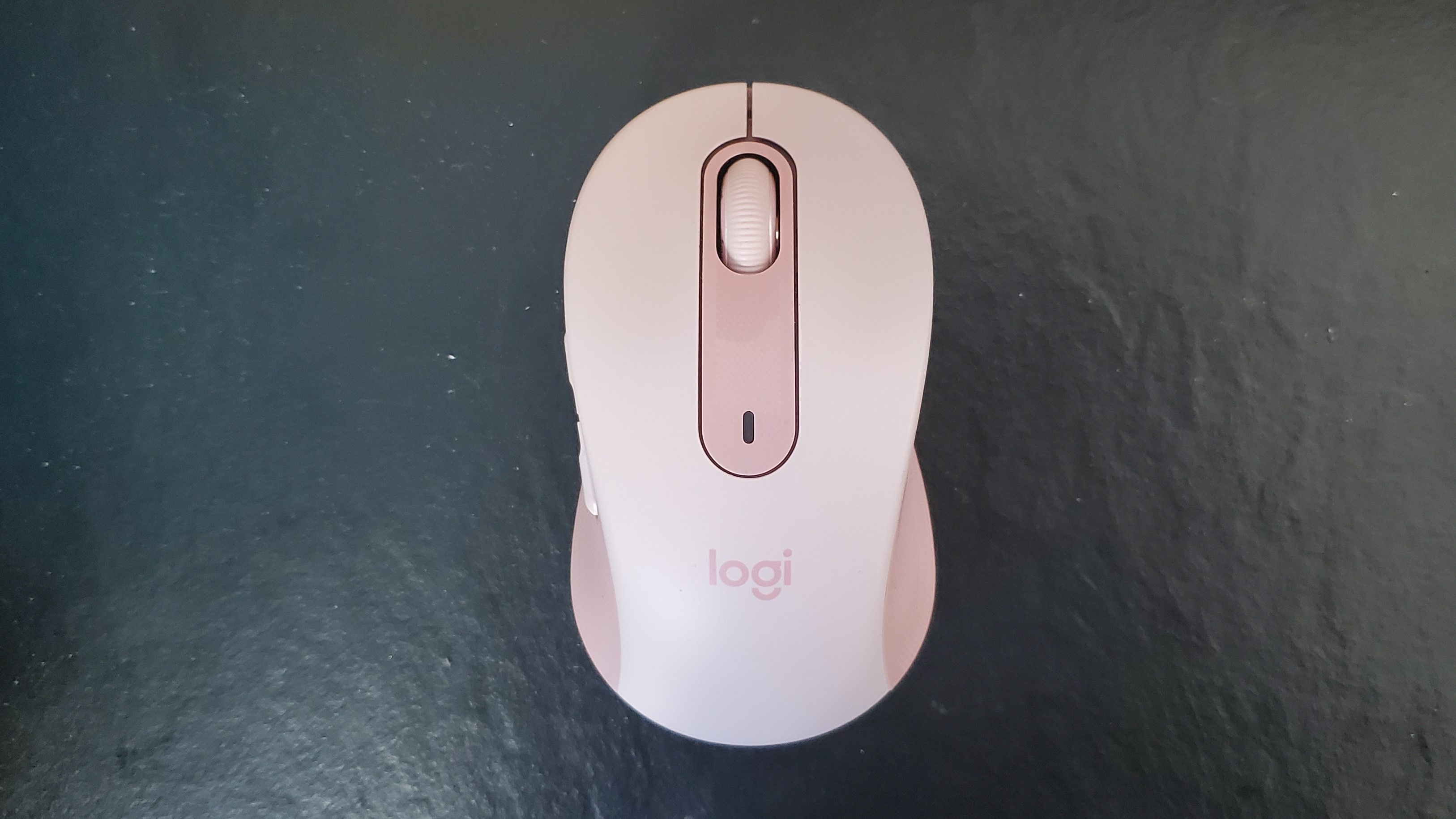
Logitech Signature M650: A quiet wireless mouse for big, small, or left hands

Logitech Signature M650 in the rose colorway.

Enlarge / Logitech Signature M650 in the rose colorway. (credit: Scharon Harding)

Specs at a glance: Logitech Signature M650
Sensor Optical (model not disclosed)
Connectivity options Bluetooth Low Energy or 2.4 GHz dongle
Programmable buttons 3
Onboard profiles 0
Lighting None
Size Standard: 4.22×2.43×1.49 inches
(107.19×61.80×37.8 mm)
Large: 4.65×2.58×1.63 inches
(118.19×65.65×41.52 mm)
Weight Medium: 3.57 ounces (101.2 g)
Large: 3.92 ounces (111.2 g)
Warranty 1 year
Price (MSRP) $40
Other perks AA battery included

Many mice offer very basic functionality—left-click, right-click, scroll wheel, and not much more. Others boast a range of programmable buttons, premium sensor specs, USB-C charging, and other features for power users. But what if you don’t need that extreme level of functionality but don’t want something cheap and bare-bones, either?

Released this past week, the Logitech Signature M650 wireless mouse is a middle-ground device that supports Windows, macOS, Linux, Chrome OS, iPadOS, and Android. It doesn’t have the most advanced features, but it isn’t basic, either. And by skipping some add-ons, like multiple Bluetooth profiles, the mouse is able to maintain an affordable $40 price point.

Logitech’s latest cord-free mouse also comes in three different versions: a standard size, a large size, and a large left-handed version, providing something for everyone—unless you have a smaller left hand, that is.

Read 36 remaining paragraphs | Comments


Source: Ars Technica – Logitech Signature M650: A quiet wireless mouse for big, small, or left hands

Pine64's Newest Linux Smartphone 'PinePhone Pro Explorer Edition' Now Available for Pre-Order

“Linux fans rejoice!” writes Hot Hardware. ” Pine64’s newest smartphone is officially available for pre-order.”

PinePhone Pro Explorer Edition pre-orders opened up Tuesday. Devices that are pre-ordered before January 18th will be shipped from Pine64’s Hong Kong warehouse by January 24th and should arrive by early February…. According to Pine64, the PinePhone Pro Explorer Edition is the “fastest mainline Linux smartphone on the market.” It uses a Rockchip RK3399S SoC that is composed of two ARM A72 cores (1.5GHz) and four A53 efficiency cores (1.5GHz)….

Consumers will also likely be pleased with the price of the device. The PinePhone Pro Explorer Edition currently rings in at $399 USD. The production run is purportedly “large” and interested consumers should therefore be able to easily purchase the device at this price.

Liliputing adds:
While the PinePhone Pro has better hardware than the original PinePhone, Pine64 plans to continue selling both phones indefinitely. The first-gen phone will continue to sell for $150 to $200, offering an entry-level option for folks that want to experiment with mobile Linux, while the higher-priced PinePhone Pro should offer a hardware experience closer to what folks would expect from a modern mid-range phone….

In addition to the PinePhone Keyboard, the recently launched PinePhone wireless charging case, fingerprint reader case, and LoRa cases should all work with either phone.

But the new phone has a faster processor, more memory and storage, higher-resolution cameras, a higher-speed USB-C port and support for WiFi 5 and Bluetooth 4.1. And those features should make it a little more viable as a replacement for an iPhone or Android device… if you’re comfortable running work-in-progress software.
They also add that “Thanks to the recent launch of the $50 PinePhone Keyboard, you can also think of the PinePhone Pro as a $400 phone that can be used as a $449 mini-laptop….”
And the Pine64 site’s January update also points out that “Pico 8 Raspberry Pi port works on the PinePhone,” adding “yes, it does run DOOM.”

Read more of this story at Slashdot.


Source: Slashdot – Pine64’s Newest Linux Smartphone ‘PinePhone Pro Explorer Edition’ Now Available for Pre-Order

Pregnant people are still not getting vaccinated against Covid

Pregnant people are still not getting vaccinated against Covid

Enlarge (credit: Getty | Dmitry Rogulin )

Calendar year three into the pandemic, and vaccination coverage among pregnant people remains staggeringly low.

According to data from the US Centers for Disease Control and Prevention, as of January 1, just over 40 percent of pregnant people in the United States between age 18 and 49 were fully vaccinated prior to pregnancy or during their pregnancy, compared with 66 percent of the general population over the age of 5. For Black pregnant people, the figure plummets to about 25 percent. Data for the United Kingdom is a little less up to date, but in August 2021 just 22 percent of women who gave birth were fully vaccinated.

And with Omicron running rampant, this is a problem. At the end of 2021, the UK’s vaccine watchdog, the Joint Committee on Vaccination and Immunization, announced that pregnant women would be made a priority group for vaccination, after reams of research has shown just how vulnerable the group is to Covid.

Read 16 remaining paragraphs | Comments


Source: Ars Technica – Pregnant people are still not getting vaccinated against Covid