That time France tried to make decimal time a thing

Though Marie Antoinette would be hard-pressed to care, the French Revolution of 1789 set its sights on more than simply toppling the monarchy. Revolutionaries sought to break the nation free from its past, specifically from the clutches of the Catholic church, and point France towards a more glorious and prosperous future. They did so, in part, by radically transforming their measurements of the passage of time.

Throughout the 18th century, most French folks were Catholic as that was the only religion allowed to be openly practiced in the country, and had been since the revocation of the Edict of Nantes in 1685. As such, the nation had traditionally adhered to the 12-month Gregorian calendar — itself based on even older, sexagesimal (6-unit) divisible systems adapted from the Babylonians and Egyptians — while French clocks cycled every 60 minutes and seconds.

But if there was little reason to continue using the established chronology system aside from tradition, the revolutionaries figured, why not transmute it into a more rational, scientifically-backed method, just as the revolution itself sought to bring stability and new order to French society as a whole? And what better system to interpose than that of the decimal, which already governed the nation’s weights and measures. So, while it wasn’t busy abolishing the privileges of the First and Second Estate, eliminating the church’s power to levy taxes or just drowning nonjuring Catholic priests en masse, France’s neophyte post-revolution government set about reforming the realm’s calendars and clocks.

The concept of decimal time, wherein a day is broken down into multiples of 10, was first suggested more than thirty years prior when French mathematician, Jean le Rond d’Alembert, argued in 1754, “It would be very desirable that all divisions, for example of the livre, the sou, the toise, the day, the hour, etc. would be from tens into tens. This division would result in much easier and more convenient calculations and would be very preferable to the arbitrary division of the livre into twenty sous, of the sou into twelve deniers, of the day into twenty-four hours, the hour into sixty minutes, etc.”

By the eve of the Revolution, the idea had evolved into a year split into 12 months of 30 days apiece, their names inspired by crops and the prevailing weather in Paris during their occurrences. That there are 365 days in a year is an immutable fact dictated by the movement of the Earth around our local star. So, 12 months of 30 days apiece resulted in 5 days (6 in a leap year!) left over. These, the revolutionaries reserved for national holidays.

Each week was divided into 10 days, every day was split into 10 equal hours, those were split into 100 minutes, with each minute divided into 100 seconds (roughly 1.5 times longer than conventional minutes) and each second into 1000 “tierces.” Individual tierces could also be divided into 1000 even tinier units, called “quatierces.” The implementation of tierces would also lead to the creation of a new unit of length, called the “half-handbreadth,” which is the distance the twilight zone travels along the equator over the course of one tierce, and equal to one billionth of the planet’s circumference — around 4 centimeters.

Decimal time was formally adopted by National Convention decree in 1793, “The day, from midnight to midnight, is divided into ten parts, each part into ten others, and so forth until the smallest measurable portion of duration.” As such, midnight would be denoted as 00:00 while noon would be 5:00.

A clock face with decimal and conventional demarcations
Public Domain

At midnight of the autumn equinox on September 22nd of that year, France’s Gregorian calendar ushered in 1st Vendémiaire Year II of the French Republican calendar. From there on, every new year would begin at midnight of the Autumn equinox, as observed by the Paris Observatory.

“The new calendar was based on two principles,” a 2017 exhibition at the International Museum of Watches, Looking for Noon at Five O’Clock, noted. “That the Republican year should coincide with the movement of the planets, and that it should measure time more accurately and more symmetrically by applying the decimal system wherever possible. Non-religious, it advocated a rational approach and honored the seasons and work in the fields.”

The main advantage of a decimal time system is that, since the base used to divide the time is the same as the one used to represent it, the whole time representation can be handled as a single string.

On one hand, this system offered the clear advantage that both the numerical base used to define the time and the numerical base used to divide it are the same number. For example, quick, how many seconds are there in three hours? The answer, most people will Google, is 10,800 — 60 seconds/minute x 60 minutes/hour x 3 hours. In decimal time, you simply get 30,000 — 3 hours x 10,000 seconds/hour.

However, due to an oversight in its otherwise logical design on account of gaps in astronomical knowledge, the Republican calendar struggled to properly accommodate leap years. “The four-year period, after which the addition of a day is usually necessary, is called the Franciade in memory of the revolution which, after four years of effort, led France to republican government, National Convention decreed. “The fourth year of the Franciade is called Sextile.”

Problem is that leap years, if we’re counting new years by midnights on the autumnal equinox in Paris, don’t consistently happen every four years. By equinox measure, the first leap year of the Republican calendar would actually have to occur in year III while the leaps in years XV and XX would happen half a decade apart.

There were also more practical issues with swapping the nation’s chronology over to an entirely new system, like the fact that people already had perfectly good clocks which they’d have to replace, were decimal time to remain in effect. It was also wildly unpopular with the working class who would only receive one day of rest out of 10 using the Republican calendar (plus a half day on the fifth), rather than the existing Gregorian one-day-in-seven, not to mention that the ten-day week played havoc with traditional Sunday religious services, seeing as how Sunday would cease to exist.

Overall, the idea simply failed to capture public support — despite edicts demanding the creation of decimal-based clocks — and was officially suspended on April 7th, 1795. The French then took a quick crack at metric time, which similarly measured time’s passage in factors of ten but based its progression in conventional seconds (aka 1/86400th of a day). Of course all of these efforts were rendered moot when Napoleon declared himself emperor in 1804, made peace with the Vatican and reinstituted the Gregorian calendar, thereby relegating both the Republican calendar and decimal time to the dustbin of history. The lesson here being, unless you’ve TNG’d yourself into a temporal loop, don’t try to fix what isn’t already broken, especially when it might earn you a trip to the guillotine.


Source: Engadget – That time France tried to make decimal time a thing

Use This Interactive Map to Plan a New Hiking Route

One of the best parts about hiking (or even taking a walk in your neighborhood) is paying attention to your surroundings, and noticing new things each time. But with so much of the world to explore, you probably also want to see new parts of it—including in your own area.

Read more…


Source: LifeHacker – Use This Interactive Map to Plan a New Hiking Route

Nintendo Warns Of Switch Scammers Using Fake Websites To Swindle Customers

Nintendo Warns Of Switch Scammers Using Fake Websites To Swindle Customers
This really should go without saying, but for the benefit of anyone who needs reminding, be extra cautious about where you buy items online. That also means double and even triple checking the URL. The reason for the reminder is because Nintendo posted a warning saying it knows of at least one fake site actively spoofing its homepage to scam

Source: Hot Hardware – Nintendo Warns Of Switch Scammers Using Fake Websites To Swindle Customers

Day Traders as 'Dumb Money'? The Pros Are Now Paying Attention

Last year, amateur investors took financial markets by storm. This year, Wall Street professionals are watching them closely. From a report: Fund managers who might have once derided small-time day traders as “dumb money” are scouring social-media posts for clues about where the herd might veer next. Some 85% of hedge funds and 42% of asset managers are now tracking retail-trading message boards, according to a survey by Bloomberg Intelligence. JPMorgan Chase in September introduced a new data product that includes information on which securities individual investors are likely buying and selling, as well as which sectors and stocks are being talked about on social media. About 50 clients, including some of the largest asset and quant managers, are testing the product, the bank says. JPMorgan equity traders are also using it to help manage their own risk. “The flow from retail is not something you can ignore if you are a professional investor,” says Chris Berthe, JPMorgan’s global co-head of cash equities trading. “It’s a whole new investor class that has emerged, and it’s an investor class thatâ(TM)s actually getting themes right.”

The shift illustrates just how much the rookies have changed the investing landscape. A year ago, market observers were questioning if the retail revolution would continue. Now many are asking what it will look like this year. After shying away from active investing for much of the past decade, millions of Americans, hunkered down at home because of Covid-19, became day traders in 2020. Enticed by volatile markets and phone apps that made it free to trade stocks, they flocked to social media for investing ideas. That year, they piled into stocks like Hertz Global Holdings. (and ultimately were rewarded when the car-rental company exited bankruptcy). It is estimated that more than 10 million individual investors opened new brokerage accounts in 2020, according to Devin Ryan, director of financial-technology research at JMP Securities. Last year the trends from 2020 accelerated. JMP Securities estimates that a further 15 million Americans signed up for brokerage accounts in 2021. Social-media forums became increasingly used for trading. Some individual investors used their growing numbers to send stocks including GameStop and AMC Entertainment flying. Many newbies relished in inflicting steep losses on some hedge funds and demonstrating that traditional playbooks aren’t the only way to win.

Read more of this story at Slashdot.


Source: Slashdot – Day Traders as ‘Dumb Money’? The Pros Are Now Paying Attention

Install Ajenti (A Web-Based Control Panel) for Managing Linux Server

Ajenti is an source web-based system management control panel for managing remote system administrating tasks from the web browser much similar to Webmin module. Ajenti is a much powerful and lightweight tool, that provides fast and responsive web interface for managing small server set-ups and also best suitable for VPS and Dedicated servers.

The post Install Ajenti (A Web-Based Control Panel) for Managing Linux Server appeared first on Linux Today.


Source: Linux Today – Install Ajenti (A Web-Based Control Panel) for Managing Linux Server

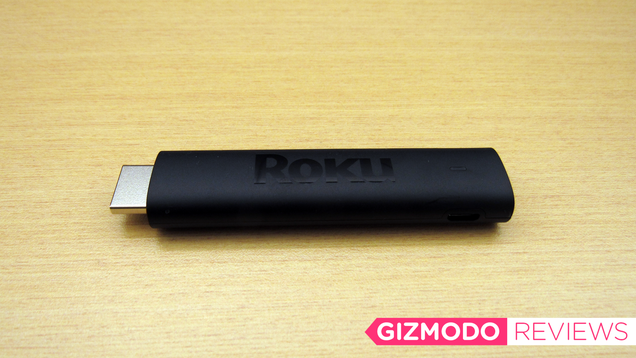
There's Only One Reason to Upgrade to Roku's New 4K Streaming Sticks

When it comes to product upgrades, it might sound like lukewarm praise to say, “It’s pretty much the same as the last version—but the last version was good!” But that’s exactly what’s true of the new Roku Streaming Stick 4K and its pricier sibling, the Roku Streaming Stick 4K+. While neither has quite enough in the…

Read more…


Source: Gizmodo – There’s Only One Reason to Upgrade to Roku’s New 4K Streaming Sticks

AeroPress Recipes Every Coffee Enthusiast Should Know

The AeroPress is on the geekier side when it comes to manual coffee brewing. It doesn’t have the artisanal cred of pour-over, nor the gravitas of a Moka pot, nor the time-tested reliability of a French press. Yet this little, plastic, plunger-based coffee maker—originally developed as a way to make one cup of reliably…

Read more…


Source: LifeHacker – AeroPress Recipes Every Coffee Enthusiast Should Know

Microsoft Closing In On $50 Billion Deal To Buy Activision Blizzard

In an extraordinary turn of events, Microsoft is getting near to a deal to buy Activision Blizzard, the Wall Street Journal reported today. This would not only be one of the most major shake-ups in the gaming industry in years but could also finally spell out the end for its horrendous CEO, Bobby Kotick.

Read more…


Source: Kotaku – Microsoft Closing In On Billion Deal To Buy Activision Blizzard

The Best Android Launchers for Completely Customizing Your Phone

The best thing about being an Android user is that you can swap out the look of your interface by merely downloading an app. But the worst thing about Android is that when you’re looking for one thing in the Play Store, you’ll encounter way too many other things are not quite what you’re looking for.

Read more…


Source: Gizmodo – The Best Android Launchers for Completely Customizing Your Phone

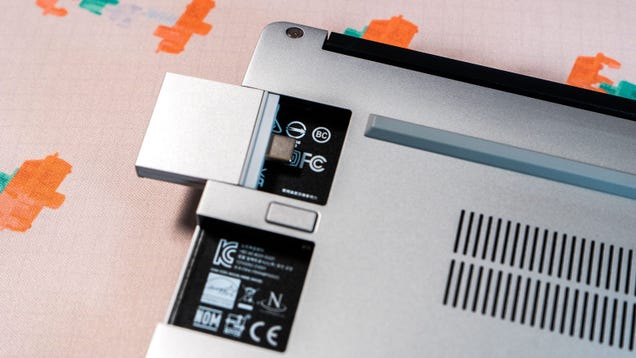
These Framework Laptop Mods Show Us Exactly Why Modular Computers Are So Damn Cool

Modular gadgets sound useful on paper but rarely break through to mainstream audiences. We’ve seen countless attempts come and go, leaving behind only fleeting blips of excitement from enthusiasts who are time and again burned when the promise of a customizable device never materializes. Every few years a new example…

Read more…


Source: Gizmodo – These Framework Laptop Mods Show Us Exactly Why Modular Computers Are So Damn Cool

Lenovo USB-C 7-in-1 Hub On Linux

For those considering the Lenovo USB-C 7-in-1 Hub for connecting to your Lenovo laptop for enjoying USB-C power charging, HDMI output, and additional USB ports, it does work out on Linux. While there have been some users running into seemingly firmware-related issues, at least with my testing over the past month this $50~60 (USD) USB-C hub has been working out well under Linux.

Source: Phoronix – Lenovo USB-C 7-in-1 Hub On Linux

Why Many California Police Departments Are Now Encrypting Their Radio Communications

“The San Diego County Sheriff’s Department last week encrypted its radio communications, blocking the public from listening to information about public safety matters in real time,” reports the San Diego Union Tribune:

The department is the latest law enforcement agency in the county and state to cut off access to radio communications in response to a California Department of Justice mandate that required agencies to protect certain personal information that law enforcement personnel obtain from state databases. Such information — names, drivers license numbers, dates of birth and other information from the California Law Enforcement Telecommunications System, or CLETS — sometimes is broadcast over police radios.

The October 2020 mandate gave agencies two options: to limit the transmission of database-obtained personal information on public channels or to encrypt their radio traffic. Police reform advocates say the switch to encrypted channels is problematic. The radio silence, they say, will force members of the public, including the news media, to rely on law enforcement agencies’ discretion in releasing information about public safety matters….

A sheriff’s spokesperson has said the department is exploring ways to disseminate information about incidents as they unfold. One idea is an online page that would show information about calls to which deputies respond.

Read more of this story at Slashdot.


Source: Slashdot – Why Many California Police Departments Are Now Encrypting Their Radio Communications

Amazon UK won't ban Visa credit cards on January 19th after all

Last November, Amazon notified customers that it would stop accepting Visa credit cards in the UK as of January 19th, 2022, blaming the high fees Visa charges for credit card transactions. Now, the company has backtracked on that, telling customers via email that it will continue accepting Visa cards, at least for the time being.

“The expected change regarding the use of Visa credit cards on Amazon.co.uk will no longer take place on January 19,” an Amazon spokesperson told Engadget. ” We are working closely with Visa on a potential solution that will enable customers to continue using their Visa credit cards on Amazon.co.uk.”

The dispute has been simmering for a while, with Amazon previously accusing Visa of charging high credit card transaction fees, and Visa saying that Amazon was “threatening to restrict consumer choice in the future.” Both companies, global leaders of their respective industries, previously said that they were attempting to work towards a solution. 

Amazon didn’t elaborate further on its statement but also didn’t set another deadline — so presumably UK buyers will be able to use their Visa cards for the foreseeable future. 


Source: Engadget – Amazon UK won’t ban Visa credit cards on January 19th after all

Amazon sale slashes Fire tablet prices by up to 50 percent

If you’ve been waiting for a sale to buy one of Amazon’s Fire HD tablets, today might be the day. You can currently pick up some key products on sale, with the best deals on the Fire HD 8 and Fire HD 8 Plus, available at all-time low discounts of 50 percent. The Fire 7 is also back to its Black Friday pricing, and kids tablets have big discounts as well. 

Buy Fire 7 tablet at Amazon – $35Buy Fire 8 HD tablet at Amazon – $45Buy Fire HD 8 Plus at Amazon – $55

We gave the 2020 Fire HD 8 a decent 81 score in our Engadget review, thanks to the new design, switch to USB-C charging, long battery life and solid performance. The Fire HD 8 Plus, however, offers a bit more RAM (3GB instead of 2GB), along with a faster processor and wireless charging support. Both models have 32GB of storage that’s expandable via microSD.

The Fire 7 is more of a budget option that comes with a 7-inch IPS display, 2MP front- and rear-cameras and hands-free Alexa controls. It also offers roughly seven hours of battery life, depending on what you’re doing. The biggest drawback is the lack of Google apps, but at $35, it’s great as a couch device for reading, checking social media and browsing the web. 

If you’re shopping for the younger set, meanwhile, the Fire 7 Kids Pro tablet is on sale for $50, or half off the regular $100 price. That price makes it an excellent budget kids option, thanks to the decent specs (a quad-core processor, dual cameras and expandable storage), along with the Kids+ content that includes educational content from National Geographic, Rabbids Coding, LEGO and others.

Buy Fire 7 Kids Pro tablet at Amazon – $50Buy Fire HD 8 Kids Pro tablet at Amazon – $80Buy Fire HD 10 Kids Pro tablet at Amazon – $140

Finally, the Fire HD 8 Kids Pro Tablet, with similar features to the Fire HD 7 Kids Pro but a slightly larger screen, is available for $80, for a savings of 43 percent from the regular $140 price. Finally, the Fire HD 10 Kids Pro tablet comes with a 10.1-inch 1080p display, dual cameras, USB-C and 3GB of RAM. That model is available for $140 instead of $200, a discount of $60 or 30 percent. 

Follow @EngadgetDeals on Twitter for the latest tech deals and buying advice.


Source: Engadget – Amazon sale slashes Fire tablet prices by up to 50 percent