Samsung's Galaxy Note 20 series is up to $400 off at Amazon

Samsung may not have added to the Galaxy Note lineup this year, but you can still get last year’s excellent Note 20 series if you prefer big, slab-like phones to foldables. Amazon’s running a sale right now on the entire series, knocking the Galaxy Note 20 5G down to $750 and the Galaxy Note 20 Ultra 5G to $900. That’s an all-time-low price on the Note 20 and only $25 more than the record-low on the Note 20 Ultra. The online retailer also has a daily deal today on Samsung SmartTags, so you could pick up one of the company’s tiny Bluetooth trackers for only $20 to go with your new smartphone.

Buy Galaxy Note 20 5G at Amazon – $750Buy Galaxy Note 20 Ultra 5G at Amazon – $900Buy Samsung SmartTags at Amazon – $20

These are some of the biggest and boldest smartphones Samsung has made in recent years, with the Note 20 including a 6.7-inch FHD+ AMOLED touchscreen and the Note 20 Ultra sporting a 6.9-inch Quad HD+ AMOLED screen. Both run on the same octa-core processor and support 5G connectivity, but the Note 20 Ultra has 12GB of RAM while the standard Note 20 has 8GB. Both also come with the Note series’ signature S Pen for drawing, doodling and note-taking and that’s one of the biggest selling point for these devices. The S Pen, while it hasn’t changed much over the past few years, continues to be a solid stylus for Note handsets, with little lag time when writing on the smartphone’s screen and gesture controls with features like Anywhere Actions.

While the Note series isn’t for everyone, the Note 20 Ultra earned a score of 86 from us and we considered it to be Samsung’s best big phone when it came out last year. It has excellent performance, a fantastic screen, a battery that lasted at least 12 hours on a single charge and a more thoughtful S Pen experience than previous generations. It’s over the top in many ways, but a device like that is easier to justify when you can get it for much less than usual.

As for Samsung’s SmartTags, they’re the company’s version of Tiles trackers and Apple’s AirTags. You can attach one to things like your keys or slip one into your wallet to keep track of things via your smartphone. The companion app will show the tracker’s last location and you can also use to to force the SmartTag to ring so you can follow the sound to your lost item. SmartTags are water-resistant and, unlike AirTags, they have a keyring hole so you can easily attach them to your things without buying additional accessories.

Follow @EngadgetDeals on Twitter for the latest tech deals and buying advice.


Source: Engadget – Samsung’s Galaxy Note 20 series is up to 0 off at Amazon

A Vanished Supernova Will Reappear in 16 Years

Ten billion years ago, well before the formation of our solar system, a gargantuan explosion threw out vast amounts of highly energetic light. A star died in a dazzling supernova, and, though it happened so long ago, the flash was only seen in 2016 and vanished shortly thereafter. But if you missed it then, worry…

Read more…


Source: Gizmodo – A Vanished Supernova Will Reappear in 16 Years

NVIDIA RTX 30 Series Resizable BAR Support Continues Helping Performance On Linux

While NVIDIA has been supporting Resizable BAR for a while now with their GeForce RTX 30 series graphics cards, for those exclusively using Linux it remains more of a challenge due to AIB partners generally not releasing any vBIOS updates for ReBAR support that can be easily applied under Linux. But if you do carry out an update — such as under Windows — the performance uplift can be worthwhile if using a game that can benefit from the support.

Source: Phoronix – NVIDIA RTX 30 Series Resizable BAR Support Continues Helping Performance On Linux

SteelSeries shrinks its Prime mice for pro gamers

Only a few months after unveiling its Prime mice for pro gamers, SteelSeries has revealed smaller versions of the peripherals. The Prime Mini and Prime Mini Wireless mice are 12 percent and nine percent lighter than their respective counterparts, which SteelSeries designed with input from more than 100 esports competitors.

The Prime Mini weighs just 61 grams. SteelSeries says it has a “hyper-durable” shell along with a matte finish to help you maintain your grip. It’s five millimeters shorter than the original Prime and a touch narrower with a slightly lower profile. The mouse has a TrueMove Pro optical sensor with adjustable sensitivity of 18,000 CPI.

The Prime Mini Wireless, meanwhile, weighs 73 grams. It supports fast charging via a USB-C port. SteelSeries says you’ll get up to 100 hours of use from a single charge, and 15 hours of usage after 15 minute of charging time.

Like the previous models, both mice boast SteelSeries’ Prestige OM optical switches, which are rated for 100 million clicks. They also have 16.8-million color RGB backlighting and on-board customization with five pre-sets.

SteelSeries is keeping the Prime Mini and Prime Mini Wireless at the same price as their larger siblings, both of which are still around for those who prefer a slightly larger option. The Prime Mini is $60 and the wireless version costs $130. They’re available starting today.


Source: Engadget – SteelSeries shrinks its Prime mice for pro gamers

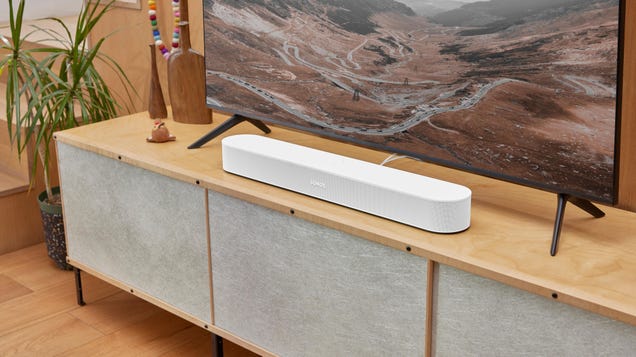
Sonos' second-get Beam soundbar supports Dolby Atmos

Sonos has sold home theater products for a long time, but the company has made the living room even more of a priority in recent years. It started with the Sonos Beam, a smaller and more affordable version of the flagship Playbar soundbar. And 2020’s new flagship, the Sonos Arc, was the company’s first soundbar capable of Dolby Atmos playback.

Today, the Beam is getting a major upgrade. The new, second-generation Beam goes on sale today for $449 and will be available on October 5th. That’s $50 more than before, in line with the other price increases Sonos announced last week. The good news is that the new Beam is more capable than its predecessor in a number of ways. We’ll have to review it before we can really say if it’s worth the extra $50, but there are a number of notable new features here.

The new Beam looks nearly identical to its predecessor, aside from a new perforated polycarbonate grille instead of the cloth front found on the original. It also has the same speaker components inside: a center tweeter, four woofers, and three passive bass radiators. What’s different is that the new processor inside the Beam is 40 percent faster, which opens up a lot of new audio formats.

Sonos Beam (gen 2)
Sonos

Most notably, the gen-two Beam supports Dolby Atmos, for movies, TV and music (the latter in a limited fashion, for now). Scott Fink, a product manager at Sonos who worked on the new Beam, says that the horsepower from the new CPU let the company increase the speaker arrays — not the specific speaker components, but, as Fink explains, “the set of software that coordinates the playback and interaction of all the speakers together in the soundbar.” The new Beam has five arrays, up from the three in the older model, and Fink said that the extras are dedicated to surround sound and height info.

All told, the Beam supports the same home theater audio formats as the Arc (including Dolby Atmos, Dolby Digital Plus, Multichannel PCM and more), which costs twice as much as the Beam. In addition to the increased processing power, the new Beam has HDMI eARC to facilitate these new formats. Sonos says the speaker should have improved dialog clarity thanks to the additional audio processing power, something that should make the currently-available speech enhancement feature work better than before.

The hardware also supports additional music formats, as well. The Beam (as well as the Arc) will soon support the Ultra HD and Dolby Atmos formats from Amazon Music. Some Sonos speakers have worked with a handful of HD music services for a while now, but this is the first time that a 3D music format will work with the company’s products. I asked if there were any plans to support Dolby Atmos on Apple Music, and unsurprisingly the company wasn’t willing to say yet. But, there shouldn’t be any technical reason, it’s just a matter of Sonos and Apple working together to get more Apple Music formats supported.

Sonos Beam (gen 2)
Sonos

As with other Sonos products, the new Beam connects to the company’s other speakers for multi-room playback; you can also use other Sonos speakers as surrounds. You can tune the speaker to your room to improve the sound using Trueplay, assuming you have an iOS device. The Beam also has far-field microphones so it can receive voice commands through either Alexa or the Google Assistant, but that’s not required (there’s a mic mute button right on top of the Beam, too). Like some other recent Sonos speakers, the new Beam has NFC to make setup even easier — playing your phone running the Sonos app near it will automatically connect it to your WiFi network.

Based on what Sonos has said so far, the new Beam is probably not a crucial upgrade for most, unless you’ve been itching to get Dolby Atmos into your setup without spending a ton of money. But given that the Beam is already the best-selling compact soundbar (according to NPD data), these upgrades should help it keep its lead over the competition — even with that $50 price hike.


Source: Engadget – Sonos’ second-get Beam soundbar supports Dolby Atmos

LG's 325-inch Direct View LED TV is an answer to Samsung's The Wall

You won’t have to stick to Samsung’s The Wall if you insist on a gigantic TV for your equally sprawling mansion. LG has introduced a Direct View LED (DVLED) Extreme Home Cinema line aimed squarely at “super-luxury” homes. It relies on the same basic concept of using millions of LED diodes (anywhere from 2 million to 33 million) to form a complete picture in customized shapes, but can scale to sizes that might even make Samsung blush — you can choose anything from a ‘small’ 81 inches to a room-dominating 325-inch setup.

You’ll need to stick to a conventional 16:9 ratio if you want those extremes, but you can also opt for “UltraStretch” 32:9 arrangements if you want to watch multiple video sources at the same time (say, live sports featuring the teams you own). You’ll have to spring for those 33 million diodes if you want an 8K picture, but you can make do with 4K or even 2K (both in single or dual configurations) if you’re not quite so determined to impress your guests. A WebOS controller box provides smart TV functions.

LG is taking orders for these DVLED home sets now, but it won’t shock you to hear that LG isn’t listing prices when each system is a custom order. It’s safe to say the costs won’t be trivial. LG estimates the installation, warranty and support (including twice-a-year “health checks”) are worth $30,000 — the actual set is bound to be much more. If that’s too much, you might have to ‘settle’ for LG’s $100,000 rollable OLED TV instead.


Source: Engadget – LG’s 325-inch Direct View LED TV is an answer to Samsung’s The Wall

Autonomous tugboat will make a trailblazing 1,150 mile voyage

There are a number of autonomous boats under development, but we’ve seen few commercial self-driving ships plying waterways. Now, a company called Sea Machines has announced that it will send an autonomous, remotely commanded tugboat on a 1,000 nautical mile (1,150 mile) “Machine Odyssey” voyage around Denmark. 

The tug (“Nellie Bly”) will have “full onboard vessel control managed by autonomous technology,” but be operated under the authority of officers located in the US. The aim is to show “global companies that operate the fleets of cargo ships, tugs, ferries, and the many other types of commercial workboats that they can integrate autonomous technology into their vessel operations for a host of technology-driven benefits.”

Autonomous tugboat will make a trailblazing 1,150 mile voyage
Sea Machines

The tug will be steered by Sea Machines’ SM300 autonomous system equipped with long-range computer vision. It’s a “sensor-to-propeller” system that employs “path-planning, obstacle avoidance replanning, vectored nautical chart data and dynamic domain perception” to control a voyage from start to finish. At the same time, it shows the remote human commanders information like live augmented overlays of the mission, vessel state, situational awareness, environmental data and “real-time vessel-born audio and video from the many streaming cameras.”

It appears that the Nellie Bly will set sail ahead of Yara’s crewless electric cargo ship that’s supposed to launch by the end of 2021. That vessel will use a 7MWh battery and 900kW propulsion system to steam at 13 knots from Herøya to Brevik, Norway — a distance of around 13km (8 miles). Sea Machines’ tug is built by the Dutch shipyard Damen and appears to be powered by a pair of outboard motors.

When Sea Machines’ tugboat launches, you’ll be able to follow it yourself as the voyage will be streamed 24/7, the company said. It’s set to launch on October 1st from Germany.


Source: Engadget – Autonomous tugboat will make a trailblazing 1,150 mile voyage

Hey Linux Users, Let’s Talk About Fedora 35 and GNOME 41

Fedora is one of the best-known and most popular Linux distributions. This Fedora distro is developed by the community and has the support of Red Hat, which guarantees us excellent support and that we will always be up-to-date in terms of updates and patches.

Although Fedora 35’s default desktop is GNOME 41, we can find flavors with other pre-configured desktops thanks to its Spins. Like any other system, this distro is constantly evolving, adding new functions and features. And, as part of this evolution, today we can know what the new Fedora 35 will be like.

The community has been working for a long time on the new version of this Linux distribution, and it will arrive on our computers very soon. And, although it will not be a revolutionary update, we are going to find several improvements and news that we will see in detail below.

The post Hey Linux Users, Let’s Talk About Fedora 35 and GNOME 41 appeared first on Linux Today.


Source: Linux Today – Hey Linux Users, Let’s Talk About Fedora 35 and GNOME 41

The Sonos Beam 2 Is an Affordable Soundbar for the Dolby Atmos Era

The original Sonos Beam is a good, reasonably priced soundbar. It’s also more than three years old, and in that time, Dolby Atmos has started popping up on soundbars left and right. So it’s not surprising that Sonos announced today that it’s introducing the Beam 2, which is a more affordable Atmos alternative to the

Read more…


Source: Gizmodo – The Sonos Beam 2 Is an Affordable Soundbar for the Dolby Atmos Era

LG's Extreme Home Cinema Brings the Whole Movie Theater to Your House

Movie theaters have been having a rough go of it lately—maybe you’ve noticed? Although theater re-openings across the country have recently resulted in tickets sales bouncing up from their all-time pandemic lows, research has shown that theater attendance is still significantly below what it once was, and shows no…

Read more…


Source: Gizmodo – LG’s Extreme Home Cinema Brings the Whole Movie Theater to Your House

Meat Accounts For Nearly 60% of All Greenhouse Gases From Food Production, Study Finds

An anonymous reader quotes a report from The Guardian: The global production of food is responsible for a third of all planet-heating gases emitted by human activity, with the use of animals for meat causing twice the pollution of producing plant-based foods, a major new study has found. The entire system of food production, such as the use of farming machinery, spraying of fertilizer and transportation of products, causes 17.3 billion metric tons of greenhouse gases a year, according to the research. This enormous release of gases that fuel the climate crisis is more than double the entire emissions of the US and represents 35% of all global emissions, researchers said.

The use of cows, pigs and other animals for food, as well as livestock feed, is responsible for 57% of all food production emissions, the research found, with 29% coming from the cultivation of plant-based foods. The rest comes from other uses of land, such as for cotton or rubber. Beef alone accounts for a quarter of emissions produced by raising and growing food. Grazing animals require a lot of land, which is often cleared through the felling of forests, as well as vast tracts of additional land to grow their feed. The paper calculates that the majority of all the world’s cropland is used to feed livestock, rather than people. Livestock also produce large quantities of methane, a powerful greenhouse gas. […] The difference in emissions between meat and plant production is stark – to produce 1kg of wheat, 2.5kg of greenhouse gases are emitted. A single kilo of beef, meanwhile, creates 70kg of emissions. The researchers said that societies should be aware of this significant discrepancy when addressing the climate crisis.

The researchers built a database that provided a consistent emissions profile of 171 crops and 16 animal products, drawing data from more than 200 countries. They found that South America is the region with the largest share of animal-based food emissions, followed by south and south-east Asia and then China. Food-related emissions have grown rapidly in China and India as increasing wealth and cultural changes have led more younger people in these countries to adopt meat-based diets. The paper’s calculations of the climate impact of meat is higher than previous estimates — the UN’s Food and Agricultural Organization has said about 14% of all emissions come from meat and diary production. The study has been published in Nature Food.

Read more of this story at Slashdot.


Source: Slashdot – Meat Accounts For Nearly 60% of All Greenhouse Gases From Food Production, Study Finds

How to Designate an 'Account Recovery Contact' So You Don't Get Locked Out of Your Apple ID Forever

It’s easy to forget the password to an account like Apple ID. While it’s integral to your entire Apple ecosystem, it’s likely not an account you sign into every day. Unless you use a password manager, the password for your oh-so-important Apple account might tumble out of your head after a while. If that happens, g…

Read more…


Source: LifeHacker – How to Designate an ‘Account Recovery Contact’ So You Don’t Get Locked Out of Your Apple ID Forever

Free computer science courseware and hardware for American educators

Today we’re announcing two brand-new, fantastic, free online courses for educators in the USA. And to kickstart their learning journey, we are giving qualified US-based educators the chance to get a free Raspberry Pi Pico microcontroller hardware kit. This is all thanks to our partners at Infosys Foundation USA, who are committed to expanding access to computer science and maker education in public schools across the United States.

In a classroom, a teacher and a student look at a computer screen while the student types on the keyboard.
Bring computer science to your students with the help of our new free online courses.

You can find both new courses on the Pathfinders Online Institute platform, which supports US classroom educators to bring high-quality computer science and maker education content to their kindergarten through 12th grade students. And best of all, the platform is completely free!

Learn how to teach the essentials of programming

The first course we’ve created for you is called Programming essentials in Scratch. It supports teachers to introduce the essentials of programming to fourth to eighth grade students. The course covers the key concepts of programming, such as variables, selection, and iteration. In addition to learning how to teach programming effectively, teachers will also discover how to inspire their students and help them create music, interactive quizzes, dance animations, and more.

A girl sits by a desktop computer, with her Scratch coding project showing on the screen.
Scratch is a block-based programming language and ideal for teaching key programming concepts.

Discover how to teach physical computing

Our second new course for you is called Design, build, and code a rover with Raspberry Pi Pico. It gives teachers of fourth to eighth grade students everything they need to start teaching physical computing in their classroom. Teachers will develop their students’ knowledge of the subject by using basic circuits, coding a Raspberry Pi Pico microcontroller to work with motors and LEDs, and designing algorithms to navigate a rover through a maze. By the end of the course, teachers will have all the resources they need to inspire students and help them explore practical programming, system design, and prototyping.

On a wooden desktop, electronic components, a Raspberry Pi Pico, and a motor next to a keyboard.
Take our free course to learn how to build and code a rover with your students.

Get one of 1,000 free hardware kits

And thanks to the generous support of Infosys Foundation USA, we’re able to provide qualified educators with a FREE kit of materials to participate in the Design, build, and code a rover with Raspberry Pi Pico course. We’re especially excited about this because the kit includes our first-ever microcontroller, Raspberry Pi Pico. This offer is available to 1,000 US-based K–12 public or charter school teachers on a first-come, first-served basis.

To claim your kit, just create a free account on Pathfinders Online Institute and start the course. On the first page of the course, you’ll receive instructions on how to apply for a free kit.

A soldered Raspberry Pi Pico on a breadboard.
The first 1,000 qualified educators who sign up for Design, build, and code a rover with Raspberry Pi Pico receive all a free hardware kit.

If you’re not a qualified educator, or if you’ve missed out on the opportunity to get the free hardware, we still welcome you to join the course! You can find the materials yourself, or purchase the kit from our partners at PiShop.us.

Thank you to Infosys Foundation USA

All of us at the Raspberry Pi Foundation want to thank the Infosys Foundation USA team for collaborating with us on this new resource and learning opportunity for educators. We appreciate and share their commitment to support computer science and maker education.

The post Free computer science courseware and hardware for American educators appeared first on Raspberry Pi.


Source: Raspberry Pi – Free computer science courseware and hardware for American educators

'Dying Light 2' delayed to February 4th, 2022

Add Dying Light 2: Stay Human to the ranks of games slipping to next year. Techland has delayed the release of its humans-are-the-real-monsters zombie title to February 4th, 2022. The game is effectively “complete,” according to studio chief Pawel Marchewka, but the team needs more time to “polish and optimize” the software.

Marchewka added both the media and influencers would get a “deeper look” at Dying Light 2 in October through hands-on time. There’s also “exciting news” due later in September, the CEO said.

Those peeks might help with your buying decision, and the delay isn’t surprising given the hurdles of remote game development during the COVID-19 pandemic. However, early access for the press and creators is cold comfort if you were hoping to play before 2021 was over. Your dreams of rebuilding society will still have to wait a couple of extra months, and that’s on top of many previous setbacks.


Source: Engadget – ‘Dying Light 2’ delayed to February 4th, 2022

Linus Torvalds admits to 'self-inflicted damage' with '-Werror' as Linux 5.15 rc1 debuts

‘One of the messier merge windows’ means the new stuff might sneak in next week. Linus Torvalds has loosed the first release candidate for version 5.15 of the Linux kernel, with but isn’t sure if it’s a big ‘un or nothing to get excited about.…

Source: LXer – Linus Torvalds admits to ‘self-inflicted damage’ with ‘-Werror’ as Linux 5.15 rc1 debuts

Here's How to Watch Apple's iPhone 13 Event—and What to Expect

Product launch season is here, and that means it’s about time to gear up for Apple’s annual September event. Like 2020, ongoing production issues and supply chain woes probably mean we’re going to see multiple launch events this fall. That said, we’re pretty sure today’s event will center around the iPhone 13.

Read more…


Source: Gizmodo – Here’s How to Watch Apple’s iPhone 13 Event—and What to Expect

Home-Buyer ‘Love Letters’ Are Tacky and Manipulative, Actually

With an overheated real estate market, buyers are increasingly relying on so-called “love letters” to sway sellers on their bid. The problem? These letters are often very personal and include details that can lead to discrimination based on race, religion, or class. That’s why the National Association of Realtors

Read more…


Source: LifeHacker – Home-Buyer ‘Love Letters’ Are Tacky and Manipulative, Actually

Sony's WF-1000XM3 wireless earbuds drop to $150 in flash sale

Sony’s true wireless earbuds are some of the best you can buy, if you’re willing to pay premium prices. The latest WF-1000XM4 come in at $280, so they’re not exactly budget-friendly. If you’re willing to invest in the previous-generation buds, you can grab Sony’s WF-1000XM3 wireless earbuds for only $150 during a Best Buy one-day flash sale. That’s $80 off their original price and just about the lowest we’ve seen. Amazon’s matching the sale price and actually comes in a couple dollars cheaper at $148.

Buy Sony WF-1000XM3 at Best Buy – $150Buy Sony WF-1000XM3 at Amazon – $148

These buds took the top spot in our best wireless earbuds guide when they came out in 2019, and they’ve recently been replaced by the XM4. The XM3 have excellent sound quality with booming bass that isn’t overpowering, bright highs and overall solid performance across a bunch of genres. Their active noise-cancellation is stellar, blocking out most background noises, and they’ll last about six hours with ANC turned on. We also like Sony’s comprehensive companion app that lets you customize the buds’ settings.

Our biggest gripe with the XM3 was is design. The buds themselves are bulkier than most and their charging case is, admittedly, huge. Sony tried to fix this with the XM4, and it succeeded in doing so more with the charging case than with the earbuds. The latest buds remain on the larger side, although they have a more modern design, and the wireless charging case 40 percent smaller than that of the XM3. Sony also improved upon the ANC in the XM4 and increased the battery life to eight hours with ANC turned on. Those changes were enough to push the XM4 to the top spot on our favorites list, but you’ll pay $280 to get all of that new tech.

Best Buy’s flash sale has a few more gems to consider. Lenovo’s original Smart Clock is on sale for $35, or $45 off its normal price. It’s a good option for Google Assistant users who want a small, subtle smart display that works well as an alarm clock. It earned a score of 87 from us for its charming design, sunrise alarm feature and lack of camera, the latter of which will be attractive to the most privacy-conscious among us. The sale also includes the AeroGarden Elite Slim for $100, which is $80 off and one of the best prices we’ve seen it. If you want to try your hand at indoor gardening, AeroGarden’s devices are one of the best ways to do so. It can grow up to six plants at once and won’t take up too much space on a countertop.

Follow @EngadgetDeals on Twitter for the latest tech deals and buying advice.


Source: Engadget – Sony’s WF-1000XM3 wireless earbuds drop to 0 in flash sale

TikTok adds warnings to search results for 'distressing content'

TikTok is adding new warnings to its in-app search that will alert users when results may include “distressing content.” The app has employed “sensitive content” warnings on individual videos since last year, but the updated alerts will appear in search results for terms that could include such content.

In a blog post, TikTok uses the example of “scary makeup” as a search term that may prompt such a warning. The company notes that users will be able to click through the warning to view results anyway, and that individual videos deemed “graphic or distressing” are ineligible from the app’s recommendations.

TikTok is also changing up search results to provide more resources on searches related to suicide and self harm, the company said. In addition to surfacing links to reach helplines like the Crisis text Line, the app will also point users to “content from our creators where they share their personal experiences with mental well-being, information on where to seek support and advice on how to talk to loved ones about these issues.”

TikTok's warnings for distressing content and self harm.
TikTok

The app has at times struggled to deal with content related to self harm. Last year, a video of a suicide, originally streamed to Facebook Live, went viral on TikTok as the company scrambled to take down new copies. But even as users came up with workarounds to skirt TikTok’s detection, other creators posted viral clips urging users not to engage with the content. That suggests that TikTok’s plan to rely on creators to share positive PSAs could be an effective strategy for the company.

In the U.S., the number for the National Suicide Prevention Lifeline is 1-800-273-8255. Crisis Text Line can be reached by texting HOME to 741741 (US), 686868 (Canada), or 85258 (UK). TikTok has published a list of resources for other countries.


Source: Engadget – TikTok adds warnings to search results for ‘distressing content’

How to Use htmlq to Extract Content from HTML Files on Linux, macOS, or FreeBSD

jq is a Linux/Unix or macOS/*BSD CLI utility that efficiently extracts data from JSON documents. Now we have an excellent htmlq utility written in Rust. It’s like jq but for HTML documents. Here’s how to get started.

The post How to Use htmlq to Extract Content from HTML Files on Linux, macOS, or FreeBSD appeared first on Linux Today.


Source: Linux Today – How to Use htmlq to Extract Content from HTML Files on Linux, macOS, or FreeBSD