Theranos promised investors $1B in revenue despite internal projection of just $100M

Read 13 remaining paragraphs | Comments


Source: Ars Technica – Theranos promised investors B in revenue despite internal projection of just 0M
Microsoft accounts can go passwordless, making “password123” a thing of the past

Microsoft accounts can go passwordless, making “password123” a thing of the past

Enlarge (credit: Getty Images)

Microsoft has been working to make passwordless sign-in for Windows and Microsoft accounts a reality for years now, and today those efforts come to fruition: The Verge reports that starting today, users can completely remove their passwords from their Microsoft accounts and opt to rely on Microsoft Authenticator or some other form of verification to sign in on new devices. Microsoft added passwordless login support for work and school accounts back in March, but this is the first time the feature has been offered for regular, old individual Microsoft accounts.

Passwordless accounts improve security by taking passwords out of the equation entirely, making it impossible to get any kind of access to your full account information without access to whatever you use to verify your identity for two-factor authentication. Even if you protect your Microsoft account with two-factor authentication, an attacker who knows your Microsoft account password could still try that password on other sites to see if you’ve reused it anywhere. And some forms of two-factor authentication, particularly SMS-based 2FA, have security problems of their own.

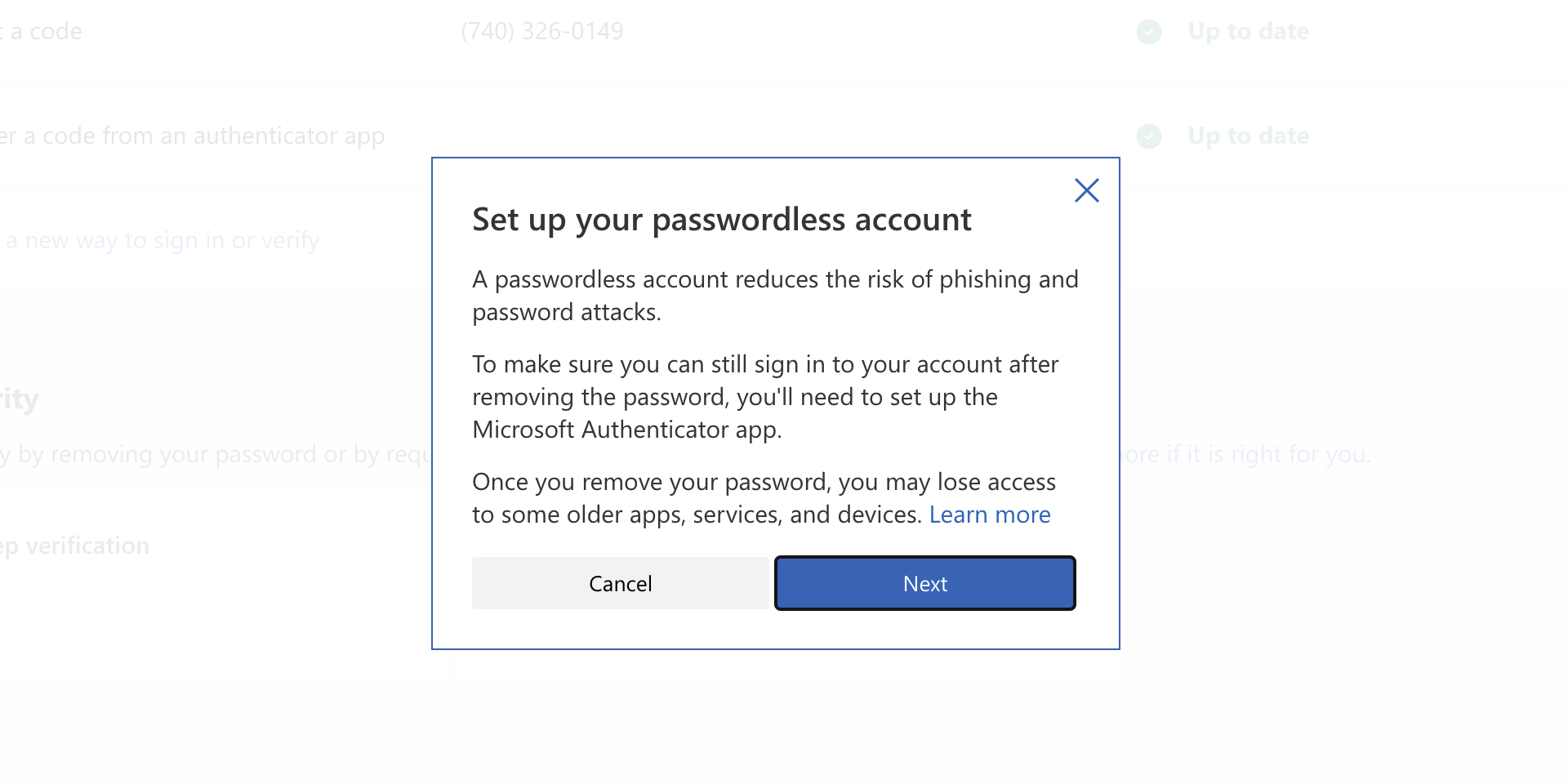
The warning message you'll see when you turn on the passwordless account feature.

The warning message you’ll see when you turn on the passwordless account feature. (credit: Andrew Cunningham)

Microsoft has offered passwordless authentication for Windows 10 and Microsoft accounts for a while now, and if you’re already taking advantage of those features, nothing about how you sign in to your devices has to change. You just need to visit the Microsoft Account site, go to the Security tab, select “Advanced security options,” and turn on the passwordless account feature to remove your password entirely.

Read 1 remaining paragraphs | Comments


Source: Ars Technica – Microsoft accounts can go passwordless, making “password123” a thing of the past

How 13 Reasons Why sparked years of suicide-contagion research

Back in 2017, the first season of the Netflix series <em>13 Reasons Why</em> sparked controversy about suicide contagion. Four years later, a new UCLA study offers guidance for Hollywood on how to best handle such topics going forward.

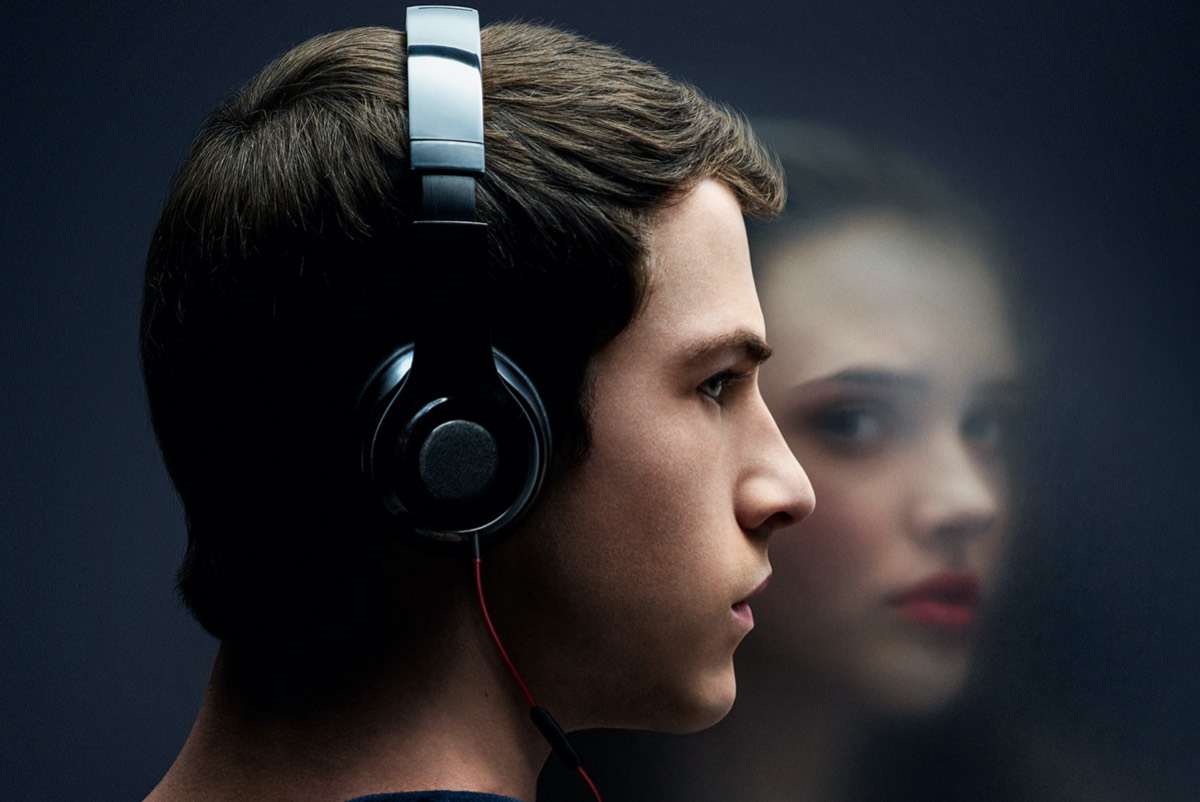
Enlarge / Back in 2017, the first season of the Netflix series 13 Reasons Why sparked controversy about suicide contagion. Four years later, a new UCLA study offers guidance for Hollywood on how to best handle such topics going forward. (credit: Netflix)

When 13 Reasons Why debuted on Netflix on March 31, 2017, it was initially met with mostly rave reviews from critics and viewers alike. Viewers appreciated the show’s frank and sensitive handling of such complex topics as suicide, bullying, rape, and depression. Within weeks, however, mental health professionals began voicing strong objections to the YA-targeted show’s treatment of suicide in particular—these professionals believed the depiction could trigger suicidal thoughts or actions in vulnerable teens.

It’s well known that high-profile suicides can sometimes influence copycats, but the issue is less clear when it comes to fictional stories. Throughout the last four years, multiple, often contradictory studies on that very topic have since appeared. Some of the studies show negative impacts, while others show beneficial effects in young people who watched 13 Reasons Why.

The series aired its fourth and final season last year, but 13 Reasons Why continues to inspire research on the potential impact (positive or negative) of fictional stories on teen mental health. A new study available today from researchers affiliated with UCLA’s Center for Scholars and Storytellers focuses specifically on the show’s third season, and it shows that series like 13 Reasons Why can have a positive impact on teen mental health as long as the issues are depicted accurately and with empathy.

Read 56 remaining paragraphs | Comments


Source: Ars Technica – How 13 Reasons Why sparked years of suicide-contagion research

The era of orbital private spaceflight truly begins with today’s launch

Crew Dragon and its Falcon 9 rocket are ready to go for the Inspiration4 mission.

Enlarge / Crew Dragon and its Falcon 9 rocket are ready to go for the Inspiration4 mission. (credit: SpaceX)

There has been a minor kerfuffle in the space community over the last few weeks about what to call the Inspiration4 mission that is set to launch this evening from Florida on SpaceX’s Falcon 9 rocket.

Entrepreneur Jared Isaacman, who paid for and will lead the three-day mission, preferred that it be deemed the “world’s first all-civilian spaceflight to orbit.” But that’s not actually accurate. According to Harvard University’s Jonathan McDowell, there have previously been 15 all-civilian orbital flights, beginning with the Soyuz TMA-3 mission in 2003. The most recent civilian flight was SpaceX’s Crew-2 mission. The definition of “civilian” is “a person not in the armed services.”

Technically, then, Inspiration4 is the first orbital spaceflight with an “all private” crew—people who are neither in the military nor professional astronauts for a civil space agency. But regardless of semantics, this mission is different.

Read 10 remaining paragraphs | Comments


Source: Ars Technica – The era of orbital private spaceflight truly begins with today’s launch

Nintendo Switch finally supports Bluetooth audio—but beware the lag

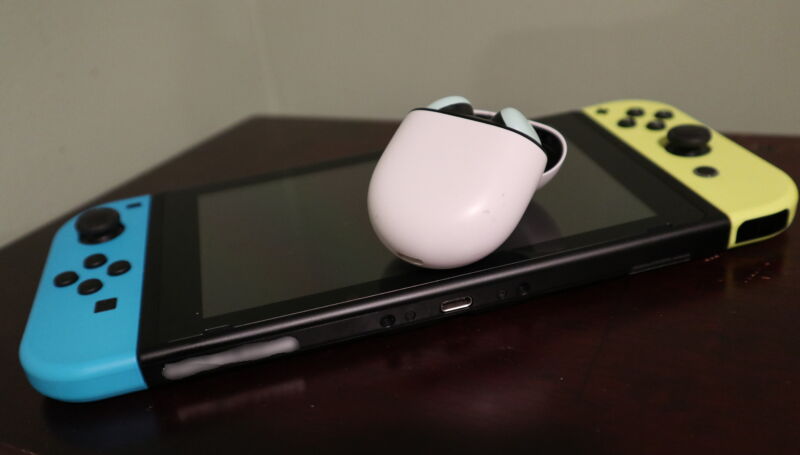
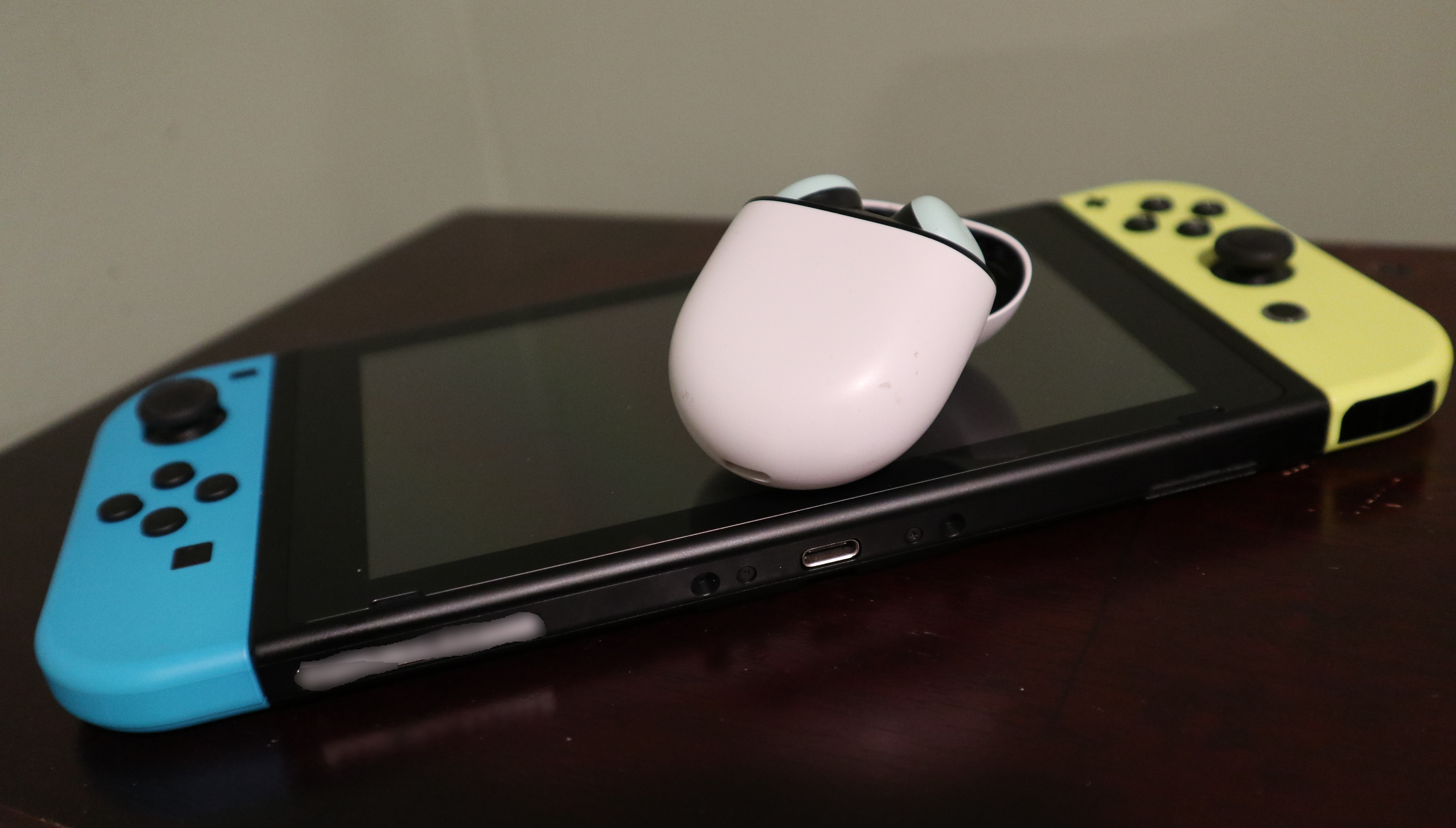
Bluetooth on Switch, presented as an overly literal image translation of the concept.

Enlarge / Bluetooth on Switch, presented as an overly literal image translation of the concept. (credit: Sam Machkovech)

In an out-of-nowhere Tuesday evening update, Nintendo reversed course on one of the portable Switch console’s biggest limitations: Bluetooth audio support. This functionality is now live on the system’s 13.0 firmware, available for download across all Switch regions.

Up until this update, Switch consoles had a portable-audio capability that was the exact opposite of smartphones like the iPhone, in that the Switch only worked with wired headphones via the console’s built-in 3.5mm headphone jack. In handheld mode, that limitation might be more bearable because the system is in your hands, so a corded headset makes a little more sense.

When Nintendo Switch is docked to a TV, on the other hand, headset options become more limited. Without Bluetooth audio support, Switch users would either need to run a 3.5mm extension cord to their entertainment center or use a pair of wireless headphones that came with a Switch-compatible USB dongle, which would have to plug into one of the Switch dock’s open ports. This runs counter to modern Xbox and PlayStation consoles, which offer more options for both 3.5mm jacks in their gamepads and built-in wireless functions in the consoles themselves.

Read 8 remaining paragraphs | Comments


Source: Ars Technica – Nintendo Switch finally supports Bluetooth audio—but beware the lag

New York passes law that will ban all gas-powered car sales by 2035

In 14 years’ time, no fossil fuel-powered vehicles will be sold in New York anymore. The state has passed a new law that bans the sale of gas vehicles starting in 2035, requiring all new cars to be zero emission. New York’s Senate and Assembly passed the bill and Governor Kathy Hochul signed it into law last week. The move will help reduce the state’s greenhouse gas emissions by 35 percent and help it achieve its climate targets, including an 85 reduction in GHG emissions by 2050.

As Ars Technica notes, though, the state has a lot of work ahead of it, considering only around one percent of new vehicles sold in New York at the moment is fully electric. That’s why, under the new law, several state agencies are required to work together to conjure a zero-emissions vehicle market development strategy by the end of next year. They’ll have to find a feasible way to make sure that even off-road vehicles and equipment sold in the state are emissions-free by 2035. The law also requires all medium- and heavy-duty vehicles sold in New York to be emissions-free by 2045.

In addition to having to convince people to buy electric within the next 14 years, New York will also have install an extensive charging network across the state. That includes installing charging stations at apartments, groceries, malls and parking lots. 

California also banned the sales of new gas-powered cars by 2035 last year, and Massachusetts followed suit earlier this year. Meanwhile, Washington lawmakers tried to pass a law that prohibits sales of gas-powered cars by 2030, but it was ultimately vetoed by Governor Jay Inslee.


Source: Engadget – New York passes law that will ban all gas-powered car sales by 2035

Panasonic Sojitz Smart Town

Akihabara News (Tokyo) — A joint venture of Panasonic Homes and Sojitz Corporation called PT PanaHome Deltamas Indonesia (PHDI) has initiated the sale of eighteen smart home units in West Java, Indonesia.

Each housing unit is outfitted with Panasonic’s Home Network System and PureTech air filtration and ventilation system, which is a device that filters out about 90% of any harmful particles that enter the house, according to Panasonic Homes.

The houses are also equipped with security networks and energy-saving functions, with the use of solar and wind power as well as rain water.

The construction method used by Panasonic PowerTech built the houses quickly while still meeting anti-earthquake criteria required for shop and office buildings in Indonesia.

The houses are part of PHDI’s Savasa residential project, an initiative to provide the people of Indonesia with a “smart lifestyle.” This is the beginning of one of four housing clusters in Savasa’s first phase of development, which will eventually consist of 811 houses and 33 shophouses over an area of thirteen hectares.

The smart town is strategically located in the heart of Deltamas city, a convenient distance from main business districts, and only minutes from the Karawang Station of the Jakarta-Bandung High Speed Rail.

Savasa plans to build a total of 2,500 houses by 2030 on a determined area of 37 hectares, slated to accommodate around 10,000 residents.

Panasonic Homes has built a total of approximately 480,000 homes in Japan over the past fifty years.

Recent Smart Home Related Articles

Notable Japan Smart Home Startups

Super Cities in Japan

Toyota Begins Weaving the Woven City

Toyota to Build Prototype City of the Future

The post Panasonic Sojitz Smart Town appeared first on Akihabara News.


Source: Akihabara News – Panasonic Sojitz Smart Town

Simple Mathematical Law Predicts Movement In Cities Around the World

An anonymous reader quotes a report from Scientific American: The people who happen to be in a city center at any given moment may seem like a random collection of individuals. But new research featuring a simple mathematical law shows that urban travel patterns worldwide are, in fact, remarkably predictable regardless of location — an insight that could enhance models of disease spread and help to optimize city planning. Studying anonymized cell-phone data, researchers discovered what is known as an inverse square relation between the number of people in a given urban location and the distance they traveled to get there, as well as how frequently they made the trip. It may seem intuitive that people visit nearby locations frequently and distant ones less so, but the newly discovered relation puts the concept into specific numerical terms. It accurately predicts, for instance, that the number of people coming from two kilometers away five times per week will be the same as the number coming from five kilometers twice a week. The researchers’ new visitation law, and a versatile model of individuals’ movements within cities based on it, was reported in Nature.

The researchers analyzed data from about eight million people between 2006 and 2013 in six urban locations: Boston, Singapore, Lisbon and Porto in Portugal, Dakar in Senegal, and Abidjan in Ivory Coast. Previous analyses have used cell-phone data to study individuals’ travel paths; this study focused instead on locations and examined how many people were visiting, from how far and how frequently. The researchers found that all the unique choices people makeâ”from dropping kids at school to shopping or commuting — obey this inverse square law when considered in aggregate. One explanation for this strong statistical pattern is that traveling requires time and energy, and people have limited resources for it.

Read more of this story at Slashdot.


Source: Slashdot – Simple Mathematical Law Predicts Movement In Cities Around the World

Scientists Can Now Assemble Entire Genomes On Their Personal Computers In Minutes

Researchers have developed a technique for reconstructing whole genomes, including the human genome, on a personal computer. “This technique is about a hundred times faster than current state-of-the-art approaches and uses one-fifth the resources,” reports Phys.Org. From the report: The study, published September 14 in the journal Cell Systems, allows for a more compact representation of genome data inspired by the way in which words, rather than letters, offer condensed building blocks for language models. […] To approach genome assembly more efficiently than current techniques, which involve making pairwise comparisons between all possible pairs of reads, [researchers] turned to language models. Building from the concept of a de Bruijn graph, a simple, efficient data structure used for genome assembly, the researchers developed a minimizer-space de Bruin graph (mdBG), which uses short sequences of nucleotides called minimizers instead of single nucleotides. “Our minimizer-space de Bruijn graphs store only a small fraction of the total nucleotides, while preserving the overall genome structure, enabling them to be orders of magnitude more efficient than classical de Bruijn graphs,” says [one of the researchers].

The researchers applied their method to assemble real HiFi data (which has almost perfect single-molecule read accuracy) for Drosophila melanogaster fruit flies, as well as human genome data provided by Pacific Biosciences (PacBio). When they evaluated the resulting genomes, [researchers] found that their mdBG-based software required about 33 times less time and 8 times less random-access memory (RAM) computing hardware than other genome assemblers. Their software performed genome assembly for the HiFi human data 81 times faster with 18 times less memory usage than the Peregrine assembler and 338 times faster with 19 times less memory usage than the hifiasm assembler. Next, [researchers] used their method to construct an index for a collection of 661,406 bacterial genomes, the largest collection of its kind to date. They found that the novel technique could search the entire collection for antimicrobial resistance genes in 13 minutes — a process that took 7 hours using standard sequence alignment.

Read more of this story at Slashdot.


Source: Slashdot – Scientists Can Now Assemble Entire Genomes On Their Personal Computers In Minutes

Comcast Will Soon Launch Smart TVs Under Its New XClass TV Brand

Comcast is gearing up to launch its own smart TVs: The company has struck a partnership with Chinese TV manufacturer Hisense to sell two smart TV models under the XClass TV brand, Protocol reported Tuesday. From the report: A number of clues left online suggests that a launch is imminent. XClass TVs run a version of Comcast’s X1 operating system, which also powers the company’s set-top boxes as well as its Xfinity Flex streaming box. However, unlike those devices, XClass TVs will be available to anyone, regardless of whether they subscribe to the company’s cable services. The Wall Street Journal reported earlier this summer that Comcast had struck a partnership with Walmart to sell its smart TVs; Protocol was first to report about Comcast’s plans to enter the smart TV platform business a year ago. While under development for some time, Comcast’s smart TV efforts have picked up steam in recent months: The company registered a trademark for “X Class TV” in February. The official XClasstv.com website remains inaccessible, but the company inadvertently left a temporary staging site accessible to the public that reveals many details about the initiative.

“XClass TV is a smart TV that brings all your favorite apps, live channels, and On Demand movies and shows together in one place,” that site explains in a FAQ. ” XClass TV … gives you thousands of free movies, shows, music, and more. And to find what you love faster, XClass TV comes with a voice remote that lets you control your TV and search across apps with just your voice.” Among the tidbits leaked through this staging site: Hisense is making two 4K TV models, with screen sizes of 43 and 50 inches, respectively, for Comcast.

Read more of this story at Slashdot.


Source: Slashdot – Comcast Will Soon Launch Smart TVs Under Its New XClass TV Brand

Nintendo Switch gets Bluetooth audio at last

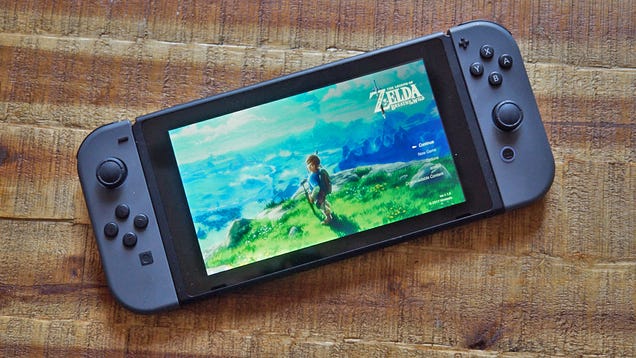
You can finally use wireless headphones and earbuds with the Nintendo Switch. The gaming giant has quietly announced on Twitter that it has rolled out a software update, which gives the Switch the ability to pair with Bluetooth devices for audio output. After updating, you’ll now see a Bluetooth Audio section under Settings, as well as a new status indicator that shows whether a pair of headphones is connected. 

The new feature only works with devices for audio output only, though, and doesn’t support microphone input via Bluetooth. You can only pair your Switch with two controllers at once while using Bluetooth audio, so you’ll have to disconnect your device if you want to get into wild eight-player battles with friends. And while up to 10 Bluetooth devices can be saved on the system, only one can connect to the console at any one time. In addition, you can’t use wireless headphones or earphones when you play local wireless multiplayer games — Switch would automatically cut your connection.

Wireless audio has been conspicuously missing from the Switch since it first launched. Over the years, several third-party manufacturers released accessories that added support for wireless audio devices, while a previous update also added support for USB headphones. This update, however, will finally make it a lot easier to go wireless, considering it will allow you to connect the Bluetooth earphone you use with all your other gadgets.


Source: Engadget – Nintendo Switch gets Bluetooth audio at last

The Nintendo Switch Finally Adds Support for Bluetooth Headphones

For a console designed to be played almost anywhere, the Nintendo Switch has mysteriously lacked support for wireless headphones, despite having Bluetooth connectivity. You’ve either had to connect headphones using a wire, or attach a wireless headphone adapter. But with the 13.0.0 Switch update that just rolled out,…

Read more…


Source: Gizmodo – The Nintendo Switch Finally Adds Support for Bluetooth Headphones

DOJ: Former NSA Operatives Worked as Cyber-Mercenaries, Helping Hack U.S. Systems

Former U.S. intelligence operatives are facing federal charges after allegedly having worked as cyber-mercenaries for the United Arab Emirates. The men, all of whom are ex-employees of the National Security Agency, are accused of helping the UAE government to break into computer systems all over the world, including…

Read more…


Source: Gizmodo – DOJ: Former NSA Operatives Worked as Cyber-Mercenaries, Helping Hack U.S. Systems