Facebook’s TikTok clone is no longer just for Instagram. As of today, the social network is officially bringing Reels to the main Facebook app. With the change, users can create Reels directly from Facebook, and the company will recommend the short-form videos in all users’ News Feeds.
Facebook has been testing out various ways of bringing Reels out of Instagram for awhile, and began testing cross-posting features last month. Now, it’s also testing a feature that allows Reels creators on Instagram to promote their videos in Facebook’s News Feed directly, even if they don’t use the app.
Reels has become increasingly important to facebook and its efforts to challenge TikTok. The company has been steadily adding features to the service, and is attempting to lure creators with the promise of payouts for hitting certain milestones. Now, the company is adding a new “invite-only” bonus program to coincide with Reels’ launch on Facebook and encourage creators to start posting on the social network.
Facebook
But it’s the potential challenge to TikTok that could be most significant for the company. Documents reported by The Wall Street Journal show that Facebook has been struggling to incentivize teens and younger users to post original content. Internally, the company is reportedly worried about ceding influence to TikTok, where teens spend much more time than on Facebook’s apps.
Promoting Reels in the main Facebook app, which is already not especially popular with teens, may not seem like the most direct way to solve that. But getting more eyes on users’ Reels will help the feature grow even if its top users don’t spend much time on Facebook itself.
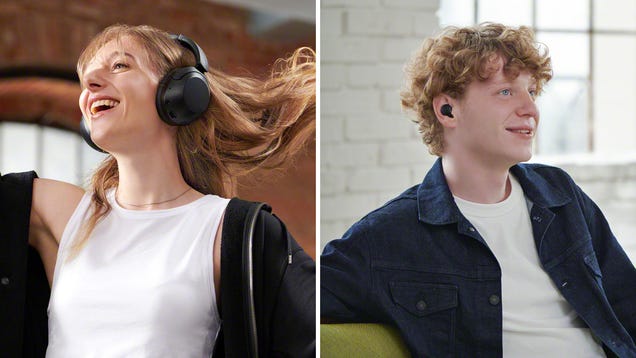
Sony’s flagship noise-cancelling headphones and tech-filled true wireless earbuds were refreshed with new 1000XM4 models in recent months. However, the company’s more affordable options are still due for a refresh, and Sony begins that process today. With the WF-C500, the company offers a solid set of true wireless earbuds capable of handling immersive 360 Reality Audio for $100. And if over-ear noise-cancelling headphones are more your vibe, the WF-XB910N pairs ANC (active noise cancellation) with 30-hour battery life for $250.
The true wireless WF-C500 replaces the WF-XB700 at the bottom of Sony’s price range. What’s more, they’re $30 cheaper than the XB700 was initially at $99.99. This substitution is a good thing because despite handling the basics well, the tiered design wasn’t as ergonomic or comfy as the company suggested. With the WF-C500, Sony takes design cues from its high-end WF-1000XM4 earbuds. The result is smaller size and a more secure fit that should be more comfortable during hours of continuous use. And an IPX4 rating means you can use these during workouts without worrying about moisture damage.
Inside, the C500 is equipped with Sony’s DSEE (Digital Sound Enhancement Engine) that restores some of the detail lost when music is compressed for streaming over Bluetooth. The company also allows you employ sound presets and adjust the EQ with its Headphones app. Plus, you have the option of listening in Sony’s 360 Reality Audio if you’re willing to splurge for the priciest streaming plan on select services (Amazon Music HD, Tidal HiFi, etc.). On-board controls give you the ability to manage music, adjust volume, take calls and activate a voice assistant without reaching for your phone. Lastly, the C500 will give you up to 10 hours of listening time with one additional charge in the included case. A quick-charge feature offers an hour of tunes in 10 minutes.
The WF-C500 is available for pre-order today, but colors vary by retailer. Sony will offer them in black, as will Amazon, Best Buy and Target. Exclusive colors include white (Amazon), green (Best Buy) and orange (Target). The earbuds are set to ship in October.
Sony XB-910N
Sony
For the over-ear noise-cancelling crowd, the WH-XB910N replaces the WH-XB900N in the middle of Sony’s headphone lineup. The price stays the same at $249.99, but the company offers a new design and improved ANC thanks to a Dual Noise Sensor. As the “XB” signifies, this model is equipped with the company’s Extra Bass feature that amps up the low-end tone when activated. DSEE tech makes streaming over Bluetooth a bit more enjoyable by restoring detail lost to compression. The XB910N can also manage Sony’s 360 Reality Audio content and employs Adaptive Sound Control, a staple of the company’s pricier headphones, that can automatically adjust settings based on activity or location.
Sony is also angling at the remote working crowd here. The company explains that Precise Voice Pickup tech uses a combination of microphones and signal processing to amplify your voice on calls. There’s also “a more natural listening experience” in ambient sound mode as Sony says the XB910N can pick up more of what’s going on around you. That’s handy whether you need to stay tuned in to what’s going on either at home or in the office. On-board controls include Sony’s quick attention feature which lets outside noise in when you place your hand over an earcup and there’s a dedicated button to quickly change from ANC to ambient sound.
Sony says the XB910N will last up to 30 hours with the option of 4.5 hours of listening time after a 10-minute quick charge. To further cater to travelers, the company opted for soft, oval-shaped earpads for extra cushion and a design that folds flat for easy storage. If you prefer to save even more on your noise-cancelling headphones, the excellent WH-CH710N will stick around and are currently $98. Although they lack a lot of the handy features from Sony’s other models, the noise-cancelling CH710N are light and comfy, handling the basics very well for that price.
The WF-C500 is available for pre-order today, and once again, the colors vary by retailer. Sony will offer them in black, as will Amazon and Best Buy. Exclusive colors include blue (Amazon) and gray (Best Buy). The headphones are scheduled to ship in October.
Carving a pumpkin means being confronted with a mass of stringy pulp and seeds, which can get easily overwhelming, especially when there are kids involved. But before you throw the entire contents of your pumpkin into the trash, you should know that the seeds can easily be used for a number of recipes.
Another major automaker has revealed plans to move entirely to electric vehicles within the next decade. Rolls-Royce is the latest one to make the pledge, following other luxury brands such as Jaguar, Lincoln and Bentley.
Spectre, Rolls-Royce’s first EV (and one that sounds like it’s rolling off the set of a James Bond film), will arrive in the last quarter of 2023. The BMW brand plans to start testing the vehicle soon, according to Reuters. Rolls-Royce teased the EV in some images, but it literally kept the Spectre’s design under wraps.
Rolls-Royce
Rolls-Royce CEO Torsten Muller-Otvos said that by 2030, the automaker “will no longer be in the business of producing or selling any internal combustion engine products.” Sibling brand Mini has made a similar pledge. Parent company BMW has not set a date for making a full switch to EVs, though it aims to move half of production to electric models by the end of this decade.
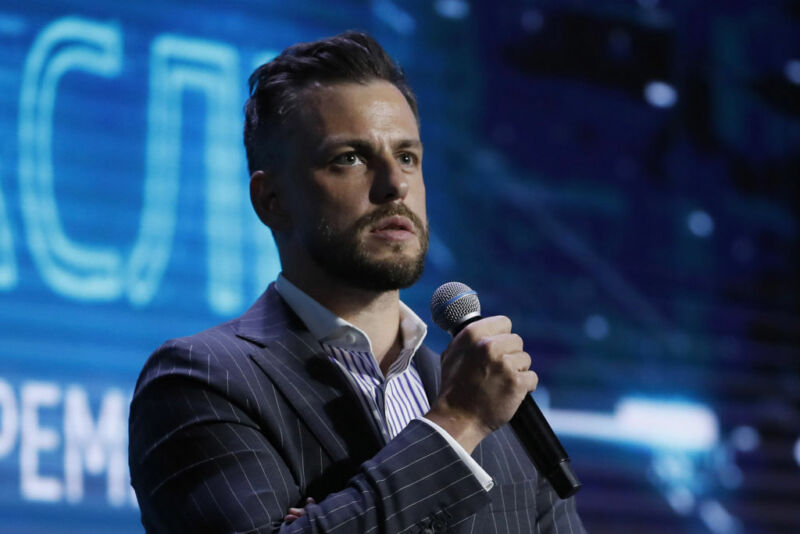
Enlarge/ KAZAN, RUSSIA – JULY 9, 2020: Group-IB CEO and founder Ilya Sachkov speaks during a panel discussion with representatives of the IT industry at Innopolis’ Popov Technopark. (credit: Dmitry Astakhov | Getty Images)
The founder of one of Russia’s largest cybersecurity companies has been arrested on suspicion of state treason and will be held in a notorious prison run by the security services for the next two months, a Moscow court said on Wednesday.
The charges against Ilya Sachkov, founder of Group-IB, are classified and details of them were not immediately clear. State-run news agency Tass cited an anonymous source who said Sachkov denied passing on secret information to foreign intelligence services.
Group-IB, which specializes in preventing cybercrime and ransomware, confirmed that law enforcement raided its officers yesterday but said it did not know the reason for Sachkov’s arrest.
After recently announcing that the launch of Battlefield 2042 would be delayed by four weeks, Dice announced both the dates and minimum specs for the game’s upcoming open beta. Those dates are scheduled to begin with a pre-download on October 5th with the early access running October 6th through 7th. Open access will be given on October 8th
Live sex cam site Chaturbate recently announced that its streaming platform will now support certain pre-approved video games, and is calling on developers to give their permission to add more to that growing list. Honestly, it was only a matter of time.
Does something feel off when scrolling webpages on your shiny new iPad mini? Maybe you’re holding it wrong (not really). Complaints have surfaced that when holding the latest iPad mini in portrait mode, there is an ever-so-slight delay between how fast the left and right sides of the screen get refreshed, in what is known as a jelly scroll
When we got our last look at Disney’s upcoming movie Encanto, we met the Madrigals, the magical house that gave the intergenerational Colombian family their unique superpowers, and Mirabel (Brooklyn 99‘s Stephanie Beatriz), the lone Madrigal member who never received a gift. It looked great, but somewhat…
We’ve seen some rather crazy devices hit Kickstarter over the years, but this latest entry from TinyCircuits perhaps takes the cake. The company this week unveiled Thumby, which looks like a Nintendo Game Boy that was hit by a shrink ray. As its name implies, Thumby is roughly the size of your thumb yet remains a fully functional game console.
Thumby
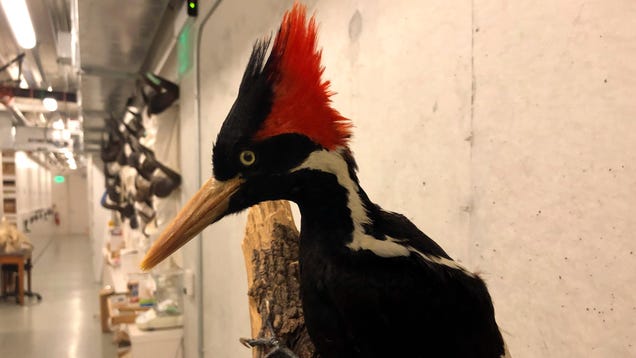
The U.S. Fish and Wildlife Service will propose removing 22 animals and one plant from the endangered species list on Wednesday, declaring them extinct. The casualties—11 birds, eight species of freshwater mussels, two fish, one bat, and a flower—are victims of the climate crisis and habitat degradation. It’s a sign…
When it comes to cool feats in The Legend of Zelda: Breath of the Wild, you probably think you’ve seen it all. You’ve caught the speedrunners and Korok seed completionists. You’ve seen someone, or perhaps many someones, run essentially naked up to Calamity Ganon’s throne and defeat him effortlessly. But hold on there,…
As promised, Jeep has detailed its first Grand Cherokee plug-in hybrid. The company has confirmed the Grand Cherokee 4xe will arrive in North American dealers in early 2022, and will sport more capabilities than you might have expected. The estimated 25 miles of all-electric driving (440 miles total) won’t necessarily cover your entire commute, but Jeep is promising a rough-and-ready PHEV that can climb hills without touching the 2.0L turbo gas engine. You can also drive in a full hybrid mode for peak performance and an “eSave” mode to preserve the 17kWh battery for later.
You can also expect new technology inside, such as 10-inch front and rear passenger displays with built-in Fire TV — your kids can stream Prime Video in the backseat. The driver, meanwhile, gets a 10-inch display with a much faster Uconnect 5 platform that supports over-the-air updates.
The 4xe and its regular counterparts are improved off-roaders with semi-active damping for air suspension as well as a front-axle disconnect when the SUV senses it doesn’t need all-wheel drive. You’ll also get semi-autonomous help through an optional Active Driving Assist system that takes over so long as your hands are on the wheel and your eyes are on the road. Jeep is promising a 6,000lbs maximum towing capacity.
Jeep hasn’t divulged pricing for the Grand Cherokee 4xe, although it will be available in increasingly loaded Limited, Trailhawk, Overland, Summit and Summit Reserve editions. It’s already safe to say this is an important vehicle for the brand, though. Parent company Stellantis is racing to catch up with rivals in electrifying its vehicles, with plans for a fully electric version of every SUV by 2025. The plug-in hybrid is a critical first step in that direction.
If you were born after wifi, the dial-up modem noise is what electronics used to sound like: dated, from the era of the fax machine and the non-customizable ringtone. To me, it’s more than that. The sound symbolizes the limits of what whole generations had agreed was basically tolerable to get online.
The Federal Trade Commission is considering strengthening online privacy protections, including for children, in an effort to bypass legislative logjams in Congress. WSJ: The rules under consideration could impose significant new obligations on businesses across the economy related to how they handle consumer data, people familiar with the matter said. The early talks are the latest indication of the five-member commission’s more aggressive posture under its new chairwoman, Lina Khan, a Democrat who has been a vocal critic of big business, particularly large technology companies. Congressional efforts to assist the FTC in tackling perceived online privacy problems will also be the focus of a Senate Commerce Committee hearing Wednesday. If the agency chooses to move forward with an initiative, any broad new rule would likely take years to implement.
In writing new privacy rules, the FTC could follow several paths, the people said: It could look to declare certain business practices unfair or deceptive, using its authority to police such conduct. It could also tap a less-used legal authority that empowers the agency to go after what it considers unfair methods of competition, perhaps by viewing certain businesses’ data-collection practices as exclusionary. The agency could also address privacy protections for children by updating its rules under the 1998 Children’s Online Privacy Protection Act. And it could use its enforcement powers to target individual companies, as some privacy advocates urge.
You can be excused for confusing “every day” with “everyday” or “anyone” with “any one.” They sound the same, after all. But these homonyms can’t be used interchangeably in writing without raising the ire of English teachers and other grammar ghouls. Luckily, it’s fairly easy to understand the difference between these…
YouTube has banned all videos containing misinformation about vaccines that are currently administered and have been approved by local health authorities or the World Health Organization. The measure is an expansion of a policy covering COVID-19 vaccines.
The service says that users shouldn’t, for instance, post videos in which they claim that vaccines lead to chronic side effects (other than rare side effects that health authorities have acknowledged); content that alleges vaccines don’t reduce transmission or contraction of diseases; or videos that have inaccuracies about vaccine ingredients.
There are some exceptions. YouTube “will continue to allow content about vaccine policies, new vaccine trials and historical vaccine successes or failures.” Users can also share scientific discussions of vaccines and personal testimonials about their experiences, as long as they don’t have a history of promoting vaccine misinformation and their video complies with YouTube’s other rules. Posting videos that “condemn, dispute or satirize misinformation” that violates YouTube’s policies should be okay too.
YouTube told the Washington Post that it’s taking down channels linked to prominent anti-vaccine advocates, including Joseph Mercola and Robert F. Kennedy Jr. The reason it didn’t move to ban all anti-vaccine content sooner is because it was focusing on COVID-19 vaccine misinformation.
“Developing robust policies takes time,” YouTube’s vice president of global trust and safety Matt Halprin told the publication. “We wanted to launch a policy that is comprehensive, enforceable with consistency and adequately addresses the challenge.”
YouTube, as well as Facebook and Twitter, banned COVID-19 misinformation in the early days of the pandemic in the spring of 2020. YouTube has removed more than 130,000 videos that broke its rules about COVID-19 vaccines, which it announced last October, and more than a million videos in total that included coronavirus misinformation.