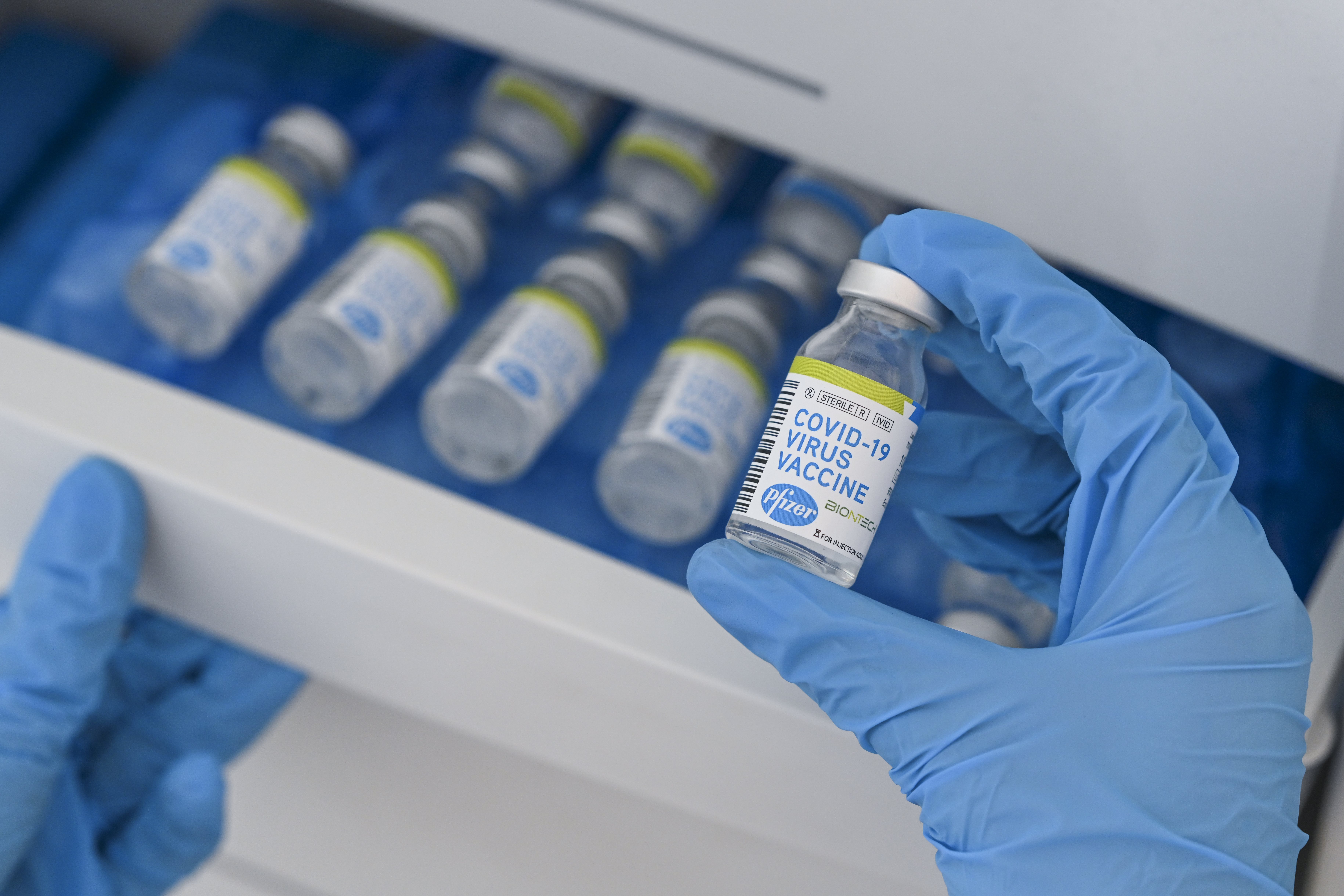
Enlarge/ Vials with COVID-19 Vaccine labels showing logos of pharmaceutical company Pfizer and German biotechnology company BioNTech. (credit: Getty | Photonews)
The Food and Drug Administration is aiming to issue full regulatory approval of Pfizer/BioNTech’s COVID-19 vaccine as early as Monday, according to a report by the New York Times.
The regulatory agency had previously set an unofficial internal goal for issuing the approval by early September. Officials who spoke with the Times said that FDA officials were working to finish the approval Friday, but they were still going through paperwork and negotiations with the companies. The timeline could still slip past Monday if the process takes longer than expected, but the agency is on track to grant approval as early as next week, Politico reported.
Currently the Pfizer/BioNTech two-dose mRNA vaccine is being offered in the US based on an Emergency Use Authorization. So far, 200 million doses have been administered in the US alone. Though the vaccine has proven highly effective and safe, the full approval may convince some vaccine holdouts that the shot is, indeed, safe and effective. Previous polling by the Kaiser Family Foundation found that 31 percent of unvaccinated people would be more likely to get their shots if a vaccine earned full approval.
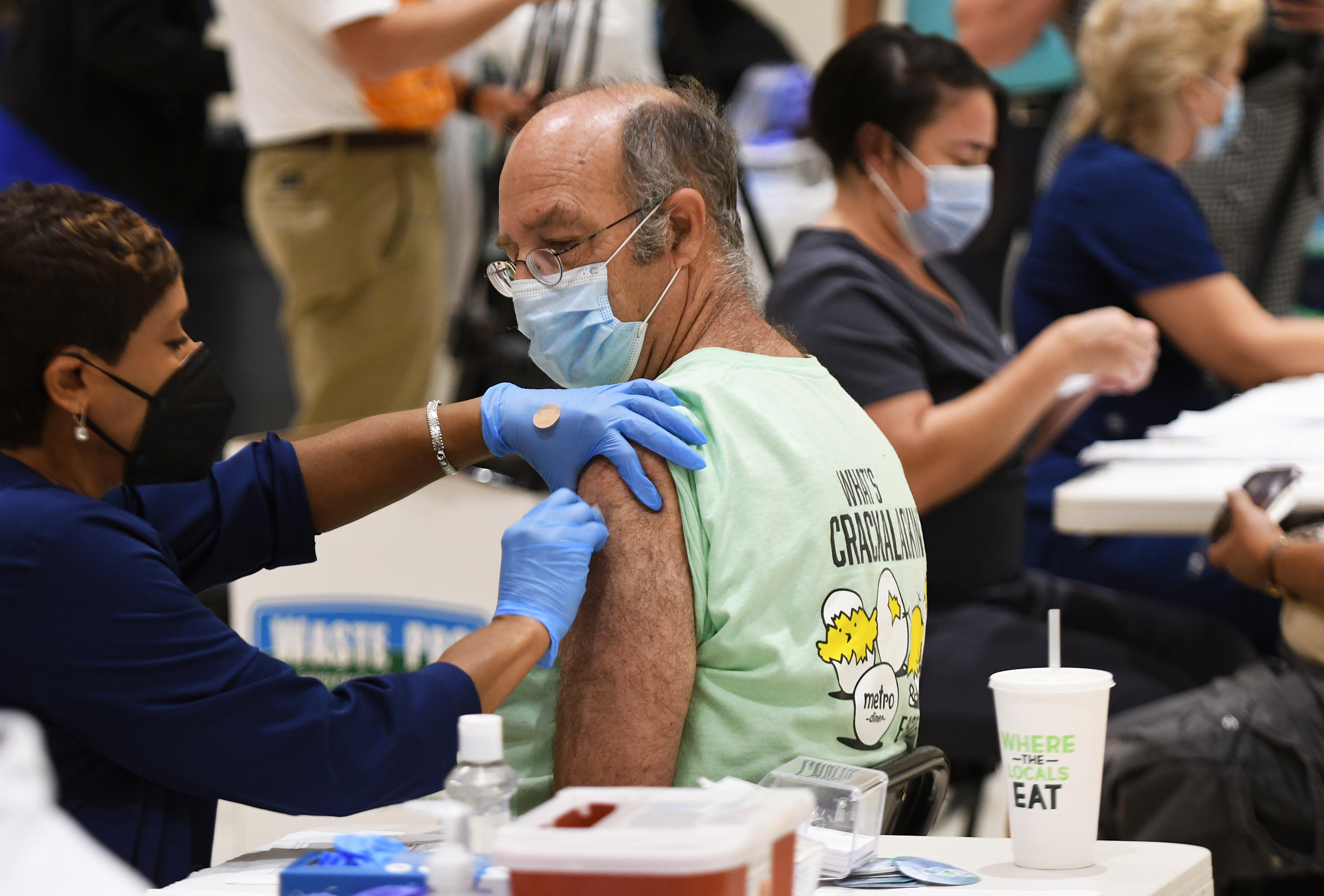
Enlarge/ A nurse administers a COVID-19 shot at a vaccination site in Florida on August 18, 2021. (credit: Getty | Sopa images)
The US reached a milestone of having 200 million people vaccinated with at least one dose of a COVID-19 vaccine on Friday. And for two days in a row now, over one million people rolled up their sleeves for a shot. Those are daily highs not seen in nearly seven weeks.
Of those one million vaccinations each day, approximately 562,000 and 534,000 shots went to people receiving their first dose, according to White House COVID-19 Data Director, Cyrus Shahpar. Earlier this week, the seven-day average of new first doses nationwide has been hovering around 400,000, according to the Centers for Disease Control and Prevention.
The boost in vaccinations comes amid a devastating wave of COVID-19 cases, hospitalizations, and deaths driven by the hypertransmissible delta variant, which now accounts for nearly all cases in the US. The surge stands to rival the country’s worst wave of the pandemic, which peaked in January 2021 with average daily new cases around 200,000. The country is now averaging over 130,000 cases a day, and that figure is still climbing.
Enlarge/Jeopardy! EP Mike Richards was chosen to replace longtime host Alex Trebek just last week. He resigned in the wake of controversy surrounding comments made during a podcast he co-hosted in 2013-2014. (credit: Sony Pictures Television)
Drama and controversy continue to swirl over the selection of a replacement host for Jeopardy! in the wake of Alex Trebek’s passing from pancreatic cancer complications late last year. Jeopardy! executive producer Mike Richards was named the new host just last week, a decision that sparked an immediate backlash among fans and former contestants of the show. And now, Richards will be stepping down on his very first day of official hosting duties, Deadline Hollywood reports. Richards will continue in his role as executive producer on the game show.
As we previously reported, Trebek’s last episodes aired in January 2021. Throughout the rest of its 37th season, the show used a long list of guest hosts to fill in for Trebek at the podium, including Richards and Mayim Bialik, best known for her roles on The Big Bang Theory and Blossom. (She also has a Ph.D. in neuroscience from UCLA.) The rotation included former Jeopardy! champion Ken Jennings, newscasters Katie Couric and Anderson Cooper, and book enthusiast LeVar Burton. Both Burton and Jennings proved to be fan favorites, and Jennings’ run posted the highest ratings of the season. (Burton’s ratings were lower, perhaps due in part to his episodes competing with the Summer Olympics on NBC.)
Even before his selection, allegations began circulating that Richards had discriminated against several pregnant employees while serving as executive producer of The Price Is Right. (Both suits were eventually settled.) “These were allegations made in employment disputes against the show,” Richards wrote in a memo to Jeopardy! staff. “I want you all to know that the way in which my comments and actions have been characterized in these complaints does not reflect the reality of who I am or how we worked together on The Price is Right.”
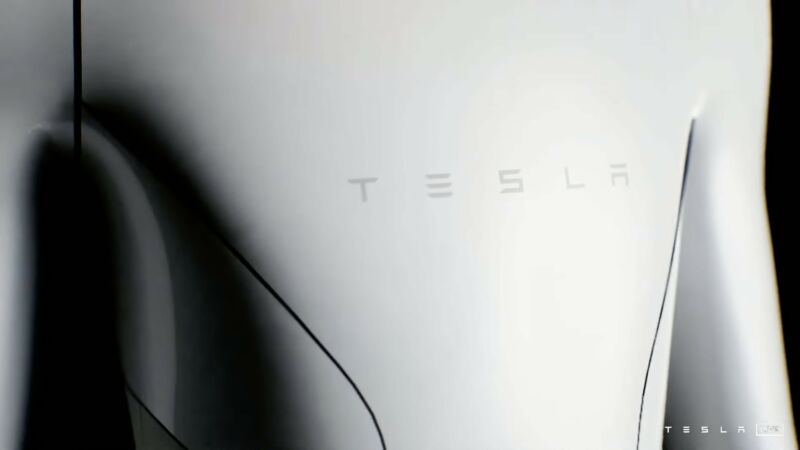
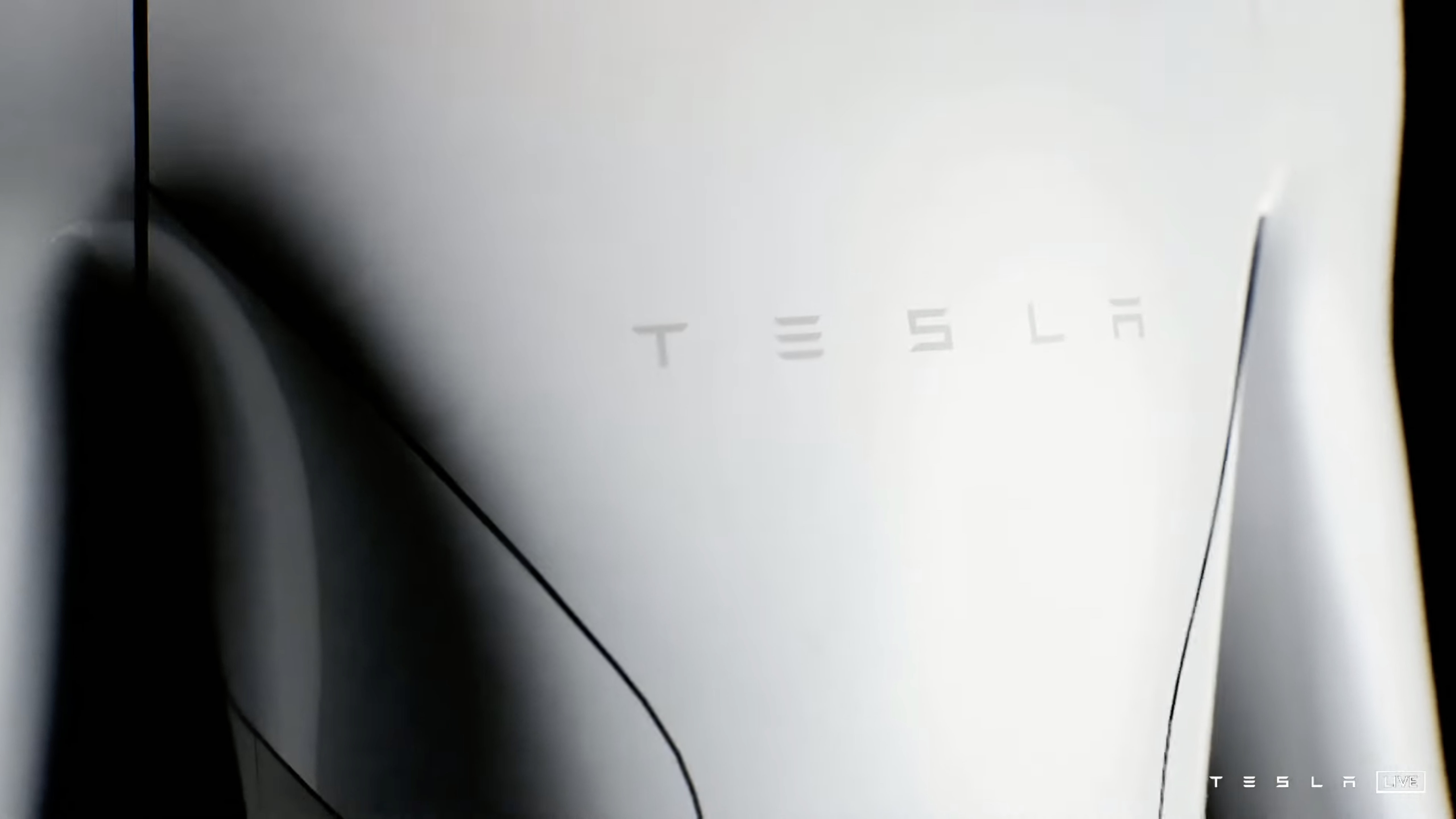
Enlarge/ Not sure how those joints will work… (credit: Tesla)
Not content to be an automaker or even an energy company, Tesla now wants people to think of it as a robotics company.
At Tesla’s “AI Day” presentation yesterday, CEO Elon Musk made the surprise announcement that the company is working on a humanoid robot. The endeavor, he argued, makes sense given the company’s experience working toward self-driving vehicles.
“Tesla is arguably the world’s biggest robotics company because our cars are semi-sentient robots on wheels,” Musk said. “We think we’ll probably have a prototype sometime next year.”
OpenSSH 8.7 has been released. Changes include
steps toward deprecating scp and
using the SFTP protocol for file transfers instead, changes to
remote-to-remote copies (they go through the local host by default now), a
stricter configuration-file parser, and more.
“Android Auto for phone screens” had an Android Auto-like UI, but it ran directly on the phone screen. [credit:
Google ]
Google is killing Android Auto. No, not that Android Auto.
Google is shutting down “Android Auto for phone screens,” which was an Android Auto offshoot for people who didn’t have cars compatible with the service. 9to5Google confirmed the cancellation with Google, and XDA Developers spotted a shutdown message in the app pushing users to a newer Google car computing solution for phone screens: “Google Assistant driving mode.” As usual, we have many similarly named Google projects to keep track of, so don’t get confused!
The thing most people think about when they hear “Android Auto” is the projected car interface (a competitor to Apple’s CarPlay), which loads a custom Google UI onto a vehicle’s infotainment screen. You just need an Android phone and a compatible car; plug the two together, and the interface starts up. (I like to think of this system as being similar to a desktop PC. The phone is the PC tower and does software and computing, and the car is the monitor.) Android Auto is not going anywhere.
Enlarge/ Henri satellite appearance as of 10:30 am ET (14:30 UTC) on Friday. (credit: NOAA)
After several days of uncertainty and wild swings in forecast models, confidence is increasing in a large tropical system making landfall in the northeastern United States this weekend. In addition to causing surges along the coastline, Henri could bring gusty winds and widespread heavy rainfall from late Saturday through Monday to a region from New Jersey to Maine.
The latest forecast from the National Hurricane Center, issued at 11 am ET on Friday, shows Henri holding at sustained winds of 65 mph, just below hurricane strength. However, the wind shear hampering Henri’s organization should relax some later today, and as the storm passes over the Gulf Stream, forecasters anticipate Henri will become a Category 1 or 2 hurricane. It may weaken some before landfall, however, as it passes over the cooler waters off the coast of New England.
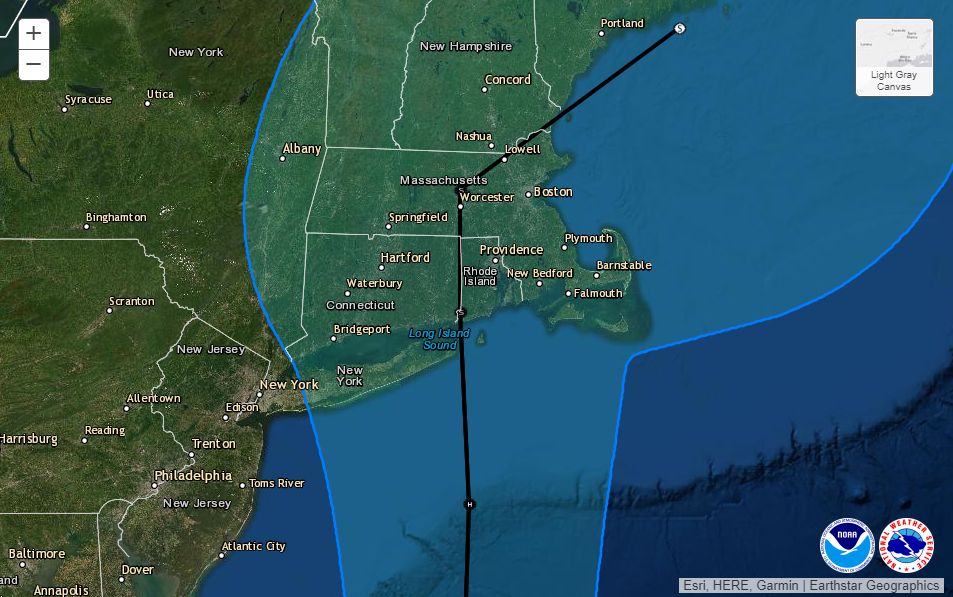
Official track forecast for TS Henri at 11 am ET Friday. (credit: National Hurricane Center)
Over the next 48 hours, the storm should now move more or less due north and will likely make landfall somewhere along Long Island, Connecticut, or Rhode Island on Sunday.
Unix-like systems — and their users — tend to expect all filesystems to
behave in the same way. But those users are also often interested in fancy
new filesystems offering features that were never envisioned by the
developers of the Unix filesystem model; that has led to a number of
interesting incompatibilities over time. Btrfs is certainly one of those
filesystems; it provides a long list of features that are found in few
other systems, and some of those features interact poorly with the
traditional view of how filesystems work. Recently, Neil Brown has been
trying to resolve a specific source of confusion relating to how Btrfs
handles inode numbers.
Second, these new and increasingly specialized requirements
primarily benefit a specific class of open source users—large
enterprises. That isn’t necessarily a bad thing—big enterprises are
essential in many ways, and indeed, the risks to them deserve to be
taken seriously.
But in a world where hundreds of billions of dollars in enterprise
value have been created by open source, and where small
educational/hobby projects (and even many small companies) don’t
really benefit from these new unfunded mandates, developers will
likely focus on other things, since few of them got into open
source primarily to benefit the Fortune 500.
On Thursday, the World Car Awards launched its 2022 program and published the list of eligible vehicles for the upcoming contest. When the winners are announced at next year’s New York International Auto Show, there will be a new category just for battery-electric vehicles.
“There has never been a better time to highlight and celebrate the world’s best electric vehicles. We are thrilled to once again be part of this year’s World Car Awards. With the importance of EVs and growing consumer interest, the need for trusted sources for consumers to turn to is paramount, and like the New York Auto Show, the industry’s top journalists that make up the World Car Awards are a trusted resource for buyers as they research their next new vehicle,” said Auto Show President Mark Schienberg.
BEVs will be eligible to win the overall 2022 World Car of the Year award; the rules just require that a car be produced in volumes of at least 10,000 a year. The vehicle must also “be priced below the luxury-car level in their primary markets” and must be available in two major markets (China, Europe, India, Japan, Korea, Latin America, and the USA) in at least two continents, between January 1, 2021, and March 30, 2022.
In our coverage of the semiconductor space, we typically think of two main vectors of hardware – the CPU and the GPU. Beyond that, we look at FPGAs, microcontrollers, and this decade is bringing the advent of the dedicated AI processor. What ties all of these products together is actually the FPGA – a field programmable gate array that allows a skilled technician to essentially build a custom circuit out of configurable gates. This means an FPGA can be used to design and simulate a full CPU or GPU, but also an FPGA offers a reconfigurable way to offer optimized compute power that adapts to the needs of its users without the cost of millions or tens of millions to design dedicated silicon. One of the first FPGA companies on the market was Lattice Semiconductor, which now focuses on small power efficient FPGA designs that end up in everything from consumer devices to servers.
Over the last three years at Lattice, Jim has initiated a cultural shift that is playing out in the company roadmaps – new products, a more agile approach, and a need to focus on enabling machine learning at every part of its product stack. The recent financial disclosures at Lattice show an increasing demand for its hardware, as well as the company making strides to double its addressable market over the next five years. I thought this would be a good time to reconnect with Jim to find out exactly what he’s doing at Lattice to earmark the next generation of growth at this foundational FPGA company.
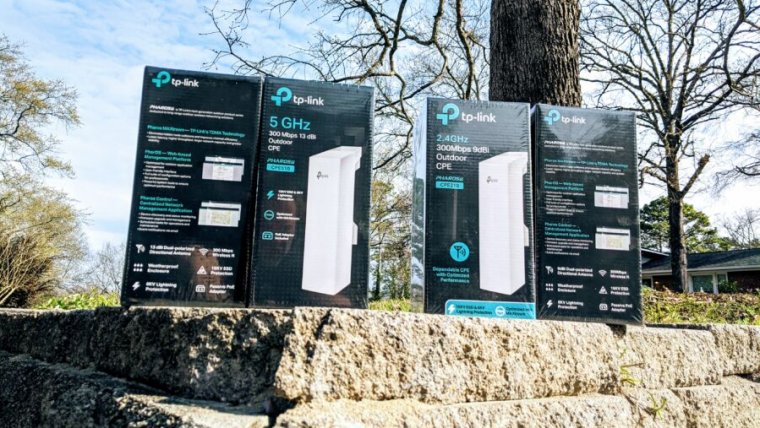
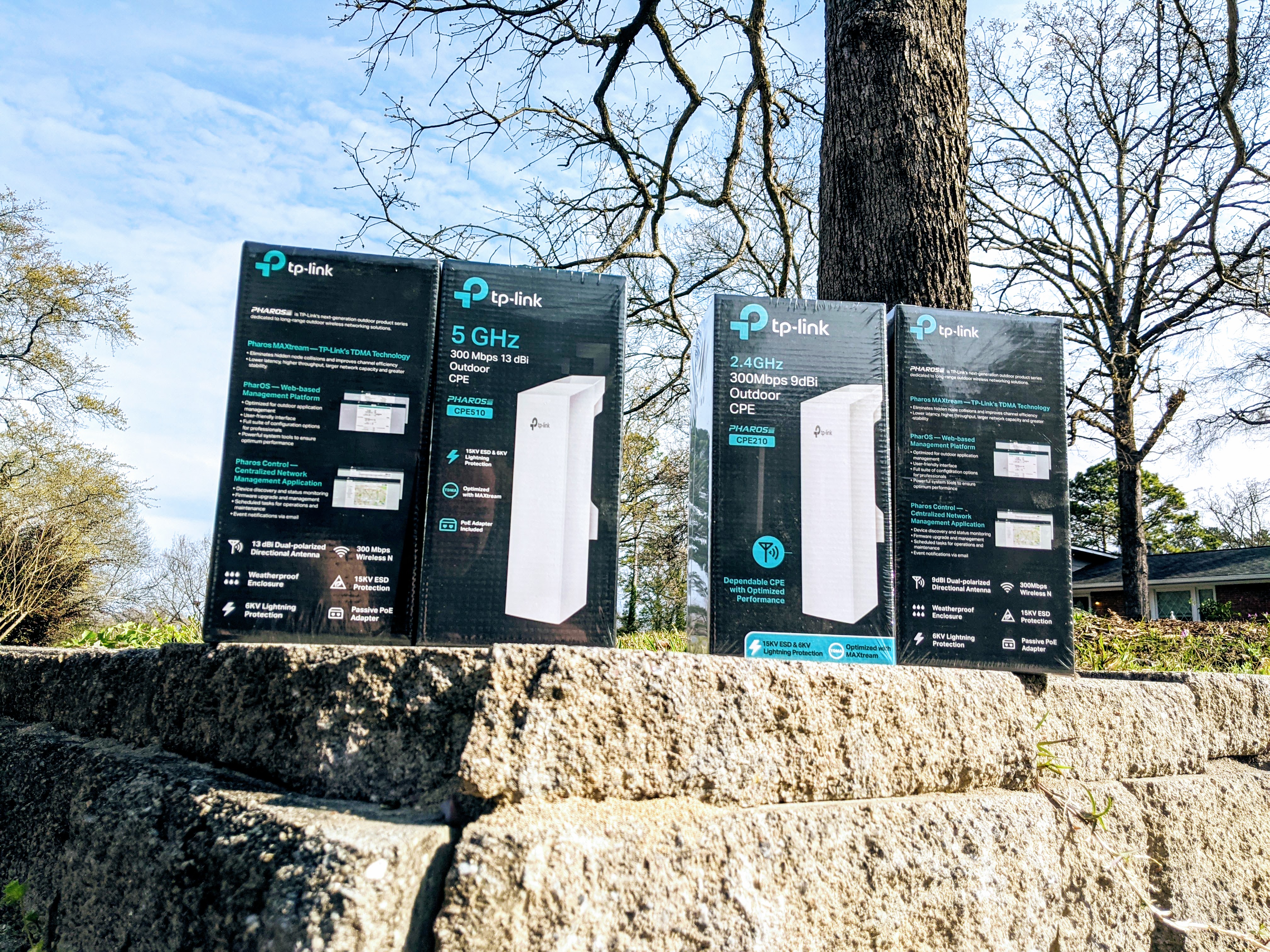
Enlarge/ We tested these TP-Link outdoor Wi-Fi bridges—both 2.4GHz and 5GHz versions—across 80 meters of partially-wooded terrain, with great success. (credit: Jim Salter)
Extending your Wi-Fi properly from one building to another is, unfortunately, a bit of a secret art—but it doesn’t need to be either difficult or expensive. The secret lies mostly in knowing the right tools for the job. This is a job that shouldn’t involve range extenders or rely on standard Wi-Fi mesh pieces. The good news is, with the right gear, you can connect your home to an outbuilding without either professional expertise or a ditch witch and a spool of burial-grade cable.
Although the Salter household (current generation) is planted firmly in suburbia, my parents stayed rural when they moved closer to their grandkids. Their place is beautiful, but it’s the kind of home where a riding lawn mower is optional—a tractor with bush hog is a necessity. Said tractor lives in a barn about 80 meters from the house, much of which is a moderately wooded grove. And that made it an excellent test candidate for a little DIY networking experiment.
Our goal in this exercise is not to geek out as hard as possible by mounting and aiming everything with millimeter precision. Instead, we’re simply out to demonstrate that wirelessly connecting two buildings quickly, cheaply, and easily is possible for anyone. In fact, you can even enjoy more-than-acceptable results in the end.
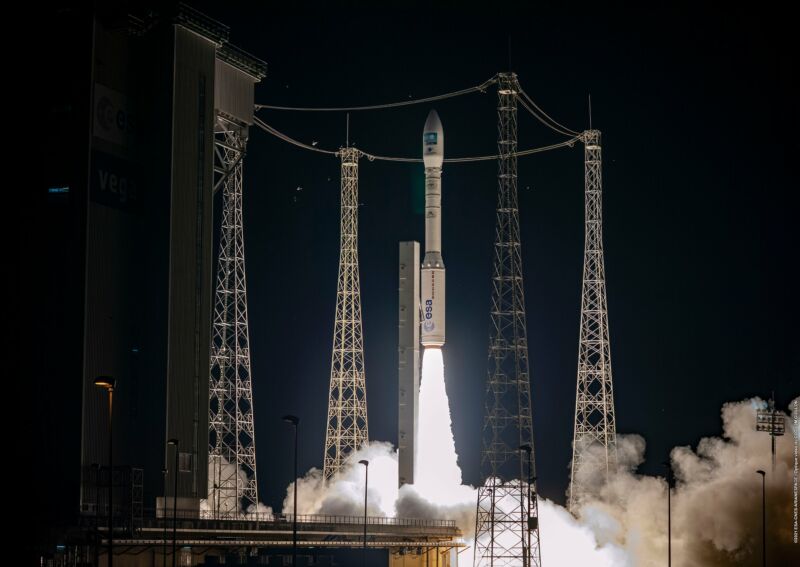
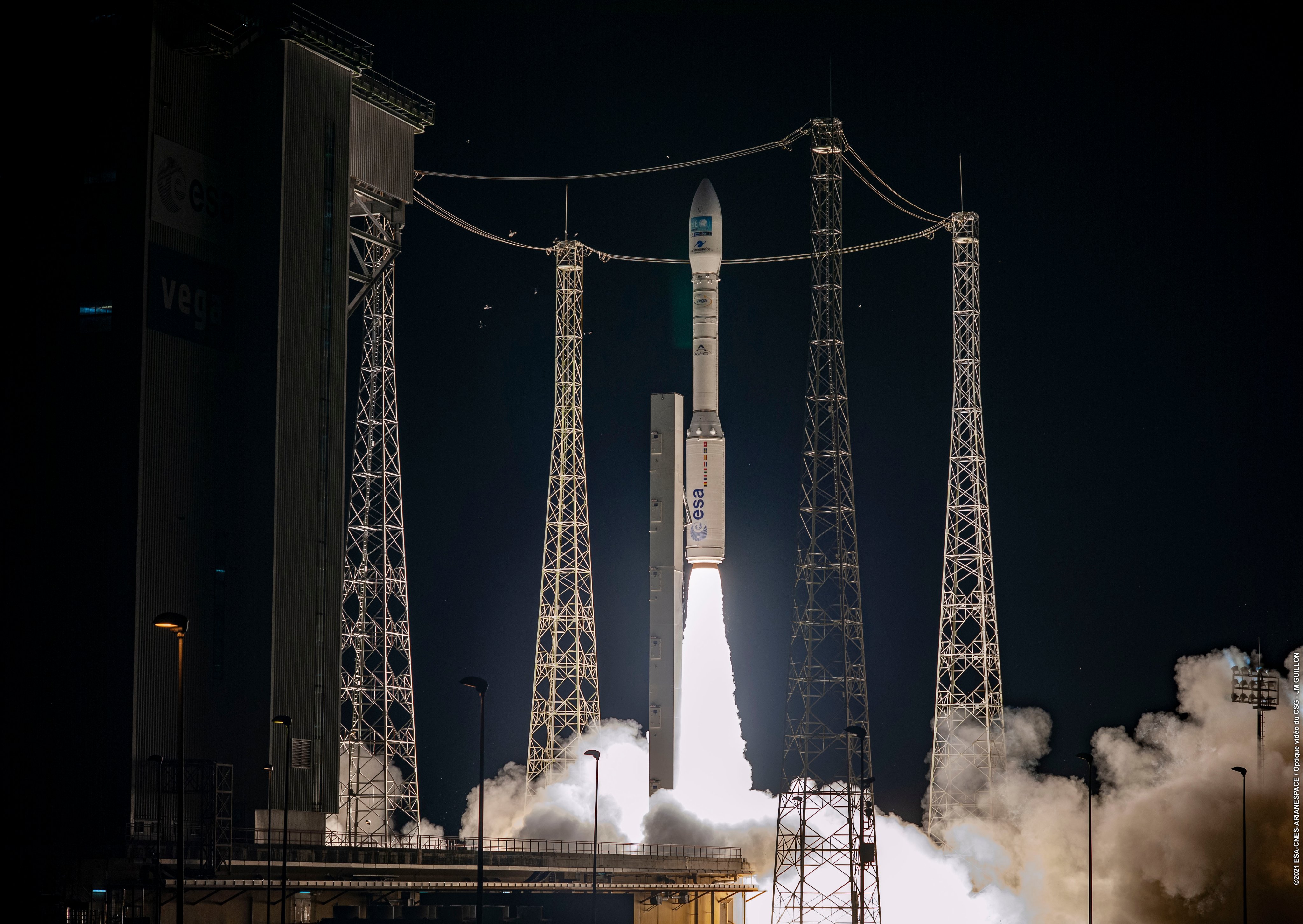
Enlarge/ Arianespace launched a second satellite for the Pléiades Neo imaging constellation Monday on a Vega rocket. (credit: Arianespace)
Welcome to Edition 4.12 of the Rocket Report! This issue comes complete with some late-breaking news: Firefly has completed a static fire test of its Alpha rocket. This is a big moment and sets up the company’s very first launch attempt next month.
As always, we welcome reader submissions, and if you don’t want to miss an issue, please subscribe using the box below (the form will not appear on AMP-enabled versions of the site). Each report will include information on small-, medium-, and heavy-lift rockets as well as a quick look ahead at the next three launches on the calendar.
Firefly completes static fire test. The Texas-based rocket company announced Thursday that it successfully completed a static fire test of its Alpha rocket the day before. This critical test paves the way for a launch attempt as early as September 2 from Vandenberg Space Force Base in California.
Enlarge/ Intel disclosed a few more details about the Xe-HPG architecture underpinning its upcoming Arc GPUs. (credit: Intel)
Earlier this week, Intel announced Arc, the branding for the new gaming GPUs that will face off with Nvidia’s GeForce and AMD’s Radeon cards when they launch early in 2022. Today, Intel provided a few additional details on Arc, its underlying Xe-HPG architecture, its graphics drivers, and the “XeSS” upscaling technology that will work with both Intel’s GPUs as well as GPUs from Nvidia and AMD.
Intel is replacing the “EU” as its base GPU hardware measurement with the “Xe-core,” a mix of 16 vector engines, 16 matrix engines, some cache, and a few other elements. [credit: Intel
]
Since at least 2006, Intel has talked about its GPU hardware in terms of “execution units,” or EUs. The company is doing away with that terminology for Xe-HPG, replacing it instead with the concept of the “Xe-core.” Each Xe-core is composed of 16 vector engines and 16 matrix (or XMX) engines, as well as L1 cache and some other hardware. Four Xe-cores combine with ray-tracing units and other fixed-function hardware to form a “render slice,” which is the bare minimum any Xe-HPG GPU will need to function (along with L2 cache and a memory interface).
Federal Trade Commission refiled its antitrust claim in federal court alleging that Facebook is breaking antitrust laws.
FTC refiled the claim in June, saying that the agency didn’t properly identify how Facebook held an illegal monopoly over the personal social networking space.
The FTC was tasked with rewriting the complaint under the agency’s new chair, Lina Khan, a fierce critic of the tech industry.
In July, Facebook requested that Khan be blocked from handling the FTC’s antitrust investigations into the company based on her public criticism of its market power.
In a tandem case brought against Facebook in the same court by 48 attorneys general, the states said they were barred from bringing their lawsuit because they waited too long to file their claims.
In turn, the lawsuits said, the company should be required to divest either company, or both. The states filed a notice indicating their intent to appeal the appeal to the U.S. Court of Appeals for the District of D.C. Judge Boasberg also ruled in Facebook’s decision to dismiss the states’ s suit.
The two cases are among a handful of closely watched antitrust litigations that also include Google and Apple among other Big Tech firms that also have brought against Big Tech companies.
Gizmodo
FTC Refiles Historic Antitrust Lawsuit as Facebook Tries to Bury the News With Shiny Things
The FTC has refiled its antitrust lawsuit against Facebook, arguing that no other social media company “remotely approaches Facebook’s scale.”
Landfill waste management is the process of disposing of all the solid waste across the country. The Solid waste management is one of the biggest challenges facing the states and the federal government.
The solid waste management is the timely, reliable and affordable collection, transportation and disposal of all the municipal solid waste which does not include hazardous waste or recyclable or reusable material. The main aim of the landfill waste management is to manage and dispose all the garbage in a proper way.
Landfills are the waste management method that is applied by the United States of America but there are some countries that have another method of waste management. Landfilling is one of the most widely used method of solid waste management but it is not the most environmentally friendly one.
The U.S. has a large number of landfills that are also known as sanitary landfills. The major function of sanitary landfills is to dispose solid waste and this waste is mostly non-hazardous. These landfills can also be rented to other parties to dump their solid waste in return for a fee. They are also important to protect surface water and groundwater.
What Are The Types Of Landfill Waste Management?
There are two types of landfills: sanitary and Class I. Sanitary landfills are further divided into 2 categories: municipal and non-municipal. The municipal sanitary landfills are in operation in most cities and are for non-hazardous waste, while the non-municipal landfills are mostly for hazardous waste.
Landfill waste management refers to a process of handling the solid wastes that are unuseable. In the United States, solid waste management is regulated by the Environmental Protection Agency and the states. The law directs the states to manage their solid waste in landfills. The useful content of the waste is separated from the unusable content of the waste. The content is then sold to companies involved in recycling. In case the content is not recyclable, it is automatically disposed of in the landfills.
How Come There Is Landfill Waste Management In Us?
Landfills are used for the disposal of large quantities of solid waste, typically in areas where no other options are available. Some of the most common landfills include the sanitary landfill and the hazardous waste landfill.
Landfills come in all sizes, but they are usually huge; the largest in the United States is 2,400 acres and is in Emelle, Alabama. Though convenient, landfilling is a controversial option for waste disposal.
Landfills are unsightly, and they emit a variety of environmental pollutants. New techniques have led to a reduction in the size of new landfills, and some communities are now practicing landfill gas recovery systems that capture the methane gas produced in the landfill for energy generation.
While the United States has made significant strides towards a better environment, there is still a lot of work to be done. Landfill waste management is the process in which waste from households and businesses is collected, transported and deposited in a landfill or similar disposal system.
Most of waste is disposed of in landfills, but some of it is recycled, incinerated for energy or turned into compost. Landfill waste management has been a major issue in the United States for decades. Until recently, most waste in the country was sent to landfills near cities.
These local landfills were a great place to get rid of waste but they created a few problems. Local landfills did not have the space to keep all of the waste they received. This led to waste being piled on top of itself, which created a huge mess. Landfills were also known to leak pollutants into the soil and groundwater.
Landfill waste management is an ongoing endeavor in the United States. Landfills today are more carefully monitored and better regulated than they were decades ago, leading to a decrease in the pollution they produce.
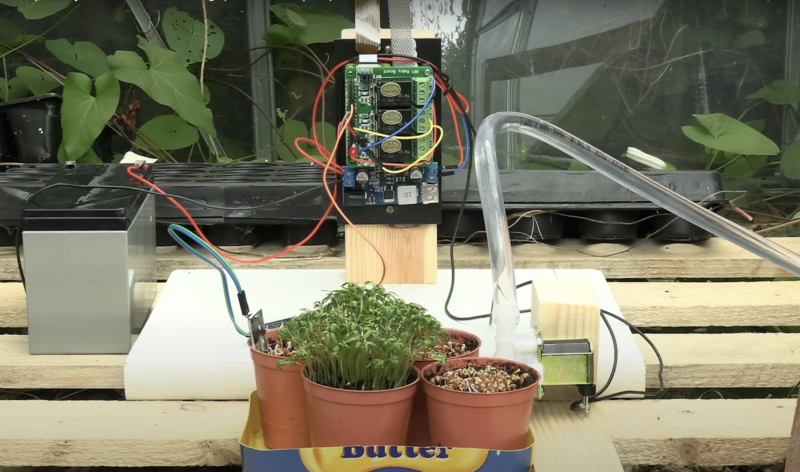
We’re not going to lie — the thing we like most about this automated plant watering project is the timelapse at the very end of the build video. But we also thought now might be a good time to show you another Raspberry Pi project for keeping an eye on your plants, since some of us are getting back to something more like our usual routines and our houseplants are no longer our best friends, so they might need a little extra automated attention.
Raspberry Pi can’t make your plants grow this fast in real life, sorry
Maker Christopher Barnatt chose Raspberry Pi Zero for this project because although Raspberry Pi Pico could handle it, he needed a camera connector to record timelapse video of his plants’ growth.
Christopher is a gem and has included links to all the hardware he used. There are also some cheaper, smaller alternatives listed in the info section of his build video.
The moisture sensor checks every half hour to determine whether or not the plant has enough water, and communicates with the Raspberry Pi. Water flow is controlled by the solenoid valve, and if the Raspberry Pi finds the soil is too dry, it opens the valve for a set amount of time to let water out.
Check out the full build video for detailed setup instructions and code tests
Code your own plant watering machine
Christopher has shared all the code you need to make your own plant watering system:
Watering.py — the final watering system and timelapse code
Check out Christopher’s YouTube channel Explaining Computers where he posts new videos every week on topics like PC hardware, single board computers such as Raspberry Pi, AI, Big Data, and quantum computing.
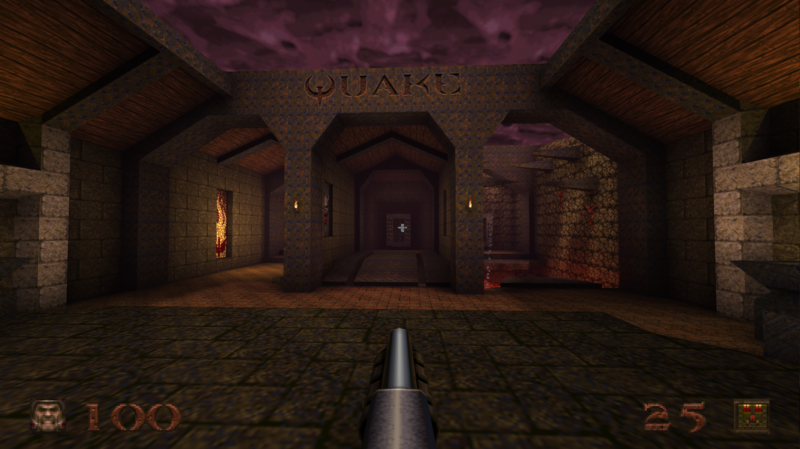
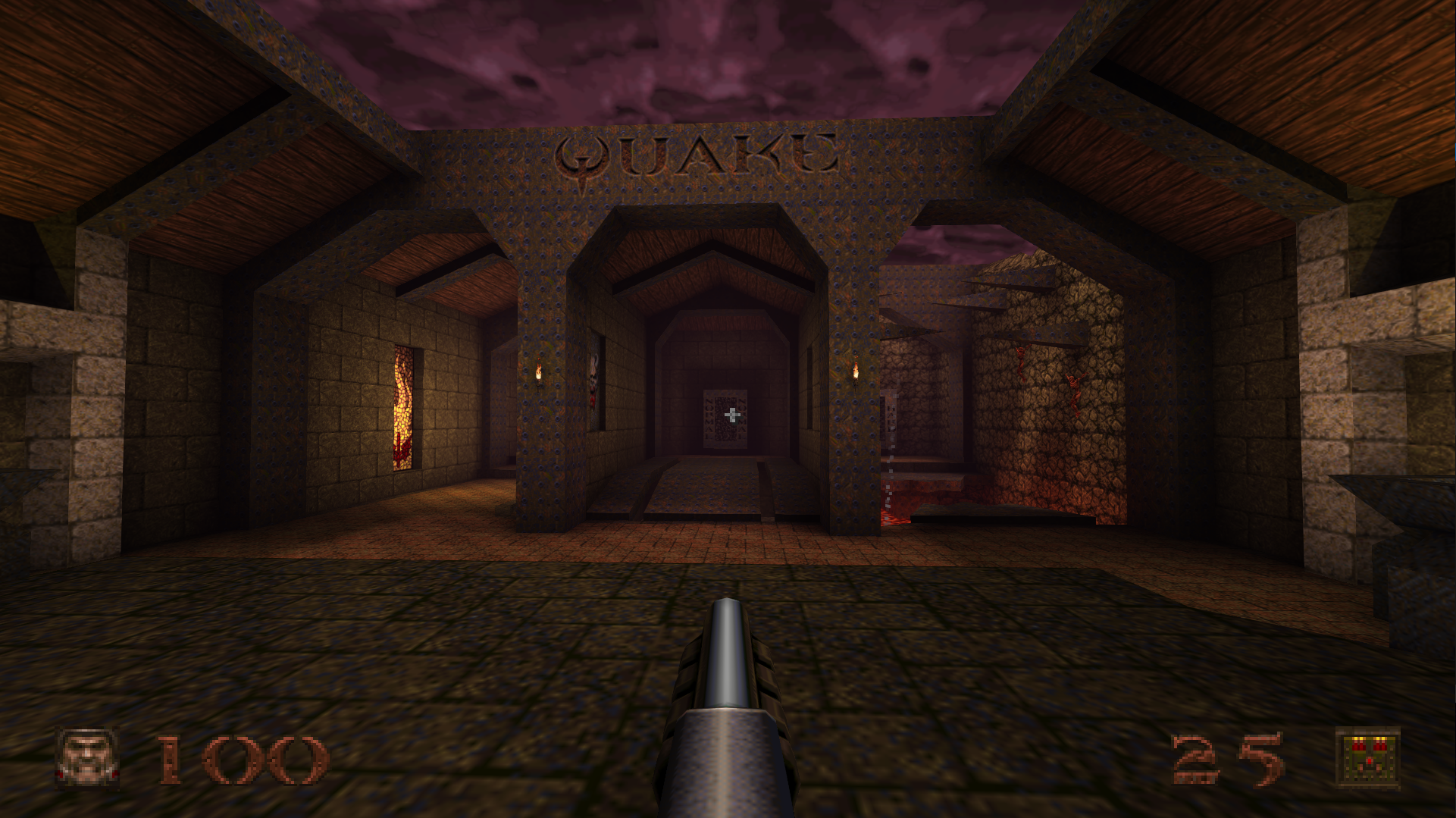
As leaked a few weeks ago by a QuakeCon scheduling slip-up, a re-release of iconic FPS Quake slipped onto console digital storefronts on Thursday, slightly ahead of the project’s official announcement. The $10 release is out now. Those who own Quake on Steam or from the official Bethesda.net store can access this update for free.
Bethesda’s re-release is available for Switch, Xbox, and PlayStation. This might be positive news after Microsoft’s acquisition of that studio, which generated worries about exclusivity moving forward, although Xbox Game Pass subscribers can access this visually updated edition as part of that service. For those who don’t mind waiting, Limited Run Games has a physical disc/card release for the PS4/Switch, respectively, including a pricey limited edition that comes in a box mirroring the in-game nail-gun ammo.
Four expansions are included: “Scourge of Armagon” and “Dissolution of Eternity,” which launched at retail shortly after the original 1996 game, along with MachineGames’ “Dimension of the Past” and “Dimension of the Machine.” And, yes, online matchmaking is available, too, complete with platform crossplay. Local split screen remains intact for up to four players, and a quick run through the Xbox version reveals numerous graphical options, even on the Xbox Series X. For instance, players can drop the resolution to “SD” levels and apply fog.
The Apple TV+ series is an adaptation of Isaac Asimov’s Foundation series of novels. [credit: YouTube/Apple TV+
]
A mathematical genius predicts the imminent collapse of a galactic empire, and he and his protege set plans in motion to preserve the foundational knowledge of their civilization in Foundation, Apple TV+’s adaptation of Isaac Asimov’s hugely influential series of science fiction novels. It’s a story that takes place across multiple planets over 1,000 years, with a huge cast of characters. That makes adapting it extremely difficult, particularly to film. But the streaming platform is betting that the series format will be better suited to bring Asimov’s futuristic vision to life. It’s certainly one of several hotly anticipated science fiction projects debuting this fall.
As I’ve written previously, Asimov’s original trilogy centered on a mathematician named Hari Seldon, who has developed a mathematical approach to sociology. Called “psychohistory,” it enables him to predict the future of large populations—like the Galactic Empire, which incorporates all inhabitants of the Milky Way. Unfortunately, Seldon’s theory predicts an imminent collapse of the empire. This will usher in a Dark Age lasting 30,000 years, after which a second empire will arise.
Seldon cannot stop the collapse, but he insists there is a way to limit those Dark Ages to just 1,000 years. He proposes creating a Foundation, a group of the most intelligent minds in the empire, charged with preserving all human knowledge in the Encyclopedia Galactica. Rather than executing Seldon, the committee decides to exile him to a remote world called Terminus, along with the members of the new Foundation, where they can begin compiling the encyclopedia.
Akihabara News (Tokyo) — NEC Corporation and Fujitsu have been tapped to develop new technologies for interoperability testing between 5G base station equipment employing O-RAN specifications, in the next step meant to open up radio access networks to a wider variety of possible vendors.
Open Radio Access Network (O-RAN) aims to compete with the radio access networks operated by a handful of international mobile industry giants (Huawei, Nokia, and Ericsson) by not relying on the proprietary technology of a single firm throughout the network, but instead based on a set of agreed standards, specifications, and interfaces by which multiple vendors may provide base station equipment.
One of the key challenges, however, is to create confidence that the equipment provided by a plethora of different vendors will actually be interoperable once they are assembled within a given network.
The New Energy and Industrial Technology Development Organization (NEDO) has asked NEC and Fujitsu to address this challenge as part of its Post 5G Infrastructure Enhancement R&D Project.
These two firms are tasked with building an environment and developing technologies to assess and verify interoperability between different vendors’ equipment, including the establishment of a verification process and developing tools that can be used in common.
NEC and Fujitsu have already launched these activities at their respective facilities in the United Kingdom and in the United States. Specifically, NEC is conducting trials at its Open RAN laboratory in London, while Fujitsu is doing so at its laboratory hosted at Fujitsu Network Communications, a Fujitsu group company based in Richardson, Texas.