Are Uber Drivers Employees? Uber Faces Two Big Court Challenges

Strider- (Slashdot reader #39,683) shares a story from Reuters:
Canada’s Supreme Court on Friday ruled in favor of a driver in a gig economy case that paves the way for a class action suit calling for Uber Technologies Inc to recognize drivers in Canada as company employees.
UberEats driver David Heller had filed a class action suit, challenged by Uber, aiming to secure a minimum wage, vacation pay and other benefits like overtime pay. Drivers are now classified as independent contractors and do not have such benefits.
A lower court had already ruled that Uber’s contracts included an arbitration clause that was “invalid and unenforceable,” Reuters, reports, and it was Uber’s attempt to appeal of that ruling that was dismissed by Canada’s Supreme Court in an 8-1 vote. Reuters notes that “The arbitration process, which must be conducted in the Netherlands where Uber has its international headquarters, costs about C$19,000 ($14,500).”
Meanwhile, CNN also reports that Uber and Lyft “could soon be forced to reclassify their drivers in California as employees or cease operating in the state as part of an escalating legal battle over a new law impacting much of the on-demand economy.”
California Attorney General Xavier Becerra and a coalition of city attorneys intend to file for a preliminary injunction this week to force the two ride-hailing companies to comply with the new state law, according to a press release issued Wednesday…
“It’s time for Uber and Lyft to own up to their responsibilities and the people who make them successful: their workers,” said Becerra in a statement concerning the injunction the state is intending to file. “Misclassifying your workers as ‘consultants’ or ‘independent contractors’ simply means you want your workers or taxpayers to foot the bill for obligations you have as an employer.

Read more of this story at Slashdot.


Source: Slashdot – Are Uber Drivers Employees? Uber Faces Two Big Court Challenges

How to Watch Disney+ Movies in Chronological Order

Ever since Disney+, the company’s streaming service, launched in November 2019, it has quickly become a *family favorite (*including families of one). Although there were a few glitches in its first few weeks, those appear to be fixed, and users have since been able to focus on features like recommendation lists. But…

Read more…


Source: LifeHacker – How to Watch Disney+ Movies in Chronological Order

AMD Radeon Navi 31 RDNA 3 GPU References Found Hiding In macOS Big Sur Code

AMD Radeon Navi 31 RDNA 3 GPU References Found Hiding In macOS Big Sur Code
Sitting just a little off in the distance is a new graphics architecture from AMD, which will power both next-gen game consoles (Xbox Series X and PlayStation 5) and a refreshed line of PC graphics cards. We are of course talking about RDNA 2. This is what will power ‘Big Navi’, the unofficial name of AMD’s next burly GPU, but what comes after

Source: Hot Hardware – AMD Radeon Navi 31 RDNA 3 GPU References Found Hiding In macOS Big Sur Code

IBM's New Differential Privacy Library Works With Just a Single Line of Code

Friday IBM Research updated their open source “IBM Differential Privacy Library,” a suite of new lightweight tools offering “an array of functionality to extract insight and knowledge from data with robust privacy guarantees.”

“Most tasks can be run with only a single line of code,” brags a new blog post (shared by Slashdot reader IBMResearch), explaining how it works:
This year for the first time in its 230-year history the U.S. Census will use differential privacy to keep the responses of its citizens confidential when the data is made available. But how does it work? Differential privacy uses mathematical noise to preserve individuals’ privacy and confidentiality while allowing population statistics to be observed.

This concept has a natural extension to machine learning, where we can protect models against privacy attacks, while maintaining overall accuracy. For example, if you want to know my age (32) I can pick a random number out of a hat, say ±7 — you will only learn that I could be between 25 and 39. I’ve added a little bit of noise to the data to protect my age and the US Census will do something similar.

While the US government built its own differential privacy tool, IBM has been working on its own open source version and today we are publishing our latest release v0.3. The IBM Differential Privacy Library boasts a suite of tools for machine learning and data analytics tasks, all with built-in privacy guarantees. Our library is unique to others in giving scientists and developers access to lightweight, user-friendly tools for data analytics and machine learning in a familiar environment… What also sets our library apart is our machine learning functionality enables organisations to publish and share their data with rigorous guarantees on user privacy like never before…

Also included is a collection of fundamental tools for data exploration and analytics. All the details for getting started with the library can be found at IBM’s Github repository.

Read more of this story at Slashdot.


Source: Slashdot – IBM’s New Differential Privacy Library Works With Just a Single Line of Code

This is what the new Ford F-150 display and infotainment looks like

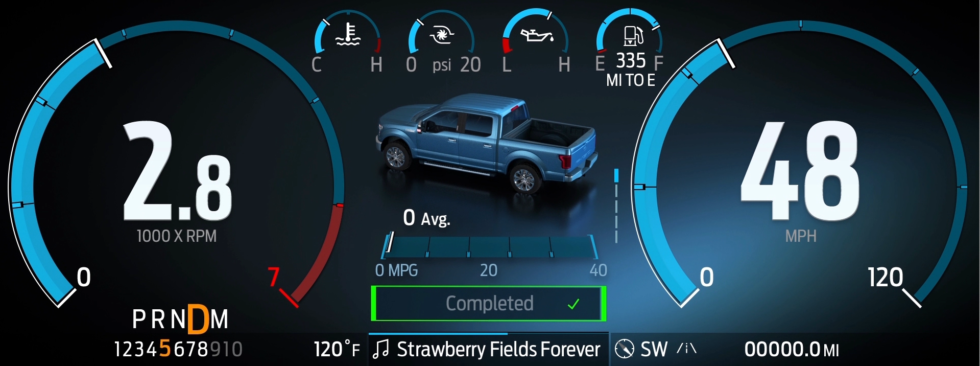
Among the most immediately noticeable technology upgrades in the new Ford F-150 are the truck’s digital displays. We didn’t have any images to share when our coverage was published on Thursday, but Ford sent over a pair of short clips that show off the new UI for the digital main instrument cluster and its latest Sync 4 infotainment system. So we decided to share them with you now. You can check out the gallery above, or watch the pair of video clips embedded below.

12.3-inch main instrument display

The F-150 isn’t the first Ford to get an all-digital dash; you can find a 12-inch display instead of old-fashioned dials in newer Mustangs, and the electric Mustang Mach-E crossover uses a 10-inch display in front of the driver. The 12.3-inch screen that faces you in a 2021 F-150 looks more elegant than any of those ‘stangs, though:

All-New-F-150-Digital-Cluster

“The idea is it presents information in a very directed way so that it almost behaves like a concierge. So it’s presenting the most important information and being able to move things around in a digital environment to make room for other content that’s perhaps more important,” said Mark Sich, F-150 digital designer at Ford. The move away from a skeuomorphic UI required some testing with Ford’s truck customers, Sich told Ars. “What we discovered was that, as long as the information is presented in a real, digestible, understandable, hierarchical way, they were willing to really take that leap of faith.”

Read 4 remaining paragraphs | Comments


Source: Ars Technica – This is what the new Ford F-150 display and infotainment looks like

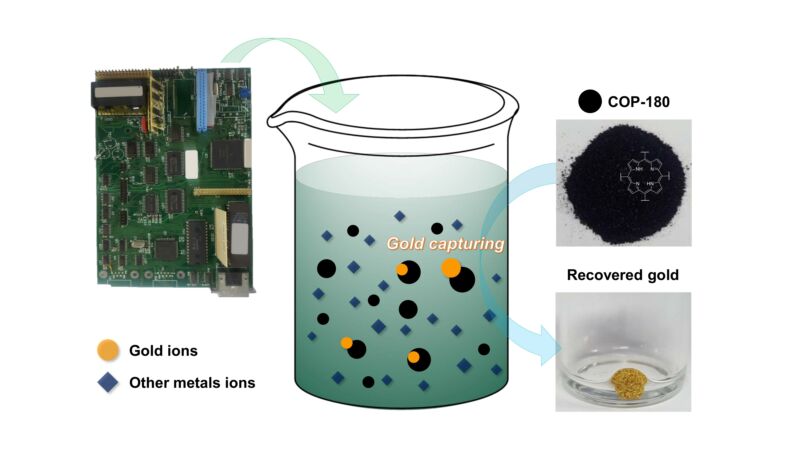
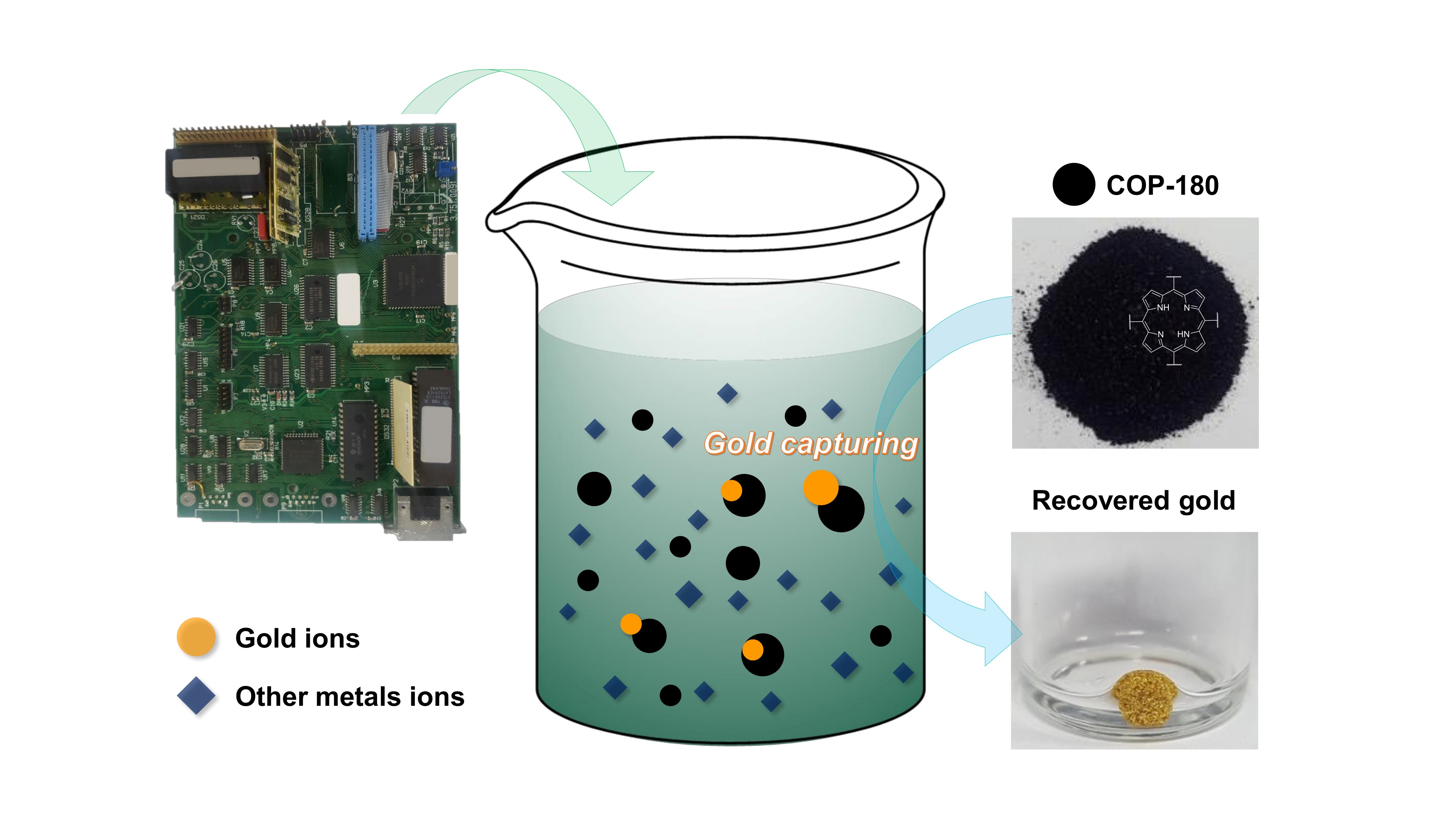
New polymer easily captures gold extracted from e-waste

Read 6 remaining paragraphs | Comments


Source: Ars Technica – New polymer easily captures gold extracted from e-waste

Jakarta EE 9 Specification Release 'Marks the Final Transition Away From javax Namespace'

An anonymous reader quotes ADTmag:
The Eclipse Foundation this week announced Jakarta EE 9 Milestone 1, the final version of the enterprise Java specification before the first Release Candidate (RC). The Jakarta EE 9 release marks the final transition away from the javax.* namespace (which Oracle refused to give up) to Eclipse’s jakarta.*. This release updates all the APIs to use jakarta.* in package names. In fact, Mike Milinkovich, executive director of the Eclipse Foundation, says that transition is really what this release is all about.

“The main purpose…is to provide a release that is very similar to Java EE 8,” Milinkovich told ADTmag, “with everything converted to the jakarta.* namespace. We’re providing a stable technical conversion platform, so all the tools and frameworks in the ecosystem that are using, say, javax.servlet, can make the change with confidence.” Giving the ecosystem solid footing for the transition from the Java EE coffee cup to the Jakarta EE sailboat is the Foundation’s way of setting the stage for rapid innovation, Milinkovich said, once the transition is largely complete.
“These technologies have been around for an awfully long time,” he added, “and we had to provide folks with a stable platform for the conversion. At the same time, thanks to a contribution from IBM, we have the Eclipse Transformer Project, which is going to provide runtime enablement. If someone has an application they don’t want to recompile, and that application is using the javax.* namespace, they will be able to run it on top of a Jakarta-compatible app server. That’s going to provide binary compatibility for apps, going forward…”

Read more of this story at Slashdot.


Source: Slashdot – Jakarta EE 9 Specification Release ‘Marks the Final Transition Away From javax Namespace’

How to move your role-playing game nights online

How to move your role-playing game nights online

Enlarge (credit: Aurich Lawson)

When the dust cleared, the golem lay in pieces across the dungeon floor. Erik sighed deeply, and though his vision blurred, he could still see the rest of the party coming to his aid. Emmelina, the knight that had first welcomed him into the group, cradled him in her arms as he took his last breath. Our team had come this far only to lose its youngest member. Across five different states, there wasn’t a dry eye among our team, but we recomposed ourselves and continued to play our tabletop adventure through the service we’ve used for half a decade now: Roll20.

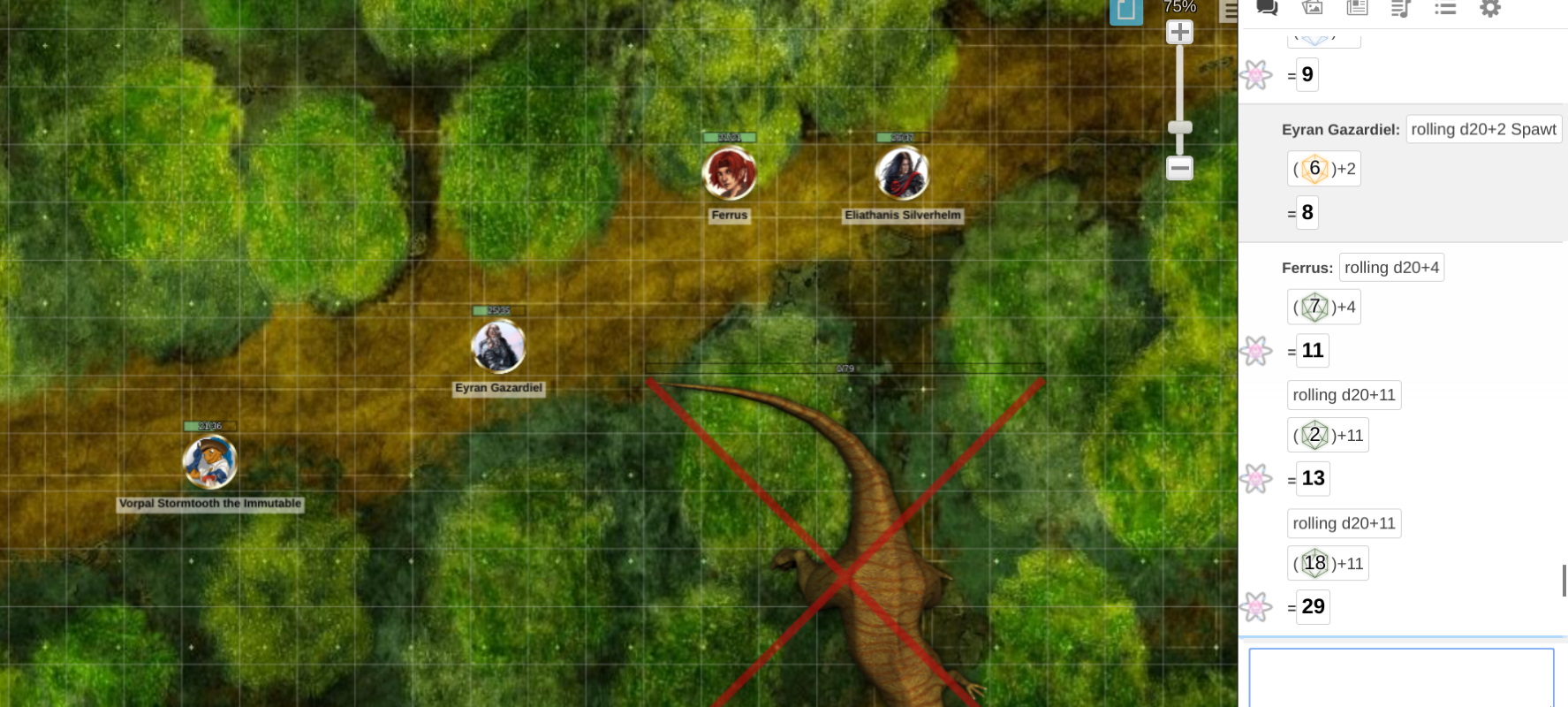
Perhaps, like me, you had fun adventures with friends locally when you were younger or, perhaps you’re interested in role-playing now but unable to actually, you know, meet up with anyone thanks to the pandemic. If so, Roll20 solves the biggest hurdle between you and delving dungeons with your buddies. And it does so without overly complicating things. If you have access to the internet, you can run virtual tabletop games of Dungeons & Dragons—or anything else—thanks to Roll20.

What is Roll20?

Roll20 is a digital platform from relatively small company The Orr Group. It launched in 2012 and allows people to create, share, and play tabletop campaigns. Various upgrades are available to purchase, but the basic service will let anyone do all of the above without too much muss or fuss. And of all the reasons to give Roll20 a shot, possibly the biggest is the simplest: it’s free.

Read 15 remaining paragraphs | Comments


Source: Ars Technica – How to move your role-playing game nights online

Virtually Attend a Q&A With a Co-Creator of 1980s Series 'Cosmos'

Are you a fan of science TV shows and documentaries? Though they’ve been around in some version since 1903, one 13-part series on PBS that aired in 1980 really captured the country’s attention. It was called “Cosmos: A Personal Voyage” and was created and written by Carl Sagan, Ann Druyan and Steven Soter, with Sagan…

Read more…


Source: LifeHacker – Virtually Attend a Q&A With a Co-Creator of 1980s Series ‘Cosmos’

An embattled group of leakers picks up the WikiLeaks mantle

An embattled group of leakers picks up the WikiLeaks mantle

Enlarge (credit: Getty Images)

For the past year, WikiLeaks founder Julian Assange has sat in a London jail awaiting extradition to the US. This week, the US Justice Department piled on yet more hacking conspiracy allegations against him, all related to his decade-plus at the helm of an organization that exposed reams of government and corporate secrets to the public. But in Assange’s absence, another group has picked up where WikiLeaks left off—and is also picking new fights.

For roughly the past year and a half, a small group of activists known as Distributed Denial of Secrets, or DDoSecrets, has quietly but steadily released a stream of hacked and leaked documents, from Russian oligarchs’ emails to the stolen communications of Chilean military leaders to shell company databases. Late last week, the group unleashed its most high-profile leak yet: BlueLeaks, a 269-gigabyte collection of more than a million police filesprovided to DDoSecrets by a source aligned with the hacktivist group Anonymous, spanning emails, audio files, and interagency memos largely pulled from law enforcement “fusion centers,” which serve as intelligence-sharing hubs. According to DDoSecrets, it represents the largest-ever release of hacked US police data. It may put DDoSecrets on the map as the heir to WikiLeaks’ mission—or at least the one it adhered to in its earlier, more idealistic years—and the inheritor of its never-ending battles against critics and censors.

“Our role is to archive and publish leaked and hacked data of potential public interest,” writes the group’s cofounder, Emma Best, a longtime transparency activist, in a text message interview with WIRED. “We want to inspire people to come forward, and release accurate information regardless of its source.”

Read 9 remaining paragraphs | Comments


Source: Ars Technica – An embattled group of leakers picks up the WikiLeaks mantle