Nokia's CTO Accuses Huawei of Both 'Sloppiness' and 'Real Obfuscation'

Nokia’s CTO Marcus Weldon “told the BBC that the UK should be wary of using the Chinese hardware” — though Nokia rushed to assure the BBC that Weldon’s remarks do “not reflect the official position of Nokia.”

Forbes reports:

On the security front, Weldon referred to analysis suggesting Huawei equipment was far more likely to have vulnerabilities than technology from Nokia or Ericsson. “We read those reports and we think okay, we’re doing a much better job than they are,” Weldon said, describing Huawei’s failings as serious and claiming Nokia’s alternatives to be a safer bet. “Some of it seems to be just sloppiness, honestly, that they haven’t patched things, they haven’t upgraded. But some of it is real obfuscation, where they make it look like they have the secure version when they don’t….”
The comments from Nokia’s CTO came in light of research from Finite State, which published a scathing report claiming that “Huawei devices quantitatively pose a high risk to their users. In virtually all categories we examined, Huawei devices were found to be less secure than those from other vendors making similar devices.” And this included the potential backdoors that lie at the heart of the U.S. government’s security case against the Chinese company. “Out of all the firmware images analyzed, 55% had at least one potential backdoor,” Finite State found. “These backdoor access vulnerabilities allow an attacker with knowledge of the firmware and/or with a corresponding cryptographic key to log into the device.”

Nokia’s later statement insisted that their company “is focused on the integrity of its own products and services and does not have its own assessment of any potential vulnerabilities associated with its competitors.”

Read more of this story at Slashdot.


Source: Slashdot – Nokia’s CTO Accuses Huawei of Both ‘Sloppiness’ and ‘Real Obfuscation’

Who will wake up from a coma? Electrical jolts in the brain offer hints

A woman in medical garb attaches electric devices to the head of a patient in bed.

Enlarge / Healthcare worker sets up an EEG on an ICU patient. (credit: Getty | BSIP)

Researchers may have found a way to detect inklings of consciousness in comatose and vegetative patients just days after they experience a brain injury—and it appears the method may help predict which patients will rouse and recover in the months afterward.

A team of researchers in New York recorded electrical activity in the brains of unresponsive patients while giving them simple spoken commands, such as “keep opening and closing your right hand” or “wiggle your toes.” Of 104 unresponsive patients tested, 16 (15%) showed some activity. Of those 16 patients, eight of them (50%) went on to be able to follow spoken commands by the time they left the hospital. A year later, seven of them (44%) were able to function independently for at least eight hours at a time.

In contrast, only 14% of those who showed no electrical activity early on reached that level of recovery after a year. The results were published this week in the New England Journal of Medicine.

Read 9 remaining paragraphs | Comments


Source: Ars Technica – Who will wake up from a coma? Electrical jolts in the brain offer hints

SpaceX Tests Broadband Satellite Network, Claims 'First To Operate' Status

SpaceX says 57 of its 60 broadband data satellites are now communicating with their ground stations — and that this grants them special privileges when other companies launch their own satellite telecommunication networks.

An anonymous reader quotes GeekWire:
In an emailed update, SpaceX said Starlink is ready to go into a testing phase that involves streaming videos and playing video games via satellite…. “Now that the majority of the satellites have reached their operational altitude, SpaceX will begin using the constellation to start transmitting broadband signals, testing the latency and capacity by streaming videos and playing some high-bandwidth video games using gateways throughout North America,” SpaceX said… SpaceX said “Starlink is now the first NGSO [non-geosynchronous satellite orbit] system to operate in the Ku-band and communicate with U.S. ground stations, demonstrating the system’s potential to provide fast, reliable internet to populations around the world.”

That statement isn’t intended merely as a marketing boast: In documents filed earlier this month with the Federal Communications Commission, SpaceX says its “first to operate” status with the FCC means it can “select its frequencies first” if there’s a conflict with other satellite telecommunication networks in low Earth orbit. SpaceX’s claim on that score has set off a flurry of regulatory filings from its rivals in the market for satellite broadband services, including the international OneWeb consortium and Canada’s biggest satellite operator, Telesat.

In one of this month’s filings, OneWeb charged that SpaceX was being “irresponsible” by going ahead with a Ku-band system under conditions that would interfere with OneWeb’s previously launched [six] satellites. But SpaceX shrugged off OneWeb’s objections, as well as Kepler’s. It said neither OneWeb nor Kepler qualified for the FCC’s first-choice status because their ground stations weren’t in the U.S… The exchange of FCC filings illustrates how tangled the regulatory environment for satellite internet broadband services can get. And things could get even more tangled if additional players including Amazon and Boeing join the fray.

Read more of this story at Slashdot.


Source: Slashdot – SpaceX Tests Broadband Satellite Network, Claims ‘First To Operate’ Status

Easy-to-make thermal chameleon fades into the background

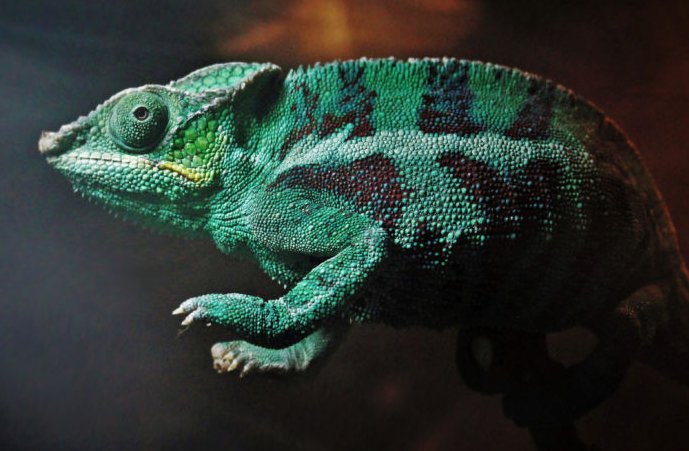
Photo of a green chameleon.

Enlarge / This story isn’t really about this kind of chameleon. Sorry. (credit: Renee Grayson / Flickr)

Chameleons, unlike bowties, are cool. The chameleon is most famous for its ability to blend with its surroundings (I’m just as impressed with the acrobatic tongue), something we’d often like to do ourselves. Doing something similar with heat would be exciting. Imagine a camouflage suit that blended in with its background in both the visible and the infrared.

Three researchers suggest they’ve done exactly that in a recent paper on a thermal cloaking demonstration. Unfortunately, their cloak doesn’t so much blend with the surroundings as become completely transparent. This is still remarkable, and, at least when cloaking in two dimensions, it’s surprisingly simple to make.

Hiding in plain sight

Before we get to how the cloak works, let me take you through what the thermal chameleon is trying to hide. Let’s imagine that I have a long cylinder. At one end, I heat the cylinder to 50°; and at the other end, I cool it to 10°. If I measure the temperature along the length of the cylinder, it will decrease steadily between the hot end and the cold end.

Read 8 remaining paragraphs | Comments


Source: Ars Technica – Easy-to-make thermal chameleon fades into the background

The Linux Kernel Getting Fixed Up For Booting On Some Intel Systems – No "8254"

There have been Linux reports of problems pertaining to “8254 Clock Gating” going back a while but more so recently. This problem is some newer Intel Skylake~Apollolake derived systems particularly with Intel SoCs where certain systems ship with the 8254 PIT to be gated via a special register and up until now that has caused Linux to fail to boot…

Source: Phoronix – The Linux Kernel Getting Fixed Up For Booting On Some Intel Systems – No “8254”

Test tube embryo transfer may give near-extinct rhinos a second chance

Lab-made embryos are one step closer to saving a virtually extinct species. Scientists have successfully transferred a test tube rhino embryo back into a female for the first time, implanting the creation into a southern white rhino in Poland. The…

Source: Engadget – Test tube embryo transfer may give near-extinct rhinos a second chance

Is Streaming TV About To Get Really Expensive?

“The golden age of streaming is over,” writes Stuart Heritage in the Guardian, arguing that TV “will become more elitist, tiered and fragmented than it already is.”

One report last year said that The Office accounts for 7% of all U.S. Netflix viewing. So, naturally, NBC wants it back. This week, it was announced that Netflix had failed to secure the rights to The Office beyond January 2021. The good news is that it will still be available to watch elsewhere. The bad news is that “elsewhere”, means “the new NBCUniversal streaming platform”. As a viewer, you are right to feel queasy. The industry-disrupting success of Netflix means that everybody wants a slice of the pie…

Friends is likely to disappear behind a new WarnerMedia streaming service — along with Lord of the Rings films, the Harry Potter films, anything based on a DC comic and everything on HBO — that it is believed will cost about £15 a month… Facebook is making shows, for crying out loud. And this sucks. Watching television is about to get very, very expensive…. There’s a huge difference between not being able to watch everything because there’s too much choice and not being able to watch everything because you don’t have enough money.

The Netflix model was great for viewers, but it couldn’t last. The content creators got greedy and scared, and now they’re determined to drag things back to the bad old ways. They will force everyone to pay for everything separately, and the subscriber base will split, and the providers will have to recoup the money they are spending to take on Netflix — such as the $500m that NBCUniversal spent to get The Office back, the $250m Amazon is spending on a Lord of the Rings series and the $500m that Warner just spent to win the services of JJ Abrams — which means that subscriptions will rise. Make no mistake: we’re the ones likely to get stiffed here. The golden age of television may be going strong, but the golden age of streaming is dead.

Read more of this story at Slashdot.


Source: Slashdot – Is Streaming TV About To Get Really Expensive?

Sting Finds Ransomware Data Recovery Firms Are Just Paying The Ransom

“ProPublica recently reported that two U.S. firms, which professed to use their own data recovery methods to help ransomware victims regain access to infected files, instead paid the hackers. Now there’s new evidence that a U.K. firm takes a similar approach.”

An anonymous reader quotes their report:
Fabian Wosar, a cyber security researcher, told ProPublica this month that, in a sting operation he conducted in April, Scotland-based Red Mosquito Data Recovery said it was “running tests” to unlock files while actually negotiating a ransom payment. Wosar, the head of research at anti-virus provider Emsisoft, said he posed as both hacker and victim so he could review the company’s communications to both sides. Red Mosquito Data Recovery “made no effort to not pay the ransom” and instead went “straight to the ransomware author literally within minutes,” Wosar said. “Behavior like this is what keeps ransomware running.”

Since 2016, more than 4,000 ransomware attacks have taken place daily, or about 1.5 million per year, according to statistics posted by the U.S. Department of Homeland Security. Law enforcement has failed to stem ransomware’s spread, and culprits are rarely caught… But clients who don’t want to give in to extortion are susceptible to firms that claim to have their own methods of decrypting files. Often, victims are willing to pay more than the ransom amount to regain access to their files if they believe the money is going to a data recovery firm rather than a hacker, Wosar said.
Red Mosquito charged their client four times the actual ransom amount, according to the report — though after ProPublica followed up, the company “did not respond to emailed questions, and hung up when we called the number listed on its website.”

The company then also “removed the statement from its website that it provides an alternative to paying hackers. It also changed ‘honest, free advice’ to ‘simple free advice,’ and the ‘hundreds’ of ransomware cases it has handled to ‘many.'”

Read more of this story at Slashdot.


Source: Slashdot – Sting Finds Ransomware Data Recovery Firms Are Just Paying The Ransom

Stranger Things 3 Is Like an 8-Hour Summer Blockbuster, Here's Our Non-Spoiler Review

Almost two years after its second season debuted, Stranger Things 3 finally comes to Netflix this week. We’ve seen it, we’ve enjoyed it, and we’ll get into a lot of the specifics after everyone else has had a chance to do the same. Until then though, we thought you might be interested in some broader, non-spoiler…

Read more…


Source: io9 – Stranger Things 3 Is Like an 8-Hour Summer Blockbuster, Here’s Our Non-Spoiler Review

'Stranger Things 3' pays respect to the power and perils of tech

Warning: While we’ve tried to avoid any spoilers in this story, the following article does refer to scenes and themes throughout the season.

When members of the Stranger Things cast visited The Tonight Show earlier this month, Jimmy Fallon asked the…

Source: Engadget – ‘Stranger Things 3’ pays respect to the power and perils of tech