There's a Huge Cavity Under Antarctica's Most Endangered Glacier

Antarctica is the font of bad news that just keeps on giving. Thwaites Glacier, among the most threatened hunks of ice on the continent, is in even more dire straits than previously reported. Its melt from above and below is being aided by newly discovered cavities below the ice, as chronicled in Science Advances on…

Read more…


Source: io9 – There’s a Huge Cavity Under Antarctica’s Most Endangered Glacier

Locast, a Free App Streaming Network TV, Would Love to Get Sued

Want to watch the Super Bowl and other network TV for free? A start-up called Locast will let you, and (so far) the big broadcasters aren’t trying to stop it. From a report: On the roof of a luxury building at the edge of Central Park, 585 feet above the concrete, a lawyer named David Goodfriend has attached a modest four-foot antenna that is a threat to the entire TV-industrial complex. The device is there to soak up TV signals coursing through the air — content from NBC, ABC, Fox, PBS and CBS. Once plucked from the ether, the content is piped through the internet and assembled into an app called Locast. It’s a streaming service, and it makes all of this network programming available to subscribers in ways that are more convenient than relying on a home antenna: It’s viewable on almost any device, at any time, in pristine quality that doesn’t cut in and out. It’s also completely free.

If this sounds familiar, you might be thinking of Aereo, the Barry Diller-backed start-up that in 2012 threatened to upend the media industry by capturing over-the-air TV signals and streaming the content to subscribers for a fee — while not paying broadcasters a dime. NBC, CBS, ABC and Fox banded together and sued, eventually convincing the Supreme Court that Aereo had violated copyright law. The clear implication for many: If you mess with the broadcasters, you’ll file for bankruptcy and cost your investors more than $100 million.

Mr. Goodfriend took a different lesson. A former media executive with stints at the Federal Communications Commission and in the Clinton administration, he wondered if an Aereo-like offering that was structured as a noncommercial entity would remain within the law. Last January, he started Locast in New York. The service now has about 60,000 users in Houston, Chicago, Boston, Philadelphia, Dallas and Denver as well as New York, and will soon add more in Washington, D.C. Mr. Goodfriend, 50, said he hoped to cover the entire nation as quickly as possible. “I’m not stopping,” he said. “I can’t now.” The comment is basically a dare to the networks to take legal action against him. By giving away TV, Mr. Goodfriend is undercutting the licensing fees that major broadcasters charge the cable and satellite companies — a sum that will exceed $10 billion this year, according to the research firm Kagan S&P Global Market Intelligence. For cable customers, the traditional network channels typically add about $12 to a monthly bill.

Read more of this story at Slashdot.


Source: Slashdot – Locast, a Free App Streaming Network TV, Would Love to Get Sued

Windows setup error messages will soon be much less useless

Windows has a pretty poor reputation when it comes to error messages. All too often you’ll get a meaningless hexadecimal number or perhaps a reference to a Knowledge Base article. The Windows setup process used for upgrading to each major Windows feature update is a good example of this; it detects and diagnoses a wide range of incompatibility issues prior to performing the installation but does very little to help Windows users actually resolve any of the problems that it finds, instead preferring to leave them with obscure codes.

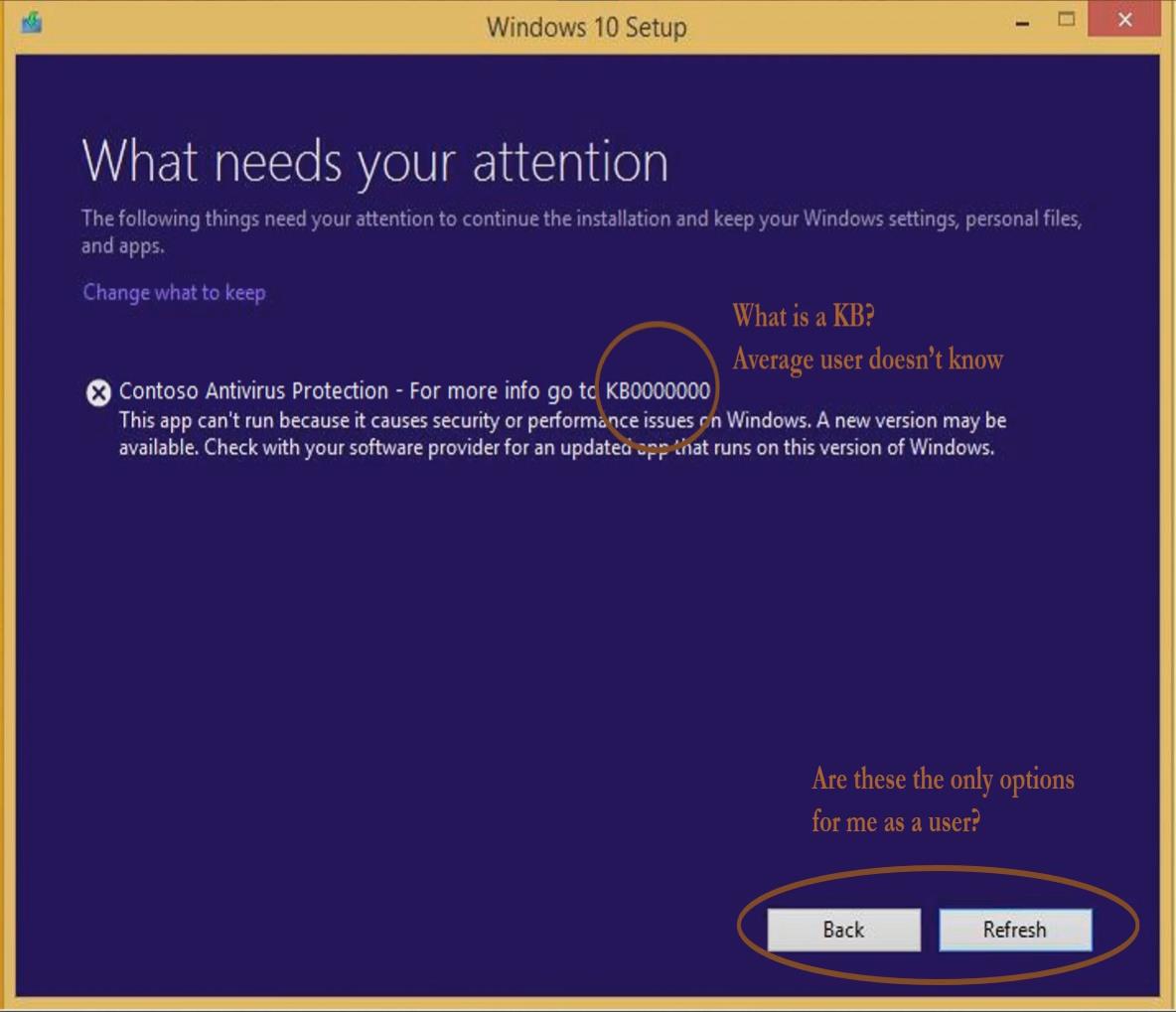
The next major Windows release, the Windows 10 April 2019 Update (codenamed 19H1), is going to offer some significant improvements in this area. Microsoft described them on its Windows Insider webcast, and they were spotted initially by WinFuture. Currently, the best case during installation is something like this screen:

The message says that an incompatible application is detected, and a Knowledge Base article is referenced. It turns out that most Windows users don’t know what “KBxxxxxxx” actually means, and the article isn’t hyperlinked to make accessing it any easier. Issues detected through the other setup experience aren’t much better. Windows will offer to uninstall problem applications, but often the better solution is to upgrade the application in question.

Read 3 remaining paragraphs | Comments


Source: Ars Technica – Windows setup error messages will soon be much less useless

Black Lightning's Metahuman World Just Got Bigger in the Most Unexpected Way

One of the interesting things about Black Lightning’s second season is the growing presence of new metahumans in Freeland whose abilities don’t seem to be dependent on them using the green light drug. Like Jefferson Pierce, these new metas’ powers come from within, which begs the question—where did they come from?

Read more…


Source: io9 – Black Lightning’s Metahuman World Just Got Bigger in the Most Unexpected Way

New Security Flaw Impacts 5G, 4G, and 3G Telephony Protocols

A new vulnerability has been discovered in the upcoming 5G cellular mobile communications protocol. Researchers have described this new flaw as more severe than any of the previous vulnerabilities that affected the 3G and 4G standards. From a report: Further, besides 5G, this new vulnerability also impacts the older 3G and 4G protocols, providing surveillance tech vendors with a new flaw they can abuse to create next-gen IMSI-catchers that work across all modern telephony protocols. This new vulnerability has been detailed in a research paper named “New Privacy Threat on 3G, 4G, and Upcoming5G AKA Protocols,” published last year.

According to researchers, the vulnerability impacts AKA, which stands for Authentication and Key Agreement, a protocol that provides authentication between a user’s phone and the cellular networks. The AKA protocol works by negotiating and establishing keys for encrypting the communications between a phone and the cellular network.

Read more of this story at Slashdot.


Source: Slashdot – New Security Flaw Impacts 5G, 4G, and 3G Telephony Protocols

Cute (But Expensive): UFO Alien Abduction Earring

ufo-abduction-earring-1.jpg

This is the ‘Tender Abduction UFO Earring’ crafted and sold by Sofia Ajram of Etsy shop sofiazakia. Admittedly *rubbing aloe on sphincter* a tender alien abduction would be nice for once. The 14k gold and diamond earring is actually an ear jacket (it only requires a single piercing to wear since the tractor beam rays are attached to the UFO via a post in the rear) but, unfortunately for anybody who wants one but isn’t made of money, cost $830 apiece. That makes a pair *doing the math* $830 x 2. Of course it’s only a matter of time until somebody makes a cheap knockoff, because, if there’s one thing you can count on, it’s people stealing other people’s ideas to make a quick buck. Now if you’ll excuse me, I have an Etsy shop to open. “You wouldn’t.” But only because I’m lazy.

Keep going for a couple more shots.

Source: Geekologie – Cute (But Expensive): UFO Alien Abduction Earring

FBI catches another man allegedly stealing Apple self-driving car secrets

A hoody man stands before a multi-story glass building.

Enlarge / Apple CEO Tim Cook speaks about the new Apple headquarters during a media event in Cupertino, California, on September 12, 2017. (credit: JOSH EDELSON/AFP/Getty Images)

Last July, we reported that federal prosecutors had arrested a man for stealing secrets from Apple’s self-driving car project and attempting to take them to a new job at a Chinese startup. This week, another man was arrested under very similar circumstances.

Apple hired Jizhong Chen last June to work on its self-driving car project, which employs around 1,200 people. According to a criminal complaint filed by the FBI, Chen began taking photographs of confidential Apple information almost immediately. A June 20 image found on Chen’s personally owned computer showed “an Apple-designed wiring harness for an autonomous vehicle.”

Apple didn’t catch on to Chen’s alleged espionage activities until January 11, when another Apple employee spotted him snapping pictures inside a secure Apple workspace. He thought that was suspicious and alerted Apple security. Apple investigators interviewed Chen and secured permission to examine his personally owned computer, hard drive, and smartphone.

Read 5 remaining paragraphs | Comments


Source: Ars Technica – FBI catches another man allegedly stealing Apple self-driving car secrets

Net neutrality court case preview: Did FCC mess up by redefining broadband?

FCC Chairman Ajit Pai.

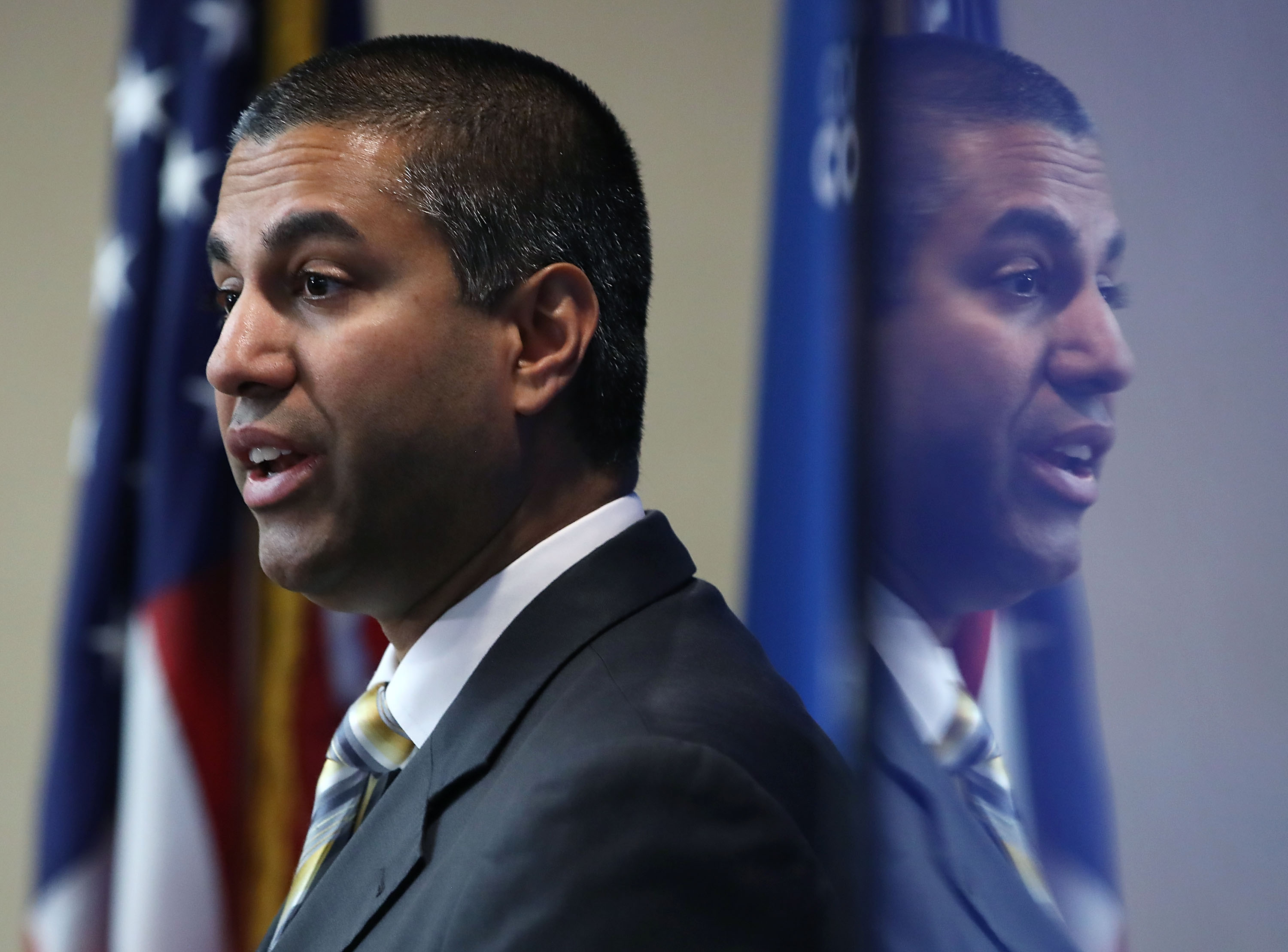
Enlarge / FCC Chairman Ajit Pai speaking at a press conference on October 1, 2018, in Washington, DC. (credit: Getty Images | Mark Wilson )

Oral arguments in the case against Ajit Pai’s net neutrality repeal are scheduled for Friday morning, and net neutrality advocates are confident that they will be victorious.

The groups that sued the Federal Communications Commission to reverse the repeal argue that Pai offered insufficient legal justification for deregulating the broadband industry.

The Obama-era net neutrality rules, which were upheld in court in 2016, relied on the FCC’s Title II authority over telecommunications services. When it eliminated the net neutrality rules, Pai’s FCC argued that broadband is not a telecommunications service and that it should be treated instead as a lightly regulated information service.

Read 28 remaining paragraphs | Comments


Source: Ars Technica – Net neutrality court case preview: Did FCC mess up by redefining broadband?

Telesat inks satellite internet deals with Loon and Blue Origin

Canadian telecom Telesat has inked a couple of deals that could boost its aim to become a key player in the satellite internet field. It’s planning to establish a low-earth orbit network of 292 satellites, with Jeff Bezos’ Blue Origin helping to depl…

Source: Engadget – Telesat inks satellite internet deals with Loon and Blue Origin

Locking Out Law Enforcement Is an 'Unintended Side Effect' of New Android Security

Apple has received both praise and criticism for their efforts to secure iDevices from everyone and everything, including law enforcement. Now, Motherboard reports that Rene Mayrhofer, Google’s Director of Android Platform Security, is saying that Google is following in Apple’s footsteps with Android. At a recent security conference, he said “We want to make it impossible for insiders to get this kind of access for whatever reasons, whatever motivation,” and that “the inability to react to legal requests here is an unintended side effect of this mitigation.” According to Mayrhofer, with Android’s recently announced security measures, not even a Google insider could push out malicious updates to Pixel 3 devices.


Even if the government did force Google to push a malicious update in order to access a phone, the user’s personal data-and the keys that encrypt their data-will be wiped or made inaccessible, according to Mayrhofer. After Mayrhofer’s talk, Ashkan Soltani, an independent researcher and former FTC chief technology officer, asked him whether Google was going “the Apple route” and making it harder for the feds and Google itself to write custom software to access user’s data. “The risk for insider attack in the long chain, in the whole ecosystem is-I think-currently bigger than the few cases where legitimate law enforcement access would happen to have to break the chain,” Mayrhofer said.

Discussion

Source: [H]ardOCP – Locking Out Law Enforcement Is an ‘Unintended Side Effect’ of New Android Security

There's Something Weirdly Comforting About Playing Games That Are Just 'Okay'

When I started playing My Time At Portia, I wasn’t expecting much. A few YouTubers I liked were playing it and I just wanted to check it out. It didn’t really wow me, but also wasn’t egregiously bad. It was just… fine. I still played it until midnight.

Read more…


Source: Kotaku – There’s Something Weirdly Comforting About Playing Games That Are Just ‘Okay’

There's an Easier Way to Cut Cauliflower

If, like me, you’ve been cutting cauliflower from the florets down your whole life, you probably assumed that those annoying rubbly bits that get everywhere were just part of the deal. They’re not. Thankfully, you can easily banish them for good—just turn that crown upside-down.

Read more…


Source: LifeHacker – There’s an Easier Way to Cut Cauliflower

Hulu Is Experimenting With a Charmin Bear Chilling on Your Pause Screen

If there’s one thing consistent in this world, it’s how companies are always finding new and creative ways to shove ads in your face. Hulu’s latest experiment involves a less abrasive strategy than the usual video ad break—it’s going to place static banner ads on the screen when you pause your video starting in the…

Read more…


Source: Gizmodo – Hulu Is Experimenting With a Charmin Bear Chilling on Your Pause Screen