In shift to content distribution, Roku may stream to third-party devices

Enlarge / Roku Express main menu. Just like in other Roku units.

A report from Variety suggests Roku’s shift from hardware to software is moving quickly. While Roku isn’t looking to abandon hardware entirely, the report claims the company is looking to stream content to third-party devices as well. The first phase of this plan will likely take place on mobile devices, possibly through Roku’s existing app.

Currently, the Roku mobile app for Android and iOS acts as a remote for existing Roku devices. You can’t use the app fully unless you have a Roku device connected to the same Wi-Fi network as your mobile device. However, the company could expand the features of the mobile app to include streaming TV and movie content from its ad-supported channels. Roku recently launched The Roku Channel, a cultivated channel full of movies provided by studios Roku has existing deals with. Currently, movies from Lionsgate, MGM, Paramount, Sony Pictures Entertainment, and Warner Brothers are free to watch on The Roku Channel with advertisements playing throughout.

Roku will likely launch more channels like this in the future, most featuring ad-supported content. At the company’s recent IPO, it stated it would focus more on selling advertisements and distributing content in the future. Getting that content into more devices, those that aren’t made by Roku, seems to be the next big step in that plan.

Read 3 remaining paragraphs | Comments


Source: Ars Technica – In shift to content distribution, Roku may stream to third-party devices

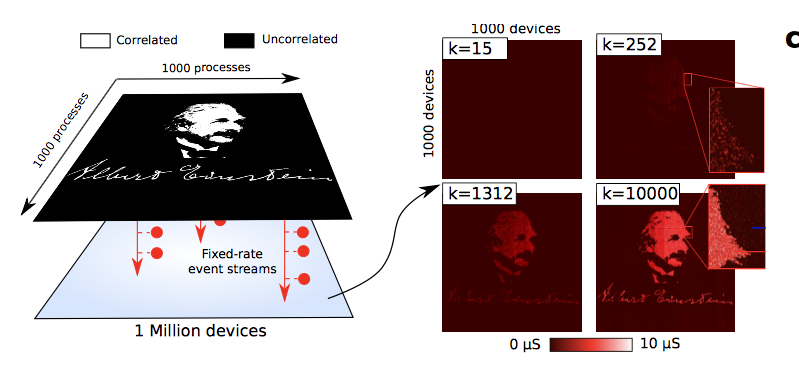
Who needs a CPU? Phase change memory acts as an analog computer

Read 9 remaining paragraphs | Comments


Source: Ars Technica – Who needs a CPU? Phase change memory acts as an analog computer

The 11 Scariest Movies Currently Streaming on Hulu, Netflix, and Amazon Prime

The big streaming services always have a ton of horror movies on offer, but not all of them are especially fright-inducing. In honor of Halloween, put all the Sharknado and Gingerdead Man sequels aside in favor of actually scaring the bejesus out of yourself. Each of these 11 movies will haunt your nightmares.

Read more…


Source: Gizmodo – The 11 Scariest Movies Currently Streaming on Hulu, Netflix, and Amazon Prime

Instagram's new feature adds dramatic zoom-ins to your Stories

Instagram’s Boomerang has a new alternative that you might want to try if you’ve been overusing the video loop format recently. The photo-sharing app has launched a new camera format for Stories called Superzoom, which you can use to create zoom-ins…

Source: Engadget – Instagram’s new feature adds dramatic zoom-ins to your Stories

PCI-SIG Finalizes and Releases PCIe 4.0, Version 1 Specification: 2x PCIe Bandwidth and More

This week, PCI-standards consortium PCI-SIG (Special Interest Group) has ratified and released specifications for PCIe 4.0 Specification Version 1, uploading the documents to their PCI-SIG Specification Library. This marks the full release of PCIe 4.0, following up on June’s revision 0.9 specification publication. Doubling PCIe 3.0’s 8 GT/s (~1 GB/s) of bandwidth per lane, PCIe 4.0 offers a transfer rate of 16 GT/s with flexible lane width configurations, providing significant I/O performance benefits useful for storage, networking, and AI applications. At the same time, PCI-SIG has targeted Q2 2019 for releasing the finalized PCIe 5.0 specification, so PCIe 4.0 won’t be quite as long-lived as PCIe 3.0 has been.


In context, PCI-SIG has previously kept to a four year cadence for PCIe 1.0 (2003), PCIe 2.0 (2006), and PCIe 3.0 (2010). In regards to the seven year delay, PCI-SIG noted that PCIe 3.0 provided sufficient bandwidth for some time before the developments and rising demands of AI compute workloads, PCIe NVMe and 3D XPoint storage, and networking speeds, particularly as 10GbE becomes more and more accessible to consumers. For compute GPUs, the bandwidth limitations of PCIe 3.0 had already driven NVIDIA in developing their proprietary NVLink interconnect. Consequently, with PCIe 4.0 and beyond, the PCI-SIG is looking to get back towards a more normal cadence, especially as they’ve now resolved some of the major technical hurdles in enabling faster transfer rates via the PCIe 4.0 standard.


The other aspect is the nature of the organization. PCI-SIG has almost 800 member companies, from which they annually elect a board of directors; for 2017-2018, the Board includes members from AMD, Intel, and NVIDIA. In developing and maintaining the open PCI specifications, members collaborate in committees and technical workgroups, submitting and reviewing specification changes. Part of PCI-SIG’s recent work is in streamlining in this process.


Once the specifications are finalized, members must have products pass interoperability and compliance tests at one of PCI-SIG’s many Compliance Workshops throughout the year, in order for the product to be added to the Integrators List, which OEMs and system integrators use in choosing hardware. For PCIe 4.0, PCI-SIG offered pre-publication Compliance Workshops for the first time, utilizing the earlier revision 0.9, but only at a preliminary “FYI Testing” level. For the rest of the year, PCI-SIG will offer PCIe 4.0 FYI Testing at Compliance Workshops; for the time being, PCIe 4.0 is not listed on either the official Compliance Program and Integrators List.


Like the previous PCIe iterations, PCIe 4.0 features backwards compatibility, and PCIe 1.x, 2.x, and 3.x cards will fit PCIe 4.0 slots and operate normally. PCIe 4.0 also maintains PCIe 3.0’s 128b/130b encoding, which will continue to be used in PCIe 5.0.


Among the other improvements, several features are more relevant for designers and developers than end users. As data rates increase, performance variation rises and signal integrity degrades. With that in mind, PCIe 4.0 brings lane margining at the PHY receiver, where the PCIe controller obtains electrical margin information of each PCIe lane in order to measure variation tolerance. PCIe 4.0 also has extended tags and credits, features that work together to mask latency and promote full bandwidth saturation. Other improvements include overall reduced system latency, I/O virtualization and platform integration, and added lanes/bandwitdth scalability, as well as enhanced Reliability, Availability, Serviceability (RAS) capabilities.


While gaming graphics cards are the most visible PCIe device to consumers, additional PCIe bandwidth overhead is unlikely to affect gaming performance, at least right away. However given the limited amount of PCIe bandwidth available with most consumer CPUs – just 16 general purpose lanes from the CPU with another 4 lanes for the chipset – this will also go a long way towards easing the pressure that the combination of GPUs, NVMe SSDs, and 10GigE networking can place on system I/O bandwidth. What may also be relevant is increased power capability from the secondary connectors, but at this point there are no further details, and a PCIe 4.0 Electromechanical Specification has not been disclosed.


As far as PCIe 4.0 vendor solutions go, Synopsys and Cadence, among others, are developing or offering 16GT/s PHYs and controllers, validation tools, and many other applications. IBM’s POWER9 feature PCIe 4.0 connections and Intel’s 10nm Falcon Mesa FPGA supports PCIe 4.0 as an IP block embedded via EMIB. Meanwhile, AMD have targeted 2020 for PCIe 4.0 support. But before products hit shelves, the PCIe 4.0 compliance and interoperability tests need to be finalized with both specifications and tools/procedures, and with the 32GT/s PCIe 5.0 fast-tracked to 2019, there may be very few, if any, consumer PCIe 4.0 devices. In any case, PCI-SIG only referred to the current PCIe 5.0 version 0.3, despite targeting Q4 2017 for version 0.5 at Hot Chips 2017.


PCI-SIG members may download the PCIe 4.0 specification for free at the Specification Library. Non-members may purchase a hard copy of the specification for $4,500.


Source: AnandTech – PCI-SIG Finalizes and Releases PCIe 4.0, Version 1 Specification: 2x PCIe Bandwidth and More

Use Mozzarella Whey and Feta Brine to Make an Extra Tasty Batch of Rice

If you are a fan of fresh mozzarella or feta, you have no doubt found yourself with a container or two of somewhat cloudy water in which your precious cheese was packed. You could dispose of the salty, slightly creamy liquid by dumping it down the drain, or you could use it as a tasty cooking liquid.

Read more…


Source: LifeHacker – Use Mozzarella Whey and Feta Brine to Make an Extra Tasty Batch of Rice

If You Missed It Last Week, Anker's Latest Robotic Vacuum Is $40 Off Again

The bestselling, top-rated, and audience-favorite robotic vacuum just came out with a new and improved model, and you can suck up yours today for just $200 with code MMSM8QWT, matching a launch deal we saw last week.

Read more…


Source: LifeHacker – If You Missed It Last Week, Anker’s Latest Robotic Vacuum Is Off Again

Saudi Arabia invests $1 billion in Richard Branson’s space plane and rocket

Read 6 remaining paragraphs | Comments


Source: Ars Technica – Saudi Arabia invests billion in Richard Branson’s space plane and rocket

AMD Unveils Ryzen Mobile Processors Combining Zen Cores and Vega Graphics

MojoKid writes: AMD is officially launching a processor family today known by the code name Raven Ridge, but now referred to as Ryzen Mobile. The architecture combines AMD’s new Zen CPU core architecture, along with its RX Vega GPU integrated into a single chip for laptops. There are two initial chips in the mobile processor family that AMD is announcing today: the Ryzen 5 2500U and the Ryzen 7 2700U. Both processors feature four cores capable of executing 8 threads with SMT. However, there are differences with respect to processor clocks and GPU specs. AMD’s Ryzen 5 2500U has a base clock of 2GHz and a boost clock of 3.6GHz, while Ryzen 7 2700U cranks up another 200MHz on both of those figures. Ryzen 5 2500U features 8 Radeon Vega graphics CUs (Compute Units) and a GPU clock of 1.1GHz, compared to 10 Radeon Vega CUs and a GPU clock of 1.3GHz for the higher-end Ryzen 7 2700U. AMD is making rather ambitious claims for the new processors, and promises some impressive gains over its 7th generation Bristol Ridge predecessors. According to AMD, CPU and GPU performance will see 200 percent and 128 percent uplifts, respectively. AMD is also showcasing benchmark numbers that have the new CPUs outgunning Intel’s new quad-core Kaby Lake R chips in spots, along with significant performance advantages in gaming and graphics, on par with discrete, entry-level laptop GPUs like NVIDIA’s GeForce 950M. Thin and light laptops from HP, Lenovo and Acer powered by Ryzen Mobile are expected to ship in Q4 this year.

Read more of this story at Slashdot.


Source: Slashdot – AMD Unveils Ryzen Mobile Processors Combining Zen Cores and Vega Graphics

AMD EPYC 7551 Linux Benchmarks

One step below AMD’s current top-end EPYC 7601 server processor is the EPYC 7551. The EPYC 7551 costs around $800 USD less than the 7601 while still being a 32 core / 64 thread part but with slightly lower clock frequencies. In this article is a look at the EPYC 7251 / 7351P / 7401P / 7551 / 7601 Ubuntu Linux performance compared to various Intel Xeon CPUs in our lab.

Source: Phoronix – AMD EPYC 7551 Linux Benchmarks

Twitter drops hammer and sickle on RT, Sputnik ad buys over election shenanigans

Enlarge / “They will love this promoted tweet, da?” (credit: Kremlin official photo)

In a blog post published today, a spokesperson for Twitter announced that the company has decided to block paid advertisement posts by Russian media outlets RT and Sputnik. “Twitter has made the policy decision to off-board advertising from all accounts owned by Russia Today (RT) and Sputnik, effective immediately,” the post stated.

The bans are the result of “retrospective work” done by Twitter’s global public policy team to investigate the use of the service during the 2016 presidential elections to conduct state-sponsored influence campaigns. The US intelligence community found “that both RT and Sputnik attempted to interfere with the election on behalf of the Russian government,” the Twitter spokesperson wrote.

“We did not come to this decision lightly and are taking this step now as part of our ongoing commitment to help protect the integrity of the user experience on Twitter,” the post states. “Early this year, the US intelligence community named RT and Sputnik as implementing state-sponsored Russian efforts to interfere with and disrupt the 2016 Presidential election, which is not something we want on Twitter.”

Read 3 remaining paragraphs | Comments


Source: Ars Technica – Twitter drops hammer and sickle on RT, Sputnik ad buys over election shenanigans

Stop Motion Video Made Entirely With Carved Pumpkins

This is ‘Oh My Gourd’, a stop motion video made entirely with carved pumpkins. That looks like it took a lot of work. Unless they had a laser carve the pumpkins for them, then it looks like not as much work and a sweet-ass burning laser. Point it at my eyes, I want to see the future. They didn’t use a laser though, because you can see them carving one of the pumpkins at the end. There’s also a shot of all the pumpkins they used, which was a lot. Me? I don’t buy my pumpkin till the day before Halloween for DEEPER DISCOUNTS and LESS SELECTION. It’s easy to pick the perfect pumpkin when there aren’t any good ones left. These are all terrible, I’ll just take that weird rectangular one. “That’s a hay bale.” Are you going to sell it to me or not? “Wait — are you the guy who only wanted to buy the stumps at our Christmas tree lot last year?” Must have been my brother, he’s a little off.

Keep going for the whole video.

Source: Geekologie – Stop Motion Video Made Entirely With Carved Pumpkins

Twitter Is Very Sorry for Asking Russian State Media for So Much Money

In belated response to an American intelligence report that concluded RT and Sputnik tried to influence the 2016 election, Twitter announced on Thursday that it is removing all advertising from accounts owned by the Russian state-sponsored news outlets. The company also promised to donate $1.9 million to help fund…

Read more…


Source: Gizmodo – Twitter Is Very Sorry for Asking Russian State Media for So Much Money

How Mortician Caitlin Doughty Traveled the World on the Wings of Death

For most Americans, the options of what you can have done to your body after you die likely seem limited. Cremation, embalming your body and then burying it—there are variations on those themes, but the basics remain. But mortician Caitlin Doughty has spent her life trying to change how we consider death and educate…

Read more…


Source: Gizmodo – How Mortician Caitlin Doughty Traveled the World on the Wings of Death

NVIDIA's CEO Sees Fully Autonomous Cars within 4 Years

Jensen Huang said today that artificial intelligence would enable fully automated cars within 4 years: “It will take no more than 4 years to have fully autonomous cars on the road. How long it takes for the vast majority of cars on the road to become that, it really just depends.” He also commented on the cryptocurrency situation, taming expectations of strong revenue growth from a wave of interest in cryptocurrencies.


“There are many tasks in companies that can be automated… the productivity of society will go up,” said NVIDIA’s Huang. But Huang joined peers taming expectations of strong revenue growth from a wave of interest in cryptocurrencies. AMD expected this week that there will be some leveling off of cryptocurrency demand. “Revenue for us in crypto is over $100 million a quarter. For us, it’s a small percentage… It’s obviously not a target market,” Huang said.

Discussion

Source: [H]ardOCP – NVIDIA’s CEO Sees Fully Autonomous Cars within 4 Years