The Smartest Food Storage Containers You've Ever Seen Have Never Been Cheaper

You have a lot of options when it comes to airtight food storage containers, but Progressive’s Prepworks models are unique in that they each include a special tool designed for a specific purpose. For example, the flour container has a built-in leveling bar, and the brown sugar container has a terra cotta disc built…

Read more…


Source: LifeHacker – The Smartest Food Storage Containers You’ve Ever Seen Have Never Been Cheaper

SpaceX set to join rare company by re-flying an orbital spacecraft

Enlarge / With the static fire test of its Falcon 9 rocket complete, SpaceX is targeting June 1 for its next launch from Pad 39A. (credit: SpaceX)

SpaceX took a big step toward a fully reusable launch system earlier this year by re-flying a used Falcon 9 booster, and it is making progress toward eventually recovering the rocket’s upper stage and payload fairing. Now, the company is set to try and and recover another key component of its space hardware—a Dragon cargo spacecraft. The launch window for the supply mission opens on Thursday, June 1, at 5:55pm ET.

This particular Dragon spacecraft was sent to the International Space Station in September 2014, and it delivered nearly 2.5 tons of cargo to the orbiting laboratory. The Dragon returned to Earth about a month later, splashing down into the ocean. It is not clear how much processing SpaceX has had to undertake to ready the spacecraft for its second flight to the station, nor has the company released a cost estimate. It also had to manufacture a new “trunk,” the unpressurized rear section of the vehicle, and solar panels.

Although company has never placed a hard dollar value on the Dragon, the savings could be considerable. SpaceX received a contract worth $1.6 billion from NASA for 12 cargo supply missions to the station in 2008—about $130 million per flight. That would have included the cost of the booster, of course, so therefore an individual Dragon spacecraft is likely valued at between $20 million to $60 million.

Read 6 remaining paragraphs | Comments


Source: Ars Technica – SpaceX set to join rare company by re-flying an orbital spacecraft

We can now convert every film and TV show from the last 80 years into HDR

Bcom

Researchers at the French research institute Bcom, with the aid of a wunderkind plucked from a nearby university, have developed software that converts existing SDR (standard dynamic range) video into HDR (high dynamic range) video. That is, the software can take almost all of the colour video content produced by humanity over the last 80 years and widen its dynamic range, increasing the brightness, contrast ratio, and number of colours displayed on-screen. I’ve seen the software in action and interrogated the algorithm, and I’m somewhat surprised to report how good the content looks with an expanded dynamic range.

But garbage in, garbage out, right? You can’t magically create more detail (or more colour data) in an image. Well, you canGoogle produced detailed face images from pixelated source images—but philosophically it is no longer the same image. When a film is cropped for TV broadcast, or you receive a blocky low-bitrate stream from Netflix, or Flickr changes the JPEG profile on an uploaded photo… are those the same image as the artist/director/videographer intended? Or are they different?

Read 17 remaining paragraphs | Comments


Source: Ars Technica – We can now convert every film and TV show from the last 80 years into HDR

Origin PC Chronos Review: A Powerful Small Form Factor Desktop PC For 4K Gaming

Origin PC Chronos Review: A Powerful Small Form Factor Desktop PC For 4K Gaming
It used to be that large physical dimensions were a telltale sign of a Herculean gaming PC. Looming desktop towers with wild looking exteriors indicated the presence of serious hardware inside. Cracking one open might reveal multiple graphics cards and fancy liquid cooling setups, both almost considered prerequisites in order to crank up the…

Source: Hot Hardware – Origin PC Chronos Review: A Powerful Small Form Factor Desktop PC For 4K Gaming

Sony's Xperia XZ Premium puts 4K HDR in your hands on June 19th

In just a few weeks, you can finally hold Sony’s new high-end, high-performance flagship phone in your hands. You can pre-order Sony’s Xperia XZ Premium in the US through Amazon and Best Buy starting on June 12th, but you can always just purchase it…

Source: Engadget – Sony’s Xperia XZ Premium puts 4K HDR in your hands on June 19th

GIGABYTE Launches Aorus X299 Motherboards: X299-Gaming 3, Gaming 7 and Gaming 9

In the wake of Intel’s announcement of their upcoming Skylake-X and Kaby Lake-X processors, GIGABYTE has unveiled their lineup of X299 LGA2066 motherboards. Given the fact that this is a high-end platform, GIGABYTE has opted to use their premium AORUS brand for all three initial models, which are the X299 AORUS Gaming 9, X299 AORUS Gaming 7, and X299 AORUS Gaming 3.


Starting off with the flagship X299 AORUS Gaming 9, we get to see GIGABYTE’s unconstrained vision for this new HEDT platform.


The X299 AORUS Gaming 9 has what appears to be a 12-phase CPU power design, and features Nippon Chemi-Con 10K Durable Black solid capacitors everywhere but in the audio subsystem. There are two 8-pin CPU/EPS power connectors, which should come in handy if a high TDP 18-core Skylake-X processor is installed or just when doing some extreme overclocking.


Making full use of this platform numerous PCIe lanes, there are five mechanical PCIe x16 slots, all of which have been mechanically reinforced with steel and additional anchor points for improved retention and shearing resistance. Two of the slots run at x16, one of the slots runs at x8, and the other two are limited to x4, which means that this motherboard will ‘only’ be able to handle up to three-way graphics card configurations.


Storage connectivity appears to be excellent with eight SATA 6Gb/s ports and three M.2 slots that support SATA, PCI-E, NVMe M.2 solid state drives and Intel’s new Optane Memory technology. All three slots feature a Thermal Guard cover to help protect and cool the M.2 drives. For those who need a fourth M.2 slot, GIGABYTE have also included an M.2 add-in card in the accessories bundle. If the lack of an U.2 port is a concern, worry not since there is also a  M.2 to U.2 adapter included. This motherboard also supports four USB 2.0 ports (two headers), eight USB 3.0 ports (four rear, two headers), and seven USB 3.1 Gen2 ports (five rear, one header). Focusing on the full-speed USB 3.1 Gen2 ports, there are an impressive four Type-A ports and one Type-C port on the rear I/O panel, and a USB 3.1 Gen2 front-panel internal header next to the memory slots. At least some of this USB 3.1 Gen2 connectivity is courtesy of the brand new ASMedia 3142 controller.


When it comes to networking, there are two gigabit LAN ports, one powered by an Intel controller and one by a Rivet Networks Killer E2500 chip. The onboard dual-band 802.11ac Wi-Fi is courtesy of a Killer Wireless-AC 1535 module that supports transfer rates of up to 867Mbps. The wired and wireless Killer interfaces can be used together via the Killer DoubleShot Pro feature to direct high priority traffic to the fastest interface or they can be combined to create one very high throughput interface.


While the name might be familiar – Amp-Up Audio – this motherboard features a brand new high-end onboard audio design. It is based on the familiar Realtek ALC1220 codec, but it has been bolstered by some pretty serious components, like a ESS SABRE 9018K2M DAC, Texas Instruments LME 49720 and OPA1622 OP-AMPs, and WIMA audio capacitors. They have also included Creative’s Sound BlasterX 720° audio engine software.


As should be pretty clear from the above picture, the X299 AORUS Gaming 9 has been outfitted with a ton of RGB LED lighting zones. There are LEDs between the individual memory slots, on both sides of each of the the PCIe slots, built into the chipset cooler, and there’s even LED strips integrated into the I/O and audio section covers. Even the rear I/O shield glows! If that’s not enough, there are also three headers on which you can plug LED light strips. Speaking of headers, there are seven fan headers, including three water pump headers, one of which is a high current 3 amp version. Apparently some of these Hybrid Fan headers that can provide up-to-the-second information on flow-rate and water temperature and can be monitored in the Smart Fan 5 software suite. The two onboard temperature sensor headers should also be able to feed data into the utility.


The bottom edge of the motherboards features an interesting assortment of power and reset buttons, clear CMOS button, ECO button, OC button, and a Debug LED. Last, but not least, the back of the motherboard is covered by a metal armor plate, which will add structural rigidity and protect the various components, solder points, and traces.


The X299 AORUS Gaming 7 is far more similar to the Gaming 9 than it is different. When it comes to expansion slots and storage connectivity everything is exactly the same. The only differences are that two of the three M.2 Thermal Guards are missing, and the M.2 to U.2 adapter is not included in the accessories bundle.


The onboard audio features the greatest change, with a swap from the ESS Sabre ES9018K2M to the ES9018Q2Ca and the removal of one of the two op-amps. The X299 AORUS Gaming 7 is also missing the fancy glowing I/O shield, though the other RGB FUSION lighting features all remain identical.


Since there is no Gaming 5 model yet, the step down from the X299 AORUS Gaming 7 to the X299 AORUS Gaming 3 is a little more severe than between the two previous models. Most notably, the Gaming 3 only has one 8-pin CPU/EPS power connector and only two of its PCIe x16 slots are steel-reinforced. The other clear difference is that there is only two M.2 slots – down one from the higher-end models – and there are no M.2 Thermal Guards at all.


The USB 3.1 Gen2 front-panel connector has been replaced with a USB 3.0 version, and three of the USB 3.1 Gen2 ports on the rear I/O panel have been replaced by USB 3.0 ports. So in total, this model has four USB 2.0 ports (two headers), ten USB 3.0 ports (six rear, two headers), and two USB 3.1 Gen2 ports (two rear). Speaking of rear I/O, there is only one gigabit LAN port and no Wi-Fi on the X299 AUROS Gaming 3. The onboard audio has also been demoted, with no DAC or op-amps, and no plastic shroud covering that area either. The RGB FUSION lighting feature has also been cut-down a bit, with no LEDs in between the memory slots and only the two primary PCIe x16 slots being lit instead of all five.


While we don’t yet have any pricing information for any of the models, the GIGABYTE X299 AORUS Gaming series will be available for purchase sometime in June 2017.


Source: AnandTech – GIGABYTE Launches Aorus X299 Motherboards: X299-Gaming 3, Gaming 7 and Gaming 9

This Robot Tells You When You'll Lose Your Job

It’s safe to assume you’re working a job that would be pretty difficult for your laptop to handle on its own, whether you’re lopping down (excuse me, felling) trees or writing a hot take for millennials. I mean, it used to be safe to assume before these damn robots started getting smarter, and now do everything from…

Read more…


Source: LifeHacker – This Robot Tells You When You’ll Lose Your Job

Steve Ballmer Regrets Slow Pivot To Hardware While Serving As Microsoft's Exuberant CEO

Steve Ballmer Regrets Slow Pivot To Hardware While Serving As Microsoft's Exuberant CEO
It has been over three years since Steve Ballmer left Microsoft, and the company has thrived without him at the helm. Current CEO Satya Nadella has transitioned the company into a “cloud” powerhouse and has embraced the lucrative subscription model for its products. Microsoft has invested heavily in deep learning technology and has focused

Source: Hot Hardware – Steve Ballmer Regrets Slow Pivot To Hardware While Serving As Microsoft’s Exuberant CEO

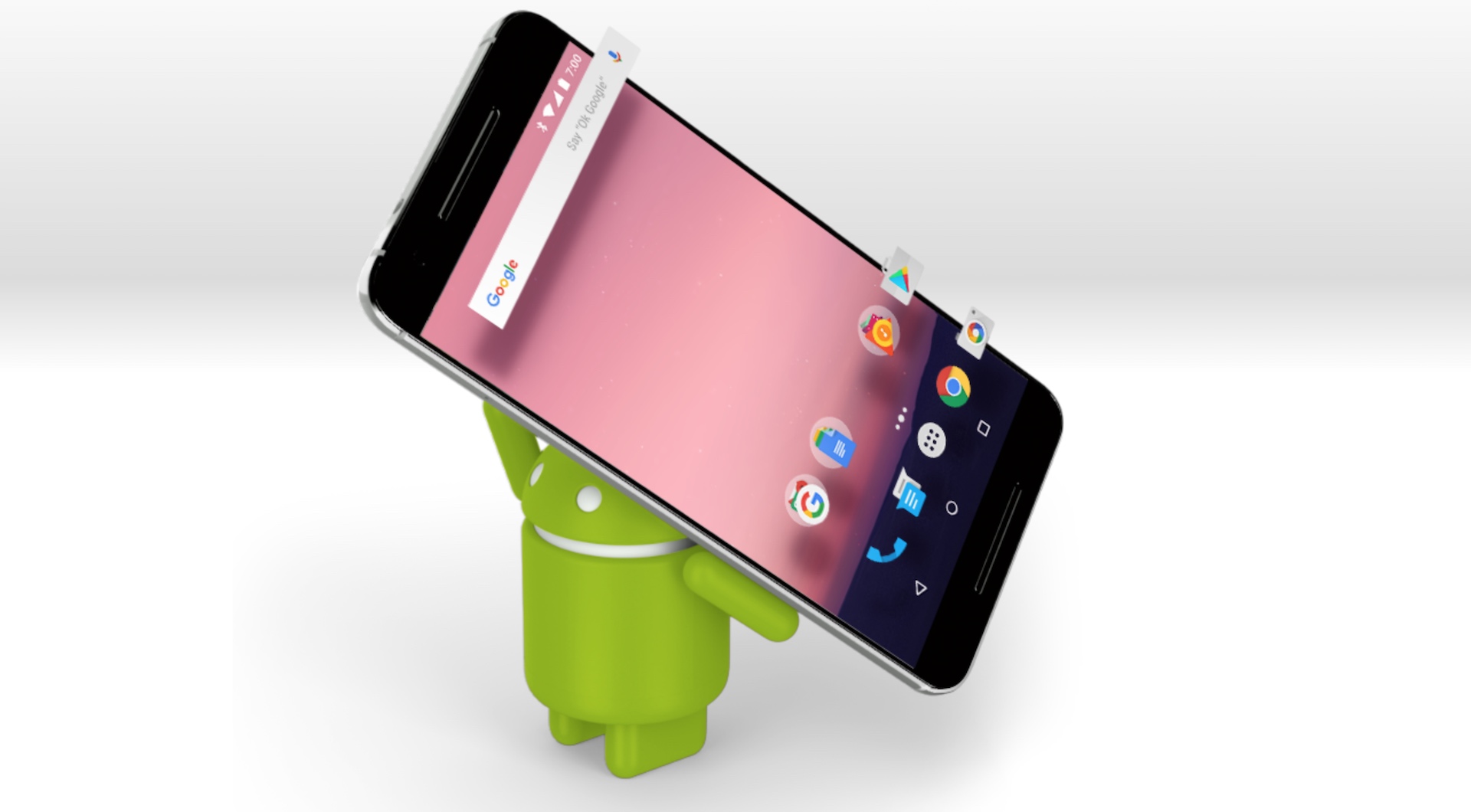
Android execs get technical talking updates, Project Treble, Linux, and more

Enlarge / Meet some of the people doing Android heavy lifting…

Google I/O doesn’t need skydivers or LCD Soundsystem to keep us interested year-to-year—we’ll happily settle for what’s becoming an annual chat with members of the Android team. Heading into this year’s conference, the group was fresh off the release of the second Android O Developer Preview and the announcement of Project Treble, a massive modularization of Android’s hardware dependencies that should make updates a little easier on everyone involved with the OS. So as usual, there was plenty to talk about.

Dave Burke, VP of Engineering for Android, has made time for us at several recent conferences, but this year we also had Stephanie Saad Cuthbertson, PM Director for Android, in on the conversation. Given the opportunity, we tried to keep these questions pretty technical. What follows is a transcript with some of the interview lightly edited for clarity. For a fuller perspective, we’ve also included some topical background comments in italics.

Project Treble

The second Android O developer preview was a big departure from past developer preview releases. Other than a bunch of new emoji, there weren’t any new major features or additions. Compare this to the Android N Developer Preview, which added features like Vulkan,  a new VR platform, and a new update installation process in the second and third preview releases. What’s the deal?

Read 61 remaining paragraphs | Comments


Source: Ars Technica – Android execs get technical talking updates, Project Treble, Linux, and more

Nest Cam IQ Flaunts 4K HDR Visuals And Facial Recognition For Connected Home Security

Nest Cam IQ Flaunts 4K HDR Visuals And Facial Recognition For Connected Home Security
In a perfect world, we would not have to worry about intruders breaking into our homes and pilfering our belongings. Of course, we do not live in such a world, and the sad reality is that burglars and thieves exist. Fortunately there are home security products that make life tough for the bad guys. One of them is the Nest IQ Cam, a smart “security

Source: Hot Hardware – Nest Cam IQ Flaunts 4K HDR Visuals And Facial Recognition For Connected Home Security

Bicycle-powered Menabrea beer dispenser

Cycle. Beat the on-screen pace. Receive free Menabrea beer. All on a system controlled by a Raspberry Pi.

Honestly, what’s not to like?

Menabrea UK

If you’re wondering what it takes to win an ice cold pint at one of our Race to Biella events, this clip will give you more of an idea. It’s no mean feat!! Do you think you have the pedal power? Join us tonight at The Avonbridge Hotel for sunshine, cycling and, of course, a refreshing pint or two.

Glasgow-based creative content agency Bright Signals were contacted by Wire with a brief for a pretty tasty project: create something for Menabrea that ties in with the Giro d’Italia cycle race passing close to the brewery in Biella, Northern Italy.

Cycle race, was it? Menabrea brewery, you say?

The team at Bright Signals came up with the superb idea of a bicycle-powered Menabrea beer dispenser.

It must be noted that when I said the words ‘bicycle-powered beer dispenser’ aloud in the Raspberry Pi office, many heads turned and Director of Software Engineering Gordon Hollingworth dropped everything he was doing in order to learn more.

The final build took a fortnight to pull together, with Bright Signals working on the Raspberry Pi-controlled machine and Wire in charge of its graphic design.

Menabrea Beer Bike Raspberry Pi

Cheer for beer!
Image c/o Grant Gibson and Menabrea

Reuse, reduce, return to the bar

“This was probably one of the most enjoyable builds I’ve worked on,” says Bright Signal’s Deputy Managing Director, Grant Gibson. “We had a really clear idea of what we were doing from the start, and we managed to reuse loads of parts from the donor bicycle as we simplified the bike and built the pouring system.” The team integrated the bottle cage of the donor bike into the main dispensing mechanism, and the bike’s brake levers now cradle a pint glass at the perfect angle for pouring.

A Raspberry Pi powers the 24″ screen atop the beer dispenser, as well as the buttons, pouring motors, and lights.

Menabrea Beer Bike Raspberry Pi

Perfect size for the Raspberry Pi lobby!
Image c/o Grant Gibson

Giro di Scozia

Fancy trying Menabrea’s bicycle-powered beer dispenser for yourself? The final stop of its 4-week tour will be the Beer Cafe in Glasgow this Friday 2nd June. If you make it to the event, be sure to share your photos and video with us in the comments below, or via our social media channels such as Twitter, Facebook, and Instagram. And if you end up building your own beer-dispensing cycle, definitely write up a tutorial for the project! We know at least one person who is keenly interested…

Menabrea on Twitter

Another successful racer wins a pint of Menabrea in the #racetobiella. The bike’s at The Fox and Hound, Houston today…

The post Bicycle-powered Menabrea beer dispenser appeared first on Raspberry Pi.


Source: Raspberry Pi – Bicycle-powered Menabrea beer dispenser

NVIDIA Announces Rocket League Bundle for GeForce GTX 1060 & 1050 Cards

The Rocket League World Championship is just around the corner, running from June 2nd through June 4th in Los Angeles. In celebration NVIDIA has partnered with Psyonix for a new GeForce game bundle: the GeForce GTX Rocket League bundle. This latest bundle covers any GeForce GTX 1060, GTX 1050Ti or GTX 1050 card or OEM desktop PC, as well as notebooks sold with these parts.


For those living under an inflated ball, Rocket League is soccer with rocket powered cars. As shown by the upcoming world championship Rocket League has become a popular eSports title with a strong and passionate fanbase. I haven’t run Rocket League on the specific cards in this bundle, but the performance numbers quoted by NVIDIA do not surprise. In fact, this game runs so well on any moderately capable card that we turned it down while choosing games for GPU Bench 2016 last year, as even at 4K it didn’t bottleneck high-end video cards.


NVIDIA Current Game Bundles
Video Card Bundle
GeForce GTX 1080/1070 None
GeForce GTX 1060/1050Ti/1050 Rocket League Bundle
GeForce GTX 1080/1070 Desktops/Notebooks None
GeForce GTX 1060/1050Ti/1050 Desktops/Notebooks Rocket League Bundle

With that context, I can see the GTX 1060 being a good match for this card at 4K and the GTX 1050 and 1050Ti making good work of 1080p. Though, users running a GTX 1060 may not stretch for a 4K monitor and 4K gamers could make good use of more competent cards on games that are significantly more taxing.  Otherwise, if someone’s library is largely eSports titles, then these cards will serve well.


The Rocket League Bundle will run from May 30, 2017 through July 31, 2017 and codes must be redeemed through GeForce Experience. It is worth remembering to verify the participation of any vendors purchased from as NVIDIA likely will not give codes for purchases made from sellers that are not participating.


Source: AnandTech – NVIDIA Announces Rocket League Bundle for GeForce GTX 1060 & 1050 Cards