When you’re ready to tackle a big home renovation or repair, finding a good contractor is a challenge. Getting one to even give you the time of day can be harder than you might think, in part because of a shortage of skilled tradespeople, and in part because of the economics of construction—your dinky little half bath…
It’s no secret that AI development brings a lot of security risks. While governing bodies are working to put forth regulations, for now, it’s mostly up to the companies themselves to take precautions. The latest show of self-supervision comes with Anthropic, Google, Microsoft and Open AI’s joint creation of the Frontier Model Forum, an industry-led body concentrating on safe, careful AI development. It considers frontier models to be any “large-scale machine-learning models” that go beyond current capabilities and have a vast range of abilities.
The Forum plans to establish an advisory committee, charter and funding. It has laid out for core pillars it intends to focus on furthering AI safety research, determining best practices, working closely with policymakers, academics, civil society and companies, and encouraging efforts to build AI that “can help meet society’s greatest challenges.”
Members will reportedly work on the first three objectives over the next year. Speaking of membership, the announcement outlines the necessary qualifications to join, such as producing frontier models and showing a clear commitment to making them safe. “It is vital that AI companies–especially those working on the most powerful models–align on common ground and advance thoughtful and adaptable safety practices to ensure powerful AI tools have the broadest benefit possible,” Anna Makanju, OpenAI’s vice president of global affairs, said in a statement. “This is urgent work and this forum is well-positioned to act quickly to advance the state of AI safety.”
The creation of the Forum follows a recent safety agreement between the White House and top AI companies, including those responsible for this new venture. Safety measures committed to included tests for bad behavior by external experts and putting a watermark on content AI created.
This article originally appeared on Engadget at https://www.engadget.com/anthropic-google-microsoft-and-openai-form-an-ai-safety-group-122032326.html?src=rss
NVK as the open-source NVIDIA Vulkan driver being developed for Mesa has to this point been developed out-of-tree as it’s been in its early stages, depends upon Nouveau DRM kernel driver improvements, and ultimately isn’t too useful until the Nouveau GSP/re-clocking situation is sorted out upstream. But overnight the merge request was opened to introduce NVK to mainline Mesa…
Amazon has teamed up with Boost Infinite, a wireless carrier owned by Dish Wireless, and has launched a storefront to make the latter’s SIM kits more accessible. While Amazon sells SIM cards from a variety of providers, this is a genuine tie-up that automatically pre-qualifies Prime members for the carrier’s $25-per-month postpaid wireless plan. Subscribers can purchase Boost Infinite’s Unlimited $25 SIM kit from the Amazon store with a 20 percent discount. And if they do, they’re also getting a $25 bill credit that will go towards their first month of service, provided that they’ve activated their SIM within 30 days of receiving it.
Dish first introduced Boost Infinite in mid-2022 with a plan that offers “unlimited data, talk and text.” The plan also provides users with 5G internet, which uses AT&T’s, T-Mobile’s and Dish’s own network, though it will get throttled after the first 30GB of the month. Subscribers can add up to five lines per account, as well. Boost Infinite promises a wireless service with no surprise, or even planned, price hikes. It says members can expect to pay $25 a month for as long as they’re active.
Customers who purchase a SIM kit from Amazon don’t have to walk into a store to activate their account. They simply need to complete their registration via the carrier’s app, after which it will pair them up with a customer support rep — a “real person,” the company emphasizes — to help them with setup and activation. To note, new subscribers can bring in their (unlocked) phones or get a new one from Boost Infinite, and they can keep or change their number. Boost Infinite’s network is compatible with both unlocked iPhones and Android devices, and it also comes with eSIM support for Apple’s mobile phones.
Steve Downer, Vice President of Consumer Electronics at Amazon, said:
“Amazon has always been about providing convenience, value, and selection to customers. Part of that is making it easier for customers to access wireless plans that are compatible with a variety of devices and can be set up from home. The Boost Infinite Unlimited SIM kit gives Prime members an exclusive deal to access affordable postpaid wireless service on one of the top networks in the U.S. at a great value.”
This article originally appeared on Engadget at https://www.engadget.com/amazon-prime-members-can-now-get-pre-approved-for-new-boost-infinite-plans-120058552.html?src=rss
Having reviewed and dissected almost a dozen ATX 3.0 power supplies in the last year, thus far we’ve seen an interesting mix in design pedigrees for PSUs targeting the newest power standard. For some manufacturers this has meant bringing up entirely new PSU designs by OEMs new and old, developing fresh platforms to accommodate the new 12VHPWR connector and its up to 600 Watt power limits. Meanwhile for other manufacturers, especially at the high end of the market, their existing PSU designs are so bulletproof that they’ve been able to add everything needed for ATX 3.0 compliance with only very modest changes.
For Be Quiet’s flagship power supply lineup, the Dark Power Pro series, the company falls distinctly in to the second group. The pride and joy of Be Quiet!’s lineup has always been the pinnacle of the company’s engineering abilities, with the best possible specifications their engineers could muster (and equally prodigious price tags for the consumer). Besides making for long-lived PSUs themselves, that kind of engineering rigor has also allowed for a long-lived platform – even with the more extreme power delivery requirements brought about by ATX 3.0, Be Quiet has only needed to make a handful of changes to meet the new standard.
The result of those updates is the latest generation of the Dark Power Pro series, the Dark Power Pro 13, which we’re looking at today. The 13th iteration of Be Quiet’s lead PSU series builds upon their already impressive design for the Dark Power Pro 12, adding compliance with Intel’s ATX 3.0 design guide while retaining the 80Plus Titanium certification and impressive features of the previous version.
So you’re going on a road trip with family you may or may not normally spend a lot of time with, all of you with different musical tastes and/or takes on politics. And no one wants to spend 36 hours playing the license-plate game or singing rounds of “99 Bottles of Beer on the Wall.” Instead, press play on these…
Samsung has taken the wraps off its latest clamshell-style foldable smartphone, the Galaxy Z Flip 5. The new handset’s biggest change is a 3.4-inch cover display that is significantly larger than the 1.9-inch outer panel on last year’s Galaxy Z Flip 4. This should generally make the device more convenient when it’s folded up, as there’s now more space to reply to texts, check notifications, take selfies and the like. Other upgrades include a faster Snapdragon 8 Gen 2 chipset and a redesigned hinge that makes the whole package slimmer when folded.
The larger external display brings the Galaxy Z Flip 5 much more in line with the Moto Razr+, another flip-style foldable that arrived earlier this year. To assist anyone deciding between the two devices, we’ve laid out how the two devices compare on the spec sheet below. Raw specs can’t tell the whole story, of course: Our Razr+ review found that phone’s camera performance to lag behind its peers, and Samsung and Motorola are taking different approaches to how Android works on the outer display. Still, if you’re thinking of dropping $1,000 on one of these devices, here’s a quick look at the hardware that money will get you. For more details on the Galaxy Z Flip 5, check out our hands-on preview.
Samsung Galaxy Z Flip 5
Motorola Razr+
Pricing (MSRP)
$999.99
$999.99
Dimensions
Unfolded: 165.1 x 71.9 x 6.9mm (6.5 x 2.83 x .27 inches)
Folded: 85.1 x 71.9 x 15.1mm (3.35 x 2.83 x .59 inches)
Unfolded: 170.83 x 73.95 x 6.99mm (6.73 x 2.91 x .28 inches)
Folded: 88.42 x 73.95 x 15.1mm (3.48 x 2.81 x .59 inches)
Weight
187g (6.6oz)
184.5g (6.51oz)
Magenta model: 188.5g (6.65oz)
Display size
Unfolded: 6.7 inches
External cover: 3.4 inches
Unfolded: 6.9 inches
External cover: 3.6 inches
Display resolution
Unfolded: 2,640 x 1,080 (426ppi)
External cover: 720 x 748 (306ppi)
Unfolded: 2,640 x 1,080 (413ppi)
External cover: 1,066 x 1,056 (413ppi)
Display type
Main: Dynamic AMOLED 2X (120Hz)
External cover: Super AMOLED (60Hz)
Main: pOLED (165Hz)
External cover: pOLED (144Hz)
Battery
3,700mAh
3,800mAh
Storage
256GB, 512GB (not expandable)
256GB (not expandable)
Rear camera(s)
Main: 12MP, f/1.8, 1.8μm
Ultrawide: 12MP, f/2.2, 1.12μm
Main: 12MP, f/1.5, 1.4μm
Ultrawide: 13MP, f/2.2, 1.12μm
4K at 30/60fps, 1080p at 30/60fps video
Front camera(s)
10MP, f/2.2, 1.22μm
32MP, f/2.4, 0.7μm
4K at 30/60fps, 1080p at 30/60fps video
SoC
Snapdragon 8 Gen 2 Mobile Platform for Galaxy
Octa-core CPU
Adreno 740 GPU
Snapdragon 8+ Gen 1 Mobile Platform
Octa-core CPU
Adreno 730 GPU
RAM
8GB
8GB
WiFi
WiFi 6E
WiFi 6E
Bluetooth
v5.3
v5.3
OS
Android 13
One UI 5.1.1
Android 13
Colors
Mint, Graphite, Cream, Lavender
Samsung.com exclusive: Gray, Blue, Green, Yellow
Infinite Black, Glacier Blue, Viva Magenta
Other features
IPX8 water resistance, 25W wired charging, 15W wireless charging
IP52 water resistance, 30W wired charging, 5W wireless charging
This article originally appeared on Engadget at https://www.engadget.com/samsung-galaxy-z-flip-5-vs-moto-razr-a-clamshell-comparison-114506038.html?src=rss
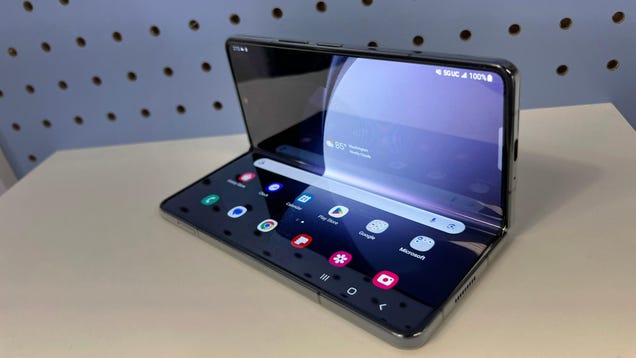
Samsung followed through on its promise to reveal its two latest foldables during its Unpacked event in Seoul today. We now know that the new flagship foldable, the Galaxy Z Fold 5, indeed uses a new Flex Hinge to narrow the gap between the two halves of the screen, shaving more than two millimeters off the folded thickness. The new model also employs the second-generation Qualcomm Snapdragon 8 processor and the internal screen got a brightness boost.
As our reviewer Sam Rutherford notes in his hands-on, that’s where the big differences end. The Z Fold 4 and 5 have the same cameras, same screen sizes and resolutions, and the same batteries — though the new processing tricks and more efficient chipset may allow this year’s model to make better use of that hardware. The new phone also carries the same $1,800 MSRP, so if you’re deliberating between this model or the previous one, you may as well go for the latest.
But how does the latest Z Fold compare to Google’s Pixel Fold? For a long time, Samsung was the only major player on the foldable pitch, until Google released its entrant and brought some serious competition. Both phones have the same size internal screen, but Samsung’s orientation is taller and skinnier than Google’s. The Z Fold 5 has a little bit bigger battery and three of the five cameras boast more megapixels than the ones on the Pixel Fold.
Here are the specs for Samsung’s Galaxy Z Fold 5 and Google’s Pixel Fold side-by-side so you can see which one makes the most sense for you. We also included specs for the Galaxy Z Fold 4 so you can see what changed (and what didn’t) this year.
Icy Blue, Phantom Black, Gray, Blue or Samsung-exclusive Cream
Obsidian or Porcelain
Graygreen, Phantom Black, Beige or Samsung-exclusive Burgundy
This article originally appeared on Engadget at https://www.engadget.com/the-galaxy-z-fold-5-vs-pixel-fold-did-samsung-rise-to-googles-challenge-113709671.html?src=rss
It looks like the big entertainment powers are digging in for a long battle with striking actors and writers. Not that they don’t have money to use. Here’s an example: Netflix’s recent job posting for a machine learning platform product manager, with a heady annual salary of $300,000 to $900,000 (that’s a range). That’s compared to many actors who make around $200 a day, according to this SAG-AFTRA contract. AI’s role in creating future entertainment is a key item of debate for both striking parties.
The job listing indicates AI will be used to “create great content” and not just develop new algorithms to recommend shows and movies. The posting also alludes to integrating artificial intelligence in “all areas of the business.” The first tentative steps have already been made: Netflix currently airs a Spanish reality dating series called Deep Fake Love, which scans contestants’ faces to create AI-generated deepfakes, while its gaming studio employs generative AI to compose narratives and dialogue.
– Mat Smith
You can get these reports delivered daily direct to your inbox. Subscribe right here!
DJI is one of the most innovative gadget companies out there, constantly trying new things with its drones, like a triple-camera setup on the Mavic 3 Pro. With the launch of the midsized Air 3 camera drone, the company has introduced a new trick called dual primary cameras. That means the telephoto camera has the same specs as the main one, rather than being relegated to lesser quality like it was on the Mavic 3. That opens up new possibilities for pilots, giving them two ways to create cinematic shots. Further highlights include long battery life, reliable obstacle protection and an extensive feature set. Image quality might not be good enough for some pros when compared to the $2,200 Mavic 3 Pro, but at $1,100, it’s considerably cheaper.
Threads is about to get vastly more useful as Meta rolls out chronological feeds of posts from the people you actually follow. Many observers said this was a key feature Threads needed to truly compete with Twitter, long a vital source of real-time information. And hopefully bury all the celebrities and brands spamming my feed. Meta has added a few other features to Threads. In the Activity tab, you can now filter notifications by follows, replies, mentions, quoted posts, reposts and interactions from verified accounts (or just opt to view all your notifications together).
The company blames its losses on podcasts and restructuring.
Spotify saw its million monthly active users (MAU) climb to 551 million after welcoming 36 million new listeners in the last quarter. Despite the massive influx, Spotify still lost a significant amount of money. Its total revenue for the period is $3.5 billion (€3.2 billion), 11 percent larger than last year’s. However, it also posted an adjusted operating loss of $123.7 million (€112 million). Spotify blamed those losses on the shutdown of its podcast shows, as well as on excess real estate and severance for employees laid off due to company restructuring.
The company is ending production on the original model amid a shift to its Ultium battery system.
General Motors isn’t quite done with the Chevrolet Bolt. The company said it would end production of the popular, wallet-friendly EV and EUV this year, largely because it relies on old battery cell tech and the factory where it’s made is being refitted. However, there’s some positive news: GM has confirmed a new version of the Bolt is on the way. The company hasn’t revealed many details about it – you’ll need to wait until later this year for that – but the next-gen model will use GM’s Ultium battery system as well as its Ultifi software platform.
This article originally appeared on Engadget at https://www.engadget.com/the-morning-after-netflix-lists-900000-ai-job-to-help-create-great-content-111516278.html?src=rss
After I reviewed the Motorola Razr+ earlier this year, I grew besotted with its external screen. Not only was its 3.6-inch outer panel larger than the 1.9-inch version on Samsung’s Galaxy Z Flip 4, it was also more useful. Since then, I’d been hoping that Samsung would adopt a bigger outer display on its next-gen Flip foldable, and today, my wish has been granted. The Galaxy Z Flip 5, which the company launched today, sports a 3.4-inch window on the outside that’s 3.78 times larger than before.
It also has a new “Flex Hinge” that allows the device to fold shut without leaving a gap between the two halves of the internal screen. Throw in the typical processor upgrades, double the base storage and some software enhancements, and the Z Flip 5 appears to be a small, but meaningful step up for the same $999 starting price as last year.
A larger external screen with lots of potential
The highlight of the Z Flip 5 is clearly its larger external display, which Samsung has infuriatingly decided to rename the Flex Window. I don’t know why, since this panel doesn’t fold and the old name of “Cover” screen still makes sense. Confusing name aside, it’s easy to see why the bigger panel is more useful. Widgets like Calendar or Weather can show data for multiple events and days. Buttons are larger, so you can more easily skip songs in the media player, start or stop timers and more.
With more room, Samsung was able to squeeze two additional shortcut buttons in the Quick Settings drawer that appears when you swipe down from the home screen. Dragging up opens Samsung Wallet, so you can quickly pay for your morning coffee.
To be clear, the Flip 5’s 3.4-inch panel doesn’t stretch across the entire back half of the phone. It’s shaped like a file folder, sort of like a rectangle that’s been awkwardly cut to avoid the pair of cameras at the bottom right. This makes for a very strange aspect ratio that many apps might struggle with, but for the most part, the software sees the screen as a rectangle. The little tab at the bottom left is largely ignored and is devoted to a Samsung Pay shortcut or a space for any ongoing activities to show their progress. If you have a timer running or a song playing, for example, a small progress bar appears there.
Because Samsung now supports more widgets on the cover, getting through all of them can become a slog. I saw about a dozen of them on the demo unit, and having to swipe 10 times to get to the one I want would suck. Thankfully, the company introduced a new gesture that lets you pinch out to access Multi Widgets view, and from there you can quickly jump to the tile you want. Don’t confuse this with the All Apps page on Android — it may look similar, but it only shows you the widgets that Samsung has made available on One UI 5 for the Flip 5.
Photo by Sam Rutherford
Another thing that may have you thinking the Flex Window can give you the full Android experience is that it supports a handful of apps like Message, YouTube, Google Maps, WhatsApp and Netflix. In countries like Korea, you’ll also find popular options like Kakao Talk. These aren’t widgets — they run like the full-fledged versions of themselves on the outside screen. I watched some YouTube videos, drafted messages and looked up restaurants in the area on the smaller panel and found them to be pretty much identical to the larger versions.
Though the practicality of using full Android on the external display is debatable, I still find it questionable that Samsung limits what apps can run natively on the Flex Window. That’s not to say you can’t find a workaround. The company itself offers an app called Good Lock that will let you run any Android app on the tiny panel. Still, it’s different from the Moto Razr+, which basically runs Google’s whole operating system up front.
Samsung’s approach is meant to ensure that only users who are invested enough to install a separate app to mimic the full Android experience on the Flex Window can. This way, if things break or look weird, you only have yourself to blame.
Another area where Moto and Samsung differ on the cover screen is the QWERTY keyboard. Both companies let you respond to messages and notifications with a full-sized keyboard, and Moto takes up the entire canvas to give you bigger buttons. Meanwhile, Samsung only uses about the bottom two thirds of the space, while retaining the message or input field at the top so you can see what you’re entering or responding to.
I like having larger keys, but Moto’s layout adds a step where, after typing your reply, you have to back out of the keyboard to the app and hit the submit button. On the Flip 5, the Send button is right above the keyboard and you can tap it when you’re done. I’ll have to spend more time with a review unit to better evaluate the two approaches and see which I prefer.
Cameras and Flex Mode
One of the best things about having a larger cover screen is how much more useful it is as a viewfinder. Most foldable phones let you use the secondary display to preview shots you take with the rear cameras, which are almost always superior to the interior sensors. On the Z Flip 4’s tiny sliver of a panel, it was hard to see what I was recording. This year, you’ll actually be able to view your entire shot before taking it. Like before, you can also swipe to change modes and lenses, as well as pinch to zoom in on your subjects.
The camera hardware hasn’t really changed. Samsung applied a different coating to the primary lens and tweaked some of the software to enable greater digital zoom. But on paper the Flip 5 has the same pair of 12-megapixel main and ultra-wide cameras as its predecessor. Inside, the 10-megapixel selfie camera has a slightly larger aperture of f/2.2 (compared to last year’s f/2.4), which should make for brighter, clearer shots. Without a side by side comparison, though, it’s tough to tell how noticeable of a difference it will make.
It’s not like you’ll want to use the internal camera much, since you can easily frame up shots with the outside sensors now. But it could come in handy for video calls or livestreams, in which case you might find it handy to prop the phone up by folding it at a 90-degree angle and sitting it up on a table.
When you fold the Flip 5 but don’t completely shut it, Flex Mode kicks in (on compatible apps). We’ve seen this on older models — apps like YouTube, Camera and Gallery will adapt their layouts by presenting content on the top half and controls on the bottom. This year, though, Samsung added more shortcuts to the Flex panel that appears on the lower half (if you enable the feature). When the Flip 5 is flexed, a small icon shows up on the bottom left that will bring up the navigational panel and move the rest of the app to the top portion of the screen.
Photo by Sam Rutherford
Here, you can have settings that make one-handed use slightly easier. You can press a button to bring down the notifications shade instead of having to reach your thumb all the way to the top. You can also take a screenshot using a shortcut or bring up a touchpad for exploring the top half of the screen with a cursor. I didn’t get to spend a lot of time with the updated Flex Mode at the hands-on session, but I know I was less than impressed when I reviewed the Flip 4 last year, after initially being excited about the feature. This time around, I won’t be so easily fooled (I hope).
New hinge, old crease
One of the more significant changes to the Z Flip line is Samsung’s new “Flex Hinge.” I’m still a little miffed about the obsession with calling everything “Flex” this and “Flex” that and honestly “Flex Hinge” sounds like a dating app exclusively for people showing off their biceps. But it’s just a marketing name for Samsung’s redesigned hinge with a dual-rail structure that is supposed to help diffuse impact.
Putting aside my distaste for the name (once more), I have to admit the new mechanism seems solid. The phone closes, without a noticeable gap like the Flip 4. It still felt as sturdy as older models, holding itself up at various angles from about 20 degrees to 160 degrees or so. Those of you who found the gap irritating should be relieved.
Photo by Sam Rutherford
People who hated the crease in the middle of the internal screen, though, will be disappointed. When I held up the Flip 5 next to a Flip 4 that I brought, the degree to which their flexible displays wrinkled was pretty much identical. But in my years of testing foldable phones, creases have never been anything more troublesome than an aesthetic quirk. It won’t get in the way of actually using the device.
Processor, storage and other specs
In fact, you’ll probably enjoy the Flip 5’s internal screen, which is a 6.7-inch Full HD AMOLED panel that refreshes at 120Hz. The 22:9 aspect ratio is slightly taller than your average smartphone, but most apps run fine. Powering everything this year is the Snapdragon 8 Gen 2 for Galaxy chipset that’s also in the Galaxy S23 series. Samsung doubled the storage for the Flip 5, so the base model gets 256GB (instead of last year’s 128GB) while costing the same. That’s a nice touch, and might even make me forgive the company’s overuse of the word Flex.
Also in Samsung’s favor is this year’s selection of colors. You can choose from the standard black (graphite), cream, lavender or this generation’s signature color — mint. It’s a similar shade of green to the one Apple used for the iPhone 12, which is still one of my favorite colors ever used on a handset. Plus, I was beginning to find the Flip 4’s Bora Purple a little dated.
Photo by Sam Rutherford
Pretty much everything else about the Flip 5 is the same as its predecessor. The battery size is the same at 3,700mAh, and it recharges at the same rate as well. That’s a little disappointing, considering the Flip 4 already struggled to last an entire day. But, perhaps the new larger cover screen is useful enough that you can conserve battery life by using the internal display less.
The Flip 5 also retains the same IPX8 water-resistance rating as the Flip 4, though it uses the newer Gorilla Glass Victus 2 covering on the outside. The handsets didn’t feel very different to me, so any changes here are pretty subtle.
Frankly, the biggest difference to the Flip 5 is its Flex Window, followed by its Flex Hinge. Some tweaks to Flex Mode round up the set of upgrades Samsung is bringing to its smaller foldable this year. Though I’m a fan of roomier screens on the outside of flip-style foldables, I can’t help but wonder: is Samsung limiting the Flip 5’s potential with its reluctance to run full Android on the small display?
That’s a question I can only answer after spending more time with a review unit and evaluating things like camera quality, battery life and real-world performance. For now, Samsung has brought us hardware that holds a lot of promise.
This article originally appeared on Engadget at https://www.engadget.com/samsung-galaxy-z-flip-5-hands-on-a-larger-external-display-holds-promise-110059050.html?src=rss
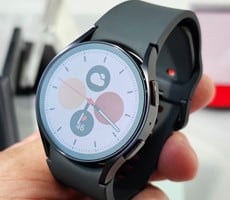
While Samsung’s latest Galaxy Watches might not be the highlight of its second Unpacked event this year, they’re arguably the most anticipated Android smartwatch launch every year. One of the most conspicuous absences from the last model was the fan-favorite spinning bezel that’s long been a hallmark of Samsung’s wearable. With the announcement of the Galaxy Watch 6 series today though, the bezel is back. Specifically, Samsung has unveiled two new models — the Galaxy Watch 6 and the Galaxy Watch 6 Classic, and the latter sports a smaller rotating bezel than the last generation that did. That, along with some physical refinements, are the most obvious changes on the hardware front, while health-tracking continues to be a focal point for the Galaxy Watch series.
Physical and hardware changes
Samsung reps had a Galaxy Watch 5 at the event and when I held it next to a Watch 6, I could see how much cleaner the design was. While the company did shave some fractions of an inch off the case, that’s not as noticeable as the fact that the screen now lies flush with the lugs.
Adding to the sleeker appearance is the Watch 6’s display, which is now 20 percent larger than the previous model, thanks to a bezel that’s 30 percent slimmer. On the Classic, Samsung managed to make the physical spinner 15 percent smaller, too, so it also has a 20 percent bigger display.
Despite its smaller size, the mechanical bezel on the Watch 6 Classic seems just as easy to use as before. I could still feel individual grooves under the frame as I jumped through apps and widgets by rotating the wheel, using each notch as a tactile cue to figure out what page I was on. And credit to Samsung for bringing back this glorified fidget spinner without making the Classic too bulky, although it comes in larger sizes (43 and 47mm) than the standard model (40 and 44mm).
In addition to getting bigger, the Watch 6s’ panels are sharper and brighter than before too, going up 2,000 nits this year. You can also adjust the brightness of the Always On Display, which is nice on a sunny day or when you’re running low on juice.
As with each smartwatch launch, the company has also added faces and straps for the Watch 6 series that older generations can use too. But what’s intriguing this year is a new “one-click” mechanism for some bands that should make swapping them easier. It took a few tries to figure out, but once I did I found it simpler than the Pixel Watch’s version. All you need to do is push down on a button then lift the strap up out of the lug. Putting it back in is a matter of holding down the button and aligning the screws to the lug, then letting go.
Other physical changes to the Watch include an updated processor and larger battery. Samsung says you can get eight hours of juice on eight minutes of “fast charge,” so if you’re running low and still want to track your sleep, you should be able to plug in and quickly get enough power to last all night.
Photo by Sam Rutherford
Sleep tracking and insights
Speaking of, some of the biggest updates to the Galaxy Watch series are coming to its sleep-tracking and coaching features. For those who wear the watch to bed, more insights are coming. Samsung says the Watch 6 will give users “in-depth analysis of Sleep Score Factors” like total sleep time, cycles, awake time and new parameters the company is calling “physical and mental recovery.”
Samsung also worked with the National Sleep Foundation to co-develop “more individualized Sleep Messages” that give users feedback each morning about their night. The Watch 6 can also recognize patterns around your sleep and wake times to see how consistent you are, and assign a “Sleep Animal Symbol” to represent your style. This is very similar to what Fitbit and Google offer with the Pixel Watch, but Samsung is not locking this behind a paywall.
Sadly, I wasn’t able to test any of these new sleep-related features (I’ve been asked to stop napping on the job), and some of them take at least seven days of wear to kick in, so we’ll have to wait till we get in a sample for testing before I can evaluate these.
Photo by Sam Rutherford
Fitness, heart rate and other updates
Other updates I wasn’t able to truly gauge include the new Samsung Wallet app (instead of just the Pay widget), personalized Heart Rate Zone calibration for running workouts and irregular heart rhythm notifications. But I can tell you what they’re supposed to do.
The Samsung Pay feature on the watch has been replaced by the Wallet, which means you can use digital IDs (where compatible), boarding passes, event tickets and loyalty cards on the watch. There’s also a new Track Run workout type that logs the number of laps you complete, while the personalized Heart Rate Zone tool requires you to go through a ten-minute calibration session before it gives you five “optimal running intensity levels” so you can exercise to activate processes like fat-burning.
When the Galaxy Watch 6 detects heart rhythms that might suggest atrial fibrillation, it will prompt you to run an electrocardiogram test. It’ll monitor your pulse in the background for such patterns, including when you’re asleep. Overnight, the Watch 6 series’ onboard skin temperature sensor will also kick in to gather data that can help determine what stage of your menstrual or ovulation cycle you might be entering.
Photo by Sam Rutherford
Samsung also introduced a Skin Temperature API under its “Privileged Health” software development kit (SDK) that will allow third parties to create different applications for the Watch’s LED infrared sensor or the temperature data that it gathers. One example is a new Thermo Check app that lets you measure water temperature before you have to dip into a pool. (Of course, if you’ve stuck your whole hand in the water, you probably already know if it’s too cold.)
A number of third-party apps have also been brought over to or optimized for the Watch 6, as well as other watches running Wear OS 4. These include WhatsApp, Google Calendar, Gmail, Audible, along with updated versions of Peloton and MyFitnessPal. Samsung also tweaked its Camera Controller app to let you remotely snap pictures, switch modes and zoom from the latest foldable phones (in addition to boring ol’ regular handsets). Find My Phone on the Galaxy Watch will now show where your misplaced device is on a map, as well.
For obvious reasons, I wasn’t able to test most of these updates — given I couldn’t simply go running for ten minutes at a hands-on, and it probably would have been a bad idea to load my credit card on the demo units. But I don’t feel as if I missed out on much. The most significant changes appear to be cosmetic and many of the software updates might eventually trickle down to older models. I’m intrigued by the sleep insights Samsung looks set to deliver, but that will take at least seven days for me to start seeing results. Stay tuned for our full review to see how the Galaxy Watch 6 performed on that front, but also for the details on battery life and real-world experience. Until then, if you’re ready to get a new Android smartwatch, you can already pre-order the Galaxy Watch 6 from $300 and the Watch 6 Classic, which starts at $400. They’ll be available starting August 11th.
Samsung is also making some tweaks to last year’s Galaxy Watch 5 Pro, adding access to hiking routes via the GPX (GPS Exchange Format) File Database as well as more options for Route Workout types. You can still buy that device for $450.
This article originally appeared on Engadget at https://www.engadget.com/samsung-galaxy-watch-6-hands-on-the-spinning-bezels-triumphant-return-110047694.html?src=rss
This year’s Galaxy Unpacked foldable showcase is more of a Samsung eco-system barrage. Two foldables, two wearables, and no fewer than three tablets are here to tempt you to stick with the Galaxy family (or jump ship from rivals like Apple and Google.) While the fourth-generation foldables are arguably the big reveals, Samsung’s latest flagship tablet, the Galaxy Tab S9 Ultra, is making its case for a premium Android tablet.
The flagship Galaxy Tab S9 is only the company’s second “Ultra” tablet, and there are many similarities to last year’s Tab S8 Ultra, with its 16:10 screen, dual-camera array on the back and magnetized stylus holster. This time, you can attach the stylus in either direction on the holster, and it’ll still charge – an odd oversight on the previous model.
Photo by Mat Smith / Engadget
Design-wise, it’s more of the same for Samsung’s tablet: More smooth aluminum frames but with slimmer bezels. They’re still thin and feel incredibly premium, especially the wide-screen Ultra. The Tab S9 Ultra feels a little unwieldy in my hands, partially due its taller screen ratio, which I’m not used to. Also because it’s almost 13 inches wide.
At least it’s gorgeous. Samsung has evolved the displays on its tablets even further, with the ninth-generation tablets all using Dynamic AMOLED 2X displays, like those found on its most powerful (and expensive) Galaxy S phones and Galaxy Book Ultra laptops. The Tab 9 Ultra has a 14.6-inch AMOLED display, capable of reaching 120Hz and supporting HDR 10+. While I’ll focus on the Ultra model, the Galaxy Tab S9+ with its 12.4-inch display and Tab S9 with its 11-inch screen also get the same beefed-up AMOLED tech.
Unsurprisingly, the screens are all vivid and high-contrast – it’s Samsung’s strength right here. I had to reduce the screen’s brightness pretty substantially just to capture images of the Tab S9 Ultra. Once again, the Galaxy Tab Ultra model comes with a notch – gasp – which appears to be dual 12-megapixel cameras. (There are a few specs we’re double-checking with Samsung.) The tablets also pack four AKG-tuned speakers, and if you’re planning to watch a lot of movies, shows or games, there’s also support for Dolby Atmos.
Beyond the display, Samsung has made two other major upgrades to the Tab S9 series. First up is IP68 dust and water protection to all the new tablets. Samsung says this means it should survive depths up to 1.5 meters of water, while it’s also launching a ruggedized cover (pricing TBD) to make the most of the tab’s new hardy bona fides.
Photo by Mat Smith / Engadget
Samsung has also improved the processor for 2023 and its tablets all use Qualcomm’s Snapdragon 8 Gen 2. The company claims some major performance improvements compared to last year’s Tab S8, including up to 32 percent improved CPU and 41 percent better GPU performance. Both the Tab S9+ and Tab S9 Ultra will be able to fast-charge at up to 45W, although only the Tab S9 Ultra will come with the compatible charging brick. That’s why it’s the Ultra, people. Both of the larger tablets have a dual-camera array on the rear, with 13- and 8-megapixel sensors, while the Tab S9 will have a single 13-megapixel camera.
You’ll be able to get up to 12 gigs of memory across all three models, although the base Tab S9 will also be available with 8GB of memory and 128GB of storage. The Tab S9 Ultra tops out with a heady 1TB storage for power users. Make sure to factor in the cost of your keyboard dock, though. We’re waiting to confirm pricing with Samsung for the Tab S9 Ultra version, but last year’s premium keyboard folio, which includes a trackpad, cost $350.
At least Samsung is making sure some apps power-users might demand make use of the add-on, with the company teasing CAD design app ArcSite and video-editor LumaFusion (think an Android-flavored iMovie) on its top tablet.
Photo by Mat Smith / Engadget
Aside from the bidirectional charging feature, the S-Pen also gets IP68 support, which is more likely to get dropped into water hazard than an almost 15-inch tablet. Samsung announced that it will also launch a creator edition of its S-Pen, with a new textured finish, wider tilt angle and multiple stylus tips. However, I didn’t get to test that during my meeting with Samsung and there’s no word on pricing and launch date, yet.
The standard S-Pen feels, well, like a Samsung Stylus. It’s more substantial than the one included with the S23 Ultra and Note series, with a flattened side to aid grip, and it seems fluid and responsive on the Tab S9’s screen.
Samsung’s Multi Control attempts to sew together your disparate Galaxy devices. I tested out some simple tasks during my briefing, and (after logging into both devices with the same Samsung account) could interface between a Galaxy Flip 4 and the Tab S9 Ultra. While setting up Multi Control, you’ll even get to choose where your phone appears in relation to the Tab S9, just like setting up a second screen on a PC. Then, if using a trackpad or mouse, you can inch the cursor across to your Samsung phone, type into search bars and emails from your keyboard (not sure why you would do that), and drag and drop files and images.
Prices for Samsung’s flagship tablet, the Tab S9 Ultra start at $1,200, while the Tab S9+ will start at $1000 and the Tab S9 at $800. Preorders will open for all three on July 26th, with the tablets eventually going on sale August 11th.
This article originally appeared on Engadget at https://www.engadget.com/samsung-galaxy-tab-s9-ultra-hands-on-a-premium-tablet-with-water-protection-110020872.html?src=rss
Enlarge/ It takes careful study and the right kind of bones to determine how something like this breathed. (credit: Tito Aureliano et. al.)
Somewhere in Earth’s past, some branches on the tree of life adopted a body plan that made breathing and cooling down considerably more efficient than how mammalian bodies like ours do it. This development might not seem like much on the surface, until you consider that it may have ultimately enabled some of the largest dinosaurs this planet has ever known. It was so successful that it was maintained by three different groups of extinct species and continues to exist today in the living descendants of dinosaurs.
Because lungs don’t usually survive fossilization, one might wonder how scientists are able to ascertain anything about the breathing capabilities of extinct species. The answer lies within their bones.
In a suite of papers published in late 2022 and early2023, paleontologists examined fossil microstructure within some of the earliest known dinosaurs to determine just how early parts of this system evolved.
Another Samsung Galaxy Unpacked is in the books, and another deluge of Galaxy products has arrived in its wake. Most notably, Samsung used the event to announce its latest pair of foldable phones: the book-style Galaxy Z Fold 5 and the clamshell Galaxy Z Flip 5, which start at $1,800 and $1,000, respectively. Those are joined by a trio of new tablets in the Galaxy Tab S9, Tab S9+ and Tab S9 Ultra, as well as a pair of new smartwatches in the Galaxy Watch 6 and the Watch 6 Classic. We’ll have full reviews in the near future, but if you’re already looking to grab one of these new Galaxy devices, we’ve broken down what’s new and compiled all the appropriate pre-order links in one place.
Samsung Galaxy Z Fold 5
The Samsung Galaxy Z Fold 5 is up for pre-order today, with wider availability beginning on August 11. Like its predecessor, the device starts at $1,800 for a model with 256GB of storage. However, if you pre-order the device by August 10, Samsung says you can upgrade to the higher-capacity 512GB model for no extra cost. Over at Amazon, you can get the same upgrade, plus a $200 Amazon gift card. A 1TB variant is available on Samsung.com, while all three SKUs come with 12GB of RAM.
You can read our hands-on preview for a full rundown, but the Galaxy Z Fold 5’s main upgrade centers on its “Flex Hinge,” which largely eliminates any gap between the phone’s halves when it’s folded. The device is slightly thinner in that mode as a result, though it’s still a bit thicker than Google’s Pixel Fold. The whole thing now runs on a faster Qualcomm Snapdragon 8 Gen 2 for Galaxy chipset, and the main display has a higher peak brightness of 1,750 nits, up from 1,200 nits. (But it still has a visible crease.) There are some new gestures aimed at boosting the software’s multitasking chops, as well as a thinner S Pen stylus.
That said, the broad strokes of the Galaxy Z Fold 5 are similar to before. The camera hardware, displays and battery aren’t drastically different, and the price is still high. But if you’ve been looking to upgrade from an older Galaxy Z Fold, or if you’ve just been looking to hop on the foldable train, this looks to be a close follow-up to a premium device we recommend in our smartphone buying guide.
Samsung Galaxy Z Flip 5
The new Galaxy Z Flip 5 is also available to pre-order today, with an official on-sale date of August 11. It starts at $1,000, just like last year’s Z Flip 4, but the base model now comes with 256GB of storage instead of 128GB. As with the Z Fold 5, you can upgrade to a 512GB unit for no extra cost if you pre-order by August 10. Both variants have 8GB of RAM. If you pre-order through Amazon, you can get that same storage upgrade alongside a $150 store gift card.
The big upgrade here is a significantly larger cover display. Whereas the Z Flip 4 had a 1.9-inch external panel, now you get a 3.4-inch screen. That brings the device more in line with the Moto Razr+ from earlier this year. Samsung is touting improved widget support thanks to that expanded screen space, though only a handful of full-on apps are designed to run on the outer display for now. Still, it should be easier to preview photos, control music, reply to texts, view the weather, check notifications and so on without having to physically unfold the device.
Like Samsung’s larger foldable, there’s a redesigned hinge that flattens the gap between the phone’s two halves and makes the device slightly thinner when folded. Samsung has bumped this device up to a Snapdragon 8 Gen 2 for Galaxy chipset as well, and it claims that some new processing tricks will help with low-light photos in particular. The rest of hardware isn’t much different outside of that, but you can check out our hands-on for more info.
Samsung Galaxy Tab S9
Beyond foldable smartphones, Samsung refreshed its Galaxy Tab lineup with a trio of new tablets: the 11-inch Galaxy Tab S9, the 12.4-inch Galaxy Tab S9+ and the 14.6-inch Galaxy Tab S9 Ultra. Those start at $800, $1,000 and $1,200, respectively, with pre-orders available today and general availability starting on August 11. The base Tab S9 comes with 8GB of RAM and 128GB of storage, while the larger two models include 12GB of RAM and 256GB of storage by default. Pricier variants with 5G support are also available.
Much like the foldables, those who pre-order a base Tab S9+ and Tab S9 Ultra can upgrade to a variant with 512GB of storage for no extra cost. The standard Tab S9, meanwhile, is eligible for a free upgrade to a 256GB model. Samsung’s store listing says anyone who pre-orders a Galaxy Tab S9 device can take $115 off a pair of the company’s Galaxy Buds 2 Pro wireless earbuds as well.
While not radically different from last year’s Galaxy Tab S8 series, the new slates do bring a handful of meaningful changes. The entry-level Tab S9 now comes with a richer AMOLED display instead of a TFT LCD panel, while all three tablets now have an IP68 water resistance rating, so you can feasibly use them in the pool or shower with less worry. Each device now runs on a faster Snapdragon 8 Gen 2 for Galaxy chipset as well.
In general, these are still high-end Android tablets, with slim aluminum frames, vivid displays and strong speakers. The question, as always, is whether you’re willing to pay this much for an Android tablet, even with Samsung’s usual modifications for productivity and multitasking. If so, the Tab S8 is the top Android pick in our tablet buying guide, and the Tab S9 appears to deliver similar pros and cons. Our hands-on has more details.
Samsung Galaxy Watch 6
Samsung also introduced two new smartwatches at Unpacked: the Galaxy Watch 6 and the Galaxy Watch 6 Classic. Like everything else unveiled today, both wearables are up for pre-order today and will be more widely available beginning on August 11.
The Galaxy Watch 6 starts at $300 for a 40mm case, which is a $20 bump over the Galaxy Watch 5. A larger 44mm model starts at $330. The Galaxy Watch 6 Classic is broadly similar to the standard model but brings back the physical rotating bezel of older Galaxy Watches, a mechanism many users preferred for navigating the OS. That one comes in 43mm and 47mm sizes, which start at $400 and $430, respectively. Samsung says anyone who pre-orders one of the new models will receive a bonus fabric watch band for no extra cost. Bluetooth and LTE variants will be available, and the company is keeping last year’s Galaxy Watch 5 Pro around for those who want a more rugged option.
The Galaxy Watch 6 comes with an extra 0.1 inches of display real estate compared to its predecessor, thanks primarily to bezels that Samsung says are 30 percent thinner. The smaller model of each device has a 1.3-inch, 432 x 432 resolution OLED panel, while the larger variants bump that up to a 1.5 inches and a 480 x 480 resolution. Both use sapphire crystal glass and are said to reach a peak brightness of 2,000 nits. On the Galaxy Watch 6, the screen sits flush with the lugs.
Samsung has slightly increased the size of each watch’s battery: 300mAh for the smaller models, 425mAh for the larger ones. The company rates the overall battery life at up to 40 hours with the always-on display mode off, though, which is 10 hours less than the Galaxy Watch 5’s max estimate.
Beyond that, both devices come with faster Exynos W930 processors, 2GB of RAM (0.5GB more than before), 16GB of storage and an IP68 water resistance rating. They also run on Samsung’s One UI 5 Watch software, which, as previously noted, brings a heavier focus on sleep tracking, plus features like personalized heart rate zones and notifications for irregular heart rhythms. We currently recommend the Galaxy Watch 5 to Android users in our smartwatch buying guide, but we’ll give the new models a full workout soon to see how they stack up.
This article originally appeared on Engadget at https://www.engadget.com/how-to-pre-order-the-samsung-galaxy-z-fold-5-and-galaxy-z-flip-5-110015244.html?src=rss
Today at its Unpacked event, Samsung announced its latest flagship foldable – the Galaxy Z Fold 5 – which features a new hinge, an even sleeker design and a brighter main display. Samsung has also included a handful of new gestures for improved multitasking along with an updated chip. However, after multiple generations without any major design changes and a still extremely high price of $1,800, one has to ask if Samsung’s latest changes are really enough.
The Galaxy Z Fold 5 is centered around what Samsung is calling a Flex Hinge, which is said to have a more streamlined design while still boasting IPX8 water resistance. And thanks to that new hinge, Samsung has managed to get rid of the gap between the screen halves while also decreasing its overall thickness to 13.5mm. That’s a nice move toward everyday usability, though it’s thicker than Pixel Fold, which is only 12.1mm.
On the inside, you get a Qualcomm Snapdragon 8 Gen 2 Mobile Platform for Galaxy for increased performance along with 12GB of RAM and up to 1TB of storage. However, the Z Fold’s battery is staying pat at 4,400 mAh, so Samsung is really relying on power efficiency gains to deliver longer runtimes. As for its cameras, we’re looking at essentially the same general setup as on the Z Fold 4 highlighted by a 50-MP main camera, a 12-MP ultra-wide and a 10-MP telephoto with a 3x optical zoom. Though, Samsung says it’s added some new processing tricks.
The screens are also essentially the same. You still get a skinny baton-like shape with a 6.2-inch OLED Cover screen along with that big 7.6-inch main display on the inside, both of which sport 120Hz refresh rates. That main screen’s peak brightness is now the same as what you get on an S23 Ultra at 1,750 nits, which is rather impressive for a flexible display. That said, it still has a crease, which may be an issue for some. Those who can ignore the divot though, will find a few new gestures to make multitasking on that expansive screen just a bit easier.
Photo by Sam Rutherford/Engadget
When you want to quickly get into side-by-side app view, there’s a simple two-finger swipe in from the left or right. Alternatively, if you want to minimize an app into windowed mode, there’s a new diagonal swipe in from the corner of the display. You can also drag and drop files and photos from one app to another without being in multitasking mode by touching and holding on something, and then using a different finger to open a new app from the taskbar. Granted, this feels kind of clunky. Depending on where things are on the screen, sometimes it feels like you’re playing Twister with your fingers. But I like the direction Samsung is going, it reminds me of dragging a file down to the taskbar in Windows which gives you more of a taste of desktop-style productivity. And while the taskbar is largely the same as before, there are now four spots for recent apps (up from just two).
Finally, while there’s still no room for it inside the device itself, Samsung has created a new S Pen for the Galaxy Z Fold 5 that’s around 40 percent thinner than before that works with a revamped and more compact phone case so there’s somewhere to stash it when it’s not being used.
However, my issue with the Z Fold 5 is that while a lot of the changes are nice in a vacuum, for a company that has had such a head start in the foldable phone space, it seems like Samsung isn’t pushing that advantage as hard as it should. On the Pixel Fold, which is Google’s first foldable phone by the way, we got an interesting new design that’s even thinner than the Z Fold 5 while having a similarly sized screen plus a longer 5x optical zoom, not to mention Google’s superior photo processing. And other big foldables from China, like the Oppo Find N2, are doing a better job at eliminating the crease.
But perhaps more importantly, the Z Fold 5 still costs $1,800, which is ludicrously expensive. That’s kind of disappointing because after five generations, you like to see Samsung leverage its size to scale down the price of foldables. And for something like the Z Flip series, Samsung actually has done a decent job of that. The original Z Flip costs just shy of $1,500 dollars at launch, but Samsung has brought that price down to $1,000. Meanwhile, the first Z Fold started at just under $2,000, and has only come down by $200 over five generations.
Photo by Sam Rutherford/Engadget
Price is still by far the biggest barrier to entry when it comes to large flagship foldables. But if Samsung could bring the Z Fold line closer to $1,500 (even though that would still be very expensive), it would give Samsung a huge leg up on rivals like the Pixel Fold. So while I like the Z Fold 5’s sleeker design, brighter screen and improved multitasking, I still kind of feel like Samsung should be doing more.
The Galaxy Z Fold 5 will be available in three main colors: Icy Blue, Phantom Black and cream along with gray and blue options which will be available exclusively from Samsung.com. The Z Fold 5 will start at $1,800 with pre-orders going live today ahead of an official on-sale date of August 11th.
This article originally appeared on Engadget at https://www.engadget.com/samsung-galaxy-z-fold-5-hands-on-specs-price-is-samsung-squandering-its-head-start-110009600.html?src=rss
Samsung just revealed a much-anticipated update to its foldable phones with some significant design changes, but that’s not all Samsung had to offer at Unpacked. Alongside the new foldables, Samsung is launching new smartwatches and tablets. The Galaxy Watch6 family consists of two watches with two size options, and the Galaxy Tab S9 lineup
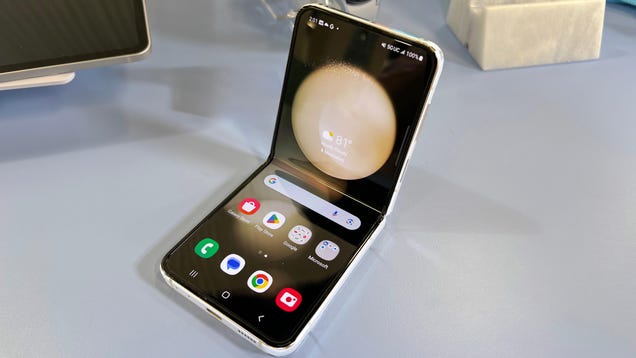
The biggest new product at Samsung Unpacked is probably its smallest folding phone. The Galaxy Z Flip 5 makes bigger changes to its design and functionality than the larger Fold 5, largely on account of having a bigger, more functional exterior screen.
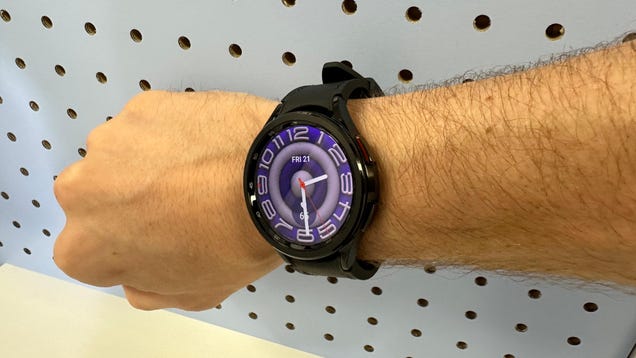
In a world of touchable glass screens, sometimes all users really want is to feel the classic, clicking sensation of older electronics. While a few are still clamoring for the return of physical keyboards on phones, Samsung was on to something with its physical rotating bezel on the Galaxy Watch “Classic” series.…
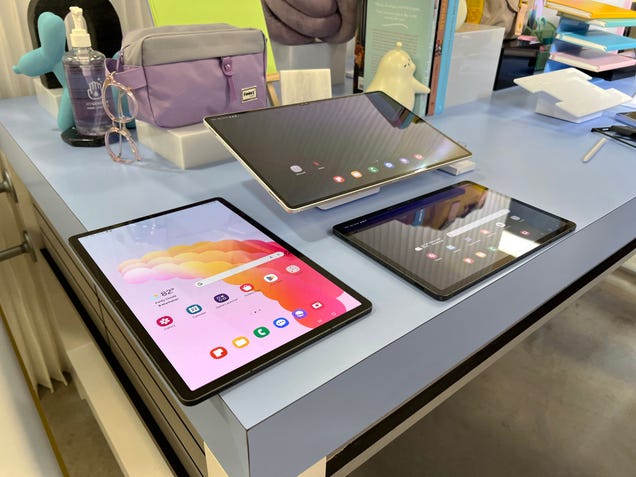
Introduced at the latest Samsung Unpacked, the Tab S9 series of tablets may not get the same level of attention as the Galaxy Fold 5 or Galaxy Flip 5 (or even the Galaxy Watch 6), but it’s still a great example of Samsung’s premium consumer product design.
The latest Samsung Galaxy Unpacked brings us a lot of flash and a lot of folds. Samsung’s latest Z Fold 5 phone may look very similar to last year’s counterpart the Korean electronics giant is betting that a few tweaks to last year’s model will entice a new crowd of buyers. The phone’s next iteration features a…