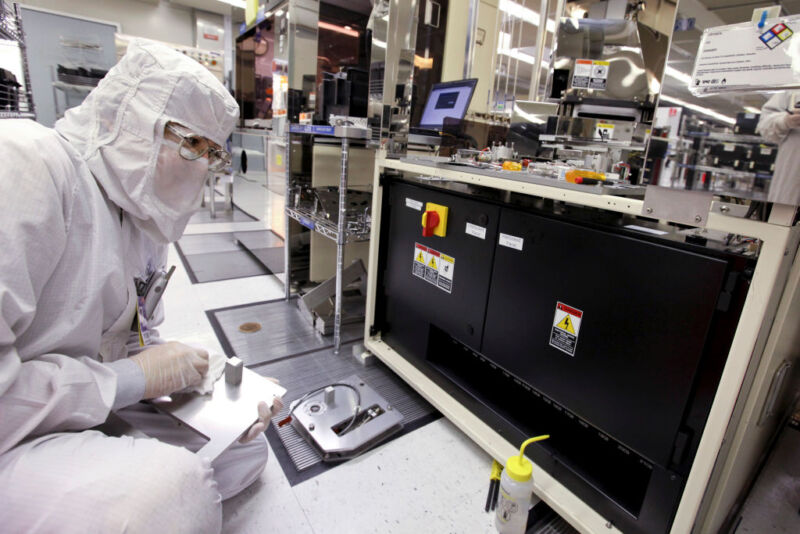
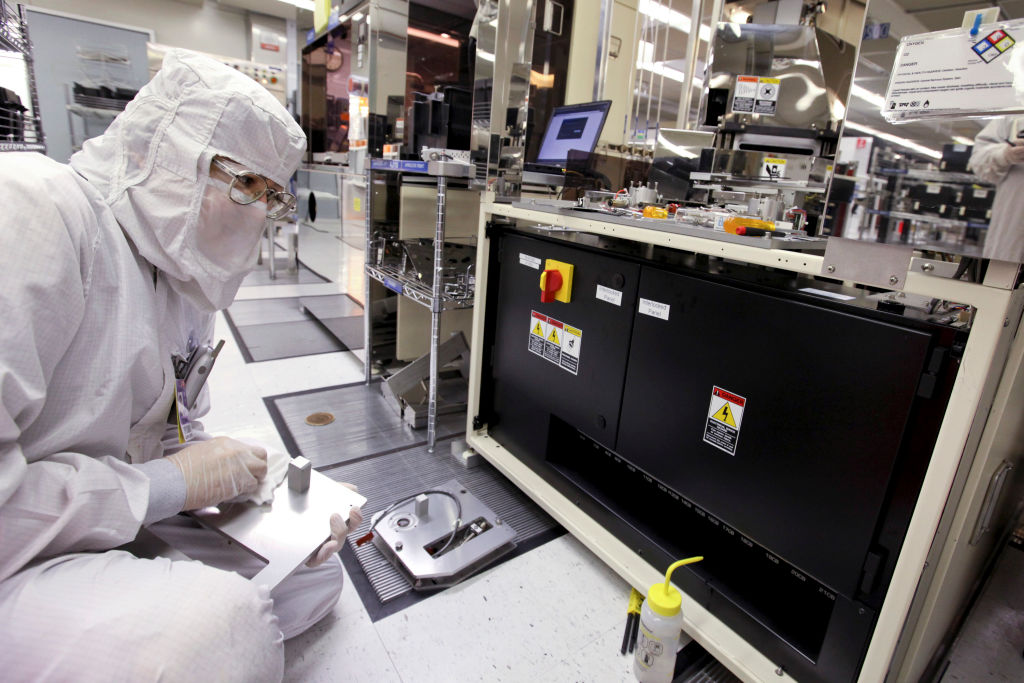
Enlarge/ A worker prepares a silicon wafer machine in a clean room at the Texas Instruments semiconductor fabrication plant in Dallas, Texas. (credit: Bloomberg via Getty Images)
Chipmakers must agree not to expand capacity in China for a decade if they are to receive money from a $39 billion federal fund designed to build a leading-edge US semiconductor industry, according to new commerce department rules.
The department on Tuesday called for applications for funds from the Chips Act passed by Congress last year, as it launched a landmark industrial policy programme designed to counter China.
In announcing the move, commerce secretary Gina Raimondo stressed that the department would be implementing safeguards to ensure the programme was not abused.
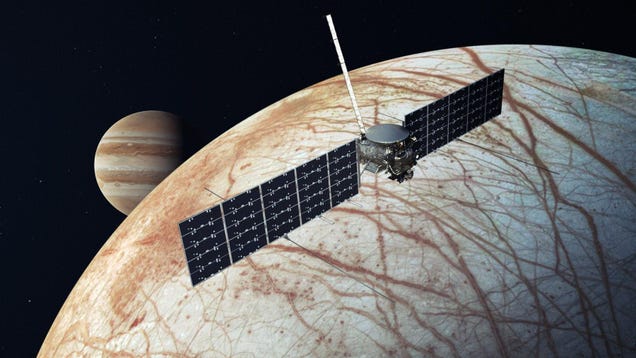
Space exploration takes tons of planning, technological expertise, and daring. And given the long timescales involved, they often require considerable patience. Many upcoming missions to deep space aren’t happening any time soon, but that doesn’t mean we can’t be excited.
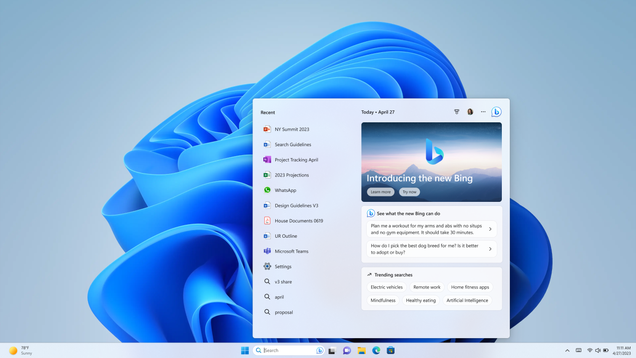
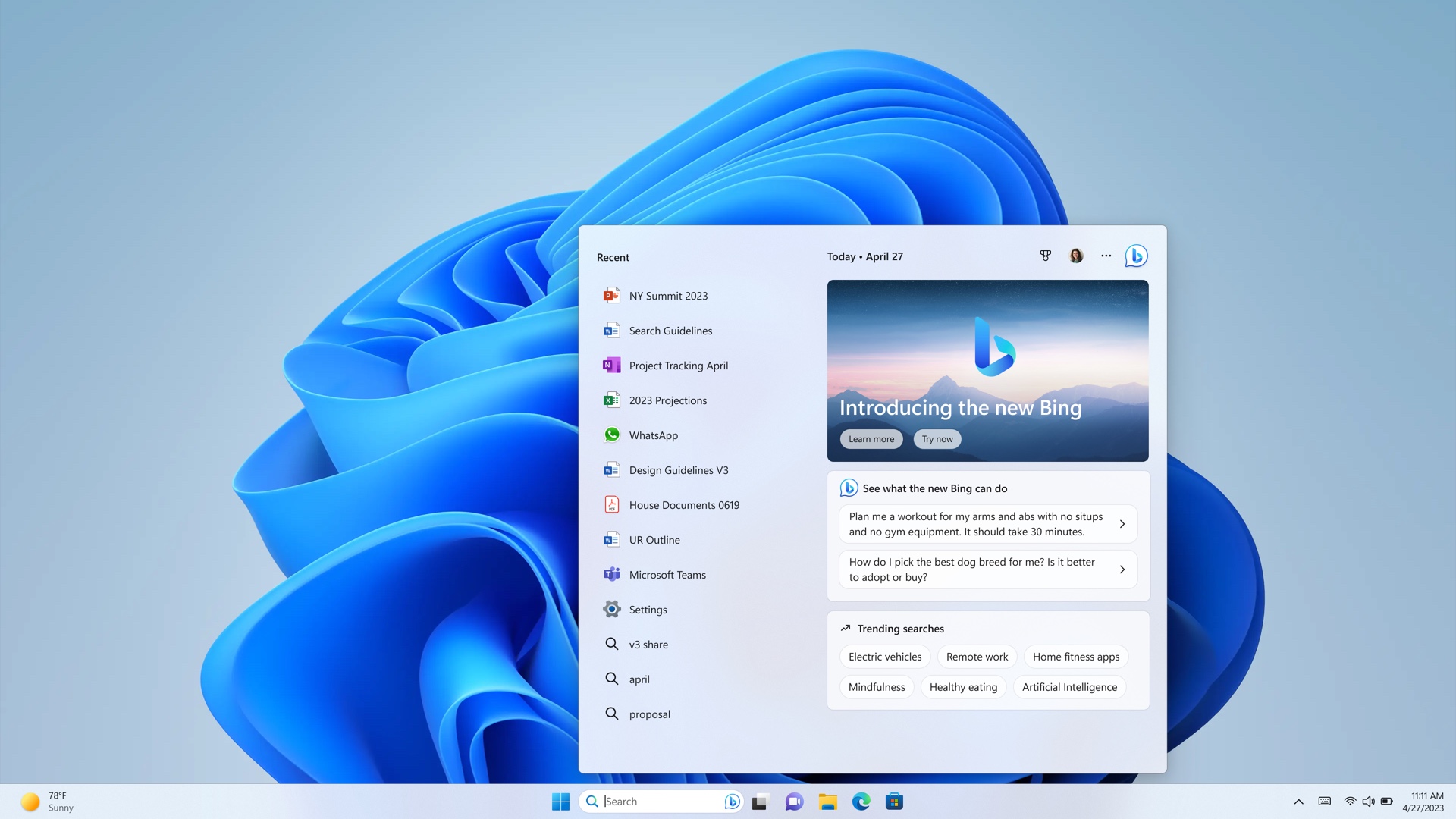
Three weeks after introducing the new AI-infused Bing, Microsoft is ready to shove it into Windows 11 with an update coming today. If you’re in the Bing AI preview, you’ll be able to access all of its new features from the search box in the Windows 11 taskbar. Just imagine a slightly more streamlined version of what we saw with the Bing AI on Edge: In addition to general web searching, you can ask Bing natural language queries and its intelligent chatbot will reply conversationally. If you don’t have access to the new Bing yet, you can still sign up for access on Microsoft’s waitlist.
The impetus here is pretty clear. Now that people are finally talking about Bing in a less derogatory way, Microsoft is aiming to infuse it into the very core of Windows 11. No need to open up Edge or switch your primary web browser. Last week, the company also rolled out the Bing AI preview on its mobile apps and Skype. More so than the expanding access, though, we’ll be keeping a close eye on how Microsoft is improving Bing’s capabilities, while also trying to limit some of its bad behavior. Remember folks, chatbots are just very good predictive text generators, not arbiters of truth.
Microsoft
If you don’t give a lick about Bing AI, this latest Windows 11 update is still packed with plenty of intriguing new features. For one, Windows Insiders will be able to test out Phone Link for iPhones, which will let you make calls and send texts from within Windows. (This follows Microsoft’s recent iCloud integration in Windows 11’s Photos app.) Android users with Samsung phones, who have had access to Phone Link for a while now, will also be able to easily turn on their Wi-Fi hotspots and transfer their browser sessions. It’ll be interesting to see how Microsoft’s solution compares to Intel’s Unison app, which supports calls, texts and file syncing between iPhones and select Windows 11 PCs.
Microsoft is also diving deeper into “touch” experiences with this update. If you’ve got a detachable or convertible PC, the taskbar will automatically shrink down to give you more screen real estate. A swipe up will let you use the taskbar as you normally would. For some users, this may be easier to deal with than having the taskbar hide itself entirely.
The new minimized Windows 11 taskbar for detached touchscreen PCs.
Microsoft
Windows 11 is also expanding support for more braille displays, including three “Designed for Surface” devices from HumanWare. Microsoft this will make it easier to flip between its built-in Narrator screen reader and alternatives. Additionally, Windows’ voice commands are coming out of preview, allowing you to have complete control of your PC without a mouse or keyboard. Microsoft expanded that functionality in its 2022 Windows 11 update — now it appears to be even more robust.
Here’s a quick rundown of a few other features you’ll find in today’s Windows 11 update, which will roll out to users over the next few weeks. (As always, you can check for its availability in the Windows Update app.)
Windows Studio Effects, which includes AI-driven features like background blurring and eye contact during video chats, are now accessible through the taskbar’s quick settings.
You’ll be able to quickly preview your video from the taskbar’s Team’s video chat button.
The Quick Assist app is faster, and you’ll also be able to quickly switch between screen sharing and full control of another users PC. (Troubleshooting your parent’s PC just got a bit easier.)
There are more widgets coming, including Xbox Game Pass, Phone Link, as well as some from third parties like Meta and Spotify. (In the two years since Windows 11’s release, I’ve yet to see anyone actually use its widgets regularly.)
The Snippet Tool can now record your screen.
Enhanced energy recommendations will help you save a bit more power.
The Windows 365 app is now in the Microsoft Store, giving you quick access to Cloud PCs.
This article originally appeared on Engadget at https://www.engadget.com/microsoft-bing-ai-windows-11-taskbar-140056212.html?src=rss
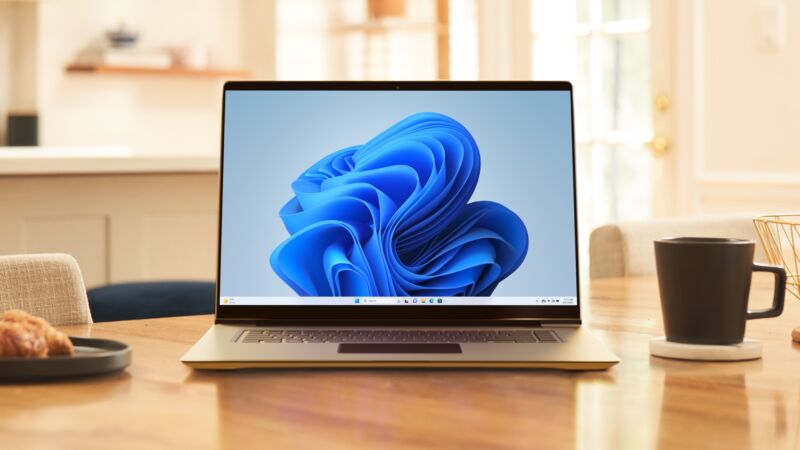
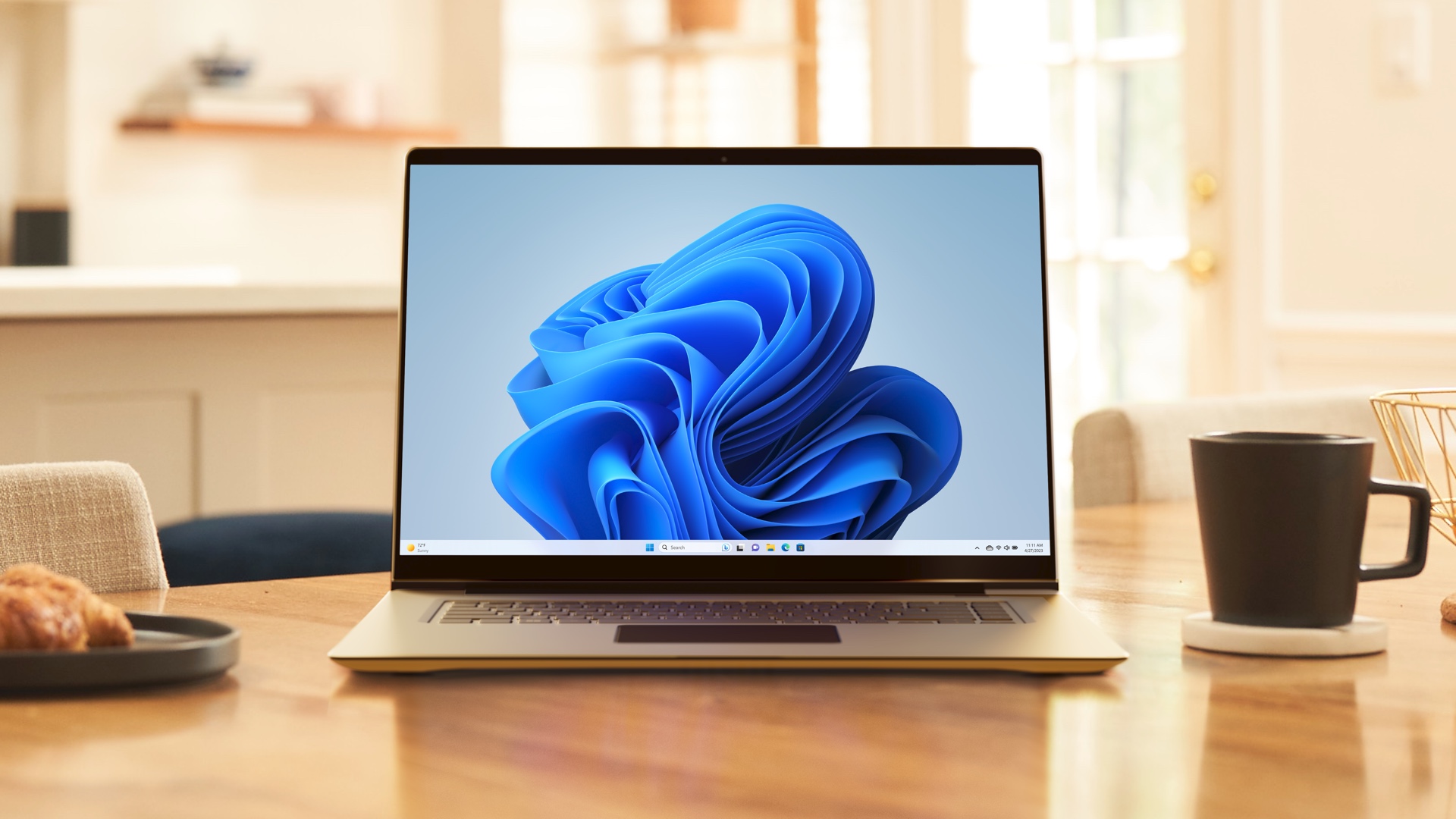
Enlarge/ A PC running Windows 11. (credit: Microsoft)
Today Microsoft announced 2023’s first major batch of updates for Windows 11, part of the company’s plan to release new Windows features “when they are ready” instead of waiting for the big annual update in the fall.
The headliner, at least for people who have signed up for the AI-powered preview of “the new Bing,” is support for those AI-powered Bing features (including the infamous Bing chatbot) in the Windows taskbar. We’ve written more about those features separately. The other changes are more typical of a regular Windows 11 release, featuring a combination of things we’ve seen before and stuff Microsoft has been testing in its Insider Preview channels for the last few weeks or months.
The Notepad app has tabs now—welcome to 2003, buddy! (credit: Microsoft)
Some of the additions enhance existing Windows 11 apps or features. The Notepad app, updated relatively recently with a Windows 11-style design and dark mode support, now supports tabs so you can view multiple notes in a single window. A redesigned Quick Assist app streamlines the process of remotely connecting to, viewing the screen of, and taking control of a PC you’re providing remote tech support for. And the Snipping Tool now supports recording onscreen video in addition to screenshots, making it more useful for recording quick app demos or other snippets.
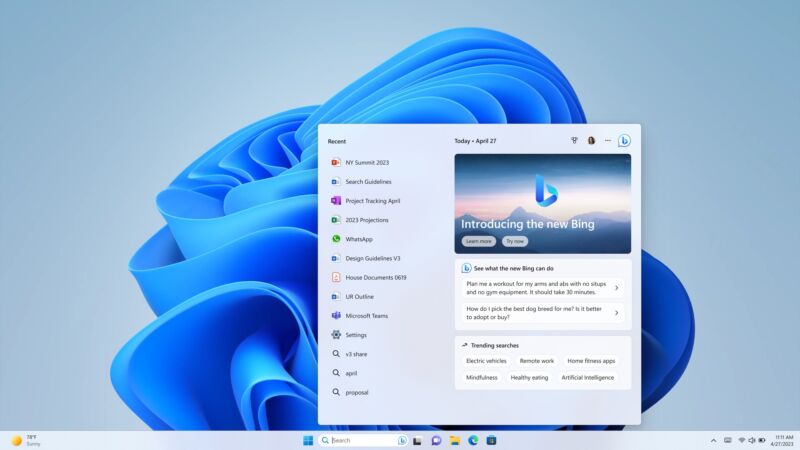
Enlarge/ The “new Bing” running directly from the Windows 11 taskbar. (credit: Microsoft)
Microsoft is adding support for Bing Chat and the other “new Bing” features to the Windows taskbar as part of 2023’s first major Windows 11 feature update. Microsoft Chief Product Officer Panos Panay announced the updates in a blog post released today.
The Windows update doesn’t open the new Bing preview to anyone who hasn’t already signed up for it, and there’s currently a waitlist for new users who want to try the feature. But if and when Microsoft expands the Bing preview to more of its users, millions of PCs that automatically install today’s update will already have built-in support for it.
You can read about the other changes in the new Windows 11 updates here. Anyone running the Windows 11 2022 updates can download them manually via Windows Update starting today, and all of the new changes will roll out to those PCs automatically in March.
Microsoft is taking its first steps towards bringing iPhone syncing to Windows 11. The company announced today that the Insider preview of Phone Link would support iPhones starting this week. The feature (which has undergone several name changes) has worked with Android phones since as far back as 2015.
The initial preview will only sync calls, messages and contacts from your iPhone to a Windows 11 PC. (It will show them like regular Windows notifications.) However, there are some limits: You won’t be able to reply to group messages, and sending media in messages is also unsupported. Still, it’s a big step in the right direction for a feature that has thus far excluded the countless people who use both iPhones and Windows PCs.
Microsoft says Phone Link for iPhones will only roll out to “a small percentage” of Windows Insiders this week; it explicitly states that not all Insiders will initially see the option. Instead, the company will expand the preview to more Insiders as it gathers feedback from the first batch of testers. Further, access is cloud-based, so there won’t be a specific version of the Phone Link app that instantly lets you use the preview.
Microsoft
If you’re one of the lucky few accepted, you’ll see an option to link your iPhone in the Phone Link app. After choosing it, it will guide you through the steps to pair your phone and PC over Bluetooth (including scanning a QR code). You’ll also need to confirm a code and grant permissions on both the Windows and iOS sides to ensure everything syncs up.
The feature follows Intel’s Unison app, which supports calls, messages, notifications and file transfers between phones (including iPhones) and Intel PCs. Several third-party apps like AirDroid have offered similar functionality for years.
This article originally appeared on Engadget at https://www.engadget.com/windows-11-phone-link-supports-limited-iphone-syncing-in-preview-140005285.html?src=rss
GravaStar, known for science-fiction-inspired speakers with surprisingly solid sound, introduced a new model today. In addition to playing music, the Supernova Bluetooth speaker doubles as a lantern — while resembling something that belongs in the Star Wars prequels. The company pitches it as a camping companion that ticks the boxes for music, lighting and oddball novelty.
The speaker has a metallic body made from a zinc alloy. Its lantern-like design can produce customizable lighting effects while changing color to the music’s rhythm. On the audio front, it has 25 watts of power and a rating of 90db with a three-inch full-range speaker and half-inch high-frequency tweeter. It also supports stereo pairing if you buy two of them.
The speaker weighs 2.2 lbs and has a handle with collapsible legs. GravaStar estimates up to seven hours of battery life and a Bluetooth distance of up to 20 meters. The Supernova speaker / lantern is available to order today for $180. The company tells Engadget that it will ship by the end of March.
GravaStar
GravaStar is also launching a 65W charger that looks like a cross between a mech and a prop from a B-grade 20th-century sci-fi film. The Alpha65 charger has one USB-A and two USB-C ports. In addition, it uses GaN (gallium nitride) tech, which should make it faster and more energy-efficient than standard silicon chargers. Finally, it includes a synchronous rectification chip to help reduce power loss when converting AC to DC. The Alpha65 charger costs $60 and is available to order starting today.
This article originally appeared on Engadget at https://www.engadget.com/gravastars-latest-speaker-looks-like-a-tiny-crawling-robot-140001000.html?src=rss
The Biden administration is considering revoking export licenses issued to U.S. suppliers for sales to Chinese telecom company Huawei, WSJ reported Tuesday, citing people familiar with the matter, part of a broader tightening of technology trade over national security concerns. From a report: The administration previously indicated that it was considering not granting any new export licenses to companies such as Qualcomm and Intel, which provide chips needed for smartphones and other devices. The action would cover products that use advanced 5G technology as well as older 4G products. The new action would take that a step further by revoking existing licenses. It comes amid heightened U.S.-China tensions triggered by a suspected Chinese spy balloon traversing the U.S. and intelligence suggesting Beijing is considering provision of lethal aid to Russia for its Ukraine war.
“The policy that had allowed exports to Huawei, notwithstanding the entity listing, is being wound down,” said a former senior security official familiar with the administration’s policy deliberations. “The White House is now telling Commerce, ‘Cut off the 4G sales, the time has come to do more pain to Huawei, to try to finish their demise,'” the former official said. Huawei was placed on the Commerce Department’s so-called entity list in 2019 by the office that oversees export controls, the Bureau of Industry and Security. The BIS cited potential national-security threats when it issued the punitive listing, which requires exporters to secure special licenses approving the sale of U.S. technology to the firm. U.S. officials say they are concerned China’s government could use Huawei’s telecommunications tech for spying.
Eating a frozen pizza for supper can feel a little like giving up, but you can’t deny the convenience factor, nor the nostalgic, juvenile appeal. It is, after all, still pizza.
I would never judge or belittle someone for enjoying their freezer pizza au naturel, but a little adornment can do wonders for them. Here are…
While in recent days there has been much talk around the new, experimental and currently out-of-tree SSDFS file-system for NVMe ZNS drives, when it comes to a modern flash-optimized Linux file-system today, the Flash-Friendly File-System (F2FS) continues handling that space well and has been battle-tested via deployment on Android devices and more. With Linux 6.3, F2FS continues to be refined with more fixes and other minor enhancements…
Microsoft’s foray into artificial intelligence has been wild, and now its sometimes unhinged Bing chatbot is going to get even easier to access. Microsoft announced that the new AI-powered Bing, based on ChatGPT and pushed out into the world fast to beat Google to the punch, is coming to users in today’s Windows 11…
Four months after its launch, Google has finally brought fall detection to the Pixel Watch. The software update starts rolling out today to all Pixel Watch users. You can check for it on the device or through the Personal Safety app on Android.
The 126th installment of the 9to5Linux Weekly Roundup is here for the week ending on February 26th, 2023, keeping you guys up to date with the most important things happening in the Linux world.
Starting today, more people around the world will be able to access hundreds of games on Windows through Microsoft’s subscription service. The company is expanding its PC Game Pass preview program to 40 more countries around the world, bringing its total number of territories to 86. Previously known as the Xbox Game Pass for PC, the service includes access to new Xbox Game Studios releases from day one, member-only benefits in Riot Games, an EA Play membership and titles by Bethesda, which officially became part of Xbox in 2021.
Since this is a preview version of the service, interested users will have to install the Xbox Insider Hub app and sign up to join the Insider Program before they can start playing. They’ll also get special pricing in the beginning — based on the official Game Pass website, membership costs $1 for the first month and then $10-a-month going forward.
In addition to the games already available through the service, subscribers will be able to play more titles as Microsoft adds them. One upcoming game is Minecraft Legends, an action-strategy title by Mojang and Blackbird Interactive that will be released on April 18th. And on May 2nd, Arkane’s open-world vampire shooter Redfall will also be making its way to PC Game Pass when it comes out for Xbox and Windows.
Here are the 40 new countries getting access to PC Game Pass today:
Albania
Algeria
Bahrain
Bolivia
Bosnia and Herzegovina
Bulgaria
Costa Rica
Croatia
Cyprus
Ecuador
Egypt
El Salvador
Estonia
Georgia
Guatemala
Honduras
Iceland
Kuwait
Latvia
Libya
Liechtenstein
Lithuania
Luxembourg
Malta
Moldova
Montenegro
Morocco
Nicaragua
North Macedonia
Oman
Panama
Paraguay
Peru
Qatar
Romania
Serbia
Slovenia
Tunisia
Ukraine
Uruguay
This article originally appeared on Engadget at https://www.engadget.com/microsoft-pc-game-pass-40-new-countries-131022625.html?src=rss
A new report from The Information states that the billionaire has been reaching out to AI researchers in recent weeks about founding a new lab to challenge OpenAI, which Musk co-founded back in 2015 but is no longer involved with. The new Musk AI lab would work to create an alternative to ChatGPT, OpenAI’s viral…
At Mobile World Congress (MWC) this week in Barcelona, OnePlus showcased a concept smartphone with liquid cooling technology, dubbed “Active CryoFlux.” While the headset may never see the light of day, at least in its current form, it serves to show how serious OnePlus hopes to get about mobile gaming. From a report: A 0.2 square centimeter piezoelectric ceramic micropump moves the coolant up and down a pipeline near the rear of the device and around the massive camera array. The rear of the device is covered in a transparent material, showcasing the process as a kind of light show. It’s a cool effect, and one that invariably shares comparisons to Phone (1), released by OnePlus co-founder Carl Pei’s Nothing last year. “A lot of young people like playing games,” said OnePlus President and COO Kinder Liu. “Gaming plays an important role in their digital life, and in the future, we will continuously improve their gaming experience. Currently, we definitely engage with our users about gaming development. We are talking about how to improve the gaming experience, and in the future, we believe we will have more time to talk to them.”
Memcached is a free, open-source, and general-purpose distributed memory-caching system used to cache database data. It is a high-performance memory caching system used to speed up dynamic web applications by reducing the database load.
Back in 2021, the European Commission issued antitrust charges against Apple after deciding that the company may be abusing its dominant position when it comes to music streaming apps. The commission sent the tech giant a Statement of Objections listing issues that it believes warrant further investigation. In it, the EU’s executive body outlined its issues with Apple, namely making developers use its payment system and preventing them from telling subscribers about alternative (and often cheaper) payment options outside of iOS apps. Now, the commission has announced that its antitrust investigation will only touch upon the second issue, or the “anti-steering obligations” Apple imposes upon developers.
Its revised Statement of Objections drops its position regarding the legality of the company making developers use its in-app payment system. It’s going all in on the anti-steering allegations instead, citing concerns that Apple’s rule prevents developers from notifying users about more affordable subscription prices elsewhere.
The commission said these anti-steering obligations imposed upon developers are “unfair trading conditions” in breach of Article 102 of the Treaty on the Functioning of the European Union (‘TFEU’). It explained that the obligations are “neither necessary nor proportionate for the provision of the App Store on iPhones and iPad,” that they’re detrimental to Apple users who’ll likely end up paying more, and that they negatively affect music streaming app developers “by limiting effective consumer choice.”
This particular antitrust case was a result of the complaint Spotify filed against Apple in 2019, wherein it accused the tech giant of having discriminatory practices designed to suppress competitors to Apple Music. If the commission decides that Apple has indeed broken antitrust laws, then it could prohibit the conduct that’s in breach of the rules — in this case, preventing developers from pointing users to external payment options — and could fine the company up to 10 percent of its annual turnover worldwide. Apple told The Wall Street Journal that it was pleased the scope of its case had been narrowed and that it hopes the commission “will end its pursuit of a complaint that has no merit.”
This article originally appeared on Engadget at https://www.engadget.com/eu-music-streaming-antitrust-case-apple-focus-anti-steering-clauses-123405739.html?src=rss
Almost four years after it was announced, Pokémon Sleep, a mobile game that tracks your sleep,is finally on the way. According to yesterday’s Pokémon Presents event, it’ll arrive sometime this summer, after it was meant to debut in 2020. It features Snorlax (of course) and Professor Neroli, a Pokémon sleep researcher. The idea is you leave your phone next to you when you go to bed, and it analyzes your sleep… somehow.
There’s also Pokémon Go Plus +, a new physical device that connects to both Pokémon Sleep and Pokémon Go. For the former, you press the button when you go to bed and again when you wake up to track your sleep data, presumably instead of needing your phone. Pokémon Go Plus + (yes, that’s its name) follows the original Pokémon Go Plus peripheral, which emerged in 2016. It will be available on July 14th and cost $55.
– Mat Smith
The Morning After isn’t just a newsletter – it’s also a daily podcast. Get our daily audio briefings, Monday through Friday, by subscribing right here.
MWC 2023 has kicked off, and while the biggest phone players might not be revealing much, there are plenty of intriguing phones and peripherals. Xiaomi has unveiled its Wireless AR Glass Discovery Edition, a compact AR headset using the same Snapdragon XR2 Gen 1 as the Quest Pro. The company says these oversized sunglasses offer an elegant way to blend the digital and real worlds but don’t need to be tethered to a smartphone. There’s no word on price or availability, but they do look like they belong in a ‘00s music video.
The experimental project may hint at future phone designs.
OnePlus has revealed its latest experimental phone – and this time, the features are more practical than before. The OnePlus 11 Concept centers on Active CryoFlux liquid cooling, which mimics some gaming PCs. The system uses a piezoelectric ceramic micropump to send cooling fluid throughout pipelines in the phone (visible on the outside) without “significantly” increasing the phone’s bulk.
Including better organizational tools and tap-to-pay animations.
Google is unveiling a raft of minor additions to Android and Wear OS, including a new widget for Google Keep to check off your to-do lists from your home screen. And with a compatible watch, you’ll be able to dictate notes and to-do list items from your wrist. Another more notable change is improved noise cancellation in Google Meet when used on some Android devices. Google said you’ll soon be able to use Chrome OS’ Fast Pair feature to connect new Bluetooth headphones to your machine with a single tap.
Proceeds will go toward rebuilding the craft destroyed during Russia’s invasion of Ukraine.
Microsoft
One year ago today, the largest aircraft ever built was destroyed during the early days of Russia’s invasion of Ukraine. Now, the Antonov An-225 Mriya is once again taking to the skies – albeit in Microsoft Flight Simulator. The Ukraine-built Mriya was an ultra-heavy lift jet transport aircraft with six engines. It was the heaviest aircraft ever built, and it had the largest wingspan of any plane at 290 feet. The Flight Simulator version of Mriya costs $20, with all proceeds going to the Antonov Corporation’s Mryia reconstruction efforts.
This article originally appeared on Engadget at https://www.engadget.com/the-morning-after-welcome-to-the-exciting-world-of-pokemon-sleep-121544894.html?src=rss