
With just over three weeks until GNOME 44, scheduled to be released on March 22, the race to hype its new features has continued. One of the highlights of the upcoming release is the new Background Apps feature. But is it for good?
Source: LXer – GNOME 44’s Background Apps: A Step Forward or a Step Too Far?
Monthly Archives: February 2023
Virologist Disputes WSJ Report on a Minority Opinion Suggesting Covid 'Lab Leak' Origin
Three long-time Slashdot readers all submitted this story — schwit1, sinij, and DevNull127.
DevNull127 writes: Four U.S. agencies have concluded that the Covid-19 virus originated at the Wuhan market, the Wall Street Journal reports. The U.S. National Intelligence Council reached the same conclusion. Then there’s two more agencies (including America’s CIA) that are “undecided.”
But there is one agency that decided — with “low confidence” — that the virus had somehow leaked from a lab. (And the FBI also decided with “moderate confidence” on that same theory.) “The new report highlights how different parts of the intelligence community have arrived at disparate judgments about the pandemic’s origin,” writes the Wall Street Journal — adding that unfortunately U.S. officials “declined” to give any details on what led to the Energy Department’s position.
The Wall Street Journal also notes:
Despite the agencies’ differing analyses, the update reaffirmed an existing consensus between them that Covid-19 wasn’t the result of a Chinese biological-weapons program, the people who have read the classified report said….
Some scientists argue that the virus probably emerged naturally and leapt from an animal to a human, the same pathway for outbreaks of previously unknown pathogens. Intelligence analysts who have supported that view give weight to “the precedent of past novel infectious disease outbreaks having zoonotic origins,” the flourishing trade in a diverse set of animals that are susceptible to such infections, and their conclusion that Chinese officials didn’t have foreknowledge of the virus, the 2021 report said.
Also responding to the Department of Energy’s outlying position was a virologist at the Vaccine and Infectious Disease Organization at Canada’s University of Saskatchewan, who posted a series of observations on Twitter:
The available evidence shows overwhelmingly that the pandemic started at Huanan market via zoonosis. I have no idea what this evidence that Department of Energy has is. All I know that it is “weak” and resulted in a conclusion of “low confidence”.
It reportedly comes from the DOE’s own network of national labs rather than through spying. But I do know that to be consistent with the available scientific evidence, the DOE has to explain how the virus emerged twice over 2 wks in humans at the same market the size of a tennis court, over 8 km & across a river from the only lab in Wuhan working on SARSr-CoVs….
Claims of a progenitor at WIV are pure speculation & unsupported by evidence…. Despite 3 years of a global search for this evidence, it has not materialized, while evidence supporting zoonosis associated with Huanan has continued to stack up. At some point, an absence of evidence might just be evidence of absence.


Read more of this story at Slashdot.
Source: Slashdot – Virologist Disputes WSJ Report on a Minority Opinion Suggesting Covid ‘Lab Leak’ Origin
Twitter has reportedly laid off product manager Esther Crawford
For at least the fourth time since he said the company was done with layoffs, Elon Musk is reportedly cutting more of Twitter’s workforce. According to The Information, the social media website laid off “dozens” of employees on Saturday evening. The outlet put the number of affected staffers at approximately 50, a number Platformer’s Zoë Schiffer later said was likely much higher.
“Hearing that the Twitter layoffs last night were well above 50 and hit multiple departments including engineering,” Schiffer tweeted on Saturday, subsequently adding that product manager Esther Crawford was among those Twitter let go on over the weekend. Crawford’s departure is notable for a few reasons. Outside of Musk himself, she was one of the most recognizable faces at “Twitter 2.0.” She led the company’s Twitter Blue redesign and oversaw work on its upcoming payments platform. At one point, she even shared a photo of herself sleeping on the floor of Twitter’s office.
Look, you’re gonna feel pretty silly about this once you get canned with 0 severance.
— cliff@leaninto.it on mastodon (@moonpolysoft) November 2, 2022
The company’s latest cuts claimed at least one other prominent employee. On Saturday morning, Revue founder Martijn de Kuijper tweeted he was among those who had lost their job. “Waking up to find I’ve been locked out of my email,” he said. “Looks like I’m let go.” Twitter shut down Revue at the start of this year. Musk did not address the cuts on Twitter. “Hope you have a good Sunday,” he tweeted early Sunday afternoon. “First day of the rest of your life.” Since his takeover of the company last year, it’s believed Twitter has cut more than 80 percent of its full-time staff. As of January, the company’s daily revenue was reportedly down 40 percent year-over-year.
Source: Engadget – Twitter has reportedly laid off product manager Esther Crawford
Black Panther's Next Comic Makes T'Challa a Hero on the Run
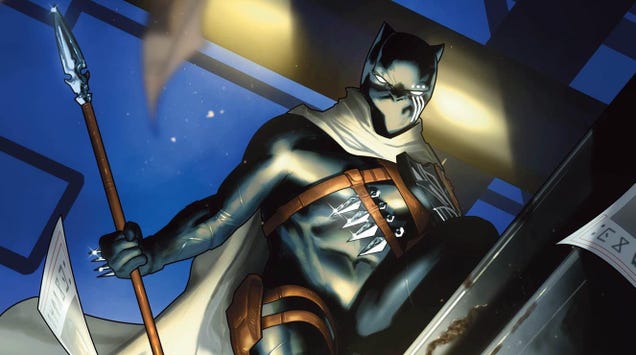
Before and especially after he showed up in the movies, Marvel’s comics gave Black Panther grand stories about his efforts to protect Wakanda and the larger universe from big threats. Being Wakanda’s king has meant he’s constantly had to shoulder the nation’s burdens on his back, but his upcoming solo series strips…
Source: Gizmodo – Black Panther’s Next Comic Makes T’Challa a Hero on the Run
Google Gives Gmail Multitasking UI Chops For Foldable Devices

We have seen many iterations of Gmail come and go in its 19-year history, but other than the ill-fated attempt at a complete relaunch with the now defunct Google Inbox, we have yet to see any significant changes in how it works in some time. For the most part, that’s just fine, but it has not made the most of book-style folding mobile devices
Source: Hot Hardware – Google Gives Gmail Multitasking UI Chops For Foldable Devices
Google's Pixel 7 Pro And Samsung's Galaxy S23+ Are On Great Deals Now At Amazon

If you are in the market for a smartphone, Amazon might have some deals for you this weekend. Between discounts on the Samsung Galaxy S23 family, to the Google’s revered Pixel 7 series, and some in between, there are certainly several good options.
First at the plate today, we have the Samsung Galaxy S23 lineup starting with the ever-impressive
Source: Hot Hardware – Google’s Pixel 7 Pro And Samsung’s Galaxy S23+ Are On Great Deals Now At Amazon
Valent is A KDE Connect Client For GTK-Based Desktops (Cinnamon, Xfce, MATE, Pantheon)
Valent is a new KDE Connect protocol implementation built on GNOME platform libraries. Compared to GSConnect, which is implemented as a GNOME Shell extension, Valent doesn’t need GNOME Shell to run (it’s a standalone app), so it can be used on any GTK-based desktop environment like Xfce, Budgie, Cinnamon, Pantheon, MATE, etc.
Source: LXer – Valent is A KDE Connect Client For GTK-Based Desktops (Cinnamon, Xfce, MATE, Pantheon)
Studio MAPPA Wows with Attack on Titan and Hell's Paradise Trailers

Animation studio MAPPA has kept itself pretty busy ever since it opened in 2011, and 2022 was an especially big year for it. Along with working on the second part of the final season of Attack on Titan, the company also released Chainsaw Man, Dance Dance Danseur, and brought Jujutsu Kaisen 0 stateside. 2023 looks to…
Source: Gizmodo – Studio MAPPA Wows with Attack on Titan and Hell’s Paradise Trailers
Russia's replacement Soyuz spacecraft arrives at ISS to bring back MS-22 crew
MS-23, the Soyuz spacecraft Russia sent to bring cosmonauts Sergey Prokopyev and Dmitry Petelin and NASA astronaut Frank Rubio back to Earth, has arrived at the International Space Station. Per Space.com, Russia’s Roscosmos Space Agency announced early Sunday morning that the unmanned vessel docked with the ISS at 7:58PM ET on Saturday evening. As expected, the flight launched from the Baikonur Cosmodrome in Kazakhstan on February 24th.
MS-23 was originally scheduled to launch later this year, but Roscosmos was forced to push up the flight after MS-22 – Prokopyev, Petelin and Rubio’s original return craft – sprung a coolant leak in December following a micrometeoroid strike. The incident put Roscosmos and NASA in a tricky spot. If an emergency broke out on the ISS and the entire crew had to evacuate, it wasn’t clear whether MS-22 could carry its crew safely back to Earth. Roscosmos and NASA eventually settled on a contingency plan that would have seen MS-22 transport Prokopyev and Petelin, while Rubio would have hitched a ride on the SpaceX Crew-5 Dragon. Thankfully, the two agencies weren’t forced to put that plan to the test.
With MS-23 safely docked with the ISS, Prokopyev, Petelin and Rubio will remain at the space station until at least September. The three were originally due to complete their mission in March. In the meantime, Roscomos plans to bring MS-22 back to Earth sometime next month.
Source: Engadget – Russia’s replacement Soyuz spacecraft arrives at ISS to bring back MS-22 crew
Ask Slashdot: What's the Best Podcast About Computer Science?
Long-time Slashdot reader destinyland writes: They say “always be learning” — but do podcasts actually help? I’ve been trying to find podcasts that discuss programming, and I’ve enjoyed Lex Fridman’s interviews with language creators like Guido van Rossum, Chris Lattner, and Brendan Eich (plus his long interviews with Donald Knuth). Then I discovered that GitHub, Red Hat, Stack Overflow, and the Linux Foundation all have their own podcast.
There’s a developer podcast called “Corecursive” that I like with the tagline “the stories behind the code,” plus a whole slew of (sometimes language-specific) podcasts at Changelog (including an interview with Brian Kernighan). And it seems like there’s an entirely different universe of content on YouTube — like the retired Microsoft engineer doing “Dave’s Garage,” Software Engineering Daily, and the various documentaries by Honeypot.io. Computerphile has also scored various interviews with Brian Kernighan, and if you search YouTube enough you’ll find stray interviews with Steve Wozniak.
But I wanted to ask Slashdot’s readers: Do you listen to podcasts about computer science? And if so, which ones? (Because I’m always stumbling across new programming podcasts, which makes me worry about what else I’ve been missing out on.) Maybe I should also ask if you ever watch coding livestreams on Twitch — although that gets into the more general question of just how much content we consume that’s related to our profession.
Fascinating discussions, or continuing work-related education? (And do podcasts really help keep your skills fresh? Are coding livestreams on Twitch just a waste of time?) Most importantly, does anyone have a favorite geek podcast that they’re listening to? Share your own experience and opinions in the comments…
What’s the best podcast about computer science?


Read more of this story at Slashdot.
Source: Slashdot – Ask Slashdot: What’s the Best Podcast About Computer Science?
Smash Hit Hogwarts Legacy Is Warner Bros Biggest Game Launch Of All Time

Warner Bros. Games Hogwarts Legacy earned an astonishing $850 million in revenue during its first two weeks of sale, making it WB Games’ highest-earning game of all time at launch. It beat out other popular WB titles, such as LEGO, Batman, Mortal Kombat, and Lord of The Rings.
Hogwarts Legacy is a game based on the world J.K. Rowling crafted
Source: Hot Hardware – Smash Hit Hogwarts Legacy Is Warner Bros Biggest Game Launch Of All Time
Sony Enlists Ant-Man & the Wasp Scribes to Adapt Gnomes Short Film

Marvel writers Andrew Barrer and Gabriel Ferrari have been hit up by Sony to pen the screenplay for the company’s next big horror film, Gnomes.
Source: Gizmodo – Sony Enlists Ant-Man & the Wasp Scribes to Adapt Gnomes Short Film
10,000 Dogs are Registered for Workplace Visits at Amazon
Long-time Slashdot reader theodp writes: In what might be mistaken for an early April Fools’ joke, one month after Amazon confirmed it would layoff 18,000+ employees, Amazon News last week put out a whimsical story about 10,000+ of its employees’ dogs who are registered to “work” at corporate offices as part of Amazon’s Dogs at Work program. “This unique program,” Amazon explains,” pulls out all the stops to make sure dogs have everything they need for a successful work day, including decked out dog parks, unlimited treats from the reception desk, and regular events where dogs and their owners can get to know their colleagues.” Amazon employees also received a back-to-the office edict last week from CEO Andy Jassy, who cited the need for “serendipitous interactions” between team members, which Amazon has at times suggested would be facilitated if its employees’ dogs return to the workplace, too. “The dog-friendly policy also contributes to the company’s culture of collaboration,” Amazon reported last year. “Dogs in the workplace are an unexpected mechanism for connection, an Amazon manager added. “I see employees meeting each other in our lobbies or elevators every day because of their dogs.” Amazon News offers profiles of “11 Amazing Pups” who didn’t need obedience school to be convinced to return to the office, including Murray and Ripley. “Working from home certainly has its perks,” Amazon reports, “but Murray LOVES coming into the office. He gets to see his favorite colleagues-both human and canine-and brighten everyone’s day.” And “Ripley starts each workday with a greeting from her best friend Lisa at the Culver Studios gate. From there, she promptly reports for duty, doling out kisses to anyone who needs a little pick-me-up.”


Read more of this story at Slashdot.
Source: Slashdot – 10,000 Dogs are Registered for Workplace Visits at Amazon
This is Nokia’s new logo
For the first time in nearly 60 years, one-time smartphone giant Nokia is changing its iconic logo. On Sunday, before the official start of Mobile World Congress Barcelona, the company unveiled a new brand identity, and it’s a dramatic change. Gone is the iconic typeface and “Yale blue” that defined its previous logo. The company has instead adopted a look it claims is more modern and digital.
“We are updating our strategy, and, as a key enabler, we are also refreshing our brand to reflect who we are today: a business-to-business technology innovation leader pioneering the future where networks meet cloud,” Nokia said in a blog post attributed to CEO Pekka Lundmark. “In most people’s minds, we are still a successful mobile phone brand, but this is not what Nokia is about,” Lundmark told Bloomberg. “We want to launch a new brand that is focusing very much on the networks and industrial digitalization, which is a completely different thing from the legacy mobile phones.”
Is this the end of a logo so many people know and love? Not necessarily. You may recall, Nokia’s phone business hasn’t been a part of Nokia proper since Microsoft’s ultimately disastrous $7 billion acquisition of the company’s Devices and Services division in 2014. After the tech giant washed its hands clean of that deal in 2016, HMD Global, a company made up of former Nokia execs, acquired the rights to use the Nokia brand for smartphones and tablets, and has been doing its own thing ever since then. In fact, the company announced its latest device, the G22, just one day before today’s announcement, and as it so happens, that phone features the classic Nokia logo. Engadget has reached out to HMD Global to find out if the company plans to continue using that logo.
Source: Engadget – This is Nokia’s new logo
TCL gave its color paper-like display tech an upgrade for its latest tablets
TCL is back at Mobile World Congress this year with a bunch of budget-friendly new gear to show off. Among other things, the company has developed a new version of its color paper-like screen technology, which it’s calling NXTPAPER 2.0.
Compared with the previous version, TCL says NXTPAPER 2.0 delivers 150 percent more brightness with up to 500 nits, making it easier to use outdoors during the day (the anti-glare tech should help too). The company claims that, due to hardware-level filtering, the technology exceeds TÜV-certified levels of blue light reduction. TCL says the tech can help protect your eye health while maintaining color accuracy and avoiding screen yellowing. The screen’s color temperature will adjust automatically based on the time and environment as well.
You’ll soon be able to check out NXTPAPER 2.0 on a new tablet. The NXTPAPER 11 has an 11-inch, 2K display and TCL says there’s a feature called AI Visual Boost that makes colors “bolder and more lifelike.” The Android 13 tablet runs on an octa-core processor. It has 8MP cameras on the front and rear, four speakers, dual mics and an 8,000mAh battery. The tablet, which weighs just over a pound (462g), starts at $249 and it will initially be available in Europe in May.
Also new is the TCL TAB 11, another 11-inch tablet, albeit with a 2K NXTVISION display. It otherwise has similar specs as the NXTPAPER 11. The TAB 11 will be available in May and it starts at $179. Versions with LTE start at $209.
TCL
On the phone front, TCL has a few new models for the US market: the 40 XE 5G, 40 X 5G and a 40 XL with 4G connectivity. The $169 40 XE 5G is the lowest-cost 5G TCL phone to date, the company said. It has a 6.56-inch HD+ display with a 90Hz refresh rate and 180Hz touch sampling. The rear camera array features a 13MP main camera and 2MP depth and macro sensors. On the front, there’s an 8MP lens. The phone has a 2.2GHz octo-core processor and 4GB of RAM. There’s just 64GB of storage, but you can add another 1TB via microSD.
The 40 XE 5G will be available in June, just like the 40 X 5G, which has similar specs, but a more advanced 50MP main camera. That model starts at $199. The 4G-only 40 XL, meanwhile, has a 6.75″ HD+ display, dual speakers and a 50MP main camera. There’s an octa-core processor and base storage of 128GB. You can pick that Android 13 phone up in May for $149.
Along with the phones and tablets, TCL has a fresh set of earphones. It says the MOVEAUDIO Neo earbuds have 25dB of bass-boosted sound, four EQ modes, dual-mic call noise cancellation and active noise cancellation. They’re available now for $50.
Source: Engadget – TCL gave its color paper-like display tech an upgrade for its latest tablets
How to Install Jitsi Video Conference Platform on Debian 11
Jitsi is a free, open-source solution for building a secure video conference platform. This article will go through the installation and configuration of the Jitsi Video Conference on the latest Debian 11 Bullseye.
Source: LXer – How to Install Jitsi Video Conference Platform on Debian 11
The Xiaomi 13 Pro with Leica cameras is coming to Europe
It’s been a long time coming, but Xiaomi is finally bringing its Leica-endorsed smartphones to the international market. Following their China launch back in December, the Xiaomi 13 and 13 Pro are going global at MWC, with Germany, France, Spain and Italy being some of their first markets in the west. As you’d expect, both Snapdragon 8 Gen 2 flagships now come with Google services pre-installed, but they are otherwise identical to their China counterparts.
The Xiaomi 13 and 13 Pro share similar-looking Leica camera islands on the back, but only the 13 Pro offers the much-hyped Type 1-inch sensor (Sony’s IMX989; 1.6um pixel size) — arguably the industry’s most powerful camera sensor at the moment — for its 50-megapixel f/1.9 OIS (optical image stabilization) main shooter. You also get a 50-megapixel 3.2x telephoto camera (75mm equivalent) with OIS and a 50-megapixel f/2.2 ultra-wide camera (14mm equivalent).
As for the lesser Xiaomi 13, it comes with a 50-megapixel f/1.8 OIS main camera with a smaller sensor (IMX800; 1um pixel size), a 10-megapixel 3.2x zoom OIS zoom camera and a 12-megapixel ultra-wide (15mm equivalent) camera.
Both models share the same 32-megapixel f/2.0 punch-hole selfie cam on the other side. On a similar note, both phones offer two modes of capture — Leica Authentic and Leica Vibrant — along with Google’s Magic Eraser tool.
Xiaomi
The Xiaomi 13 series also comes in two designs. The 13 Pro comes with a curved 6.73-inch 3,200 x 1,400 AMOLED screen with vegan leather or ceramic back versions. On the other hand, the 13 packs a flat 6.36-inch 2,400 x 1,080 AMOLED display, which is surrounded by iPhone-like aluminum sides and complemented by either glass or leather back options. Both screens support a refresh rate of up to 120Hz for a slick scrolling experience.
Other noteworthy features include the 13 Pro’s 120W charging (from zero to 100 percent in just 19 minutes for its 4,820mAh battery), the 13’s 67W charging (38 minutes to fully charge its 4,500mAh cell), and 50W wireless charging, Dolby Atmos dual speakers and IP68 ruggedness for both Android devices. The 13 Pro starts from 1,299 euros (around $1,370), whereas the 13 starts from 999 euros (around $1,060).
Xiaomi
As a surprise for MWC, Xiaomi also announced the 13 Lite, which appears to be a variant of the selfie-centric Civi 2 sold in China. And no, there’s no Leica involvement here. This model starts from 499 euros (around $530) and boasts dual front cameras (32-megapixel + 8-megapixel depth sensor) plus dual “Selfie Glow” LEDs for supposedly better selfies. It’s powered by a Snapdragon 7 Gen 1 processor, and it also packs a 50-megapixel main camera (IMX766), a 20-megapixel ultra-wide camera, a 2-megapixel macro camera, a 4,500mAh battery with 67W charging, and a 6.55-inch Full HD+ 120Hz display. This is all tucked into a 171g-heavy, 7.23mm-thick body, which obviously goes well with its “Lite” branding.
Source: Engadget – The Xiaomi 13 Pro with Leica cameras is coming to Europe
Battery-Swapping EVs Are All the Rage in Taiwan
An interesting profile of EV entrepreneur Horace Luke from Rest of World:
During his time working for companies like Microsoft and HTC on projects like the Xbox gaming system and Android phones, Luke mulled over the idea of mobility. In 2011, he pitched the idea that would form the core of his company Gogoro: an electric vehicle that didn’t have to take up space and time charging its batteries, but instead relied on a network of batteries that could be swapped at roadside stations, like filling up a gas tank. Multiple investors and vehicle makers told him the idea was impossible.
Today, Gogoro battery-swapping stations are as common as gas stations in Taiwan, and the network supports nearly 400,000 battery swaps a day, by over 526,000 riders. Last year, according to the Taiwanese government, 12% of all scooters sold in Taiwan were electric, and over 90% of those relied on Gogoro batteries. But in order to make the battery network a reality, Gogoro didn’t have to develop just the batteries but also the vehicles that use them, along with an internal management software that encompasses everything from the supply of vehicle parts to the number of charged batteries at stations to how far riders can go before their next swap.
And the company now has pilot projects in Germany, India, Indonesia, Israel, the Philippines, Singapore, and South Korea.


Read more of this story at Slashdot.
Source: Slashdot – Battery-Swapping EVs Are All the Rage in Taiwan
FOSSDA: Preserving the History of Open-Source and Free Software
FOSSDA is a not-for-profit foundation that aims to engage with the pioneers of open-source software and share their legacies with the world.
The post FOSSDA: Preserving the History of Open-Source and Free Software appeared first on Linux Today.
Source: Linux Today – FOSSDA: Preserving the History of Open-Source and Free Software
How to Clean Unsealed Concrete Floors in Your Basement or Garage

Out of all the usual household tasks, washing the floors is one of the easiest to put off (repeatedly). It’s a lot of hassle to go through only to have people walk on the clean floors as soon as they dry.
Source: LifeHacker – How to Clean Unsealed Concrete Floors in Your Basement or Garage