SpaceX Becomes NASA's Second-Largest Vendor, Surpassing Boeing

NASA obligated $2.04 billion to SpaceX in fiscal year 2022, which ended last month, according to new federal procurement data. For the first time, the amount paid by the space agency to SpaceX exceeds that paid to Boeing, which has long been the leading hardware provider to NASA. Boeing received $1.72 billion during the most recent fiscal year, based on data first reported by Aviation Week’s Irene Klotz. Ars Technica reports: The California Institute of Technology, which manages the Jet Propulsion Laboratory field center for NASA, remains the agency’s No. 1 contractor, with $2.68 billion in funding. The academic institution is responsible for operating the California-based NASA field center and distributing funding for myriad robotic spacecraft missions such as Mars Perseverance and the Europa Clipper. On the one hand, the ascension of SpaceX to the No. 2 spot on NASA’s contractor list represents a major shakeup in the order of things. For a long time, NASA’s human spaceflight and exploration programs were dominated by Boeing, Lockheed Martin, Aerojet, Northrop Grumman, and a handful of other traditional defense aerospace contractors.

However, it should come as no surprise that a company that has recently delivered the most services — and, arguably, value — to NASA should start to receive a large share of its contract awards. This has been most notable with SpaceX’s performance on Commercial Crew, NASA’s program to buy transportation services from private companies to bring its astronauts to and from the International Space Station. NASA awarded contracts to Boeing and SpaceX in 2014 to develop their spacecraft, paying Boeing about 60 percent more. At the time, it was widely believed that the traditional contractor, with this additional money, would deliver services sooner. But it was SpaceX that first flew crew to the space station in May 2020, and the company has since launched five operational missions to the orbiting laboratory. […] Much of the funding increase for SpaceX in 2022, an increase of about $400 million over the previous year, appears to be driven by contracts for the Human Landing System as part of the Artemis Moon Program and the purchase of additional Crew Dragon missions to the space station. (Individual contracts can be found within the Federal Procurement Data System).

Read more of this story at Slashdot.


Source: Slashdot – SpaceX Becomes NASA’s Second-Largest Vendor, Surpassing Boeing

Redmi's latest phone can be fully charged in nine minutes

Over the years, we’ve seen smartphone charging speeds going from the already-impressive 30 minutes down to 15 minutes, but apparently that’s still too slow for Xiaomi. In the new Redmi Note 12 lineup unveiled earlier today, one model dubbed “Redmi Note 12 Discovery Edition” stood out with a whopping 210W HyperCharge capability. This feature is controlled by three 100W fast charging chips, which fully charge the phone’s 4,300mAh battery in just 9 minutes. To put things into perspective, both Xiaomi’s earlier 120W HyperCharge and Oppo’s 150W SuperVOOC need 15 minutes to juice up a 4,500mAh battery.

The Redmi Note 12 Discovery Edition also sees the debut of MediaTek’s mid-range Dimensity 1080 processor, and it’s completed with a 6.67-inch OLED screen (2,400 x 1,080, 120Hz), a 200MP main camera (Samsung’s brand new HPX sensor; with OIS), an 8MP ultra-wide camera, a 2MP macro camera and a 16MP selfie camera. You’ll also find dual-SIM slots, dual speakers, a 3.5mm headphone jack, an in-display fingerprint sensor, NFC, and an infrared blaster on this Android 12 device. 

As for RAM and storage, this model only comes with one combo: 8GB LPDDR4x RAM and 256GB UFS 2.2 storage. Unlike last year’s Redmi Note 11 Pro+, microSD expansion is missing here, which may be a deterrent for those who are considering an upgrade. Still, not bad for 2,399 yuan or $330.

Redmi Note 12 Pro+ series
From left to right: white, black, blue versions of the Redmi Note 12 Pro+, as well as the Redmi Note 12 Discovery Edition and Redmi Note 12 Yibo Edition (a collaboration with Chinese artist Wang Yibo).
Xiaomi

Despite the name, the Redmi Note 12 Discovery Edition is actually based on the Redmi Note 12 Pro+, with the main difference being the lesser charging power (120W) but bigger battery (5,000mAh) for the latter. This model starts from 2,199 yuan or about $304, which comes with 8GB of RAM and 256GB of storage; or you can pay 2,399 yuan or around $331 to bump the RAM up to 12GB.

Then there’s also the lesser but similar-looking Redmi Note 12 Pro, which swaps the 200MP main camera for a 50MP one (using Sony’s IMX766 sensor), and it only uses 67W charging for the same 5,000mAh battery. This starts from 1,699 yuan or about $235, which gets you 6GB of RAM with 128GB of storage; and you can max out at 12GB of RAM with 256GB of storage for the price of 2,199 yuan or around $304 — the same as the Pro+’s starting price, interestingly.

Redmi Note 12
Redmi Note 12
Xiaomi

Last but not least, the Redmi Note 12 is positioned as an affordable smartphone, starting at 1,199 yuan or about $166. It packs a Qualcomm Snapdragon 4 Gen 1 chipset, a slightly lesser-grade OLED display of the same size (mainly lower brightness and contrast, as well as the lack of HDR support), less powerful cameras (48MP main, 2MP depth sensor and 8MP front), weaker charging power (33W) and just a mono speaker. In terms of variants, it starts from 4GB of RAM with 128GB of storage, going all the way up to 8GB with 256GB, respectively (1,699 yuan or around $235; same as the Note 12 Pro’s base price).

As with recent Redmi phones, there’s a good chance that these new models will make their way to international markets later, so we’ll be keeping an eye out for further updates.


Source: Engadget – Redmi’s latest phone can be fully charged in nine minutes

Bitcoin Miner Core Scientific Says It May Seek Bankruptcy

Core Scientific, one of the world’s largest miners of Bitcoin, warned that it may run out of cash by the end of the year and could seek relief through bankruptcy protection. Bloomberg reports: Operating performance and liquidity have been severely impacted by the prolonged drop in the price of Bitcoin, a rise in electricity costs, increased competition and litigation with bankrupt Celsius Networks LLC, the Austin, Texas-based company said in a US Securities and Exchange Commission filing on Thursday. Shares of Core Scientific dropped 78% on Thursday, its worst trading day since going public earlier this year through a merger. Bitcoin mining companies such as Core Scientific had recently been increasingly opting to sell equity, resorting to one of their least attractive options to raise money as profits dry up and higher interest rates makes borrowing more expensive. The company entered into a $100 million common stock purchase agreement with B. Riley Principal Capital II in July. Bitcoin has slumped almost 70% since reaching a record high in November 2021.

“We could see similar filings within the sector,” said Brian Dobson, an analyst at Chardan Capital, who had a ‘buy’ rating on the shares. “This is going to weigh on all of the publicly traded crypto miners.” Should Core Scientific file for bankruptcy, it would likely be the first large publicly traded Bitcoin miner to do so, Dobson said. Core Scientific said it won’t make payments coming due in late October and early November with respect to several of equipment and other financings, including two bridge promissory notes. The company is exploring alternatives, including hiring strategic advisers, raising additional capital or restructuring its existing capital structure. Core Scientific held 24 Bitcoins and approximately $26.6 million in cash as of Thursday. That’s compared with 1,051 Bitcoins and about $29.5 million in cash as of September, the company said in the filing. The shares, which traded as much as $14.32 late last year, closed at 22 cents. they’ve tumbled 98% since the start of the year.

Read more of this story at Slashdot.


Source: Slashdot – Bitcoin Miner Core Scientific Says It May Seek Bankruptcy

Minnesota and DC sue Target-owned Shipt delivery service for worker misclassification

The Minnesota and District of Columbia attorneys general are suing Target-owned Shipt delivery service over worker misclassification, CBS News has reported. The lawsuits accuse the company of designating its “personal shoppers” (who pick and deliver grocery orders) as independent contractors to avoid paying benefits like state unemployment insurance and worker’s compensation. 

“Increasingly, we’re seeing companies abuse hard-working District residents by fraudulently calling them independent contractors and, as a result, denying them wages and benefits they are legally owed,” said DC AG Karl Racine in a statement.

Shipt said it disagrees with the allegation and that most of its workers prefer being able to set their own hours. “Shoppers with Shipt are independent contractors, and the flexibility that comes with being an independent contractor is the primary reason Shipt Shoppers choose to earn on our platform,” spokesperson Evangeline George told CBS News. Citing its own survey, it said that 80 percent of its workers named such flexibility as a key priority.

However, Minnesota attorney general Keith Ellison said the company controls “virtually every facet of a shopper’s work” despite claiming the workers are independent. “Unlike other employees, these workers have no clarity on how much they will be paid day to day, and they often don’t receive the minimum wage and overtime they’re entitled to,” he added. 

The suits seek to recover paid sick leave owed, unpaid wages, payments owed for unemployment insurance, penalties and more. Other delivery companies including DoorDash have faced similar actions, and Instacart recently agreed to pay $46.5 million in a settlement with the city of San Diego over misclassified workers. Earlier this year, Massachusetts sued Uber and Lyft for identifying drivers as contractors. 


Source: Engadget – Minnesota and DC sue Target-owned Shipt delivery service for worker misclassification

OpenSSL Warns of Critical Security Vulnerability With Upcoming Patch

An anonymous reader quotes a report from ZDNet: Everyone depends on OpenSSL. You may not know it, but OpenSSL is what makes it possible to use secure Transport Layer Security (TLS) on Linux, Unix, Windows, and many other operating systems. It’s also what is used to lock down pretty much every secure communications and networking application and device out there. So we should all be concerned that Mark Cox, a Red Hat Distinguished Software Engineer and the Apache Software Foundation (ASF)’s VP of Security, this week tweeted, “OpenSSL 3.0.7 update to fix Critical CVE out next Tuesday 1300-1700UTC.” How bad is “Critical”? According to OpenSSL, an issue of critical severity affects common configurations and is also likely exploitable. It’s likely to be abused to disclose server memory contents, and potentially reveal user details, and could be easily exploited remotely to compromise server private keys or execute code execute remotely. In other words, pretty much everything you don’t want happening on your production systems.

The last time OpenSSL had a kick in its security teeth like this one was in 2016. That vulnerability could be used to crash and take over systems. Even years after it arrived, security company Check Point estimated it affected over 42% of organizations. This one could be worse. We can only hope it’s not as bad as that all-time champion of OpenSSL’s security holes, 2014’s HeartBleed. […] There is another little silver lining in this dark cloud. This new hole only affects OpenSSL versions 3.0.0 through 3.0.6. So, older operating systems and devices are likely to avoid these problems. For example, Red Hat Enterprise Linux (RHEL) 8.x and earlier and Ubuntu 20.04 won’t be smacked by it. RHEL 9.x and Ubuntu 22.04, however, are a different story. They do use OpenSSL 3.x. […] But, if you’re using anything with OpenSSL 3.x in — anything — get ready to patch on Tuesday. This is likely to be a bad security hole, and exploits will soon follow. You’ll want to make your systems safe as soon as possible.

Read more of this story at Slashdot.


Source: Slashdot – OpenSSL Warns of Critical Security Vulnerability With Upcoming Patch

Adidas Is Turning Homer's 'Walking Into The Bushes' Meme Into A Sneaker

It hasn’t been a great month for Adidas, but if the German sportswear giant can be counted on one thing these days (or over the last 20 years), it’s finding ways to squeeze some cash out of licensed sneaker deals. Next up: The Simpsons.

Read more…


Source: Kotaku – Adidas Is Turning Homer’s ‘Walking Into The Bushes’ Meme Into A Sneaker

Six Players, Coach Banned From Official NBA 2K League Over Gambling Scandal

The NBA 2K League, the official esports competition that’s a team effort of both the NBA and NBA 2K publishers Take-Two, has just “indefinitely disqualified” six players and a coach for their role in a betting scandal.

Read more…


Source: Kotaku – Six Players, Coach Banned From Official NBA 2K League Over Gambling Scandal

Google Introduces Cloud-Based Blockchain Node Service For Ethereum

Tech giant Google said Thursday it will be launching a cloud-based node engine for Ethereum projects. CoinDesk reports: The company said its Google Cloud Blockchain Node Engine will be a “fully managed node-hosting service that can minimize the need for node operations,” meaning that Google will be responsible for monitoring node activity and restarting them during outages. A node is a type of computer that runs a blockchain’s software to validate and store the history of transactions on a blockchain’s network. At the time of launch, Google will be supporting only Ethereum nodes. Google’s announcement signifies the growing attention that technology giants are giving toward blockchain, crypto and Web3 projects. “Blockchain is changing the way the world stores and moves its information,” Google said in its announcement.

Read more of this story at Slashdot.


Source: Slashdot – Google Introduces Cloud-Based Blockchain Node Service For Ethereum

Elon Musk completes Twitter purchase, immediately fires CEO and other execs

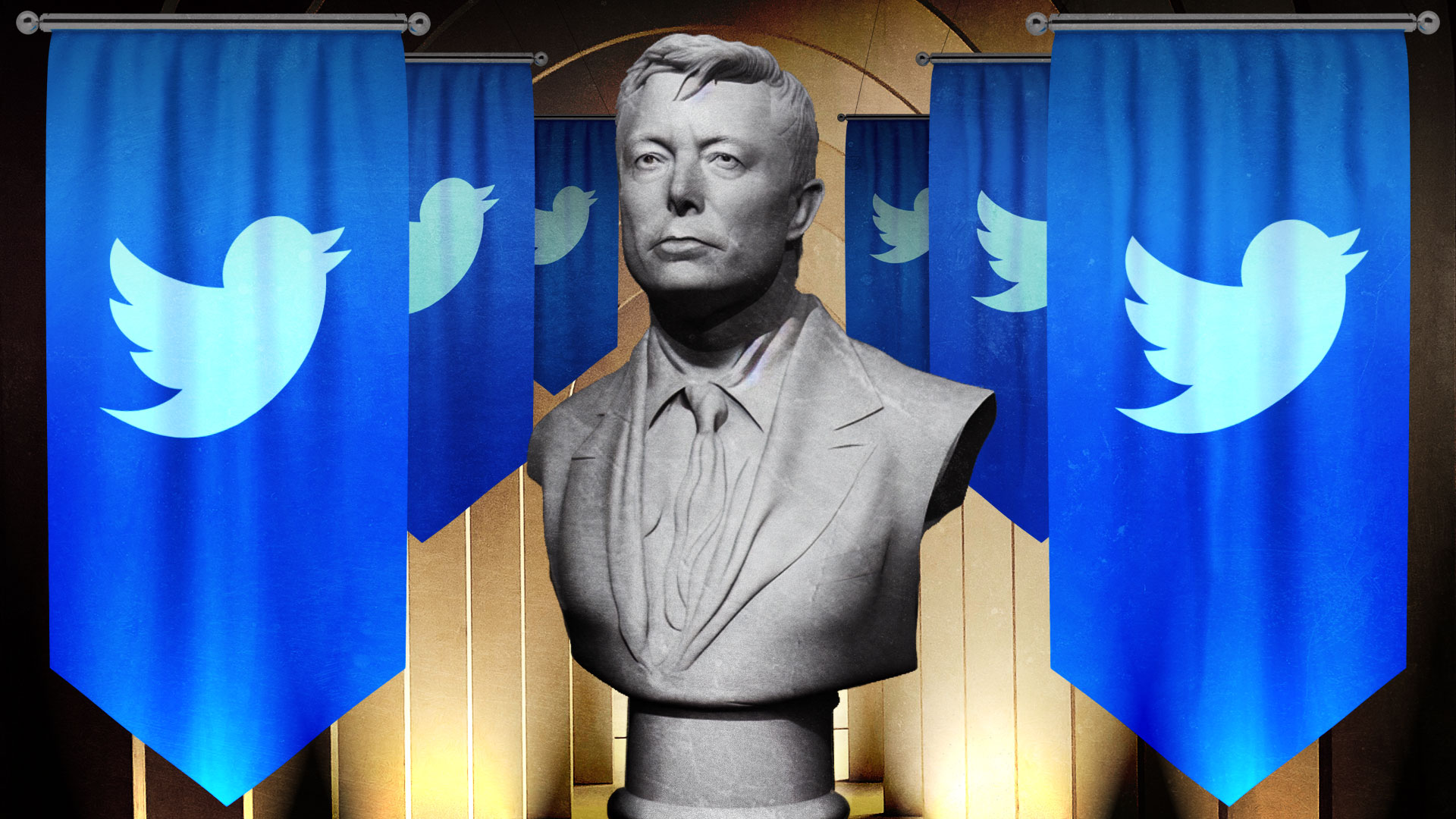
Illustration of an Elon Musk bust surrounded by flags with the Twitter logo.

Enlarge (credit: Aurich Lawson)

Elon Musk completed the $44 billion purchase of Twitter today, capping a months-long saga that resulted in Twitter suing Musk to force him to honor their merger agreement. Musk’s first course of business was to fire top executives.

“Musk fired Chief Executive Parag Agrawal and Chief Financial Officer Ned Segal after the deal closed” on Thursday, The Wall Street Journal wrote. Twitter legal chief Vijaya Gadde and general counsel Sean Edgett were also reportedly fired by Musk. It’s not yet clear who will be the CEO under Musk’s ownership.

Musk feuded with Agrawal while he was trying to get out of the merger contract. In August, he challenged the then-Twitter CEO to a public debate about Twitter’s spam-account data. Twitter stuck with its lawsuit against Musk instead, and the court case helped force Musk to complete the deal. Musk had also posted tweets with criticism of Gadde’s approach to content moderation.

Read 16 remaining paragraphs | Comments


Source: Ars Technica – Elon Musk completes Twitter purchase, immediately fires CEO and other execs

Twitter Is Now an Elon Musk Company

Elon Musk has “added [Twitter] to his business empire after months of legal skirmishes,” writes The Verge’s Elizabeth Lopatto, citing reports from CNBC, The Washington Post and Insider. From the report: Musk’s first move on Thursday was to oust Parag Agrawal, who was Twitter’s last CEO as a public company. Chief financial officer Ned Segal and Vijaya Gadde, the company’s policy chief whom Musk had publicly criticized have also reportedly left the building. Sean Edgett, the general counsel, is also gone, The New York Times reports, adding that at least one of these executives was walked out by security. Chief customer officer Sarah Personette was also fired, Insider reports. The execs received handsome payouts for their trouble, Insider reports: Agrawal got $38.7 million, Segal got $25.4 million, Gadde got $12.5 million, and Personette, who tweeted yesterday about how excited she was for Musk’s takeover, got $11.2 million

Questions still remain about what Musk plans to do with Twitter now that he owns it, though he’s made a number of public comments. The Washington Post reported that Musk planned to cull 75 percent of Twitter’s employees, citing estimates given to prospective Twitter investors. Musk told Twitter staffers that the 75 percent figure was inaccurate, Bloomberg reported. In Musk’s text messages, provided during discovery to Twitter’s lawyers, he and entrepreneur Jason Calacanis, a friend of his, discussed cutting staff by requiring a return to office. “Day zero,” Calacanis texted Musk. “Sharpen your blades boys.” Requiring Twitter employees to return to offices would mean 20 percent of the staff would leave voluntarily, Calacanis wrote. Also, Calacanis told Musk, “Twitter CEO is my dream job.”

Twitter also faces challenges to its free speech stance in court, as the Supreme Court agreed to take up two cases that will determine its liability for illegal content. Musk, who is also CEO of Tesla and SpaceX, has suggested he’ll change the way Twitter’s moderation works, potentially relaxing the kinds of policies that saw former President Donald Trump permanently banned from the platform. Although Musk has said that his Twitter acquisition is “not a way to make money,” he’s reportedly raised ideas for cost cutting and increasing revenue. Governments and corporations could be charged a “slight cost” to use Twitter, and there could be job cuts on the table to improve the company’s bottom line. Some of Twitter’s current employees have criticized Musk’s plans for the platform as “incoherent” and lacking in detail. More broadly, Musk has talked about using Twitter to create “X, the everything app.” This is a reference to China’s WeChat app, which started life as a messaging platform, but has since grown to encompass multiple businesses, from shopping to payments to gaming. “You basically live on WeChat in China,” Musk told Twitter employees in June. “If we can recreate that with Twitter, we’ll be a great success.”

Read more of this story at Slashdot.


Source: Slashdot – Twitter Is Now an Elon Musk Company

Elon Musk has begun his takeover of Twitter

After months of legal drama, Elon Musk has begun his takeover of Twitter, according to The Wall Street Journal and The Washington Post. His first move was to fire CEO Parag Agrawal, Chief Financial Officer Ned Segal and other top execs.

Musk is taking the reins just ahead of a Friday deadline to complete the deal. He spent time in Twitter’s San Francisco headquarters this week, where he met with employees. He also reportedly brought in some Tesla engineers to help “assess” Twitter’s code, Bloomberg reported.

The deal’s closing will bring to an end the months-long legal battle that has engulfed Twitter since Musk first offered to buy the company for $44 billion in April, before announcing a couple weeks later that the acquisition was “on hold.” Musk, who declined to do due diligence before his offer, cited concerns about the number of bots and fake accounts on the platform. Twitter’s lawyers later argued that the bot issue was merely a “pretext” for him to renege on the deal.

But finalizing the acquisition will be far from the end of turmoil within Twitter. Musk, who has criticized Twitter’s leadership and clashed with Agrawal, has already fired at least four executives, including Vijaya Gadde, Twitter’s top policy official, and Sean Edgett, the company’s general counsel. The New York Timesreported that “at least one” executive was escorted from the company’s office on Thursday. Twitter didn’t immediately respond to a request for comment. 

Musk, who changed his Twitter bio to “Chief Twit,” has made it clear he intends to bring other big changes to the social media company. He has said both in public appearances and in private messages that he wants to relax Twitter’s moderation rules and that he dislikes permanent bans. He’s also likely to let more staff go, though he has told employees the cuts won’t be as high as 75 percent.

Twitter’s core service could also dramatically change under Musk’s leadership. In addition to loosening moderation rules on the platform, Musk has said wants to “open source” Twitter’s algorithm so users could better understand its recommendations. At the same time, he’s tried to reassure advertisers that he doesn’t want the site to be a “free-for-all hellscape,” and that Twitter should be the “most respected advertising platform in the world.” Twitter’s COO Sarah Personette, tweeted that she had a “great discussion” with Musk.

Musk, who has often talked about his desire for Twitter to be “an accelerant to creating X, the everything app” akin to WeChat in China, is also likely to look for ways to increase non-advertising revenue. He’s proposed changes to Twitter Blue, and floated the idea of charging companies for tweet embeds.


Source: Engadget – Elon Musk has begun his takeover of Twitter

Twitter Will Allow Users To Buy and Sell NFTs Through Tweets

Social media platform Twitter today announced that it will let users buy, sell, and display NFTs directly through tweets in partnership with four marketplaces. Decrypt reports: The integration, called NFT Tweet Tiles, displays the artwork of an NFT in a dedicated panel within a tweet, and includes a button to let users click through to a marketplace listing. The integration — which is still in testing — currently works with marketplaces from four specific partners: Solana-centric marketplace Magic Eden, multi-platform NFT marketplace protocol Rarible, Flow blockchain creator Dapper Labs, and sports-centric platform Jump.trade. Collectively, those marketplaces span several blockchain networks, including Ethereum, Solana, Flow, Polygon, Tezos, and Immutable X.

A Twitter representative confirmed to Decrypt that the feature is blockchain-agnostic, so all networks are supported so long as the links are from a partnered marketplace. The representative added that the “feature is currently being tested with select Twitter users across iOS and web,” and that those users will see the NFT Tweet Tile integration if they’re in the test group. A Twitter Blue premium subscription is not required to use the feature.

Read more of this story at Slashdot.


Source: Slashdot – Twitter Will Allow Users To Buy and Sell NFTs Through Tweets

Chadwick Boseman's Family Was Consulted on Black Panther: Wakanda Forever

Losing Chadwick Boseman during the build-up to Black Panther: Wakanda Forever was more than just losing the star of the film. It lost its heart. The actor was everything to the franchise and his tragic passing could have very easily seen the film wiped away for good. But the team behind the movie didn’t let that…

Read more…


Source: Gizmodo – Chadwick Boseman’s Family Was Consulted on Black Panther: Wakanda Forever

Physical 'Copies' of the New Call of Duty Are Just Empty Discs

An anonymous reader quotes a report from TechCrunch: Cartridges and discs used to be how you got the latest games, but that’s been changing as downloads have become more convenient and reliable. But some people prefer the sure thing: a physical copy, so they can play offline or with a bad connection. To them, Activision says “qq”: the Call of Duty: Modern Warfare II disc is basically just a link to a 150-gigabyte download. Now, to be fair, games that size don’t fit neatly on even high capacity Blu-ray discs, which for distribution purposes max out at around 50 gigs. Not that we haven’t seen multi-disc games before (I never finished Final Fantasy VIII because the final disc was scratched someday, Edea), but clearly Activision decided it wasn’t worth the bother in this case. […] Far from having the full game on it, the disc is almost completely empty. This 72-megabyte app is basically just an authenticator and shell that initiates the enormous download process. I’d be willing to bet that most of those 72 megabytes are 4K video files of logos. There’s even a pre-order steelbook bonus (that’s a metal case for the disc and anything else it comes with). Players may be disappointed to find that this fancy reinforced packaging protects nothing of value.

Obviously there is great waste entailed in the production of perhaps millions of discs (though the numbers are likely much lower than they used to) for no reason. But waste is endemic in consumerism. The bait and switch of it is the galling thing — that Activision is taking the worst of both worlds. There’s literally no point in even providing a physical version of the software if none of the reasons for doing so are fulfilled by it. It’s the equivalent of the next season of Stranger Things coming on a disc that just loads up Netflix and starts streaming. Why bother? It’s worth asking whether Activision could have built a version of the game that fit on a disc at all. Considering how proudly they’ve been advertising the realism of the graphics, probably not. A single 4K texture unit, say for a building front or character model, may be scores of megabytes, and any AAA game will have countless such textures. Meanwhile the audio and video assets also have to fit on there, and they can only be compressed so far before they degrade.

Read more of this story at Slashdot.


Source: Slashdot – Physical ‘Copies’ of the New Call of Duty Are Just Empty Discs

How to Find and Rename Files in Linux

Linux offers multiple command-line solutions for renaming files regardless of the different paths or locations. Renaming a single file is easy, but what happens when you have multiple files that should be instantaneously renamed? Learn how to find and rename files quickly in Linux with this tutorial.

The post How to Find and Rename Files in Linux appeared first on Linux Today.


Source: Linux Today – How to Find and Rename Files in Linux

Did PayPal Just Reintroduce Its $2,500 'Misinformation' Fine, Hoping We Wouldn't Notice?

“On October 8th, PayPal updated its terms of service agreement to include a clause enabling it to withdraw $2,500 from users’ bank accounts simply for posting anything the company deems as misinformation or offensive,” reports Grit Daily. “Unsurprisingly, the backlash was instant and massive,” causing the company to backtrack on the policy and claim the update was sent out “in error.” Now, after the criticism on social media died down, several media outlets are reporting that the company quietly reinstated the questionable misinformation fine — even though that itself may be a bit of misinformation. From a report: Apparently, they believed that everyone would just accept their claim and immediately forget about the incident. So the clause that was a mistake and was never intended to be included in PayPal’s terms of service magically ended up back in there once the criticism died back down. That sounds plausible, right? And as for what constitutes a “violation” of the company’s terms of service, the language is so vaguely worded that it could encompass literally anything.

The term “other forms of intolerance” is so broad that it legally gives the company grounds to claim that anyone not fully supporting any particular position is engaging in “intolerance” because the definition of the word is the unwillingness to accept views, beliefs, or behavior that differ from one’s own. So essentially, this clause gives PayPal the perceived right to withdraw $2,500 from users accounts for voicing opinions that PayPal disagrees with. As news of PayPal’s most recent revision spreads, I anticipate that the company’s PR disaster will grow, and with numerous competing payment platforms available today, this could deliver a devastating and well deserved blow to the company. UPDATE: According to The Deep Dive, citing Twitter user Kelley K, PayPal “never removed the $2,500 fine. It’s been there for over a year. All they removed earlier this month was a new section that mentioned misinformation.”

She goes on to highlight the following:

1.) [T]he $2,500 fine has been there since September 2021.
2.) PayPal did remove what was originally item number 5 of the Prohibited Activities annex, the portion that contained the questionable “promoting misinformation” clause that the company claims was an “error.”
3.) [T]he other portion, item 2.f. which includes “other forms of intolerance that is discriminatory,” which some have pointed out may also be dangerous as the language is vague, has always been there since the policy was updated, and not recently added.

PayPal’s user agreement can be read here.

Read more of this story at Slashdot.


Source: Slashdot – Did PayPal Just Reintroduce Its ,500 ‘Misinformation’ Fine, Hoping We Wouldn’t Notice?