Researchers Find Amazon Uses Alexa Voice Data To Target You With Ads

A report released last week contends that Amazon uses voice data from its Echo devices to serve targeted ads on its own platforms and the web. The Verge reports: he report, produced by researchers affiliated with the University of Washington, UC Davis, UC Irvine, and Northeastern University, said the ways Amazon does this is inconsistent with its privacy policies. Titled, “Your Echos are Heard: Tracking, Profiling, and Ad Targeting in the Amazon Smart Speaker Ecosystem,” the report concludes that Amazon and third parties (including advertising and tracking services) collect data from your interactions with Alexa through Echo smart speakers and share it with as many as 41 advertising partners. That data is then used to “infer user interests” and “serve targeted ads on-platform (Echo devices) as well as off-platform (web).” It also concludes that this type of data is in hot demand, leading to “30X higher ad bids from advertisers.”

Amazon confirmed to The Verge that it does use voice data from Alexa interactions to inform relevant ads shown on Amazon or other sites where Amazon places ads. “Similar to what you’d experience if you made a purchase on Amazon.com or requested a song through Amazon Music, if you ask Alexa to order paper towels or to play a song on Amazon Music, the record of that purchase or song play may inform relevant ads shown on Amazon or other sites where Amazon places ads.” Amazon spokesperson Lauren Raemhild said in an email.

The company also confirmed there are targeted ads on its smart speakers. “Customers may receive interest-based ads when they use ad-supported premium content — like music, radio or news streams,” said Raemhild, pointing out that this is the same experience if they engaged with that content on other channels. She went on to say that Amazon does not share voice recordings with developers. “Developers get the information necessary to fulfill your requests within their skills, such as answers when you play a trivia skill, or the name of the song you want to play,” she said. “We do not share our customers’ personal information to third-party skills without the customer’s consent.” Amazon allows Alexa users to opt out of ad targeting as well (see sidebar). “Many of the conclusions in this research are based on inaccurate inferences or speculation by the authors, and do not accurately reflect how Alexa works,” added Raemhild. “We are not in the business of selling our customers’ personal information and we do not share Alexa requests with advertising networks.”

Read more of this story at Slashdot.


Source: Slashdot – Researchers Find Amazon Uses Alexa Voice Data To Target You With Ads

One of Coachella's Stage Sets Had a Very Cool Avatar Connection

The music scene’s big festival return has come to a close as Coachella wrapped up last weekend. io9 was able to attend through a media pass to catch all the sights and sounds (read our Danny Elfman report here)—which included not only music but also creative sets and installations. Through technology and physical…

Read more…


Source: Gizmodo – One of Coachella’s Stage Sets Had a Very Cool Avatar Connection

Europe Starts Its Own Social Networks

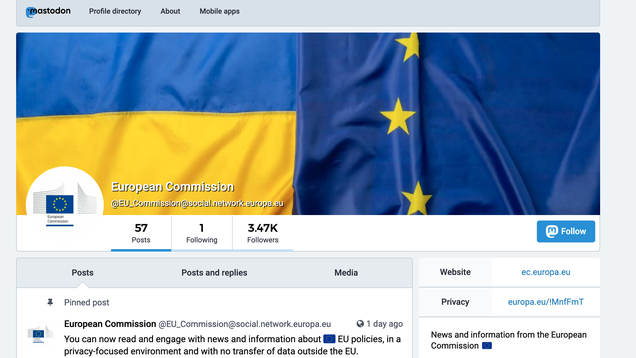
If you’re among the throng of Twitter-die hards that are more than a bit bummed about a certain South African billionaire’s plans to buy out the social network, you might have flocked to its open-source alternative, Mastodon. As it turns out, the European Union is right there with you; the European Data Protection…

Read more…


Source: Gizmodo – Europe Starts Its Own Social Networks

CWA accuses Activision of threatening employees for discussing work conditions

The union working to organize Activision Blizzard workers — the Communications Workers of America — filed a complaint today with the National Labor Relations Board (NLRB), accusing the video game company of forbidding workers from discussing ongoing sexual and workplace harassment lawsuits. This isn’t the first time Activision has been accused of shutting down workplace dissent. Last September, CWA accused Activision of union-busting and intimidating workers who engaged in walkouts and other protests.

CWA filed its latest complaint after an incident in which an Activision worker posted a link to an article on their departmental Slack channel about an ongoing California Department of Fair Housing and Employment lawsuit against the company. The union shared no details about whether the worker was fired or reprimanded. Engadget has reached out to CWA for more information about the incident and will update when we hear back. Under federal law, employees have the right to discuss matters relating to wages, hours and working conditions.

Former Blizzard test analyst Jessica Gonzalez said Activision used “similar tactics” during her time at the company after she spoke out about workplace sexual harassment. “It is unfortunate that Activision continues to take the low road, but my hope is that everyone in the video game community understands how having a union on the job can encourage a workplace free from harassment and discrimination, which translates to better video games,” said Gonzalez in a statement.


Source: Engadget – CWA accuses Activision of threatening employees for discussing work conditions

FBI Searched the Data of Millions of Americans Without Warrants

An anonymous reader quotes a report from Bloomberg: The FBI searched emails, texts and other electronic communications of as many as 3.4 million U.S. residents without a warrant over a year, the nation’s top spy chief said in a report. The “queries” were made between December 2020 and November 2021 by Federal Bureau of Investigation personnel as they looked for signs of threats and terrorists within electronic data legally collected under the Foreign Intelligence Surveillance Act, according to an annual transparency report issued Friday by the Office of the Director of National Intelligence. The surge came as the FBI made a push to stop hacking attacks.

The authority the FBI used in this case was under Section 702 of FISA, which is set to expire at the end of next year unless it’s renewed by Congress. The report doesn’t say the activity was illegal or even wrong. But the revelation could renew congressional and public debates over the power U.S. agencies have to collect and review intelligence information, especially data concerning individuals. In comparison, fewer than 1.3 million queries involving Americans’ data were conducted between December 2019 and November 2020, according to the 38-page report. The report sought to provide a justification for the increase in queries during the last year.

“In the first half of the year, there were a number of large batch queries related to attempts to compromise U.S. critical infrastructure by foreign cyber actors,” according to the report. “These queries, which included approximately 1.9 million query terms related to potential victims — including U.S. persons — accounted for the vast majority of the increase in U.S. person queries conducted by FBI over the prior year.” The exact number of U.S. residents who potentially had their information reviewed isn’t known because there’s no precise way to measure the data, according to the report. “Today’s report sheds light on the extent of these unconstitutional ‘backdoor searches,’ and underscores the urgency of the problem,” said senior staff attorney with the ACLU. “It’s past time for Congress to step in to protect Americans’ Fourth Amendment rights.”

Read more of this story at Slashdot.


Source: Slashdot – FBI Searched the Data of Millions of Americans Without Warrants

Microsoft Edge Is Getting A Huge Security Upgrade With Cloudflare Powered VPN

Microsoft Edge Is Getting A Huge Security Upgrade With Cloudflare Powered VPN
Microsoft will be retiring Internet Explorer once and for all on June 15. However, Microsoft won’t be out of the web browser game with this retirement. The company has shifted its focus to maintaining and developing the Chromium-based Edge browser. Microsoft rolls out new Edge features fairly often, though some of them may be of somewhat questionable

Source: Hot Hardware – Microsoft Edge Is Getting A Huge Security Upgrade With Cloudflare Powered VPN

Intel Powers-Up 14th-Gen Meteor Lake Hybrid CPU And Boots Windows

Intel Powers-Up 14th-Gen Meteor Lake Hybrid CPU And Boots Windows
People might have scoffed at AMD’s “stapled-together” processors once upon a time, but it’s become clear since then that chiplet-based processor designs are the way forward. There are still benefits to making monolithic CPUs, but they can be costly,  and inefficient compared to “disaggregated” designs.

Intel’s next 13th-Gen processors,

Source: Hot Hardware – Intel Powers-Up 14th-Gen Meteor Lake Hybrid CPU And Boots Windows

'Why the Heck Are SSNs Still Treated as Passwords in the US?'

Haje Jan Kamps, writing for TechCrunch: A couple of weeks ago yet another of my friends was a victim of identity theft, and I got yet another deep look into how fantastically broken the U.S. can be when it comes to security. “They have my social security number,” she said, and I was reminded of how a lot of systems in the U.S. are woefully poorly designed. To wit: This morning I called my bank and was asked for the last four digits of my SSN and they somehow accepted my identity because I knew those four digits.

When I moved to the U.S. a couple of years ago, my friends made sure that I knew I had to keep my Social Security number (SSN) secret and hidden. When I started opening a bank account and set up a cell phone plan, it became obvious why: All sorts of institutions that really should know better are treating this string of numbers as a password. There’s a huge, glaring problem with that. I maintain that Equifax should receive the corporate equivalent of capital punishment for allowing this to happen, but 145 million social security numbers were stolen by hackers a few years ago, which means that the Social Security numbers — yes, the same numbers that are being treated as “passwords” — for about half the U.S. adult population are in the wind.

We’ve gotten used to passwords by now, but at least, in most cases, passwords can be changed when they are hacked. Your social security number? Not so much. If your SSN leaks just once, you’re boned. It’s not possible to change it, and that brings up the true depth of idiocy in all of this: Relying on security that depends on keeping an unchangeable piece of information secret is really bloody stupid. The corollary is this: Imagine that your email has been hacked but your email provider tells you that you can’t change your password, you can’t change your email provider, and you’ll just have to deal with it. That’s the situation we currently have with Social Security numbers.

Read more of this story at Slashdot.


Source: Slashdot – ‘Why the Heck Are SSNs Still Treated as Passwords in the US?’

Russians Reportedly Turn to Old Soviet-Era Tactics to Watch Western Movies

If you thought the age of streaming services would put an end to people watching oddly formatted bootleg copies of the newest movie releases, then you’d probably be surprised to see what some Russians have been forced to do to watch Turning Red in theaters.

Read more…


Source: Gizmodo – Russians Reportedly Turn to Old Soviet-Era Tactics to Watch Western Movies

Intel: Meteor Lake Chiplet SoC Up and Running

Alongside Intel’s regular earnings report yesterday, the company also delivered a brief up on the state of one of their most important upcoming products, Meteor Lake. Intel’s first chiplet/tile-based SoC, which completed initial development last year, has now completed power-on testing and more. The news is not unexpected, but for Intel it still marks a notable milestone, and is important proof that both Meteor Lake and the Intel 4 process remain on track.


Meteor Lake, which is slated to be the basis of Intel’s 14th generation Core processors in 2023, is an important chip for the company on several levels. In terms of design, it is the first chiplet-based (or as Intel likes to put it, “disaggregated”) mass-market client SoC from the company. Intel’s roadmap for the Core lineup has the company using chiplet-style SoCs on a permanent basis going forward, so Meteor Lake is very important for Intel’s design and architecture teams as it’s going to be their first crack at client chiplets – and proof as to whether they can successfully pull it off.


Meanwhile Meteor Lake is also the first client part that will be built on the Intel 4 process, which was formerly known as Intel’s 7nm process. Intel 4 will mark Intel’s long-awaited (and delayed) transition to using EUV in patterning, making it one of the most significant changes to Intel’s fab technology since the company added FinFETs a decade ago. Given Intel’s fab troubles over the past few years, the company is understandably eager to show off any proof that its fab development cycle is back on track, and that they are going to make their previously declared manufacturing milestones.


As for this week’s power-on announcement, this is in-line with Intel’s earlier expectations. At the company’s 2022 investor meeting back in February, in the client roadmap presentation Intel indicated that they were aiming for a Q2’22 power-on.


In fact, it would seem that Intel has slightly exceeded their own goals. While in a tweet put out today by Michelle Johnston Holthaus, the recently named EVP and GM of Intel’s Client Computing Group, announced that Meteor Lake had been powered on, comments from CEO Pat Gelsinger indicate that Meteor Lake is doing even better than that. According to Gelsinger’s comments on yesterday’s earnings call, Meteor Lake has also been able to boot Windows, Chrome, and Linux. So while there remains many months of bring-up left to go, it would seem that Meteor Lake’s development is proceeding apace.


But that will be a story for 2023. Intel will first be getting Raptor Lake out the door later this year. The Alder Lake successor is being built on the same Intel 7 process as Alder Lake itself, and will feature an enhanced version of the Alder Lake architecture.


Source: AnandTech – Intel: Meteor Lake Chiplet SoC Up and Running

Airbnb will stop offering refunds when a host or guest contracts COVID-19

Airbnb bookings made on or after May 31st will no longer be eligible for refunds for COVID-19-related issues. The upcoming change to the extenuating circumstances policy will apply to cases where a host or guest contracts COVID-19.

The company says the host’s standard cancellation policy will apply instead. It says nearly two-thirds of active offer policies that allow guests to cancel up to five days (under the moderate policy) or up to 24 hours before check in (as per the flexible policy).

Reservations made before the end of next month may still be eligible for a COVID-19-linked refund if they meet the terms of Airbnb’s policy. There are exceptions for domestic reservations in South Korea and mainland China. Airbnb said refunds will still be available there for some COVID-19-related circumstances for the foreseeable future.

“Some in the travel industry stopped this type of policy months ago, while others didn’t provide one at all,” Airbnb wrote in a blog post. “After consultation with our medical advisors, as well as our community, we feel the time is now right to take the same step.”

For what it’s worth, Airbnb will soon start offering travel insurance. The product will be available in the coming months. Until then, the company says, those concerned that COVID-19 may disrupt their travel plans can buy insurance elsewhere.

The onset of the pandemic devastated the travel industry and Airbnb wasn’t immune from the impact. The company laid off 25 percent of its workforce, or around 1,900 jobs, in May 2020. It seems Airbnb is hoping to get back to business as usual. It noted that “many countries have now implemented living with COVID-19 plans.”

Still, the pandemic is not over. Around a third of the global population has yet to receive at least one vaccine dose. Data shows that, on average, 629,798 cases have been recorded worldwide in each of the last 14 days.


Source: Engadget – Airbnb will stop offering refunds when a host or guest contracts COVID-19

Nigeria Blocks 73 Million Mobile Phones in Security Clampdown

An anonymous reader shares a report: C onstance Chioma calls her son every morning to check that he is safe while studying in northeast Nigeria, a region plagued by deadly attacks by Islamist insurgents and armed kidnappings. Earlier this month, she could not get through. She later realised her SIM card was one of about 73 million – more than a third of the 198 million in Nigeria – which have been barred from making outgoing calls because they have not been registered in the national digital identity database.

[…] Nigeria is among dozens of African countries including Ghana, Egypt and Kenya with SIM registration laws that authorities say are necessary for security purposes, but digital rights experts here say increase surveillance and hurts privacy. Nigeria has been rolling out 11-digit electronic national identity cards for almost a decade, which record an individual’s personal and biometric data, including fingerprints and photo. The National Identity Number (NIN) is required to open a bank account, apply for a driver’s license, vote, get health insurance, and file tax returns. In 2020, Nigeria’s telecommunications regulator said every active mobile phone number must be linked to the user’s NIN. It repeatedly extended the deadline until March 31 this year. The government said outgoing calls were being barred from April 4 here from any mobile phone numbers that had not complied.

Read more of this story at Slashdot.


Source: Slashdot – Nigeria Blocks 73 Million Mobile Phones in Security Clampdown

Who Is Sabotaging France's Fiber Optic Cables?

Somebody disabled a large number of France’s fiber optic cables earlier this week. The incident, which is being criminally investigated and has been called an act of “vandalism” and “sabotage,” temporarily disrupted the internet in multiple French cities, including Paris.

Read more…


Source: Gizmodo – Who Is Sabotaging France’s Fiber Optic Cables?

Webb’s mirror alignment is done, now it’s on to the instruments

A multi-panel image showing stars as detected by different detectors.

Enlarge / A very detailed view of one of the Milky Way’s satellite galaxies. (credit: NASA/STScI)

In mid-March, NASA released an image from the Webb Space Telescope that demonstrated that its primary mirror reached the point where it focused light as finely as physics would allow for hardware of its size. That was a critical milestone, but it only applied to one of the five instruments carried by the telescope. On Thursday, NASA announced that the next milestone had been reached: All the instruments were now equally in focus.

Webb’s instruments include two spectrographs, two imaging cameras, and the fine guidance sensor that helps with pointing the telescope. Each of these has had to be aligned individually to the primary mirror to ensure focus, a process that has taken several weeks. But now, the focus for each of them is about as good as physics will allow.

That limit is set by diffraction, the process by which light interferes with itself and diffuses when it reaches an edge or corner. While it’s possible to beat the diffraction limit if you have complete control of the photons and play quantum mechanical tricks with them, that isn’t the case with telescopes. So, diffraction-limited is the best we can hope for from a telescope. And, according to NASA, it’s somewhat better than we had planned for: “The optical performance of the telescope continues to be better than the engineering team’s most optimistic predictions.”

Read 2 remaining paragraphs | Comments


Source: Ars Technica – Webb’s mirror alignment is done, now it’s on to the instruments