Star Trek: Picard's unraveling continuity is the result of operator error

The following contains moderate spoilers for the fourth episode of ‘Star Trek: Picard’ season two.

Continuity is something that comes up in geek media a lot, from the Marvel Cinematic Universe to Star Wars to DC’s TV Arrowverse. It used to be a thing only hardcore nerds really cared about, but now it’s gone mainstream, with fans of all stripes cheering at callbacks and pointing out inconsistencies. Star Trek was probably the first major example of an interconnected universe that most people were aware of, but as the franchise continues to grow, with at least five shows in active production and more on the way, is consistent continuity something it can keep up with?

Out of all the current shows, Star Trek: Picard probably has the strongest ties to continuity right now. It’s billed as a direct sequel to Star Trek: The Next Generation and follows the adventures of Jean-Luc Picard 20 years after we saw him and the Enterprise-E crew in Nemesis. Season one found him a broken man, after a devastating attack on Mars and the banning of synthetic life. This storyline actually made a good follow-up to the events of The Next Generation, in which the rights of an artificial being like Data were constantly being called into question.

Pictured: John de Lancie as Q and Sir Patrick Stewart as Jean-Luc Picard of the Paramount+ original series STAR TREK: PICARD. Photo Cr: Trae Patton/Paramount+ ©2022 ViacomCBS. All Rights Reserved.
CBS

Season two so far has decided to focus on the relationship between Q and Picard, with the omnipotent being thrusting the old admiral into an alternate reality similar to, but not identical to, the twisted mirror universe where everyone is evil. In this reality Picard is an admired general in a genocidal empire. He makes the decision to travel back in time to the point of divergence with the reality he knows, a common Star Trek plot device.

It’s common enough that the episode makes two references to at least two other previous time travel adventures in the franchise: Seven and Raffi encounter a punk on a bus with a boombox blasting the song “I Hate You” at top volume, a recreation of a scene from The Voyage Home (even featuring the same punk), and later they find that their colleague Rios is being taken to a “Sanctuary District,” a concept first introduced in the Deep Space Nine two-parter “Past Tense.”

Pictured: Sir Patrick Stewart as Picard of the Paramount+ original series STAR TREK: PICARD. Photo Cr: Trae Patton/Paramount+ ©2022 ViacomCBS. All Rights Reserved.
CBS

And yet, there’s an entire plot line that involves Picard heading to a set of coordinates only to arrive at 10 Forward Street, the location of Guinan’s bar in the season premiere. Picard even laughs when he sees the street sign, showing that even he’s aware of the amusing similarity to the name of Guinan’s bar on the Enterprise-D. Star Trek is no stranger to coincidences, though the next scene makes me wonder if the writers were aware that Guinan’s bar is called 10 Forward because it was at the very front of deck 10.

Even though it is 2024, Guinan does in fact happen to be there, though she’s closing up shop. But instead of a happy reunion between the two, this version of Guinan doesn’t recognize him at all. This doesn’t seem to perturb Picard in the slightest — he even withholds his name and where he really comes from so as to not disturb the timeline.

Long-time Trek viewers will immediately see the problem with this, namely in that another time travel adventure, the TNG two-parter “Time Arrow,” Picard met Guinan in the 19th century. He saved her life, even. And that adventure was actually an answer to a long-standing question on the show: How did the two become friends without ever meeting before she stepped foot on the Enterprise-D in season two of TNG? Guinan once said their relationship was “beyond friendship, beyond family” and while the whole adventure might not have been the ideal solution that fans wanted, it was good enough at the time.

So, when Picard walks into 10 Forward Street, it seems like the perfect opportunity to deepen the connection between the two characters further. Reunited after 131 years! It’s a level of “wibbly wobbly timey wimey” that Doctor Who is known for and has managed to make work, in particular when establishing the relationship between the Doctor and River Song. If the connection between Guinan and Picard is “more than friendship, more than family” there’s room for another adventure between the two to establish why they care for each other so deeply.

Pictured: Sir Patrick Stewart as Picard of the Paramount+ original series STAR TREK: PICARD. Photo Cr: Trae Patton/Paramount+ ©2022 ViacomCBS. All Rights Reserved.
CBS

Instead, it’s like they’re meeting again for the first time. This Guinan is jaded, almost angry at the state of Earth, which is why she’s leaving now. It seems uncharacteristically bitter for her, who is usually a caring, curious person. And, while Picard feels like he can’t reveal details about the future to her, he does feel like he has to convince her not to leave Earth.

But… why? Long-time fans know that at some point she returns to her homeworld, only to become a refugee when the planet is attacked by (presumably) the Borg. And when we saw her in “Time’s Arrow,” she was merely visiting, and was unlikely to stay long lest her mother show up to come collect her. It doesn’t really track that she would have hung out another 131 years, even going so far as to open a business or have a dog.

Pictured: Whoopi Goldberg as Guinan and Sir Patrick Stewart as Jean-Luc Picard of the Paramount+ original series STAR TREK: PICARD. Photo Cr: Nicole Wilder/Paramount+ ©2022 ViacomCBS. All Rights Reserved.
CBS

I previously argued that there’s a point where it becomes unrealistic to expect fans to keep up with every bit of continuity. There are almost 30 films in the Marvel Cinematic Universe, and days worth of TV shows to match. And it’s impractical to expect a new Star Trek writer to watch 800-plus episodes of old Trek before they’re allowed to write a single word of script.

But to watch at least a few episodes of the show relevant to the current storyline? That’s not a huge ask, especially in a world where everything is available via streaming. We’re long past the days of the BBC erasing the tapes of Doctor Who or the original prints of films like Star Wars disappearing into the void. And no longer are TV show archives locked away in corporate storage facilities or stacked in basements of hardcore collectors. Just a few clicks on Paramount+, and any episode of any Star Trek series can be pulled up on demand. Which includes “Time’s Arrow.”

Pictured: Whoopi Goldberg as Guinan of the Paramount+ original series STAR TREK: PICARD. Photo Cr: Nicole Wilder/Paramount+ ©2022 ViacomCBS. All Rights Reserved.
CBS

But it’s even understandable that under a time crunch, perhaps the writers couldn’t watch every episode with Guinan. But even then the excuses are thin, since the writers could do what I did before writing this post: Google it. Pull up Star Trek wiki Memory Alpha, punch in “Guinan” and skim through the entry to get a full list of her appearances. There’s even a section specifically about Picard and Guinan’s friendship, which would have alerted any reader to the existence of the “Time’s Arrow” two-parter, even if the writers for whatever reason had never heard of it.

With 56 years of history and most of the writers born after the original series — and newer shows even employing people born after The Next Generation — they can’t be expected to know everything. But even as everything becomes “available forever,” there are people who’ve made it their jobs to sort through all of it and keep track of every little detail. Some writers argue that continuity can be stifling, and the jury’s still out on how much it matters, but in the case of Guinan and Picard the appeal is the characters’ shared history. A shared history that isn’t hard to look up on today’s internet.


Source: Engadget – Star Trek: Picard’s unraveling continuity is the result of operator error

Adding Okra To Drinking Water Removes Microplastics

An anonymous reader quotes a report from New Atlas: If you’ve ever eaten okra, then you’ll know that the stuff can be pretty gooey. According to new research, that quality could allow a compound from the plant to be used in a less toxic method of removing microplastics from drinking water. […] After some experimentation, it was found that polysaccharides from okra paired with those from fenugreek worked best at removing microplastics from seawater, while those same okra polysaccharides paired with those from tamarind were best for use on freshwater.

All in all, depending on factors such as the ratio of the polysaccharides and the water source, the plant-based flocculants performed either as well as or better than polyacrylamide. And importantly, they could be used in existing water treatment plants, without any alterations to the facilities or processes. The scientists are now investigating how well other combinations of plant-derived polysaccharides will work on specific types of plastic microparticles, in water from a variety of sources. The findings have been reported via EurekAlert. The American Chemical Society Meeting Newsroom channel on YouTube also produced a video about the research.

Read more of this story at Slashdot.


Source: Slashdot – Adding Okra To Drinking Water Removes Microplastics

How to Get Kids to Stop Eating Their Boogers

If you’ve ever been around kids for any length of time, you’ve surely asked yourself: Why, why on Earth, would a person eat the inner contents of their disgusting nose? The most basic answer is: Kids are gross, and they do gross things. But more specifically, in the words of a child I know (I’ll never say who): “I eat…

Read more…


Source: LifeHacker – How to Get Kids to Stop Eating Their Boogers

Kobo's Libra 2 e-reader is $20 off right now

We already liked Kobo’s Libra 2 e-reader at the full $180 price, thanks to the physical buttons, high-resolution e-Ink display and support for multiple formats. Now, we’re seeing the first good discount on it, making it all the more attractive. You can pick one up at Amazon for $160, for a savings of $20 or 11 percent.

Buy Kobo Libra 2 at Amazon – $160

The Libra 2 features a large “chin” that houses a pair of physical page buttons, a feature that’s also available on the Kindle Oasis, but for a lot more money. We found that the physical buttons stop hand cramping because it’s easy to switch from one hand to another.

The 7-inch E-Ink Carta 1200 touchscreen is sharp and easy on the eyes. The “ComfortLight Pro” automatically adjusts the brightness and color temperature to match the room, and becomes less blue as the day goes on to help keep you calm before bedtime. It can charge up in a couple of hours and go for days at a time, is waterproof for use in the tub or pool, lets you save articles to Pocket and supports more file types than Kindle.

Finally, the Libra 2 includes Bluetooth functionality, letting you connect a pair of headphones and listen to audiobooks. As for drawbacks? The lack of a plastic cover means that crumbs or particles can get trapped between the screen and bezel, and some users have noticed hiccups while trying to use the highlighting feature. Still, it’s far and away one of the best eReaders out there and a very attractive option at this price.

If you’re looking for a more basic reader, or want to stick with Amazon’s ecosystem, don’t forget that the Kindle Paperwhite and Kindle are still on sale as well, for $105 and $55, respectively. You’ll also find the corresponding Kids tablets for $115 and $65

Follow @EngadgetDeals on Twitter for the latest tech deals and buying advice.


Source: Engadget – Kobo’s Libra 2 e-reader is off right now

OnePlus 10 Pro will launch in North America, Europe and India on March 31st

OnePlus’ latest flagship phone will launch in Europe, North America and India on March 31st. The company previously said the OnePlus Pro 10 would arrive in those markets by the end of March, so that’s right on schedule. It released the smartphone in China in January.

The OnePlus 10 Pro is powered by a Snapdragon 8 Gen 1 chip and OxygenOS (which is based on Android 12). It has a 6.7-inch 120Hz Fluid AMOLED with LTPO screen which allows for adjustable refresh rates to improve the battery life. The device has a 5,000mAh battery, along with support for 80W fast charging and 50W wireless charging. It comes with up to 12GB of RAM and 256GB of internal storage.

There’s an array of three Hasselblad cameras on the rear: a 48MP wide-angle sensor, an eight-megapixel telephoto lens and a 50MP ultrawide camera. To show off the cameras, their 10-bit color capabilities and the OnePlus Pro 10’s color processing knowhow, the company sent the handset 38,000 meters (23.6 miles) up into the stratosphere to take some shots of the horizon.

OnePlus Pro 10
OnePlus

Folks in North America, Europe and India will be able to pre-order the OnePlus Pro 10 from the OnePlus website and Amazon on March 31st at 10:20AM ET. You’ll get the OnePlus Buds Pro as a freebie if you pre-order. Those who order from Amazon or elsewhere will need to claim their earbuds through the OnePlus store app.


Source: Engadget – OnePlus 10 Pro will launch in North America, Europe and India on March 31st

NASA to accept new Artemis lunar lander proposals from commercial companies

Back in April 2021, NASA chose SpaceX to develop a lunar lander that will take astronauts to the moon for its future Artemis missions. SpaceX’s vehicle won’t be the only one flying astronauts to the surface of the Moon, though: NASA has announced that it’s welcoming proposals from American companies for landers that can take human spacefarers from the Gateway station in the lunar orbit to the Moon itself. By having that capability, the lander design can be used for missions beyond Artemis III, which will be the first crewed landing on the Moon since Apollo 17.

In its announcement, the agency said it’s also exercising an option under its existing contract with SpaceX and is asking the company to change the landing system it proposed to meet the new requirement. “Pursuing more development work under the original contract maximizes NASA’s investment and partnership with SpaceX,” the agency said. Having a second lunar lander “provides redundancy in services” and can help ensure reliable transportation for astronauts that will be part of future lunar missions.

While the call for a second lunar lander is new, the plan to have more than one company working on the project isn’t. NASA was originally supposed to choose more than one lunar lander provider for Artemis, but the agency didn’t receive enough funding from Congress, prompting it to go with SpaceX alone. 

Blue Origin, one of the finalists for the contract, filed a complaint with the US Court of Federal Claims, calling the decision “fundamentally unfair.” The Jeff Bezos-owned space corporation argued that NASA allowed SpaceX to modify its bid and wasn’t given the same chance to do so. To note, the contract SpaceX won was worth $2.9 billion, while Blue Origin’s bid was almost twice that at $5.9 billion. NASA believed Blue Origin bid high on purpose on the assumption that NASA would haggle and that it would receive more funding than it did. While the court dismissed Blue Origin’s lawsuit in November, SpaceX had to pause work on the lander twice, losing months in the process. When NASA pushed back the Artemis III mission to 2025, NASA administrator Bill Nelson said Blue Origin’s lawsuit was partly to blame.

NASA will issue a draft solicitation for the second lunar lander in the coming weeks before issuing a formal request for proposals this summer.

Lisa Watson-Morgan, NASA’s Human Landing System Program manager, said:

“This strategy expedites progress toward a long-term, sustaining lander capability as early as the 2026 or 2027 timeframe. We expect to have two companies safely carry astronauts in their landers to the surface of the Moon under NASA’s guidance before we ask for services, which could result in multiple experienced providers in the market.”


Source: Engadget – NASA to accept new Artemis lunar lander proposals from commercial companies

The web is for everyone: Our vision for the evolution of the web

Over the last two decades, the web has woven itself into the fabric of our lives. What began as a research project has become the world’s most important communication platform and an essential tool for billions of people.  But despite its success — and sometimes because of it — the web has real problems.

Source: LXer – The web is for everyone: Our vision for the evolution of the web

MSI challenges Lenovo, HP with Tile-tracking laptops

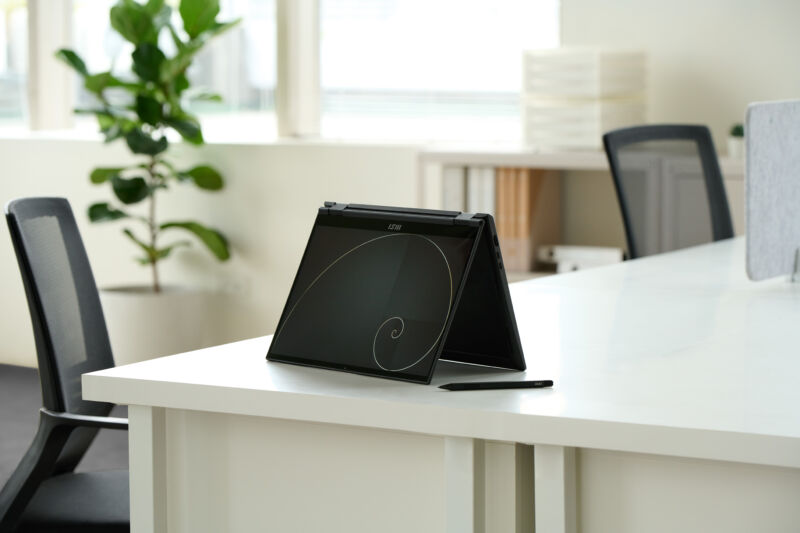

MSI Summit E14 Flip Evo propped on a desk

Enlarge / MSI introduced the E14 Flip Evo 2-in-1 (pictured) today. (credit: MSI)

The newest laptops in MSI’s highest-end productivity and business lineup should now be easier to locate should you misplace them. The refreshed Summit laptops include a new model, the Summit E14 Flip Evo, and they take a page from HP and Lenovo laptops by integrating Tile’s Bluetooth trackers.

Once users activate the feature in the preloaded Windows Tile app (which requires the Internet), they can use Tile’s smartphone app to track down their missing PC. MSI’s new Summit laptops will be able to use Tile’s Ring My PC feature, which makes the PC emit a noise if it’s within 250 feet, even if the PC is off. Tile also supports a proximity meter and can show you the lost PC’s most recent tracked location. The Tile Network can also alert you if someone with a smartphone using the Tile app goes near the laptop.

MSI’s inclusion of Tile puts the Summit series in line with the likes of business and power user-ready productivity laptops from HP, such as the EliteBook 1000, the EliteBook 800 G8, and the Zbook Firefly G8 series. HP was the first brand to sell laptops with built-in Tile trackers, and Lenovo followed suit with its ThinkPad lineup (X1 and T series). With people doing more work on the go, now is a good time to cash in by making powerful laptops, which keep getting smaller, a little easier to find.

Read 5 remaining paragraphs | Comments


Source: Ars Technica – MSI challenges Lenovo, HP with Tile-tracking laptops

Instacart will offer its own tech to help grocery retailers speed up deliveries

Instacart will start offering its tech to all grocery retailers. The company says the Instacart Platform will help them handle ecommerce, delivery fulfillment and ads, while offering access to insights and other data.

Retailers will be able to use the software’s features (which also include options to manage scanless carts and other aspects of brick-and-mortar operations) on an à la carte basis or to run most of their business on a single platform. All grocery store operators will be able to use the software, not only those with which Instacart has partnered for deliveries.

In the coming months, Publix will start using the platform’s fulfillment features in Atlanta and Miami to make deliveries from Instacart’s purpose-built warehouses in as little as 15 minutes. Some of Instacart’s rivals, such as Gopuff, DoorDash and Getir, are also embracing ultra-fast grocery deliveries. Some jurisdictions have raised alarm bells about such services, in part because they could make things unsafe for couriers who might be under pressure to meet deadlines.

Other retailers, including Good Food Holdings and Schnuck Markets, are piloting Instacart’s ad service, which will be rolled out more widely later this year.

Licensing the Instacart Platform could open up a key stream of revenue for the company. The economics of the gig worker model make it difficult for companies in that space to turn a profit, especially given the stiff competition they face in certain markets. Dealing with retailers directly could improve Instacart’s bottom line, though the gig workers Instacart has worked with to handle deliveries could be affected.

We’re seen other instances of ecommerce companies offering their tech to physical retailers. Starbucks and Sainsbury’s are testing Amazon’s cashier-free Just Walk Out tech.


Source: Engadget – Instacart will offer its own tech to help grocery retailers speed up deliveries

The Morning After: Our verdict on Apple's Studio Display

Apple’s new display is here, ready for the Mac aficionados unwilling to deck their workstation in anything less than brushed metal and soft corners. The Studio Display is a bit brighter than the 5K iMac; otherwise it’s the same 27-inch screen. That does mean it lacks features we’ve seen on the latest MacBook Pros, like ProMotion refresh rate and Mini-LED backlighting. 

There is an A13 Bionic chip to drive its webcam (which needs the help) and augment its speakers. For the $1,599 price, though, it’s missing some pretty standard features, like an adjustable stand, HDR and high refresh rates. If you want a Mac screen and don’t want to pay more than $2,000, it may still be the best fit. Read our full review here.

— Mat Smith

The biggest stories you might have missed

YouTube makes thousands of TV show episodes available to stream for free

The ad-supported series include ‘Hell’s Kitchen’ and ‘Heartland.’

YouTube is letting users in the US stream thousands of free ad-supported TV shows like Hell’s Kitchen, Heartland and Unsolved Mysteries. YouTube plans to offer around 4,000 free TV episodes on top of the 1,500 movies already available. This month, it added a raft of new movie titles, including Gone in Sixty Seconds, Runaway Bride and Legally Blonde, now available to stream for free with ads.

Continue reading.

PS5 will catch up to Xbox with variable refresh rates

Sony teased the feature will arrive in a few months.

Variable refresh rate (VRR) is coming to the PlayStation 5 in the “coming months,” Sony announced. If you have an HDMI 2.1-compatible TV or PC monitor, it will dynamically sync the display refresh rate to the PS5 console’s graphical output, Sony explained in a blog post. The feature is long overdue. VRR has been available on the Xbox Series X and Series S consoles since they debuted. VRR will help minimize visual artifacts, like screen tearing, offering a more consistently smooth picture.

Continue reading.

IKEA’s latest experiment in speakers is an outdoor LED lamp

It’s a Spotify-enabled Bluetooth speaker.

TMA
IKEA

IKEA has unveiled the Vappeby Bluetooth speaker with a Spotify Tap button that doubles as an outdoor lamp, confirming an FCC filing we saw last year. With IP65 dust and water splash resistance, it’s designed to illuminate outdoor parties, BBQs, etc. with LED light while delivering 360-degree sound. The new model is now available to order for $65 in blue or gray.

Continue reading.

Nothing’s first phone will launch this summer

The Phone 1 will feature a Qualcomm Snapdragon and run a modified version of Android.

As teased, Nothing will release its first smartphone this summer and, in the usual marketing style of its CEO, OnePlus Co-founder Carl Pei, Nothing shared a handful of details while promising to reveal more soon. The phone will run Nothing OS, a modified version of Android that “captures the best features” of Google’s mobile OS while distilling it “to just the essentials.” Which I guess are two ways of saying the same thing. It’s a huge challenge to launch a new smartphone in a land of Galaxies, Pixels and iPhones, but I was pleasantly surprised with Nothing’s slick Ear 1 wireless buds. The company could pretty much win me over with a transparent smartphone, to be honest.

Continue reading.


Source: Engadget – The Morning After: Our verdict on Apple’s Studio Display

Polestar's long range single motor Polestar 2 arrives in the US

Following the release of its dual-motor variant late last year, Polestar announced on Wednesday that the 270-mile long range, single-motor version of its Polestar 2 EV is now available for sale in the US. 

Starting at $45,900 — $33,400 after federal and state incentives — the single-motor Polestar 2 is $4,000 less expensive than its AWD sibling (which starts at $51,200) and provides 16 extra miles of driving range to the all-wheel’s 249 miles. Other than the number of e-motors affixed to their axles, the two are functionally identical.

“All variants of the Polestar 2 exude the brand’s leadership in cutting-edge technology with the Google infotainment system, premium sustainable materials, and unparalleled avant-garde design,” Gregor Hembrough, Head of Polestar North America, said in a press statement. The $4,000 creature comfort “Plus” upgrade and $3,200 “Pilot” sensor and safety package are likewise available with either powertrain setup. 

Folks looking to stick it to their local petrochemical conglomerate can schedule a test drive either through the Polestar 2 configurator site or at one of the company’s physical retail locations located in major cities throughout the US.


Source: Engadget – Polestar’s long range single motor Polestar 2 arrives in the US

North Korea Launches First ICBM Since 2017 in Already Tense Nuclear Environment

North Korea tested a new type of intercontinental ballistic missile early Thursday that landed in the Sea of Japan, the first ICBM test conducted by the country since 2017. Experts believe the missile could have been the Hwasong-17, a “monster” ICBM first revealed in October of 2020, but there’s no confirmation on…

Read more…


Source: Gizmodo – North Korea Launches First ICBM Since 2017 in Already Tense Nuclear Environment

OnePlus 10 Pro 5G With Snapdragon 8 Gen 1 And 120Hz Display Is Headed To The US

OnePlus 10 Pro 5G With Snapdragon 8 Gen 1 And 120Hz Display Is Headed To The US
When OnePlus announced its flagship OnePlus 10 Pro 5G at the Consumer Electronics Show earlier this year, there was never any doubt it would be released in the US. We just didn’t know exactly when, because that tidbit hadn’t been revealed (it’s been exclusive to China so far). Well, now we know.

OnePlus today confirmed it will launch the

Source: Hot Hardware – OnePlus 10 Pro 5G With Snapdragon 8 Gen 1 And 120Hz Display Is Headed To The US

Wolfenstein 3D secrets revealed by John Romero in lengthy post-mortem chat

 John Romero speaks at GDC 2022.

Enlarge / John Romero speaks at GDC 2022. (credit: Sam Machkovech)

SAN FRANCISCO—While the game series Doom and Quake have been heavily chronicled in convention panels and books, the same can’t be said for id Software’s legendary precursor Wolfenstein 3D. One of its key figures, coder and level designer John Romero, appeared at this year’s Game Developers Conference to chronicle how this six-month, six-person project built the crucial bridge between the company’s Commander Keen-dominated past and FPS-revolution future.

And if six months for a landmark game seems fast, you should pause for a history lesson.

Original concept art for <em>Wolfenstein 3D</em>.

Original concept art for Wolfenstein 3D. (credit: Sam Machkovech)

“In the last six months of 1991, we started and shipped five games,” Romero says as a lead-in to the genesis of Wolfenstein 3D‘s development. This included multiple Commander Keen side-scrolling games, and id Software began the year of 1992 by prototyping the game that would have been Keen 7, whose major technological advancement would have been parallax-scrolling backgrounds. After helping id Software complete the game’s first demo in one week, Romero announced that he wasn’t interested in keeping the Keen series going. id Software co-founder Adrian Carmack agreed—”I’m sick of Keen“—and John Carmack (no relation) “viewed the carnage” and assessed that a change might very well be in order.

Read 20 remaining paragraphs | Comments


Source: Ars Technica – Wolfenstein 3D secrets revealed by John Romero in lengthy post-mortem chat

Materials Scientists Make Pizza Dough — Without the Yeast

sciencehabit shares a report from Science.org: When he was 25, materials scientist Ernesto Di Maio developed a yeast allergy and broke out in hives whenever he ate pizza, which was somewhat embarrassing for a son of Naples, Italy. “My wife loves pizza, and this sometimes creates tension on the night menu,” he says. Now, Di Maio can look forward to carefree dinners, for he and his colleagues have invented a yeast-free method of leavening pizza dough.

In a classically prepared pizza, as with most bread, yeast ferments and releases carbon dioxide to give the dough a foamlike consistency. Baking then drives off the water and locks in the airy texture. Di Maio’s team at the University of Naples Federico II (UNINA) thought it might be able to produce the same effect in a different way: by infusing the dough with gas at high pressure and releasing the pressure during baking, adapting a method they’d developed to manufacture polyurethane. “The aim was to try to make the same texture that we love so much in pizza without a chemical agent,” says co-author and UNINA materials scientist Rossana Pasquino. […] The end result: “We tried it, and it was nice and crusty and soft,” Di Maio says.
Alessio Cappelli, a food technologist at the University of Florence, says the paper is “interesting,” but he wonders whether the method will be widely used in practice, given that baker’s yeast is so cheap and easy. “It looks like an innovation just for the sake of it,” he says.

The study has been published in the journal Physics of Fluids.

Read more of this story at Slashdot.


Source: Slashdot – Materials Scientists Make Pizza Dough — Without the Yeast