
In this guide, you will set up Passenger to assist Nginx with serving your Ruby on Rails web application and install Let’sEncrypt SSL to secure your application.
Source: LXer – How to Install Ruby On Rails on Ubuntu 20.04 with MySQL, Nginx, Passenger, SSL
Monthly Archives: March 2022
Devs Want To Challenge Your Expectations Of Who Makes Games

While the video game industry is becoming more diverse every year, marginalized game developers are still often dismissed in professional settings based on their appearance. One developer started the hashtag #WhatAGameDevLooksLike after security guards at a games conference apparently stopped her no fewer than three…
Source: Kotaku – Devs Want To Challenge Your Expectations Of Who Makes Games
Luke Skywalker's Next Star Wars Story Features an Unexpectedly Emotional Reunion

What did Luke Skywalker do after Return of the Jedi? It’s a question fans had been thinking about for decades and, over the past few years, we’ve learned bits and pieces: a baby apprentice here, villainous nephew there, self-imposed exile, etc. A new book, however, promises to be the deepest dive into this story yet…
Source: Gizmodo – Luke Skywalker’s Next Star Wars Story Features an Unexpectedly Emotional Reunion
Ekstrand: How to write a Vulkan driver in 2022
Over on the Collabora blog, Jason Ekstrand has a detailed look at writing a Vulkan graphics driver in today’s world. “Not only has Vulkan grown, but Mesa has as well, and we’ve built up quite a suite of utilities and helpers for making writing Vulkan drivers easier.” The blog post takes the form of a tutorial of sorts, though the end result is not a functioning Vulkan driver the framework of one is shown.
At the time we were developing ANV (the Intel Vulkan driver), the Vulkan spec itself was still under development and everything was constantly in flux. There were no best practices; there were barely even tools. Everyone working on Vulkan was making it up as they went because it was a totally new API. Most of the code we wrote was purpose-built for the Intel driver because there were no other Mesa drivers to share code. (Except for the short-lived LunarG Intel driver based in ilo, which we were replacing.) If we had tried to build abstractions, they could have gotten shot to pieces at any moment by a spec change. (We rewrote the descriptor set layout code from scratch at least five or six times before the driver ever shipped.) It was frustrating, exhausting, and a whole lot of fun.
These days, however, the Vulkan spec has been stable and shipping for six years, the tooling and testing situation is pretty solid, and there are six Vulkan drivers in the Mesa tree with more on the way. We’ve also built up a lot of common infrastructure. This is important both because it makes writing a Vulkan driver easier and because it lets us fix certain classes of annoying bugs in a common place instead of everyone copying and pasting those bugs.
Source: LWN.net – Ekstrand: How to write a Vulkan driver in 2022
MIT's new simulation reveals crucial insights into the birth of the universe
Spontaneously generating reality is a messy affair.
Our Big Bang, for example, unleashed a universe’s worth of energy and matter in an instant, then flung it omnidirectionally away at the speed of light as temperatures throughout the growing cosmos exceeded 1,000 trillion degrees Celsius in the first few nanoseconds of time’s existence. The following couple hundred million years, during which time the universe cooled to the point that particles beyond quarks and photons could exist — when actual atoms like hydrogen and helium came into being — are known as the dark ages, on account of stars not yet existing to provide light.
Eventually however, vast clouds of elemental gasses compressed themselves enough to ignite, bringing illumination to a formerly dark cosmos and driving the process of cosmic reionization, which is why the universe isn’t still just a whole bunch of hydrogen and helium atoms. The actual process of how the light from those new stars interacted with surrounding gas clouds to create the ionized plasma that spawned heavier elements is not fully understood but a team of researchers at MIT have just announced that their mathematical model of this turbulent epoch is the largest and most detailed devised to date.
The Thesan simulation, named in honor of the Etruscan goddess of dawn, simulates the period of cosmic reionization looking at the interactions between gasses, gravity, and radiation in a 100 million cubic light year space. Researchers can scrub through a synthetic timeline extending from 400,000 years to 1 billion years after the Big Bang to see how changing different variables within the model impacts the generated outcomes.
“Thesan acts as a bridge to the early universe,” Aaron Smith, NASA Einstein Fellow in the MIT Kavli Institute for Astrophysics and Space Research, told MIT News. “It is intended to serve as an ideal simulation counterpart for upcoming observational facilities, which are poised to fundamentally alter our understanding of the cosmos.”
It boasts higher detail at a larger volume than any previous simulation thanks to a novel algorithm tracking light’s interaction with gas that dovetails with separate galaxy formation and cosmic dust behavior models.
“Thesan follows how the light from these first galaxies interacts with the gas over the first billion years and transforms the universe from neutral to ionized,” Rahul Kannan of the Harvard-Smithsonian Center for Astrophysics, which partnered with MIT and the Max Planck Institute for Astrophysics on this project, told MIT News. “This way, we automatically follow the reionization process as it unfolds.”
Powering this simulation is the SuperMUC-NG supercomputer in Garching, Germany. Its 60,000 computing cores run the equivalent of 30 million CPU hours in parallel to crunch the numbers needed by Thesan. The team has already seen surprising results from the experiment as well.
“Thesan found that light doesn’t travel large distances early in the universe,” Kannan said. “In fact, this distance is very small, and only becomes large at the very end of reionization, increasing by a factor of 10 over just a few hundred million years.”
That is, light at the end of the reionization period traveled further than researchers had previously figured. They have also noticed that the type and mass of a galaxy may influence the reionization process, though the Thesan team was quick to point out that corroborating real-world observations will be needed before that hypothesis is confirmed.
Source: Engadget – MIT’s new simulation reveals crucial insights into the birth of the universe
North Korean hackers unleashed Chrome 0-day exploit on hundreds of US targets
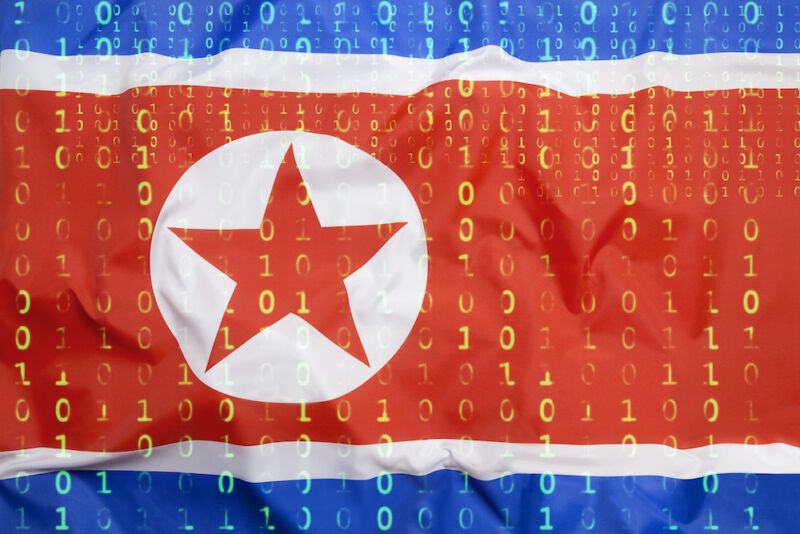
Enlarge (credit: Getty Images)
Hackers backed by North Korea’s government exploited a critical Chrome zeroday in an attempt to infect the computers of hundreds of people working in a wide range of industries, including the news media, IT, cryptocurrency, and financial services, Google said Thursday.
The flaw, tracked as CVE-2022-0609, was exploited by two separate North Korean hacking groups. Both groups deployed the same exploit kit on websites that either belonged to legitimate organizations and were hacked or were set up for the express purpose of serving attack code on unsuspecting visitors. One group was dubbed Operation Dream Job, and it targeted more than 250 people working for 10 different companies. The other group, known as AppleJeus, targeted 85 users.
Dream jobs and cryptocurrency riches
“We suspect that these groups work for the same entity with a shared supply chain, hence the use of the same exploit kit, but each operate with a different mission set and deploy different techniques,” Adam Weidemann, a researcher on Google’s threat analysis group, wrote in a post. “It is possible that other North Korean government-backed attackers have access to the same exploit kit.”
Read 14 remaining paragraphs | Comments
Source: Ars Technica – North Korean hackers unleashed Chrome 0-day exploit on hundreds of US targets
The UN Is Building a Global Early Warning System for Extreme Weather

In hopes of protecting more people from climate change-fueled disasters, the United Nations is working on a global system to warn populations who are in the path of a storm or about to be hit by a heatwave or drought. The UN World Meteorological Organization (WMO) aims to build a system within the next five years to…
Source: Gizmodo – The UN Is Building a Global Early Warning System for Extreme Weather
Grimes claims responsibility for 2012 hack of culture blog Hipster Runoff
Grimes’ connections to hacking extend beyond a Cyberpunk 2077 cameo, apparently. Cybersecurity expert Jackie Singh and Pitchfork report the electropop star (aka Claire Boucher) confessed to hacking the culture blog Hipster Runoff in a Vanity Fairinterview. She said she coordinated a distributed denial of service attack against the site in 2012 after its anonymous author Carles posted an allegedly “mean” story including a photo of her kissing a friend at a party.
At the time, Carles told Motherboard there was evidence of “foul play” on the server, including a disk crash and sabotaged backups. Grimes said she and her fellow, still-anonymous perpetrator (from the games industry) “basically blackmail[ed]” Carles into removing the story before they would let him restore Hipster Runoff.
The admission might be more than just an interesting anecdote. As Pitchfork explains, DDoS attacks have long been illegal in both the US and Grimes’ home country of Canada — both nations can sentence culprits to as many as 10 years in prison. Blackmail, of course, has been illegal for longer. Law enforcement could theoretically charge Boucher and her accomplice based on the interview. Current Hipster Runoff owner Trevor McFedries has asked Twitter followers if anyone has a backup of the site under Carles, so the story might not be over yet.
Source: Engadget – Grimes claims responsibility for 2012 hack of culture blog Hipster Runoff
Omicron is trouncing the argument for “natural immunity” to COVID

Enlarge / A 13-year-old celebrates getting the Pfizer-BioNTech COVID-19 vaccine in Hartford, Connecticut, on May 13, 2021. (credit: Getty | JOSEPH PREZIOSO )
So-called “natural immunity” against COVID-19 has always been a dodgy argument for avoiding vaccination during the pandemic. But amid omicron, natural immunity is clearly rubbish.
Unvaccinated people who have recovered from an infection with the omicron coronavirus variant are left with paltry levels of neutralizing antibodies against omicron and almost no neutralizing antibodies against any of five other coronavirus variants, including delta. People who were vaccinated before getting an omicron infection, on the other hand, have strong protection against all five variants, and they are among the highest levels of neutralizing antibodies seen against omicron.
That’s all according to a new study surveying neutralizing antibody profiles in people who have all recovered from an omicron infection, with or without pre-existing immunity. The study was published Wednesday in The New England Journal of Medicine by a team of Austrian researchers. The researchers were led by virologist Janine Kimpel of the Medical University of Innsbruck.
Read 10 remaining paragraphs | Comments
Source: Ars Technica – Omicron is trouncing the argument for “natural immunity” to COVID
Israel Blocked Ukraine From Buying Pegasus Spyware, Fearing Russia's Anger
Israel blocked Ukraine from buying NSO Group’s Pegasus spyware for fear that Russian officials would be angered by the sale of the sophisticated hacking tool to a regional foe, The Guardian reported Thursday, citing people familiar with the matter. From the report: The revelation, following a joint investigation by the Guardian and Washington Post, offers new insight into the way Israel’s relationship with Russia has at times undermined Ukraine’s offensive capabilities — and contradicted US priorities. The Ukrainian president, Volodymyr Zelenskiy, has been critical of Israel’s stance since Russia launched its full and bloody invasion of Ukraine on 24 February, saying in a recent address before members of Israel’s Knesset that Israel would have to “give answers” on why it had not given weapons to Ukraine or applied sanctions on Russians.
People with direct knowledge of the matter say that, dating back to at least 2019, Ukrainian officials lobbied Israel to try to convince it to license the spyware tool for use by Ukraine. But those efforts were rebuffed and NSO Group, which is regulated by the Israeli ministry of defense, was never permitted to market or sell the company’s spyware to Ukraine.


Read more of this story at Slashdot.
Source: Slashdot – Israel Blocked Ukraine From Buying Pegasus Spyware, Fearing Russia’s Anger
New York Yellow Cabs Will Finally Run Through Uber

New Yorkers looking to catch an Uber may soon find themselves sitting in the back of classic Yellow Cab.
Source: Gizmodo – New York Yellow Cabs Will Finally Run Through Uber
Linux on the M1 Is Already Beating Apple at Its Own Game
Apple’s M1 processor has been turning heads since its launch in late 2020, and now there’s a Linux distro designed exclusively for the chip that’s already wowing people with its performance.
Source: LXer – Linux on the M1 Is Already Beating Apple at Its Own Game
Painted Skeletons of Çatalhöyük

The Best Character in Aliens Is Getting Her Own Origin Story

The best character in Aliens is getting her very own book. No, not Ripley. No, not the Queen Alien, though that would be cool. We’re talking of course about Private First Class Jenette Vasquez, 2nd Battalion Bravo Team in the United States Colonial Marine Corps.
Source: Gizmodo – The Best Character in Aliens Is Getting Her Own Origin Story
They Just Don't Make Video Game Manuals Like Tunic's Anymore


Radeon RX 6900 XT Might Get Beat By A Mid-Range RDNA 3 Graphics Card

Greymon55 is a popular, Digimon-themed hardware news leaker, and he’s been busy lately. Early this month, he tweeted vaguely about a product entering its “bring-up” phase, which is the testing phase after “tape out” when a company receives its first shipment of etched dice from the foundry.
As it turns out, that tweet was in relation to
Source: Hot Hardware – Radeon RX 6900 XT Might Get Beat By A Mid-Range RDNA 3 Graphics Card
Former Tandy CEO and PC innovator John Roach dead at 83
John Roach — the former chief of RadioShack parent company Tandy who later became one of the lead proponents of the personal computer — has died at 83, reportedThe New York Times. The Fort Worth native died in the city where he was raised, and no cause of death was given by his wife. As an employee of Tandy in the 70s, Roach convinced RadioShack executives to sell the TRS-80, a desktop microcomputer that retailed for just under $600, in its stores nationwide. This was at a time when few complete, pre-assembled computers were on the market. The TRS-80 first hit RadioShack stores in 1977, and by 1981 became the largest-selling computer of all time, beating out Apple’s early offerings.
“It is obvious that the microcomputer is at the center of a communications and information revolution. I believe that within 20 years most Americans will be computer users and will benefit from the attendant mental advantage,” Roach toldCreative Computing in 1984.
Roach was born on November 22, 1938 in Stamford, Texas. He started his career at Tandy Corporation as a data processing manager in 1967. Once a top-seller of CB radios through its RadioShack stores, the Tandy Corporation was then in a sales slump due to a decline in demand. The TRS-80, which sold exclusively at RadioShack stores, helped revive the company. By the time Roach became chief operating officer of Tandy in 1980, the company had close to 40 percent of the personal computer market.
The very first TRS-80 came equipped with a Zilog 80 processor, 4 KB DRAM, 64-character per line video monitor and Level I BASIC language interpreter. Its keyboard could only type uppercase letters. But the units sold like wildfire, and became a favorite among computer hobbyists and business professionals. By the early ‘90s, the TRS-80’s market share took a nosedive, overtaken by offerings from Apple and IBM. Roach retired as chief executive of Tandy in 1998.
“I was saddened to hear of John’s passing. John’s vision and his ability to get early computers, like the TRS-80, into people’s hands through RadioShack made him one of the true pioneers of this industry,” Bill Gates said in a statement to the Fort Worth Star-Telegram. “He helped create a market that so many people and companies benefited from as the personal computing industry took shape.”
Source: Engadget – Former Tandy CEO and PC innovator John Roach dead at 83
Apple could soon turn the iPhone into a recurring subscription service

Enlarge / The back of the iPhone 13. (credit: Samuel Axon)

Apple is working on a way for users to acquire iPhones as part of a subscrption service, according to reporting from Bloomberg. The service could launch as soon as this year, but it could also arrive in early 2023.
The new offering would fit neatly into Apple’s ongoing efforts to emphasize recurring subscription revenue. That model has worked well for big tech companies like Microsoft, which earn most of their revenue from subscriptions, albeit mostly not hardware ones.
Microsoft does offer a hardware subscription for the Xbox Series S console, though, and that subscription might be similar to what we would see from Apple with the iPhone. Users pay for an Xbox in installments with a flat monthly fee that also includes online and software subscription services like Xbox Game Pass.
Read 4 remaining paragraphs | Comments
Source: Ars Technica – Apple could soon turn the iPhone into a recurring subscription service
Google Employees Bombard Execs With Questions About Pay at Recent All-Hands Meeting
Google executives, facing a barrage of criticism from employees on issues related to compensation, defended the company’s competitiveness at a recent all-hands meeting while acknowledging that the performance review process could change. From a report: The companywide virtual gathering earlier this month followed the release of internal survey results, which showed a growing number of staffers don’t view their pay packages as fair or competitive with what they could make elsewhere. At all-hands meetings, Google CEO Sundar Pichai and other senior executives regularly read top submissions from Dory, a site where employees write questions and give a thumbs up to those they want leadership to address.
The second highest-rated question ahead of the March meeting was about the annual “Googlegeist” survey. As CNBC reported, the lowest scores from the survey, which went out to employees in January, were in the areas of compensation and execution. “Compensation-related questions showed the biggest decrease from last year, what is your understanding of why that is?” Pichai read aloud from the employee submissions. According to the survey results, only 46% of respondents said their total compensation is competitive compared to similar jobs at other companies. Bret Hill was first to respond. Hill is Google’s vice president of “Total Rewards,” which refers to compensation and stock packages. “There’s some macro economic trends at play,” Hill said. “It’s a very competitive market and you’re probably hearing anecdotal stories of colleagues getting better offers at other companies.”


Read more of this story at Slashdot.
Source: Slashdot – Google Employees Bombard Execs With Questions About Pay at Recent All-Hands Meeting
Returnal's Co-Op Is Kind Of A Letdown
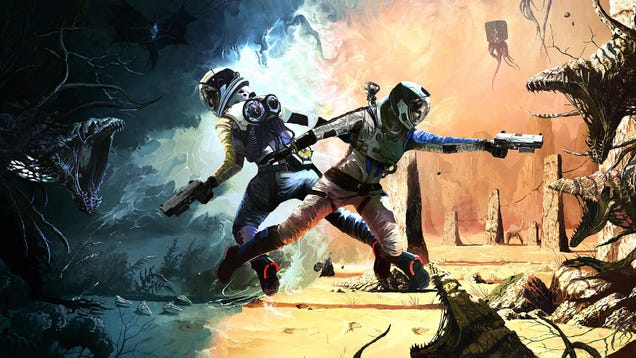
When Returnal landed with a splash on PlayStation 5 last year, all I wanted was the chance to play it cooperatively with a friend. Now that such a mode is here? Meh.
Source: Kotaku – Returnal’s Co-Op Is Kind Of A Letdown