Osaka Releases Flying Car Road Map

Akihabara News (Tokyo) — The Osaka Prefectural Government has released its awaited “Road Map” on the development of the eVTOL industry.

It is a 27-page PDF document, which is at this juncture available on the prefecture’s website, but only in Japanese language.

The part of the report highlighted most prominently by the domestic news media was the timeline envisioned by the prefectural government.

Vertiport construction is to begin next year and to be completed in 2024.

The next few years will also be occupied by various demonstration events and an effort to educate local residents, preparing the ground for social acceptance of flying vehicles in the urban environment.

As has been previously noted, it is the 2025 World Expo on the manmade island of Yumeshima in Osaka Bay at which the age of the eVTOL will be proclaimed to the nation and the world.

The Road Map goes on to specify that even after the World Expo closes, eVTOLs should continue to run along various routes in Osaka for sightseeing and other purposes.

Around 2030, the Road Map foresees a gradual shift toward automatic flight without pilots, as well as on-demand flight based on user reservations. Moreover, this is likely to be the period when eVTOL flight areas expanded from central Osaka to the whole of the Kansai region.

Finally, around 2035, Osaka Prefecture expects that eVTOLs will come into daily use by a significant portion of the population, no longer seen as a curiosity or something out of the ordinary.

The Road Map explains that the prefectural government’s interest in proactively promoting the eVTOL industry derives from the fact that these vehicles, when compared to helicopters or conventional aircraft, are likely to become less noisy, better for the climate, and cheaper than the existing options. Vertiports will also require much less ground space than the major airports in use today.

As the report puts it, “As a means for daily and short-distance transportation, eVTOL have the potential to bring new value to people’s lives and the towns they live in. They are expected to be used for a wide range of applications such as urban transportation, tourism and leisure, critical care, and disaster response.

The prefecture also has its eye on some of the positive knock-on effects that might attend the development of the eVTOL industry, such as the creation of new manufacturing and service jobs in the local economy.

Specifically, these could include the training of eVTOL pilots and mechanics to support commercial operations, aircraft and airframe maintenance jobs, and new opportunities for the insurance business.

On the same day as the Road Map was released, the Osaka Prefectural Government also hosted the 6th meeting of the Osaka Roundtable on a Moving Revolution Society in the Sky.

This event included presentations by a number of private firms that are making their own proposals. Namely, there were presentations by SkyDrive (an eVTOL developer), ANA Holdings and Japan Airlines (which are collaborating with foreign eVTOL makers to bring eVTOL services to Japan); as well as FaroStar and Mitsui & Co. (which are promoting air traffic management systems).

The Osaka Roundtable on a Moving Revolution Society in the Sky was launched on November 17, 2020, with the Osaka Prefectural Government and 41 private companies and organizations as its inaugural members.

Osaka’s initiative was in turn based upon the Public-Private Conference for Future Air Mobility, an initiative jointly launched in August 2018 by Japan’s Ministry of Economy, Trade and Industry (METI) and Ministry of Land, Infrastructure, Transport and Tourism (MLIT).

Osaka Prefecture has a population of over 8.8 million people and is the traditional rival within Japan of the capital city, Tokyo. The city’s leaders believe that the eVTOLs can help them take the national lead in a strategic forward-looking industry.

Recent eVTOL Industry Related Articles

Air Traffic System Passes Yumeshima Test

eVTOL VR Flight Experience

Eve and Skyports to Assist Japanese Regulators

Joby Aerial Services in Tokyo

eVTOL Crash Avoidance Test in Fukuyama City

Japan’s eVTOLs Add Lift

Testing the Flying Car Navigation System

Chinese eVTOL Flies in Fukushima

Hoverbike Tests in Yamanashi Prefecture

Government Certifies SkyDrive Flying Car

The post Osaka Releases Flying Car Road Map appeared first on Akihabara News.


Source: Akihabara News – Osaka Releases Flying Car Road Map

Hell Yes, Kairosoft's Classic Management Games Are Now On Steam

Readers, an occasional dabble with emulation and board game ports aside, I don’t normally play games on my phone. Ever. But over the years I have made one major concession and played the shit out of a series of management games released by Japanese studio Kairosoft.

Read more…


Source: Kotaku – Hell Yes, Kairosoft’s Classic Management Games Are Now On Steam

'Quantum Computing Has a Hype Problem'

“A reputed expert in the quantum computing field puts it in black and white: as of today, quantum computing is a paper tiger, and nobody knows when (if ever) it will become commercially practical,” writes Slashdot reader OneHundredAndTen. “In the meantime, the hype continues.”

In an opinion piece for MIT Technology Review, Sankar Das Sarma, a “pro-quantum-computing” physicist that’s “published more than 100 technical papers on the subject,” says he’s disturbed by some of the quantum computing hype he sees today, “particularly when it comes to claims about how it will be commercialized.” Here’s an excerpt from his article: Established applications for quantum computers do exist. The best known is Peter Shor’s 1994 theoretical demonstration that a quantum computer can solve the hard problem of finding the prime factors of large numbers exponentially faster than all classical schemes. Prime factorization is at the heart of breaking the universally used RSA-based cryptography, so Shor’s factorization scheme immediately attracted the attention of national governments everywhere, leading to considerable quantum-computing research funding. The only problem? Actually making a quantum computer that could do it. That depends on implementing an idea pioneered by Shor and others called quantum-error correction, a process to compensate for the fact that quantum states disappear quickly because of environmental noise (a phenomenon called “decoherence”). In 1994, scientists thought that such error correction would be easy because physics allows it. But in practice, it is extremely difficult.

The most advanced quantum computers today have dozens of decohering (or “noisy”) physical qubits. Building a quantum computer that could crack RSA codes out of such components would require many millions if not billions of qubits. Only tens of thousands of these would be used for computation — so-called logical qubits; the rest would be needed for error correction, compensating for decoherence. The qubit systems we have today are a tremendous scientific achievement, but they take us no closer to having a quantum computer that can solve a problem that anybody cares about. It is akin to trying to make today’s best smartphones using vacuum tubes from the early 1900s. You can put 100 tubes together and establish the principle that if you could somehow get 10 billion of them to work together in a coherent, seamless manner, you could achieve all kinds of miracles. What, however, is missing is the breakthrough of integrated circuits and CPUs leading to smartphones — it took 60 years of very difficult engineering to go from the invention of transistors to the smartphone with no new physics involved in the process.

Read more of this story at Slashdot.


Source: Slashdot – ‘Quantum Computing Has a Hype Problem’

YouTube is testing time-specific emoji reactions

Sometimes a YouTube video deserves more nuanced feedback than a simple comment, or a “thumbs up” or a “thumbs down”. YouTube today is testing timed-specific emoji reactions for a small group of users. Viewers can throw out an emoji when a specific moment in a video resonates with them (or doesn’t). 

Users can also get a feel for how others reacted throughout the duration of a video. There will be a separate reaction panel in the comment section of each video that will display emoji reactions by the moment, similar to features already offered by Facebook Live and Twitch. 

“If you’re watching a video that is part of this experiment, you can react and see crowd reactions by opening the comment section of the video and tapping into the reaction panel. The test will also show you which moments other viewers are reacting to (which will be anonymized – we won’t show who sent each reaction). We’re testing multiple sets of reactions and will add or remove reactions based on how the experiment goes!,” wrote Meaghan, a representative from Team YouTube.

Google frequently experiments with new features on YouTube, but they don’t always become permanent. YouTube recently tested letting users time their comments to specific points in a video and hiding the “dislike” button. As far as user engagement goes, YouTube is relatively light on options. 

Emoji reactions have been hit-or-miss on other social media platforms. Twitter experimented with emoji reactions to tweets last year, and reactions were largely ambivalent. But unlike tweets, videos are a lengthier medium and more likely to elicit a multitude of reactions. YouTube creators are likely to receive more detailed user feedback via emoji as well, such as being able to nail down if a joke landed or bombed.

YouTube is testing emoji reactions on a small number of channels to start but will expand the feature depending on the reception. Users will have a wide array of emoji reactions at their disposal, including the face with tears of joy, a heart, the shocked face, the celebration party poppers, the “keep it 100” sign, a question mark, the idea light bulb and a screaming cat.


Source: Engadget – YouTube is testing time-specific emoji reactions

If Jurassic Park Had Time Travelers, It Might Look Like Hell Creek

Back in 2020, we shared filmmaker Danny Donahue’s Evil Dead-evoking horror short Beast of Prey. He’s got a new one with a killer logline: “a time traveler is hunted by a dinosaur,” and it’s surely worth stopping what you’re doing to spend the next few minutes immersed in Hell Creek. Check it out!

Read more…


Source: Gizmodo – If Jurassic Park Had Time Travelers, It Might Look Like Hell Creek

Developers Fighting & Fleeing Russians Somehow Releasing Switch Game Next Month

Sherlock Holmes: The Devil’s Daughter is a game that has been out for six years now on PC, and has also been ported to the PS4 and Xbox One. Next month it’ll be hitting the Nintendo Switch, which might not sound like big deal, except for the fact it’s a port that’s practically a miracle effort considering what the…

Read more…


Source: Kotaku – Developers Fighting & Fleeing Russians Somehow Releasing Switch Game Next Month

US Lawmakers Introduce 'ECASH' Bill in New Push to Create a Digital Dollar

A group of U.S. lawmakers says the U.S. Treasury Department may be the right government entity to create a digital dollar — not the Federal Reserve. A new bill introduced Monday would authorize just that. CoinDesk reports: Reps. Stephen Lynch (D-Mass.), Jesus Chuy Garcia (D-Ill.), Ayanna Pressley (D-Mass.) and Rashida Tlaib (D-Mich.) introduced the “Electronic Currency And Secure Hardware Act” (ECASH Act) to direct the Treasury Secretary to develop and issue an electronic version of the U.S. dollar, with an eye to preserving privacy and anonymity in transactions. The electronic dollar, as defined in the bill, would be a bearer instrument that people could hold on their phone or a card. The system would be token-based, not account-based, meaning if someone were to lose their phone or card, they would lose the funds. In other words, it would be like losing a wallet with dollar bills in it. This electronic dollar would be deemed legal tender and be functionally identical to a physical greenback.

Rohan Grey, an assistant professor at Willamette University who consulted on the bill, told CoinDesk the bill is meant to create a true digital analogue to the U.S. dollar. “We’re proposing to have a genuine cash-like bearer instrument, a token-based system that doesn’t have either a centralized ledger or distributed ledger because it had no ledger whatsoever. It uses secured hardware software and it’s issued by the Treasury,” he said. This form of e-cash would support peer-to-peer transactions, and given the nature of its setup, it would support fully anonymous transactions. Thus, it would differ from other proposals for a digital dollar, which are based on stablecoins or other decentralized ledger tools. The full text of the E-CASH Bill can be read here.

Read more of this story at Slashdot.


Source: Slashdot – US Lawmakers Introduce ‘ECASH’ Bill in New Push to Create a Digital Dollar

Shanghai in lockdown as officials work to test all 26M residents

Medical workers in hazmat suits talk to a stopped driver.

Enlarge / A closed viaduct and tunnel leading to Pudong is seen in Shanghai, China, March 28, 2022. (credit: Getty | Future Publishing)

Coronavirus cases in China are spiking to record highs, leading officials in the Chinese financial hub of Shanghai to make the snap decision late Sunday to lock down the city of around 26 million people. For weeks, officials denied that they would institute lockdowns in response to rising cases.

But this month, the spread of the ultratransmissible omicron variant has driven China’s highest case rise in the pandemic, and Shanghai has seen some of the highest numbers. On Sunday, the country reported more than 6,000 new cases, with 3,500 of those in Shanghai. According to data tracking by The New York Times, the number of daily new cases has increased 233 percent in the past 14 days. The current case count is the highest yet for the country, which saw its previous peak in February 2020 when new cases reached just above 3,000 a day.

Starting March 28, Shanghai residents on the east side of Huangpu River entered a four-day home lockdown and mass testing campaign. From April 1 to 5, people on the west side will take their turn locking down and testing. Officials are aiming to test the entire population during the sequential lockdowns, sending health workers in white hazmat suits to residents’ front doors.

Read 3 remaining paragraphs | Comments


Source: Ars Technica – Shanghai in lockdown as officials work to test all 26M residents

Rode's first headphones are the creator-focused NTH-100

You might be mistaken for thinking Rode already made headphones. And that’s fair enough, it feels like something the company would already be doing. Yet, here we are with the first set from the Australian brand, the NTH-100. The $150 over-ear headphones might have been a long time coming, but if you’ve been following the company over the last couple of years, you’ll know it’s making a conscious effort to dominate the podcast and streaming world, and that’s who these headphones are aimed at.

At a glance, the NTH-100 seem pretty straightforward. An all-black pair of studio headphones with no Bluetooth or noise cancellation frills. Just a comfortable set of wired cans designed for home studio use. And for the most part, that’s exactly what they are, but Rode has tried to add enough details here to make them stand out in an otherwise busy segment.

Rode states that the drivers in the NTH-100 have been designed for accurate frequency response which makes sense if you are pitching these to streamers and creators. They certainly don’t sound overly loaded at the lower end and the mid-highs don’t artificially stand out which can often be the case in this category.

In fact, the NTH-100 sound surprisingly neutral. I was expecting them to be weighted toward… something, but they don’t seem to be doing much to the source material at all. I’ve worn them for everything from Zoom calls to Podcast recording and of course endless music listening and they serve each of these purposes well. I particularly like them for monitoring. I’m not sure why, but my dull voice seems to be accurately dull when I listen through these and I appreciate their honesty (it allows me to better spice it up at the edit stage, which is the whole point).

A very handsome man is pictured wearing the Rode NTH-100 headphones.
James Trew / Engadget

They also aren’t distracting to look at and that’s no bad thing. Bar the small circular gold Rode logo the only other aesthetic detail is the overly large “Ø” debossed into the side of each matte earcup (in gloss). It’s a little too large for my taste and feels a little conspicuous in an otherwise understated design but given it’s also black it doesn’t spoil their discreet look too much.

Neutral and discreet is cool and all but surely there’s a little seasoning here to make them interesting? And there is, mostly in their comfort. The Alcantara covering on the earpads feels luxurious, but it’s the “CoolTech” gel underneath that is the real treat. Rode states that this makes them colder on the ears and thus reduces wearing fatigue. I was skeptical, but when I put them on they really do feel noticeably chilly and that makes a big difference. Given these are aimed at editors, creators and streamers it’s entirely possible you’ll be wearing them for longer stretches so details like this can make a difference.

Likewise, a clever detail called “FitLock” removes the need to adjust them every time you put them on. Once you have them set just right, there’s a locking clip that will prevent them from accidentally re-adjusting them every time you handle them. It actually took me a little bit to get used to the idea that I might not have to check if they are positioned right every time I put them on.

Given that you’ll likely be wearing these at a desk, Rode saw fit to make sure you can attach the cable on either side. It’s a small detail, but one that can quickly induce buyer’s remorse if you have to decide between reorganizing your desk to have your audio interface on the other side or dealing with awkward cable spaghetti.

Rode's NTH-100 headphones are pictured alongside a Rode podcasting microphone.
James Trew / Engadget

What’s less of a surprise is that Rode has designed the NTH-100 to slot right into its existing creator ecosystem. If you own a Rodecaster Pro or use Rode Connect or maybe just bought the “Colors” accessory for your NT-USB Mini you’ll know that the company is centering a lot of its products around multi-person podcasting and streaming and including colorful ways to mark which microphone (or headphones) belong to which audio channel and/or host . The NTH-100 are no exception with color tags included in the box.

If you want to take that a step further, or merely want to customize them a little so they’re not entirely black you will also be able to buy replacement cables in each of Rode’s four bright chosen colors. That’s an extra spend though of course.

All in all for $150 everything feels decidedly more expensive. The plastic material on the earcups might not be the most luxurious, but the overall build and sound quality should make them an appealing choice for those looking for something comfortable while getting some work done.

The NTH-100 are available starting today.


Source: Engadget – Rode’s first headphones are the creator-focused NTH-100

Move Over Global Disinformation Campaigns, Deepfakes Have a New Role: Corporate Spamming

Have you ever ignored a seemingly random LinkedIn solicitor and been left with a weird feeling that something about the profile just seemed…off? Well, it turns out, in some cases, those sales reps hounding you might not actually be human beings at all. Yes, AI-generated deepfakes have come for LinkedIn and they’d like…

Read more…


Source: Gizmodo – Move Over Global Disinformation Campaigns, Deepfakes Have a New Role: Corporate Spamming

Ukrainian Telecom Company's Internet Service Disrupted By 'Powerful' Cyberattack

Ukraine’s state-owned telecommunications company Ukrtelecom experienced a disruption in internet service on Monday after a “powerful” cyberattack, according to Ukrainian government officials and company representatives. Reuters reports: The incident is the latest hacking attack against Ukrainian internet services since Russian military forces invaded in late February. “Today, the enemy launched a powerful cyberattack against Ukrtelecom’s IT-infrastructure,” said Yurii Shchyhol, chairman of the State Service of Special Communication and Information Protection of Ukraine. “The attack was repelled. And now Ukrtelecom has an ability to begin restoring its services to the clients.” “Currently, the attack is repulsed, the provision of services is gradually resumed,” said Ukrtelecom spokesperson Mikhail Shuranov.

NetBlocks, which monitors internet service disruptions, posted on Twitter earlier on Monday that it saw “connectivity collapsing” with an “ongoing and intensifying nation-scale disruption.” A similar incident took place earlier this month with Triolan, a smaller Ukrainian telecom company, Forbes previously reported. That company suffered a hack that reset some internal systems, resulting in some local subscribers losing access.

Read more of this story at Slashdot.


Source: Slashdot – Ukrainian Telecom Company’s Internet Service Disrupted By ‘Powerful’ Cyberattack

No more excuses: NASA in line to get funding needed for Artemis plan

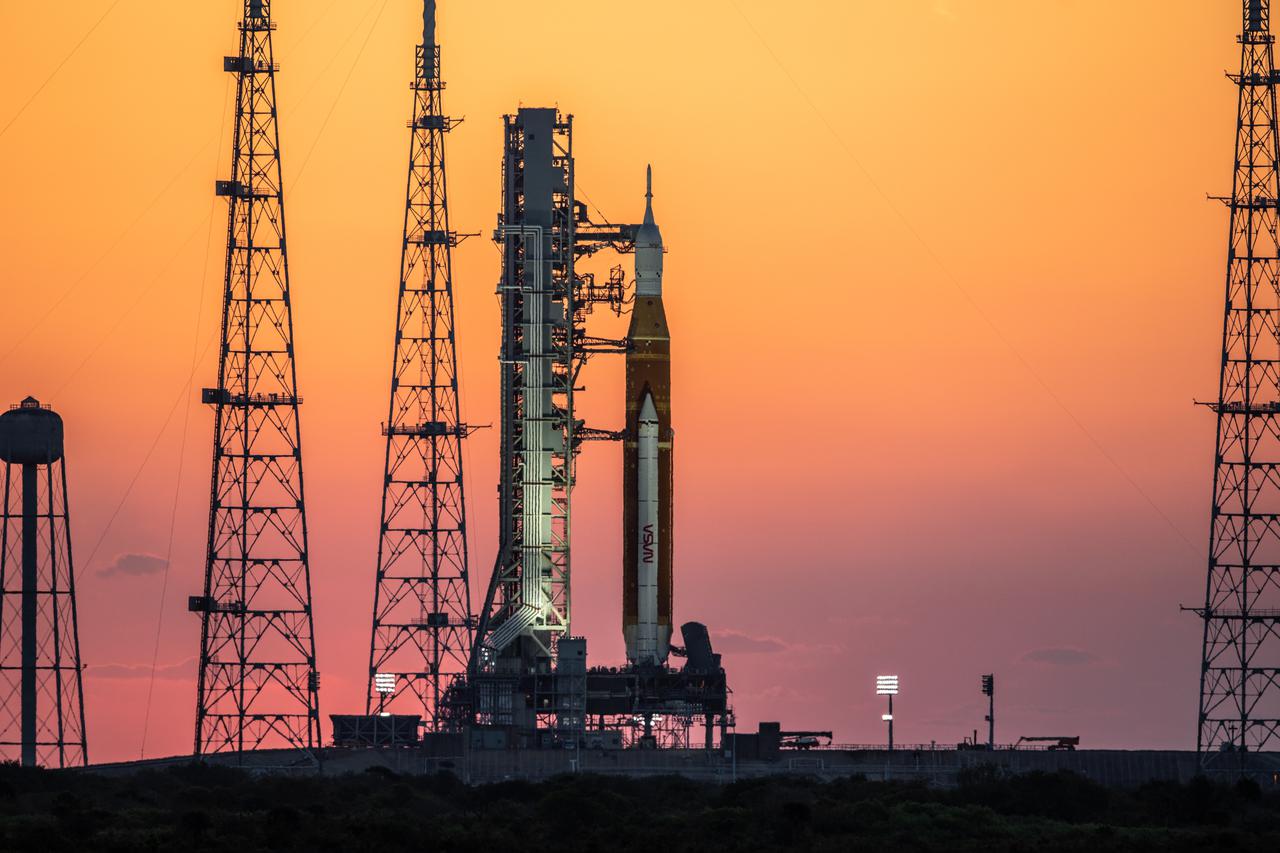
NASA's SLS rocket and Orion spacecraft are at the launch site in Florida, ready for a wet dress rehearsal in early April.

Enlarge / NASA’s SLS rocket and Orion spacecraft are at the launch site in Florida, ready for a wet dress rehearsal in early April. (credit: NASA)

President Joe Biden on Monday released his budget request for the coming fiscal year, and NASA is a big winner. The administration is asking Congress to fund $25.9 billion for the space agency in 2023, an increase of nearly $2 billion over the $24 billion the agency received for fiscal year 2022.

The budget request for NASA includes a healthy increase for the Artemis Program, which seeks to carry out a series of human landings on the Moon later this decade. Notably, funding for a “Human Landing System” would increase from $1.2 billion for the current fiscal year to $1.5 billion, allowing for a second provider to begin work. Additionally, funding for lunar spacesuits would increase from $100 million to $276 million. NASA would also receive substantial funding—$48 million—to begin developing human exploration campaigns for the Moon and beyond.

All of this new funding in the proposed budget comes in addition to the billions that NASA has been spending annually to develop the Space Launch System rocket and Orion spacecraft. Overall funding for Artemis, therefore, would increase from $6.8 billion in fiscal year 2022 to $7.5 billion in the coming fiscal year, which begins October 1, 2022.

Read 9 remaining paragraphs | Comments


Source: Ars Technica – No more excuses: NASA in line to get funding needed for Artemis plan

Marvel Star Clark Gregg Joins Snowpiercer Season 4

As TNT’s Snowpiercer closes out its third season, the dystopian series is already looking ahead to season four, and has added Marvel’s Clark Gregg and Tony winner Michael Aronov to its cast. It also has a new showrunner: Paul Zbyszewski, who also has MCU experience; his previous credits include Agents of SHIELD,

Read more…


Source: Gizmodo – Marvel Star Clark Gregg Joins Snowpiercer Season 4

Games Industry Mourns Coffee Talk Creator, Who Passed Away At 32

It’s with a heavy heart that we must report that Mohammad Fahmi, the creator of the beloved barista visual novel Coffee Talk and a notable figure in the Indonesian game development scene, passed away over the weekend. He was 32 years old. A cause of death hasn’t been specified at this time.

Read more…


Source: Kotaku – Games Industry Mourns Coffee Talk Creator, Who Passed Away At 32