
Back in 2020 the Linux kernel tried adding flexible array members to replace zero length arrays but that time the code was reverted shortly thereafter. For Linux 5.18 the tree-wide change of replacing zero length arrays with C99 flexible array members was merged and appears to be all in good shape this time…
Source: Phoronix – Linux 5.18 Switches From Zero Length Arrays To Flexible Array Members
Monthly Archives: March 2022
GParted 1.4 Released with Labeling Support for Mounted Btrfs, EXT4, and XFS Filesystems
GParted, the open-source and free partition editor software based on parted, has been updated today to version 1.4, a release that brings new features and various improvements.
Source: LXer – GParted 1.4 Released with Labeling Support for Mounted Btrfs, EXT4, and XFS Filesystems
Devialet’s huge soundbar might not need a separate subwoofer
French audio maker Devialet is best known for speaker collaborations, unique designs – and often heady prices. Having experimented with UK broadcaster Sky, the sound company is ready to launch its first solo soundbar for TVs, the Dione. And it’s huge.
Devialet pitches the Dione as a high-end soundbar, offering Dolby Atmos 5.1.2, as well as the ability to upscale stereo content into an approximate 5.1.2 audio signal, offering a richer sound stage and augmented spatial effect even if what you’re watching isn’t primed for Atmos. During a preview event in London, I got to listen to the new soundbar, with its eye-catching “orb” detail and well, it sounds deeper, crisper and outright louder than the mid-range soundbars I’ve owned myself. And pretty much any other soundbar I’ve heard
There’s also the reality that it’s likely as wide as your new 4K TV. And as deep too. That’s because it houses 17 speaker drivers – including eight subwoofers, all custom-built to Devialet’s specifications. This means, according to the company, that there’s enough oomph to sidestep a separate subwoofer unit, with the built-in woofers reaching bass levels as low as 24Hz, and attempting to fill the company’s aim of, as CEO Franck Lebouchard told me, “bringing everything to one object”.
As is the case for most modern soundbars, there are increased processor demands, and Devialet is using a Qualcomm SoC (System on a chip), which helps with room calibration and several of the company’s proprietary sound engineering features, like adaptive volume level (AVL), which automatically adjusts sound levels to help you hear speech, or avoid getting blasted by loud ads in the middle of quieter programs.
The most impressive trick is still the upmixing. I watched a nature documentary, first in stereo, then in Devialet’s SPACE upmixed mode, which attempts to add the richness and breadth of 5.1.2 audio to stereo audio. It works – even if this might not be true 5.1.2 audio. I could hear a richer soundstage, with the background rustles of the jungle, and the separate tweets of two birds in the midst of a courtship dance. Switching back to stereo, and everything sounds narrower, tighter.
Besides this movie mode, which is available when connected through HDMI or optical input, there’s also “spatial mode”, which attempts to upgrade audio from wireless sources (Spotify Connect, AirPlay or Bluetooth) and a voice mode which boosts, well, voices. This is aimed at news programming and podcasts.
You can switch between the modes through the companion app, as well as use the app for volume controls. There’s also a standalone controller from Devialet – sold separately – which looks like a smart thermostat. Because of course.
Mat Smith/Engadget
The company’s new Advanced Dimensional Experience (ADE) is its take on beamforming audio. According to the company’s white paper on the tech, this helps to optimize the surround audio, boosting soundwaves from certain angles and “rejecting” other soundwaves in an attempt to optimize audio for the listener in front of the soundbar.
The Dione can be laid beneath a TV or mounted on the wall. The aforementioned “orb” rotates to match this, but the bar can detect its orientation with its built-in gyroscope. The soundbar has specific audio profiles for either orientation. The orb, a nod to its Phantom speaker, also houses one active speaker and two passive radiators.
Devialet wants the attention of audiophiles – as well as those not looking to place multiple speakers around their living space. It’s difficult to compare to most of the smaller, cheaper products. The best comparison may be Sennheiser’s Ambeo, a $2,500 6.1.2 Atmos bar with plenty of tricks of its own. The Dione is a substantial investment, priced at $2,400 in the US, or £1,800 in the UK.
It’s another all-in-one solution, but at these specs, size and price, it’s for those interested in upgrading their entire viewing experience. What’s the point of a 4K OLED TV if everything doesn’t sound as good as it looks?
Source: Engadget – Devialet’s huge soundbar might not need a separate subwoofer
Devialet Crammed 17 Speakers and a Rotating Orb Into Its First Sound Bar
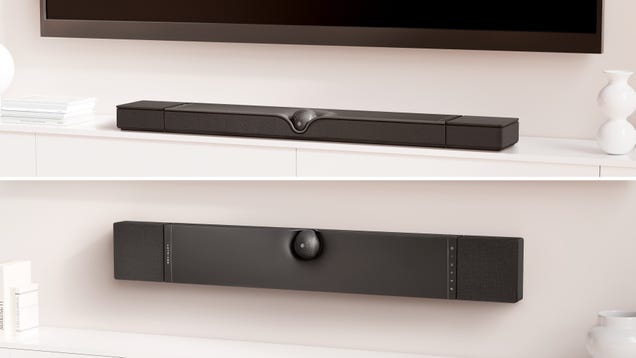
Devialet announced its first all-in-one TV sound bar Tuesday—a unique design that ensures optimal sound quality no matter where it’s installed.
Source: Gizmodo – Devialet Crammed 17 Speakers and a Rotating Orb Into Its First Sound Bar
Intel says its new 5.5GHz i9-12900KS is the world's fastest desktop processor
Intel has unveiled the Core i9-12900KS “Special Edition” CPU claiming it’s “the world’s fastest desktop processor.” Like the Core i9-12900K, it comes with 16-cores, including eight Performance cores and eight Efficient cores, along with 24 threads and 30MB of L3 cache. However, Intel boosted the clock speed from 5.2Ghz to 5.5Ghz (on up to two cores) by bumping the power from 125 to 150 watts.
AMD recently said that its $449 Ryzen 7 5800X3D was the world’s fastest gaming processor, claiming that its 3D V-Cache would allow it to beat the Core i9-12900K. However, Intel has a good case that its latest model is now on top, as it has a much higher maximum clock speed (5.5Ghz compared to 4.5Ghz).
We’ll have to wait for benchmark tests to see whether Intel is right, and the lead might change hands again when AMD releases its much anticipated Zen 4 Ryzen 7000 desktop chips in the second half of 2022. It would be a bit of a pyrrhic victory for end users, however, as the Core i9-12900KS will cost (at least) $739 when it arrives on April 5th — nearly $300 more than the AMD model. That’s a pretty high price to pay for bragging rights, particularly when they could be short lived.
Source: Engadget – Intel says its new 5.5GHz i9-12900KS is the world’s fastest desktop processor
SpaceX Ending Production of Flagship Crew Capsule
SpaceX has ended production of new Crew Dragon astronaut capsules, a company executive told Reuters, as Elon Musk’s space transportation company heaps resources on its next-generation spaceship program. From the report: Capping the fleet at four Crew Dragons adds more urgency to the development of the astronaut capsule’s eventual successor, Starship, SpaceX’s moon and Mars rocket. Starship’s debut launch has been delayed for months by engine development hurdles and regulatory reviews. It also poses new challenges as the company learns how to maintain a fleet and quickly fix unexpected problems without holding up a busy schedule of astronaut missions.
“We are finishing our final (capsule), but we still are manufacturing components, because we’ll be refurbishing,” SpaceX President Gwynne Shotwell told Reuters, confirming the plan to end Crew Dragon manufacturing. She added that SpaceX would retain the capability to build more capsules if a need arises in the future, but contended that “fleet management is key.” Musk’s business model is underpinned by reusable spacecraft, so it was inevitable the company would cease production at some point. But the timing was not known, nor was his strategy of using the existing fleet for its full backlog of missions. “Crew Dragon has flown five crews of government and private astronauts to space since 2020, when it flew its first pair of NASA astronauts and became the U.S. space agency’s primary ride for getting humans to and from the International Space Station,” notes Reuters.


Read more of this story at Slashdot.
Source: Slashdot – SpaceX Ending Production of Flagship Crew Capsule
Debugging source is even harder when you can't stop laughing at it
Forgive the self-taught Visual Basic programmer, for they know not what they do. Or do they? Who, Me? Thank goodness for code reviews. However things weren’t always so squeaky clean as one Register reader discovered while attempting to sort another’s sweary source. Welcome to Who, Me?…
Source: LXer – Debugging source is even harder when you can’t stop laughing at it
Gentoo-Based Porteus Kiosk 5.4 Released with Linux Kernel 5.15 LTS, Various Improvements
Tomasz Jokiel announced today the general availability of Porteus Kiosk 5.4 as the latest stable release of this Gentoo-based GNU/Linux distribution for kiosks and public computers.
Source: LXer – Gentoo-Based Porteus Kiosk 5.4 Released with Linux Kernel 5.15 LTS, Various Improvements
Zynq UltraScale+ gets the SiP treatment with tiny OSDZU3 module
Octavo Systems’ 40 x 20.5mm “OSDZU3” SiP module runs Linux on the FPGA-equipped, quad -A53 Zynq UltraScale ZU3 MPSoC with 2GB LPDDR4. An “OSDZU3-REF” carrier adds GbE, DP, SATA, USB, and PMODs.
Source: LXer – Zynq UltraScale+ gets the SiP treatment with tiny OSDZU3 module
Google Has A Problem With Linux Server Reboots Too Slow Due To Too Many NVMe Drives
Hyperscaler problems these days? Linux servers taking too long to reboot due to having too many NVMe drives. Thankfully Google is working on an improvement to address this where some of their many-drive servers can take more than one minute for the Linux kernel to carry out its shutdown tasks while this work may benefit other users too albeit less notably…
Source: Phoronix – Google Has A Problem With Linux Server Reboots Too Slow Due To Too Many NVMe Drives
EROFS Read-Only Linux File-System Working Toward New Features
EROFS as a reminder is the read-only Linux file-system originally introduced four years ago that has gone on to see some use particularly by Android devices. While there hasn’t been much to report on EROFS in recent time, they are approaching some new functionality in coming kernels…
Source: Phoronix – EROFS Read-Only Linux File-System Working Toward New Features
Give Free Power To People Living Near Wind Farms, UK Minister Suggests
An anonymous reader quotes a report from The Independent: Energy bills for people living near onshore wind farms could be slashed under new reforms, according to a cabinet minister. Education secretary Nadhim Zahawi also suggested he supports more onshore wind farms but only if they are backed by the local community. Boris Johnson has committed to publishing a British energy security strategy although when asked about onshore wind farms, the Prime Minister stressed there is a “massive opportunity” for the UK with offshore wind.
Mr Zahawi told Sky’s Sophy Ridge On Sunday program: “I would say that if we are going to make sure that we carry the will of local people, whether it’s onshore wind or nuclear, we have to learn from how it’s done well in other countries. “The way you do that is to make sure the local community has a real say. “But also we’ve seen great examples of other people where if they build a nuclear power station, within a certain radius of that power station they get free power. So it’s right to look at innovation to make sure we wean ourselves off hydrocarbons, we have to do that, we have to do that well, part of that is making sure we look after the will of the local people.” Mr Zahawi insisted there “isn’t a row” around the Cabinet table about onshore wind.


Read more of this story at Slashdot.
Source: Slashdot – Give Free Power To People Living Near Wind Farms, UK Minister Suggests
How to Install Minecraft Launcher on Fedora 36 Linux
In the following tutorial, you will learn how to install Minecraft Launcher on Fedora 36 Linux.
Source: LXer – How to Install Minecraft Launcher on Fedora 36 Linux
Our Favorite Cosplay From Japan Expo 2022

With most of the scene having been shut down during the pandemic, and major shows only just starting to make their way back into the lineup, it’s lovely to be able to turn our attention internationally once again with this feature on Japan Expo 2022, which was held in Bangkok a few months back.
Source: Kotaku – Our Favorite Cosplay From Japan Expo 2022
Lapsus$ Found a Spreadsheet of Passwords as They Breached Okta, Documents Show
The Lapsus$ hackers used compromised credentials to break into the network of customer service giant Sitel in January, days before subsequently accessing the internal systems of authentication giant Okta, according to documents seen by TechCrunch that provide new details of the cyber intrusion that have not yet been reported. The report adds: […] The documents provide the most detailed account to date of the Sitel compromise, which allowed the hackers to later gain access to Okta’s network. […] The documents, obtained by independent security researcher Bill Demirkapi and shared with TechCrunch, include a Sitel customer communication sent on January 25 — more than a week after hackers first compromised its network — and a detailed timeline of the Sitel intrusion compiled by incident response firm Mandiant dated March 17 that was shared with Okta.
According to the documents, Sitel said it discovered the security incident in its VPN gateways on a legacy network belonging to Sykes, a customer service company working for Okta that Sitel acquired in 2021. The timeline details how the attackers used remote access services and publicly accessible hacking tools to compromise and navigate through Sitel’s network, gaining deeper visibility to the network over the five days that Lapsus$ had access. Sitel said that its Azure cloud infrastructure was also compromised by hackers. According to the timeline, the hackers accessed a spreadsheet on Sitel’s internal network early on January 21 called “DomAdmins-LastPass.xlsx.” The filename suggests that the spreadsheet contained passwords for domain administrator accounts that were exported from a Sitel employee’s LastPass password manager.


Read more of this story at Slashdot.
Source: Slashdot – Lapsus$ Found a Spreadsheet of Passwords as They Breached Okta, Documents Show
Some Twitter traffic briefly funneled through Russian ISP, thanks to BGP mishap
Enlarge (credit: Getty Images)

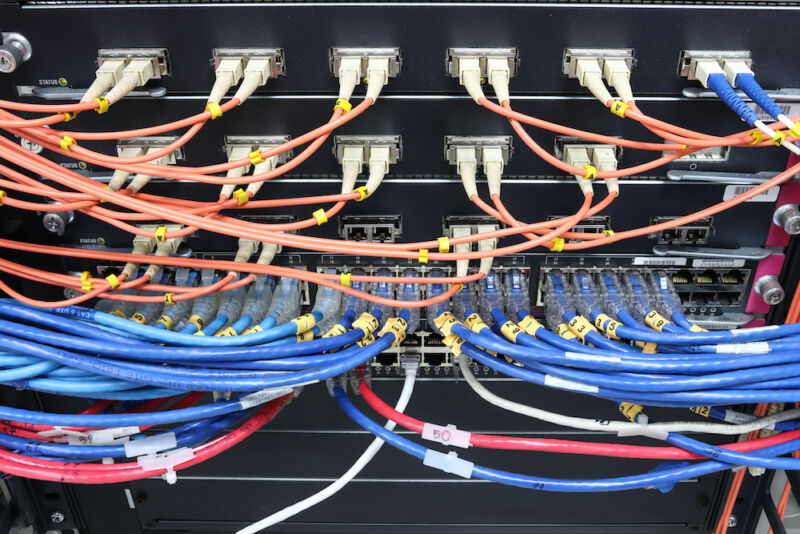
Some Internet traffic in and out of Twitter on Monday was briefly funneled through Russia after a major ISP in that country misconfigured the Internet’s routing table, network monitoring services said.
The mishap lasted for about 45 minutes before RTCOMM, a leading ISP in Russia, stopped advertising its network as the official way for other ISPs to connect to the widely used Twitter IP addresses. Even before RTCOMM dropped the announcement, safeguards prevented most large ISPs from abiding by the routing directive.
A visualization of what the event looked like is illustrated on this page from BGPStream.
Read 11 remaining paragraphs | Comments
Source: Ars Technica – Some Twitter traffic briefly funneled through Russian ISP, thanks to BGP mishap
How To Create Proxmox Containers From Proxmox VE Web UI Dashboard
This guide explains how to create Proxmox containers from Proxmox Web user interface and how to do basic container management actions such as starting, stopping, cloning and deleting Containers.
Source: LXer – How To Create Proxmox Containers From Proxmox VE Web UI Dashboard
Smash Bros Champion Gets Twitter Hacked By NFT Dipshits

Earlier today the Twitter account of Leonardo Lopez Perez, aka “MkLeo”, one of if not the best Smash players in the world, was hacked by crypto freaks trying to shill their bogus NFT schemes.
Source: Kotaku – Smash Bros Champion Gets Twitter Hacked By NFT Dipshits
Conflict, Inflation Lead To Cuts In iPhone SE Production, Report Claims
juul_advocate shares a report from iTWire: Apple’s output of the iPhone SE will drop by a fifth in the coming quarter, indicating that the Russia-Ukraine conflict and fears of inflation have affected demand for the device, a report claims. The Nikkei Asia website reported that the company had been telling a number of suppliers that production orders for the next three months would be lower by about two or three million units. Orders for AirPods earphones were also down, by about 10 million units for the whole year, the website said, citing four unnamed individuals as sources. Apple announced the third-generation iPhone SE earlier this month at its “Peek Performance” event. It features the A15 Bionic chip, improved battery life, 5G connectivity, and a new camera system, among other things, for a starting price of $429.


Read more of this story at Slashdot.
Source: Slashdot – Conflict, Inflation Lead To Cuts In iPhone SE Production, Report Claims
Global Science Project Links Android Phones With Satellites To Improve Weather Forecasts
An anonymous reader quotes a report from The Verge: Collecting satellite data for research is a group effort thanks to this app developed for Android users. Camaliot is a campaign funded by the European Space Agency, and its first project focuses on making smartphone owners around the world part of a project that can help improve weather forecasts by using your phone’s GPS receiver. The Camaliot app works on devices running Android version 7.0 or later that support satellite navigation. Researchers think that they can use satellite signals to get more information about the atmosphere. For example, the amount of water vapor in the atmosphere can affect how a satellite signal travels through the air to something like a phone.
The app gathers information to track signal strength, the distance between the satellite and the phone being used, and the satellite’s carrier phase, according to Camaliot’s FAQs. With enough data collected from around the world, researchers can theoretically combine that with existing weather readings to measure long-term water vapor trends. They hope to use that data to inform weather forecasting models with machine learning. They can also track changes in Earth’s ionosphere — the part of the atmosphere near space. Creating better ionospheric forecasts could be relevant in tracking space weather and could eventually make Global Navigation Satellite Systems (GNSS) more accurate by accounting for events like geomagnetic storms. Camaliot could eventually expand to include more attempts at collecting data on a massive scale using sensors present in “Internet of Things” connected home devices. According to The Verge, these are the steps to take to begin using the Camaliot app on your Android phone:
1. Select “start logging” and place your phone in an area with a clear sky view to begin logging the data
2. Once you have measured to your liking, select “stop logging”
3. Then, upload your session to the server and repeat the process over time to collect more data. You can also delete your locally-stored log files at this step.
“In addition to being able to view your own measurements against others accumulated over time, you can also see a leaderboard showing logging sessions done by other participants,” adds The Verge. “Eventually, the information collected for the study will be available in a separate portal.”


Read more of this story at Slashdot.
Source: Slashdot – Global Science Project Links Android Phones With Satellites To Improve Weather Forecasts