7 Possible Berserk References In Elden Ring

FromSoftware president Hidetaka Miyazaki’s love for the late Kentaro Miura’s manga and anime series Berserk is the worst kept secret in the gaming industry. While he avoids explicitly discussing the connections between his games and Berserk, it’s clear that every Miyazaki-helmed project since 2009’s Demon’s Souls has…

Read more…


Source: Kotaku – 7 Possible Berserk References In Elden Ring

[$] Systemd discusses its kernel-version needs

A query regarding the possibility of dropping support for older kernels in systemd led
to some discussion on the systemd-devel mailing list recently. As might be
guessed, exactly which kernel would be the minimum
supported, what kernel features systemd is using, and when those kernel
features became available, were all part of that conversation.
A component like systemd that is closely tied to the kernel, and the interfaces
different versions
provide, has a number of different factors to consider when making a
decision of this sort.

Source: LWN.net – [$] Systemd discusses its kernel-version needs

Google’s next US antitrust issue: Google Maps

The logo for the board game Monopoly, complete with Uncle Pennybags, has been transformed to say Google.

Enlarge / Let’s see, you landed on my “Google Ads” space, and with three houses… that will be $1,400. (credit: Ron Amadeo / Hasbro)

Google’s latest antitrust headache is coming from the US government, which is starting to take issue with how Google bundles Google Maps and restricts developers from using competing services. Nothing’s official yet, but Reuters’ sources say the US Justice Department has “breathed new life into an investigation of Google Maps to determine if bundling the service together with other Google software illegally stifles competition.”

The DOJ investigation is concerned with two Google Maps strategies. The first is surprisingly all about Android Automotive—note that this is not Android Auto, the phone app. Android Automotive (fully spelled out) is a full operating system that manufacturers can ship on their cars. We covered it on the Polestar 2 last year. Just like on phones, Google bundles all of its apps together on Android Automotive. Google Maps is a killer app in a car, but if manufacturers want Google Maps, Google requires them to take the Play Store, the Google Assistant, YouTube Music, and any other car apps the company makes. The Justice Department is concerned that this requirement stifles competition.

What’s surprising about this move by the DOJ is that the US never made Google do anything about app bundling on phones, which is a much larger market. Android Automotive is a very new, very limited OS, available on only around 10 vehicles, like the Polestar 2, other Volvo vehicles like the XC40 Recharge, the GMC Hummer EV, and soon 2023 Ford vehicles. Android, meanwhile, is on about 2.5 billion phones worldwide. The US has gone after Google for limiting app store competition on Android, paying to be the default search engine on most platforms, promoting its own services in search, and anticompetitive behavior in the advertising market. But Google is still free to bundle its apps on phones.

Read 5 remaining paragraphs | Comments


Source: Ars Technica – Google’s next US antitrust issue: Google Maps

YouTube TV finally supports picture-in-picture on iOS

Google has begun rolling out a new update to its iOS YouTube TV app that allows both iPhone and iPad users to take advantage of picture-in-picture functionality. To watch something in PiP mode, swipe up from the bottom of the screen. The video will then automatically resize and move across your device’s display.

Today’s update is long overdue, a fact Google acknowledged. “We really appreciate your patience while we worked on enabling this key feature for your iOS 15+ devices,” the company said on Twitter. To put the wait in perspective, Apple’s mobile operating system has supported picture-in-picture functionality on iPad since iOS 13 and iPhone since iOS 14. What’s more, the feature has been available through the company’s main YouTube app since last year.


Source: Engadget – YouTube TV finally supports picture-in-picture on iOS

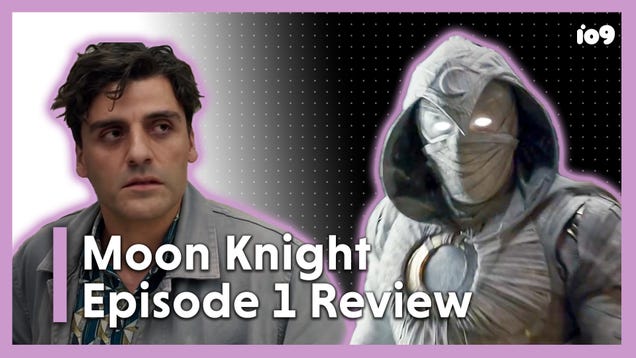
A British Person's Review of Oscar Isaac's Moon Knight Accent

Moon Knight is a series that goes to some rather unfathomable places for a Marvel TV show. It’s darker and more mysterious than perhaps anything since the studio’s Netflix endeavors. It, with rather considerable restraint, chooses not to constantly reference its place in Marvel Cinematic Universe. Perhaps most…

Read more…


Source: Gizmodo – A British Person’s Review of Oscar Isaac’s Moon Knight Accent

'We Study Virus Evolution. Here's Where We Think the Coronavirus Is Going.'

Sarah Cobey, who studies the interaction of immunity, virus evolution and transmission at the University of Chicago, Jesse Bloom and Tyler Starr, both of whom study virus evolution at Fred Hutchinson Cancer Research Center in Seattle, writing for The New York Times: It’s impossible to say whether future variants will have more big Omicron-like jumps or more typical stepwise changes, but we are confident SARS-CoV-2 will continue to evolve to escape immunity. While transmissibility of viruses does plateau at a certain point, other human viruses that escape immunity keep doing so. The influenza vaccine has been updated annually for decades to chase viral evolution, and some influenza viruses show no sign of slowing down. Immune escape is an endless evolutionary arms race, because the immune system can always make new antibodies and the virus has a vast set of mutations to explore in response. For instance, Omicron has just a tiny fraction of the many mutations that have been observed in SARS-CoV-2 or related bat viruses, which are in turn just a small fraction of what lab experiments suggest the virus could potentially explore.

Taking all this together, we expect SARS-CoV-2 will continue to cause new epidemics, but they will increasingly be driven by the ability to skirt the immune system. In this sense, the future may look something like the seasonal flu, where new variants cause waves of cases each year. If this happens, which we expect it will, vaccines may need to be updated regularly similar to the flu vaccines unless we develop broader variant-proof vaccines. And of course, how much all this matters for public health depends on how sick the virus makes us. That is the hardest prediction to make, because evolution selects for viruses that spread well, and whether that makes disease severity go up or down is mostly a matter of luck. But we do know that immunity reduces disease severity even when it doesn’t fully block infections and spread, and immunity gained from vaccination and prior infections has helped blunt the impact of the Omicron wave in many countries. Updated or improved vaccines and other measures that slow transmission remain our best strategies for handling an uncertain evolutionary future.

Read more of this story at Slashdot.


Source: Slashdot – ‘We Study Virus Evolution. Here’s Where We Think the Coronavirus Is Going.’

Apple plans to build its own financial infrastructure for payments and lending

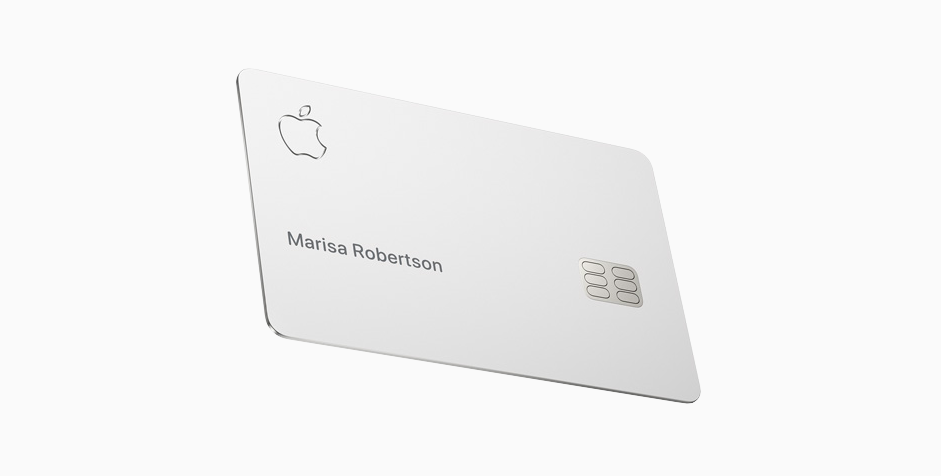
Apple Card physical card

Enlarge / The featureless, very Apple-like physical Apple Card. (credit: Apple)

Apple plans to build its own in-house technology and infrastructure for financial services, according to a Bloomberg report citing people with knowledge of the matter.

The initiative is internally codenamed “Breakout” as an allusion to the idea of users breaking free from the current establishment players in the financial system.

Apple has long held to a philosophy of controlling as much of the user experience—and its own pipeline—as possible, believing this method offers the dual benefits of better experiences for customers and a bigger slice of the revenue pie for Apple. That control also means Apple can be less affected by surprises or failures from external partners.

Read 5 remaining paragraphs | Comments


Source: Ars Technica – Apple plans to build its own financial infrastructure for payments and lending

Hubble may have spotted the most distant star to date

Astronomers have had success finding some of the most distant galaxies in the universe, but now they might have pinpointed the most distant star to date. As SyFy Wirenotes, researchers using the Hubble Space Telescope have spotted Earendel (“morning star” in Old English), a star currently reckoned to be 12.9 billion light-years away — the light we see from it comes from when the universe was roughly 900 million years old. Until now, the smallest objects seen at that distance were star clusters.

If confirmed, the star will easily smash the previous record. The most distant star before now was MACS J1149+2223 Lensed Star 1, which shone when the universe was about 4 billion years old. Scientists found that star using Hubble in 2018.

Lensed Star Earendel
The ancient star Earendel capured in a composite of exposures from the Hubble Space Telescope.
NASA/ESA/Brian Welch (JHU)/Dan Coe (STScI)/Alyssa Pagan (STScI)

The feat was accomplished using gravitational lensing, or relying on the gravity of galaxy clusters to distort light and magnify objects that would otherwise remain difficult or impossible to detect. The star’s host galaxy had its light warped into a long arc thanks to the massive WHL0137-08 galaxy cluster. As Earendel sits on the edge of a space “caustic,” or a ripple in the fabric of space, its brightness was magnified a thousand times and helped it stand out.

Earendel is a large beast, too. The scientists estimate it’s “at least” 50 times the mass of the Sun, and millions of times brighter. It’s also expected to have relatively little metal, as it would have formed when it didn’t have access to heavier elements that came with successive star generations. If it’s made of only hydrogen and helium, it would be the first evidence of very early “Population III” stars.

The object hasn’t been confirmed as a star yet, but that might come relatively soon. Observers plan to use the James Webb Space Telescope’s high infrared sensitivity to both verify Earendel’s star status and study it in more detail. With that said, Webb might also help pinpoint stars that are even more distant. To put it another way, he technology needed to acknowledge the star’s existence might relegate it to a footnote.


Source: Engadget – Hubble may have spotted the most distant star to date

IT giant Globant discloses hack after Lapsus$ leaks 70GB of stolen data

Read 11 remaining paragraphs | Comments


Source: Ars Technica – IT giant Globant discloses hack after Lapsus$ leaks 70GB of stolen data

Apple's Studio Display guts feature a remarkable feat of over-engineering

It may look a lot like the redesigned iMac, but Apple’s new Studio Display is in many ways a more complicated device once you open it up. Next to the company’s all-in-one desktop, the monitor is about 50 percent thicker, and there’s an interesting reason for that.

Following its recent Mac Studio teardown, iFixit took apart the Studio Display to see the engineering that went into Apple’s first dedicated monitor since the Pro Display XDR. What ends up making the studio display thicker than the iMac is a complicated, multi-board power supply board that’s housed within the monitor. Unlike with the iMac, you don’t need an adapter to power the Studio Display. It’s one of those features that might seem small on the surface, but it ultimately leads to a better user experience.  

“If [Apple] had gone with an external power supply, this could have been the same design as the iMac,” iFixit said. It notes Apple likely invested a significant amount of engineering effort and cost to design a power supply that is as slim as the one found in the Studio Display. 

In taking apart the Studio Display, iFixit also discovered a few other interesting tidbits about the monitor. Almost every review of the Studio Display has complained of poor web camera quality. Apple has said it will release a software update to address the problem. In the meantime, iFixit says the Studio Display’s camera module looks nearly identical to the one found in the iPhone 11. “Hardware-wise, a three-year-old sensor is perfectly capable of packing a better punch than all these reviewers are seeing,” the company said. That’s something to keep in mind if you’re thinking about purchasing the Studio Display.


Source: Engadget – Apple’s Studio Display guts feature a remarkable feat of over-engineering

After 25 Years, One Piece Finally Became One Piece Z

Eiichiro Oda has been playing the long game. That’s not news to anyone reading One Piece, his globally popular manga, which has been dropping Easter eggs and seeding revelations for two and a half decades. The biggest one—and certainly the most divisive one among its many fans—was revealed this past weekend, and it…

Read more…


Source: Gizmodo – After 25 Years, One Piece Finally Became One Piece Z

Dyson's Air Purifying Headphones Serve Up A Breath Of Fresh Beats And That Funky Bane Vibe

Dyson's Air Purifying Headphones Serve Up A Breath Of Fresh Beats And That Funky Bane Vibe
Do you live in a constant state of fear? Are you terrified of the world around you? Someone who’d really rather stay home, yet must venture out into the horrifying real world? First, make sure you remember your Xanax. Once that’s taken care of, check out Dyson’s new “Dyson Zone” wearable air purifier and headset.

The “Zone” is Dyson’s first

Source: Hot Hardware – Dyson’s Air Purifying Headphones Serve Up A Breath Of Fresh Beats And That Funky Bane Vibe

Apple, Facebook and Discord reportedly gave user data to hackers posing as law enforcement

Apple, Facebook and Discord turned over user data to hackers posing as law enforcement officials, according to a new report in Bloomberg. The demands, which were forged to look like authentic legal requests, reportedly came from legitimate email accounts that had been “compromised.”

According to Bloomberg, both Facebook and Apple turned over “basic subscriber details, such as a customer’s address, phone number and IP address.” Discord provided “the Internet address history of Discord accounts tied to a specific phone number,” according to Krebs on Security. The hackers also targeted Snap, though it’s not clear if the company actually turned over the requested data.

As Bloomberg points out, it’s not uncommon for companies like Apple and Facebook to turn over data to law enforcement, and these companies have dedicated teams to respond to such requests. Typically, these requests are accompanied by a court order, but there are “emergency” cases when law enforcement asks for data without one, like when someone’s life is believed to be in danger.

In this case, the hackers exploited this tactic in order to access personal information about specific targets in order to “facilitate financial fraud schemes.” Using hacked emails tied to legitimate law enforcement personnel, they were able to successfully fool the companies into handing over the data.

In a statement to Bloomberg, Meta spokesperson Andy Stone said that the company has safeguards in place to verify legal requests and detect abuse. “We block known compromised accounts from making requests and work with law enforcement to respond to incidents involving suspected fraudulent requests, as we have done in this case,” Stone said.

Apple and Snap also pointed to company guidelines, saying they have policies to verify the legitimacy of requests for user data. But these safeguards can fall short if the requests appear to be from emails associated with legitimate law enforcement agencies. As Discord told Krebson Security:

“We can confirm that Discord received requests from a legitimate law enforcement domain and complied with the requests in accordance with our policies. We verify these requests by checking that they come from a genuine source, and did so in this instance. While our verification process confirmed that the law enforcement account itself was legitimate, we later learned that it had been compromised by a malicious actor. We have since conducted an investigation into this illegal activity and notified law enforcement about the compromised email account.”

Interestingly, security researchers have reportedly tied some of the people involved in this scheme to another high-profile hacking group: Lapsus$, whose members allegedly hacked Microsoft and Okta. According to Bloomberg, one person involved with forging the requests is also “believed to be the mastermind behind the cybercrime group Lapsus$.”


Source: Engadget – Apple, Facebook and Discord reportedly gave user data to hackers posing as law enforcement

Getting Spam Messages From Your Own Verizon Number? Don't Click The Link

Getting Spam Messages From Your Own Verizon Number? Don't Click The Link
Phishing attacks are currently the number one cause of data compromises, and they are becoming more sophisticated as additional countermeasures are developed and deployed and users become more wary of suspicious or unexpected messages. Just last week, we covered a new phishing technique that creates an animated login window to better fool

Source: Hot Hardware – Getting Spam Messages From Your Own Verizon Number? Don’t Click The Link