
The Linux Foundation, the nonprofit organization enabling mass innovation through open source, has announced that SupplyChainSecurityCon, an event launched last fall at KubeCon + CloudNativeCon North America, will be hosted in 2022 as part of Open Source Summit North America, June 21-24, in Austin, TX and virtual.
Source: LXer – The Linux Foundation Announces SupplyChainSecurityCon will be Featured Under the Open Source Summit North America 2022 Conference Umbrella
Monthly Archives: January 2022
Stable kernels 5.16.2, 5.15.16, 5.10.93, and 5.4.173
Four new stable kernels have been announced: 5.16.2, 5.15.16, 5.10.93, and 5.4.173. These contain a relatively small set
of important fixes; users should upgrade.
Source: LWN.net – Stable kernels 5.16.2, 5.15.16, 5.10.93, and 5.4.173
'Lego Star Wars: The Skywalker Saga' will arrive on April 5th
Two years after the game was initially supposed to debut, Lego Star Wars: The Skywalker Saga will finally arrive on April 5th. The long-awaited title from TT Games adapts all nine movies in the Skywalker Saga, and you’ll be able to choose which trilogy to start with (so you might want to get the prequels out of the way first).
Lego Star Wars: The Skywalker Saga is coming to PlayStation 4, PS5, Xbox One, Xbox Series X/S, Nintendo Switch and PC. It’s said to be the biggest Lego game to date, and publisher Warner Bros. Games provided an in-depth look at what’s in store with a gameplay trailer.
There are new combat mechanics, including ways to string attacks together and defend yourself with counter moves “in styles tailored to your favorite characters.” Expect fresh blaster mechanics, with an over-the-shoulder perspective and third-person aiming reticle, and a cover system. Of course, there’ll be a ton of lightsaber action, space dogfighting battles and many opportunities to use Force powers as well.
Many levels will have multiple paths to explore and you’ll be able to take on side missions. Class-based abilities are upgradable and there are more than 300 playable characters to unlock. There’s also a Mumble Mode, which will replace intelligible voice lines with mumbling, à la previous games in the series.
Based on the gameplay trailer alone, Lego Star Wars: The Skywalker Saga seems like a huge game. However, despite the lengthy delays, the development team was still required to work long hours (or “crunch”), according to Polygon.
Several current and former employees told the publication that TT Games has had a “challenging work culture over the last decade and a half” and that, during crunch periods, work weeks of between 80 and 100 hours weren’t rare (though overtime is said to have been limited in recent months). TT Games has also reportedly had a high level of staff turnover since work started on Lego Star Wars: The Skywalker Saga nearly five years ago.
Source: Engadget – ‘Lego Star Wars: The Skywalker Saga’ will arrive on April 5th
Installing Arch Linux Using archinstall Automated Script [Complete Guide]
In this guide, we explain the super easy way of installing Arch Linux using automated script archinstall. Intended for beginner to advanced users.
The post Installing Arch Linux Using archinstall Automated Script [Complete Guide] appeared first on Linux Today.
Source: Linux Today – Installing Arch Linux Using archinstall Automated Script [Complete Guide]
Oura’s third-generation Ring is more powerful, but not for everybody
The wearables business is hard, especially if you’re a small startup with a device you could, perhaps uncharitably, call “niche.” Oura, which makes activity-tracking rings worn endorsed by a numberof celebrities, recently released its third-generation model. This new hardware is a technical marvel, packing many of the features that most wrist-worn devices take for granted. But the need to keep the cash rolling in has seen Oura, like Fitbit, Apple, Wahoo and others, pivot to a recurring-revenue model. Oura says that this is key to shift from the idea of buying a device that never changes, to supporting its broader goals of building an evolving fitness ecosystem.
Hardware
Daniel Cooper
Before we get into the specifics of this new Oura ring, let’s take a moment to remember that this device is still a marvel of engineering. Taking the sensors from a smartwatch or fitness tracker and shrinking them into a ring is worthy of enormous praise. For all of its imperfections, it’s amazing to see Oura push the limits of what is capable in such a small form factor. And there’s much more tech crammed in this time around, despite the size and weight remaining the same as the second-generation version. The headline features these new sensors enable include continuous heart-rate tracking, temperature monitoring, blood oxygenation and period prediction.
The sizing process is the same for pretty much every smart ring I’ve ever tried: The company sends you a set of plastic dummy rings you have to wear for a couple of days. Once you’ve determined the correct fit, which is tight and secure around the base of your index finger, but not to the point where it’s uncomfortable, you can order the real thing. This actually was the most stressful part of this review, since I felt that one size was too loose, the other too tight, but I opted for looseness rather than sacrificing a digit to the gods of fitness tracking. Oura says that the index finger is the best place for its ring, but you can stick it elsewhere if you prefer.
Unfortunately, the one thing you can’t do much about is the size of the ring itself which is a bit too big. I’m a big-ish guy with big-ish hands, but it feels a bit too ostentatious on my fingers, enough that people notice and ask me what it is as soon as they spot it. If you have more slender hands, I’m sure you might have a similar issue with folks pointing it out. I suspect that the smart thing to do is visit Parts Of 4 to get some more adornments to balance out the look.
Software
Without a screen, Oura is yoked tightly to the iOS or Android app where all of this data will be displayed. The Oura app is clean and tidy, only giving you the deepest data when you go looking for it. The app breaks down all of the information generated from your finger and compresses it into three scores, which are shown on the homescreen. These are for Readiness, Sleep and Activity, representing how prepared you are to face the day, how well-rested you are and how much exercise you’re doing.
The only other thing you’ll find on the homescreen is a breakdown of your heart rate across the day, showing you where the peaks and troughs are. You’ll also get advice on your ideal bedtime, which is useful when you’re working late nights and need to juggle sleep with getting things done. You’ll also get periodic reminders to move if the app detects you’ve been still for a while, and advice when it’s time for you to wind down for the day.
Go into one of the categories, like Readiness, and you’ll get scores for your recovery index, sleep, as well as your HRV balance, body temperature and resting heart rate. You can also see that my figures dropped quite substantially during a three-day period when I got food poisoning from a New Year’s Eve takeaway meal. During that period, I was given plenty of warnings telling me I wasn’t rested or well enough to do much else – not that I felt like I was gonna go for a run or anything.
As part of Oura’s plan to add extra value to its platform, the company is adding a series of video and audio guides for meditation, breathwork and sleeping. These guides, which are essentially guided meditation audio tracks, can be backed with a white noise option of your choice. You can pick the hum of a train station, the crunch of a forest stroll, the sound of the tide lapping at the land or rainfall, amongst others. These are a thing for people who find those things useful to fall asleep and feel restful but I, personally, do not find them that great.
That said, where Oura differs from its rivals in this space is that it’ll break down your vital signs during your meditation. If you’re wondering how to get better at meditating then you’ll be guided to more appropriate tracks that’ll help prod you toward nirvana.
Oura is working on adding more features to the Ring v3 over the next year, including more content as well as more accurate sleep and period tracking. These will not actually appear as new features so much as they are behind-the-scenes improvements in the underlying systems. Finally, at some point this year, the ring will be able to identify your blood oxygenation (SpO2) while you sleep in order to help detect disorders like sleep apnea.
In use
Daniel Cooper
The best thing about the Oura ring is that, once you’ve worn it a few days, you quickly start to ignore its presence. And while you’re not paying attention, it begins worming its way into every corner of your life, learning your working patterns and getting ready to make helpful suggestions. If you feel like crap in the morning but don’t have the mental wherewithal to comprehend why, you’ll be told as soon as you look at your phone. Don’t get me wrong, there’s nothing here that other platforms don’t do as well, but this is certainly an elegant implementation of the idea.
Sleep tracking is generally fine, by which I mean it works by tracking movement and therefore can’t tell when you’ve been rudely awoken but haven’t moved. As part of this new pivot, however, Oura is promising that the sleep tracking will soon become vastly more accurate as a consequence of behind-the-scenes changes. This will not be readily visible to users, however, since all you’ll get is a pop-up telling you that things just got more accurate. Still, it offers a fairly good indicator for how the night went, although I find the activity tracking to be a little more on the generous side. Yesterday morning, for instance, it told me that my morning shower was a strength training workout with plenty of burned calories for my trouble. Similarly, it’ll tell me around lunchtime that I need to take a half-hour brisk walk to finish my activity for the day, and then by early evening, having done nothing more than stand at my desk, make dinner and put my kids to sleep, it’ll tell me I’ve completed my goal.
One of the features that Oura is tempting its users with is Workout Heart Rate, which I find inadvertently amusing. Because the ring is so chunky, and it has such a hard edge, that I really don’t find it comfortable to wear during workouts. For instance, if I’ve got a pair of free weights, or I’m doing an incline push up on a Smith machine bar, the ring just pushes into the fleshy parts of my hand. For most of the proper “gym” workouts I’ve done, the ring has had to come off, lest I tap out too early or draw blood from the chubby parts of my fingers. But for more ring-friendly jobs, like running, walking, or cycling, you should find this to be a big help.
In terms of vital-signs tracking accuracy, I think it’s always wise to remember that wearables will not be as inch-perfect as a clinical-grade device. But in a number of random spot-tests, the Oura offered the exact same figures as the Apple Watch on my wrist. In fact, Oura’s reputation for accuracy has always been pretty high, and one of the reasons that the company hasn’t released some of these features is to ensure they’re ready to go when they do arrive.
Oura quotes battery life at seven days, although I rarely managed to get past five without having to drop it on the charging plate. Certainly, real-world stamina is a bit far from what the company is saying, but then it’s hardly a deal breaker since you can charge it full in two hours. It’s become common for me to take the ring off while I’m standing at my desk on Monday and Friday mornings and let it re-juice while I’m working.
Economics
The third-generation Oura ring will set you back $299, which gets you the ring in one of four finishes: Silver, Black, Stealth or Gold. In the box, you’ll receive the charging plate and a USB-C cable, and as part of the deal, you’ll get a six-month trial of Oura’s subscription service. Membership, which costs $5.99 a month for new users, will entitle you to “daily health insights,” “personalized recommendations,” as well as more video and audio sessions. Any existing Oura user who upgrades to the new ring will get a lifetime membership thrown in for free.
I want to be fair here and say that I understand why Oura is pivoting to this recurring revenue model. It’s not as if other companies in this space, like Fitbit, aren’t doing the same in the hope of bolstering their bottom lines. And that’s before we get to talk about how much lock-in the Apple Watch gets as a consequence of Fitness+. But I also think there’s a difference between the sort of product that those rivals are offering compared to Oura’s product.
After all, Apple and Fitbit can both offer coaching both on their devices and on bigger screens, which Oura can’t. Not to mention that Oura is really only able to offer guided audio clips (and short videos) through its app. And that while Apple and Fitbit are selling their devices as (having the potential to become) Capital-F Fitness gear, the Oura really isn’t. But, then again, that’s not what Oura is pitching here – it’s for the meditator, the runner, the cyclist, who doesn’t want to strap something beefy to their wrist.
Wrap-Up
Here’s the problem with reviewing Oura: It’s not a device that every fitness person will love. If you want something with more versatility, you’d buy a smartwatch and have done with it. Oura is more of a subtle product, for people who want to be less ostentatious about their health, or simply want something that slips into their lives and does the job. Honestly, since I’m not a gym bro, I really like the data the ring offers me without any fuss or muss.
As for the subscription, it’s likely that Oura will have to keep squeezing as many new features and insights as possible out of this new hardware. Between that, and vastly improving its currently slender content library, it’s worth it if you’re a paid-up member of the Oura family. But, and this is more a comment on the industry as a whole rather than a slight against Oura itself, I do find this need for every company to squeeze some rental income out of their users to be a little bit grating.
Source: Engadget – Oura’s third-generation Ring is more powerful, but not for everybody
15 of the Best Shakespeare Adaptations Ever Filmed

Joel Coen’s expressionistic new take on The Tragedy of Macbeth has been (at least) a modest hit, and certainly a buzzy critical success. It’s very hard to quantify success for a movie with a dual streaming and theatrical release strategy during a Covid uptick, but it seems that few people have complaints about its…
Source: LifeHacker – 15 of the Best Shakespeare Adaptations Ever Filmed
What we bought: a rice cooker whose greatest trick isn't actually rice
Every month, Engadget features what our editors are currently into, whether it be video games, podcasts or gadgets. These are not official reviews; they’re simply our first-hand experiences. This week, Senior Editor Nicole Lee gives her take on the Zojirushi Neuro Fuzzy rice cooker.
A long-standing joke among my family and friends over the past couple of decades is that I’m not a true Asian. Why? Because I didn’t have a rice cooker. Since rice is a staple of the Asian diet, rice cookers are commonplace in most Asian households. But for years, I refused to get one. That is, until recently, when I finally gave in and got a $195 Zojirushi Neuro Fuzzy rice cooker. And ironically, what I ended up liking most about it isn’t rice at all.
The reason I held off was mostly that I didn’t think I needed it. Since I only live with my husband, I told myself I didn’t need a single-purpose appliance. After all, I could already make rice on the stove with just a saucepan. I’ve become adept at making small portions of rice over the years. Plus, it only takes 18-or-so minutes. A rice cooker, on the other hand, can typically take 35 minutes or longer. So even though I enjoy rice enough to make it regularly, I just couldn’t quite justify the seeming inconvenience.
This, however, was challenged over this past winter break. We had our family over on Christmas Eve, so I ordered takeout from a local Chinese restaurant. At one point, we ran out of rice, so I set about making more on the stove. I had to make rice for around 10 people, which I’m not used to doing. Long story short, my calculations were off, and the rice I made ended up crunchier than I would like. Of course, my family didn’t complain, but I was still a little upset with myself. That’s when I reconsidered getting a dedicated rice cooker.
Engadget
After some research, I opted for the Zojirushi Neuro Fuzzy rice cooker. Sure it’s expensive – you can easily get basic models for less than $50 – but I wanted one that can cook all kinds of rice such as short-grain and medium-grain white rice, long-grain jasmine rice, sweet (or sticky) rice, brown rice and more. More importantly, I wanted a cooker with “fuzzy logic” (yes, that’s an industry term), which essentially means that the device has a computer chip. This gives it the smarts to adjust temperature and cook time to accommodate other variables, such as human error (like what I experienced over Christmas), to ensure perfectly cooked rice every time.
I’ve now had it for a few weeks, and I love it. It really does make cooking rice so much easier. Instead of having to fuss over the stove, I can just rinse the rice, add water, push a button and walk away. It also has a “Keep Warm” function that lasts over five hours, giving me plenty of time to prepare dinner as the rice cooks. It also comes with a handy guide that tells you the proper rice and water ratio for all the different kinds of rice. On top of that, it has a timer so you can have the rice ready whenever you want it.
Engadget
But I’d argue the killer function of the Neuro Fuzzy isn’t rice at all. I’ve discovered that it actually makes amazing oatmeal from steel-cut oats. I learned about this from an NYT Cooking recipe for “Rice Cooker Steel-Cut Oats,” (link requires subscription) and it is really such a game changer for me. Steel-cut oatmeal usually takes 20 or so minutes to make, and I don’t usually have time for it in the mornings. But with the rice cooker, I just dump in one cup of oats followed by four cups of water and a teaspoon of salt before I go to bed, set the timer for 8AM, toggle the menu to the Porridge setting, press Cook, and I get to wake up to fresh oatmeal every morning. What’s more, the resulting oatmeal is the best I’ve ever had. The texture is so creamy and smooth, making it the perfect vehicle for both sweet and savory applications. I like mine with spam, spinach and furikake.
Additionally, and it admittedly sounds silly to talk about a rice cooker this way, but the Neuro Fuzzy is just adorable. Its long oval shape gives it a rounded, egg-like appearance that I find aesthetically pleasing. It also plays a tune whenever it starts or ends cooking. My favorite design feature, however, is its power cord: it’s retractable! This way you can store it away without a nest of cables to contend with.
Perhaps the only real downside of the Neuro Fuzzy rice cooker is that it’s pretty slow. White rice takes around 40 or so minutes to cook, while brown rice can take 90 minutes or longer (stovetop timing on the other hand, ranges from 18 minutes for white rice to 45 minutes or so for brown rice). Still, that’s a small price to pay for perfectly cooked rice, creamy morning oatmeal and, hopefully, no more ruined Christmases.
Source: Engadget – What we bought: a rice cooker whose greatest trick isn’t actually rice
Locations and Contact Data on 515,000 Vulnerable People Stolen in Red Cross Data Breach
A cyberattack targeting a contractor working for the International Committee of the Red Cross has spilled confidential data on more than 515,000 “highly vulnerable” people, many of whom have been separated from their families due to conflict, migration and disaster. From a report: The Red Cross did not name the contractor, based in Switzerland, which it uses to store data nor say what led to the security incident, but said that the data comes from at least 60 Red Cross and Red Crescent national societies. In a statement, the international organization pleaded with the attackers not to publicly share or leak the information given the sensitivity of the data.


Read more of this story at Slashdot.
Source: Slashdot – Locations and Contact Data on 515,000 Vulnerable People Stolen in Red Cross Data Breach
Watch Intel Deliver And Unpack Its $7B Fab 34 Site's First Huge Chip Making Tool

Intel is in the process of installing hardware at its Fab 34 manufacturing site in Ireland, and this week it took delivery of its “first huge chip making tool,” the company said. Work actually began on the facility in 2019. If all goes to plan, it will be up and running in 2023, effectively doubling Intel’s manufacturing space in Ireland.
The
Source: Hot Hardware – Watch Intel Deliver And Unpack Its B Fab 34 Site’s First Huge Chip Making Tool
Why airlines and telecoms are fighting over the 5G rollout
Rollouts of new wireless technologies and standards have not always gone well. When the GSM system debuted, it caused hearing aids to buzz and pop with static while early cell phone signals would occasionally disrupt pacemakers. Today, as carriers expand their 5G networks across the country, they are faced with an equally dangerous prospect: that one of 5G’s spectrum bands may interfere with the radio altimeters aboard commercial aircraft below 2,500 feet, potentially causing their automated landing controls to misjudge the distance from the ground and crash.
Sticking the landing is generally considered one of the more important parts of a flight — which is, in part, why you never hear people applaud during takeoff. As such, the FAA, which regulates American air travel, and the FCC, which controls the use of our telecommunications spectrum, have found themselves at loggerheads over how, when and where 5G might be safely deployed.
5G is shorthand for 5th generation, referring to the latest standard for cellular service. First deployed in 2019, 5G operates on the same basis as its 4G predecessor — accessing the internet and telephone network via radio waves beamed at local cell antennas — but does so at broadband speeds up to 10Gb/s. However, because 5G can operate on the C band spectrum, there’s a chance that it can interfere with radio altimeters if within close proximity to airports, especially the older models lacking sufficient RF shielding.
“The fundamental emissions may lead to blocking interference in the radar altimeter receiver,” a 2020 study by aeronautics technical group RTCA, observed. “The spurious emissions, on the other hand, fall within the normal receive bandwidth of the radar altimeter, and may produce undesirable effects such as desensitization due to reduced signal-to-interference-plus-noise ratio (SINR), or false altitude determination due to the erroneous detection of the interference signal as a radar return.”
So when the FCC sold a range of C band in the 3.7 GHz to 3.98 GHz frequency range last February for a cool $81 billion, the airline industry under the umbrella of Airlines for America (which represents American Airlines, Delta, FedEx and UPS) took umbrage. These concerns prompted the FAA to issue a warning about the issue last November and led Verizon/AT&T to push back their plans to launch 5G service on C Band by a month.
This warning, in turn, prompted the CTIA (the wireless industry’s main lobbying arm) to file its counterargument shortly thereafter, asserting that aircraft already safely fly into and out of more than 40 countries that have broadly deployed 5G networks, such as Denmark and Japan. “If interference were possible, we would have seen it long before now,” CTIA President, Meredith Attwell Baker, insisted in a November Morning Consult op-ed.
However, those countries have also taken steps necessary to mitigate much of the potential issues, such as lowering the power of 5G cell towers, moving towers or simply pointing their receivers away from landing approaches.
FAA
What’s more, a causal relationship between the 5G rollout and misbehaving altimeters has yet to be established.
“The C-band is closer to the frequencies used by airplane altimeters than previous 5G deployments,” Avi Greengart, lead analyst at Techsponentia, told Tom’s Guide. “In the US, the 5G we’ve been using has either been used before for prior wireless networks, or it is on really high frequencies with no ability to penetrate a piece of paper, let alone an airplane.”
“There is a 200MHz buffer zone between C-band and altimeter frequencies, and the part of C-band that is opening up this week is even farther from that point,” he continued. “Additionally, similar frequencies are already in use in Europe with no problems observed. If the airplane’s altimeter filters are working properly, there should be no interference whatsoever.”
Despite the CTIA’s efforts, the FAA (along with Transportation Secretary Pete Buttigieg) in late December requested Verizon and AT&T delay their primary rollout by two weeks, starting on January 5th and extending to January 17th, to give the government time to further investigate the issue. Unsurprisingly, those complex issues were not resolved within the given time frame, causing the airline industry to look towards the supposedly falling heavens and Chicken Little even harder.
In a letter obtained by Reuters, Airlines for America argued the skies would be beset by utter “chaos” amid “catastrophic” failures if 5G were deployed, potentially stranding thousands of passengers overseas. “Unless our major hubs are cleared to fly, the vast majority of the traveling and shipping public will essentially be grounded. This means that on a day like yesterday, more than 1,100 flights and 100,000 passengers would be subjected to cancellations, diversions or delays.”
Full airline CEO letter https://t.co/NeXVJbFhzQpic.twitter.com/ws5Y5HKx1X
— davidshepardson (@davidshepardson) January 17, 2022
“We are writing with urgency to request that 5G be implemented everywhere in the country except within the approximate two miles of airport runways as defined by the FAA on January 19, 2022,” the airline CEOs leaders argued. “To be blunt, the nation’s commerce will grind to a halt.” The airlines also objected to potential incurred costs related to better shielding their avionics (which helped alleviate the previous issues with hearing aids).
For its part, United Airlines told Reuters that it faces “significant restrictions on 787s, 777s, 737s and regional aircraft in major cities like Houston, Newark, Los Angeles, San Francisco and Chicago.” That’s about 4 percent of the carrier’s daily traffic. These restrictions would apply to cargo aircraft as well as passenger planes, which will likely further exacerbate the nation’s current supply chain woes.
The FAA has conceded that 5G cellular technology could potentially cause issues but stopped short of the airline industry’s apocalyptic predictions. “Aircraft with untested altimeters or that need retrofitting or replacement will be unable to perform low-visibility landings where 5G is deployed,” the agency said in a statement, directing airlines that operate Boeing 787s, for example, to take extra precautions when landing on wet or snowy runways as 5G interference could prevent the massive airfcraft’s thrust reversers to fail, leaving it to stop using brake power alone.
AT&T is none too happy with the FAA’s course of action either. “We are frustrated by the FAA’s inability to do what nearly 40 countries have done, which is to safely deploy 5G technology without disrupting aviation services, and we urge it to do so in a timely manner,” an AT&T spokesperson said in a statement.
The FAA is already considering the airlines’ request for buffer zones and, on January 8th, released a list of 50 airports across the country where it plans to implement them. The agency also notes that it has cleared five models of radio altimeter to operate within low-visibility areas where 5G systems operate. These models are installed in more than 60 percent of aircraft flying in the US including the Boeing 737 – 777, Airbus’ A310 – A380, and the MD-10/-11.
“We recognize the economic importance of expanding 5G, and we appreciate the wireless companies working with us to protect the flying public and the country’s supply chain. The complex U.S. airspace leads the world in safety because of our high standards for aviation, and we will maintain this commitment as wireless companies deploy 5G,” Transportation Secretary Pete Buttigieg, said in a statement on Tuesday.
This leaves the FAA in a tight spot. With the two week delay having already expired, Verizon is moving ahead with its 1,700-city, 100 million-customer rollout. AT&T is doing so as well, though on a more limited basis in select parts of eight metro areas including Detroit, Chicago, Austin, Dallas-Fort Worth and Houston. The agency has pledged to continue to investigate the issue and regulate based on its findings though it has not yet disclosed what steps it plans to take next for doing so.
Source: Engadget – Why airlines and telecoms are fighting over the 5G rollout
10 Voice Memos Features You Aren't Using, but Should Be
Some built-in iPhone apps do such a good job there’s no need to look for third-party alternatives. While you might not give it much attention, Voice Memos is one of those apps, and it gets even better every few years. If you’re looking for a voice recorder that backs up your content and syncs between your devices,…
Source: LifeHacker – 10 Voice Memos Features You Aren’t Using, but Should Be
The Batman Will Be Epic, Picard Reunites With Q

Jack Quaid promises The Boys will continue to be even more messed up in season 3. The shadow of Q lingers in a new Star Trek: Picard poster. Plus, what’s to come on Legends of Tomorrow and Batwoman. Spoilers, away!
Source: Gizmodo – The Batman Will Be Epic, Picard Reunites With Q
Google Forms Blockchain Group Under Newly Appointed Executive
Google is forming a group dedicated to the blockchain and related technologies under a newly appointed executive who has spent more than a decade on the company’s core business of search advertising. From a report: Shivakumar Venkataraman, an engineering vice president for Alphabet’s Google, is now running a unit focused on “blockchain and other next-gen distributed computing and data storage technologies,” according to an email viewed by Bloomberg News. The executive will become a “founding leader” of Labs, a business division in which Google houses its various virtual and augmented reality efforts, according to the email.


Read more of this story at Slashdot.
Source: Slashdot – Google Forms Blockchain Group Under Newly Appointed Executive
Facebook and Instagram may help you create and sell NFTs
Meta might be the next to hop on the NFT bandwagon. The Financial Timessources claim Meta is developing ways to create, display and sell NFTs on Facebook and Instagram. The company’s Novi wallet technology would power much of the “supporting functionality,” one tipster said. Instagram is reportedly testing a way to showcase NFTs, while Meta is also said to be discussing a marketplace that would help you buy or sell these digital collectibles.
The company has already declined to comment, and the sources cautioned the effort was still early and could change.However, Instagram leader Adam Mosseri said in December that his social network was “actively exploring” NFTs. The technology is on the company’s mind, at least.
A dip into NFTs would make sense. While companies sometimes abuse the link between NFTs and the metaverse (merely offering NFTs doesn’t mean you’re creating a metaverse, folks), Meta might want a framework for them so that residents of its virtual worlds can sell unique digital goods. This could also help Meta prevent third-party platforms like OpenSea’s market from gaining too strong a hold if NFTs prove to be more than a short-lived trend.
Source: Engadget – Facebook and Instagram may help you create and sell NFTs
'Zero Trust' is the guiding principle of Sikur's latest security-focused smartphone
Security-focused smartphone maker Sikur is back with its latest handset. The Android 11-powered Sikur One, which was developed with the help of Brazilian manufacturer Multilaser, follows the Zero Trust approach to security.
The Zero Trust concept is, in a nutshell, self explanatory. It assumes that no one can fully be trusted from a security perspective. A company or organization typically has control over a Zero Trust setup, which requires users to be authorized, authenticated and continuously validated for them to retain access to apps and data.
The Sikur One is designed primarily for corporate and government use, with organizations having the ability to control each device in line with their policies. Sikur says the device is compliant with European GDPR and Brazilian LGPD data privacy standards.
Using a system called Sikur ID, the Sikur One can carry out a password-less authentication token function. The company says that will prevent malware and phishing attacks. The phone can be locked or wiped remotely if it’s lost or stolen. Users can restore data from the cloud on another device.
Sikur
Data is encrypted at the source Users won’t be able to install apps from unsecured third-party stores and Sikur One will switch off location services by default. The company will strip out unneeded system applications, while the Sikur One will be up to date with over-the-air patches. The company says that won’t leave “any room for commonly exploited vulnerabilities.” There’s no USB file transfer support either.
The Sikur One uses Sikur Messenger as the standard communication platform, encompassing messaging, file storage, file sharing and voice and video calls. All data is stored in a private cloud.
Despite the security measures, Sikur CEO Fabio Fischer says the smartphone has “the same usability as a regular device.” The Sikur One has access to all apps on the Google Play Store, but the organization in charge of the device can determine what kinds of apps can be downloaded or whether users can install their own apps at all.
On the hardware side, the Sikur One has a 6.5-inch screen, an octo-core processor, 4GB of memory and 128GB of onboard storage (which is expandable by up to 512GB using a memory card). It has a 4,000 mAh battery and dual SIM support, as well as 4G, WiFi and Bluetooth connectivity. The device has a triple camera array on the rear and a 3MP front-facing lens. In addition, there’s a fingerprint sensor and support for facial recognition.
Sikur One builds on the company’s previous handsets, GranitePhone and SikurPhone, which it released in 2015 and 2018, respectively. Although those were also intended for organizations, consumers were still buying the GranitePhone.
Sikur will offer its latest model to the public as well via its sales channel partners. Pricing varies by country, but the Sikur One costs around $274. That covers the cost of the device as well as a one-year license for Sikur Messenger and mobile device management. After the first 12 months, organization will need to pay $145 per user per year for those features.
Source: Engadget – ‘Zero Trust’ is the guiding principle of Sikur’s latest security-focused smartphone
What is Rclone and How to Install in Linux
In this tutorial, we will learn about Rclone and its important features, how to install Rclone in various Linux operating systems, and finally how to access the Rclone Web interface from a web browser.
The post What is Rclone and How to Install in Linux appeared first on Linux Today.
Source: Linux Today – What is Rclone and How to Install in Linux
Why You Should Stop ‘Gamifying’ Your Health and Fitness

Whenever there’s a task you don’t want to do, there’s a guaranteed way to feel worse about it: Just add a whole layer of guilt and disappointment on top. Streaks that you’ll inevitably break, badges you don’t care about, check-in notifications that bug you when you were just trying to relax. Ahh, gamification.
Source: LifeHacker – Why You Should Stop ‘Gamifying’ Your Health and Fitness
The Best iPad Keyboard Shortcuts You Should Start Using Now
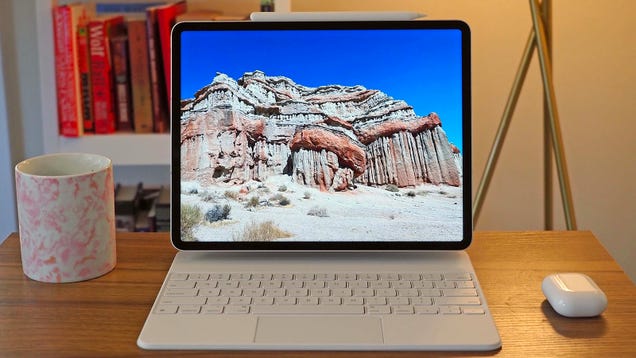
The iPad is a capable laptop replacement in many ways, and iPadOS multitasking features and Apple’s Magic Keyboard take that to the next level. iPadOS differs from iOS in several ways, and includes keyboard shortcuts and trackpad gestures that unlock functionality you can’t get on an iPhone.
Source: Gizmodo – The Best iPad Keyboard Shortcuts You Should Start Using Now
What's New on Hulu in February 2022

The 1990s encompassed my teen years, so of course I know all about Pamela Anderson and Tommy Lee and the 1995 leak of their infamous sex tape. A viral sensation in those heady, early days of the internet, for a time it gained a level of fame that eclipsed that of its featured players, a Playboy model and Baywatch…
Source: LifeHacker – What’s New on Hulu in February 2022
Mark Papermaster: Executive Best Practices And How Not to Sink a Cruise Ship

This week I’m looking at CTO and Executive Vice President Mark Papermaster’s tenure at AMD, and it reminded me of a story I was told when I was on a Windjammer Cruise a few years ago. The Captain and ship are no longer with us having perished in a nasty storm, but the story he told stuck with me, and it parallels the most important decision that Papermaster made as CTO of AMD.
Let’s talk about the true story of how to not sink a cruise ship and how it relates to effective executive decision-making this week.
The Windjammer story
A few decades ago, I was invited to sail on the Windjammer Ship Fantome, which was an old, converted sailing warship. It was the Duke of Westminster’s personal yacht. It had been heavily armored but no longer had weapons on board. The front of the ship had a bowsprit of solid steel about as thick as a human torso. The captain, Guyan March, had been a captain with Norwegian Cruise lines and, as he told the story, was moored right next to a huge Norwegian cruise ship when he decided to show off.
His plan was to use the foresails to pull the ship off the dock, raise the mains, and spectacularly and safely come about (turn the ship around) and give the folks on the cruise ship a show. So, he called for the mainsails and foresails to be unfurled and quickly realized he had a problem. The third mate, who was supposed to be handling the foresails, was instead chatting up a young woman on deck which meant the ship wasn’t coming about but was building up speed and aimed right at the middle of the cruise ship. The cruise ship had a steel hull made up of ¼” metal plate while the Fantom, being a warship, not only had the huge solid steel bowsprit but was also clad in ½” military-grade steel. If it hit the cruise ship at speed, it would likely cut the cruise ship in half, sinking both ships.
Guyan ordered the Fantom’s huge engines fired up, and then he had a choice to make. If he ordered a full reverse, he knew he couldn’t stop the ship, only slow it with the best outcome being a hole in the side of the Norwegian ship about the size of a house. Or he could order full ahead and hope he got enough force on the rudder to miss the ship entirely. Granted, if he didn’t turn the ship, he’d take out both the cruise ship and the dock where it was moored.
He ordered full ahead and was able to turn the ship enough so that it made a glancing hit, snapping one of the massive oak booms and removing much of the paint on the sides of both ships, but both ships were still seaworthy, and his gamble paid off. The decision took a ton of guts because, if it didn’t work out, he was done as a captain and might even have ended up in jail.
Executives often make bet-your-career decisions like this, but few have the guts to do so. Which causes folks like Papermaster to stand out.
Papermaster’s save-the-ship decision
When Mark Papermaster joined AMD, it was in deep trouble, and Papermaster, because he’d recently been fired from Apple, should have been risk-averse. His firing from Apple was tied to the Antenna Gate scandal at Apple, which arguably wasn’t his fault, but because Jobs hated IBM employees and Papermaster was ex-IBM, it looked like Mark was scapegoated. Ironically, IBM was the company that helped Apple fix the problem, which has always seemed odd to me given how much Jobs seemed to hate the company and its employees. It kind of surprises me how many firms have helped Apple over the years, even when they have been treated horribly by the company.
So Papermaster joined AMD under a bit of a cloud which should have made him risk-averse. But he was faced with a hard decision. He could take the easy path by trying to work with AMD’s then Bulldozer technology, which wasn’t competitive and try to make it more competitive, which would have failed but would not leave him at personal risk. Or he could push to have the technology redesigned and leapfrog ahead to create something that was competitive and would take the battle to Intel. But, if that failed, his career likely would have been over and AMD would have gone under.
Like Captain March, he made the hard choice, putting his own neck on the line, and the result, like March’s, was that AMD is now in far better shape than it has been for decades and far more competitive than most that follow the company thought possible.
Wrapping up: Making the hard choice
The higher up in a company you go, the more likelihood you’ll have to make a high-risk decision. Most of the executives I’ve studied tend to take the safe path. I remember meeting with one senior VP at IBM years ago to whom I presented a series of critical problems that were killing the company, only to have the exec say he was aware of the problems but, if he tried to fix them and failed, he’d get fired and lose his pension. IBM almost went under due to people like that who felt it far safer to cover up problems than fix them.
Papermaster and Captain March were cut from better cloth, and both showcased a willingness to put their own careers at risk to save their operations. Part of an executive’s job is to take risks, but executives that are risk-averse tend to be company-killers as much as those that take unreasonable risks. Knowing the difference and taking risks when appropriate is what often differentiates the truly successful executive, the one who is an asset to their company, from the dead weight.
Something to think about when you look at the behavior of your own upline.
Source: TG Daily – Mark Papermaster: Executive Best Practices And How Not to Sink a Cruise Ship