Renault Nissan Mitsubishi Alliance confirms plans to build 35 new EVs by 2030

The Renault Nissan Mitsubishi Alliance has announced plans to spend $25.8 billion (€23 billion) with the aim of having 35 EVs by 2030. As part of that, the group will develop five new platforms shared across brands with 80 percent common usage as part of a “smart differentiation” strategy. Nissan teased one of the first cars based on one those platforms, an all-electric compact that will be sold in Europe to replace the automaker’s popular Micra. 

The Alliance is focusing on pure EVs and “intelligent & connected mobility.” It aims to increase commonality between vehicles with a “smart differentiation” system that allows pooling for platforms, production plants, powertrains and vehicle segments. “For example, the common platform for the C and D segment will carry five models from three brands of the Alliance (Nissan Qashqai and X-Trail, Mitsubishi Outlander, Renault Austral and an upcoming seven-seater SUV),” Renault Group said in the press release.

To that end, it unveiled five separate platforms, including the affordable CMF-AEV that’s the base for Renault’s budget Dacia Spring model, the mini vehicle KEI-EV platform for ultra-compact EVs and the LCV for commercial vehicles like the Renault Kangoo and Nissan Town Star. Another is CMF-EV, currently used by the Alliance for crossovers like the Nissan Ariya and Renault Megane E-Tech. 

Finally, the CMF-BEV platform will be used for compact EVs but reduce costs by 33 percent and consumption by 10 percent compared to the current Renault Zoe. It’ll be the base for 250,000 vehicles per year under the Renault, Nissan and Alpine brands, including the Renault R5 and Nissan’s upcoming EV to replace the Micra.

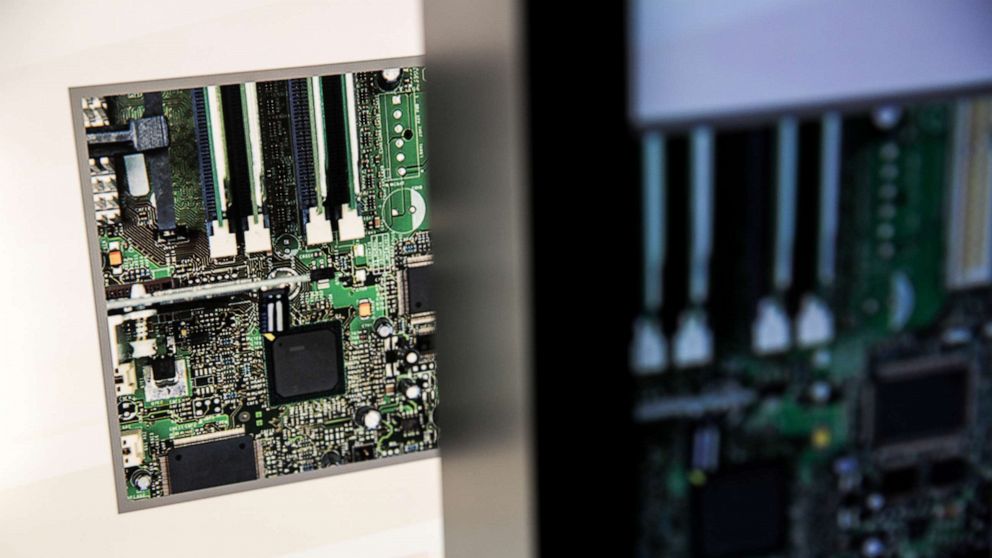
Nissan teased that vehicle in a separate press release, showing it off in a shadowy photo and brief video (above). While it has no name, price or launch date, it’ll be built at the Renault ElectriCity center in Northern France. “This all-new model will be designed by Nissan and engineered and manufactured by Renault using our new common platform, maximizing the use of our Alliance assets while maintaining its Nissan-ness,” said Nissan CEO Ashwani Gupta. “This is a great example of the Alliance”s ‘smart differentiation” approach.”

Renault Group said it would use a common battery strategy as well, aiming for 220 GWh of production capacity by 2030. It plans to reduce battery costs by 50 percent in 2026 and 65 percent by 2028. It’s aiming to develop all-solid-state batteries (ASSB) by 2028, with Nissan in charge of that project “based on its deep expertise and unique experience as a pioneer in battery technology.” 

The Alliance also said it aimed to have 25 million vehicles connected to its cloud system by 2026 that would allow for Tesla-like OTA (over the air) updates. “The Alliance will also be the first global, mass-market OEM to introduce the Google ecosystem in its cars,” Renault Group said. 

The news follows Renault’s announcement that it would electrify two thirds of its cars by 2025, with about 90 percent EVs in its lineup by 2030. Renault and Nissan ruled out a closer partnership last year, with Renault saying the companies “don’t need a merger to be efficient.” With the new platforms and cooperation announcement, it appears that the common platforms with “smart differentiation” will be key to that. 


Source: Engadget – Renault Nissan Mitsubishi Alliance confirms plans to build 35 new EVs by 2030

Spotify Takes Down Neil Young Songs After Fight Over Joe Rogan's Anti- Vaccine Bullsh*t

Spotify has started to take down songs by Neil Young after the veteran rocker said he didn’t want his music appearing on the same platform as anti-vaccine podcaster Joe Rogan, who has a $100 million deal with the service, according to reports from several news outlets. Young had about 6 million monthly listeners of…

Read more…


Source: Gizmodo – Spotify Takes Down Neil Young Songs After Fight Over Joe Rogan’s Anti- Vaccine Bullsh*t

Apple will reportedly allow iPhones to accept contactless payments

Small businesses might soon be able to accept payments using their iPhones without the need for extra hardware. According to Bloomberg, Apple could start rolling out the feature through a software update in the next few months, perhaps with the final version of iOS 15.4 that’s coming out this spring. Apple has reportedly been working on the service since 2020, when it purchased a Canadian startup called Mobeewave known for developing a technology that turns a phone into a payment portal.

Mobeewave’s technology only needs an app and the phone’s NFC to work, unlike services like Square that require the use of an external hardware. The user simply has to type in the amount they want to charge, and their customer only needs to tap their credit card onto the back of the device. Apple declined Bloomberg’s invitation to comment, so it’s unclear if that’s how its built-in iPhone feature will work, as well. 

In addition, Bloomberg’s sources couldn’t say whether the feature will be rolled out as part of Apple Pay. The team developing the feature, however, has reportedly been working with the tech giant’s payments division since Apple purchased Mobeewave. Whether Apple is launching the service with an existing payment network is also unknown at this point. 

Before its acquisition, Mobeewave teamed up with Samsung to turn its phones into contactless payment terminals. They piloted the feature in Canada and even gave the company’s point-of-sale service, dubbed Samsung POS, a wide release in the country. 


Source: Engadget – Apple will reportedly allow iPhones to accept contactless payments

Microsoft's CBL-Mariner Linux Distribution Adds Intel SGX Support, Updated Packages

One of Microsoft’s Linux/open-source surprises for 2021 was publishing of CBL-Mariner as their internal Linux distribution used for a variety of purposes at the company. Microsoft has kept to updating CBL-Mariner publicly on a monthly basis and continuing to make it easier to test out and enhance its usefulness. Last night they published their January 2022 build of Microsoft’s Linux operating system…

Source: Phoronix – Microsoft’s CBL-Mariner Linux Distribution Adds Intel SGX Support, Updated Packages

'Burning' Hydrogen Plasma In the World's Largest Laser Sets Fusion Records

The secret behind a record-breaking nuclear fusion experiment that spit out 10 quadrillion watts of power in a split second has been revealed: a “self-heating” — or “burning” — plasma of neutron-heavy hydrogen inside the fuel capsule used in the experiment, according to researchers. Live Science reports: Last year, scientists at the Lawrence Livermore National Laboratory in Northern California announced the record release of 1.3 megajoules of energy for 100 trillionths of a second at the National Ignition Facility (NIF), Live Science reported at the time. In two new research papers, NIF scientists show the achievement was due to the precision engineering of the tiny cavity and fuel capsule at the heart of the world’s most powerful laser system, where the fusion took place.

Although the fuel capsule was only about a millimeter (0.04 inch) across, and the fusion reaction lasted only the briefest sliver of time, its output was equal to about 10% of all the energy from sunlight that hits Earth every instant, the researchers reported. The researchers said the reaction blasted out that much energy because the process of fusion itself heated the remaining fuel into a plasma hot enough to enable further fusion reactions. “A burning plasma is when heating from the fusion reactions becomes the dominant source of heating in the plasma, more than required to initiate or jump-start the fusion,” Annie Kritcher, a physicist at the Lawrence Livermore National Laboratory (LLNL), told Live Science in an email. Kritcher is the lead author of a study published Jan. 26 in Nature Physics describing how the NIF was optimized to achieve the burning plasma, and the co-author of another study published in Nature the same day that details the first burning plasma experiments at NIF in 2020 and early 2021.

The two new studies describe burning plasma experiments conducted in the months before the 10 quadrillion watt reaction; those earlier experiments culminated in the production of 170 kilojoules of energy from a pellet of just 200 micrograms (0.000007 ounces) of hydrogen fuel — around three times the energy output of any earlier experiments. It was achieved by carefully shaping both the fuel capsule — a tiny spherical shell of polycarbonate diamond that enclosed the pellet — and the cavity that contained it — a small cylinder of depleted (not very radioactive) uranium lined with gold, known as a hohlraum. The new designs allowed the NIF lasers that heated the pellet to operate more efficiently within the hohlraum, and the hot shell of the capsule to rapidly expand outward while the fuel pellet “imploded” — with the result that the fuel fused at such a high temperature that it heated other parts of the pellet into a plasma.

Read more of this story at Slashdot.


Source: Slashdot – ‘Burning’ Hydrogen Plasma In the World’s Largest Laser Sets Fusion Records

The Roots project: Implementing culturally responsive computing teaching in schools in England

Since last year, we have been investigating culturally relevant pedagogy and culturally responsive teaching in computing education. This is an important part of our research to understand how to make computing accessible to all young people. We are now continuing our work in this area with a new project called Roots, bridging our research team here at the Foundation and the team at the Raspberry Pi Computing Education Research Centre, which we jointly created with the University of Cambridge in its Department of Computer Science and Technology.

Across both organisations, we’ve got great ambitions for the Centre, and I’m delighted to have been appointed as its Director. It’s a great privilege to lead this work. 

What do we mean by culturally relevant pedagogy?

Culturally relevant pedagogy is a framework for teaching that emphasises the importance of incorporating and valuing all learners’ knowledge, ways of learning, and heritage. It promotes the development of learners’ critical consciousness of the world and encourages them to ask questions about ethics, power, privilege, and social justice. Culturally relevant pedagogy emphasises opportunities to address issues that are important to learners and their communities.

Culturally responsive teaching builds on the framework above to identify a range of teaching practices that can be implemented in the classroom. These include:

  • Drawing on learners’ cultural knowledge and experiences to inform the curriculum
  • Providing opportunities for learners to choose personally meaningful projects and express their own cultural identities
  • Exploring issues of social justice and bias

The story so far

The overall objective of our work in this area is to further our understanding of ways to engage underrepresented groups in computing. In 2021, funded by a Special Projects Grant from ACM’s Special Interest Group in Computer Science Education (SIGCSE), we established a working group of teachers and academics who met up over the course of three months to explore and discuss culturally relevant pedagogy. The result was a collaboratively written set of practical guidelines about culturally relevant and responsive teaching for classroom educators.

The video below is an introduction for teachers who may not be familiar with the topic, showing the perspectives of three members of the working group and their students. You can also find other resources that resulted from this first phase of the work, and read our Special Projects Report.

We’re really excited that, having developed the guidelines, we can now focus on how culturally responsive computing teaching can be implemented in English schools through the Roots project, a new, related project supported by funding from Google. This funding continues Google’s commitment to grow the impact of computer science education in schools, which included a £1 million donation to support us and other organisations to develop online courses for teachers.

The next phase of work: Roots

In our new Roots project, we want to learn from practitioners how culturally responsive computing teaching can be implemented in classrooms in England, by supporting teachers to plan activities, and listening carefully to their experiences in school. Our approach is similar to the Research-Practice-Partnership (RPP) approach used extensively in the USA to develop research in computing education; this approach hasn’t yet been used in the UK. In this way, we hope to further develop and improve the guidelines with exemplars and case studies, and to increase our understanding of teachers’ motivations and beliefs with respect to culturally responsive computing teaching.

The pilot phase of the Roots project starts this month and will run until December 2022. During this phase, we will work with a small group of schools around London, Essex, and Cambridgeshire. Longer-term, we aim to scale up this work across the UK.

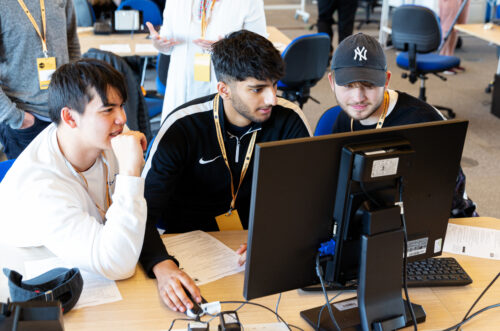
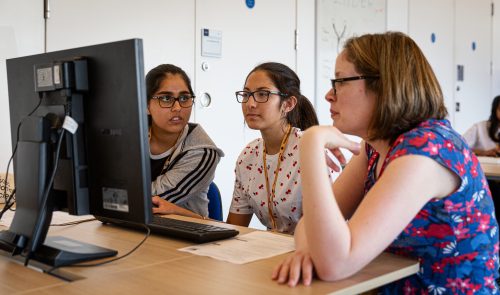
The project will be centred around two workshops held in participating teachers’ schools during the first half of the year. In the first workshop, teachers will work together with facilitators from the Foundation and the Raspberry Pi Computing Education Research Centre to discuss culturally responsive computing teaching and how to make use of the guidelines in adapting existing lessons and programmes of study. The second workshop will take place after the teachers have implemented the guidelines in their classroom, and it will be structured around a discussion of the teachers’ experiences and suggestions for iteration of the guidelines. We will also be using a visual research methodology to create a number of videos representing the new knowledge gleaned from all participants’ experiences of the project. We’re looking forward to sharing the results of the project later on in the year. 

We’re delighted that Dr Polly Card will be leading the work on this project at the Raspberry Pi Computing Education Research Centre, University of Cambridge, together with Saman Rizvi in the Foundation’s research team and Katie Vanderpere-Brown, Assistant Headteacher, Saffron Walden County High School, Essex and Computing Lead of the NCCE London, Hertfordshire and Essex Computing Hub.

More about equity, diversity, and inclusion in computing education

We hold monthly research seminars here at the Foundation, and in the first half of 2021, we invited speakers who focus on a range of topics relating to equity, diversity, and inclusion in computing education.

As well as holding seminars and building a community of interested people around them, we share the insights from speakers and attendees through video recordings of the sessions, blog posts, and the speakers’ presentation slides. We also publish a series of seminar proceedings with referenced chapters written by the speakers.

You can download your copy of the proceedings of the equity, diversity, and inclusion series now.  

The post The Roots project: Implementing culturally responsive computing teaching in schools in England appeared first on Raspberry Pi.


Source: Raspberry Pi – The Roots project: Implementing culturally responsive computing teaching in schools in England

DirectFB2 Aims To Resurrect DirectFB For Embedded Systems

The DirectFB library had been a popular option for embedded systems in running off the Linux frame-buffer to avoid the full overhead of an X11 server. But a number of years ago DirectFB disappeared and ultimately stopped being maintained. Meanwhile Wayland has been making lots of inroads into mobile/embedded and areas once popular for DirectFB use. But now it turns out DirectFB2 is in development as a fork of the original DirectFB…

Source: Phoronix – DirectFB2 Aims To Resurrect DirectFB For Embedded Systems

Anti-work subreddit temporarily goes private after awkward Fox News interview

The r/antiwork subreddit forum has temporarily gone private following a rough interview between Fox News personality Jesse Watters and one of the subreddit’s moderators, Mashable reported. Other mods said they’re dealing with “cleanup from ongoing brigading,” or attacks by other subreddits, “and will be back soon.” 

Members of the forum felt that the interview didn’t reflect well on them, as it focused more on the moderator personally rather than the movement itself. “This person had the chance to prove to the world the problems with the current work culture yet just said ‘laziness is a virtue,'” one commenter stated. 

The subreddit’s catch-phrase is “Unemployment for all, not just the rich.” It has more than 1.7 million users and was the fastest-growing non-default reddit across the site as of this writing. Growth doubled in the last three months alone, as workers tired of COVID-19 pandemic conditions and low wages. 

While it originally started as an anti-capitalism forum, the subreddit is now used to discuss workers’ rights, talk about bad bosses, air grievances and more. Previously, the site has been implicated in a hack on business receipt printers to insert pro-labor messages.

“Most of the posts on r/antiwork are from retail and fast food workers, nurses, teachers, and other essential workers who are being screwed over during the pandemic,” said another user on Twitter, according to The Independent. “But then… [this moderator] goes on TV and sets the entire thing back by a decade.”


Source: Engadget – Anti-work subreddit temporarily goes private after awkward Fox News interview

Will the chip shortage end soon?

amd cpu processor microprocessor hardware chip pc

The U.S. Commerce Department conducted global survey of semiconductor supply chain companies.

Results show supply is still far too short to meet current market demand for chips. Biden administration says situation will remain dire for at least the rest of 2022.

It remains to be seen if the Biden administration’s estimates are correct and whether we will have to wait longer.

The survey didn’t reveal any evidence of hoarding, but some prices do appear to be inflated and the Commerce Department is going to review them, but it will continue to collect data from companies and collect data.

In the past two years, there may be some light in the dark for mining cards may drop due to the current cryptocurrency crash and the demand for mining chips may also stabilize as soon as this year, according to sources in the coming months. 

Why the global chip shortage threatens the economy, national security and Americans’ ‘status quo’

“It is both an economic and national security imperative to solve this crisis.”

Continue reading on ABC News

How the Computer Chip Shortage Could Incite a U.S. Conflict With China

A war game and study by a think tank illustrate how dependent the world is on Taiwan’s semiconductor foundries.

Continue reading on

U.S. says semiconductor chip shortage has nothing to do with S. Korean firms

The U.S. Department of Commerce says Washington ?s semiconductor shortage has nothing to do with South Korean firms, increasing hopes that chip cooperation between Seoul and Washington will be boosted.

The commerce department on Tuesday released results from the Risks in the Semiconductor Suppl

Continue reading on U.S. says semiconductor chip shortage has nothing to do with S. Korean firms : ARIRANG


Source: TG Daily – Will the chip shortage end soon?

TikTok will add PSAs to Holocaust-related content

TikTok is adding PSAs and informational resources about the Holocaust in an effort to combat antisemitism in its app. With the changes, TikTok will link to aboutholocaust.org when users search for Holocaust-related content. Holocaust-related hashtags will also link to the website, along with a brief PSA.

“While browsing this topic, we recommend you verify facts using trusted sources, such as the multilingual website (aboutholocaust.org) for essential information about the history of the Holocaust and tis legacy,” the message says. The app will also add a permanent banner at the bottom of Holocaust-related videos that urges users to “get the facts about the Holocaust.” That change will be rolling out “in the coming months.”

Though TikTok’s rules prohibit hate speech, Holocaust denialism and other forms of antisemitism, the app has faced criticism in the past for allowing antisemitic content to spread on its platform. Last year, the Anti-Defamation League published a blog post with a number of examples of “posts perpetuating age-old antisemitic tropes and conspiracy theories.” The organization urged TikTok “to address this systematically.”

TikTok is adding educational resources to searches for Holocaust-related content.
TikTok

In its latest statement, TikTok notes that it blocks search results about the Holocaust that may break its rules, and that it uses “a combination of technologies and moderation teams to remove antisemitic content and accounts from our platform, including Holocaust denial or any other form of hate speech directed at the Jewish community.”


Source: Engadget – TikTok will add PSAs to Holocaust-related content

Covid-19 Infection Can Reactivate the Latent Retroviruses In Human DNA

He Who Has No Name writes: In a synopsis posted Monday, John Hewitt at Phys.org points out some fairly unsettling implications of an ugly trick by Covid-19 (more formally, SARS-CoV-2) — it wakes up latent viruses that we are born with in our DNA. A quick version for those not familiar with virology: retroviruses are a subclass of viruses that leave copies of their RNA in the host cell’s DNA as part of their replication process, the reverse of the way most viruses replicate (that’s where the ‘retro’ part comes from). Latent, inactive sequences of retroviral DNA make up more than 1% of the human genome. We’re literally born with them in our genes. Now back to Covid’s latest trick.

From the article: “Transposable elements, or jumping genes, are now known to be responsible for many human diseases. Keeping them repressed by methylation, RNA binding, or the attentions of the innate immune system is a full-time jump for cells. Last week, we reviewed the activation of one particular kind of transposable element, the Line-1 retrotransposons, in an ever-expanding host of neurodegenerative conditions. Retrotransposons derive from human endogenous retrovirus (HERVs) but typically have lost their signature long terminal repeat sequences at the beginning and ends of their genes. On Tuesday, a real zinger was dropped onto the medRxiv preprint server that could potentially explain many of the commonly observed pathogenic features of SARS-CoV-2. The authors provide solid evidence that the SARS-CoV-2 spike protein activates the envelope (ENV) protein encoded by HERV-W in blood cells, which is in turn directly responsible for many pathological features of the disease.”

While this is all analysis of preprint research, the evidence and implied results are very much in line with other long-term effects from Covid infection, especially neurocognitive symptoms, known to long haul Covid patients as “brain fog.” Given that other research is showing long haul Covid cognitive symptoms are more accurately detected by the cognitive function test specifically used for HIV-Associated Neurocognitive Disorder (HAND) compared to standard function tests, the implication of retroviral elements to the puzzle of PACS (Post-Acute Covid Symptoms, the official term now in use for long haul Covid) is disturbing. The good news: only about 20-30% of people infected with Covid appear to be susceptible. This is, however, conspicuously in line with other data analysis showing that about 1 in 4 Covid victims has PACS / long-haul symptoms after the acute infection stage…

Read more of this story at Slashdot.


Source: Slashdot – Covid-19 Infection Can Reactivate the Latent Retroviruses In Human DNA

Quarkus and Mutiny

Quarkus is a foundation for building Java based applications; whether for the desktop, server or cloud. An excellent write up on usage can be found at https://fedoramagazine.org/using-the-quarkus-framework-on-fedora-silverblue-just-a-quick-look/. This article is primer for coding asynchronous processes using Quarkus and Mutiny.

Source: LXer – Quarkus and Mutiny

Samsung posts record revenue but reveals profit decline for Q4 2021

Samsung’s consolidated revenue for the fourth quarter of 2021 reached 76.57 trillion Korean won (US$63.7 billion), the tech giant has revealed in its latest earnings report. That’s a quarterly record high for the company, which says that its revenue growth for the period was driven mainly by the expanded sales of its smartphones, TVs and home appliances. 

Its operating profit of KRW 13.87 trillion (US$11.5 billion) in the quarter ending December 31st, 2021 was lower than the previous quarter’s, however, due to the bonuses that it doled out to employees for the season. The company has also reported a new historic revenue high of KRW 279.6 trillion (U$232.5 billion) for all of 2021, along with KRW 51.63 trillion (US$42.9 billion) in operating profits. 

Samsung’s memory business, which is typically its biggest moneymaker, has experienced a decline in revenue from the previous quarter due to the global supply chain crisis and a slight drop in prices. Further, while demand for memory products remained strong, the company says it didn’t push for sales as aggressively as it usually does after considering its inventory levels and the market outlook. The memory division posted a consolidated revenue of KRW 26.01 trillion (US$21.6 billion) and an operating profit of KRW 8.84 trillion (US$7.35 billion) for the fourth quarter of 2021. In the third quarter, it posted KRW 26.41 trillion (US$21.96 billion) in consolidated revenue and KRW 10.06 trillion (US$8.36 billion) in operating profit. 

Samsung’s combined mobile and consumer electronics business, now called Mobile eXperience or MX, has posted KRW 28.95 trillion (US$24 billion) in consolidated revenue and KRW 2.66 trillion (US$2.2 billion) in operating profit. The slight increase in revenue was mainly due to the strong sales of its premium smartphones, namely its foldables and its Galaxy S series devices, as well as its PCs, tablets and wearables during the holiday season. Like in the previous quarter, though, the division’s profitability was impacted by Samsung’s marketing efforts for its foldables and for the launch of its upcoming models this year. 

Meanwhile, the company’s mobile panel business saw an increase in earnings due to solid demand for new smartphones. Losses became larger for Samsung’s large panel business, though, due to a decline in pricing for LCDs and the initial costs related to its Quantum Dot displays. Samsung also saw strong sales for its premium and lifestyle TVs, but its visual display business recorded a lower operating profit quarter-on-quarter because of rising material and logistics costs.

For 2022, Samsung expects growth in its memory business from higher server demand and in its display panel business from new smartphone releases. However, the company made it clear in its report that it also expects COVID-related supply issues and other problems to persist and affect its operations. Despite those constraints, it believes its MX business will still deliver revenue and profit growth led by its new flagships and by higher sales of its mass market 5G smartphones. Samsung has an Unpacked event scheduled on February 9th, where it will unveil the next S-series flagship to succeed the Galaxy S21 lineup.


Source: Engadget – Samsung posts record revenue but reveals profit decline for Q4 2021

JoJo’s Bizarre Adventure Game in Development

Akihabara News (Tokyo) — Mobile gacha game JoJo’s Bizarre Adventure: Golden Hymn is in development following the Netflix hit JoJo’s Bizarre Adventure: Stone Ocean.

Japanese manga artist Hirohiko Araki is best known for his long-running and successful series JoJo’s Bizarre Adventure. And with its recent anime adaptation released on Netflix, this has allowed Araki’s franchise to reach new heights.

Following the success of the adaptation, a new mobile gacha game is currently under development by Japan-based software company KLab, best known for its production of successful anime games such as YuYu Hakusho and Bleach: Brave Souls.

Gacha game mechanics typically involve players buying in-game currency to purchase a never-ending wave of characters from events or external game collaborations.

This gacha game was originally set to be released in Chinese-speaking regions exclusively, such as mainland China, Taiwan, Hong Kong, and Macau. However, the popularity of the series on Netflix convinced the developers to go global.

Recent Video Game Related Articles

Sega Sammy Lifted by Games and Pachinko

Sony Sells Off GSN Games Division

PlayStation Falls Short as Nintendo Dominates

Sega Sammy Showcases Arcade Decline

Akihabara Adores Arcade to Close June 30

The post JoJo’s Bizarre Adventure Game in Development appeared first on Akihabara News.


Source: Akihabara News – JoJo’s Bizarre Adventure Game in Development