Samsung no-showed on its major Exynos 2200 launch and won’t say why

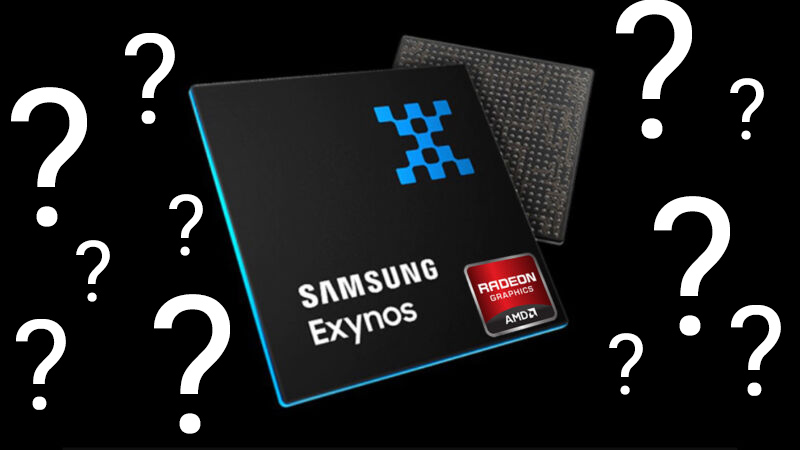
Photoshopped question marks surround a smart device that displays the words Samsung Exynos.

Enlarge (credit: Samsung / Ron Amadeo)

So here’s a crazy story. Samsung was supposed to have a big SoC launch today, but that launch did not happen. Samsung didn’t cancel or delay the event. The January 11 date was announced, and we even wrote about it, but when the time for the event came, nothing happened! Samsung pulled a no-call no-show for a major product launch. It’s the end of the day now, and the company has yet to respond to what must be hundreds of press inquiries that are no-doubt flooding its email inbox, including ours! Samsung stood up the entire tech industry, and now it won’t say why. Nobody knows what is going on.
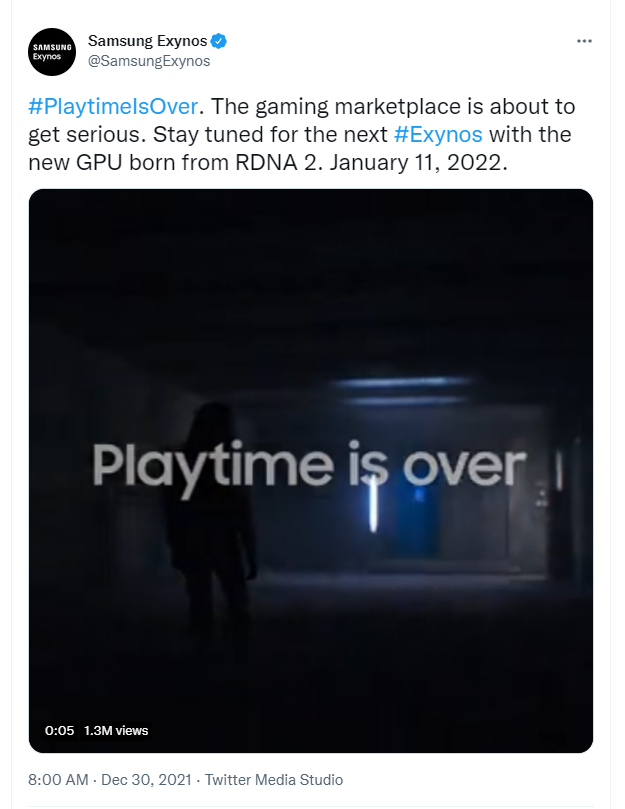
Samsung's promotional tweet.

Samsung’s promotional tweet. (credit: Samsung)

The Exynos 2200 was (?) shaping up to be a major launch for Samsung. It is, after all, the first Samsung SoC with the headline-grabbing feature of having an AMD GPU. The two companies announced this deal a year ago, and we’ve been giddy about it ever since. The Exynos 2200 is (or was) going to debut in the Galaxy S22. That launch event is currently scheduled for February 8, assuming Samsung doesn’t ghost everyone again.

Samsung announced the Exynos 2200 event just 12 days ago, saying, “Stay tuned for the next Exynos with the new GPU born from RDNA 2. January 11, 2022.” (RDNA 2 is an AMD GPU architecture). In addition to a tweet from the official, verified, @SamsungExynos account, the company also cut a promo video ending with the January 11 2022 date. You can still watch it at archive.org. The closest thing Samsung has done to communicate about the status of the Exynos 2200 is to delete its tweets promoting the show.

Read 3 remaining paragraphs | Comments


Source: Ars Technica – Samsung no-showed on its major Exynos 2200 launch and won’t say why

New Mexico Jail Forced Into Lockdown After Cyberattack Incapacitates Cameras, Doors

A suspected ransomware attack in New Mexico has incapacitated services for an entire county, including the local jail—which frighteningly lost access to its camera feeds, facility databases, and automated doors.

Read more…


Source: Gizmodo – New Mexico Jail Forced Into Lockdown After Cyberattack Incapacitates Cameras, Doors

T-Mobile Says It Has 'Not Broadly Blocked' iCloud Private Relay, Blames iOS 15.2 Bug For Errors

T-Mobile has officially acknowledged a bug that has blocked some subscribers from using iCloud Private Relay when connected to cellular networking. In a statement to 9to5Mac, T-Mobile blamed this situation on a bug in iOS 15.2 and said that it has “not broadly blocked” iCloud Private Relay. From the report: It’s also important to note that this bug is not only affecting T-Mobile subscribers, as the company says in its statement. Instead, it’s a bug that seems to affect iOS 15.2 broadly rather than T-Mobile specifically. The issue is also still present in the latest release of iOS 15.3 beta. The full statement reads: “Overnight our team identified that in the 15.2 iOS release, some device settings default to the feature being toggled off. We have shared this with Apple. This is not specific to T-Mobile. Again though, we have not broadly blocked iCloud Phone Relay.”

A solution to the problem that has worked for 9to5Mac in testing is to go to Settings, then choose Cellular, then choose your plan, and ensure that “Limit IP Address Tracking” is enabled. Make sure to complete these steps while WiFi is disabled and you are connected to your cellular network. T-Mobile has, however, acknowledged that are situations in which it is required to block iCloud Private Relay due to technical reasons. Namely, if your account or line has content moderation features or parental controls enabled, you will be unable to use iCloud Private Relay when connected to cellular. […] A source has also confirmed to 9to5Mac that this also applies to certain legacy plans that include the Netflix on Us perk and have Family Allowances enabled.

Read more of this story at Slashdot.


Source: Slashdot – T-Mobile Says It Has ‘Not Broadly Blocked’ iCloud Private Relay, Blames iOS 15.2 Bug For Errors

Raspberry Pi Can Detect Malware By Scanning for Electromagnetic Waves

The world’s largest companies are grappling with increasingly widespread and sophisticated malware attacks, but an interesting new malware detection technique could help companies thwart these threats without needing any software.

Read more…


Source: Gizmodo – Raspberry Pi Can Detect Malware By Scanning for Electromagnetic Waves

The Associated Press Is Starting Its Own NFT Marketplace For Photojournalism

The Associated Press, or AP, has announced that it’s starting a marketplace to sell NFTs of its photojournalists’ work in collaboration with a company called Xooa. The Verge reports: It’s billing its foray into NFTs as a way for collectors to “purchase the news agency’s award-winning contemporary and historic photojournalism” and says that the virtual tokens will be released at “broad and inclusive price points” (though it’s hard to tell what types of prices resellers will want on the AP marketplace). The news outlet says its system will be built on the “environmentally friendly” Polygon blockchain and that the NFTs will “include a rich set of original metadata” to tell buyers when, where, and how the photos were taken. It says its first collection, launching January 31st, will include NFTs featuring photos of “space, climate, war and other images to spotlights on the work of specific AP photographers.”

Buyers will be able to pay for NFTs from the market using either credit cards or Ethereum — AP says the MetaMask will be the first wallet supported but that there are plans to add support for others. There will be virtual queues to buy NFTs as they’re released by AP, with “Pulitzer Drops” containing more limited-edition NFTs happening every two weeks — the FAQ says these particular images will “have increased scarcity to preserve their status.” Buyers will be able to resell those NFTs on the site’s secondary market. AP says that the proceeds from the NFTs’ sale will be used to fund its journalistic endeavors. It’ll also get revenue whenever they’re resold on its marketplace — the FAQ says there’s a 10 percent fee associated with reselling, and Xooa spokesperson Lauren Easton told The Verge in an email that the two companies would share that fee. Easton also told us that the “photographers will share in all revenue collected,” but didn’t specify what their cut would be. The NFT marketplace is set to open on January 31st, but you can get on a waitlist now to get “priority access” and a higher waitlist ranking if you refer others to sign up.

Read more of this story at Slashdot.


Source: Slashdot – The Associated Press Is Starting Its Own NFT Marketplace For Photojournalism

Robert Rodriguez's Female-Led Zorro Series Is Now Heading to the CW

In case you were wondering, prolific filmmaker Robert Rodriguez (whose most recent projects include directing episodes of The Mandalorian and The Book of Boba Fett, as well as Netflix kids’ movie We Can Be Heroes) is still in the Zorro business. A few years back, he was working on a female-led, Zorro-inspired show for NBC

Read more…


Source: Gizmodo – Robert Rodriguez’s Female-Led Zorro Series Is Now Heading to the CW

Smart Guns Finally Arriving In US

An anonymous reader quotes a report from Reuters: Personalized smart guns, which can be fired only by verified users, may finally become available to U.S. consumers after two decades of questions about reliability and concerns they will usher in a new wave of government regulation. Four-year-old LodeStar Works on Friday unveiled its 9mm smart handgun for shareholders and investors in Boise, Idaho. And a Kansas company, SmartGunz LLC, says law enforcement agents are beta testing its product, a similar but simpler model. Both companies hope to have a product commercially available this year.

LodeStar co-founder Gareth Glaser said he was inspired after hearing one too many stories about children shot while playing with an unattended gun. Smart guns could stop such tragedies by using technology to authenticate a user’s identity and disable the gun should anyone else try to fire it. They could also reduce suicides, render lost or stolen guns useless, and offer safety for police officers and jail guards who fear gun grabs. But attempts to develop smart guns have stalled: Smith & Wesson got hit with a boycott, a German company’s product was hacked, and a New Jersey law aimed at promoting smart guns has raised the wrath of defenders of the Second Amendment. Glaser acknowledged there will be additional challenges to large-scale manufacturing, but expressed confidence that after years of trial and error the technology was advanced enough and the microelectronics inside the gun are well-protected. “We finally feel like we’re at the point where … let’s go public,” Glaser said. “We’re there.” “Most early smart gun prototypes used either fingerprint unlocking or radio frequency identification technology that enables the gun to fire only when a chip in the gun communicates with another chip worn by the user in a ring or bracelet,” reports Reuters. “LodeStar integrated both a fingerprint reader and a near-field communication chip activated by a phone app, plus a PIN pad. The gun can be authorized for more than one user. The fingerprint reader unlocks the gun in microseconds, but since it may not work when wet or in other adverse conditions, the PIN pad is there as a backup.”

“Skeptics have argued that smart guns are too risky for a person trying to protect a home or family during a crisis, or for police in the field.”

Read more of this story at Slashdot.


Source: Slashdot – Smart Guns Finally Arriving In US

New Year, New Privacy Protection for Firefox Focus on Android

Have you ever signed up for a contest to win a big screen TV or a vacation to an exotic location? Or have you joined a big retailer loyalty program so you can save money? If you answered yes to either of these questions you may be exchanging your name, home address, email address, phone number and sometimes even your birthdate to companies who are building your profile with the information you freely provide.

Source: LXer – New Year, New Privacy Protection for Firefox Focus on Android

The latest 'Belle' trailer introduces us to the film's dazzling technicolor virtual world

With Mamoru Hosoda’s latest movie opening in US theaters this Friday, Studio Chizu and the film’s distributor have shared a new trailer for Belle. The more than three-minute-long clip shows the movie’s opening scene in its entirety, introducing us to U, Belle’s metaverse-like virtual world. The trailer is mostly a showcase of Studio Chizu’s virtuoso animation work, but we also get to hear an equally great English cover of Millennium Parade’s “U” and learn more about the setting.

The metaverse has been a hot topic recently thanks in large part to the work Meta has done to promote the concept as the next big evolution of the internet, but Belle director Mamoru Hosoda has thinking about what virtual worlds might mean for our interpersonal relationships for a long time. Back in 2009, he directed Summer Wars. That film imagines a world where everything is connected through a separate digital realm. More than a decade ago, the idea seemed outlandish. Now it feels prescient.


Source: Engadget – The latest ‘Belle’ trailer introduces us to the film’s dazzling technicolor virtual world

Volvo shows off the Polestar 3’s sweet new Android Automotive interface

The full Polestar 3 design isn't revealed yet, but Volvo released this camouflaged photo.

Enlarge / The full Polestar 3 design isn’t revealed yet, but Volvo released this camouflaged photo. (credit: Volvo)

Volvo, Qualcomm, Google are teaming up to make car infotainment even more smartphone-like than ever. If Wintel (Windows plus Intel) is the default software+hardware combo of the PC era, then the smartphone equivalent has got to be Android and Qualcomm (Andcom? Qualdroid?). Volvo is bringing this combo to the upcoming Polestar 3 electric SUV, which is due sometime in 2022. We also got a sneak peek at what the new interface would look like.

Volvo’s Polestar 2 was the first to ship Google’s Android Automotive OS in a car. Unlike Android Auto or Apple’s CarPlay, which run on your smartphone, Android Automotive OS has a custom version of Android preinstalled on the car, as the main car infotainment OS. Even if you have an iPhone, your car still runs Android. The Polestar 2 used an x86 chip (an Intel Atom A3900), but now Volvo is pairing a Qualcomm smartphone chip with its Google smartphone OS. The Polestar 3 will ship with Qualcomm’s “Snapdragon Cockpit Platform Gen 3,” and while that sounds unique, it is really just a repackaged smartphone chip with a few extra features.

The integration of cars with computer technology is always tough. Car development takes around five years, which can seem almost incompatible with the development pace of smartphones and computers. That’s still true of the 2022 Polestar 3. Qualcomm’s Gen 3 automotive platform was actually announced back in 2019, but design wins for the platform are just now being announced at CES 2022. Qualcomm says the Gen 3 automotive platform is based on the Snapdragon 820 SoC, an ARM flagship smartphone chip from 2016. You may remember this chip from phones such as the Samsung Galaxy S7 and the Google Pixel 1. The Polestar 2’s Intel Atom was also from 2016.

Read 10 remaining paragraphs | Comments


Source: Ars Technica – Volvo shows off the Polestar 3’s sweet new Android Automotive interface

[$] An outdated Python for openSUSE Leap

Enterprise distributions are famous for maintaining the same versions of
software throughout their, normally five-year-plus, support windows. But
many of the projects those distributions are based on have far shorter
support periods; part of what the enterprise distributions sell is patching
over those mismatches. But openSUSE Leap is not exactly an
enterprise distribution, so some users are chafing under the restrictions
that come from Leap being based on SUSE Enterprise Linux (SLE). In
particular, shipping Python 3.6, which reached its end of life at the
end of 2021, is seen as problematic for the upcoming Leap 15.4 release.

Source: LWN.net – [$] An outdated Python for openSUSE Leap

Wordle' clones are taking over the App Store

If you’ve spent any time on Twitter in the last week, chances are you’ve seen the grids of emoji boxes taking over your feed. That’s thanks to Wordle, a new puzzle game that’s become somewhat of an obsession for many since The New York Timeswrote about it just over a week ago.

Like other viral games, Wordle is deceptively simple: you have six chances to guess a new five-letter word. And that’s… pretty much it. There’s just one puzzle a day, and it’s free to play with no ads . Its creator, a software developer named Josh Wardle, is apparently “overwhelmed” by his game’s popularity. But the fact that the game doesn’t have an app has allowed developers to create their own knockoff version of the game.

One particularly egregious example comes from developer Zach Shakked who created an app called “Wordle – The App.At first glance, the app, which is subtitled “Word Game Everyone’s Playing!” could easily be mistaken for the original. The word grid looks almost the same, and it even uses the same color scheme. But Shakked’s version also asks players to sign up for a “pro” subscription that costs $29.99 after a three-day “free trial.”

But between naming the app “Wordle” and running search ads against the term in the App Store, Shakked seems to have succeeded in profiting off the popularity of the game originally created by Wardle. “This is absurd. 450 trials at 1am last night, now at 950 and getting a new ones every minute,” he wrote in a tweet that has since been made private. “12K downloads, rank #28 word game, and #4 result for “Wordle” in the App Store. We’re going to the fucking moon.”

The developer of a knockoff version of Wordle bragged about his success copying the viral game.
Screenshot via Twittet

Shakked and Wardle didn’t respond to questions from Engadget. But Shakked isn’t the only developer trying to cash in on the popularity of Wordle. His app is one of at least six Wordle clones launched in the App Store in the eight days since the original New York Times article about Wordle. Another, called “What Word – Wordle” which charges a $0.99 in-app purchase to remove ads, claims to be the “No. 1 Word game” in its App Store screenshots. (It is actually ranked No. 7 in word games, according to its App Store listing.)

Scammy knockoff apps capitalizing on the popularity of a viral game is nothing new, of course. Game developers have been complaining about the practice for years. Apple didn’t immediately respond to questions about Wordle clones in its store. But, thanks to emails released during the Epic v. Apple trial, we do know that copycat apps have long been a source of frustration for Apple executives as well. “Is no one reviewing these apps? Is no one minding the store?” Phil Schiller wrote in a 2012 email. Three years later, he complained that “I can’t believe we still don’t” have automated tools to find scam apps.


Source: Engadget – Wordle’ clones are taking over the App Store

Hotel Chain Switches To Chrome OS To Recover From Ransomware Attack

A Scandinavian hotel chain that fell victim to a ransomware attack last month said it took a novel approach to recover from the incident by switching all affected systems to Chrome OS. The Record reports: Nordic Choice Hotels, which operates 200 hotels across Northern Europe, fell victim to a ransomware attack on December 2, when hackers encrypted some of its internal systems using the Conti ransomware strain. The attack prevented staff from accessing guest reservation data and from issuing key cards to newly arriving guests, as one of the hotel’s guests told The Record in an interview last month. But in a press release today, Nordic Choice said that instead of contacting the hackers and negotiating a ransom for the decryption key that would have unlocked the infected devices, the hotel chose to migrate its entire PC fleet from Windows to Chrome OS.

“[I]n less than 24 hours, the first hotel was operating in the Chrome OS ecosystem from Google. And in the following two days, 2000 computers were converted all over the company consisting of 212 hotels in five different countries,” the hotel chain explained. Kari Anna Fiskvik, VP Technology at Nordic Choice Hotels, said the hotel had already run a pilot program to test the tool before the attack as a way to save money by reusing old computers with a less-demanding OS. “So when we suddenly had to deal with the cyberattack, the decision to go all in and fasttrack the project was made in seconds,” Fiskvik said. Nordic Choice said it plans to migrate another 2,000 computers to Chrome OS, on top of the 2,000 it migrated during the attack. The hotel chain said they expect to save $6.7 million by converting old computers to Chrome OS instead of buying new hardware.

Read more of this story at Slashdot.


Source: Slashdot – Hotel Chain Switches To Chrome OS To Recover From Ransomware Attack

Radio astronomers scouring the archives spotted black hole devouring a star

Artist's conception of a Tidal Disruption Event (TDE) -- a star being shredded by the powerful gravity of a supermassive black hole. Material from the star spirals into a disk rotating around the black hole, and a jet of particles is ejected.

Enlarge / Artist’s conception of a Tidal Disruption Event (TDE) — a star being shredded by the powerful gravity of a supermassive black hole. Material from the star spirals into a disk rotating around the black hole, and a jet of particles is ejected.

There are decades of radio astronomy data in the archives of the National Radio Astronomy Observatory (NRAO), and there are still new discoveries lurking within it. Astronomers have spotted the telltale signature jet from a black hole devouring a star several decades ago in archival data collected by the Very Large Array (VLA) telescope in New Mexico. According to a new paper published in The Astrophysical Journal, it’s only the second such candidate event discovered in the radio regime; the first was discovered in 2020. The discovery was presented virtually yesterday at a meeting of the American Astronomical Society.

As we’ve reported previously, it’s a popular misconception that black holes behave like cosmic vacuum cleaners, ravenously sucking up any matter in their surroundings. In reality, only stuff that passes beyond the event horizon—including light—is swallowed up and can’t escape, although black holes are also messy eaters. That means that part of an object’s matter is actually ejected in a powerful jet.

If that object is a star, the process of being shredded (or “spaghettified”) by the powerful gravitational forces of a black hole occurs outside the event horizon, and part of the star’s original mass is ejected violently outward. This in turn can form a rotating ring of matter (aka an accretion disk) around the black hole that emits powerful X-rays and visible light—and sometimes radio waves. Those jets are one way astronomers can indirectly infer the presence of a black hole. They’re known as “tidal disruption events” (TDEs). 

Read 6 remaining paragraphs | Comments


Source: Ars Technica – Radio astronomers scouring the archives spotted black hole devouring a star

Halo Infinite Players Discover Automatic Weapon Is Automatic

Halo Infinite launched with a bunch of new-to-the-series weapons, some of which have functions that aren’t immediately apparent. The heatwave can shoot both vertically and horizontally. The mangler deals 117 percent more damage if you’re playing against a pro. And—hopefully you’re sitting down for this—the disruptor,…

Read more…


Source: Kotaku – Halo Infinite Players Discover Automatic Weapon Is Automatic