Microsoft warns of destructive disk wiper targeting Ukraine

Microsoft warns of destructive disk wiper targeting Ukraine

Enlarge (credit: Getty Images)

Over the past few months, geopolitical tensions have escalated as Russia amassed tens of thousands of troops along Ukraine’s border and made subtle but far-reaching threats if Ukraine and NATO don’t agree to Kremlin demands.

Now, a similar dispute is playing out in cyber arenas, as unknown hackers late last week defaced scores of Ukrainian government websites and left a cryptic warning to Ukrainian citizens who attempted to receive services.

Be afraid and expect the worst

“All data on the computer is being destroyed, it is impossible to recover it,” said a message, written in Ukrainian, Russian, and Polish, that appeared late last week on at least some of the infected systems. “All information about you has become public, be afraid and expect the worst.”

Read 16 remaining paragraphs | Comments


Source: Ars Technica – Microsoft warns of destructive disk wiper targeting Ukraine

Ubuntu 22.04 LTS “Jammy Jellyfish” – New Features and Release Details

It’s time to unwrap the new features of Ubuntu 22.04 LTS “Jammy Jellyfish”. We give you all the relevant information, and you stay up to date until the final release.

The post Ubuntu 22.04 LTS “Jammy Jellyfish” – New Features and Release Details appeared first on Linux Today.


Source: Linux Today – Ubuntu 22.04 LTS “Jammy Jellyfish” – New Features and Release Details

Chromebook 'Nearby Share' to Get 'Self Share' to Send Files to Our Own Devices

Google is tweaking the Nearby Share feature to allow users to share files to their own devices. The new feature called ‘Self Share’ is now under development. Dinsan Francis writes via Chrome Story: Google recently launched a new feature called Nearby Share. Similar to Apple’s AirDrop, Nearby Share allows users to send files to devices nearby. Building on this feature, Google is adding ‘Self Share’, a new addition to Nearby Share. Self Share helps you send files between your own devices using the Nearby Share method. […] When this new feature is ready, you will see the “Send to Your Devices” option in the Nearby Share menu.

Read more of this story at Slashdot.


Source: Slashdot – Chromebook ‘Nearby Share’ to Get ‘Self Share’ to Send Files to Our Own Devices

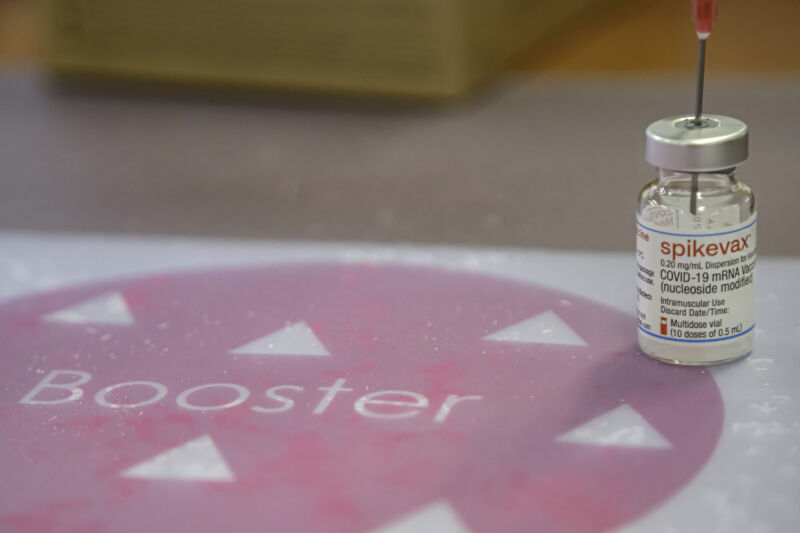
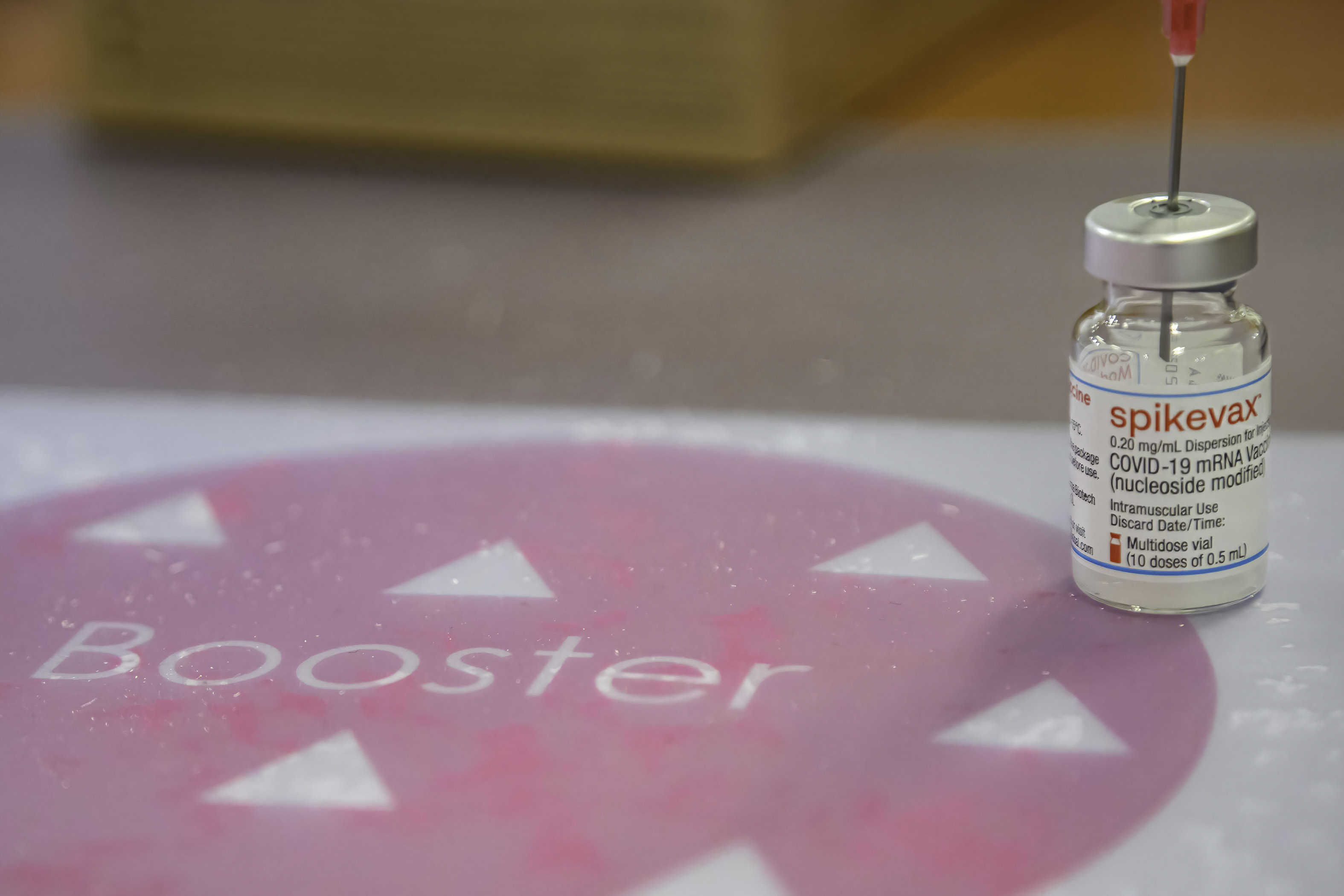
Pfizer and Moderna expect seasonal booster shots after omicron wave

Read 6 remaining paragraphs | Comments


Source: Ars Technica – Pfizer and Moderna expect seasonal booster shots after omicron wave

Fourth Pfizer Dose Is Insufficient to Ward Off Omicron, Israeli Trial Suggests

A fourth dose of the Pfizer-BioNTech vaccine was insufficient to prevent infection with the omicron variant of Covid-19, according to preliminary data from a trial in Israel released Monday. Bloomberg reports: Two weeks after the start of the trial of 154 medical personnel at the Sheba Medical Center in Tel Aviv, researchers found the vaccine successfully raised antibody levels. But that only offered a partial defense against omicron, according to Gili Regev-Yochay, the trial’s lead researcher. Vaccines which were more effective against previous variants offer less protection with omicron, she said. Still, those infected in the trial had only slight symptoms or none at all.

Israel started rolling out the fourth dose of the vaccine to the over-60s and immunocompromised in late December amid a surge in cases. Since then, more than half a million Israelis have received the extra dose, according to the Health Ministry. The decision to give the fourth vaccine to the most vulnerable was the correct one, Regev-Yochay said at a virtual press conference, since it may have given additional benefit against omicron. But she added the results didn’t support a wider rollout to the whole population.

Read more of this story at Slashdot.


Source: Slashdot – Fourth Pfizer Dose Is Insufficient to Ward Off Omicron, Israeli Trial Suggests

WarCraft III fan picks up what Blizzard dropped, remasters (part of) campaign

A cinematic intro to the WC3 human campaign? That's cool. Too bad fans had to step in to create this, since Blizzard doesn't appear poised to add anything substantial to WC3R ever again.

Enlarge / A cinematic intro to the WC3 human campaign? That’s cool. Too bad fans had to step in to create this, since Blizzard doesn’t appear poised to add anything substantial to WC3R ever again. (credit: InsaneMonster)

WarCraft III: Reforged has not received a patch or official announcement since April 2021, and its handlers at Blizzard have remained eerily quiet about anything previously announced for this so-called “remaster” of an RTS classic. Official matchmaking ladders, leaderboards, and user profiles never came to pass, prompting the game’s remaining community to cobble together its own solution, and that’s on top of the re-release’s utter lack of single-player updates. (To date, custom WC3 campaign files still aren’t formally supported.)

Thus—just as fans previously built their own online gameplay updates in the form of WC3Champions—so, too, has the game’s remaining community stepped up to make the single-player campaign better resemble Blizzard’s initial pitches for the project.

WarCraft III: Re-Reforged 2022 update

WarCraft III: Re-Reforged is a fan-made project apparently led by a single designer named InsaneMonster. It received its second substantial update on Saturday, following its original January 2021 launch as a downloadable pack of WC3R campaign files. The project is now up to 10 in-game chapters: the five chapters of WC3‘s Horde-specific prologue, which already launched last year, and the first five chapters of its human-focused first act. You can now access both parts of Re-Reforged as free downloads at Hive Workshop (part one, part two).

Read 5 remaining paragraphs | Comments


Source: Ars Technica – WarCraft III fan picks up what Blizzard dropped, remasters (part of) campaign

Report: Apple’s first AR/VR headset faces delays

The "Sword of Damocles" head-mounted display, the original augmented reality headset, circa 1968.

Enlarge / The “Sword of Damocles” head-mounted display, the original augmented reality headset, circa 1968. (credit: Ivan Sutherland)

Apple may delay the launch of its first mixed reality headset, according to Bloomberg.

Multiple sources had previously claimed that the device was likely to launch in 2022, and Apple seemed poised to introduce its new mixed reality platform to developers at the company’s annual Worldwide Developers Conference (WWDC) this June.

But according to “people familiar with the situation” with whom Bloomberg reporters Mark Gurman, Takashi Mochizuki, and Debby Wu spoke, the announcement of the new headset could fall to “the end of 2022 or later, with the product hitting shelves by 2023.”

Read 7 remaining paragraphs | Comments


Source: Ars Technica – Report: Apple’s first AR/VR headset faces delays

VPN Provider Agrees To Block Torrent Traffic and The Pirate Bay On US Servers

An anonymous reader quotes a report from TorrentFreak: Over the past few years we have seen copyright holders take several ISPs to court, accusing them of failing to disconnect repeat copyright infringers. These lawsuits have expanded recently, with VPN providers and hosting companies as the main targets. The VPN lawsuits are filed by a group of independent movies companies that previously went after piracy sites and apps. They include the makers of films such as The Hitman’s Bodyguard, Dallas Buyers Club, and London Has Fallen. In one of these cases, the filmmakers accused VPN Unlimited’s company KeepSolid Inc. of being involved in widespread copyright infringement. The company allegedly ‘encouraged’ subscribers to use pirate sites and did nothing to stop infringing traffic.

Most VPNs can’t track the online activities of subscribers and the filmmakers believe that VPN Unlimited and other providers actively promoted their services to online pirates. For example, by referencing known pirate sites. “Defendant KeepSolid encourages its users to access torrent sites including the Pirate Bay,” the complaint read, showing a screenshot from the VPN’s help section, which remains online today. Instead of fighting the case on its merits, both parties have agreed to settle the case behind closed doors. Last week, they informed the Virginia federal court that an agreement had been reached. As part of this settlement, all claims against VPN Unlimited were dismissed. The full details of the settlement agreement are confidential. Both parties agreed to cover their own costs but it’s unknown whether any monetary damages are involved. What is clear is that, going forward, VPN Unlimited will restrict torrent traffic on its U.S. servers.

“Pursuant to the confidential settlement agreement, Plaintiffs have requested and Defendant KeepSolid has agreed to use commercially reasonable efforts to block BitTorrent traffic,” the joint dismissal stipulation reads. As it reads, this measure applies to BitTorrent traffic as a broad category. That includes both pirated content and lawful torrent transfers. In addition, VPN Unlimited will also take more targeted measures to stop traffic to torrent sites. VPN Unlimited has agreed to block access to several pirate sites. These include YTS, The Pirate Bay, RARBG, 1337x, and several proxies. These measures are again limited to U.S.-based VPN servers. Popcorn-time.tw is also on the blocklist, but this Popcorn Time fork has already shut down.

Read more of this story at Slashdot.


Source: Slashdot – VPN Provider Agrees To Block Torrent Traffic and The Pirate Bay On US Servers

GNOME Boxes Review: No-Frills, No-Thrills Desktop Virtualization

GNOME Boxes is an easy-to-use graphical virtual machine (VM) installer and launcher. It’s not a VM manager and offers practically no settings for micromanaging your VM. However, its easy-to-use design philosophy can also prevent its users from getting any use out of it.

The post GNOME Boxes Review: No-Frills, No-Thrills Desktop Virtualization appeared first on Linux Today.


Source: Linux Today – GNOME Boxes Review: No-Frills, No-Thrills Desktop Virtualization

The Man Who Fell to Earth Remake's First Teaser Puts the Future in Chiwetel Ejiofor's Hands

Showtime has released the first look at Star Trek’s Alex Kurtzman and Jenny Lumet’s take on the iconic Walter Tevis novel is here, giving us a glimpse at Chiwetel Ejiofor’s arrival on Earth—and his alien struggle to find a way to fit into a changing human society.

Read more…


Source: Gizmodo – The Man Who Fell to Earth Remake’s First Teaser Puts the Future in Chiwetel Ejiofor’s Hands

The PinePhone Pro brings upgraded hardware to the Linux phone

Promotional image of cutting-edge smartphone.

Enlarge / The PinePhone Pro is “the fastest mainline Linux smartphone on the market. (credit: Pine64)

Pine64 is launching a major hardware upgrade in its quest to build a Linux smartphone. After the launch of the original PinePhone in 2019, the organization is now taking preorders for the PinePhone Pro, a new smartphone it’s calling “the fastest mainline Linux smartphone on the market.” The phone was announced in October, and you can now secure a unit. The MSRP is $599, but it’s up for preorder now at an introductory price of $399.

Since Pine64 wants to make an open source Linux smartphone, its choice of hardware components is limited. Most big chip companies like Qualcomm or Samsung don’t want to share open drivers or schematics, and you saw that with the original PinePhone, which was based on a 40 nm Cortex A53 SoC made by Allwinner. The PinePhone Pro is upgrading things with a Rockchip RK3399 SoC. The chip sports two Cortex A72 CPUs and four Cortex A53 CPUs, and Pine64 says it worked with Rockchip to get the chip “binned and voltage locked for optimal performance with sustainable power and thermal limits.” Pine64 doesn’t cite a process node, but other companies list the RK3399 at 28 nm. If that’s true and you’re looking for something roughly comparable in Qualcomm’s lineup, the Snapdragon 618/650 (a mid-range chip from 2016) would seem to fit the bill.

The phone has a 6-inch, 1440×720 LCD, 4GB of RAM, 128GB of eMMC storage, and a 3,000 mAh battery. There’s a USB-C port with 15 W charging, a headphone jack, a 13MP main camera, and an 8MP front camera. The back cover pops off, and inside the phone, you’ll find a removable battery (whoa!), a microSD slot, pogo pins, and a series of privacy dip switches that let you kill the modem, Wi-Fi/Bluetooth, microphone, rear camera, front camera, and headphones.

Read 3 remaining paragraphs | Comments


Source: Ars Technica – The PinePhone Pro brings upgraded hardware to the Linux phone

Record your terminal session with Asciinema

Support calls are important and often satisfying in the end, but the act of clear communication can be arduous for everyone involved. If you[he]#039[/he]ve ever been on a support call, you[he]#039[/he]ve probably spent several minutes spelling out even the shortest commands and explaining in detail where the spaces and returns fall. While it[he]#039[/he]s often easier to just seize control of a user[he]#039[/he]s computer, that[he]#039[/he]s not really the best way to educate. What you might try instead is sending a user a screen recording, but one that they can copy commands from and paste into their own terminal.

Source: LXer – Record your terminal session with Asciinema

2022 Mac Pro Could Complete The Apple Silicon Transition With An All New Beast Chip

2022 Mac Pro Could Complete The Apple Silicon Transition With An All New Beast Chip
Apple has been moving away from Intel processors to its own custom Arm-based Silicon since November 2020. If one well-known leaker is right, the Apple Silicon transition could wrap up in 2022 with the release of an all-new Mac Pro.

Back in August 2021, a similar report suggested the Cupertino-based tech giant would conclude its two-year

Source: Hot Hardware – 2022 Mac Pro Could Complete The Apple Silicon Transition With An All New Beast Chip

Why is Android 12 So Buggy?

Android 12 is one of the platform’s most ambitious updates in recent history, bringing a major design overhaul to every corner of the operating system. It has also been one of the rockiest Android OS launches in the past few years. From a report: Both Samsung and OnePlus paused the rollout of their stable Android 12-based updates amid reports of serious bugs. Google itself has addressed a laundry list of bug reports from Pixel 6 owners, just as it’s trying to convince them it’s finally figured out how to build a truly premium phone. What in the heck is going on? The short answer is that there are some unique complicating factors at play this year but also that Android is inherently a little bit messy — that just comes with the territory when you’re designing a delightful public park compared to Apple’s walled garden. Despite a refreshed look and some appealing new high-end handsets, Android is still Android — the good and the bad.

To try and figure out what the heck is going on, we talked to Mishaal Rahman, former editor-in-chief of XDA Developers, who’s well known for digging into Android codebases and discovering Google’s secrets. Speaking to the Pixel 6 bugs in particular, Rahman guesses that it has a lot to do with the unusually large size of the update. “Many people have called it, myself included, the biggest OS update to Android since Android 5.0 Lollipop, and that was many years ago. There are just so many massive changes to the interface and to the feature set.” He also suggests that Google’s commitment to issue a new Android update every year can make things worse when it’s trying to do so much, and the self-imposed one-year development cycle doesn’t leave much wiggle room in the timeline. “They started immediately after Android 11 was released to the public — and they have a hard cutoff date… After that, they just focus on fixing bugs.” Delay any longer, and they’d risk bumping into next year’s development cycle.

It’s also possible that the attempt to bring timely Android updates to non-Google devices wound up backfiring. Android phone owners have been asking for faster updates for a long time — outside of Google’s Pixel phones and pricey flagships, many devices face long waits for OS updates. Sure enough, the updates have come faster this year. Case in point: Samsung users are accustomed to waiting about three months after an Android stable release to get their finished One UI update with the new version of the OS, but this year, One UI 4.0 arrived just one and a half months after Android 12. But the way things have gone this year, many users would likely have opted for a slower, stable update rather than a fast one riddled with bugs.

Read more of this story at Slashdot.


Source: Slashdot – Why is Android 12 So Buggy?

Astronomers find growing number of Starlink satellite tracks

A Starlink track running across the Andromeda galaxy.

Enlarge / A Starlink track running across the Andromeda galaxy. (credit: Caltech Optical Observatories/IPAC)

SpaceX’s Starlink Internet service will require a dense constellation of satellites to provide consistent, low-latency connectivity. It already has over 1,500 satellites in orbit and has already received approval to operate 12,000 of them. And that has astronomers worried. Although SpaceX has taken steps to reduce the impact of its hardware, there’s no way to completely eliminate the tracks the satellites leave across ground-based observations.

How bad is it? A team of astronomers has used archival images from a survey telescope to look for Starlink tracks over the past two years. Over that time, the number of images effected rose by a factor of 35, and the researchers estimate that, by the time the planned Starlink constellation is complete, pretty much every image from their hardware will have at least one track in it.

Looking widely

The hardware used for the analysis is called the Zwicky Transient Facility (ZTF) at the Palomar Observatory. The ZTF is designed to pick up rare events, such as supernovae. It does so by scanning the entire sky repeatedly, with software scanning the resulting images to look for objects that were absent in early images but appeared in later ones. The ZTF’s high sensitivity makes it good for picking out dim objects, like asteroids, in our own Solar System.

Read 10 remaining paragraphs | Comments


Source: Ars Technica – Astronomers find growing number of Starlink satellite tracks

US airlines warn C-Band 5G could cause 'catastrophic disruption'

The airline industry claims a “catastrophic” event could unfold on Wednesday when AT&T and Verizon activate their new C-Band 5G networks. In a letter obtained by Reuters, the CEOs of several prominent passenger and cargo airlines, including Delta, United and Southwest, warn interference from 5G cell towers could affect the sensitive safety equipment on their planes.

“Unless our major hubs are cleared to fly, the vast majority of the traveling and shipping public will essentially be grounded,” they state in the letter, which was sent to the heads of the White House Economic Council, Federal Aviation Administration and Federal Communications Commission, as well as Transportation Secretary Pete Buttigieg. “Immediate intervention is needed to avoid significant operational disruption to air passengers, shippers, supply chain and delivery of needed medical supplies.”

The airlines have asked that AT&T and Verizon not offer 5G service within 2 miles of some of the country’s busiest and most vital airports. They’re also urging the federal government to ensure “5G is deployed except when towers are too close to airport runways until the FAA can determine how that can be safely accomplished without catastrophic disruption.” The agency established 5G buffer zones at 50 airports on January 7th. 

The letter is the latest development in the ongoing back and forth between the airline and wireless industries. AT&T, T-Mobile and Verizon spent nearly $80 billion at the start of 2021 to secure the repurposed C-Band spectrum the FCC had put up for auction. In November, AT&T and Verizon agreed to delay their C-Band rollouts to January 5th to help the FAA address any interference concerns. They later proposed limiting the power output of cell towers close to airports and agreed to a further two-week delay on January 4th.


Source: Engadget – US airlines warn C-Band 5G could cause ‘catastrophic disruption’