Android 6 and up will start stripping unused apps’ permissions

Android 6.0 Marshmallow is getting a spiffy new feature.

Enlarge / Android 6.0 Marshmallow is getting a spiffy new feature. (credit: Ron Amadeo)

Google is coming for your unused Android crapware. The company announced Friday that it will backport an Android 11 privacy feature—auto-resetting app permissions—to Android 6.

Auto-resetting app permissions were introduced in Android 11 as part of a continually expanding Android feature set aiming to automatically limit apps you don’t use. When you don’t use an app for a set period of time, Android will automatically strip the app of any permissions it has been granted, limiting it from tracking you in the background or accessing data. It’s a nice feature for less tech-savvy people who aren’t interested in manually organizing the inner workings of their phones. If you open the app again, it can ask for all of those permissions again.

Like most new Android features, auto-resetting permissions were exclusive to Android 11 when it came out last year—making up a very small number of Android’s 3 billion active devices. Google’s official Android Studio stats have Android 11 at 0 percent market share, but that chart hasn’t been updated since Android 11 came out (update your chart, Google!). The last update we got said OEMs were pushing out Android 11 about as quickly as they rolled out Android 10, so today, version 11 might be cracking 10 percent of Android devices.

Read 11 remaining paragraphs | Comments


Source: Ars Technica – Android 6 and up will start stripping unused apps’ permissions

Facebook forced troll farm content on over 40% of all Americans each month

Facebook forced troll farm content on over 40% of all Americans each month

Enlarge (credit: Chesnot | Getty Images)

In the wake of the 2016 election, Facebook knew it had a problem. Pages and fake accounts created by the Kremlin-backed Internet Research Agency had spread through the social network and drawn massive engagement from real users. Facebook knew it had to get things under control.

But years later, Facebook’s own internal research teams revealed that troll farms were still reaching massive audiences, even if they didn’t have large direct followings. The company’s own algorithms pushed the troll content onto users who had not expressed interest in the pages, expanding the trolls’ reach exponentially. A report detailing the research was leaked to MIT Technology Review by a former employee.

When the report was published in 2019, troll farms were reaching 100 million Americans and 360 million people worldwide every week. In any given month, Facebook was showing troll farm posts to 140 million Americans. Most of the users never followed any of the pages. Rather, Facebook’s content-recommendation algorithms had forced the content on over 100 million Americans weekly. “A big majority of their ability to reach our users comes from the structure of our platform and our ranking algorithms rather than user choice,” the report said.

Read 15 remaining paragraphs | Comments


Source: Ars Technica – Facebook forced troll farm content on over 40% of all Americans each month

36,000 gigatons of carbon heralded history’s biggest mass extinction

Image of a large ridge made of volcanic rock.

Enlarge / Some of the massive volcanic deposits that are part of the Siberian Traps. (credit: MIT)

The end-Permian mass extinction was a big deal. It was the largest mass extinction event ever and occurred 252 million years ago. A whopping 90 percent of all marine species and around 70 percent of their terrestrial kin were killed off.

Over the years, there have been numerous efforts to look into this massive, world-changing event. The end-Permian mass extinction was coincident with mass eruptions in the Siberian Traps, and some potential scenarios include volcanism driving acid rain, volcanism triggering the burning of coal (which released greenhouses gases into the atmosphere), and a reduction in the availability of oxygen in the ocean, among others. However, a new paper relies on previously unused data and modeling to dig into the matter.

In all, the study found that 36,000 gigatons of carbon—mostly from volcanic sources—were released into the atmosphere over a relatively short span of 15,000 years. This period also saw the global average temperature rise a staggering amount, from 25ºC to 40ºC. While researchers previously explored volcanism and carbon as potential causes for the massive extinction, this work provides more insight into the event, said Wolfram Kürschner, a geologist at the University of Oslo and one of the authors of the paper.

Read 7 remaining paragraphs | Comments


Source: Ars Technica – 36,000 gigatons of carbon heralded history’s biggest mass extinction

Cryptocurrency launchpad hit by $3 million supply chain attack

Cryptocurrency launchpad hit by $3 million supply chain attack

Enlarge (credit: Austin Distel)

SushiSwap’s chief technology officer says the company’s MISO platform has been hit by a software supply chain attack. SushiSwap is a community-driven decentralized finance (DeFi) platform that lets users swap, earn, lend, borrow, and leverage cryptocurrency assets all from one place. Launched earlier this year, Sushi’s newest offering, Minimal Initial SushiSwap Offering (MISO), is a token launchpad that lets projects launch their own tokens on the Sushi network.

Unlike cryptocurrency coins that need a native blockchain and substantive groundwork, DeFi tokens are an easier alternative to implement, as they can function on an existing blockchain. For example, anybody can create their own “digital tokens” on top of the Ethereum blockchain without having to recreate a new cryptocurrency altogether.

Attacker steals $3 million in Ethereum via one GitHub commit

In a Twitter thread today, SushiSwap CTO Joseph Delong announced that an auction on MISO launchpad had been hijacked via a supply chain attack. An “anonymous contractor” with the GitHub handle AristoK3 and access to the project’s code repository had pushed a malicious code commit that was distributed on the platform’s front-end.

Read 14 remaining paragraphs | Comments


Source: Ars Technica – Cryptocurrency launchpad hit by million supply chain attack

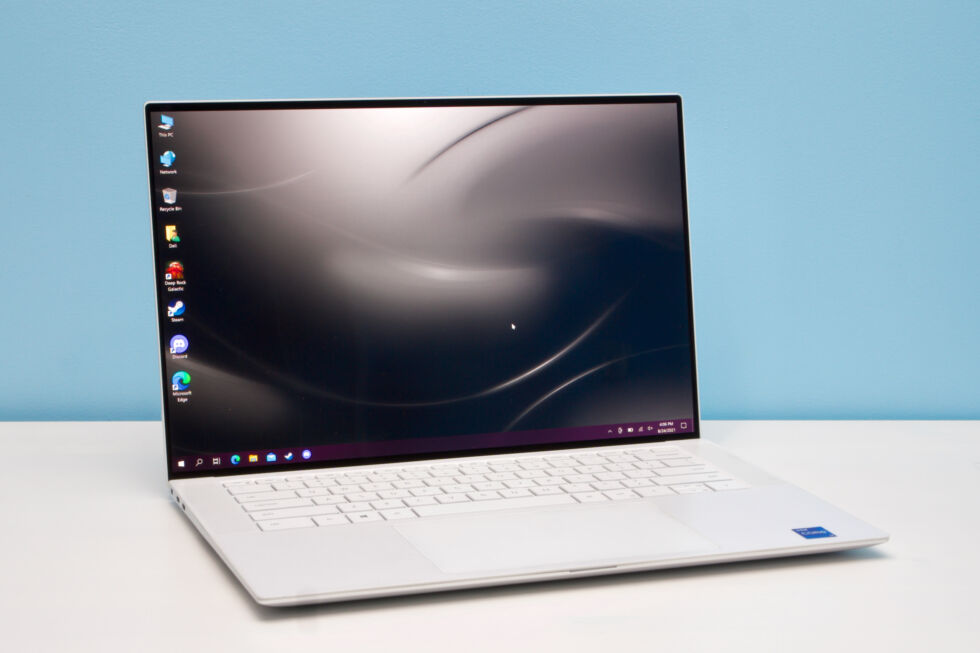
Dell XPS 15 9510 review: Come for the screen, stay for everything else

Read 27 remaining paragraphs | Comments


Source: Ars Technica – Dell XPS 15 9510 review: Come for the screen, stay for everything else

The OnLogic Helix HX500 Review: A Rugged Fanless 35W mini-PC

The emergence of edge computing as a paradigm has expanded the market for industrial PCs over the last few years. Traditionally an ‘industrial PC’ was built with a focus on reliable operation in a rugged environment – the emphasis on computing performance being secondary to the utility. This has changed recently with the need to process more data at the edge.

OnLogic (formerly, Logic Supply) has been servicing the embedded / industrial PC market with pre-configured small form-factor (SFF) systems since 2003. Their Helix line of fanless industrial PCs is based on Intel’s Elkhart Lake (300-series) and Comet Lake (500 and 600-series) processors, catering to the increased demand for processing power in edge computing. Read on for a detailed look at the performance and value proposition of a high-end Helix HX500 configuration based on the 35W Intel Core i7-10700T.


Source: AnandTech – The OnLogic Helix HX500 Review: A Rugged Fanless 35W mini-PC

Telegram emerges as new dark web for cyber criminals

Read 25 remaining paragraphs | Comments


Source: Ars Technica – Telegram emerges as new dark web for cyber criminals

Rocket Report: Virgin Galactic delays flight, Falcon Heavy nets NASA mission

Light streaks across the sky.

Enlarge / Inspiration4 reflected in the shores of the St. Johns River on the space coast of Florida. (credit: Trevor Mahlmann / Ars Technica)

Welcome to Edition 4.16 of the Rocket Report! We’ve experienced an inspiring week of spaceflight thanks to the launch of the Inspiration4 mission on Wednesday, but there is much more happening around the world when it comes to launch.

As always, we welcome reader submissions, and if you don’t want to miss an issue, please subscribe using the box below (the form will not appear on AMP-enabled versions of the site). Each report will include information on small-, medium-, and heavy-lift rockets as well as a quick look ahead at the next three launches on the calendar.

Virgin Galactic delays next flight. The space tourism company said Friday that it was delaying the next flight of its VSS Unity vehicle to no earlier than mid-October. As a reason, Virgin Galactic said, “During preparation for the Unity 23 test flight, a third-party supplier recently flagged a potential manufacturing defect in a component of the flight control actuation system that they supply to Virgin Galactic.”

Read 28 remaining paragraphs | Comments


Source: Ars Technica – Rocket Report: Virgin Galactic delays flight, Falcon Heavy nets NASA mission

Sir Clive Sinclair, 1940-2021

It’s an incredibly sad day for the British computing industry.

We’re always going to be very grateful to Sir Clive for being one of the founding fathers of the UK home computing boom that helped so many of us at Raspberry Pi get hooked on programming as kids.

He was someone from whom the business behind Raspberry Pi has drawn great inspiration. He’ll be very sadly missed.

sir clive sinclair

The post Sir Clive Sinclair, 1940-2021 appeared first on Raspberry Pi.


Source: Raspberry Pi – Sir Clive Sinclair, 1940-2021

Miwo Japanese Cursive Recognition App

Akihabara News (Tokyo) — Tarin Clanuwat, a research scientist for the Google Brain Tokyo team, has been developing a mobile phone application to recognize cursive classical Japanese (kuzushiji) as modern Japanese text.

Although the technology for computers to read printed and handwritten characters (OCR) has been used since the 1960s, kuzushiji has a lack of clear character breaks and is often intricately laid out around pictures, making it much more difficult to read.

Consequently, only about 0.01% of the Japanese population can read kuzushiji fluently.

Miwo, an AI cursive script recognition app developed by Clanuwat and her team, uses deep learning and datasets to translate Japanese cursive into modern Japanese text, making classical Japanese texts more accessible.

Miwo utilizes the ROIS-DS Center for Open Data in the Humanities’ (CODH) KuroNet kuzushiji recognition system, trained on the kuzushiji dataset created by the National Institute of Japanese Literature.

Users can either upload photos from their mobile phone camera roll or use their camera in the app and the translated cursive text will be overlaid on the original photo.

Specific characters can be highlighted and selected, opening a menu which shows other similar-looking characters, and users can also access a dataset of the selected character as it appears in different classical texts.

The app has some accessibility features, such as text size and colored boxes to separate the cursive characters, making them more discernible from each other.

The user can edit and annotate any of the translated text as they see fit, as well as copy the text and conveniently paste it into another application.

The translated photos can also be saved in the app for easy reference or if the user wishes to continue editing the translation.

Bungaku Report suggests that miwo in its current state can read about 80% of well-organized texts from the Edo period, and around 60% of handwritten manuscripts.

Miwo is free of charge and has surpassed 16,000 downloads as of September 6.

Recent Mobile App Related Articles

PayPal Snaps Up Japan FinTech Unicorn

Launch of AI Taxi-Sharing Services

XELS Marries Blockchain with Carbon Reduction

Megabank and Mobile Carrier Partnerships

Mercari: Japan’s First Unicorn

The post Miwo Japanese Cursive Recognition App appeared first on Akihabara News.


Source: Akihabara News – Miwo Japanese Cursive Recognition App

Study confirms superior sound of a Stradivari is due to the varnish

Violin against a red background.

Enlarge / A 1729 Stradivari known as the “Solomon, Ex-Lambert” on display at Christie’s in New York in March 2007. (credit: Don Emmert/AFP/Getty Images)

Along with Andrea Amati and Andrea Guarneri, Antonio Stradivari dominated the so-called Golden Age of Violins (roughly 1660 to 1750), and the instruments they crafted remain the gold standard today in terms of acoustic quality. World-renowned cellist Yo-Yo Ma has long favored a Stradivarius instrument, as does violinist Joshua Bell. But scientists have been arguing for years about precisely why these instruments have such superior sound. A recent paper published in the journal Angewandte Chemie confirms a theory dating back to 2006: the secret lies in the chemicals used to soak the wood, most notably borax, zinc, copper, alum, and lime water.

I’ve written extensively about this topic in the past. The (perceived) unique sound can’t just be due to the instrument’s geometry, although Stradivari’s geometrical approach did give us the violin’s signature shape. One hypothesis is that Stradivari may have used Alpine spruce that grew during a period of uncommonly cold weather, which caused the annual growth rings to be closer together, making the wood abnormally dense. Another prevailing theory has to do with the varnish: namely, that Stradivari used an ingenious cocktail of honey, egg whites, and gum arabic from sub-Saharan trees—or perhaps salts or other chemicals.

Then again, the difference may be all in our heads. A player’s instrument preference is highly subjective, and there’s some evidence of so-called “psychoacoustics” at play: that is, we’ve become so awed by the name Stradivarius that it influences how we evaluate or respond to the sound of one of Stradivari’s instruments.

Read 14 remaining paragraphs | Comments


Source: Ars Technica – Study confirms superior sound of a Stradivari is due to the varnish

SoftBank Startup Hub in Aichi

Akihabara News (Tokyo) — SoftBank signed an agreement with Aichi Prefecture to be the representative company for the prefecture’s startup hub: Station Ai.

The automotive industry, which is the leading industry in the prefecture, continues to develop in response to Computer-Aided Software Engineering (CASE) and Mobility as a Service (MaaS). Station Ai’s purpose is to maintain and strengthen local industry through startup innovations.

The project will be led by Station Ai Corporation, established by SoftBank on September 1. Hirotaka Sahashi, the president and CEO of Station Ai, has previously been involved in internal entrepreneurship programs and supported various businesses at SoftBank’s subsidiary for new businesses, SB InnoVenture.

SoftBank will utilize 5G, IoT, and AI in tandem with their know-how in startup support and networks with domestic and overseas companies to develop Station Ai as a core base for innovation, not only in Japan but also globally.

The facility will include offices for startups, offices for partner companies, including overseas startup support organizations and universities, a tech lab for prototype production and evaluation, and more.

Aichi Prefecture is part of the Central Japan Startup Ecosystem Consortium approved by the Cabinet Office in July 2020, an association including the Chubu Economic Federation, Nagoya University, Nagoya City, and Hamamatsu City.

Station Ai is an initiative of the Aichi Startup Strategy, serving as the core for the project.

The design and construction period is slated to be from October 2021 to September 2024, and Station Ai is projected to operate from October 2024 to September 2034.

Recent Startup Ecosystem Related Articles

Launching Environmental Technologies

Japan Biting Into FoodTech

Scrum Ventures Funds FoodTech Innovation

Sparx Group Establishes Space Frontier Fund

The post SoftBank Startup Hub in Aichi appeared first on Akihabara News.


Source: Akihabara News – SoftBank Startup Hub in Aichi

Billionaire Sacklers’ immunity threatened as DOJ moves to block opioid deal

Protestors hold up a banner while surrounded by empty prescription bottles.

Enlarge / PURDUE PHARMA, STAMFORD, Conn. – 2019/09/12: Members of P.A.I.N. (Prescription Addiction Intervention Now) and Truth Pharm staged a protest outside Purdue Pharma headquarters over the recent, controversial opioid settlement. (credit: Getty | Erik McGregor)

The Department of Justice is fighting to strip the billionaire Sackler family of the sweeping legal immunity granted as part of a controversial $4.5 billion opioid settlement.

The department filed a motion late Wednesday to block the implementation of the settlement until appeals can be heard in a higher court. Attorneys for the department argued that some aspects of the deal could go into effect quickly, complicating the appeal, according to NPR. Along with the DOJ, Connecticut, Maryland, the District of Columbia, and Washington state are also preparing to fight the settlement.

The Justice Department also requested an expedited hearing within the next two weeks.

Read 8 remaining paragraphs | Comments


Source: Ars Technica – Billionaire Sacklers’ immunity threatened as DOJ moves to block opioid deal

Apple sunsets the 256GB iPhone SE

Read 5 remaining paragraphs | Comments


Source: Ars Technica – Apple sunsets the 256GB iPhone SE

Nintendo’s “thing after the Switch”: How an overheard convo sent me reeling

Read 22 remaining paragraphs | Comments


Source: Ars Technica – Nintendo’s “thing after the Switch”: How an overheard convo sent me reeling

Battlefield 2042 joins recent game-delay frenzy, moves to November

Read 1 remaining paragraphs | Comments


Source: Ars Technica – Battlefield 2042 joins recent game-delay frenzy, moves to November

Man once called world’s “largest facilitator of child porn” sentenced to 27 years

Eric Eoin Marques led away from the High Court in Dublin in August 2013 after US authorities formally requested his extradition.

Enlarge / Eric Eoin Marques led away from the High Court in Dublin in August 2013 after US authorities formally requested his extradition. (credit: Getty Images | Niall Carson | PA Images )

A man who operated a dark web service that hosted millions of child-sexual-abuse images was sentenced to 27 years in federal prison for conspiracy to advertise child pornography, the US Department of Justice announced today. Eric Eoin Marques, a 36-year-old dual national of the US and Ireland, was also sentenced to “a lifetime of supervised release” after his prison time is over.

Marques will get credit for time served from July 2013 to the present, a sentencing document says. He was also ordered to forfeit over $154,000.

During a 2013 bail hearing in Dublin, FBI Special Agent Brooke Donahue “agreed that he had described Marques as ‘the largest facilitator of child porn on the planet’ and added ‘that remains true to this day,'” according to an Irish Examiner article in September 2013. An Irish court record provides a slightly different wording of Donahue’s quote, describing Marques as “the largest facilitator of child pornography websites on the planet.” Today’s DOJ announcement said that “Marques was one of the largest facilitators of child pornography in the world.”

Read 8 remaining paragraphs | Comments


Source: Ars Technica – Man once called world’s “largest facilitator of child porn” sentenced to 27 years

Office 2021 will be available for non-Microsoft 365 subscribers on October 5

Office 2021 will be available for non-Microsoft 365 subscribers on October 5

Enlarge (credit: Microsoft)

New versions of Microsoft Office aren’t as big a deal as they used to be, thanks to the continuously updated (and continuously paid for) versions of the apps that come with a Microsoft 365 subscription. But for everyone else, there’s still Office 2021, an upgrade to Office 2019 that’s coming to both Windows and macOS on October 5, Microsoft announced today. Office 2021 will add the same features as the Office Long-Term Servicing Channel (or LTSC, catchy) release, which is available today.

Compared to Office 2019, the last “perpetual” version of Office, the new version includes Dark Mode support, support for version 1.3 of the OpenDocument format, new Excel functions and formulas, improved slide show recording for PowerPoint, and various user-interface tweaks and enhancements. Microsoft lists most of the new features here.

Microsoft plans to offer five years of “Mainstream Support” for Office 2021, without any extended support beyond that. The end date for Office 2021 support is in October of 2016, just a year after support ends for the Windows versions of Office 2016 and Office 2019.

Read 1 remaining paragraphs | Comments


Source: Ars Technica – Office 2021 will be available for non-Microsoft 365 subscribers on October 5

Lost Judgment impressions: 15 wild hours in Yokohama

Read 20 remaining paragraphs | Comments


Source: Ars Technica – Lost Judgment impressions: 15 wild hours in Yokohama

Hospital staff must swear off Tylenol, Tums to get religious vaccine exemption

Read 8 remaining paragraphs | Comments


Source: Ars Technica – Hospital staff must swear off Tylenol, Tums to get religious vaccine exemption