Seagate Introduces IronWolf 525 PCIe 4.0 M.2 NVMe SSDs for NAS Systems

Seagate’s IronWolf series of drives for network-attached storage systems has gained significant traction in its market segments. One of the primary reasons has been the breadth of offerings – high-capacity HDDs targeting different applications, as well as SATA and NVMe SSDs. In fact, Seagate was one of the first vendors to introduce SSDs targeting the prosumer / SMB / SME NAS markets with the IronWolf SSD 110 series at the 2019 CES. This 2.5″ SATA SSD family was complemented by the announcement of the IronWolf 510 NVMe SSD family in Q1 2020. The SSD family, based on the Phison E12DC Enterprise SSD Controller, sported a 1DWPD rating that was not available in other SSDs targeting the prosumer / SMB NAS market.


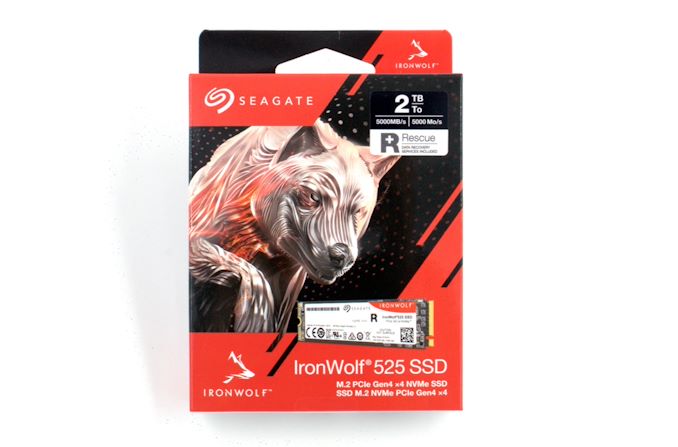
Seagate is continuing their leadership march today with the launch of the IronWolf 525 NVMe SSDs. Based on the Phison E16 (PS5016-E16-32) PCIe 4.0 x4 NVMe SSD controller, the product appears to dial back to consumer roots with a 0.7 DWPD rating. Currently, there are no commercial off-the-shelf NAS offerings from the major vendors (Synology, QNAP, Asustor, etc.) with native PCIe 4.0 capability. The IronWolf 525 is backwards compatible with PCIe 3.0 and can slot into the same places where the IronWolf 510 is currently being used. Key confirmed specifications are captured in the table below.


The Seagate IronWolf 525 SSDs for NAS
Capacity 500 GB 1 TB 2TB
Model Number ZP500NM30002 ZP1000NM30002 ZP2000NM30002
Controller Phison E16
NAND Flash Kioxia BiCS 4 96L 3D TLC NAND
Form-Factor, Interface M.2-2280, PCIe 4.0 x4, NVMe 1.3
Double-Sided

(22.15mm x 80.15mm x 3.58mm)
Seq. Read (128KB @ QD32) [ Normal / Sustained @ PCIe 4.0 x4 ] 5000 / 3300 MBps 5000 / 4350 MBps 5000 / 4300 MBps
Seq. Write (128KB @ QD32) [ Normal / Sustained @ PCIe 4.0 x4 ] 2500 / 525 MBps 4400 / 995 MBps 4400 / 965 MBps
Rand. Read IOPS (QD32T8) [ Normal @ PCIe 4.0 x4 ] 420K 760K 740K
Rand. Write IOPS (QD32T8) [ Normal @ PCIe 4.0 x4 ] 630K 700K 700K
Pseudo-SLC Caching Yes
DRAM Buffer 1GB DDR4 2GB DDR4
TCG Opal Encryption No
Power Consumption Avg Active 5.6 W 6.5 W
Avg Sleep 20mW 20mW 30mW
Warranty 5 years (including 3 years of Rescue Data Recovery Services)
MTBF 1.8 million hours
TBW 700 1400 2800
DWPD 0.7
UBER 1E10^16
Additional Information IronWolf 525 SSD Specifications
MSRP ? ? ?


Key value additions include the IronWolf Health Management (IHM) and Rescue Data Recovery Services (DRS). The former is an embedded software application that continuously monitors drive health parameters and notifies users appropriately to reduce probability of data loss on supported NAS platforms. The 3-year complimentary DRS provides data recovery services for accidental data corruption or drive damage.
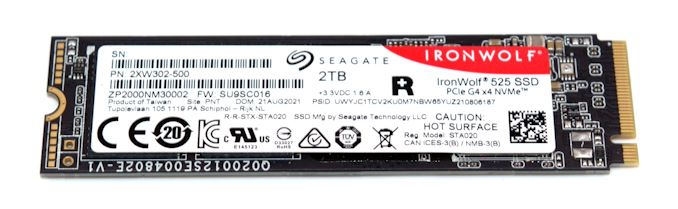


Seagate intends the IronWolf 525 NVMe SSDs to be used in commercial and entry-level enterprise NAS units, high-performance workstations, and in U.2 NVMe SSD drive bays with U.2 to M.2 adapters. These SSDs appear to have the same hardware (including the Kioxia BiCS 4 96L 3D TLC flash) as the FireCuda 520 series, albeit with modified firmware to enable the NAS-specific features such as IHM. Consequently, pricing is expected to carry a slight premium over the FireCuda 520 currently retailing for $370 (2TB), $190 (1TB), and


Source: AnandTech – Seagate Introduces IronWolf 525 PCIe 4.0 M.2 NVMe SSDs for NAS Systems

Amazon announces new Kindle Paperwhite lineup with 6.8-inch screens, USB-C

Amazon is giving the Kindle Paperwhite its first major update since 2018, the company announced today. The new Paperwhite lineup includes two different hardware models, plus a separate Paperwhite Kids edition that comes with its own case, has ads turned off by default, and includes a one-year subscription to the Amazon Kids+ service and a two-year “worry-free guarantee” warranty. The new Kindles can be preordered starting today and ship on October 27.

The basic Paperwhite is still probably the best combination of features and price. For $140 ($10 more than the last-generation version), you get a larger 6.8-inch screen with slimmer bezels than the old Paperwhite, plus a faster processor that delivers “20% faster page turns” than the old model. The number of LEDs used for the Paperwhite’s front-light has increased from five to 17, which should make the lighting look smoother and more uniform. Like the Kindle Oasis, the new Paperwhite has a “warm light” option that can make the Kindle’s backlight warmer if you don’t like the default bluish light.

Amazon also promises improved battery life for the new Paperwhite, but when you do need to charge it, you can finally do it using a USB-C charger rather than the increasingly outdated micro-USB port on older Kindles. Like the previous Paperwhite, the new model has an IPx8 waterproofing rating, 8GB of storage, an antiglare coating, and buttonless bezels that sit flush with the device’s screen.

Read 2 remaining paragraphs | Comments


Source: Ars Technica – Amazon announces new Kindle Paperwhite lineup with 6.8-inch screens, USB-C

$5.9 million ransomware attack on farming co-op may cause food shortage

Read 11 remaining paragraphs | Comments


Source: Ars Technica – .9 million ransomware attack on farming co-op may cause food shortage

The anonymous meta-analysis that’s convincing people to use ivermectin

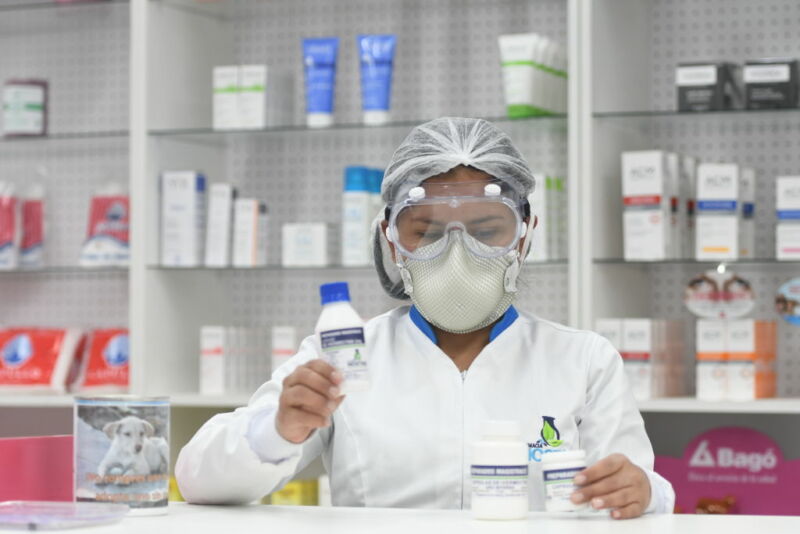
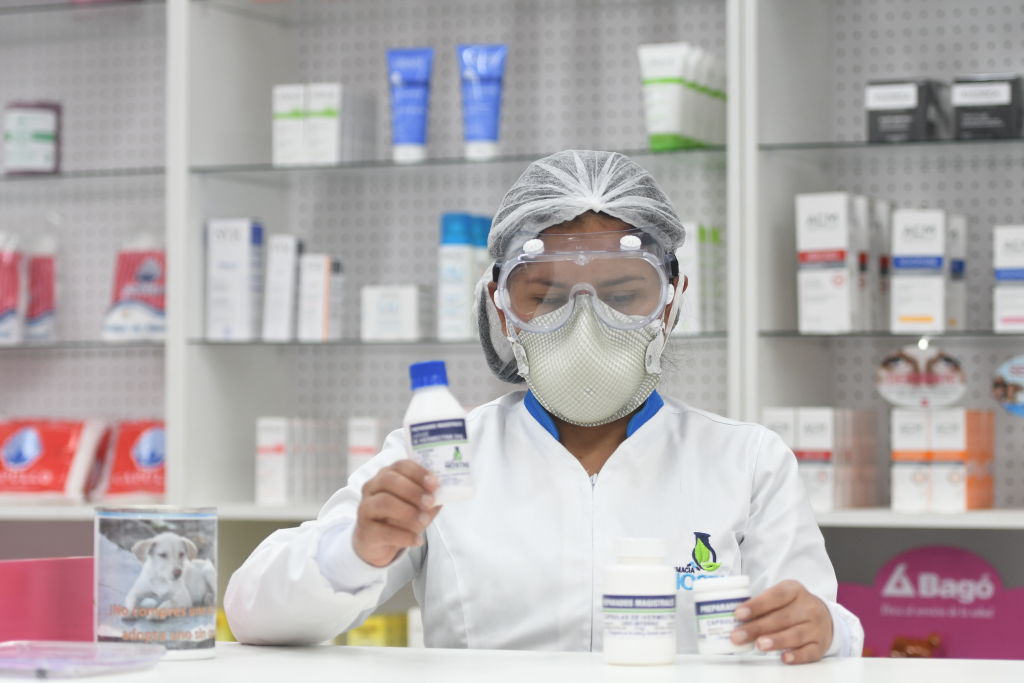
Image of a woman in protective clothing dispensing pills.

Enlarge / A pharmacist prepares to dispense ivermectin prescriptions. (credit: Picture Alliance / Getty Images)

If you’ve looked into the controversy regarding the use of ivermectin for treating COVID-19, chances are you’ve come across links to a site called c19ivermectin.com (or one of its many relatives) that claims to host a regularly updated aggregation of all the latest studies into a single meta-analysis of the effects of the drug. We here at Ars have been asked—by email, in the comments, and via our feedback form—to check out c19ivermectin.com, which purports to provide evidence ivermectin is an effective therapy.

So we have. And we’re suggesting you don’t, because it’s not a reliable source of information.

We want an old drug

Why is anyone talking about ivermectin at all? Early on in the pandemic, before the development of effective vaccines, there was a rush to find treatments that could be rapidly rolled out to the public. As such, researchers focused on testing drugs that were already approved for other problems, since this would lower the regulatory hurdles and safety testing needed. Plenty of existing drugs were tested in cell culture, and a few were trialed in humans.

Read 21 remaining paragraphs | Comments


Source: Ars Technica – The anonymous meta-analysis that’s convincing people to use ivermectin

Restored Vermeer painting finally reveals hidden Cupid in background

Side-by-side comparison of painting before and after restoration.

Enlarge / A new restoration of Johannes Vermeer’s Girl Reading a Letter at an Open Window has revealed a Cupid in the background. The restored painting will be the centerpiece of a new exhibition at the Gemäldegalerie Alte Meister in Dresden, Germany, from September 10, 2021, through January 2, 2022. (credit: Gemäldegalerie Alte Meister, SKD)

Since 1979, art historians have known that Johannes Vermeer’s Girl Reading a Letter at an Open Window (circa 1657-1659) featured an overpainted figure of a Cupid in the background. Most assumed Vermeer himself had painted over the figure. Now, thanks to a major restoration by the Staatliche Kunstsammlungen Dresden in Germany, the overpainting has a been removed to reveal the Cupid. That process also revealed that someone else painted over the Cupid in the 18th century, after the artist’s death, causing a rethinking of how the painting should be interpreted. The fully restored canvas is now on view to the public for the first time at the Gemäldegalerie Alte Meister, one of many galleries that form the Staatliche Kunstsammlungen Dresden.

The use of various X-ray imaging techniques—especially synchrotron radiation—has become a powerful tool for the nondestructive analysis of great works of art. For instance, European scientists in 2008 used synchrotron radiation to reconstruct the hidden portrait of a peasant woman painted by Vincent van Gogh. The artist (known for reusing his canvases) had painted over it when he created 1887’s Patch of Grass. The synchrotron radiation excites the atoms on the canvas, which then emit X-rays of their own that can be picked up by a fluorescence detector. Each element in the painting has its own X-ray signature, so scientists can identify the distribution of each in the many layers of paint.

In 2019, we reported on the work of a team of Dutch and French scientists who used high-energy X-rays to unlock Rembrandt’s secret recipe for his famous impasto technique, believed to be lost to history. And in 2020, an international team of scientists used synchrotron radiation to determine the cause of alarming signs of degradation to Edvard Munch’s famous painting The Scream. The team’s analysis revealed that the damage is not the result of exposure to light, but humidity—specifically, from the breath of museum visitors, perhaps as they lean in to take a closer look at the master’s brushstrokes.

Read 6 remaining paragraphs | Comments


Source: Ars Technica – Restored Vermeer painting finally reveals hidden Cupid in background

Automatically tune your guitar with Raspberry Pi Pico

You sit down with your six-string, ready to bash out that new song you recently mastered, but find you’re out of tune. Redditor u/thataintthis (Guyrandy Jean-Gilles) has taken the pain out of tuning your guitar, so those of us lacking this necessary skill can skip the boring bit and get back to playing.

Before you dismiss this project as just a Raspberry Pi Pico-powered guitar tuning box, read on, because when the maker said this is a fully automatic tuner, they meant it.

How does it work?

Guyrandy’s device listens to the sound of a string being plucked and decides which note it needs to be tuned to. Then it automatically turns the tuning keys on the guitar’s headstock just the right amount until it achieves the correct note.

Genius.

If this were a regular tuning box, it would be up to the musician to fiddle with the tuning keys while twanging the string until they hit a note that matches the one being made by the tuning box.

It’s currently hardcoded to do standard tuning, but it could be tweaked to do things like Drop D tuning.

Pico automatic guitar tuner
Waiting for that green light

Upgrade suggestions

Commenters were quick to share great ideas to make this build even better. Issues of harmonics were raised, and possible new algorithms to get around it were shared. Another commenter noticed the maker wrote their own code in C and suggested making use of the existing ulab FFT in MicroPython. And a final great idea was training the Raspberry Pi Pico to accept the guitar’s audio output as input and analyse the note that way, rather than using a microphone, which has a less clear sound quality.

These upgrades seemed to pique the maker’s interest. So maybe watch this space for a v2.0 of this project…

(Watch out for some spicy language in the comments section of the original reddit post. People got pretty lively when articulating their love for this build.)

Inspiration

This project was inspired by the Roadie automatic tuning device. Roadie is sleek but it costs big cash money. And it strips you of the hours of tinkering fun you get from making your own version.

All the code for the project can be found here.

The post Automatically tune your guitar with Raspberry Pi Pico appeared first on Raspberry Pi.


Source: Raspberry Pi – Automatically tune your guitar with Raspberry Pi Pico

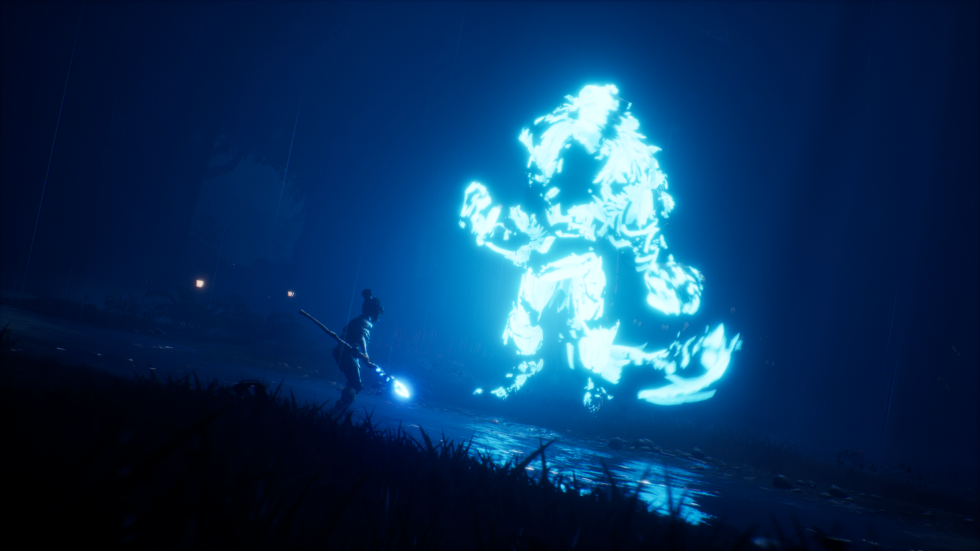
Review: Kena: Bridge of Spirits is this year’s best Zelda 35th-anniversary gift

What would a legitimate “dark” Legend of Zelda game look like? I don’t mean a game made by another studio that copies Zelda concepts while adding violence, cursing, or gothic architecture—we’ve seen plenty of those. I’m more curious how Nintendo itself might craft a 3D, “E-10” rated adventure—full of magical melee combat, puzzles, charm, and meticulous art direction—that somehow takes the series into a more sinister direction.

My praise for this week’s Kena: Bridge of Souls, the first-ever game from Ember Lab, is that it is as close to that pitch as I’ve seen since the Zelda series revolutionized the 3D adventure genre. This new, 15-hour series premiere is exhilarating, accessible, cute, gorgeous, ominous, and above all, touching.

K:BoS doesn’t necessarily exceed what we got from Nintendo’s 2017 classic Breath of the Wild, and its occasional slip-ups and issues are firm reminders that its creators are a bit green. But there’s something special here, in a debut game that most studios would kill to launch as their third or fourth game.

Read 26 remaining paragraphs | Comments


Source: Ars Technica – Review: Kena: Bridge of Spirits is this year’s best Zelda 35th-anniversary gift

Terra Drone Aerial Survey Tech

Akihabara News (Tokyo) — Terra Drone, a startup established in 2016 specializing in unmanned hardware and surveying methods, has applied its technology to preventing secondary disasters at a landslide site in the Kyushu region.

Utilizing lasers, drones were used to trace contour lines and cross-sectional maps to determine which areas were affected by heavy rains, and to guide people away from treks on unstable land.

Although the area surveyed was covered with heavy vegetation, the technology still allowed for a detailed topographical map to be produced with less than five centimeters of error.

Terra Drone’s surveying technology has previously been applied to the inspection of industrial sites such as construction and mining. It has recently developed a drone mechanism for the ultrasonic inspection of overhead cranes.

Crane inspections are required to ensure workplace safety, but the high altitude of the machines make it a dangerous job. Through this new way of carrying out inspections, Terra Drone cuts the time and cost of crane examinations significantly and safely.

Terra Drone continues to branch out into other dimensions of aerial technology, with a recent alliance with Mitsui Bussan Aerospace to commercialize air mobility with drones, helicopters, and flying cars.

On August 27, Terra Drone was selected by the Osaka government for the Demonstration Experiment for the Realization of a Flying Car.

Recent Drone Related Articles

Sony Accepts Orders for Its First Drone

Mapping the Winds for Safe Drone Flights

Japan Easing Up on Drone Laws

Global Drone Market Worth US$26 Billion

Drones Tested for Disaster Relief Missions

Agricultural Drone Alliance

Japanese Drones in India

The post Terra Drone Aerial Survey Tech appeared first on Akihabara News.


Source: Akihabara News – Terra Drone Aerial Survey Tech

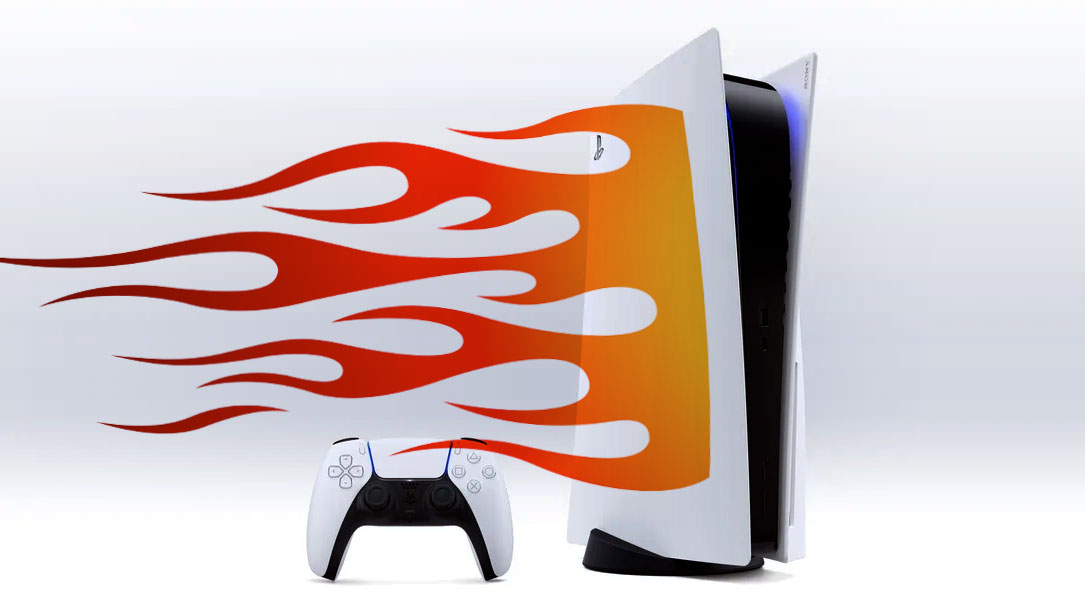
Sony’s new PS5 firmware can make your games slightly faster

Sony’s new PS5 firmware can make your games slightly faster

Enlarge (credit: Aurich Lawson | Sony)

Sony’s latest PS5 system firmware update makes some games run slightly faster, at least under certain scenarios. In a new Digital Foundry video, it was discovered that a performance bump—which affects both the console’s 1000 series launch model and recently released 1100 series model revision—appears to make certain games run up to three percentage points faster.

Digital Foundry founder Richard Leadbetter compared performance tests in Control Ultimate Edition and Devil May Cry 5 Special Edition using previously released PS5 firmware as a benchmark against the now-current September system software update. The video’s accompanying frame-graph footage showed DMC5SE cut scenes and Control‘s photo mode (which unlocks the game’s frame rate, capped at 30 fps during gameplay) running at a fluctuating 1-2 frames per second higher on the PS5 using the newer firmware.

During his tests, Leadbetter said each game was running 1-3 percent faster with a 1 percent margin of error. He added that ray tracing and unlocked frame rates seemed to be a “common component” in their occurrence. Digital Foundry did not mention any other games that have unlocked frame rates below 60 fps, since the powerful PS5 console doesn’t have many of those. This leaves to interpretation exactly how much power this firmware update is possibly opening up to PS5 games across the board.

Read 2 remaining paragraphs | Comments


Source: Ars Technica – Sony’s new PS5 firmware can make your games slightly faster

SEC probing Activision Blizzard in wake of harassment, discrimination lawsuits

Photoshopped image from a video game shows a person in an Activision Blizzsard hoodie confronted barrels filled, presumably, with gasoline.

Enlarge (credit: Aurich Lawson | Getty Images)

In video game parlance, longtime gaming publisher Activision Blizzard has jumped to “extreme” difficulty as of late, thanks to a wave of highly publicized lawsuits. On Monday, the company behind World of Warcraft, Diablo, and Call of Duty faced arguably its biggest test yet, this time from the federal government.

The Securities and Exchange Commission is investigating Activision Blizzard over how the video game publisher dealt with allegations of sexual misconduct and workplace discrimination—and whether related information was properly disclosed to shareholders by executives.

The federal regulator has subpoenaed the company as well several senior executives, including CEO Bobby Kotick, according to The Wall Street Journal. It has also requested a variety of documents, including Kotick’s communications with other executives regarding the matter, minutes from board meetings held since 2019, the personnel files of six former employees, and separation agreements written this year. Former employees also reportedly have been subpoenaed.

Read 9 remaining paragraphs | Comments


Source: Ars Technica – SEC probing Activision Blizzard in wake of harassment, discrimination lawsuits

Nation-state espionage group breaches Alaska Department of Health

A bear lumbers along a shore with pine trees in the background.

Enlarge / If Alaska’s native Ursus arctos population could be enlisted for cyber defense patrols, attackers might need paws for reflection before committing a criminal breach. (credit: Jared Lloyd via Getty Images)

Last week, Alaska’s Department of Health and Social Services (DHSS) disclosed a security breach apparently made by a sophisticated nation-state level attacker.

According to DHSS—which contracted with well-known security firm Mandiant to investigate the breach—the attackers gained a foothold inside DHSS’ network via one of its public-facing websites, from which it pivoted to deeper resources.

A months-long saga

This is not the first report of the DHSS breach. The organization first publicly announced the intrusion on May 18, with a June update announcing a multipronged investigation, and one more in August on completion of the first of three investigatory steps.

Read 6 remaining paragraphs | Comments


Source: Ars Technica – Nation-state espionage group breaches Alaska Department of Health

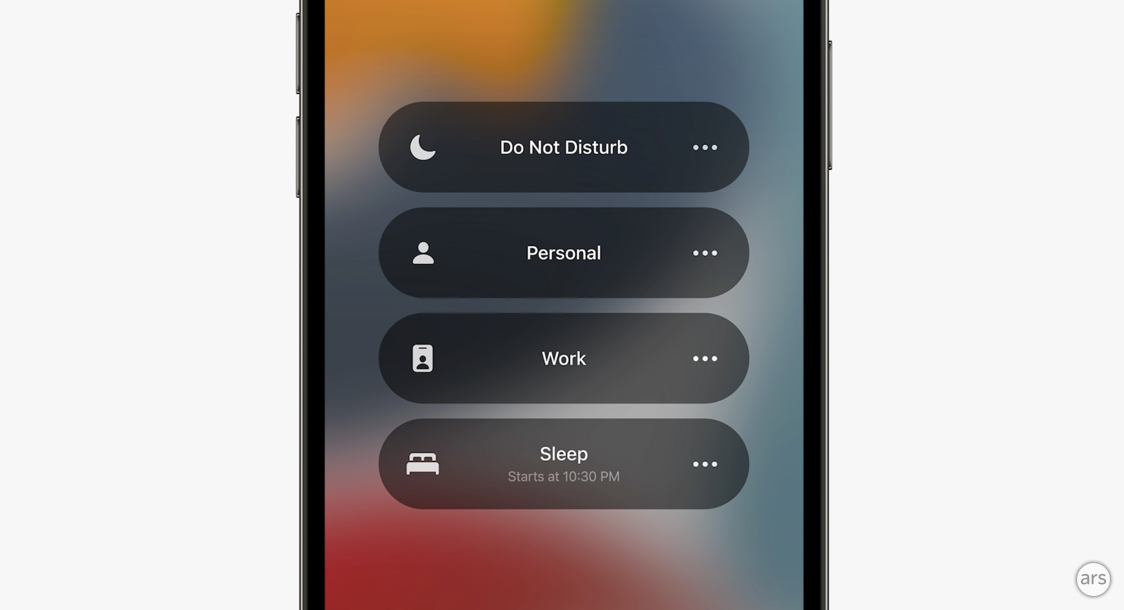
Apple releases iOS 15 with Focus mode and more

Read 5 remaining paragraphs | Comments


Source: Ars Technica – Apple releases iOS 15 with Focus mode and more

PSA: You don’t have to upgrade to iOS 15

Read 4 remaining paragraphs | Comments


Source: Ars Technica – PSA: You don’t have to upgrade to iOS 15

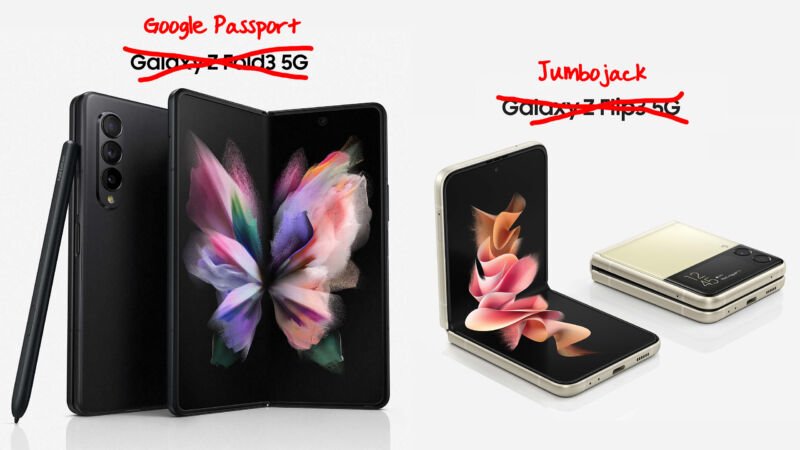
Google’s foldable phone plans include two devices, Android 12.1 release

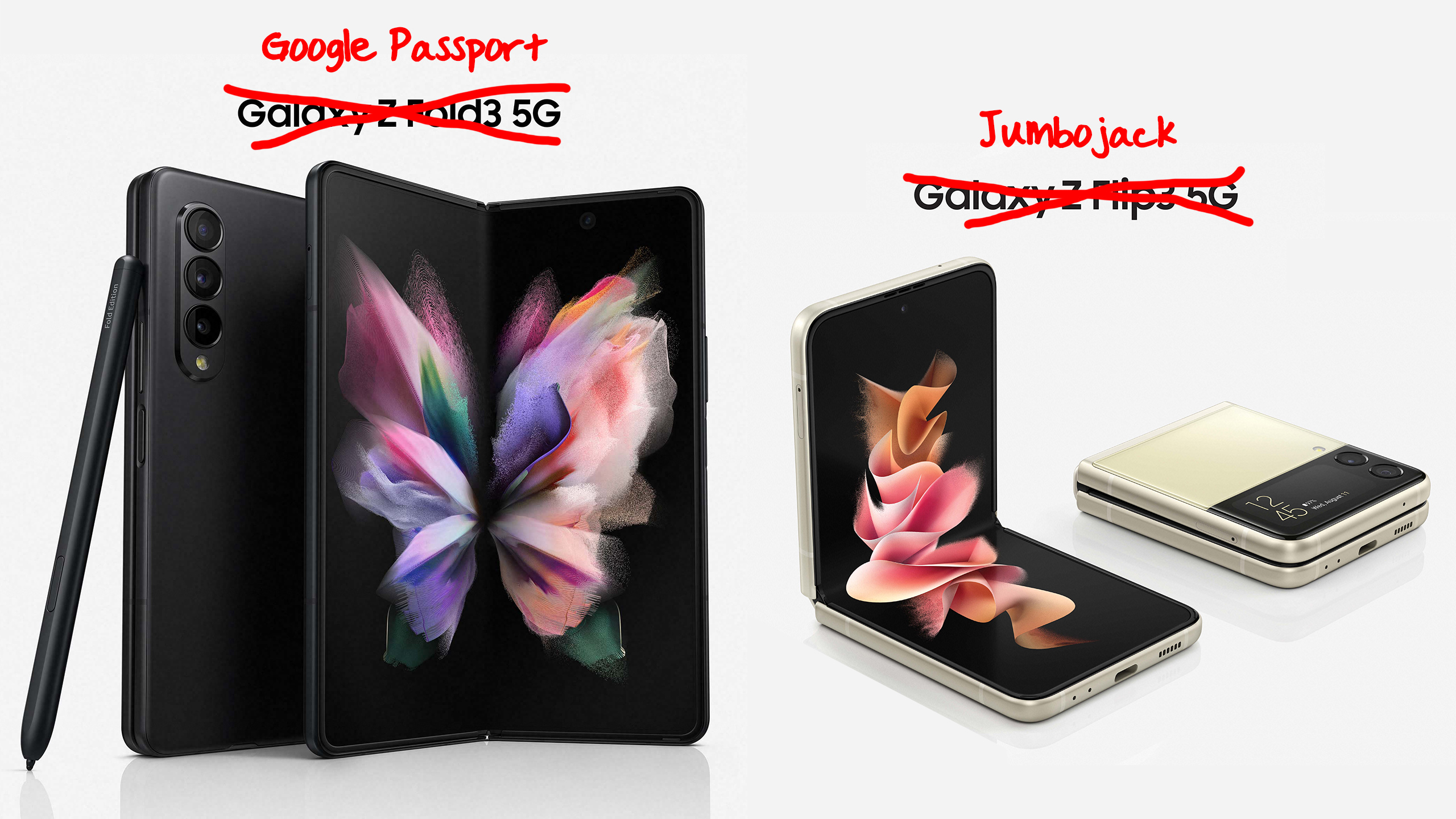
These are the Galaxy Z Fold 3 and Galaxy Z Flip 3 devices, but Google's foldable hardware will reportedly follow in Samsung's footsteps.

Enlarge / These are the Galaxy Z Fold 3 and Galaxy Z Flip 3 devices, but Google’s foldable hardware will reportedly follow in Samsung’s footsteps. (credit: Samsung / Ron Amadeo)

A Google Pixel Fold is pretty much inevitable. Samsung’s push on the hardware front is making foldables the next big Android form factor, and the Android Team has already started thinking about foldables by incorporating basic support in Android 10 for the first Galaxy Fold launch. Part of the point of Google phones is to give the Android Team in-house hardware to experiment with and build the next version of Android for. So if foldables are going to be the next big thing, Google’s going to need to make one.

That is pretty much what the rumor mill is pointing toward, with Google reportedly planning to combine the best of both worlds currently available on the market: Samsung-style foldable hardware with an iPad-OS-style dock interface for easier multitasking.

First up, the hardware: the Pixel 6 is a good framework to think about when pondering the upcoming Pixel foldables. Google’s upcoming slab smartphone is very Samsungy, with a new “Google Tensor” SoC co-developed with Samsung’s Exynos division and a Samsung modem with mmWave—the Galaxy S21 doesn’t even use a Samsung mmWave modem. There’s a 50MP Samsung GN1 as the new main camera sensor, and the 120 Hz display will undoubtedly be made by Samsung, too. The foldables will probably have a similar makeup: a metric ton of Samsung hardware DNA with Google software.

Read 7 remaining paragraphs | Comments


Source: Ars Technica – Google’s foldable phone plans include two devices, Android 12.1 release

Finch trailer is carefully tailored to push all the right warm, fuzzy buttons

Apple TV+ has dropped the official trailer for Finch, its forthcoming sci-fi film starring Tom Hanks as a robotics engineer who survives an apocalyptic solar flare, then goes on a trek to mountain safety with his trusty dog and robot sidekick. That is so Tom Hanks, amirite? Yes, this is a real movie, not a gag. Based on the trailer—carefully tailored to push all the requisite emotional buttons—the film looks like a strange mix of Cast Away, WALL-E, and Chappie. In the right hands, that unlikely mix just might work.

The title was BIOS when the film was originally announced in 2017. The global pandemic put the planned 2020 theatrical release on hold indefinitely, and Universal Pictures eventually sold the rights to Apple TV, which changed the title to Finch. There are reasons to be cautiously optimistic. The film is directed by Miguel Sapochnik, the mastermind behind several big, battle-centric episodes of Game of Thrones, including “Hardhome,” “The Battle of the Bastards,” “The Long Night,” and the hugely controversial (because of a favorite character’s heel turn) “The Bells.” The spec script by Craig Luck and Ivor Powell made 2017’s “Black List” of favorite unproduced screenplays. And you’ve got the world’s most likable everyman (Hanks) in the lead role.

Per the official synopsis:

Read 2 remaining paragraphs | Comments


Source: Ars Technica – Finch trailer is carefully tailored to push all the right warm, fuzzy buttons

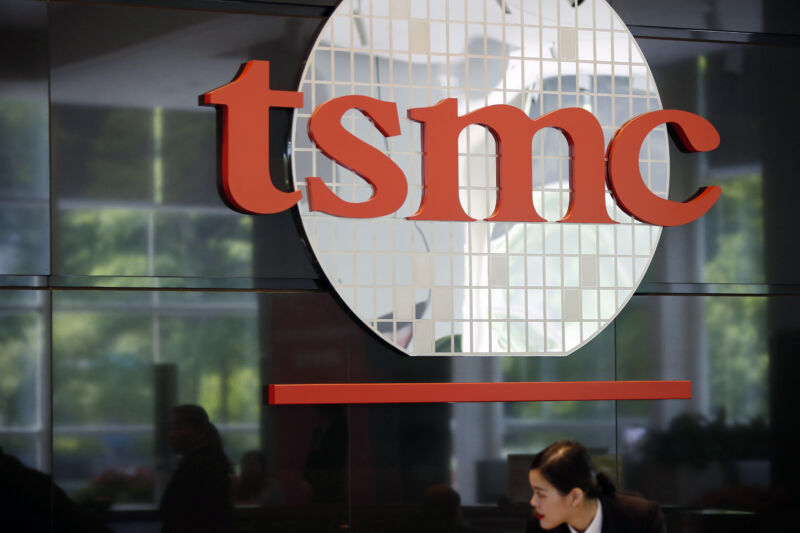
World’s largest chip foundry TSMC sets 2050 deadline to go carbon neutral

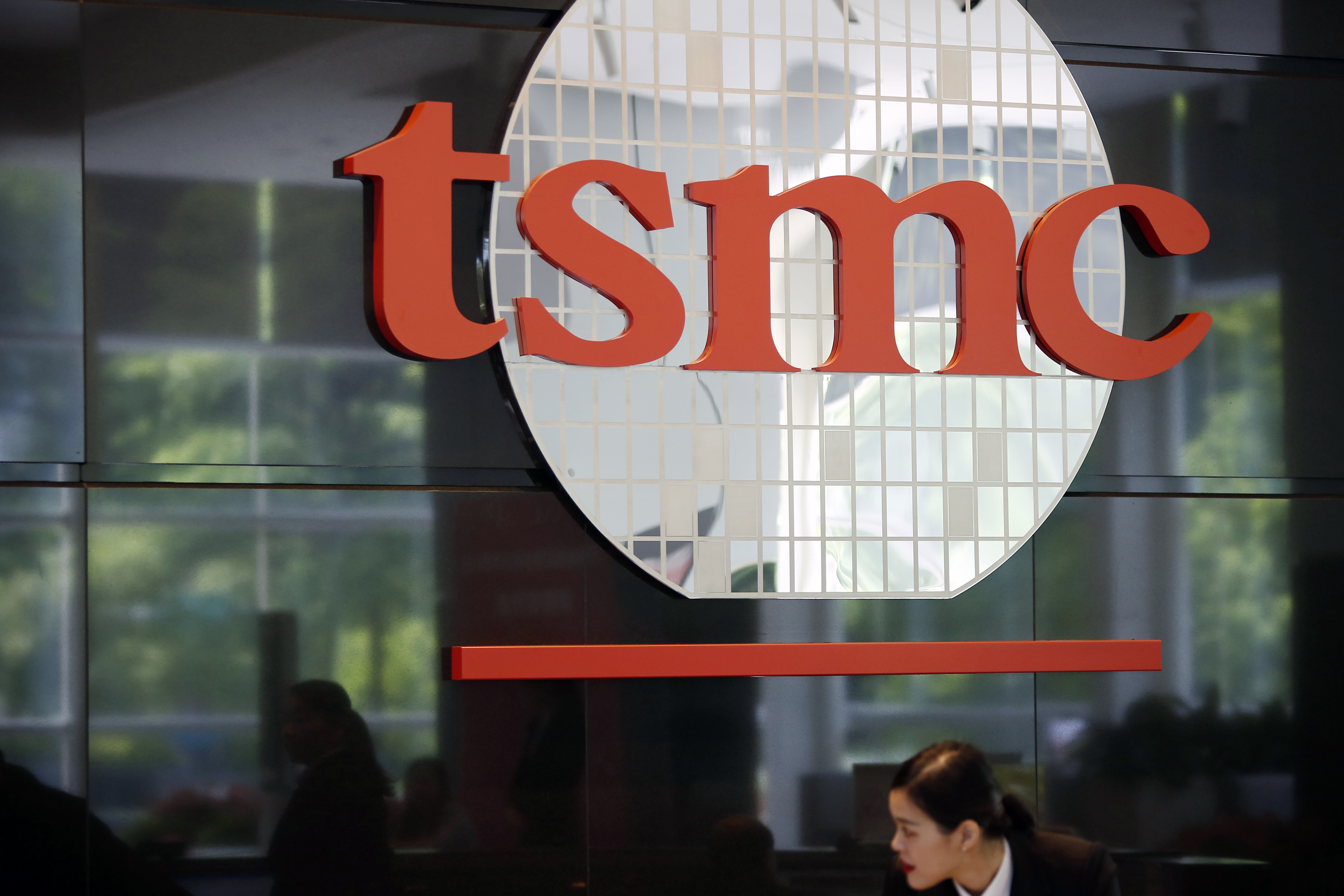
Signage for Taiwan Semiconductor Manufacturing Co. (TSMC) is displayed inside the company's headquarters in Hsinchu, Taiwan.

Enlarge / Signage for Taiwan Semiconductor Manufacturing Co. (TSMC) is displayed inside the company’s headquarters in Hsinchu, Taiwan. (credit: Ashley Pon/Bloomberg)

The dirty secret of the computing and networking world is that most of its pollution comes not from the electricity used to run the devices, but from the energy and materials used to produce the chips that make it all possible.

In a typical laptop like a MacBook Air, manufacturing represents 74 percent of the device’s lifetime carbon emissions, including shipping, use, and disposal. Of that, about half is from integrated circuits, according to a recent study led by researchers at Harvard. Researchers have found similar trends throughout the industry. “Chip manufacturing, as opposed to hardware use and energy consumption, accounts for most of the carbon output attributable to hardware systems,” the study’s authors said.

That footprint may wane in the coming years, though, as TSMC announced last week that it would flatten its emissions growth by 2025 and reach net-zero carbon by 2050. That’ll be a tall order for a company that produced over 15 million tons of carbon pollution last year across the entire scope of its operations, about the same as the country of Ghana. Though the amount of carbon pollution per wafer produced by TSMC has declined in recent years, surging demand for semiconductors has driven overall emissions up, and years of rising energy use, likely from the introduction of EUV lithography, has slowed progress.

Read 7 remaining paragraphs | Comments


Source: Ars Technica – World’s largest chip foundry TSMC sets 2050 deadline to go carbon neutral

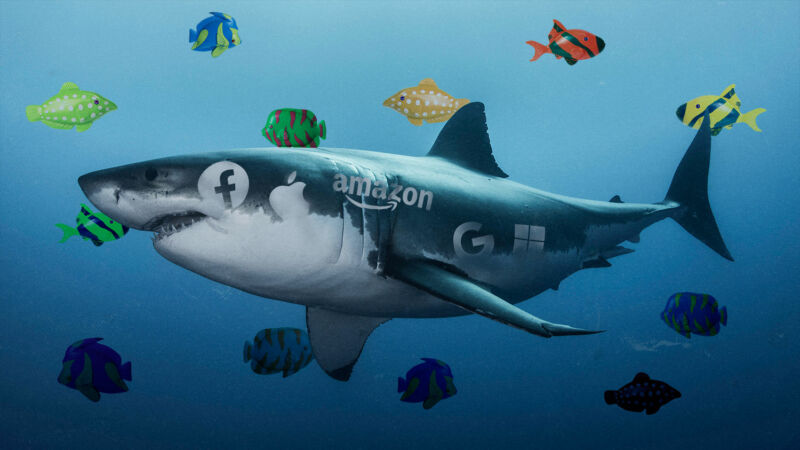
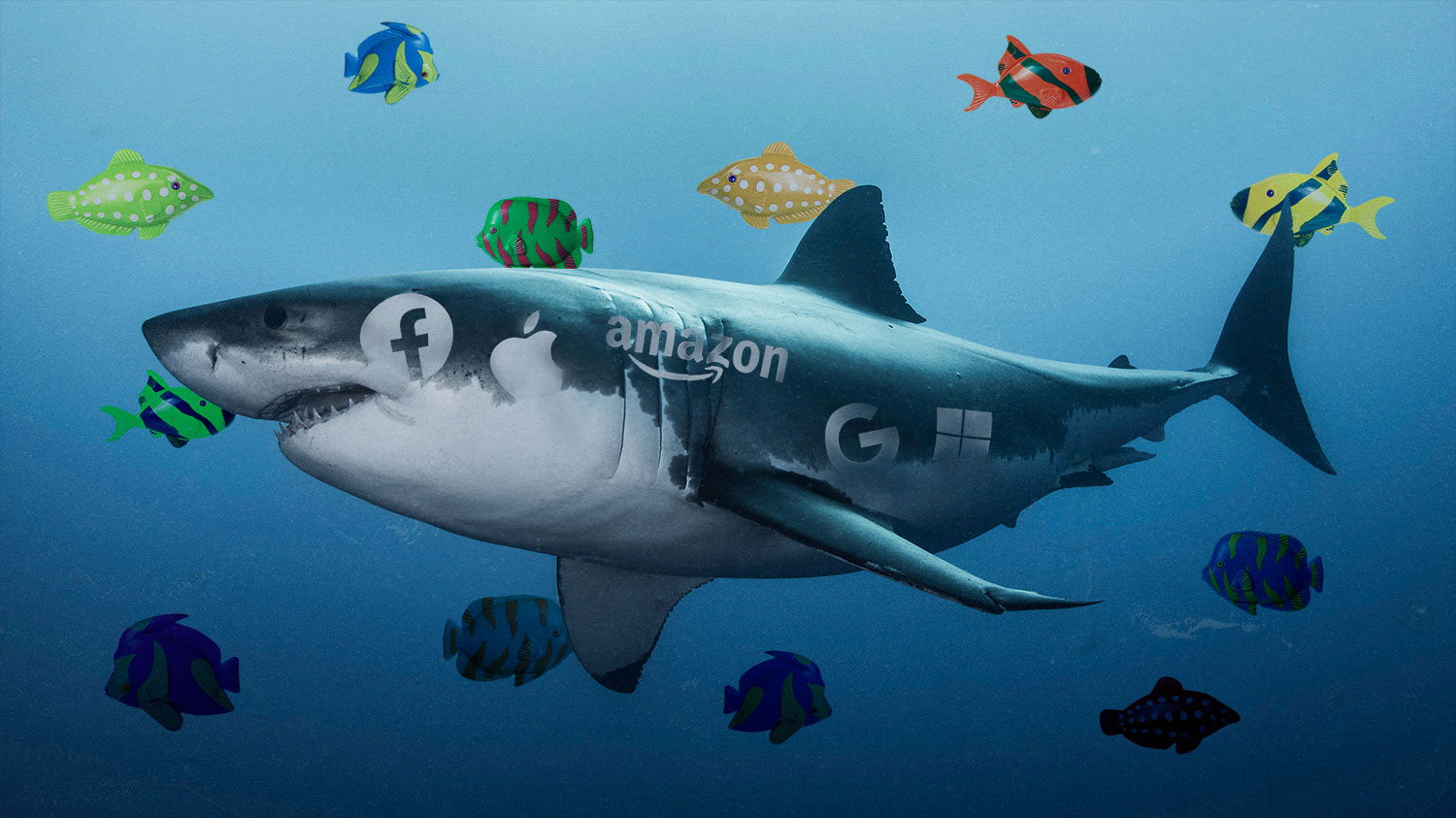
Big tech companies snap up smaller rivals at record pace

Read 21 remaining paragraphs | Comments


Source: Ars Technica – Big tech companies snap up smaller rivals at record pace

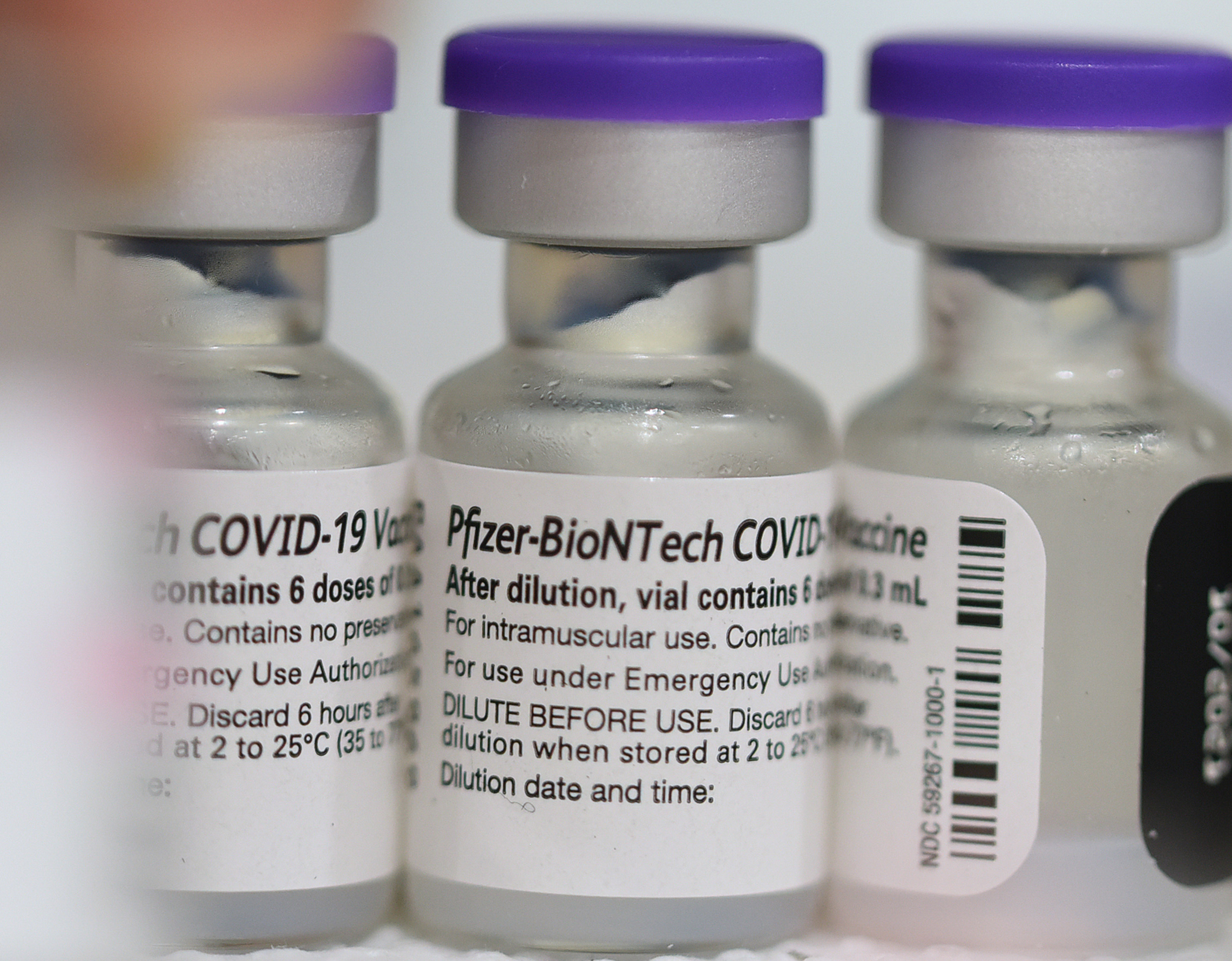
Kids 5-11 appear safely protected by small doses of COVID vaccine, Pfizer says

Read 6 remaining paragraphs | Comments


Source: Ars Technica – Kids 5-11 appear safely protected by small doses of COVID vaccine, Pfizer says

Leaked Surface Pro 8 specs include Thunderbolt ports and a 120Hz screen

Alleged Surface Pro 8 leak shows a device with a larger screen, Thunderbolt ports, and a 120Hz screen.

Alleged Surface Pro 8 leak shows a device with a larger screen, Thunderbolt ports, and a 120Hz screen. (credit: Twitter/Shadow_Leak)

Just days ahead of Microsoft’s next Surface hardware event, Twitter user @Shadlow_Leak has posted what appears to be a leaked retail listing showing some key specs of a new Surface Pro device (via The Verge). According to the listing, the new convertible tablet appears to ditch USB-C and USB-A ports in favor of a pair of Thunderbolt 4 ports, and it also adds 11th-gen Intel Core processors, a 13″ screen with a 120Hz refresh rate, and a user-replaceable SSD like the ones in some other current Surface devices.

The renders show a Surface with a design similar to the current Surface Pro 7, just with a notably larger screen and smaller bezels than the current Surface Pro 7. Take this with a larger grain of salt—the “screens” in these press renders are often superimposed on the devices after the fact, and they’ve been known to get the screen size wrong. Still, a larger screen with smaller bezels lines up with other Surface Pro 8 rumors that have been circulating, as well as general design trends in the PC industry.

A larger screen for the Surface Pro 8 would make this the biggest overhaul of the hardware since 2014’s Surface Pro 3. Microsoft has been intentionally conservative about updating the device’s design over the years in order to maintain compatibility with existing chargers, keyboard covers, and accessories. 2019’s Surface Pro X introduced a refined design, but that tablet is only available with ARM processors rather than x86 chips from Intel or AMD, limiting compatibility and performance for many existing Windows apps.

Read 1 remaining paragraphs | Comments


Source: Ars Technica – Leaked Surface Pro 8 specs include Thunderbolt ports and a 120Hz screen

After Inspiration4, SpaceX sees high demand for free-flyer missions

Dr. Sian Proctor seems to have enjoyed three days in orbit.

Enlarge / Dr. Sian Proctor seems to have enjoyed three days in orbit. (credit: SpaceX)

Four amateur astronauts returned from a three-day private spaceflight this weekend overflowing with enthusiasm about the experience. “Best ride of my life,” said Dr. Sian Proctor, shortly after emerging from the Crew Dragon capsule.

Future customers for such a free-flying orbital experience, however, weren’t waiting for the initial reviews to express their interest in going to space. Even before the Crew Dragon spacecraft splashed down on Saturday night the Inspiration4 mission had already ignited a firestorm of interest.

“The amount of people who are approaching us through our sales and marketing portals has actually increased significantly,” said Benji Reed, Senior Director of Human Spaceflight Programs for SpaceX, during a call with reporters after the space tourism mission landed. “There’s tons of interest rolling in now.”

Read 7 remaining paragraphs | Comments


Source: Ars Technica – After Inspiration4, SpaceX sees high demand for free-flyer missions