Inexplicably volatile Theranos results falsely warned pregnant woman of miscarriage

Former Theranos founder and CEO Elizabeth Holmes goes through security after arriving for court at the Robert F. Peckham Federal Building September 17, 2021 in San Jose, California. Holmes is facing charges of conspiracy and wire fraud for allegedly engaging in a multimillion-dollar scheme to defraud investors with the Theranos blood testing lab services.

Enlarge / Former Theranos founder and CEO Elizabeth Holmes goes through security after arriving for court at the Robert F. Peckham Federal Building September 17, 2021 in San Jose, California. Holmes is facing charges of conspiracy and wire fraud for allegedly engaging in a multimillion-dollar scheme to defraud investors with the Theranos blood testing lab services. (credit: Justin Sullivan/Getty Images)

Jurors in the Elizabeth Holmes trial yesterday heard emotional testimony from Brittany Gould, the first patient called as a witness, who said that one of Theranos’ tests told her in 2014 that she was miscarrying. Gould, who had already been through three miscarriages at the time, heard the news from her nurse practitioner, Audra Zachman.

“She told me your numbers are falling, unfortunately, and that I was miscarrying,” Gould said.

Gould had initially thought she was on her way to a successful pregnancy. Her first test, performed by Sonora Quest on September 30, 2014, reported that a key pregnancy hormone, hCG, was at 1,005, which was suggestive of pregnancy.

Read 9 remaining paragraphs | Comments


Source: Ars Technica – Inexplicably volatile Theranos results falsely warned pregnant woman of miscarriage

Unpatched macOS vulnerability lets remote attackers execute code

Read 10 remaining paragraphs | Comments


Source: Ars Technica – Unpatched macOS vulnerability lets remote attackers execute code

Akasa M.2 SSD Enclosures Reviewed: Giving Spare Drives a New Lease of Life

The internal storage device market segment has seen rapid evolution over the last decade after the introduction of flash-based disk drives. Beginning with 2.5-inch SSDs in early 2010s, the market moved to mSATA units while the SATA-to-NVMe transition started to gather steam. With the PCIe 4.0 transition set in motion, many users are finding themselves with spare M.2 SSDs.


A common re-purposing method has been to place the SSD in a USB enclosure. Akasa is one of the few manufacturers to possess a SSD enclosure lineup catering to almost all possible scenarios in this market segment. Read on for our review of their M.2 SSD enclosures lineup – the Akasa AK-ENU3M2-02 (SATA), AK-ENU3M2-03 (NVMe), and the AK-ENU3M2-04 (SATA / NVMe).


Source: AnandTech – Akasa M.2 SSD Enclosures Reviewed: Giving Spare Drives a New Lease of Life

New free resources for young people to become independent digital makers

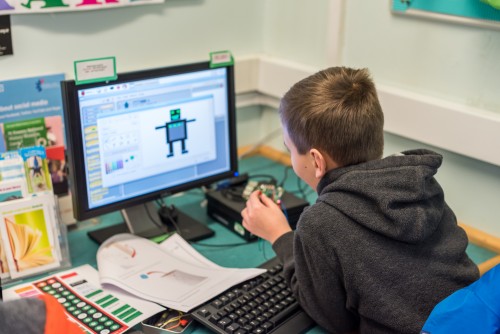
Our mission at the Raspberry Pi Foundation is to help learners get creative with technology and develop the skills and confidence they need to make things that matter to them using code and physical computing. One of the ways in which we do this is by offering learners a catalogue of more than 250 free digital making projects! Some of them have been translated into 30 languages, and they can be used with or without a Raspberry Pi computer.

Over the last 18 months, we’ve been developing an all-new format for these educational projects, designed to better support young people who want to learn coding, whether at home or in a coding club, on their digital making journey.

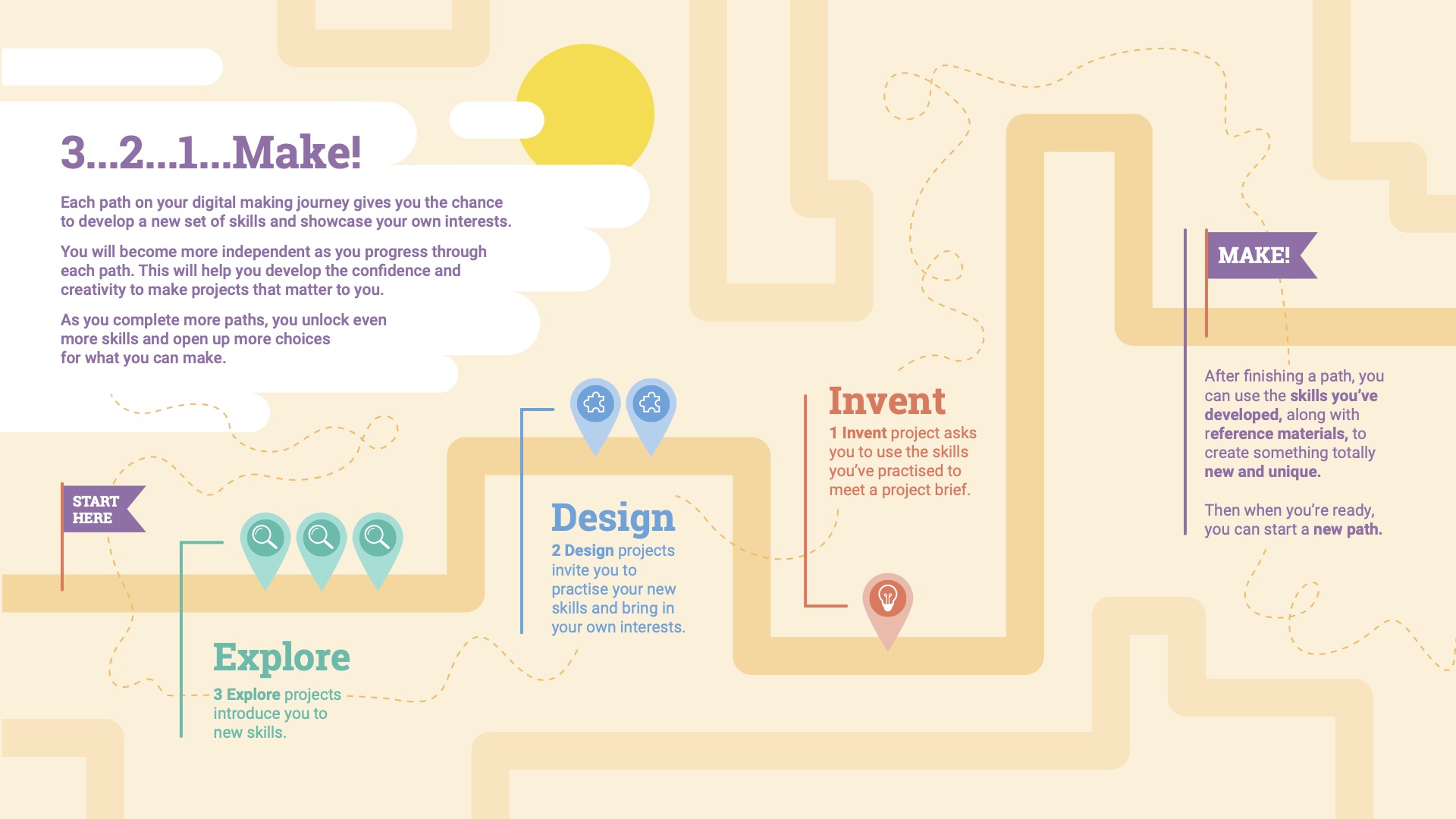
An illustration of the 3-2-1 structure of the new Raspberry Pi Foundation coding project paths.
Our new free learning content for young people who want to create with technology has a 3-2-1 structure (click the image to enlarge)

Supporting learners to become independent tech creators

In the design process of the new project format, we combined:

  • Leading research
  • Experience of what works in Code Clubs, CoderDojos, and other Raspberry Pi programmes
  • Feedback from the community

While designing the new format for our free projects, we found that, as well as support and opportunities to practise while acquiring new skills and knowledge, learners need a learning journey that lets them gradually develop and demonstrate increasing independence.

Therefore, each of our new learning paths is designed to scaffold learners’ success in the early stages, and then lets them build upon this learning by providing them with more open-ended tasks and inspirational ideas that learners can adapt or work from. Each learning path is made up of six projects, and the projects become less structured as learners progress along the path. This allows learners to practise their newly acquired skills and use their creativity and interests to make projects that matter to them. In this way, learners develop more and more independence, and when they reach the final project in the path, they are presented with a simple project brief. By this time they have the skills, practice, and confidence to meet this brief any way they choose!

The new content structure

When a learner is ready to develop a new set of coding skills, they choose one of our new paths to embark on. Each path is made up of three different types of projects in a 3-2-1 structure:

  • The first three Explore projects introduce learners to a set of skills and knowledge, and provide step-by-step instructions to help learners develop initial confidence. Throughout these projects, learners have lots of opportunity to personalise and tinker with what they’re creating.
  • The next two Design projects are opportunities for learners to practise the skills they learned in the previous Explore projects, and to express themselves creatively. Learners are guided through creating their own version of a type of project (such as a musical instrument, an interactive pet, or a website to support a local event), and they are given code examples to choose, combine, and customise. No new skills are introduced in these projects, so that learners can focus on practising and on designing and creating a project based on their own preferences and interests.
  • In the final one Invent project, learners focus on completing a project to meet a project brief for a particular audience. The project brief is written so that they can meet it using the skills they’ve learned by following the path up to this point. Learners are provided with reference material, but are free to decide which skills to use. They need to plan their project and decide on the order to carry out tasks.

As a result of working through a path, learners are empowered to make their own ideas and create solutions to situations they or their communities face, with increased independence. And in order to develop more skills, learners can work through more paths, giving them even more choice about what they create in the future.

More features for an augmented learning experience

We’ve also introduced some new features to add interactivity, choice, and authenticity to each project in a path:

  • Real-world info box-outs provide interesting and relevant facts about the skills and knowledge being taught.
  • Design decision points allow learners to make choices about how their project looks and what it does, based on their preferences and interests.
  • Debugging tips throughout each project give learners guidance for finding and fixing common coding mistakes.
  • Project reflection steps solidify new knowledge and provide opportunities for mastery by letting learners revisit the important learnings from the project. Common misconceptions are highlighted, and learners are guided to the correct answer.
  • At the start of each project, learners can interact with example creations from the community, and at the end of a project, they are encouraged to share what they’ve made. Thus, learners can find inspiration in the creations of their peers and receive constructive feedback on their own projects.
  • An open-ended upgrade step at the end of each project offers inspiration for young people to give them ideas for ways in which they could continue to improve upon their project in the future.

Access the new free learning content now

You can discover our new paths on our projects site right now!

We’ll be adding even more content soon, including completely new Python programming and web development paths!

As always, we’d love to know what you think: here’s a feedback form for you to share comments you have about our new content!

For feedback specific to an individual project, you can use the feedback link in the footer of that project’s page as usual.

The post New free resources for young people to become independent digital makers appeared first on Raspberry Pi.


Source: Raspberry Pi – New free resources for young people to become independent digital makers

Notable Japan Femtech Startups

Akihabara News (Tokyo) — In June, the Ministry of Economy, Trade and Industry (METI) selected twenty “femtech” companies for a combined subsidy of US$1.4 million to support endeavors at the intersection of technology and female health.

Femtech, a portmanteau of female and technology, addresses women’s health issues via revolutionary products and services, consequently confronting the taboo surrounding things like menstruation, pregnancy, infertility treatment, and menopause.

Some emerging femtech startups in Japan are Hi to Bito, fermata, Nagi, Comfits, Neith Incorporated, Ashlyn, Herbio, FamiOne, Laundry Box, and bonyu.

Hi to Bito, founded in August 2017 by Ai Kobayashi, is a production and distribution company for products made from local agriculture. Its organic feminine skin care brand, “Tomorrow I Will Climb a Persimmon Tree,” is one of the endeavors selected by METI for the subsidy. Hi to Bito aims to create options for feminine hygiene that allow busy women to take time out of their day to properly take care of themselves.

fermata, established in 2019 by Amina Sugimoto and Hiroko Nakamura, is an ecommerce platform that facilitates access to technologies designed for female health. Working under the vision of “transforming taboos into triumphs,” fermata pushes for international femtech products to reach a Japanese audience. fermata also facilitates brick-and-mortar shops and services in Japan. Such locations include New Stand Tokyo, a store that sells products listed on the fermata website, as well as Shirokane Takanawa Ebine Women’s Clinic, a clinic that offers obstetrics, gynecology, pediatrics, and more. fermata also operates in Singapore, on a track towards improving the femtech market across Asia.

Nagi, founded by Rina Ishii, is a period underwear brand built on the opinions of 150 Japanese women and hand-sewn Japanese materials. With the mission statement “to be yourself everyday,” Nagi provides women with a comfortable, eco-friendly alternative to single-use pads and tampons. Nagi has three styles to address different fits and flows such as the full style, which sits at the waist. Nagi also runs Nagi Room, a blog that spotlights the women of the company along with features on menstrual health. Ishii was originally known for her media outlet Blast, which featured topics such as female reproductive diseases, sexuality, and LGBT issues, until she established Nagi to narrow her focus on menstrual health.

Comfits is another period underwear product under the lingerie brand Lace Fran de Lingerie. Priced at an accessible US$18-$26 with inclusive sizing that goes from XS to 3XL, Comfits provides women with more options for comfortable reusable menstrual wear. Although only available in black, there are six different styles to choose from depending on an individual’s fit preference and flow. The special + style boasts a high-waisted style. Furthermore, part of the profits from comfit sales are donated to Colabo, a nonprofit organization that shelters teenage girls in Shibuya and Shinjuku.

Neith Incorporated, founded by Eri Nobuchika, launched Rine, another contributor to the market of period underwear. Rine has the highest absorption capacity of the products of the firms listed. They also offer a regular option for lighter flow days with a selection of three different sizes and colors. The fabric utilizes an eco-friendly wood fiber based material dubbed Tencel, making the product biodegradable. Rine has also recently launched a collection of bralettes for nursing with absorbent padding and a v-shaped front for simple and comfortable nursing.

Ashlyn, founded by Miku Kojima in 2016, launched Belle Macron, Japan’s first no-wire bra. Belle Macron was crowdfunded in 2017 to launch a new color and has since also launched a new “24h bra” designed as a bra comfortable enough to wear even while sleeping. The product comes in six colors and covers cup sizes A to G.

Herbio, established by Sayuri Tanaka, developed a wearable device called Picot that measures basal body temperature. The small coin-sized Picot takes deep body temperature every ten minutes while its wearers sleep, and will monitor pulse, body motion, and breathing, as well as detect abnormalities. These features allow women to predict ovulation patterns and menstruation for easy health monitoring and family planning.

FamiOne, founded by Yusuke Ishikawa in 2015, is an app that supports family planning via the messaging app Line. Nurses and counselors certified by the non-profit organization Fine offer tailored advice regarding fertility concerns. Basic functions such as hospital recommendations are free, and a US$36 a month subscription allows users to talk freely with experts via phone or text. FamiOne also stresses the importance of covering all issues for individuals of all walks of life, including menopause, nursing care, cancer, those with disabilities, and LGBT individuals.

Laundry Box, established by Misa Nishimoto in 2019, is a lifestyle platform concerned with the development and sale of sanitary products. Nishimoto also launched Laundry Girl, a blog focused around women’s bodies and sexuality, covering themes of sex education, LGBT issues, and sex culture. With the informational blog working in tandem with offering more sophisticated options for sanitary products, Nishimoto aims to give women more options and more authority over their health.

bonyu, founded in 2018 by Midori Ogino, is a breast milk analysis service for mothers wishing to monitor their lactation. By analyzing the contents of breast milk, bonyu advises mothers on their lifestyle and their child’s condition to identify any correlation or causation, and suggests what kinds of foods mothers should eat more or less of. bonyu will also be using the research to further study breast milk and its capabilities regarding what it does for a child’s natural immunity and development.

Some companies mentioned above as well as other femtech startups will be at Femtech Tokyo, a specialized exhibition for femtech companies taking place on October 20-22, 2022.

According to Emergen Research, the global market for technology geared towards women is projected to reach US$60 billion in 2027.

The post Notable Japan Femtech Startups appeared first on Akihabara News.


Source: Akihabara News – Notable Japan Femtech Startups

Yamaha’s Robot Agriculture Investments

Akihabara News (Tokyo) — Yamaha Motor continues to make strategic investments in robotic solutions for agriculture, with the latest move related to strawberry harvesting.

In the most recent announcement, Yamaha together with Kubota Corporation have upped their investment in the California-based startup Advanced Farm Technologies.

This startup seeks to raise efficiency by developing and manufacturing robots for strawberry harvesting. Its current robotic strawberry harvester combines an unmanned ground vehicle together with image sensors and artificial intelligence. The image recognition technologies instantly distinguish ripe and ready strawberries, and the grippers at the end of the robot arms gently pick each one.

This is hardly Yamaha’s only initiative of the sort.

Earlier this year, Yamaha partnered with Yield Technology Solutions, Australian agricultural technology startup, and Treasury Wine Estates to optimize yield production in wine grapes and improve autonomous crop spraying using robots.

However, Yamaha’s investments have not always been successful. It had invested several million dollars in the California-based startup Abundant Robotics, which had developed a harvesting robot that initially targeted apples. The company, however, shut down this July explaining that it “was unable to develop the market traction necessary to support its business during the pandemic.”

Robotics Related Articles

Japan Robot Week in Aichi

Robot Boom in Japan

Goodbye Pepper!

JAXA to Send Tiny Robot to the Moon

Robot Baristas at JR East Stations

The post Yamaha’s Robot Agriculture Investments appeared first on Akihabara News.


Source: Akihabara News – Yamaha’s Robot Agriculture Investments

JAXA Engine for Deep Space Travel

Akihabara News (Tokyo) — Japan Aerospace Exploration Agency (JAXA) recently announced that it has successfully tested the operation of the world’s first “rotating detonation engine” in space, a technology which could become a key to deep space travel.

The engine uses spinning explosions inside a ring channel, efficiently generating thrust coming from a small engine that uses little fuel.

The system was launched from the Uchinoura Space Center in Kagoshima Prefecture on July 27 with a payload of 100 kilograms.

When the rocket was recovered from the ocean after the demonstration, it was discovered that the rotating detonation engine produced around 500 Newtons of thrust.

JAXA engineers believe that the successful in-space test proves that such engines are a step towards improved space navigation using less fuel and weight, as they show promise for extending the propulsion method for deep space travel.

Japan hopes to put the technology into practical use within five years.

Recent Space Industry Related Articles

ispace Unveils Larger Lunar Lander

JAXA Has No Fear of Phobos

Producing Oxygen on the Moon

Farming on the Moon

ispace Raises Funds for Second Moon Mission

The post JAXA Engine for Deep Space Travel appeared first on Akihabara News.


Source: Akihabara News – JAXA Engine for Deep Space Travel

Florida’s new surgeon general skeptical of vaccines, opposes masks

Florida Gov. Ron DeSantis holds a news conference at the Florida Department of Health office in Viera, Florida, on September 1, 2021.

Enlarge / Florida Gov. Ron DeSantis holds a news conference at the Florida Department of Health office in Viera, Florida, on September 1, 2021. (credit: Getty | SOPA images)

Florida Gov. Ron DeSantis announced Tuesday that the state’s new surgeon general will be Joseph Ladapo, a UCLA researcher known for opposing evidence-based mask mandates, vaccine mandates, and lockdowns.

Instead, Dr. Ladapo advocates for the controversial idea of embracing “the reality of viral spread” to achieve herd immunity.

“Florida will completely reject fear as a way of making policies in public health,” Ladapo said in a press conference Tuesday after DeSantis announced his appointment. Fear, he said, has “been unfortunately a centerpiece of health policy in the United States ever since the beginning of the pandemic and it’s over here. Expiration date: it’s done.”

Read 12 remaining paragraphs | Comments


Source: Ars Technica – Florida’s new surgeon general skeptical of vaccines, opposes masks

China to stop building coal plants in developing nations

Read 2 remaining paragraphs | Comments


Source: Ars Technica – China to stop building coal plants in developing nations

Linux Foundation says companies are desperate for open source talent

Online hiring information for Linux position.

Enlarge / It probably shouldn’t be considered “surprising” when a Linux certification entity reports that Linux certifications are highly desirable. (credit: Linux Foundation)

The Linux Foundation released its 2021 Open Source Jobs Report this month, which aims to inform both sides of the IT hiring process about current trends. The report accurately foreshadows many of its conclusions in the first paragraph, saying “the talent gap that existed before the pandemic has worsened due to an acceleration of cloud-native adoption as remote work has gone mainstream.” In other words: job-shopping Kubernetes and AWS experts are in luck.

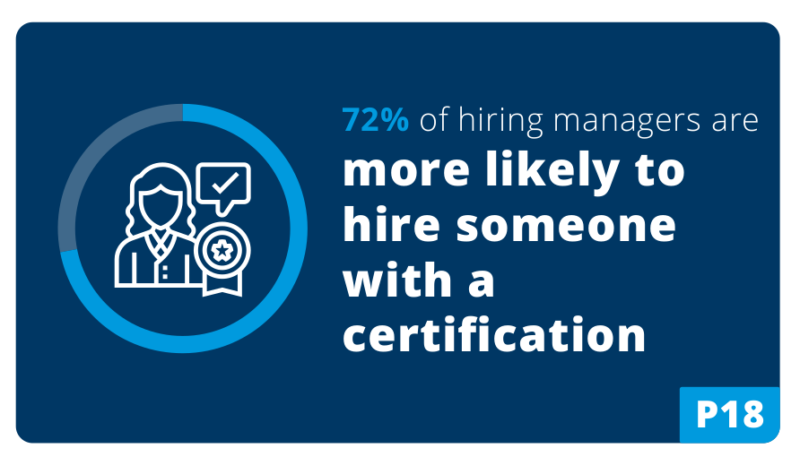
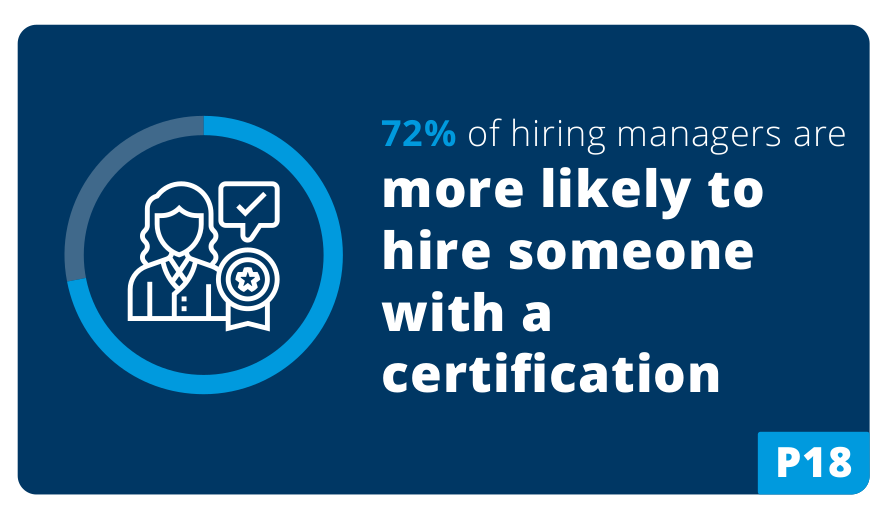
The Foundation surveyed roughly 200 hiring managers and 750 open source professionals to find out which skills—and HR-friendly resume bullet points—are in the greatest demand. According to the report, college-degree requirements are trending down, but IT-certification requirements and/or preferences are trending up—and for the first time, “cloud-native” skills (such as Kubernetes management) are in higher demand than traditional Linux skills.

The hiring priority shift from traditional Linux to “cloud-native” skill sets implies that it’s becoming more possible to live and breathe containers without necessarily understanding what’s inside them—but you can’t have Kubernetes, Docker, or similar computing stacks without a traditional operating system beneath them. In theory, any traditional operating system could become the foundation of a cloud-native stack—but in practice, Linux is overwhelmingly what clouds are made of.

Read 3 remaining paragraphs | Comments


Source: Ars Technica – Linux Foundation says companies are desperate for open source talent

Porsche finds yet another way to slice the 911: The 2022 911 Carrera GTS

ATLANTA—When it comes to cars that car nerds can obsess about, few cars get close to the Porsche 911. And with good reason: from that first show car in 1963 until today, Porsche has refined and evolved the 911 into a bewildering array of variants and versions. For example, only one turbocharged 911 is called the 911 Turbo, even though today, almost all 911s use turbocharged engines. I find it almost mystifying how well the company is able to tweak the same recipe to make cars that, to the outsider, look identical but drive completely differently and are bought by different customers.

Nothing exemplifies this (or confuses me more) than today’s car in question, the 2022 911 GTS. Those three letters usually appear in combination on the back of a 911 in the run-up to the car’s midlife refresh, or the change from one generation to another. But the 911 GTS isn’t a single variant; it’s really a range within a range, with five different 911 GTSes, each with the choice of two transmissions to pick from. See what I mean about confusion?

One engine, two transmissions, three body styles

All 911 GTSes use the same 3.0L turbocharged flat-six engine, mounted behind the rear axle, as is the tradition with the 911. In the GTS it has received a modest increase of 30 hp (22 kW) and 30 lb-ft (41 Nm) over the Carrera S and now outputs 473 hp (353 kW) and 420 lb-ft (570 Nm). The increase is thanks to an increase in boost pressure—18.6 psi (1.3 bar) versus 16 psi (1.1 bar) in lesser 911s—but Porsche has also fitted a new dual-mass flywheel to cope with the added torque.

Read 10 remaining paragraphs | Comments


Source: Ars Technica – Porsche finds yet another way to slice the 911: The 2022 911 Carrera GTS

PS5 storage analysis concludes: Spend less, get the same gaming performance

PS5 storage analysis concludes: Spend less, get the same gaming performance

Enlarge (credit: Aurich Lawson | Getty Images)

After nearly a year of questions and confusion, PlayStation 5 owners can finally add to the console’s very high-end storage via Sony’s latest firmware update—which is leading to many tests in the wild over the past week. Arguably the biggest test yet has resulting in some potentially great news: you don’t need to overspend on compatible SSDs as many had previously feared.

We’ve pointed to Digital Foundry’s coverage of PS5 storage and performance in the past, and founder Richard Leadbetter returned to the topic on Tuesday to confirm that any compatible PS5 drive will deliver apparently identical performance when running native titles for the console (and backwards compatible ones, too).

In order to upgrade the PS5’s storage capacity, the minimum requirements for a compatible drive are that it must be NVME M.2 format and PCIe 4.0 speed rated, as well as meeting certain dimensional and technical requirements to slot into the console’s storage expansion bay. Beyond those requirements, compatible SSDs have a significant range of storage amounts (as low as 256GB) and speed ratings (in terms of both sequential and random read/write operations, which can significantly impact general-purpose performance on an average computer).

Read 9 remaining paragraphs | Comments


Source: Ars Technica – PS5 storage analysis concludes: Spend less, get the same gaming performance

Braille display demo refreshes with miniature fireballs

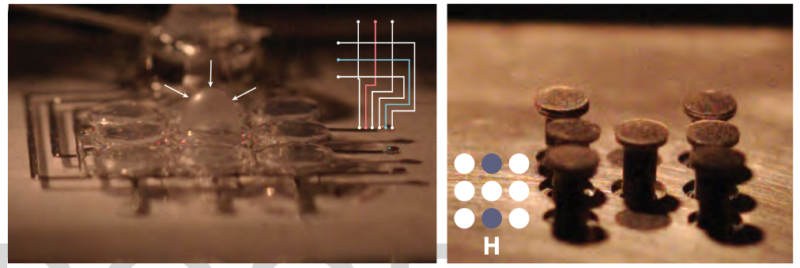
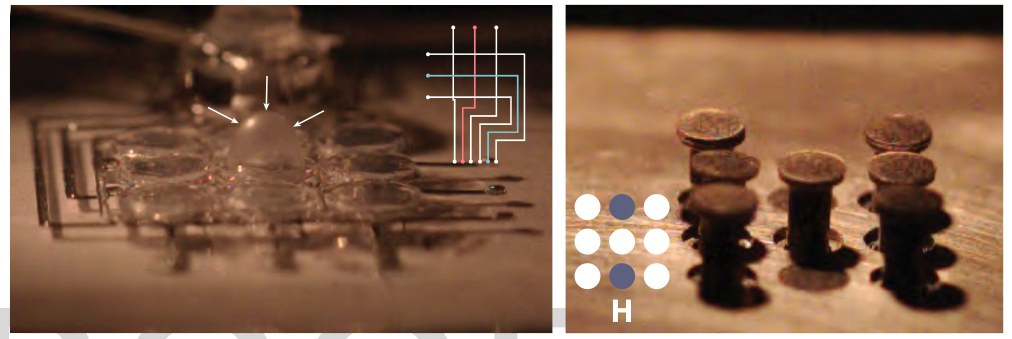
Two images that show the change in surfaces triggered by combustion.

Enlarge / The device can provide haptic information by expanding bubbles (left) or pushing up pins (right). (credit: Heisser, et. al.)

There have been a lot of advances in accessibility recently, with voice control, screen readers, and more improving access to computers for many people. But something that’s been missing is a haptic device, which provides touch-based information—think of a dynamic Braille display. For many people, notably those with limited vision and hearing, this would be the most effective way of interacting with electronics. And a simple, low-cost haptic device can have plenty of applications beyond accessibility.

One of the reasons these haven’t become widely available is that they’re hard to make. Physical actuators that can create a pattern detectable by touch take up a fair bit of volume and are difficult to pack into close proximity to each other. They also tend to be pricy. So, a US-Israeli team of researchers looked into alternatives to physical hardware. And the researchers came up with an unexpected alternative: set off a miniature fireball inside a flexible bit of polymer that can inflate like a balloon.

Replacing hardware with combustion

In theory, making a refreshable Braille display is relatively easy. All we need is an array of mechanical devices that can be switched between up and down states. The reason these don’t exist is that the mechanical devices that are commercially available are too bulky to place in close proximity. For example, the researchers consider the possibility of using microfluidics to inflate a polymer bubble. But the valves needed for a 2 x 3 grid of devices would occupy 18 times the area of the device itself and cost about $250.00.

Read 11 remaining paragraphs | Comments


Source: Ars Technica – Braille display demo refreshes with miniature fireballs

Ransomware victims panicked while FBI secretly held REvil decryption key

Circular seal against a marble wall.

Enlarge / The seal of the Federal Bureau of Investigation (FBI) is seen at the J. Edgar Hoover building in Washington, D.C. (credit: Andrew Harrer/Bloomberg)

For three weeks during the REvil ransomeware attack this summer, the FBI secretly withheld the key that would have decrypted data and computers on up to 1,500 networks, including those run by hospitals, schools, and businesses.

The FBI had penetrated the REvil gang’s servers to obtain the key, but after discussing it with other agencies, the bureau decided to wait before sending it to victims for fear of tipping off the criminals, The Washington Post reports. The FBI hadn’t wanted to tip off the REvil gang and had hoped to take down their operations, sources told the Post.

Instead, REvil went dark on July 13 before the FBI could step in. For reasons that haven’t been explained, the FBI didn’t cough up the key until July 21.

Read 6 remaining paragraphs | Comments


Source: Ars Technica – Ransomware victims panicked while FBI secretly held REvil decryption key

Facebook’s latest “apology” reveals security and safety disarray

A person in a Hazmat suit covers the Facebook logo with warning tape.

Enlarge (credit: Aurich Lawson / Getty Images)

Facebook had it rough last week. Leaked documents—many leaked documents—formed the backbone of a string of reports published in The Wall Street Journal. Together, the stories paint the picture of a company barely in control of its own creation. The revelations run the gamut: Facebook had created special rules for VIPs that largely exempted 5.8 million users from moderation, forced troll farm content on 40 percent of America, created toxic conditions for teen girls, ignored cartels and human traffickers, and even undermined CEO Mark Zuckerberg’s own desire to promote vaccination against COVID.

Now, Facebook wants you to know it’s sorry and that it’s trying to do better.

“In the past, we didn’t address safety and security challenges early enough in the product development process,” the company said in an unsigned press release today. “Instead, we made improvements reactively in response to a specific abuse. But we have fundamentally changed that approach.”

Read 10 remaining paragraphs | Comments


Source: Ars Technica – Facebook’s latest “apology” reveals security and safety disarray

CIA director “fuming” after Havana syndrome strikes team member in India

William Burns, director of the Central Intelligence Agency (CIA), arrives for a closed hearing at the US Capitol in Washington, DC, on Wednesday, May 26, 2021.

Enlarge / William Burns, director of the Central Intelligence Agency (CIA), arrives for a closed hearing at the US Capitol in Washington, DC, on Wednesday, May 26, 2021.

A US intelligence officer traveling in India earlier this month with CIA director William Burns reported experiencing a mysterious health incident and symptoms consistent with so-called Havana syndrome, according to a report by CNN. The officer received immediate medical care upon returning to the US.

The case raises fears that such incidents are not only increasing, but potentially escalating, unnamed officials told CNN and The New York Times. The new incident within Burns’ own team reportedly left the CIA chief “fuming” with anger.

The director’s schedule is tightly guarded, and officials do not know if the affected intelligence officer was targeted because the officer was traveling with the director. If the health incident was an attack carried out by an adversarial intelligence agency—as feared—it’s unclear how the adversarial agency learned of the trip and was able to prepare an attack. It’s also possible, however, that the officer was targeted for other reasons and without knowledge that the officer was traveling with the director.

Read 10 remaining paragraphs | Comments


Source: Ars Technica – CIA director “fuming” after Havana syndrome strikes team member in India

Google’s spending $2.1 billion for even more New York City real estate

Read 1 remaining paragraphs | Comments


Source: Ars Technica – Google’s spending .1 billion for even more New York City real estate

Updated PC Health Check app will actually tell you why you can’t run Windows 11

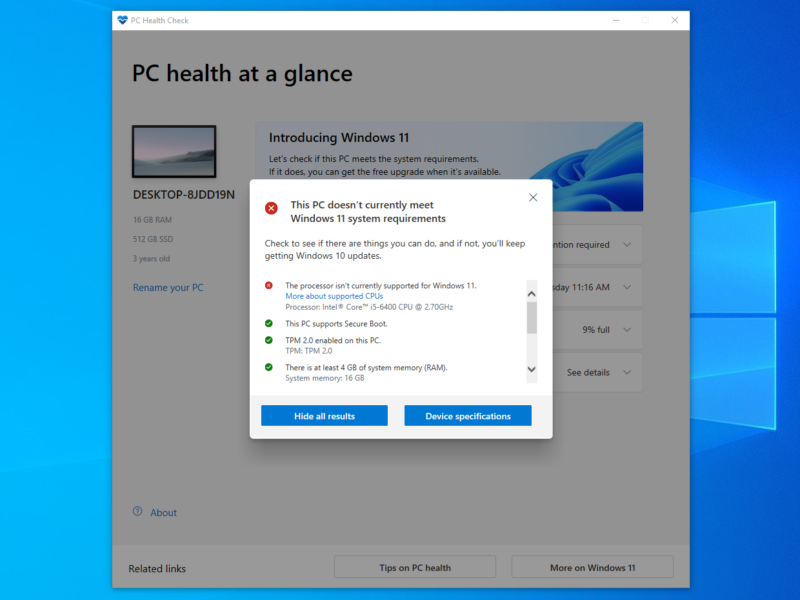
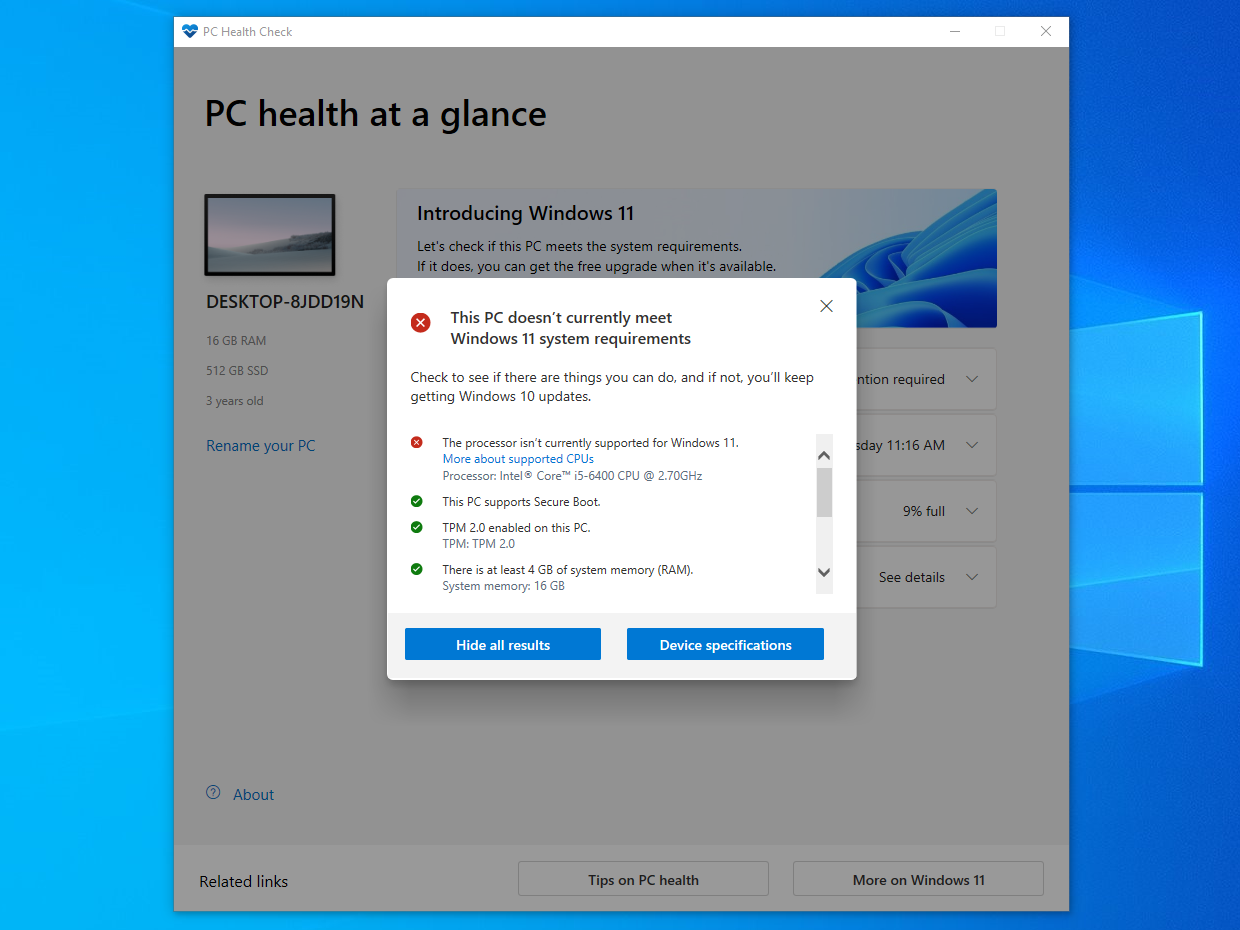
It doesn't fix how strict the new Windows requirements are, but the new PC Health Check app can at least give you detailed information and more useful recommendations.

Enlarge / It doesn’t fix how strict the new Windows requirements are, but the new PC Health Check app can at least give you detailed information and more useful recommendations. (credit: Andrew Cunningham)

When it announced Windows 11 and its strict new hardware requirements, Microsoft also released a PC Health Check tool that would analyze your hardware and tell you whether your computer could upgrade to Windows 11. The problem is that the app wouldn’t tell you why your computer failed the test, leading some people with relatively new PCs to believe that they wouldn’t be able to run the OS without hardware upgrades.

A new version of the PC Health Check app, available to anyone who signs up for a Windows Insider account, fixes that problem. In our testing, it’s still pretty bad at guessing the approximate age of the PC that it’s running on, but it at least presents more detailed information when it’s telling you that you won’t be able to upgrade to a new OS.

The new version of the Health Check app makes recommendations if your PC has easily fixable compatibility problems, like if there’s a firmware TPM module that simply isn’t enabled, if Secure Boot is turned off, or if you need a RAM or disk space upgrade. But for more serious problems, like a processor that isn’t on one of Microsoft’s compatibility lists, your only options are to upgrade to a supported processor (not always an option but possible for some AMD Ryzen desktops in particular), replace the computer, continue running Windows 10, or run an “unsupported” Windows 11 install that may or may not receive updates going forward.

Read 2 remaining paragraphs | Comments


Source: Ars Technica – Updated PC Health Check app will actually tell you why you can’t run Windows 11

NASA to split leadership of its human spaceflight program

Read 9 remaining paragraphs | Comments


Source: Ars Technica – NASA to split leadership of its human spaceflight program